Loading...
artsbooks
Sarvat Hasin's new novel is about a magnetic friendship between 'Strange Girls'
About this Episode
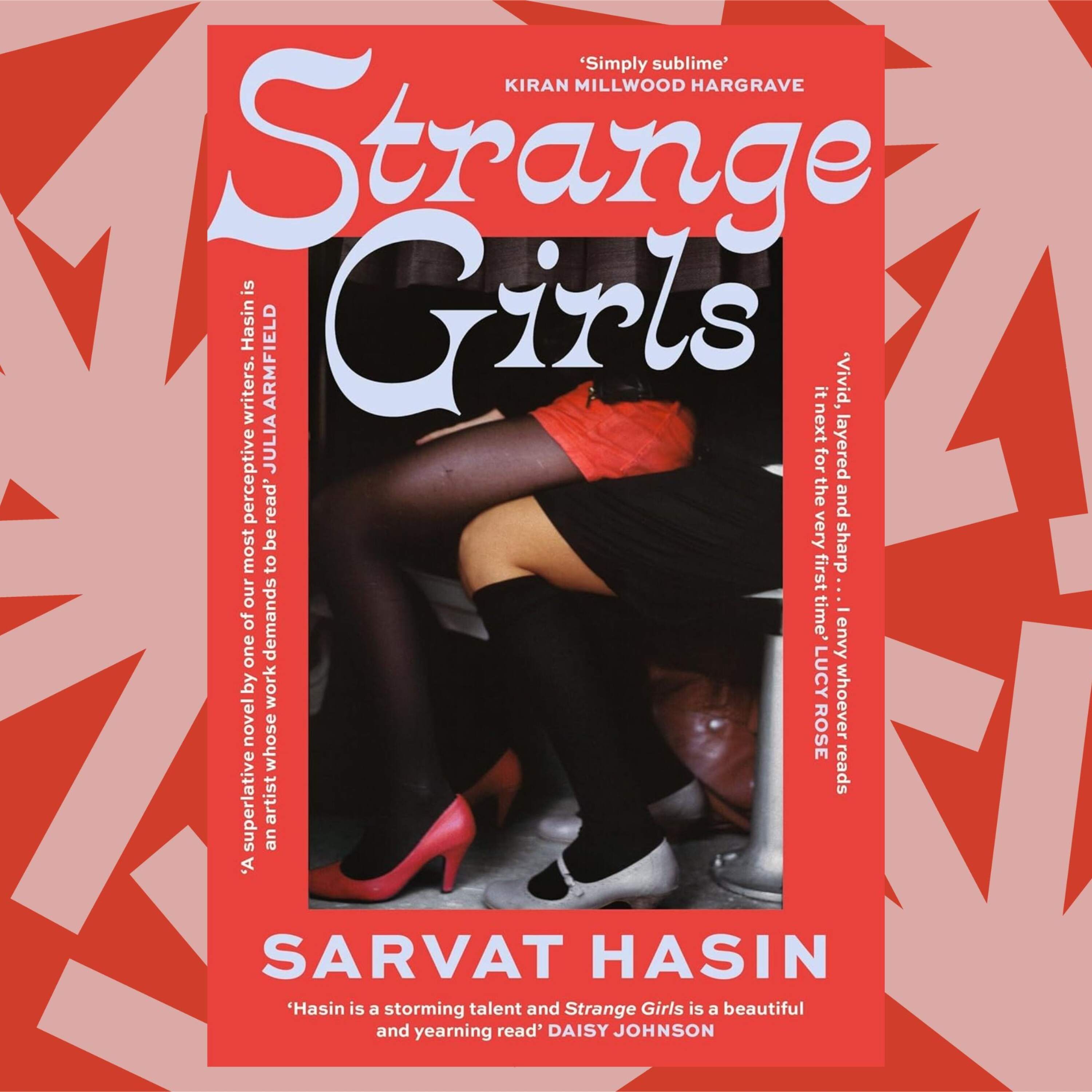
In Sarvat Hasin’s novel Strange Girls, a Pakistani woman and an American woman meet at a London-based university in the 2010s. There, they quickly become close, bonding over a shared dissatisfaction with the definition of femininity available to them. In today’s episode, Hasin joins NPR’s Juana Summers for a conversation about the intense relationship that forms between the two protagonists, the way friendships can be strained in the post-college years, and what makes this novel a kind of “period piece.”
To listen to Book of the Day sponsor-free and support NPR's book coverage, sign up for Book of the Day+ at plus.npr.org/bookoftheday
See pcm.adswizz.com for information about our collection and use of personal data for sponsorship and to manage your podcast sponsorship preferences.
NPR Privacy Policy
To listen to Book of the Day sponsor-free and support NPR's book coverage, sign up for Book of the Day+ at plus.npr.org/bookoftheday
See pcm.adswizz.com for information about our collection and use of personal data for sponsorship and to manage your podcast sponsorship preferences.
NPR Privacy Policy
Hosts & Guests

Transcript
Hey, it's NPR's Book of the Day.
I'm Tinby D'Aremis, filling in for Andrew Limbong.
A good friendship can transform your life.
That's certainly been the case for me, and it was especially true when I was in college.
There's this intense intimacy that comes from living in close quarters with your favorite
people, you know, figuring out classes and parties and crossing that threshold into adulthood.
But what happens when you graduate?
Life takes over, and the nature of that life-altering friendship changes.
Strange girls by Sarvat has seen it takes on this topic.
She spoke about it with all things considered host Wana Summers.
Support for this podcast and the following message come from strawberry.me.
If you could go back and talk to your younger self, would you tell yourself that you have
a job that truly makes you happy?
Many people are stuck in jobs they've outgrown or never really wanted.
A career coach from strawberry.me can help you move on to something you actually love.
Benefit from having a dedicated coach in your corner and get 50% off your first coaching
session at strawberry.me slash NPR.
This message comes from Bayer.
Science is a rigorous process that requires questions, testing, transparency, and results
that can be proven again and again.
It's the approach that mapped the human genome, advancing therapies for chronic diseases.
It transformed farming to help feed billions of people.
It produces countless innovations that improve lives worldwide.
This approach is integral to every breakthrough Bayer brings forward, innovations that save
lives and feed the world, because the future depends on it.
More at sciencedelivers.com
Many of us have had that one friendship.
You know, the one where you get really close really fast and then the real world gets
in the way.
The friendship falters.
And suddenly, it has been a decade since you've even talked.
In author Sarvat Haasin's new book Strange Girls, Protagonist Eva and Alia are those friends
to each other.
Both of them are just sort of defined almost by their similarities as much of their differences.
So they're both bookworms and they're both obsessed with novels and writing and storytelling
and are very creatively ambitious and want to be part of that world.
Eva is American.
Alia is Pakistani.
They meet in college in London and quickly declare themselves Strange Girls.
When I talked with author Sarvat Haasin about the book, I started by asking her about that
phrase and what it means to them.
They're 18 when they sort of define themselves as Strange Girls.
And I think they feel like they can't see the models for womanhood.
They've been fed an idea of femininity and what their life should be like when they
grow up.
And it doesn't really resonate.
So they feel sort of strange and disconnected from it.
I think they're also just very, you know, as any to young aspiring writers, quite pretentious
and determined to set themselves apart from the rest of the world.
I don't think what they want necessarily is that strange, but because they don't have
examples of people who've lived those lives in front of them, it feels very alienating.
And in fact, they come to classify all girls, all women really as either strange or not
strange.
I do have to ask, where would you classify yourself?
I'm probably not very strange anymore.
I think the Strangeness is almost sort of defined by both the defines, but also by a desire
to be strange.
And I think it's sort of difficult as you get older to keep, you know, choosing to make
your life in those unconventional decisions.
I think also for me, their sort of strange and not strange came from feeling very much
like I was growing up in a popular culture landscape that pitted women against each other.
And you were either the sort of like cool alternative person or you were the more traditional
feminine person and there was no space to have aspects of both, the no space to be both
if not like you're to pick a side.
And hopefully I feel like it's not like that as much anymore.
Yeah.
Tell us about where the idea from the story came from.
When did you start to think about it?
So I started to play with these characters around the time that my last novel, The Joint
Dog, came out and I was starting for a new idea and these two characters sort of came
to me and actually the story itself has had many different forms.
It was a role playing game at one point.
It was a period piece at another point.
The vessel kept changing, but these characters stayed the same.
And I think I was really interested in their particular relationship, which is something
that is in between a friendship and a romance and incredibly intense and difficult to name
and difficult to define.
And I was really interested in what happens to your relationship like that if you are
very close and sort of completely entwined in each other's lives.
And the relationship doesn't progress and becomes something else.
It doesn't change shape, but also doesn't lessen its intensity.
What happens to that?
Can that intensity sort of like toxify?
It's so interesting because there's this magnetism between these two characters, but
there's also this through line of insecurity and envy of the other person.
Alia seems to really worship Eva in school and she wants her confidence and her talent
and her social skills.
And then as they get older, the tables really seem to turn.
How do you think that happens?
It's so interesting, isn't it, because I feel like one of the things that the core of
the book for me is how you can have such similar ambitions and such similar sort of life goals
when you're at university because there's sort of like material shape of your lives and
your days are so similar.
Like I think universities, they're sort of great flattening where everything to do with
class and cultural backgrounds and things like that sort of becomes smooth out a little
bit. And it's only when you leave university that all of these other forces start to take
control.
And I think that for me, Eva Strani is very much about, you know, one of care.
She is in the intervening years that we don't see them.
She has been looking after her mother and sometimes she's not been directly her carer,
but she's been the person who's responsible for her.
And that's really defined her time and creativity and talent and drive are not the only things
that make authors writing is something that requires quite a lot of time and time is
very expensive and the piece that you need to have that time is expensive.
We see them come together, but there's also the aftermath for relationship when you have
this intimate connection that you've treasured where it breaks apart or fades and we experience
that in this book too.
Talk about what you were hoping to show or illustrate with the distance that grows between
them.
Yeah, I think that female friendships and all friendships actually when you leave university
become very tenuous because when you're young, you have a lot of time to devote to those
friendships and it's very easy for your life to evolve around them.
And then it feels like in the intervening years, every decision you make can either bring
you closer to or further from your friends.
So if you're both single at the same time, there's a sort of bonding in that and you can
continue to keep that intimacy to that.
If you both end up in relationships around the same time and your partners like each other,
there's a bonding to have in that.
If you have children around the same time, if you choose similar careers, those are ways
that you can maintain that intimacy.
But if the opposite happens and you go in different directions and one of you stay single
and the other person gets married or one of you as children and the other doesn't or
one of you becomes very career focused and the other person is more focused on travel
or something else, those things can really bring you apart and there's a sense almost
in the way we organise our lives where friendships aren't prioritised.
I think in any of an obvious case because it's so intense and so intimate, there is also
this sense of the unspoken between them and this ambiguity that I was really interested
in that gives them so much space for misunderstanding because they haven't agreed who they are to
each other and they haven't made the rules or the map for what they owe each other, so
there's so much space for them to get it wrong and for those expectations to be mismatched.
Therefore, there's no sort of script when they're falling apart, there's no sense of oh,
we were in a relationship, now we've broken up and now we're not going to speak for this
amount of time but maybe we're consciously uncoupling and we'll go no contact and then
we'll resume a polite friendship in so many years.
There's no space for that because there's no script for the kind of breakup they're having.
Yeah, it felt like these were two women that simply didn't have the vocabulary for what
they were to each other or if they did, they didn't feel the ability to say it out loud.
Was that intentional?
Yes, definitely.
I think in a funny way, the book's also a period of peace, right, because the university
is a set in the early 2010s and that was a slightly different time for young women and
their sexuality and how comfortable they were expressing certain things and how comfortable
they were with those different expressions, I guess, and that was definitely something
that I was considering.
We've been speaking with author Sarvat and I'll see you in her new book is Strange Girls.
Thank you so much.
Thank you.
This message comes from Bayer.
Science is a rigorous process that requires questions, testing, transparency, and results
that can be proven.
This approach is integral to every breakthrough they are brings forward, innovations that
save lives and feed the world, sciencedelivers.com.
This message comes from the John D. and Catherine T. MacArthur Foundation, recognizing extraordinarily
creative individuals whose ideas, solutions, and discoveries expand people's expectations
of what's possible, macfound.org.
Do you love pop culture?
Hate some of it too?
You're in good company.
Pull up a metaphorical chair to pop culture happy hour, the podcast that breaks down the
best and some of the most questionable moments in pop culture.
We'll tell you what's great, what's interesting, and break it all down with debates that'll
have you yelling at your speakers, but in a good way.
Listen to NPR's pop culture happy hour by finding us wherever you get your podcasts.


