About this episode
Schedule a FREE call: http://www.thebitcoinway.com/podcast?utm_campaign=bitcoin-banter&utm_medium=social&utm_source=fountain&utm_term=bitcoin-banter
Subscribe to our newsletter: https://www.thebitcoinway.com/resources/newsletter?utm_campaign=bitcoin-banter&utm_medium=social&utm_source=fountain
Learn about our self-custody services:
Check out our articles on quantum computing here:
https://www.thebitcoinway.com/articles/will-quantum-computing-break-bitcoin
https://www.thebitcoinway.com/articles/this-again-a-clearer-look-at-quantum-and-bitcoin
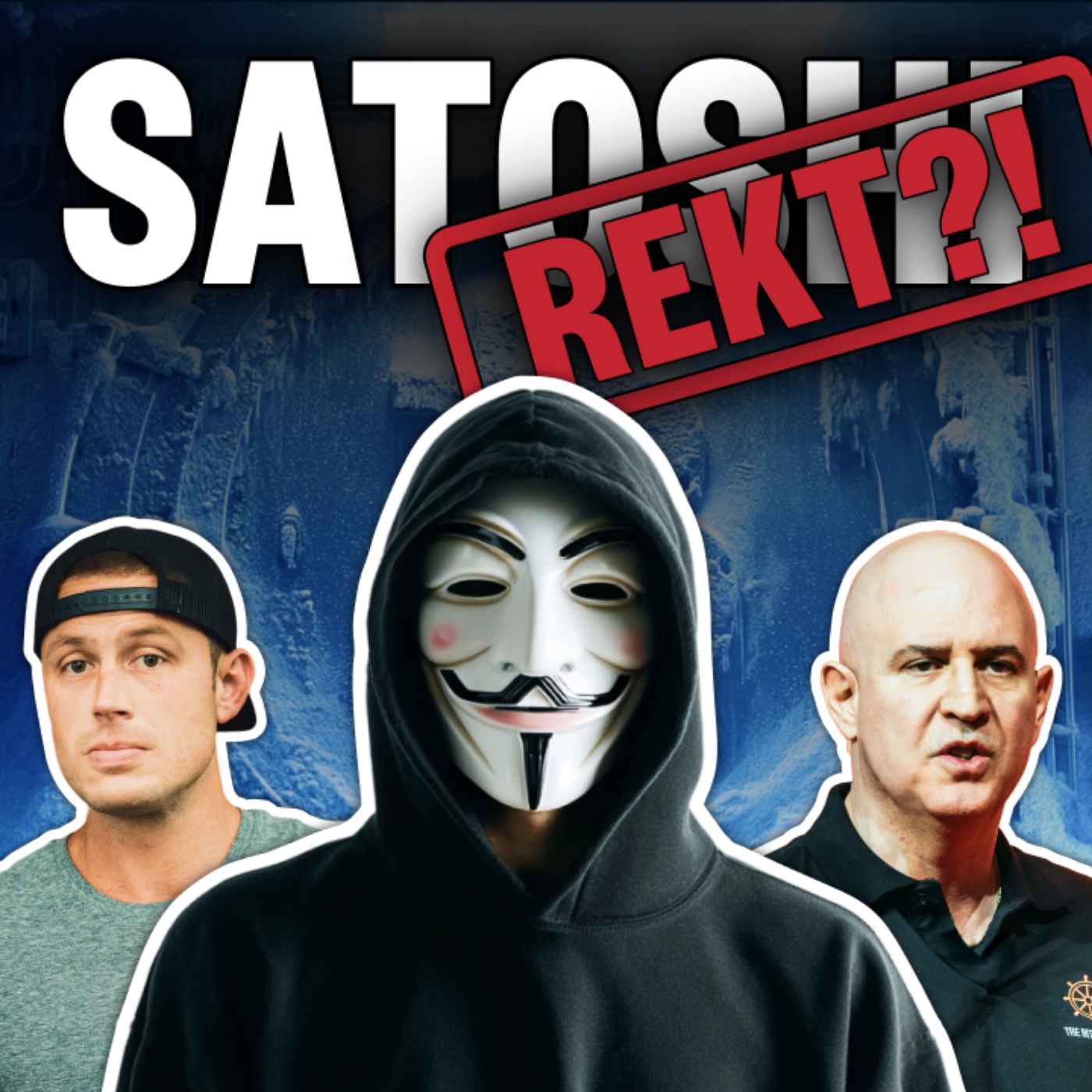
In this episode of Bitcoin Banter, Michael and guests Sophi and Adam discuss whether Satoshi himself is about to be rug pulled. There's a new proposal on the table from Bitcoin developers that want to freeze quantum vulnerable wallets - including Satoshi's entire stack of over 1 million coins.
They also talk about the EU's Christine Lagarde warning of food rationing, scammers demanding USDT to enter the Strait of Hormuz, hundreds of millions lost in crypto hacks and our Donkey of the Week, Ethereum founder Vitalik Buterin!
⏱️ TIMESTAMPS:
00:00 - Recap
00:28 - Satoshi's 1.1M Coins Could Be Frozen
08:01 - United States is Running a Bitcoin Node
12:36 - Possible Food Rationing Due to Fertilizer Disruptions
17:46 - Indian Tanker Pays Crypto Bribe to Fake IRGC
20:38 - Crypto Has Lost $605M+ to Hacks
25:13 - $100m Worth of ETH Frozen!
28:28 - Tether freezes $344 million in $USDT
29:52 - Outro
🎧 LISTEN TO OUR POD & OTHER EPISODES:
YouTube: https://www.youtube.com/@TheBitcoinWay
Rumble: https://rumble.com/user/thebitcoinway
RSS: https://feeds.buzzsprout.com/2334006.rss
🎙ABOUT OUR SHOW:
On Bitcoin Banter, Michael and members of The Bitcoin Way team discuss current events related to Bitcoin, macroeconomics, finance, politics, and more.
Follow guest Sophi on: https://x.com/internetsophi and Adam on https://x.com/adamsimecka
📞 SCHEDULE A CALL WITH THE BITCOIN WAY:
🔗CONNECT WITH US:
X: https://twitter.com/thebitcoinway_
N: npub1lrj3lsskez59qu68v5fpnur7ythe7s5e4qcelclha6t6r9q5pqgsl2m
LI: https://www.linkedin.com/company/thebitcoinway/
IG: https://www.instagram.com/thebitcoinway_
TT: https://www.tiktok.com/@thebitcoinway
🗞️: https://www.thebitcoinway.com/resources/newsletter
❗DISCLAIMER:
This show is for entertainment purposes only. Before making any financial or legal decisions consult a professional.
economics #finance #financialfreedom #crypto #cryptocurrency #investing #wealth #money #btc #blockchain #investment #cash #bitcoin #dollars #economy #economics #investing #investments #digitalcurrency #BTC #technology #tech #wealthmanagement
Get every episode summarized
Each time The Bitcoin Way Podcast publishes, we email you a written briefing from the transcript — the topics, who appeared, and any specific claims, with the ad reads skipped.
Email me new episodesFree for 3 shows. No card needed.
Hosts & guests
Transcript ready
713 searchable segments. Every word is indexed and playable.
Full transcript
The Bitcoin Way Podcast — Satoshi's Bitcoin Frozen Forever!?. Machine-transcribed; use the interactive transcript above to jump the player to any line.
Is Satoshi himself about to be rug-pulled, including Satoshi's entire stack of over 1 million coins? They've probably been running notes for a very long time, but this is their first moment publicly saying it. The Ethereum network is on par with Tether. They're freezing money. Like, it sounds like a movie that we would see with all your favorite actors. It's just, like, I can't believe this is real. Is Satoshi himself about to be rug-pulled? There's a new proposal on the table from Bitcoin developers that seek to freeze quantum vulnerable wallets, including Satoshi's entire stack of over 1 million coins. Hey, everyone, welcome to another episode of Bitcoin banter. Tony's on the road, so I have Adam and Sophie with me today. Don't forget to stick around to the end for our donkey of the week segment. Alrighty, guys, let's jump into BIP. 361, so Cypher Punk, Jamison Lopp, and other Bitcoin developers propose BIP 361 to freeze quantum vulnerable wallets, which could lock Satoshi Nakamoto's 1.1 million coins.
Now worth $74 billion. Sophie, I would love for you to give your assessment of what's going on. I want to understand what the motivation behind this BIP might be. I think we're all probably going to be approximately in agreement. Yeah, that was actually my question as well. Last week, I'm talking about this with you guys, and I'm totally opposed to it, because I don't think that any one person has the right to kind of make this type of unilateral decision. That's not the spirit of Bitcoin. That's not why we all got into this. But I also just want to understand the reasons why. Is this going to really make it quantum proofers that just a theory? It kind of seems to me that we won't really know until it happens. And if and when quantum becomes a threat, the solution is going to come. And don't forget that if quantum really is this threat that people are saying it is, we have much bigger problems
than the Bitcoin network or these wallets getting hacked, like we have national security that we have to basically completely rewire if this is going to be a problem, right? So I'm still against it. I still don't think that it's the time or the place or the person to take this decision. So yeah, that's kind of my two cents about it or two cents. Adam, I've got my thoughts on what the motivation here is. And I think there are one of two. But I'm going to save that until after I hear your initial reaction to this. Well, I'd love to hear that too, because I don't know what your thoughts are on that. And I haven't quite made up my mind on where I think this is all coming from, because I think ultimately this is actually pretty ridiculous in my opinion. And I think that they have to know this. So I do think that there might be something else there. One of the interesting things that I saw somebody say, and I apologize I can't give him credit because I don't remember who it was. But they essentially just said, if they
can freeze Satoshi's coins, they can freeze your coins. So keep that in mind. I think that this, in my opinion, is a fairly slippery slope. And I definitely don't support it. That's my own personal opinion. But I also think that this is just outright ridiculous. I also think this is a signal that kind of implicates some of the other things. A lot of these proponents have been pushing. And I'll let the audience make up their own mind there. I don't want to make anybody's opinions for them. But I think that James and Lop and crew, let's just put it that way. They've been pushing a lot of things lately. And I think that this is a good example of one of the very obvious reasons why some of the stuff that they push is so ridiculous. And so I hate to lump people into categories. But this is at least a red flag to say, hey, the stuff that James and Lop and crew are pushing is kind of ridiculous. And here's a very clear example of why.
So I come into this with maybe a bit of an advantage because I just had Jimmy Song on the podcast yesterday. So we had a conversation about this. So one of the reasons I think they could be pushing something like BIP 361 is because it's an economic reason. They're worried that Satoshi's coins are going to be hacked stolen in some way. And they're going to dump a million coins on the market. And the price is going to crash once quantum comes to fruition. I think that's maybe the more generous explanation. I think the less generous explanation would be, I just think some of these people are bad actors. And they don't like Bitcoin or they're being paid to do something to Bitcoin. I don't necessarily have a strong opinion. I mean, obviously, I think the economic incentive is there to want to freeze his coins. However, Jimmy made a great point about that. And he said, to assume that they're just going to dump a million coins on the market, it's a big assumption. They might have a private buyer ready to scoop these up in a Chinese central bank or something like that. You never know.
But also, I'm not really worried about quantum anyway. I think it could possibly come in the future. And I think any drastic measure to protect against it today is just kind of overblown. That's my personal opinion. Any comment on that? I agree. I think it sets a kind of a dangerous precedent because quantum is not that big of a deal right now. Like you said, it is overblown and it's kind of like going a little too far. And so you have to question the incentives of people who want this to happen and what's in it for them. Yeah, that's a good way of saying it. Adam, were you going to say something? Yeah, I was going to say, I mean, there's no limit to the amount of solutions we have to this problem. And we already have a lot of really good solutions that have been proposed. And we don't need to freeze Satoshi's coins to be resistant, in my opinion. I mean, Satoshi's coins may be vulnerable, at least to certain quantum attacks. And I'll be the first to admit, I'm not a quantum expert. I don't think any of these people are. I don't think, it's my opinion that it's likely
that most people, even the experts, don't fully understand the implications of quantum. Obviously, I'm pretty low on that list. But my point is, like Sophie said earlier, there's a lot behind the whole quantum thing that is going to be a bigger problem than Satoshi's coins being hacked. So in that case, I think that in my uneducated mind, I would say that there are a lot of there's cascading implications of a quantum hack or quantum being able to perform this type of attack on these quantum resistant addresses. I think that before we get to that point, there's going to be a lot of other cascading problems that lead us up to that. We'll have plenty of time to more adequately plant. But like I said, my point is, I think we already have measures in place, and they've already been presented that are not the same proposal.
So I think you're right. I think one other comment on this, I'm a big fan of private property rights. And if you had an HOA that arbitrarily froze one person from selling their home within a subdivision, you'd say that's a violation of their property rights, the right to transact freely. And this to me is no different. And people don't necessarily have equal opportunities to sell their coins at a particular time. You could be incarcerated unconscious, have lost the key, but eventually find it, right? And so like there are a dozen reasons why you might want to move your coins again in the future. And I think this is just a pathetic attempt at either something very bad or protecting people again from themselves, which I don't think is necessary. Hey guys, if you are enjoying the show, do me a huge favor, smash the like button, make sure you're subscribed. We'd really appreciate that. Guys, this next bit is incredibly interesting. I'm not real surprising to me, but the fact that it's public is pretty amazing. So a US admiral has said that the United States is now running its own Bitcoin node. He says we have a node on the Bitcoin network.
We're doing a number of operational tests to secure and protect networks using the Bitcoin protocol. Adam, as a former spook yourself, I would love to hear your assessment of what this means. Is this significant? Do you care? Do you think this is like, you know, obviously they're running a node? What's your take? Yeah, kind of actually all the above. And yeah, I, former military, I trained at some of the same facilities as Jason Lowry, which I think is a big driver behind a lot of this. So shout out and props to him. But you know, credit words do, I should say. He's got his first share of haters though. So I'm sure there's going to be plenty of commentary on that. But my point is, I think that this is significant to this, in the sense that the government is, at this point, you know, overtly, you know, kind of driving this message. It's no longer, you know, under wraps. So to speak, I think that, you know, they've probably been running nodes for a very long time. But this is their first moment of them coming out
and publicly saying it. And I think that's a big deal, right? Because they're now, what they're saying is, you know, the government is now, you know, understanding this protocol and this process, they're studying it. And they're letting the public know that it's significant and important. And that's basically what this gentleman just said is that, you know, it is a matter of national importance, right? So I think that that part is what a significant, but I think it is a little bit naive to think that this is like their first dipping their toe in the water in the Bitcoin. I do think that they've been at least privy to it for a lot longer than they've led on to believe. Sophie, what do you think? The US government's a client of the Bitcoin way, it seems. I think Tony might have trained them up. Wow. Yeah, I think there's two ways to kind of see this. The first way is kind of like the ultimate bending of the knee, right? If they're running a node, then they must believe that it is worth sustaining the Bitcoin network
that if everything went wrong, at least they are part of the people, the millions of people around the world who can sustain a Bitcoin network through a node. So there's that way of seeing it. And then there's a skeptical way of seeing it, right? And the skeptical way of seeing it is like, you know, the CIA didn't invent Bitcoin, but they wish they did. And now they want to crack it. Or now they want to figure out some way to control it because the Bitcoin is such a threat to the dollar. And I still think that maybe in their naivety, they think that they might be able to do that by running a node and understanding how it works, understanding how this whole thing functions. And so I do have to like kind of look at it skeptically in that regard. Or, you know, best case scenario, we're going to a million. And you know, the government is actually taking Bitcoin seriously and we're going to have a strategic reserve and you know, we'll live happily ever after. But that's usually not the way it goes.
So you got to look at it both ways. Yeah, no, I think that's a fair way of looking at it. I don't really know. I mean, on one hand, I think this is like a pretty interesting thing in maybe an encouragement to people who have been sitting on the sidelines aren't. Anytime people in power talk about Bitcoin, I feel like if, especially when it's affirming and it's not scaring people away, I think that's, you know, great to hear. I don't really care about the government running a node other than the marketing that it provides folks who are maybe a little more reluctant to engage with Bitcoin. I mean, the interesting thing is they're running a node. But the, what wasn't the, what was that case? The US marshals lost like tons of Bitcoin because the custodian that they were holding it with. It's like, so was the custodian pointing to their node? Or do they just have a start nine server sitting and at the Pentagon doing nothing, not really connected to a wallet or anything? I don't know what they're actually doing with this node. That's what I'd like to know. But what I do know is that they're not in self-custody.
Everyone should be. So if you aren't, if you're listening, go to the bitcoinway.com slash podcast, make sure you schedule some time with our team. We can help you run a node just like the US government, but we'll actually help you take self-custody or Bitcoin too, which is obviously much, much more important than a very important compared to keep it in a coin base or any of those crappy places. Alrighty, guys, this is scary from Christine Lagarde. Unsurprising though. She's warning of possible food rationing due to fertilizer disruptions. The third of the fertilizers is shipped through the straight-off hormones. Now, that is also at risk. Yes, would be nice if perhaps we weren't at war as sort of my first takeaway because it used to be open, the straight, but Sophie, why don't you take this one first? Do you think this is fear mongering? Do you think she's telegraphing what they're planning on doing anyway? What's the what's the play here? Well, on the show, we call Christine Lagarde
Opti's ex-girlfriend. So, you know, she's just trying to get back at all of us. And yeah, it would be great if we weren't at war, but it would also be great if Christine Lagarde wasn't the person who's standing in the way of the EU adopting Bitcoin. She's been trying to push a CBDC being created in the EU since October. She said it was going to happen. It never actually did. But she's she's, it makes me wonder, you know, if they did have Bitcoin when they were charging a toll for $2 million a shipment, would have they been able to kind of like get over this, right? So she's she's claiming like, oh, a third of the fertilizers are shipped through the straight of her moves. Like, we're going to starve. And it's like, yeah, but you're not helping. Like, you don't have any provisions to help us get through this. You're part of the system that puts sanctions on other countries so that they have to like look
for other revenues and ways to be able to have leverage on the countries that are terrorizing them. So, you know, I it kind of just goes to show that centralization doesn't always work. Having one method of currency, like, it doesn't work. You know, you you have to make it fair for all the countries and just having a small sect of them that are going to, you know, control everything. It puts you in this situation because when the tables turn, you're stuck in a situation like this. Yeah, absolutely. Adam, what do you think about Christine Lagarde? Generally, in the specific comment. You know, I think I'll save my general comments Christine Lagarde for another episode. I'll take care of that in a minute. You give your thoughts on this particular story. This particular story. So, this is my opinion. My general impression is that food rationing and fertilizer disruptions are just two items on a very long list of what I see as inevitabilities
in the short term. And I think that this is more or less just a distraction. And I know there's way more to it than that. But if we look at the root cause of all of this, it is, you know, they're all economic catastrophes that come back to the root cause of a broken money. And I think that, you know, the shutdown of the straight or war moose, this is really just a, you know, a good explanation to the world for why these things are happening that doesn't point directly back to the money, right? Christine Lagarde isn't gonna come up there and say, hey, you know, our money is broken. And that is why we're having all these problems. No, she's gonna get up there and point to some very specific thing. And I believe it was the same thing that happened with COVID. You know, it was, it was, you know, leading up to COVID, the writing was on the wall. You know, all these things were coming to a close anyway. And COVID just happened to be the perfect scapegoat. And so I think more than anything,
the straight or war moose being shut down is a scapegoat for a lot of the economic woes and catastrophes that we're seeing today. Same with a lot of the conflict, not just in the Middle East, but also Russia, Ukraine, and all over the world. But these things are pointed to by our government, by our media to try to distract us from the real reason for why a lot of these things are happening. And so, and this isn't new either. This isn't modern, right? As money dies, as monies have died, as regimes have collapsed over time in history, there's always a major war. Look at any major war. They're always preceded by economic collapse. And so, you know, whether or not it's, you know, the chicken or the egg, it won't always leads to the other. And so I think that that's really what we're seeing is just an inevitable conclusion of the economic struggles and the economic failures that we're seeing in the world.
And the straight of hormones just happens to get the headline. I think that makes sense. It was the, do you guys remember the Putin's price hike when inflation took off? And they forgot that they printed $6 trillion and that was the obvious underlying cause of inflation. And they blame the war in Ukraine for, you know, 9% inflation or whatever. I mean, it's crazy. These people are absolutely evil. All right, speaking of the straight hormones, guys, be careful out there. Don't trust, verify. An Indian tanker paid a crypto bribe to it fake IRGC and got shot at by the real IRGC. So he paid in tether to a scammer. He thought he was paying to get through the straight of hormones. And when he hadn't paid the actual IRGC, they started shooting at him. SEPA NEVY, SEPA NEVY, this is modern Afghanistan Maradal. You get me clearance to go. My name is second on your list. You get me clearance to go. You are fighting now. Let me turn back. Don't trust verifies the lesson here. But also crazy that this is even a thing
that he thought he was supposed to be paying in some form of crypto. Sophie, what do you think about this? When don't trust verify becomes life or death, literally. Yeah, I think I think in the future, we're going to be seeing a lot of this through scammers. But man, these scammers need to like go to jail or so. Like they need, they really need to get caught. Like nothing makes me angry. It'd been people scamming other people. I just, I had a really bad experience. Not myself, but a family member. And so therefore, by extension me with scammers. And it just, it really sucks. And so I can't imagine the confusion of the sky. So, you know, saying, OK, we paid. We're good to go. And then all of a sudden, like Jesus Christ, I would have, I have no words for this. I mean, I guess that's what that's the learning curve that people are taking in this new world of paying things through crypto.
But, you know, we'll learn the consequences are real. And the consequences will be the thing that helps people learn the quickest. Yeah, I'm laughing. It's sad. I can't imagine actually being in that situation. But it all, yeah, I'm laughing, but it's so bad. Like that's so scary, actually. But it sounds like a comedy. Like it sounds like a movie that we would see with all your favorite actors in one of them shooting. Like, I mean, it's just, I can't believe this is real. Adam, any final comments on this story? Yeah, I just say, as far as I'm aware, the IRGC is not taking USDT. And the reason why is because it's sensible. So if somebody, if you find yourself in the straight-of-form is and somebody's asking you for, you know, a couple million dollars of USDT to pass through, just understand that's probably not the real deal because they want Bitcoin. And it's backed by the debt that is funding the war effort. So it's a lot of reasons why Iran would not accept USDT. So I think prudent advice.
Listen, if you're listening to this, take Adam's advice. Do not, do not, first of all, don't find yourself in the straight-of-form moves. But if you do, make sure you're not using USDT, carry your cold card with you, send him some Bitcoin. Alrighty, guys, this month alone, the month of April, crypto, his lost 605 million to hacks, scammers are everywhere, 12 exploits over 18 days, the top two alone were 578 million. And it says, these are not smart contract bugs, just compromise keys and forged bridge messages. Man, I'm glad I got out of crypto. Being a toxic Bitcoin Maxi makes a lot of sense these days. Adam, what's your take on all this? I told you offline, by the way, I look at these names, like, I don't even know what any of these things are. I just know what their crypto projects and they keep getting scammed. They're like embarrassing usernames from the early 2000s. Like, I feel like I'm looking at my old AIM friends. Hyper bridge. Zaryan, Adam, what do you think?
Yeah, if you look at the explanation, which I'm very thankful for this poster, putting the parentheses explanation, they're forged by a layer, zero messages, admin key take over hot wall at breach, fake collateral, so on and so forth. All things that essentially don't relate in any way she performed with Bitcoin. Now, I will say there are, there's like a fished one on here. So there could be some potential risk there, but my point is, these complicated protocols have so much surface area for attack that it leads to this, right? $650 million in hacks. And, you know, Bitcoin's simple, right? Sometimes people say Bitcoin's too simple, but there's a reason for that. It's because Bitcoin doesn't have this layer zero messages. It doesn't have, you know, these admin key takeovers or, you know, this cross chain forgery. None of this exists in Bitcoin, guys. And so, you know, the only way that somebody can take
your Bitcoin is if you give them your keys somehow, right? If you're storing your keys properly, if you have it offline, if you follow the Bitcoin way, right? You're going to be taking care of your keys in the proper way. And the only way somebody can ever take that Bitcoin from you is if you give them permission to do so, whether you do intentionally or not, right? You can of course, you know, fall into a fishing hack or a trap, right? But more than anything, you know, this stuff does not apply to Bitcoiners. This applies to, you know, the crypto ecosystem and the complexity there. And so, I think that's really the message here. Bitcoin only, and you can avoid all of this. Yeah, absolutely. I think you hit the nail on the head. Bitcoin is very complicated technically. If you are looking at the cryptography and like certain aspects of each mechanism, but when it comes together, it's a pretty simple thing. Like you'll read inventing Bitcoin and you'll understand fundamentally how Bitcoin works. Even if you can't, you can't explain the lipstick cryptography or something like that.
These, I just, I can't even get my head around what exactly are they're supposed to be doing. And I think that's the whole problem. Tons of points of exposure. Sophie, what do you, what's your take here? Yeah, to add to Adam's point, Bitcoin only and Bitcoin in self-custody avoids all of these things. Because even with the Zarian example, the fishing, you can avoid a lot of that. If you have your Bitcoin in cold storage and you make it kind of semi-complicated for yourself to withdraw that Bitcoin and send it to somebody else. So yeah, like being a Bitcoin Maxi, toxic Bitcoin Maxi, it's annoying, I get it, but it's like when your parents tell you to eat your vegetables, like you do it because it's good for you. You don't do it because it tastes good or it's convenient or whatever, but you do it because you want to be stronger, you want to be in a good position, you want to be healthy. And that's kind of what Bitcoin is. All of these other coins are basically junk food.
You want to get the quick high, the quick release of dopamine and you don't actually realize the consequences down the line until you get sick or you're dead. So that's kind of like the analogy that I would make if you don't really understand much of this. Don't do shit coins, they're bad for you. Absolutely. You sell your shit coins, swap it into Bitcoin, go to the bitcoinway.com slash podcast, schedule some time with our team. We will help you run a node just like the US government and take self-custody so you don't have to worry about any of these things, including fishing attacks. You just aren't susceptible to those things because you know that your Bitcoin's in cold storage, you don't have to think about it, it's beautiful. Alrighty, guys, we have finally arrived at our donkey of the week. So I guess the donkey here is Vitalik because he's claimed that this is like a highly decentralized L2 of Ethereum. So the largest Ethereum layer too, which has been regularly praised by Vitalik as the most decentralized, just froze $100 million worth of eth that was hacked by criminals.
We've seen this before on the base layer of Ethereum, I believe, years ago. And Plutator here says, are you finally starting to realize the Bitcoin Maxis were right, Sophie? I mean, this is sort of a perfect segue from our last story. It's just like, it's all chaos over there in Crypto Land. What's your thought on this? Yeah, it's a perfect segue from our last story. Again, when you are moving from the dollar because you're being inflated and it's a centralized currency and you just move to another centralized currency which can also be inflated. You kind of got to wonder, like, what are you doing? You know, and it also ties in to the market and it also ties into the first story. The Vip 361, this is what you're looking at when you're able to freeze your coins. Here, you know, they're doing it with good intentions but you also got to wonder if you're holding Ethereum.
Why can they freeze my coins? Have they been able to do this the entire time? And what happens when they want to do it for malicious intentions? You know, who's to know when someone's morality or their mind changes? So it's all full circle. And again, you know, you want to stay away from these shit coins. You want to have your Bitcoin in self-custody and then you're not going to have any problems. Then you don't have to understand terms like L2 and DeFi and so on and so forth. You could just, you know, live your happy life and go out in the sun and touch grass. So if you made a great point and that is that we see two examples of people, I think what looks like people trying to accomplish a very similar objective. You've got this Ethereum layer two, which basically is freezing or seizing people's funds, right? And the difference, the key difference differentiator here
is that this is unilateral, right? Somebody at the center of the circle is making that decision. With bit 361, with Bitcoin specifically, they have to convince the entire ecosystem and the entire network to adopt it, right? It is up to us, right? We don't have to run bit 361. We can if we want to, but they have to convince all of us to steal somebody or freeze somebody's coins with, you know, Ethereum. As we saw with Ethereum, the Ethereum classic fork, they did it unilaterally. Right here we have a layer two, which I understand is a little bit different, but with Ethereum, they can do this unilaterally with Bitcoin you can't. Everybody has to agree to these types of changes on Bitcoin. I think that's pretty cool. Yeah, I think that's a very important distinction. I just saw something really funny on Twitter. I just sent it to Michael. Watch Guru tweeted saying, Tether frees is $344 million in USDT following requests by US law enforcement.
Steele coins are the best form of money. Brian Armstrong less than 24 hours ago. You literally can't make this up. The Ethereum network is on par with Tether and they're freezing money. Like you can't do this on a Bitcoin network. That's what people need to understand. And Bitcoin, no matter what other projects or ICOs or whatever, like they tell you, they're gonna sell you the stars and the moon and tell you that it's better than Bitcoin in every single way, but guess what? It all boils down to this. This is the one thing that Bitcoin cannot do. You can't freeze someone's money unless you, you can't freeze money unless you command it to or you program it to and from your own wallet. You know, you could time delay it or whatever, but you can't freeze it. You can't do what these other coins are doing. So I just think that this is fascinating. There's definitely a trend here. And I think that if people pay attention, they're going to start to realize that, you know,
Bitcoin is king. And this is why they're gonna run into more scenarios that show you why. That is a great place to wrap up. Thank you guys for this fantastic conversation. Adam, why don't you tell people where they can find you first and then we'll, we'll round it out. Yeah, I'm usually on X at Adam Simeca. Thank you so much for having Michael. Sophie is great to chat with you too. Hey, tell him about Manon. Same here. Yeah, so Manon is a self custodial layer to wallet and payment platform for Bitcoin only. If you're interested in making payments sending or receiving Bitcoin, Manon is a cool option to check out. Perfect. Sophie, tell him where they can find you. You guys can find me on simply Bitcoin's YouTube channel. You can also find me on rumble doing an exclusive show for Satoshi once a week. And you can follow me on Twitter at internet Sophie. No, yet the end for all of our listeners. Thanks for tuning in. If you've made it this far and you have not smashed the like button, how dare you? Let's make sure you smash the like button, subscribe to the channel.
Anything you can do to feed the algorithm, we would really, really appreciate it. We'll be back next time. I think Sophie's gonna be back next week maybe. I think Tony's done traveling. But Adam, thank you so much for joining, and Manon will have you back on again soon. Thanks again. Cheers guys.
More episodes
More from The Bitcoin Way Podcast

The EU Just Declared WAR on Your Wealth!
The Bitcoin Way Podcast

People Are Gambling Just To Survive | James Lavish
The Bitcoin Way Podcast

The Fed Has No Way Out
The Bitcoin Way Podcast

South Africa To Make Bitcoin Self-Custody ILLEGAL?
The Bitcoin Way Podcast