About this episode
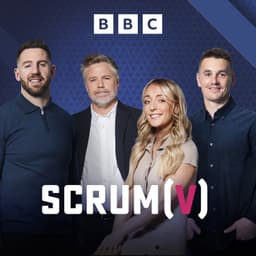
Comedian and actor Mike Bubbins welcomes former referee Nigel Owens to his bar. Regarded as one of the great referees of the game, Nigel will be revealing his favourite five and six nations matches.
Warning: contains themes around suicide Support is available here: https://www.bbc.co.uk/actionline/
Get every episode summarized
Each time Scrum V publishes, we email you a written briefing from the transcript — the topics, who appeared, and any specific claims, with the ad reads skipped.
Email me new episodesFree for 3 shows. No card needed.
Hosts & guests

Transcript ready
2,125 searchable segments. Every word is indexed and playable.
Full transcript
Scrum V — Scrum V Top 5: Nigel Owens. Machine-transcribed; use the interactive transcript above to jump the player to any line.
This BBC podcast is supported by ads outside the UK. The best B2B marketing gets wasted on the wrong people, so when you want to reach the right professionals, use LinkedIn ads. LinkedIn has grown to a network of over one billion professionals, including 130 million decision makers, and that's where it stands apart from other ad buys. You can target your buyers by job title, industry, company, role, seniority, skills, company revenue, so you can stop wasting budget on the wrong audience. It's why LinkedIn ads generate the highest B2B return on ad spend of major ad networks. Spend $250 on your first campaign on LinkedIn ads and get $250 credit for the next one. Just go to LinkedIn.com slash broadcast. That's LinkedIn.com slash broadcast. Terms and conditions apply. Work moves fast. Every email, report, and proposal counts. That's where Grammarly comes in. It's your one place to think, write, and finish. Grammarly's AI agents help you find natural phrasing, fine-tuned tone, and confidently write wherever you work.
It's the premier writing tool that 93% of users trust to get more work done. In a world of generic AI, don't sound like everyone else. With Grammarly, you never will. Download Grammarly for free at Grammarly.com. Hello, I'm Mike Bubbins, and this is Scrum 5, Top 5. Welcome to my bar. We're all be speaking to some Welsh rugby legends during this year's Six Nations. Today we're talking Top 5, 5, and Six Nations matches. So I'm delighted to welcome someone who's officiated his fair share of big games. One of the great rugby referees. It's Nigel Owens. Music It gives me great pleasure to welcome to my bar. Mr Nigel Owens, how are you, sir? I'm very well, thank you. I'm very impressive, but I like it now. Very cool. Well, yeah, yeah. A bit of a labour at love. Is it? Hi, yeah. Well, stocked as well, look.
No, what's around? I do not mess around. Yeah, got beer on draft. We got a fridge for the beer down there. We got all the wine's in spirits. All in debt? No, all in debt, no. I mean, the blue cure is so one off a long time ago. Well, it looks nice. So I keep that there, you know. Come on, you know, it sucks. All day well as well. Oh, yeah. I was a young guest pool champion. Money cutting, working once club, New Year's Day Tournament, when I was 14. Is that right? Yep. That would give me more. Do you still play with? I grew up every New Year's Day now. We don't play the annual pool members pool Tournament. It's a bit of fun, but, um, one to the final two years ago and lost my first round last year, so I gave him a nine count. I don't understand that. I like it, we're okay. You could play the money. One, let me see how good you are for that, I'll say. We say yes, I'm not breaking it. It looks nice, doesn't it? It does, it looks very good, yeah. Yeah. So, uh, you've been, first of all, thank you for coming. I know you're a kind of busy manager today. Um, yes. Quite busy, it's been, it's been a far better. I was, I was, I was, I was still found quite an easy job. Because the animals do a lot of the work. I grew up over the top.
It's been joking, yeah. The only thing the animals do is, is, is they enjoy eating the food, but then you've got to, you've got to get the food ready for them, like, you know. So, no, I, I, when I, my first three, my eight years of age, I was not wanting to play rugby for wheels, to become a referee or anything else, was to be a farmer. Really? And then I left school at 16. I went to work on, on a farm, on a daily farm in, in Travach, in the wedding farm, on the old white-tea scheme. As I was told back then, the young thickens too big. I think I'll take this back then. And then I always wanted to give you a farmer. And then, because I was in a farmer's, not a farmer's son. Okay. So, I brought up a come to the state, my dad was a coal mine, and my mum looked a couple of hours in the school, continuous as a cook. So, the only way, then, that you'd go into farming was, if you were going to, if I was going to marry a farmer's daughter, and that wasn't going to happen. Yeah, yeah, yeah. So, I saved up over the years, you know, the refereeing saved up and bought a small holding. Pretty much just before I went to the World Cup in Japan, 2019. The first couple arrived when I got back from the World Cup in Japan,
and then the sort of next chapter of my life started, really. I just sort of like, pedigree, hairy foods, and I'm loving it. Well, I assume being a, being a Australian, and a Welsh-speaking Welsh-speaking, that you were, and this is, you know, this is, this is a very Cardiff Boy speaking, right? I just assume the family would be farming, farming family, and that's why you got the farm. Well, most people in West Wales, sort of, partly farming. So, my great uncle and aunt Dee were dairy farmers. Just took up their every summer holidays. Then my grandparents and my dad's side, they are small holding. They had a couple of horses and pigs and chickens when I was sort of a young kid. And then my mother's grandparents and great grandparents, they would have been farmers as well. So, it's always most people, I guess, and I suppose most people in Wales, I guess, if you went back a couple of generations, would be coming from farming background, most people would, you know. So, farming's always been in the blood, but I wasn't an actual farmer. Believe me, my great-grandfather, a great-great-grandfather is a baker in St David's.
Don't say, David, is it? No, David. And we found on the other day, I was shouting to the First Minister, to like to drop names. And she mentioned that her great-great-grandfather, on the same time, was a miller in St David's. So, I thought, there's just another small word. He was giving the flower to my great-grandfather, you know what I mean? God, he said, who was back then, see? Wales, that's Wales, you. OK. So, it was a strange ambition for a young land to want to be a farmer when no one in your family, when your mum and dad didn't farm. You tend to find that, man. You tend to find a lot of sort of, and probably more so now, after some Jeremy Clarkson's Clarkson farm, and a lot of young people who were not from traditional farming background want to go into farming, but it's not an industry that you can really go into unless you've got the financial sort of ability to buy a farm and start off. Or you're going into it from sort of, you know, farms being passed down through generations, generations of the most farms in Wales, are obviously all passed down through generations. And particularly when the, you know,
the balance of how hard work it is and the sort of the cost of it, and when you think about all the work that farmers, no other industry would be working all the hours that the day can give you for so much little financial reward as farmers do. But it's a way of life in one sense. And yes, you know, if you are sort of pretty business-having stuff, you can make it work, of course you can. But it is your commitment to how to work. I did drive the Halifax in the early days on my stender, which took me four hours to get there, and three hours to get home. I was there for an hour. I got 40 quid. I'm just saying, I'm not saying I'm a farmer. I'm just saying, you know, my nose to the microphone for about 10 years on the stender circuit. Yeah, but then you weren't, you were driving, you weren't doing labour, you weren't in the wind in the rain, were you, when all the weathers and all the other things. No, I mean, well, I'll take the roof down then. I'll take the roof down. With the window. And I'll just simply do a few, I didn't move down. Well, thanks to the farmers, you know,
if you've got food in your plate, thank you for the farmer. No, exactly. Right, but listen, you're not here to talk about farming. I know this is whilst television, but, you know, thankfully, that dream didn't materialise until later on in life, because what you did do is go down the path of rugby referee and like, no, how have you got into the path? You saw a referee as a young man as well. So, were you a rugby player that went into referee and what? No, so when I, my category was brought up, it was very small, small rule of alleged in the Gwendoff Valley. And we were only about a couple of boys, a couple of years old, older than me, a couple of younger. You see, we were only about four or five boys in the village. Okay. So, we used to play football at the bottom of the street, Gawley in and out, one of the boys pretended to be a man United player, some of those would be a Liverpool player and I pretended to be a rexham player, just rexham played in rent for the only reason, I guess. And I'd been a rexham, so I've got a big football fan and I haven't been to watch rexham play and I'm certainly not going to jump on a bang waga now, but that's where I've always supported and kept the night for those records,
was rexham just for that reason. So, I didn't start playing rugby. The first game of rugby came when money carry school, there were only 14 of us in the whole school. That's mad. Two classes, two teachers. And only two of us the same year as me, me and Christopher Lloyd was living in the same street as me. So, then I sort of lasted at primary school, we had the opportunity to play rugby the first time when we went to play with Dravar primary school and I started off playing number eight. Then I went to prop and then I went to my set out of our school. I went to play full back. So, it was the last you, my generation, did the, did the LEMPLUS, how the hell I passed the LEMPLUS? I drove the LEMPLUS. I could, I could, could a copying. What, what were you doing in the LEMPLUS? Don't look so surprised. It's not you, I'm going to be here. Right for you, I'm going to be here. You're going to apply it away. I was the first year GCSE, so that's why I knew it. Oh, they were, they were, they were, they were, they were. So, I went to the Grinder Grammar School, but then that was phased out because it got where you had your body, John's, John's, James, Garatavis and all of these.
And then I went to my set out of our school, then the Welsh speaking school. And I was playing full back. So, because you were a new school, the numbers are quite dentech, quite low in the first couple of years. So, we had a bare 15. So, that's pretty much the only reason I was playing full back because I was, we were bare 15. We hadn't won a game all year. We'd lost every single game, Hammert. And we were playing the last game of the season, down in St Claes, a school drift with Jones, who was now being phased out. That's not the fact. And my best mate was a huge huge fan of yours. You would have met me in one of the games in Cardiff, Wing Thomas, like the founder. scored, brilliant try, good centre win. I scored a try underneath the post to take the score to 12 all. Conversion to come. Now, my other mate Craig Benel was a captain. I don't Craig as well. You know Craig, right? So, set a crux, crux. Camero, I'll take it. Now, I'll, you know, I'll kick this conversion right in front of the post. We win the game 14-12. Last game of the season, lost every single game. Yeah. I'd be hero in school. So, Mike, I lined up, writing for the post.
The god's honour is true for you. I kicked it, and he went to other corner posts. The game finished 12 all. And John Bynan, the late John Bynan, unfortunately, was such a great, great guy. Pasta made a very young age, John Bynan, and he was a sports teacher. And he said to me, in well, she said, in Wiener, never. He said, nice of a god, say, we'll go and bloody referee or something, will you? I said, all right, then. And I did, then I went to help. Don't press later in, before I take. So, now I said, so, um, helped out, roughing a couple of school games into house games, and at 16 and then, just, just fell into it then, and just stole some of my stuff. So, if you could kick, we would know one of the world's finest referees. If faster than gone all of that, I could have been. Yeah. Wheels is finest full back, maybe. So, he went from, like, you went from month, yeah, I have a JPR, then you want to say. Um, you went from, so, school games, club games, and they did, but did you enjoy that son of a straightaway? I did. And I think that's what a lot of the young referees are missing now, I think. You know, back then, you started doing sort of,
you thought, be then, you do the second 15s, then you go, you do, if you go to invite them on the WI Lewis, then, where you referee the first, so, um, you know, I remember going to referee, um, in penarth, in barry, all these places, you know, um, where you learnt, you learnt to trade. That's true. And then you gradually then climb through the ladder, and then, obviously, it came on then, to Derek Beavon retired in 2001. Oh, yeah. And I took his place then on that sort of lever, and then from there, then you got selected then on to sort of, European cup and, and World Rugby and Derek Beavon. Then he became a coach then, for most of my referees in career, then, at the professional end of the game. Well, a couple of things. One of my old teachers, Mr. Braxton, was a, was a, was a, was a referee. Um, very well. I think, I think Mr. Beavon, refereed me on a couple of occasions as well. Well, I first started teaching P, in a previous life. I, we had to go and do a referee in course, and I went with the referee in course, and Clomorke Wanda's rugby club, who took the course? I remember. Mr. Nondzelo.
Yes, I remember. Looks like I tell you a few times to pay attention. I remember, I remember well. You aren't changed. No, no, no, I don't, I show attention to you. Yeah. To enjoy that Sunday, it was well bringing from the young referees and, I did, yeah. I fell as a moustache. Yeah, I enjoyed that. Yeah, I did a lot of it at the time back then. Um, so I still, I'm, I still work with the WIU known a part-time basis. So I know coach, sort of next generation. So I coach Craig Evers, Ben, but they expire. Adam Jones, come to the young referees, coming through. So yeah, I still involved in that capacity. But I still enjoy running the courses. The reason he did that is for, to pick your top five, we've let you decide your category. So what have you gone for first? Well, top five, what? I was asked to do designated discs back in 2016, and you got to choose songs. And I didn't choose between my favorite songs. I chose songs that meant some things. So I've gone along the lines of picking games that meant something special for me in falling in love with rugby for the first time
because of an old five nations game. To game that I just thought was brilliant and some of my heroes are playing in that game. And then to games that I was involved in, which meant something special. They may not be the greatest games, although one of them would have been, but they meant something special. So, well, your top five, most meaningful five-and-six nation games. What's meaningful? Yeah, so number five, the game I fell in love with rugby, I guess, and my first memory of the five nations back then. So in 1977, I think the try has been voted the best whilst try of all time, I think. Okay. It was when Gerald Davies broke out to his own 22 and the brilliant Bill McLeod on explaining it all. And then Benny scores, Phil Banner scores a try underneath the post. And you know what stands out, when he scores a try, he puts this brown leather ball underneath this chin and had a brown leather ball in the garden at home. And after watching this game, I went out to get the ball,
pretending to be Phil Banner. And behind the house where we lived in, number eight, my son, in the council of St. Dominic Eric, behind the house, it was a field. And there were two donkeys in the field. Called chocolate and fudge. And I went, not that meant anything. So I went to get the rugby ball. I went in the field, pretending to be Phil Banner. Yeah. Just side-stepping these donkeys and chip in the ball and pretending to be Phil Banner and trying to do the Bill McLeod. They go for the donkeys. They went for the donkeys. One of them really kicked me. And that's when I fell in love with the game or in that moment. And then my dad was to go over, the working was clubbing, the money carry then to watch the games. And then after that year, then I used to take around the gaster score sweeper on the village in money carry. There wasn't sort of ten pens to go. Yeah, people gaster score, score on the villages. And then I'd be low, then to go over the club, then and people in the club would gaster score. But then I had to go home, then to watch the game. And then I'd go back after the game, then tell them who the window was and give the winnings.
And then most occasions, however one would give you a bit of tip. And then after a couple of years, and there were ten lambs of age, I was allowed to sit in the club and watch the game then. And I thought I was the business. Imagine. And that game is... So where would you watch over with your mum and the house? Was that with your time at the club? My mum would be cooking. My mum never watched rugby. My mum never watched me referee. So the only time my mum watched me referee was before I was down to do a six nations game. And before weeks before the game, my mum sat me and my dad down. She taught us both the chance. She had cancer and she was dying. But she made me promise to her that I'd gone referee this game in four weeks' time. And I went to referee this game. And she was quite ill at the time. And it was the first and the last time she watched me have a referee again, you know? So and then she used to be cooking. You know, she was a great cook. She cooked me on the stove, making Welsh cakes and stuff. So I'd have the road beyond and my mum would be would be cooking away there.
And then sometimes there night be I'd be shouting something like, you know, shouting at the referee or something. And I'd be like, hey, nice job. Cut the eye. What's your language or something like, you know? So yeah, so I'd watched the game at home then. And sometimes you'd be made to be wrong with something. So your memories of 70s rugby and what about the same age? Are all good. Whereas mine, growing up in the 70s, me and my sister, my mum and dad would get some people from the rugby club down to the house to watch the games. My mum would scream, she would rugby me. She would scream at the television. And I hated it. So me and my sister would go in the other room, shut the door. Whenever Wales were playing rugby, it was like it was like the worst day of the week. Because it was just... So what's your game then, yeah? Not close to 10-11. The size of what 11 years of age started secondary school, but I got into it. But before that, because my mum just took it all too seriously. She was the opposite of me, obviously. And what do you like to know? Do you take a seriously when you're watching her? Are you shouting or barking or? I bet you are. You would have to do with that. The referee's course. We were told to respect her. I would respect the referee. I would respect the referee.
So I think it's lovely that you... That's sort of village life in West Wales. It's just a small village. So that rugby game would have been a massive part of it, you know, for those five nation Saturdays. I live when you said that, 11 years of age. I can remember going to the golf club with my dad for a presentation when I was like 13 or 14. There was a first of all to sit down for the presentation, right? With the blokes in the club, right? Or the rugby club result, the old man played back in the early 70s, you know? And you suddenly, when your dad's mates start, you know, what do you do then, Mike? So when you're there in the club as a young man, you've been doing this sort of the sweep or whatever. Three or four years down the line, you're in the club watching the game with the blokes. It's a lovely feeling there, and... Yeah, it's great. And then it was such a small community. And then you had a carnival on. So after the carnival, there'd be something on the club. So all the families, the kids, if there's something on in the club, everybody would go. So it was... It was... Around there, from the villages around, though.
No, just from the carnival, you'd have people coming, sort of members of families, who were living in other villages, but in general, the village itself and a few villages around. And then everybody was in the club. It was a fundraising event on... Because in Money Carry, all we had was the primary school, back close back in 2007. We had the Work Immense Club on a post office. But the post office only sold TV licenses and stamps. It didn't end your joy or all of stuff like that. It didn't sell any sweets, the proper clips or nothing. So all we had in the village was the club. So that's what people would go. I used to go to the club then, with my mum, every Tuesday night, when I was about 10 years of age, 11 years of age, playing whist. The two was in like cars in the club. And they'd raise money then, the welfare would raise money then, to put things like the carnival and stuff. And when I was about 13, the carnival, sort of, like most villages in Wales, died out because of, I suppose, health and safety and insurance. And everything that went with that. You don't see many carnivals as often as you did now. But we had the floor too. So you used to go out of the club.
And yeah, when you were there, as a kid on that five nations day, like, you know, and everybody was there, and the men would be jumping up and cheering, you know, when wheels were scored. And you were just, you were in awe of this. It's exciting. You know what I mean? I've talked about Flo Bennett. Oh, he was my dad. He was my dad's favorite. He was a big debate between Buddy John and Phil Bennett. And he basically tossed a coin through his best. It all come down to preference, I guess. But he was my dad's favorite because of the skill. And then he was my favorite really. Until then, sort of my two rugby heroes growing up would have been Mark Ring. And I don't like seeing this, but Jiffy, which is Jonathan, because I don't want to skill. Do you think what the Mark Ring skill, what he was doing? I love Ring Up. He was brilliant. Absolutely brilliant. And Jiffy as well. You know, what he did? It's some of the TriZ score, and we didn't see the best. Let me go on the rugby league, you know. It's some of the TriZ score there. So there they were my two two heroes in rugby before then. Derek, we have a 5-0 and came along.
Right, great number 5 there. For a really good reason. But what is your number 4 most mean of OK? Super Saturday, England fans in Twickenham, 2015, because it was, it was a, there's a big build up to it. So 2013, I did South Africa New Zealand Alice Park, which a lot of people say is the greatest game of rugby they've ever seen. Then I did Ireland, New Zealand, four weeks later in Dublin, where crew didn't have to retake the conversion. Ireland lost last minute. It was a brilliant game of rugby. So I was going in now to 2015 World Cup here. A lot of people were saying, oh, Nigel Yield, with a final year, they were calling, calling me the best referee in the world. So there's a lot of pressure going in, and there's a super Saturday, because there's everything on this. So Wales beat Italy in Rome. How about it? 50-60 points, I think it was. So they went top of the championship now, before Scotland Ireland came next, and then England fans, which I was doing.
So I was a little walk around, which when we were staying, now it's another coffee after sort of getting, before I could ready to go to Twickenham. I'm not having list supporters, obviously, no ready, heading over for the game. And then going, oh, you're laughing at the game, Nigel, Wales are top now. I don't want to see England losing today, because you want Wales to win the championship. So there's this pressure going in, there's a Welsh referee. But then Ireland beat Scotland in Murrayfield, so then Ireland won top of the championship. England now had to beat France by so many points difference in order to become champions. I knew this, but I didn't know what the point difference was. Didn't make a difference to me, but I just didn't bother finding out. So I knew they needed me points difference. And of course, because of that, they had to play. They just had to go out now and play. They just couldn't win this game, 12, 9, 12, 6. They had to play. England will run in the ball from everywhere, scoring, length of field tries. France would do the same, counter attacking from their own goal line.
The game was absolutely brilliant. End to end stuff. And then I think the final score was 55, 35, I think. To England, but there was something like three or five points short now of taking the championship. And there's a video going on and I just go watching the game. I was somebody who's recorded. So England had a attacking now in the last play of the game. So England had a attacking and they, so they're building up pressure and I give, given and playable. There was a French player on the wrong side and I sort of blew the whistle because it couldn't go out to the way. The players in the top of the game. So it's not a penalty, unplayable, England ball. Chris Robson, I was a captain. He thought that Chris was, he wanted a penalty because he wanted to kick for the corner. They need to get tried time was running out. So he comes out and says, oh, no, there's not the wrong side. It's going to be a penalty. He said, I said, no, there's no way your players are on top. When he couldn't get out there, not his fault, just an unplayable.
Oh, but Nigel and I said, Christopher. Yeah, that's what it's, yeah. You don't get in trouble then, do you? No, I just, I just said it didn't think anything. I said, Christopher. Of course. And I'm sure it goes. Oh, sorry, sorry, sir. And then off he goes like, you know, and then that came a YouTube hit and stuff. Anyway, England are pressurising now, a couple of minutes later. And I penalise England for off their feet. Disattroise, brilliant. One of the most brilliant people in rugby as a person and as a captain. If I had to pick my best captain, it'd be disattroised. Oh, he was brilliant. Brilliant players. All a lovely, lovely guy. He gets in the ball now, winging him in off the feet, so penalise off the feet and holding on. Which means now, championship is gone for England. So this Irish guy now, who somebody sent me the video afterwards is, I mean, yes, yes, yes, Nigel, Nigel, Nigel, Nigel, and of course, typical French. The French now decide not to just kick this dead because the game is over. There's nothing they can do.
They're going to not going to win not the game or anything. They decide to tap and go from their own tri-line. So then this English now, he goes, goes, Jesus, Nigel, what are you doing? Bro, what? So when I see this, I'm going to continue here. Like, you know? And anyway, they don't score an England don't score, and then the championship goes to Ireland. But to me, that's summed up what supasatity can be about and the fact that you have to score tries. So in that game at 2013 in Alice Park, I was one of the big advocates who started calling for bonus points in the Six Nations. Because a lot of the traditions go, no, no, you can't have bonus with Six Nations. And I said, well, look, when I went to referee that game in Alice Park, if New Zealand won and prevent dead South Africa, in New Zealand won and got at least a point, then they would still be trainees as champions or trainees as champions. If South Africa won with a bonus point
and prevented New Zealand getting one, they would be champions. Now, this meant South Africa had to play. They just couldn't win that in 1993. They couldn't sort of smother the gamers as they're very good at doing and, you know, winning the contacts. They had to win the score tries. So the game was absolutely brilliant. It was a lot of brilliant, but that is my best. Well, it's revolutionary, it was. So I was a big advocate then in calling for bonus points in the Six Nations. And then I said in 2015, well, this is a perfect reason. Two teams will have to go out when the French and have to, but England had a go out and score tries. Yeah, yeah. So if you had the bonus point in, which you do have now, it doesn't take away. If you still win every game, your grand sum champions, you can't be overtaken, no matter how you win those games. But if you don't win every game, if you score tries and play open rugby, so I felt the Six Nations in the last sort of 10 years has become more of a spectacle because of the bonus points. And that's super Saturday.
I didn't know if you remember it, but it was. Oh, yes. Every game has something on it. It was brilliant. Oh, it was amazing. It was brilliant. Here's a question about it then. So you're in a game like that, a high pressure game. Like I've got two questions. What is physical and the other one's mental? So physically, you're playing an end-to-end game with that, right? So I'm thinking about a scrum half has got to be at every breakdown. You think the scrum half probably, probably the fitness player in the pitch. Because here you're playing pod rugby. He's got to go, boom, boom, boom, boom, boom, boom. So it's always, used to be maybe open-side flankers, but probably schramache now. But you've got to be at every rock and every breakdown and every more as well. So if they're playing an expensive game, how physically hard is that for you, number one? Really physical. Because, as you said, you're pretty much going to be like a scrum half or an open side. You've got to sort of, the main thing in rugby, you've got to follow that block. Because once a tackle happens, you have a lot of bodies there and you've got to be in a position then to see that ball because you've got to be sure that if there's an offense, you deal with the first one. You don't penalize the third offense until you miss. So your positioning
and following the ball is crucial. You've got to be there. If there's a flat pass, you've got to be pretty much close in line to it and everything. So your fitness has to be high. So we were fitness tested a couple of times of here. There were certain levels that... A bleat test, they all. It was the old bleat test first of all. And then it was what's something called a yo-yo test. And we had to reach a level. I can't remember what it was now, but you had to reach a level. I think it was 18.1 I think on the yo-yo, which is a lot of players don't get that. And when you're a referee, just remember, you're probably 20 years or rather some of those players. It was really, really difficult. So your fitness has to be really, really top notch. But as well, you have to be mentally alert and fit as well. So once your body becomes tired and you're sort of getting lethargic or you're not fit enough, then your sharpness in your mind is going as well. And that's where you see a lot of referees. If they're not players, if players are not fit in that last 20 minutes,
that's when they start making mistakes and referees are the same. So it's physical fitness and mental fitness. They go together. So you're going to be mentally alert, mentally sharp and the body. Because if the body tires, so you're exhausted when I came for the authority to be exhausted, I was physically and mentally drained. Pressure is, is huge. Loving number four there, I gel. So number three, most meaningful game. The best B2B marketing gets wasted on the wrong people. So when you want to reach the right professionals, use LinkedIn ads. LinkedIn has grown to a network of over one billion professionals, including 130 million decision makers. And that's where it stands apart from other ad buys. You can target your buyers by job title, industry, company, role, seniority, skills, company revenue. So you can stop wasting budget on the wrong audience. It's why LinkedIn ads generates the highest B2B return on ad spend of major ad networks. Spend $250 on your first campaign on LinkedIn ads and get $250 credit for the next one.
Just go to LinkedIn.com slash broadcast. That's LinkedIn.com slash broadcast. Terms and conditions apply. Omaha Stakes semi-annual sailors here. Save 50% site-wide on legendary Stakes gourmet burgers, chicken, pork, seafood, and more. Plus, get an extra $35 off with promo code audio at OmahaStakes.com. Shop now to save 50% site-wide on stakes and more during Omaha Stakes semi-annual sale. Plus, get an extra $35 off with promo code audio at checkout. That's OmahaStakes.com, promo code AUDIO. Minimum purchase may apply. See site for details. Game and I watched back many, many times. I still got it on the old VHS tape. I think it was 1988 with a Scotland in Cardiff with two of my rugby heroes, Mark Ring, Jonathan D. Were you there? Yeah, that's a great man once said I was all on playing. I was there. Oh, I guess that. I was there. I was in the North East, South Inclosure.
A great game, wouldn't it? Oh, fantastic. I watched it at home. I did it on the high list then. I watched the high list for so many years after that game. Between, again, Bill McClaren, you know, adding to the comments, we were really excited. Yeah, young Evans then, you know, nearly the magician can have done it better. And then Jiffy with that typical chip and cheeky chip. You know, it was a brilliant game of rugby. I think he dropped two or three goals. So, you know, Mark Ring, playing that game, my hero of the time, Jiffy as well, and the game was. It was typically that way the Scotland type of game was in it if you'd come accustomed to all the years. When Scotland played with it, there's always something of a, an excitement about the game, you know, and that game was, you know, superb. I loved every moment of that game, but the commentary of the time was this. When young got the ball, there was three sized steps off the right foot, wasn't it? But towards the post. Yeah. The first, just me and my mate Nick, who lives in Canada now, we were right there, probably, I don't know, 30 feet away from my young to the ball. And it just went up.
It was such a good try. It was brilliant try. And I never forget the referee then, or you, you, what was his name? You'll bring her. No, no, I was just saying to ourselves that you'd bring her, after he wasn't in it. Yeah, yeah, yeah. Take a look. Oh, it's just his name now. I met him a few years after he was, but funny enough, when the back then, different now, obviously, we would rugby selection, but back then, a lot of the French referees, we just referee one, six or five nations game, because when you were getting to the end of your career, you were going to talk and thank you, and you're going to point it to an international game. Oh, was it? Yeah, so the French were very typical play on at everything, and I suited the game, and I never get the referee, I can't understand, though. And he said, I was the only evidence cut back there, and the French referee, particularly, sort of, has to run out of his way, and he goes back inside and goes underneath the post, like, you know, and I was a brilliant game, and then jiffy, typically, with that skill, you know, and he had the piercing hard, wasn't it?
Oh, my God. Yeah, he was reading with a game, and I mean, speed and pace and acceleration. I mean, obviously, you're a good match each other, right? But I worked him a few times now, and hopefully, he would consider me a mate. But, so he'll take this in the amount of which I intended to be taken. He doesn't look fast. He never looked anywhere near as quick as he was. No. He was lighted. Like, acceleration was crazy. But then, he could do, he would run the length of the field, as well, he wasn't just explosive over 10 yards or five yards. He could also turn the burners on and score under the other tries. And he had a swirr as well, didn't he? Magic. And he's got the guts as well. Yeah, he had everything, you know. He's so many players who have certain sort of skills. I mean, the heart is not quite there when he comes to the crunch, or the pressure, the big occasions, but he had everything. So, when we filmed Jonathan with a wonderful Sarah, who... Yeah, what's that like? Oh, she brilliant. She's a lovely lover. She's been in here.
She was fantastic. Oh, she brilliant. And she's... I don't know. When you... I don't think you could then get any... She interviewed... It was something all up. I'm sure she interviewed Warren Gatland. When Gats came back the second time, and everything was going wrong for Wales. And she'd ask those, you know, big, big, difficult questions. Yeah. And she just does it so easily. And she will engage with people. In the difficult questions, they will open up to us. For me, her skill of interviewing is one, if not the best out there. And she's wonderful. And Giffy the same, like, you know. So, when we do the filming, we have these challenges. And Giffy just wants to win all the time. And you can see that, as he was... It's not important. We don't keep scores, I always say. Exactly. So, number three, great, great choice there. Wales, Scotland. I was there, of course. Right next time. Watching. Brings us down to the... Yeah. ...to the nitty gritty. Top two. So, who is your number two most meaningful game? I was tossing a coin here between two and one.
It was Paris 2020. Look, lunch again. France, England. So, 2019 woke up. I did that semi-final, which was a brick and a rugby. England, New Zealand, in Japan. And then I decided then... If I wasn't going to commit to another four years, they probably weren't going to pick me as a referee because they needed to bring next generation through for the World Cup in France. I'd been in Japan for eight weeks and I thought, I know that's one of the things I want to do in my life, the farm and everything. And I thought... You pick about that two months, isn't it? It is a long time away. It is. Especially when you're away as well. I'd been to Australia. I'd been to Fiji back home for two weeks. Back to Japan. Back home. Back to Japan again. So, I'm just... I've been to France in four years, time for eight weeks again. No. I went there with my first World Cup in 2007. So, I thought, this is my last case. My 98 test match. So, and the look on she's... Is this something special? I'd never be the perishable again.
I'd bet you'd be quite disappointed in the location of the stadium where it is because there's nothing there. There's nothing there. Like, we saw Lucky, the principal stadium. It's in the middle of the city. It is the best. But in Paris, the stadium is in the middle of nowhere. There's nothing there. But when you're in the stadium, it's... When the fans are singing the alarm, I say it's... It's brilliant. And the atmosphere when the fans are on, so it's... It's special. So, what happens on a Friday before an international match? Is... The courtes of the board teams have the ability to meet the Waza referee to discuss anything they have. It concerns about... We feel that he's going to do in this, or if he's going to do in this, he's going to win the last game. How are we going to referee this? Are we going to do anything for us? Is there anything you know? So, I met with Fabian Galte, the French coach, three o'clock in the hotel, with the French captain with the pont, best player in the world.
I was a lovely guy. I actually wrapped him in his first game for Toulouse, and his first cap for France as well. I would have lovely... Not a chance to come off. I was very quiet in an assuming like, you know, just gets on with it, really. To make... Like Mike Phillips in the same circle. Oh, quiet. Brilliant. Okay, quiet. No. So, back to them, and then at five o'clock, they were meeting Eddie Jones, or one father as the captain of England, and their defense coach, or forward coach. So, sat down here and chucked it away with them and they were asking things away, and I always good on well with the one father. No airs or graces, a born winner, just down to earth guy, can't be challenging on the field, but as a person, and as a player, he would respect them. And so he sat down there and chucked it away and talking to me, and I said, and I said,
we've got something for you. I said, all right. And he got out from a backyard by his side, the England jersey, signed by all the players, and then engraved on the jersey, don't you think it was? Nigel Owen's 98th test match, from England, Paris, 2020. We'd like to give you this because it's six nations, the 98th game, and we had you to humor that you were going to be retiring. I hadn't announced anything at this time. I said, well, I am thinking about this could be my last six nations game. And I sort of made my mind in one sense. And he went to me, he goes, but why? Were you finishing? We all forgot. And I thought, well, why am I finishing? Because I knew why, because of the travelling and everything. And he said to me, he said, but you're on 98th test match, you surely got it to 100th. And then I spoke to a few referees, a Derek Bevan,
and people often said, I actually got it to 100th, and you've got, you know. So that's the reason why I went on the test for season, and did England Georgia, and Italy, France, Italy in Paris, then, to reach the 100th test match. And then I retired after that. Now, I had hoped, because my, I had hoped to finish in Twickenham, where I had all started, England, Italy, in 2021. But the referee manager of the time wouldn't allow that, and I thought, why? This is what I thought. Well, Joel Jout was the time, who was the referee manager, when I did the World Cup on the 2015, and he'd come back as a referee manager, and said, no, no. You know, we've got to bring, yeah. He said, you've got to bring the next generation through, and I said, yeah, that's final. So we won the game. We won the next week. And I wasn't, and I wasn't bitter at it, but I was a bit disappointed, like, you know, I was hoping to finish, where it all started. But I know it didn't come to that in the service. So, so when a father gave me this, uh, gave me this jersey, and, um, checked it away, and, um, and the game,
there's nothing like, you know, gift before the game. Clever. It was, they lost the game, actually. No, it didn't. So, yeah. I was shooting it. I was shooting it. I was shooting it again. Uh, so, so, do you know when, when a team kicks off, that there's two things you do as a referee, you know, I would have, you know, if, you know, if you would have listened to that course, you know, I was listening. This, you always ask the kicker if he's going left or right. And they always do. And the two reasons are, everybody who's chasing the kick has got to be behind the ball, because if they're in front, they're offside, it's going to be scrumbed back. Yeah. More important than that. There's nothing more embarrassing as a referee that you run the opposite way he's going to kick. Yeah. Always ask. Now, what also happens is this, when you ask the kicker, he tells you, when you go and stand the other side, the opposition then can trigger gone while they're kicking that way. So now, one farer now, obviously didn't want England, didn't want France to know which way he was kicking.
So I go over, I said, oh, are you going left or right? I'm not telling you. I don't know, is it good start? No, to be fair, he doesn't have to tell me. Yeah. But I also could have said, if you're not telling me, you're not kicking off, but then I'd have been the bad guy. So I guess now, he was kicking to the left, because all the four was lined up to the left. So he stood back, he kicks left. France then break out of their own, 22, and DuPont, Mixed Break, Fuqua scores a brilliant try in the corner. They kicked the diversion, frontside up, 7-0. Parles now was not happy with me, as he usually is with referees. Go back to the halfway line. I said, you go left or right. I'm not telling you. All right, okay. Four was a split. No, he must have been kicking off the middle. Yeah, yeah, yeah. I stood back, he kicks down the middle. England now have the ball. They're a meter short of the French tri-line. All they're going to do is recycle the ball. Danny Kair will pick up. He'll pass out to Toulage you on the wing,
England and Garden T to score because there were no French defenders on the blind. James Haskell arrives. Lit. It's a ball. Yes, he's handed in now. So the French defender now is winning the turnover. The only way Haskell could win this ball back now is by illegally using his hands because you can't have to rub his form. Pinging. Pinging. He didn't learn it on the course. So, as he, Danny Kair picks the ball up, the pass is on the way to Toulage. England are going to score. But I brought the penalty. I said, England 6. Sack of mine in, illegal use of the hand. Tri is gone. I don't know his few men. I can see him kind of me now from the corner. No, yeah, just by the way. And the adds away. God. As he's approaching, he goes, oh, what was that for? I said, I'm not telling you. The, ha, ha, ha, two-shay. Ten minutes later, I was kicking off again. Yeah, yeah, yeah. Before I could say anything, he goes to me, uh,
Nage, I'm going right. If you're a referee, always remember, there's another one way to skin a cat. I love that. That's fantastic. But he was, he was great. A huge amount of, I saw that. You must have been so much so. I lost you, you had those couple of games after that. But I would have been going into lockdown. This would have been... I think that was the last game on the crowd. I think then the following week, if I'm right, or the two-week after, um, where is it due to play Scotland in Cardiff? That's right. And then they called it off the deal before, because of Covid. So that was the last game, I think. So I was really pleased that that last six-nation game was in the full voice of... Yeah, that was for you, I'll find it. It comes with French, wouldn't it? Oh, and it's not the same mic if there's no crowd there. Yeah. And to me, that showed me that, during that Covid period, the most important people, and we must never forget this. The most important people in the game, are the spectators. They make the six nations
the travelling, the support. I think there was a sort of sentiment of rugby and football that, you know, it wasn't so much about the live-experience and the crowd because of TV and everything else. When those things were empty, the players were all realised, and the coaches were not realised. This is, you know, the whole point of the live-sport, and you might be watching Ponder Baron with 40 people on the side, though. But is that involvement, for the spectators as well? But if you have some, like, in Paris, with 70,000 screaming French people, it must be incredible. Oh, it's unbelievable. And what I know is that the French, because anything they don't like, they boo. So they boo, he was the rest of the world from the children on team. They will do that, folks. Well, I refereed a lot, and this is why I said earlier, Tiriti Sattra for me was one of the greats, because not just his great player and deservedly so, but a great captain as well. And he kept in France, through, for French standards, a pretty abysmal time in their history, because from, sort of,
2010, you know, they were to the World Cup, 2010, you know, should have won that, but they were awful in between that. And until, sort of, no, after the 2019 World Cup, where they really started coming back to themselves, during that, sort of, eight, nine years, pretty average French side. And when you were rapping in those stadiums, and the French, you know, I ref them when they lost against Italy, you, the, the stadium was boring, them being was a player, and I'm not just talking, you know, casual booze. That's, the 80,000 plus would be, would be boring, they're like, you know, great as a referee, because they weren't booing me anymore. But it was, they really get on there, but then, when they're on full of songs. Well, there's a question, then you just, but you alluded to there, talking to Dan Bigger about kicking and what the crowd, and did you, can you hear what they're saying? Did you pay any attention to it? And he basically said, yeah, of course, you're not just going on. You can hear things. People say they can't hear things, they're not telling the truth. When you're referee in, you know, Barry seconds,
against Italy's power seconds, you can hear everything. But when you're referee in Walesing and, but the national stadium, you will hear things. Now, I, I was, um, homophobicly abused in, in England, New Zealand, in Twitter. Oh, that's different. 20, 2040, in the Ottoman internationals. But I heard nothing. I heard nothing of this in the stadium. Um, but obviously people in the stadium had heard it. And, um, somebody wrote in to the newspaper, then, that on the following day, or the following week, saying that they were at Twickenham, awful, at the Somophobic abuse, was being lustrous. As the Nigel Owens referee, and then, they just hit the press then. Uh, and it went, big news. And then, to be fair to them, the RFU, they were able to identify who these people were by the seats of the tickets. And then, they, they followed up with they were, they could ban for the stadium for two years, I think. And they were both then, at total to pay, um, a thousand pound each,
in a fine, to a charity of my choice. And I think I gave, I think, as I gave, some to Steve Havan, and I gave him, some to bully out charities, or a patron of it, and bruise out charity in, in, in Cardiff. Oh, exactly. If it wasn't for that person, standing up to this, and reporting it, no, the thing I didn't say, that I would know nothing about it. So, but, the most important thing for me, it was, it was dealt with then. Yeah. And I would hope, that, if you hear that in a, in a ground, not the referee, but other people, if I'm, if I'm there, and I hear that in a ground, that I would, yeah, it's not easy for everyone to say something. So, it was certainly, say, well, I'm making it okay, we're in road D, that's the number of students. Okay. I got that. Write it down. Or put on your phone. Or imagine if you were 40 and the people turned on and say, that's not accepted. Yeah. That's what drones out that then. You know, because I remember being told an old old man, or very wise man, many, many years ago, as a young kid, remember,
in telling me this, no, it's not only responsibility we have, in what we say, or what we do, we sometimes have more than we say, or do nothing. Yeah. And to me, that's what's important is, if you hear, whatever type of abuse it is, or an informal bullying, if the majority of people turn around and say, hang on, that's not accepted. Yeah. That will stop it. But if you turn around as an individual, then it become a bit different because you don't, you know, sometimes you know, all these people are, there's three or four of them, it's just you, then you're going to think twice I was saying something. But if 40 people turn around and say, hey, hang on, that's not acceptable here. Then that's how we will then, get rid of that noise and lessen those sort of minority voices, you know. So how did that, so when you came out, what was, how was the rugby reception to that, in general, with, say, with your local club, or with the players that you knew, or the coaches,
and the fans. Well, what was that like for you? It was, it was usually surprising in a positive way, because I'd hand that hand with it for many, many years until I'd gone to a really, really dark place, and when I attempted to take my own life, and if I spent a couple of days in intensive care and a week or so in hospital, and I was very, very lucky to get a second chance. But I still didn't say anything for another five or six years, because there was, there was nobody out in the martial world of rugby, so I didn't really know how is rugby going to react? I honestly thought that you'd come to a time where I would have to make a choice of, either carrying on refereeing and living the slide, which just, I couldn't do, because I was suffering from it, from mental health and depression, because of this. Or, do I give up my refereeing, so I can go and live my life? And nobody should have to make that choice. But still today, people feel they have to. And that was to do with, well,
how is rugby going to react to a gay person, open loose, but there was nobody. So then, in the end, I decided to, I couldn't carry on living slide anymore, I told my mum, they want to see my line manager, and the JBLU, Bob B.M.N., the referee manager. And I wanted to find out, was Bob, can I do this? And he said, look, Nigel, myself, in the World Show, we will support you 100%, and they did, does this still do today? And from then on, my refereeing career took off, because I was happy within myself, Derek Babin said, many years ago, I was happy referees of good referees. And he was right. And then, once I did, it came out in the press, after I was, I came out in 2005, but it came out in the, I kept it sort of quiet, family friends, but then it came out in the press, then, when I was appointed to go to the World Cup in 2007, as a referee, it came out in the press, then, and the amount of messages I had from spectators, from the likes of, Brian, the Duskullers,
you're Dan Carter, sending you a message, even here, we're really proud of you, Joe Marlar, all these people coming out in support, then, later on, as well. And it was, the positives outweighed, any negatives by, by a long, long way. You know, there are some people in the sport, so if you look at Israel, for example. Never said anything nasty to me. Always shook my hand after the game, always a nice little thanks to the game, always good on finding them, but had an issue, issue because of his deep religious beliefs with that, but he did nothing nasty to me. So you have to understand, and I also knew there are some people there who can't accept you don't like it, but as long as they get on with their lives, that's what matters. So I don't know, the change, the best when it was this, we didn't do the osprey scarlets. I did that game so many times, and it wasn't like me, because I was living upon a beer and about seven, eight miles from tenets, you can't win there, can you?
No, so the jacks thought I was a Turk. The Turk said I was with the jacks because if I would be penalising them, so I would into the, it was down in the Liberty Stadium box in here. I think the game, Justin Marshall, all these were playing like, you know, McPhilips was in the scarlet, so whatever it was at the time, and this place was full of 22,000 packed in the Liberty Stadium, big, big box in the game, you know, which is shamed doesn't happen anymore. So I went into the change rooms, and this was in about the sort of view that I'd come out really. Ryan Joyce was a great captain, very underrated captain, as I thought, a great, great leader, he was cupping the ospreys. We knew the change rooms did do the tech, speak to the front rows, test judges will check the stones, then you speak to the front rows. And Joe Ged now Ryan Joyce is there now in his, in his boxers, like, you know, getting changed. I went, uh, speak to the captain himself, and he goes, oh, no, Joe, hang on, let me put some clothes on, I don't want to make you too excited, he goes, right? And I went, you could see some of the players going, oh, my God.
So I went, hey, I got standards, and everybody burst out laughing, and that was the first game I think after I'd come out, you know, with none environment, and, uh, not just everybody laughing. And that's what he should be about, like, you know, say loads them, I don't, I don't say that like me, what you did, they would have saved loads, guaranteed. But you know, this is true story for you, Mike, okay? So they, the law of approach me in 2007, six or seven, to do, uh, an autobiography. And I said, no, I'm not doing autobiography because, um, one, I haven't achieved anything in, in, in, in refereeing terms, um, you know, I did a couple of internationalism, nothing, nothing major, hand-bindable world cup, but anything, um, also I, well, I'd been through that time, you know, the suicide attempt, and, and dealing with all that, or it meant for my, my, my dad, and everything of living with that as well, until I actually sort of came out with a thing, then all that sort of worry was gone in for a sense. And I said, I can, and, and if I'm going to do an autobiography, it has to be an honest
account of my life. I just can't sort of leave those dark times out because people know about it. Yeah. And I don't really want to do that. Okay? Okay. No worries, they said, and I should understand. And I was announced to go to the World Cup in 2007, and all this came out in the press. I had a letter, but a month or so letter, from a, a mother down just south of Exeter sent me this hundred and letter, which I still got to see in, in, in, kept at home in the house. And the letter was, dear Nigel, I'm writing a letter to, to thank you for sharing a story because sharing a story has saved, uh, our son's life, well, so the son was 16 at the time, and he had tried to take his own life. They didn't know why or anything, so they know we're living with, when is he going to try it again? Will we be there to, to save those others? I was reading his letter. And I just, tears in my eyes reading this letter. And what had happened was my cause, if they had some family and friends over one night, and it was just after the announcement of the referees for the World Cup in 2007, and
then this, my coming out to come out in the press. So myself and Wayne Barnes, we were a bit of outsiders, nobody's expecting us to be picked to go to the 2007 World Cup as a referees, but, but we were, and some experienced referees were left out because they took us, made it to give us experience for 2011, so building for the next one. So around the table, um, that's a conversation on the table of some family members and friends there, um, I was, uh, I'm writing I was just something it was, and one of the parents of the, or the one of the family members said, um, I've seen they've announced the, uh, World Cup referees. And one of them said, well, a bit of a surprise at Nigel Owen's and Wayne Barnes is going. And suddenly I said, um, yeah, did they read this week somewhere that Nigel Owen's, uh, is the gay referee? And the father of this child said, uh, yeah, I read that as well, but that doesn't matter. The most important thing is that, that he's a good referee, he deserves to go with. That's what's important. You know, this young kid was shearing this now, perfect.
So he knew now, I'm safe, you know, my dad is okay with this because he was struggling with his identity or his sexuality. So he went upstairs, he Googled my name and read a bit about my story and my, my journey. And then about a week or two later, he plucked up the courage to tell his mom and dad, he said, look, I'm going to tell you, uh, he said, um, I did it for, I can break him with this. I did it for the same reason as, as Nigel Owen's did. And she, um, so obviously now he, he knew that I'm so important as a parent, that kid may not be here today. So she wrote me this lovely letter. And then the Oliver came back and asked me again, a couple of years later, and Nigel, you know, we, they think just, and I said, you know what? I think it will help because I knew it had helped, you know, so, um, yeah, I get quite a lot of questions. I'm always, when I, when I speak with them. Thank you, great. Thank you. Thank you for your kind words. Oh, excuse me. Oh, yeah.
Actually. Indeed. I'm not allowed up to date. He's like, yeah, so it does. And I think, you know, most important, Michael, it's we, the people, well, there's mental health, depression, whatever you anxiety, whatever you're struggling with. If you can share that, it will help yourself, you know, because we need to get men in particular to open up about the struggles, because it's a sign of strength, on a sign of weakness. And the more we hear people talk about those challenges, there is no doubt the more it will, it will help other people who are going through that journey as well, like, you know, Well, I just think it's a, as a father of a, as a father of a teenage, teenage daughter. You just want your kids to be happy. I get, now it's all I want is my kids to be happy. It was tough, man. Even a referee. Right. Right. And I do. Lovely choice for number two. And thank you for sharing that with us. That means a lot to me. And let's go to your number one. Your number one.
Most meaningful game. Yeah. Well, number two was my last. And number one was my first England again, England Italy and Twickenham 2007. It's, I've already done Scotland, the Bayerians, Argentina, some more Australia, Italy, I think, I've already done. But we don't really feel in becoming an international referee until you do a six nations game. Because for me, outside the rugby world cup, the six nations is, it is the greatest rugby tournament in the world. Yeah. The rugby championship probably as far as the quality of the games go. We'll edge in front of that slightly, maybe, or on a whole. But for the occasions, the experience, the tournament, the fans, the six nations is, from me, is, is, is, is up there with the top of the green club. So you don't really feel you become an international referee until you get your six nations game. So my first, I was announced on to my first six nations game was told it'll be. So what they tend to do is when you do your first six nations game, it tends to be.
England, Italy, maybe France, Italy, because it's much, well, I've been disrespectful to it. A lot has changed now. Yeah, yeah, yeah. It's more of England, Italy, and Twickenham. The result shouldn't be in doubt. You're not going to give your first six nations game, England, France, you know. So they'll tend to sort of England on paper. Should win this comfortably, you know, easy, yeah. So it's a bit of an easier, as a referee to get into it. Like, you know, if I can put it that way. So that was the game in, in, in Twickenham. Now, my, my dad had been to watch me referee. A lot of local games in Wales came with me to, you know, watch the local games him and his mate. So come quite often. But my dad was sent to you. My dad was 72 years of age at the time. Okay, he's 19 out next month. He's 19. He's a good health to shoot. And my mum passed away 17 years ago. And actually, so my dad had never been out of Wales in all his life.
He never crossed it. 72. 72. Never been to England. Unbelievable, isn't it? And I got to say in all fairness, I mean, in Twickenham and the RFU, we always get a good welcome there. They look after you well and they could tick us off on my dad to my cousin. And my cousin's husband and my auntie. So my dad now was, was going to, to Twickenham for, for the first time. And my uncle was driving. And what happened to the seven bridge? Seven bridge. Move. We need to find out to your parents come back all of it. You're going to go out there. So I was wondering, I'm going, this is one of my favourite, my favourite moment of an international weekend is walking out in the tunnel behind the two teams into the corner noise and then standing for the anthems. That's, that was the buzz from me, wasn't it? Yeah, yeah. Like, you know, when, once you brought the whistle, you're in the zone, you know, but in that buildup, take it all in. So I'm standing there now between England and Italy for the anthems, trying to concentrate. Now it's my first big game, my first six nations game.
And the, and the biggest thing about referring into our, or any referee were particularly professional international refereeing is, is your concentration on your focus for that 80 minutes. No, no. Well, if you win bands, it'll be 100 minutes. So I was standing there looking up my dad now who was sitting right above the tunnel as a place of coming out in Twickenham in the sort of VIP area. So I think, and I did not do something now in a stadium that was 82 and a half thousand sold out that day. There was only one empty seat in the whole stadium. And that one empty seat was right next door to my dad. And the reason that that seat was empty next door to my dad was sitting next door to that empty seat was at the time, the third in the line to the throne, Prince Harry. And then next door to him was the director of the RFU, Rob Andrew, the old England I was at half. Well, six then. This is my dad now is 72 years of age.
The first time ever he has left home. And there he is, sitting one empty seat away from the third in the line to the throne. And I know for a fact, he hasn't got a bloody clue who it is. Not a clue. Not a clue. Well, not a clue, Prince Harry is. No. I'm sorry. And it wasn't a special game. It was special for that reason in my first six nations game. And my dad told me I was a pressure on you for your first game. Yeah, you know, yeah. Prince Harry watching. And then, so England won the game pretty comfortably. I think it was. It wasn't the most memorable game as far as spectacle goes. But you went away for me. It died to the Tower London. Yeah, it died. How did we get involved in that? You think of that, actually? Yeah, that's incredible. And then you should charge him over to Halifax. So at the end of the game, then you got then to the reception and stuff like that. You know, and then the president's room. So my dad and they were all well looked after there.
No, he was in his element, getting free beer. And so I'm standing there. I was talking to him. I enjoyed the game. Oh, wonderful occasion. They looked after the swell. And they suddenly enjoyed it. And you enjoy the game. Yeah, as I kept enjoying the game, I said, did you know who was sitting a couple of seats away from you? He said, oh, yeah, I know. I knew it was. I said, all right, what was it then? Oh, it was that old England. I said, ah, when is son? He's in clove. You thought Prince Harry was Rob Andrewson. If he was, he thought he was Andrew. Rob Andrewson. Tom, no, that, that, that first succession game was. Yeah. Did you, did you, can you, so you said, you've done a couple of things before that, right? But you're there tricking him. You know, things are going on. Did a little bit of you think, you know, I'm a, I'm a kid from Ponder Bay. I never tricking him in referee in the Six Nations match. Is it quite surreal? Is it quite, it was surreal because I never,
I never sort of started refereeing thinking, I'm going to referee World Cup or World Cup Final. I'm going to referee Six Nations game. I've never started refereeing thinking that. But as the years went by, you know, I sort of slowly climbed the ladder. So I went from second 15s to W.I.U. First 15s. Then you went higher up the levels. Then you did the old Celtic League, the Scottish Angler World Cup, but the old sort of merit table on what it was by that time. So you then realized you are now climbing the ladder. So when I got to that stage, I said, oh, no, I, I was then, I'd love to do a Six Nations game now, you know? And then obviously when that came, then you were, you were, when you got an appointment, my god, you know, a boy, a boy from Money Carrying and Ponder Bay. And, you know, I ain't going to be, I ain't going to be a referee or something, you know, where at 11 years of age, I was a kid in the club with my dad with everybody else watching the game. Now they are there now watching me referee a game.
So it was a bit of a, it was, it was a very surreal sort of experience, you know, when you sometimes you have those moments and you, and you think about, oh, you're a kid growing up. It's these Six Nations in it. Yeah, yeah. My joy has been absolute pleasure. Plague really enjoyed it. Thank you. Thank you so much for coming. Yeah, my pleasure. You walk him anytime. Like your efforts are futile. And you can spend a fortune trying to find fabulous people only to get flooded with candidates who are just fine. F***. Fortunately, Zippercrooter figured out how to fix all that. And right now, you can try Zippercrooter for free at zippercrooter.com slash zip. With Zippercrooter, you can forget your frustrations because we find the right people for your roles fast, which is our absolute favorite effort. In fact, four out of five employers who post on Zippercrooter
get a quality candidate within the first day. Fantastic. So whether you need to hire four, 40, or 400 people, get ready to meet first rate talent. Just go to zippercrooter.com slash zip to try Zippercrooter for free. Don't forget that zippercrooter.com slash zip. Finally, that zippercrooter.com slash zip. Warning. The following Zippercrooter radio spot you are about to hear is going to be filled with F words. When you're hiring, we at Zippercrooter know you can feel frustrated. For Lauren, even, like your efforts are futile. And you can spend a fortune trying to find fabulous people only to get flooded with candidates who are just fine. F***. Fortunately, Zippercrooter figured out how to fix all that. And right now, you can try Zippercrooter for free at zippercrooter.com slash zip. With Zippercrooter, you can forget your frustrations because we find the right people for your roles fast, which is our absolute favorite F word. In fact, four out of five employers who post on Zippercrooter
get a quality candidate within the first day. Fantastic. So whether you need to hire four, 40, or 400 people, get ready to meet first rate talent. Just go to zippercrooter.com slash zip to try Zippercrooter for free. Don't forget that zippercrooter.com slash zip. Finally, that zippercrooter.com slash zip.
More episodes