Loading...
societycultureeducation
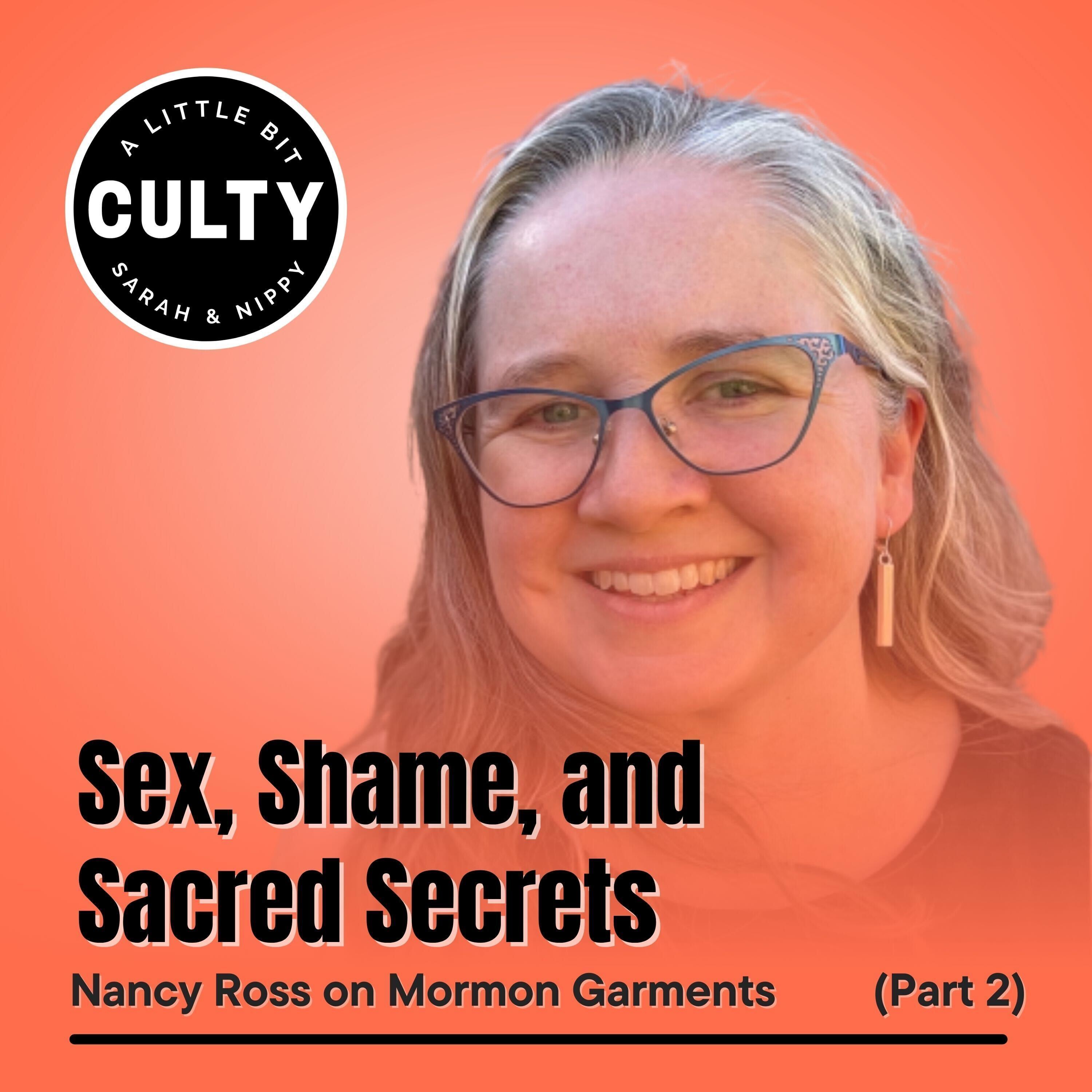
Sex, Shame, and Sacred Secrets: Nancy Ross on Mormon Garments (Part 2)
About this Episode
In Part 2 of our conversation with Dr. Nancy Ross, we dig deeper into the fascinating (and frankly under-discussed) world of Mormon temple garments, the sacred undergarments worn by many devoted members of the LDS Church. Building on the research we introduced in Part 1, Nancy walks us through the results of her large survey examining how these garments actually impact people’s daily lives, especially Mormon women. We talk about everything from comfort and body awareness to modesty culture and the unspoken rules that shape how members think about their bodies, sexuality, and spiritual worthiness.
Nancy shares what hundreds of respondents revealed about the lived experience of wearing temple garments: the physical realities and the complicated mix of devotion, obligation, and identity tied up in this uniquely Mormon practice. We also explore how conversations around modesty, sexuality, and religious obedience in the LDS Church can shape women’s sense of autonomy and self-trust, and how everyday practices can reinforce belonging, control, and silence around discomfort.
For more in-depth info on her survey, pick up her book, Mormon Garments, and follow her on YouTube, Instagram, or TikTok.
Trigger warning: This episode contains frank discussion of religious control, modesty culture, sexuality, body shame, and sensitive topics related to women’s bodies.
Also…let it be known that:
The views and opinions expressed on A Little Bit Culty do not necessarily reflect the official policy or position of the podcast. Any content provided by our guests, bloggers, sponsors or authors are of their opinion and are not intended to malign any religion, group, club, organization, business, individual, anyone or anything. Nobody’s mad at you, just don’t be a culty fuckwad.
**PRE-ORDER Sarah and Nippy's newest book here
Check out our amazing sponsors
Join A Little Bit Culty on Patreon
Get poppin’ fresh ALBC Swag
Support the pod and smash this link
Check out our cult awareness and recovery resources
Watch Sarah's TED Talk and buy her memoir, Scarred
CREDITS:
Executive Producers: Sarah Edmondson & Anthony Ames
Production Partner: Citizens of Sound
Co-Creator: Jess Tardy
Audio production: Will Retherford
Production Coordinator: Lesli Dinsmore
Writer: Sandra Nomoto
Social media team: Eric Skwarzynski and Brooke Keane
Theme Song: “Cultivated” by Jon Bryant co-written with Nygel Asselin
SUPPORT OUR SPONSOR:
If you’re ready to start searching safely online, go to surfshark.com/culty or use code CULTY at checkout to get 4 extra months of Surfshark VPN.
See Privacy Policy at https://art19.com/privacy and California Privacy Notice at https://art19.com/privacy#do-not-sell-my-info.
Hosts & Guests

Transcript
Can we talk about phone bills for a second? Because I'm pretty sure my carrier thinks I'm
personally funding their CEO's yacht collection. Seriously, folks. I've been paying the ridiculous
monthly bill, the mystery fees that make no sense, the free stuff that somehow makes everything
more expensive, classic big wireless move, right? Well, I'm done. The second my contract is up,
I'm switching to Mint Mobile. 15 bucks a month, and yes, it's real wireless. High-speed data,
unlimited talking text, runs on the nation's largest 5G network. Not some 10 can and
string situation. You just bring your phone, pop in an e-sim, and you're done. No new contracts,
no gotcha moments, no explain to your spouse why the phone bill is higher than your car payment.
I'm honestly embarrassed by how much money I've been throwing away for absolutely no reason.
They're finding out you've been massively over tipping out a place with terrible service.
I cannot wait to stop funding out collections. If you like your money,
Mint Mobile is for you. Shopplans at MintMobile.com-slashculti. That's MintMobile.com-slashculti.
Upfront payment of $45 for three months, 5 gigabyte plan required,
equivalent to $15 per month. New customer offer for first three months only,
then full price plan options available. Taxes and fees extra. See MintMobile for details.
The Bleacher Report app is your destination for sports. Right now, the NBA is heating up,
March Manus is here, and MLB is almost back. Every day there's a new headline, a new highlight,
a new moment you've got to see for yourself. That's why I stay locked in with the Bleacher Report app.
For me, it's about staying connected to my sports. I could follow the teams I care about,
get real-time scores, breaking news, and highlights all in one place.
Download the Bleacher Report app today so you never miss a moment.
This podcast is for informational purposes only and should not be considered legal,
medical, or mental health advice. The views and opinions expressed do not necessarily reflect
the official policy or position of the podcast, and are not intended to malign any religion,
group, club, organization, business, individual, anyone, or anything.
I'm Sarah Edmondson, and I'm Anthony Nippie Ames, and this is a little bit culty.
We woke up from a cult, and that journey was captured in the vow on HBO and in my memoir,
Now in this podcast we break down the shame and secrets that make these experiences so
destructive with honest conversations on how seemingly benign groups can cross into the cult
of us, and how to spot and recover from trouble if it happens to you.
Each week we bring experts, survivors, and whistleblowers to explore red flags,
resilience, and even share a few laughs because sometimes you got to laugh.
Subscribe to our Patreon for early and ad-free listening, some live Q&A and exclusive content at
patreon.com slash a little bit culty. Welcome to season 8 of a little bit culty.
Welcome back everyone to part 2 with Nancy Ross.
So if you missed part 1, you might want to go back and listen to that because it explains
who Nancy is and what her experience was in the Mormon Church and how it led her to the survey
about the undergarments that are worn by devoted Mormon members.
Also chronology helps.
Yeah, the chronology helps.
And we want to also make sure that we're not mocking in any way.
And perhaps I have to say I have in the past because I didn't really understand.
Sarah, we were sashes.
We also were sashes in our cult.
So, you know, sometimes we laugh and we tease ourselves and others in a way that's like just
we have to laugh, but we don't want anyone to feel what people to feel like they can come to
this conversation and feel like it's a safe space, I guess, at that point.
Absolutely. And that was a key consideration as we were thinking about in writing this book,
which is how do we explain this practice and different experiences of this practice,
but also be sensitive to the practice, recognizing we are breaking a pretty big taboo in writing
this book, right?
The issue of sensitivity has been at the heart of so many of our discussions
as we have been writing.
Okay.
So, let's do a little summary for those who maybe have only heard of the garments on South Park
or something and don't really understand the history and why Joseph Smith came up with the idea.
Can you give us like a broad picture?
Yeah.
Why don't we start with a little history?
So, Joseph Smith died in 1844 just to kind of give us a benchmark of time here.
And so, in the late 1830s and 1840s, he is developing his ideas of polygamy, his ideas of what
he would term like celestial marriage and these temple ceremonies, you know, an earlier version of
that that I had described earlier. And as he was doing this, he was trying to, he was experimenting
with the idea and language around garments as representing the state of someone's soul.
And that came up in a lot of his writings and speaking.
And at some point then, in probably the late 1830s, early 1840s, he visited a seamstress in his
community, in his very early Mormon community in Navu, Illinois.
And her name was Elizabeth Alred, Warren Alred.
And he asked her to help him cut out some clothing.
And the clothing, what he told this seamstress was that the clothing that he was asking for help
in cutting out was the same clothing that was worn by an angel that had visited him on a number
of occasions. And for Mormon, this is the angel Moroni, a figure in the Book of Mormon.
And so, he wanted to wear like divine clothing or to kind of, to kind of reproduce the clothing
this angel was wearing in these visionary experiences. And so, he asked sort of kind of cut out
in a sense kind of long John style under like single piece to ankles and wrists
underwear. And one of the things we want to understand is that like union suit style underwear
didn't actually exist in the 1830s and 1840s. So, when he asked underwear was different,
not everybody wore underwear, but underwear didn't look like a union suit until later in the 19th
century. And so, this was like in advance of union suit style underwear. And so, what Joseph is
doing here is to a certain extent progressive, even if that is not how we might understand the
practice today. But he is trying to create some kind of clothing that would emulate like the clothing
of divine visitors. And as he is developing these temple ceremonies, they would also come to
symbolize the kind of coat of skins or cloak of skins that Adam and Eve were given as they were
cast out of the garden. And this is an important narrative in the temple endowment that the bodies
of Mormons are kind of clothed with garments and that these garments reflect the clothing given
to Adam and Eve by God as they are like on their way out of the garden. And so, that is a little
bit about what they mean. So, garments then kind of symbolize the commitments made in Mormons
term that covenants, temple covenants made. So, covenants to obey God, to they've changed a
little over the years. The covenant that I made was that I would harken unto my husband as he
harkened unto God. And today, I believe the language has changed a little bit, so men and women
both covenant to obey God. But garments represent these like commitments, but they also represent
divine figures or they connect to the spaces of heaven, but they also connect back to like there's
an imagined biblical past for these. So, it kind of connects through. And so, garments are these
things that kind of throughout the last 200 years just have continued to take on additional meanings.
There was a church conference in 2024 where someone gave a talk and it was decided and they talked
about garments which is very unusual for someone to be talking about garments in a big church conference
about suddenly taking on the meaning of Jesus' atonement. And that is not discourse that appears
in the previous 200 years of garments or so, but they keep like taking on new meaning and they
become, they're like very heavy with meaning. They mean all of the things, but socially what they
mean. So, they begin as like long John style kind of underwear. In 1923, they are changed so that
they go down to the elbow and then kind of to the knee. Throughout the later 20th century,
they're continued to be changes made. There's a swimsuit designer that gets involved in the 50s and
60s and eventually in 1979, the church announces that there will be two piece garments, like a one piece
piece. Yes. And everybody who is like my age has like elderly relatives who still wear one piece
garments or group with their parents wearing one piece garments, which is a whole kind of horror.
Wait, I have a timeout. It's really quick. Do people of that era or even now, like, do you
how many do you have? Do you wash it at one and then you get the bestowed to you wash it every day?
No, you have like a whole bunch of sets, right? You have like a drawer full of underwear,
right? And it's a lot of underwear. So, but then by the time I was wearing garments,
this has been the 90s. Early 2000s, 2004. So, they become two pieces in 1979 and I start
wearing garments in 20 2004. And the kind of garments, I'm just going to describe the kind of garments
that I wore. I'm a short person. So, there are like short people garments, petite garments,
petite women's garments. And so, the leg, so they're like shorts. And so, the leg comes down to
merely my knee. And they had like a little cap sleeve and a neckline. So, there's a top as well
as bottoms. And there are a number of different fabrics that people could choose. The kind that I
wore were like nylon. And they had women's garments had like this like lacy edge. On the neckline,
they had elastic at the waist. A lot of people have complained about the discomfort of elastic at the
waist. But they're very like the bottoms are really high-waisted. So, for many women, they like
come up to your boobs. So, there's a very high rise on the bottoms. And the tops are often fairly
long. And I just, I mean, there's kind of a joke in the Mormon community that you're just forever
like retucking in your underwear. It's always something that you feel like you are managing or
I always felt like the tops and the edges of the tops were just trying to like climb out of my
clothing. Generally, you're supposed to eat, I mean, not generally, but you're supposed to keep
garments covered. And so, with your clothing, so they kind of enforce a particular standard of
modesty when you are wearing them. And you wear them day and night. And so, like all the time,
with the idea that you're only really supposed to take them off maybe during like sex swimming
and showering. It's so that you're mostly wearing garments fairly continually. And that you're
generally supposed to be wearing them next to your skin. And one of the issues with garments is that
while this is an individual practice that you can see other people's garments through the lines
that they create very distinct clothing lines. And especially the lace on women's garments
creates very noticeable. And I think that the newest garments don't have the itchy lace. And if you
have sensory issues, this is all just kind of a nightmare. And you know, that's a big issue. But you
can see the lines of people's garments through their clothing. And you expect in congregations,
in Mormon communities, you expect to see them. If someone is wearing their garments, then that's
kind of a proxy for understanding that person is a good and faithful church member. And if they
are not wearing their garments, if you cannot detect these lines, then they're like not doing what
they're supposed to be doing. And so there are a lot of stories in the survey about we asked people
if you had ever noticed someone else checking to see your garment lines, like garment checking you.
Or if you had ever done that. And we have, of course, lots of people saying yes, right? Like that
these are community behaviors. One of my favorite stories I have it in my notes here was a woman
who is like self-reflecting. And I just thought that was such a great line. It's something like I
realized that my friend's underwear choice was not my own. Like it was her choice. Like I just
thought that's so telling of what these underwear mean. And perhaps you want to speak a little bit
to what you see the difference is between undergarments. Or we can get to this later because you know,
you're still giving us sort of the overall history. But I know that some people will say it's no
different than the Berkha or the Yamakha for being Jewish or the Tee-Tee or like what, you know,
these certain religious garments. It's no different. But for me, it does feel so different because
it's your underwear. And it has to do with sexuality. And it's very like the level of control seems
much more heightened. I mean, maybe not with the Berkha or the Hijab, I think maybe more parallel.
I don't know. I'm not a religious scholar. This is your field. Tell me what you think.
I would say that those are different. So my understanding of like women who wear Hijab
is that women who wear Hijab wouldn't necessarily, like if they're just at home with their family,
that they wouldn't necessarily be wearing Hijab, that Hijab would be for if people who are not part
of the family, and especially men who are not part of the family, you're going to be in the home
or if they are out in public, then they're going to be engaging in this practice that is my understanding
and I could be wrong. And so it's not in all the time every day, all day, and all night practice.
It's a sometimes a lot of the time practice, but not all of the time. And a lot of religious
clothing, you know, like a Yamako or a Kippa, like it is not going to be worn by a man in the
middle of the night. Even cult podcast need sponsors, check out these must-haves.
If you love the ritual of a little evening drink, but could really do without the fuzzy head and
questionable life choices the next morning, meet Vesper from peak. It's a non-alcoholic,
adapt genic aperitif that keeps the ritual, the romance, and the cheers moment just without the
alcohol. Vesper is made with calming ingredients like altheanine, tart cherry, lemon balm, and
elderflower, so you actually feel your body relax, your shoulders drop, your jaw and clenches,
the whole vibe shifts, but it's not sleepy or dull. Botanicals like gentian and de miena give you
a subtle lift, so you feel social, present, and maybe even a little flirty. Flavor-wise,
it's lovely. Sour cherry, bright, great fruit citrus, and herbal bitters, poured over ice,
top it with sparkling water, let it candle, suddenly your Tuesday night feels a little more like a
European vacation. In fact, it's the drink that lets you stay fully present for the conversation,
the connection, the moment, and still wake up feeling amazing the next day, which I have to,
because for example, tomorrow I have a full day of baseball for both kids, but I'm going over
to see a friend tonight, and we are planning to do a Korean skincare spa night, and while I
would probably normally bring some rosé tonight, I'm bringing the Vesper. Vesper makes it still like
a fun night, and we can do the face masks and all that and cheers, but I know that I'll be able
to get through my big sports day tomorrow, and that's what I need. Set a new standard for how you
relax and connect. Access 10% off for life and redefine your nightly ritual today at peaklife.com
slash culty. That's p-i-q-u-e-life.com slash culty. Enjoy.
You know that moment when it's suddenly dinner time, and you open the fridge hoping inspiration
magically appears, and instead it's just condiments and a lonely carrot, and you go back,
you do it again, lowering your standards each time, but still the lonely carrot. Yeah, that's where
butcher box comes in. Butcher box delivers high quality protein right to your door, including
family favorites that make weeknight meals way easier, even for the picky eaters like our boys.
Whether you're cooking something fancy like filet mignon, or just tossing chicken nuggets in
air fryer, every product meets the same rigorous standards. It's all quality across the board.
For over a decade, butcher box has led the industry with meat and seafood that's antibiotic-free,
hormone-free, and independently verified. It's the clean, trustworthy protein you want to be eating,
especially at the start of a new year. In the best part, you can fully customize your
box to fit your routine, your goals, and your schedule. Last week, we had chicken thighs,
beautiful rib eyes, and my personal favorite for the family, the New York strip. All one less
thing to think about. Shipping is always free, and members get access to recipe ideas, tips,
and exclusive deals that make cooking at home easier, and a lot more delicious. As an exclusive
offer, new listeners can get their choice between organic ground beef, chicken breast,
or shrimp in every box for a year, plus $20 off when you go to butcherbox.com slash culty.
That's right. Your choice of organic ground beef, chicken breast, or shrimp in every box for an
entire year, plus $20 off your first box, and free shipping always. That's butcherbox.com slash
culty. Don't forget to use our links so they know who sent you.
Day or night, VerboCare is here 24-7 to help make every part of your stay seamless.
If anything comes up, or you simply need a little guidance, support is ready whenever you reach out.
From the moment you book to the moment you had home, we're here to help things run smoothly.
Because a great trip starts with the right support, and hey, a good playlist doesn't hurt either.
Thank you, sponsors. We couldn't do it without you. Now, let's get back to the show.
Sorry, I just want to clarify Rockwell because I'm sure audience will jump down my throat if I
don't say this. That I'm not saying that the hijab is fine or not problematic. That's a whole
different episode. And extremes of any religion can be very problematic and oppressive. I'm not saying
that. I was just wanting to make a distinction of the sexual and all the time aspect of it. That's
all right. There's varying degrees of how people are using garments. Yes. Yes. Yeah.
Absolutely. And I would also say, like, as a religious study scholar, that many women who wear
hijab find good experiences and empowerment and see this as a positive sign of their identity
in addition to different kinds of experiences, right? This is people are going to have a range of
experiences and meanings with these embodied religious practices. And the same is true of garments
and garment wearing. We have many women in the survey who were like, I love what my garments
mean and that they're a reminder of the temple, but they're kind of a disaster is underwear.
A little more than a year ago, the church announced that there would be sleeveless garments and a
few months ago, they were released in desert book stores. And in my town in St. George, people
were waiting in lines for three hours to get the new sleeveless garments like it was a whole big,
it was a whole big to do. Can you shock your livelihood? Yes. A huge chunk your body,
including right like all of your sexual parts, right, including your genitals. And so the idea is
that you do this all of the time, basically, right? Like the default is you are wearing garments,
not that you would take them off at night, but rather that you're supposed to be wearing them at
night. And so this is an, there are very few spiritual practices that I can think of in various
religious traditions that are supposed to be absolutely all the time, religious practices.
And this isn't all the time, religious practice. And so for a long time, people have been complaining
about that is comfort of garments. So this is something we really wanted to investigate in the
survey is that, you know, what are people's experiences with their garments? And we kind of
very crudely hypothesized before we put the survey into the world that men would be fine with
their garments, because garment development largely mimics the developments of men's underwear.
So like men's garments would look like a t-shirt, like an undershirt. And, you know,
kind of boxers or boxer briefs, right? Like this, you know, that's not too different. So we're like,
well, men's garments kind of look like men's underwear. So we don't think that men are going to
have a problem with their garments, but we're going to guess that a lot of women have problems with
their garments. And so we got our four and a half thousand responses in a week. We had hoped to
leave the survey open for like a month, but as our survey was slowing down at the end of a week,
we're like, we already have more answers here than we know what to do with. When you do survey
research as well, you might have like, you know, multiple choice kinds of questions or check all
that apply kinds of questions. And then you might have right in the box open-ended response
questions. And generally people, when they're taking a survey, do not want to give you their time.
And so they do not write in the box, or they only write like short one word answers or something.
What we experienced is that people poured their hearts out in the box in our open-ended survey
response questions, sharing all of their like garment secrets and stories that were not really
permissible to share in other places that were very hard for them to share. And so we suddenly had
far more data than we had tools and skills to navigate and manage and understand. And we had a
range in depth of experiences and stories that we did not have frameworks of understanding for.
And when we do this, we are still in the church. And we are still like serving in the church,
we're taking our families to church, you know, we are very involved pretty soon after this happens.
And while our book is about our survey data, because survey data can feel sometimes a little
impersonal, because you can't ask follow-up questions and things. My co-authors and I, so myself,
Jessica Finnegan, Larissa Kano-Kindred, we include personal stories about our garment-wearing
experiences in the book to help kind of give narrative and to kind of flesh out what this looks
like and feel like. And that is very vulnerable. And it's not normal, it's not normal in an academic
book that we're sharing our underwear stories. But it was also something we talked about over a
very long period of time. And that we felt like we really need to share our own secrets to feel less
shame about our experiences with wearing garments and in writing and talking about garments and
public spaces. And ultimately, I think that sharing our own stories was also part of our own
healing. But it's not too long after we do the survey that some things happen in Jessica's
congregation and she has to leave the church. Because of this? Not because of the survey exactly,
but that was certainly, right, like one thing that it's hard to describe is that it's one thing
to know and begin to pick apart your own experiences. It's something else to read four and a half
thousand people's experiences and to read devastating. To read a lot of devastating experiences is
to take on. Like suddenly, this felt heavy and impossible as a project. Yeah, you can't ignore,
you can ignore your own feelings to a degree, right? But there's too many red flags when you see
it all laid out like that, right? And we are encountering women's devastating experiences
and so many more devastating health related and sexuality related experiences than we had ever
than we're part of our own personal experience. But we're also reading men's experiences and
they're devastating. Like we're just like encountering it's like it's both a data gold mine
as a researcher and personally devastating. And so we are both trying to have to navigate this
as people who are still wearing garments and trying to figure out how to make that happen.
At the same time that all of this is happening, I'm involved with this activist organization
called Ording Women. And so like they're on the faith front and the Mormon feminist activist
front. They're just a lot of things going on at this particular time. Jessica, particular things
escalate in Jessica's life. She and then her family step away from the church. And about a year and
a half later, John Delin of Mormon Stories fame, somebody is leaked to him the church's policy
on LGBT inclusion has changed to become more rigid and restrictive. And I couldn't have not
have told you before then that this would be the hill that I would have died on faithwise.
But it was and my family and I leave the church at that time. So my husband and I are
negotiating what leaving the church is going to look like for us. My children are seven and eight
at that time. And I will tell you that we had decided to leave the church and it still took a few
more months for us to take our garments off. Like it wasn't that we liked them. And it wasn't
that we loved them. But making the decision to leave was easier than making the decision to take
off our garments. And this was like once we do this, you know that you cannot. This is like
the real point of no return. It's almost like a cop meeting his badge or something. Like it's
yeah. We could make a decision to leave our faith community. Yeah. And that was easier
than making the decision to stop this practice, which was so hard. And it wasn't hard because I
liked my garments. I really didn't like my garments at this point. I didn't like them. And it was
still very difficult because I knew that once I took them off, that was it. Like we were not going
to be putting we would I would not be able to like put them back on. And it's hard to describe
the like when you absolutely want to do something and you feel like you cannot do something and it
was just a very difficult place to be. Eventually one night before bed, my husband is like we're doing
it. And like rips them off. And I'm like, okay, I'm going to take that energy and do the same. And
I know that sounds really silly. So many of us burned our sashes. Like it was a whole thing. Yeah.
It was a whole thing. I fantasized and talked about burning my, talked about burning my garments.
I don't think I've said that in public before. But I didn't. I think my husband just got rid of them
one day and like I was like sure. They were like in a box in the back of the closet for a long time.
It just felt so fraught and it still felt so heavy. And so like so you kind of ripped them off one
day and that was kind of it. What about buying new underwear? Oh my goodness. Okay. So like
so I'm a university professor in a town that's been growing in a city that's been growing over
the last 20 years since we have been here. We've experienced some big growth. I have taught,
I don't teach general education classes anymore, but for a long time I did so. And for a long time
and still my husband and I cannot go anywhere in town and not encounter former students basically
everywhere. I've taught thousands of students. I, you know, we love our jobs. We love many things
about our jobs. And you know, for like 10 years we could not go out to eat anywhere and not be served
by a current or former student. This is before Amazon could deliver you some underwear. Yeah,
or but I didn't want to do. I wanted to like see and feel some sensory issues. So I'm not like,
you know, any wonder where is not going to work for me. More should it. So what I kind of settle on
is like, and I feel like I am sneaking into the mall like a bandit of some kind. Because before
I had worn garments, I had worn like Victoria's Secret underwear. And I was like, well, why don't we
just go and start with that? We're going to start with that first. Like this seems like safe, you
know, like I'm all kinds of freaked out about like underwear and underwear issues. And I've all
maybe gone to unpack all of this, but I'm feeling a lot of shame about all this stuff. And I'm in this
difficult moment of transition where I am kind of on an emotional roller coaster between feeling
super liberated by letting go of all of this. And in deep grief, like a close family member has died,
like about this. And I am just like bouncing between liberation and deep grief. And that was just
for like six months. And that was just a really difficult emotional space to be in still teaching.
And so I go into Victoria's Secret. And again, like, and right, like, and I am there too by
underwear, but I feel like I am committing some crime, committing some underwear related crime.
And, you know, I'm just trying to like play it cool. Like I am a normal person buying underwear. And
I am like not able to pull off that internally. Like I'm just freaking out on the inside. And I
finally, like I collect my items and I am waiting in line, desperately hoping not to be seen by
anybody I know. And I get to the front of the line. And a student who I've had in so many of my
classes, who I know pretty well and who knows me pretty well. And doesn't know that they are helping
me by garments for the first like non-garment underwear for the first time. There is no part of this
that gets to be like secret and private, right? Like it's all a little bit living my life a little
more publicly than I like. And so that is my kind of kind of my first experience of buying regular
underwear again and trying to transition and getting used to people noticing that I do not have
underwear that I do not have garment lines. And that I am clearly not wearing garments. I go through
and I still do, you know, I wear a lot of sleeveless dresses. And then it's very clear that I'm not
wearing garments. And my very Mormon boss sees this, you know, like and, you know, it's it is
knowing and through the survey, knowing having so much awareness that there absolutely is
absolutely judgment. But I am just going to have to lean into that. I'm going to have to have
compassion for the people who are judging me. We sit with this garment data for so long. We try
to write versions of a paper. We can never quite get through. It's really hard to get through to
what exactly we have lots of points and themes and ideas of control and ideas of secrecy and ideas
about like modesty and sexuality. It takes such a long time to really sit with all of this and to
be able to get through to the end of the project and be like, what does this mean? And how can we
communicate this in a way that is clear and connected and where we understand this is working
within a framework. And we write a lot of versions of this journal article that get rejected.
And eventually we realize this is not a journal article. It is a book. And eventually, you know,
12 years later, here we are. Eventually, Jessica has to kind of move on and do other things in her
life and not work on this full time. And I am just exhausted by this whole project, but also
desperate to make good on all the sweat blood we have sweat through this thing. And here,
Larissa, who had at a conference, who present on her own survey of about 8,000 Mormon women
and their experiences with garments. And I'm like, this is the person I would like to work with.
And so we bring her on board. And she helps us. And she and her energy and her insight get us
over the line through to publication. And the book is going to be released next week. So this is
just a whole journey, not only of academic study, but of like faith and figuring out what does this
mean in a big academic social religious way, but also in a very personal way. And it's a lot.
Time to do program. Listen up for our sponsors latest offer.
Thanks for listening. Now let's resume our Coltie Cabo.
It is a lot. And I congrats. It's huge. It's a huge undertaking. We're going through it.
Yeah. Yeah. What was the most surprising or shocking response from the survey?
There were so many. I think one of the things that was really painful is that there were some
men we call them conforming believing men as opposed to non-conforming. And that really has to
do with whether or not people experienced out. There were conforming believing men who saw garments
as who did not understand what the challenges of wearing garments might be like for women or other
people who were so judgmental when we asked the question, what do you do when you hear other people
complain about their garments? And they were just like, well, this is such an easy practice.
We just don't understand why they're difficult. They must have real issues. You know, those
responses felt really painful. We had women together through to we had women to women in the survey
who were like, my garments mean to me that God has promised me that women will someday be
ordained to the priesthood and Mormonism. And I was like, I love that response. And I tried to like
as a believing Mormon still tried to like, oh, I love that. I would like to try and adopt that
for myself because that sounds really positive. And then I was never able to like make that work
authentically. And I was like, why is that? This is so interesting and confusing. So there were both
devastating surprising comments and like really obviously very empowering surprising comments
and everything in between together with people talking about how they had permanence
scarring on their vulvas from wearing garments or that they could not access sexual feelings as
a result of wearing garments or that they just felt very controlled by wearing garments or that
their garments were a source of real angst and suffering in their lives. It's such a metaphor
of microcosm for everything that goes on a macro. It's yeah, it doesn't have to be it doesn't have
to be anything content specific. You can like cell phones or landlines and you get the same
response from people who hate cell phones and love landlines and you can come up with all sorts of
arguments and people that are too sensitive to one side, insensitive to others. Yeah. The line
that really stuck out to me that and again, I learned so much. I really had a very cursory knowledge
of garments. I didn't realize if a man and a wife were practicing and conforming and believing
would rip off their garments to have sex and had to put them right back on afterwards. The line
was you can't that someone was upset that she couldn't spoon naked with her husband after sex
had to put the garments back on. Like that's crazy. That is crazy. Yeah. That's like what a lack of
intimacy. That's the best part. That was the best part. That's the best part. No, I take it back
as one of the best parts other than, you know, to me, it's such an important time. Yeah. Well,
the church messes with your intimacy. That's the big thing that I'm hearing with. Yes, it does.
That might sound confusing for outsiders just to say, well, then why wouldn't you just not do it?
You know, do what you want to do because nobody's watching you in that moment. But because of
the inculturation and the conversations around modesty and sexuality and the need to be wearing
garments continually, that there was this like, and I relate in the story in the book, like a personal
story of, you know, falling asleep after sex with my husband and waking up later naked and feeling
and like rushing to put them on again and feeling really guilty and then coming to find through
the survey that this is actually, this was not an uncommon experience. And the sense that like before
I was entitled to pleasure, I must first like check in with religious requirement. Like that, that
was more. Yeah, that's crazy. Right. And that my body just felt this on like a soul level.
It was part of the big heaviness of things. I think that the note I had from reading your book
was what you just said, and internalize the church's authority. So you're constantly putting
everything through that filter. They don't have to be watching you. You're surveilling,
they're surveilling, you're surveilling yourself. And now others, like you said, with the garment check,
you know, one thing I realized we didn't talk about the beginning, which I think it's important
to the history is what's the, how do the garments relate to polygamy and then how did that change?
Sorry. Yes. Sorry. Yeah. Of course. This is just so key because who doesn't love, who doesn't
look like this? This is the gossip. Spill the tea. He's spill the tea. Yes. So in the lifetime of
Joseph Smith, right, in the 1830s and 40s, the people who are experiencing and going through the
ceremony, the early in history and the endowment were only people who were engaging in polygamy
unions because this was a way to sacralize and create like a polygamy union. Like these were
the ceremonies that made sacred in Mormonism this socially very taboo practice. So only people who
were practicing polygamy in early Mormonism were wearing garments. And so garments were then at
that time a symbol of practicing polygamy. Eventually the church to become a state Utah, like the
LDS church has to officially stop plaque practicing polygamy, which they issue a manifesto in 1890,
so that Utah becomes a state in 1896. There's still a lot of people practicing polygamy,
even the church has officially given it up by the 20s and 30s. It is really trying to assimilate
into the American mainstream. And so the church starts excommunicating and punishing people for
continuing to practice polygamy. So between 1890 and 1820s and 30s, there's this difference.
As I said before, there were these big changes in 1823. The Mormon fundamentalist movement,
so the people who would practice polygamy today, they kind of descend from leaders in the 1820s and
30s who continue to practice polygamy, who as a part of their fundamentalism, rejecting like the modernization
of garments in 1923. And so but then as the church in the 20th century tries to become more like
mainstream white evangelical, in part to overcome the way in which polygamy racialized Mormons
in the American press. So as Mormons are trying to become white in America and trying to kind of
assimilate into the American mainstream, polygamy is seen as this like weird legacy that they have
to overcome as a kind of unrestrained sexuality that has to be overcome by taking on a kind of
public and a public and private performance of like really restrained sexuality, really restrained
monogamy. And garments become a useful tool for talking about women as gatekeepers of sexuality
like evangelicals are doing and then policing and enforcing modesty standards. And ultimately then
as we would argue restraining adult Mormons, adult married Mormons like sexual behavior,
which is what many people report in the survey. So it becomes this technology. So where once it was
this thing that represented polygamy and you know a different kind of sexual practice and family
unit. In the 20th century it takes on like the exact opposite. It helps Mormons become you know
kind of more chased clean cut family oriented more chased in American society so that they can
blend right. So and Romney can run for president you know and that kind of thing you use the word
religious technology. And that's a word that my ears perk up a little bit because we in our cult
we had technology and Kundalini uses technology and we're one of our and things that we talk about
in our upcoming book little plug there. I'm like show make sure you get one is the use of the word
technology is like not really accurate but like it's not a technology but what's your understanding?
So what we mean by technology and I think that you know this is something we could have explained
better in the book but but technology would be like a device that helps to mediate religious
experience. That's what I mean by religious technology. And so even if we don't think that like
the novel is a technology or that sewing machines are really technology they're like there are
it has to be a device is this a device and have to have wires and metal right or electricity right
like it is a device that takes on religious meaning that is central to religious practice that
helps to mediate and religious experience. And so Mormons garments are a religious technology
that we argue in the book serves to restrain the sexual behavior of Mormon adults but it also
in a bigger sense right like it does that because it helps to mediate Mormons like world views
and religious experiences and embodied experiences. So maybe that's the correct use of the word
in cults when they use it to imply a special technology is more of like the hook of what you're
going to get like this magic technology like there's the academic approach of technology and then
there's the tech using the word technology as a hook for a promise of the salvation or whatever is
going to come with using the thing. I'm just figuring this out for myself I don't actually have
a thesis on it. No I think they are the same right because it is that promise that is captivating
we are captivated by technology and the promise of technology right and so the way in which garments
connect church members to the spaces of the temple to the afterlife to a biblical past to all
these things right that God is present with you through the wearing of garments is kind of a promise
of intimacy with God of closeness with God of protection right and whether that idea is like
we might say real or testable or verifiable in some kind of scientific way that the investment
in that idea that the believing of that thing shapes how we experience the world and makes that
unseen thing that intanguableness of God or whatever our beliefs are invested in it makes it
real right it makes it real in a physical way and so it does that mediating work that making
the experience of the divine or whatever it is into something that can be felt in a physical
seeable way yeah as well said in any way in condition to trust yeah the thinking that goes into
that the same way a lot of people blindly follow governmental edicts yeah and I think that they're
the book really showed how it's not necessarily one or the other like yes they're good or know
they're bad it's many people had multiple feelings at once like yes I want to feel closer to God I
really appreciate them but they're so uncomfortable and how do I have my period in them and like
so many like conflicting things and I wonder I guess you don't know what the response you don't know
the response is going to be because you haven't this is new I don't think I've been episode maybe
we'll have to have a catch up with you and see how it gets how it's what's the word to your
technology point technology has an underlying kind of feel of authority to it as well yeah exactly
which stifles inquiry in a lot of ways oh technology I don't have to ask any more questions it's
been vetted and verified and quantified to some extent all I know is I just I just feel so
uncomfortable the lot of words I wrote down here slumpy sliding hot like I just feel like
I would not do well with these garments I mean I think what a lot of people reported in our survey
and certainly what we all three of us right all three of the co-authors on this book war
garments and no longer wear garments and what we I think we'll say is that we had to turn off
or turn down our experiences of our bodily sensations in order to tolerate some of the
discomforts of garment wearing and that's and when you do that right when you routinely have to
do that like then things like dissociating and disconnecting with your body become like second
nature responses to coping with requirements that that feel unmanageable and that create long
lasting consequences for like our physical sexual and mental health and trying to as we are
trying to connect with our own bodies our sexual feelings our spouses and all of these things they're
just very like those things that we try to do to cope with the practice end up being very harmful
even as there are these believing pieces and people do have positive experiences with their
I think that's such a important thing to wrap up with and I want to ask you for any current or
former LDS listeners wrestling with their own relationship to garments what questions do you
hope your book will help them ask about agency and consent and the right to interpret or even set
aside this practice and pursuit of maybe something healthier for them I hope that that the book
will help people to feel because I think that feeling alone in our garment problems is a great
source of disconnection and I hope that in reading the book will people will be like oh there is
a conversation here I can feel connected I do not have to feel ashamed and isolated I can find
ways to connect and that even if people want to continue to practice wearing garments that they
I would hope that they would open up spaces for conversation so that people can feel like this can
be an open conversation and not like a secret and shameful conversation and that there can be more
that where there is so much disconnection from self from community from sexuality that people
can then navigate this practice on their own terms and feel empowered to make their own choices
so that's what I would really hope not a particular outcome but that they would feel that they
would be able to make the choices that they wanted to make in their life that's what I really would
hope for have their autonomy yeah exactly autonomy is good I hope this book does well I hope John
Delin gets it out there yeah thank you yeah we're almost every podcast we just go like wow it's so
cool we had to like have our own private religious studies yeah thank you Nancy yeah thank you for
having me
all right everybody that was part two with Nancy Ross please do let us know we thought of this
episode in the comments did you learn anything new about underwear magical underwear I sure did
how about you to be I definitely don't think that underwear is going to be our sponsor nope that's
not a quince that's not a quince maybe meandies I wonder meandies has like a Mormon line meandies
what Mormon could be there's a whole market there meandies get it get yourself some moandies some
meandies is not the moandies oh my gosh it's gonna be okay okay enjoy bye
I hope you're enjoying a little bit culty if so please do show us some love drop a rating or
leave a review hit subscribe on apple spotify or ever you listen and subscribe to our patreon at
patreon.com such a little bit culty even better send this episode to someone who needs it maybe
they're in a cult maybe they're just a little bit susceptible or maybe they just love a good story
spread the words spread the love thanks for listening and see you next time a little bit culty
is a trace 120 production executive produced by Sarah Edmondson and Anthony Nippy Ames in collaboration
with producer Will Rutherford at Citizens of Sound our co-creator is Jess Temple Tarty our
production coordinator is Leslie Dinsbore riding by Sandra Nemoto and social media marketing by
Eric Swarsinski and Brooke Kean our theme song cultivated is by the artist John Bryant and
Nigel Aslan
you


