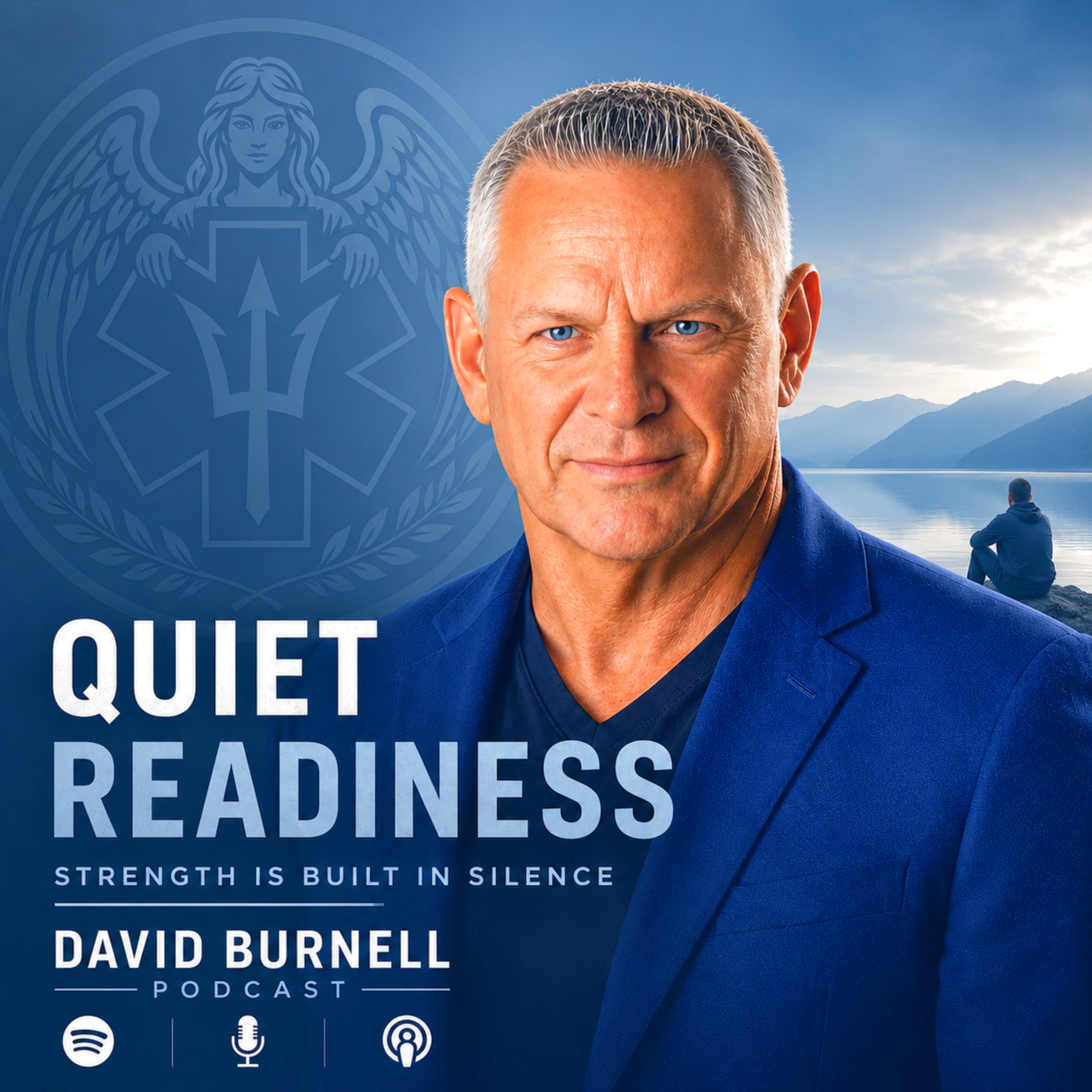
About this episode
Two words can change everything in an instant: Shots fired.
In this episode of Quiet Readiness, David Burnell examines the reality of active violence and what it teaches us about preparedness, training, and the mindset required to respond when chaos suddenly enters ordinary places.
Drawing on decades of experience in military service, law enforcement training, rescue operations, and the development of force-on-force training environments such as the Urban Warfare Center, David explores how modern threats have evolved and why traditional training methods often fail to prepare people for real-world encounters.
This episode looks at:
• why active violence can occur in any community• how distraction and hesitation increase vulnerability• the limits of traditional range training• why force-on-force training changes how people respond under stress• the psychological realities of fight, flight, or freeze• lessons from real-world incidents involving active shooters
Quiet Readiness is not about fear or sensationalism.
It is about developing the habits of awareness, preparation, and calm thinking that help people function when the unexpected happens.
Because when violence erupts, people do not magically rise to the occasion.
They fall to the level of their preparation.
Follow or subscribe for more Quiet Readiness insights on awareness, preparedness, and practical self-defense thinking.
Stay aware.Stay prepared.Stay quietly ready.
Get full access to David Burnell at davidburnell.substack.com/subscribe
Get every episode summarized
Each time Echo Valor Podcast publishes, we email you a written briefing from the transcript — the topics, who appeared, and any specific claims, with the ad reads skipped.
Email me new episodesFree for 3 shows. No card needed.
Hosts & guests

Transcript ready
81 searchable segments. Every word is indexed and playable.
Full transcript
Echo Valor Podcast — Quiet Readiness: Shots Fired. Machine-transcribed; use the interactive transcript above to jump the player to any line.
Shots fired. What active violence teaches about readiness. This is quiet readiness. Practical awareness, preparedness, and self-defense thinking for uncertain times. I'm David Bernel. Today I want to talk about a subject that most people do not want to think about until they are forced to. Shots fired. Those are two words that instantly change everything. They change the atmosphere. They change the stakes. They change how quickly confusion can become terror and they reveal in a matter of seconds whether the people involved were prepared at all. This episode grows out of work I did years ago in a project called Shots fired where we examine the reality of active violence, law enforcement response, force on force training, and the difference between training that looks good on paper and training that actually prepares people for real life. I want to revisit that subject here in quiet readiness not to sensationalize
it and not to glorify violence but to say something that I believe is absolutely true. Active violence is not someone else's problem. It is not limited to major cities. It is not limited to schools. It is not limited to one kind of person, one kind of building, or one kind of community. It can happen in a school. It can happen in a shopping mall. It can happen in a church, a library, a museum, or a public gathering place. And once it begins, preparedness matters. Not theory, not assumptions, preparedness. The reality of modern violence. One of the hard truths I have learned over the years is that many people still think serious violence is rare enough that it belongs in the background of life. Something tragic, yes, but distant. That is a dangerous mindset. I have seen enough, trained enough, and worked around enough real world events to know that violence can break into ordinary places without warning. In fact, part of what makes these events so devastating
is that they happen in places people associate with safety, routine, and normal life. When an active shooter event begins, the people inside that environment are not thinking in paragraphs. They are not making elegant decisions. They are overwhelmed by noise, fear, confusion, and the primitive shock of realizing that what is happening is real. That is why readiness before the event ever begins. The problem with traditional training. For a long time, much of our training culture was built around simplicity, paper targets, flat ranges, predictable drills, controlled movement. That kind of training has value. It teaches fundamentals. It teaches weapons handling. It teaches marksmanship, but it does not teach chaos. It does not teach confusion. It does not teach decision-making under stress. In the real world,
a violent encounter is not a neat sequence. It is noise, movement, uncertainty, pressure, and the need to act while your mind is still trying to understand what just happened. That is why realistic training matters. Because if all you have ever done is shoot paper, you may know how to fire a weapon, but you may not know how to function when another human being is moving, resisting, thinking, and trying to hurt you. That is a completely different problem. Violence has changed. There was a time when most law enforcement encounters involved a more defined threat, a robbery in progress, a barricaded suspect, a known offender, but modern active violence is often different. Now we see attackers deliberately targeting civilians, children, families, unarmed people in public places. That changes everything. It changes response time and it changes urgency. And it means that communities of every size have to accept a hard
truth. No town is too small, too quiet, too respectable. Violence can happen anywhere. That does not mean we live in fear. It means we live awake. Preparation begins in the mind. When I talk about preparation, I do not simply mean equipment. Equipment matters, but preparation begins deeper than that. It begins in the mind. It begins with accepting that if something catastrophic happens, your performance will not magically rise to the occasion. You will fall back on whatever foundation you have built beforehand. That foundation may be training. It may be rehearsal. It may be habits of awareness. But when shots are fired, nobody becomes disciplined by accident. Force on force training. One of the most important things I learned through years of instruction is that force on force training changes people. Not because it is dramatic and because it is revealing. It introduces people to themselves under adrenaline.
Many people assume they know how they will react under stress. But when fear hits, the human brain can respond in three ways. Fight, flight, or freeze. If you have never confronted those reactions in yourself, you are betting your future performance on a version of yourself you have never actually met. That is a dangerous bet. Force on force training introduces stress in a controlled environment so people can experience those reactions and learn to function through them. The importance of realistic training. When we establish the Urban Warfare Center, the goal was immersion, darkness, confusion, changing environments, fog, noise, because real engagements do not happen in ideal conditions since they happen in cluttered spaces. They happen when your senses are overloaded. They happen when your plan breaks down. Realistic training gives people a reference point they can draw on when a real encounter occurs. Not perfect confidence. But familiarity and familiarity
under stress can save lives. The human side of shots fired. What often gets lost in discussions about active violence is the human reality on the other side of the response. People hiding under desks, children terrified and nearby buildings, victims bleeding in stores and hallways, ordinary citizens trying to process that a normal day has become the worst day of their lives. That is why preparedness cannot just be a professional topic. It is also a citizen responsibility. People should think about exits, about movement, about communication, about how to get themselves and their families to safety. Preparedness shortens hesitation and hesitation can cost lives. Quiet readiness. So what does all of this mean for quiet readiness? It means readiness is not noise. It is not posturing. It is not fantasy. It is the quiet discipline of accepting reality
before reality forces itself on you. It is the humility to train honestly. It is the willingness to prepare before you are tested. Most people will never face an active shooter. I hope they never do. But whether the crisis is violence, disaster or sudden chaos, the principle is always the same. You do not rise to the occasion. You fall to your level of preparation. That is why readiness matters. Final Thought When shots are fired, the world narrows fast. What remains is character, preparation and action, not panic, not theory, preparation. Because readiness is not about expecting the worst every moment of your life. It is about being hard to surprise, quick to act, and mentally prepared to meet chaos without surrendering to it. That is the heart of quiet readiness. This is quiet readiness with David Bernel. Make sure to follow or subscribe for more quiet readiness tips and
insights on awareness, preparedness, and practical self-defense thinking. Stay aware, stay prepared, stay quietly ready.
More episodes