About this episode
Most danger does not arrive suddenly.
It announces itself first.
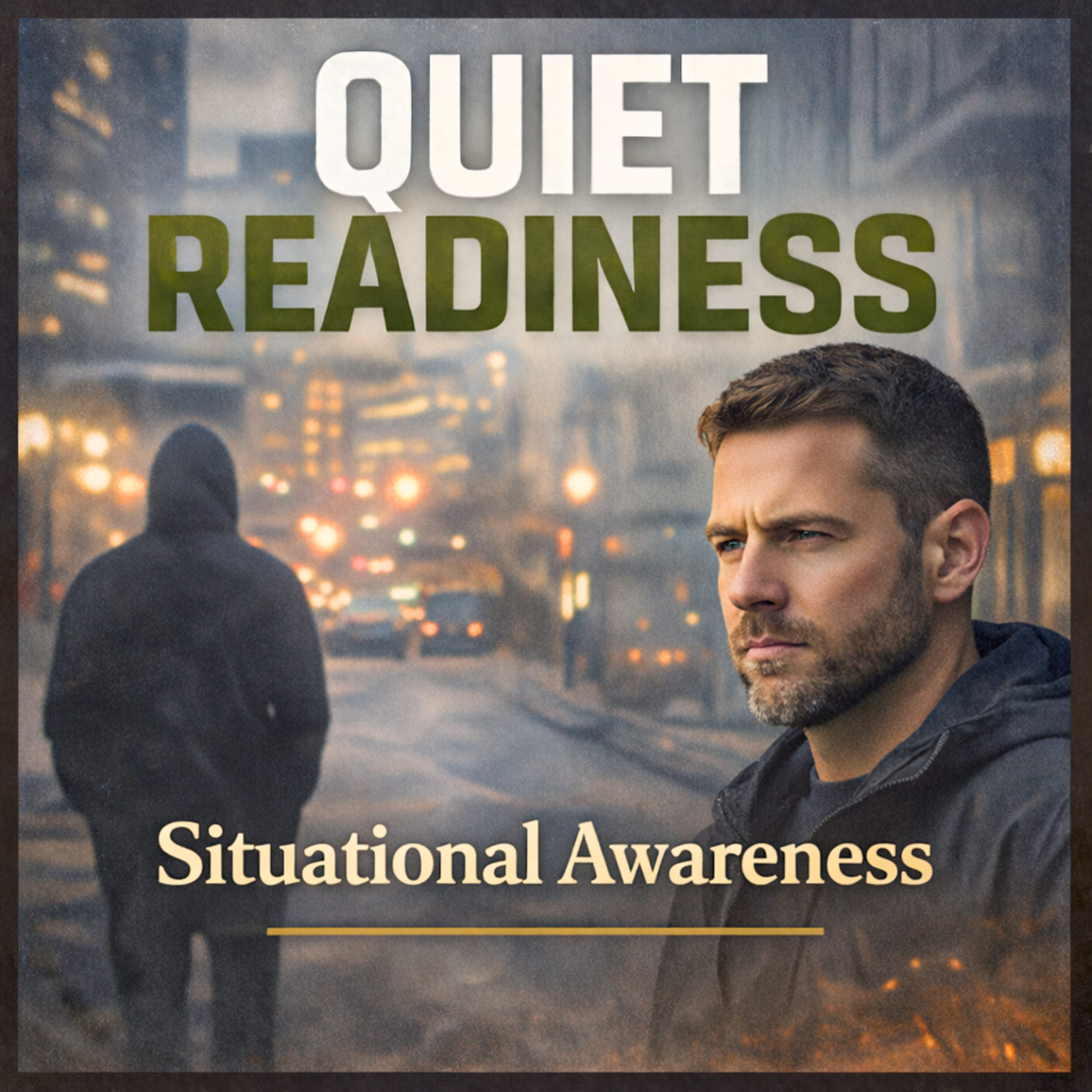
In the first episode of Quiet Readiness, David Burnell introduces the foundational skill that prevents more danger than any weapon or tactic ever will — situational awareness.
Drawing from decades of experience in military service, rescue operations, tactical training, and humanitarian missions, David explains why awareness is the quiet skill that keeps people safe in everyday life.
You’ll learn:
• why most people miss early warning signs• the three levels of situational awareness• how criminals and predators identify distracted targets• simple habits that dramatically improve personal safety• why preparedness begins with attention, not equipment
Situational awareness is not paranoia.
It is the calm ability to understand what is happening around you so you can recognize problems before they become dangerous.
This episode introduces the mindset that will guide the entire Quiet Readiness series — practical awareness, preparedness, and self-defense thinking for uncertain times.
Make sure to follow or subscribe for more Quiet Readiness insights on awareness, preparedness, and practical self-defense thinking.
Stay aware.Stay prepared.Stay quietly ready.
Get full access to David Burnell at davidburnell.substack.com/subscribe
Get every episode summarized
Each time Echo Valor Podcast publishes, we email you a written briefing from the transcript — the topics, who appeared, and any specific claims, with the ad reads skipped.
Email me new episodesFree for 3 shows. No card needed.
Hosts & guests

Transcript ready
35 searchable segments. Every word is indexed and playable.
Full transcript
Echo Valor Podcast — Quiet Readiness: Situational Awareness. Machine-transcribed; use the interactive transcript above to jump the player to any line.
This is quiet readiness, practical awareness, preparedness, and self-defense thinking for uncertain times. I'm David Bernal. Today, I want to begin this series with the most important concept in personal safety and preparedness. Situational awareness, the first rule of staying safe, not strength, not weapons, not tactics, awareness. In my experience, whether in military environments, rescue operations, disaster zones, or simply walking through a parking lot late at night, awareness prevents more danger than any other skill a person can develop. And the good news is that awareness is not something you are born with. It is something you practice. The quiet signals of danger. One of the most important lessons I've learned over the years is that danger rarely appears without warning. It usually whispers first, something feels slightly wrong.
A person who is watching when everyone else is moving along, a car that circles a parking lot twice, a situation that just doesn't fit the environment. These signals are not always threats, but they are indicators. The problem is that most people today are moving through life distracted. Fones in their hands, headphones in their ears. Attention somewhere else entirely. Their body may be present, but their awareness is somewhere else. Predators, whether criminals, or simply opportunistic troublemakers, look for that distraction. They are looking for the person who is not paying attention. What situational awareness really means. Situational awareness does not mean walking around paranoid or tense. It simply means being aware of your surroundings and understanding what is normal in the environment you are in. When you understand what is normal, anything abnormal stands out quickly. For example, when you walk into a restaurant, what do you see?
Most people see their phone, but an aware person will notice things like where the exits are, where people are positioned, where the staff are moving, and whether anything in the environment seems out of place. This kind of awareness is not stressful. In fact, it becomes second nature. It becomes part of how you move through the world, the three levels of awareness. There is a simple model I like to explain when I teach situational awareness. Three levels. Level one. Unaware. This is where many people spend most of their time. Eyes down, head in the phone. Attention somewhere else. This is the state where people are most vulnerable because they are not even aware of what is happening around them. Level two. Aware. This is the ideal state for everyday life. Relaxed, but attentive. You notice who is around you. You notice entrances and exits. You notice unusual behavior. You are calm, but you are present.
Level three. Alert. Something has caught your attention. Something doesn't seem right. You begin paying closer attention. You may create distance. You may move toward an exit. You may simply watch more carefully. Most potential problems can be avoided right here because awareness gives you time to act early and time is the most valuable advantage you can have. The power of small habits. Situational awareness is built through small habits. One habit I encourage people to practice is this. Every time you enter a new environment, ask yourself two questions. Where are the exits and what is normal here? That simple question alone will begin to train your awareness. Another habit is to occasionally pause and simply observe the environment around you. Not in a suspicious way, just quietly paying attention. People, movement, behavior. You will be surprised how quickly your brain begins to notice patterns.
Preparedness begins with attention. Many people think preparedness begins with equipment, gears, supplies and tools. Those things have their place. But real preparedness begins with attention. The ability to see what others miss. The ability to recognize early signals. The ability to act before a situation develops into something more dangerous. Situational awareness is the foundation of everything we will talk about in quiet readiness. It is the quiet habit that keeps people safe far more often than confrontation ever will. A final thought. You don't need to become paranoid to become aware. You simply need to become present. Look around. Notice your environment. Trust the small signals your mind picks up. Most of the time, awareness alone will allow you to move away from trouble long before it ever reaches you. That is the power of quiet readiness. This has been quiet readiness with David Bernel. If you value calm thinking, practical preparedness and quiet strength in uncertain times, follow and subscribe so you never miss an episode.
Stay aware, stay prepared and stay quietly ready.
More episodes