Loading...

religionspiritualitychristianity
SJ2 – Joseph and His King – St. Joseph and His World with Mike Aquilina – Discerning Hearts Podcast
About this Episode
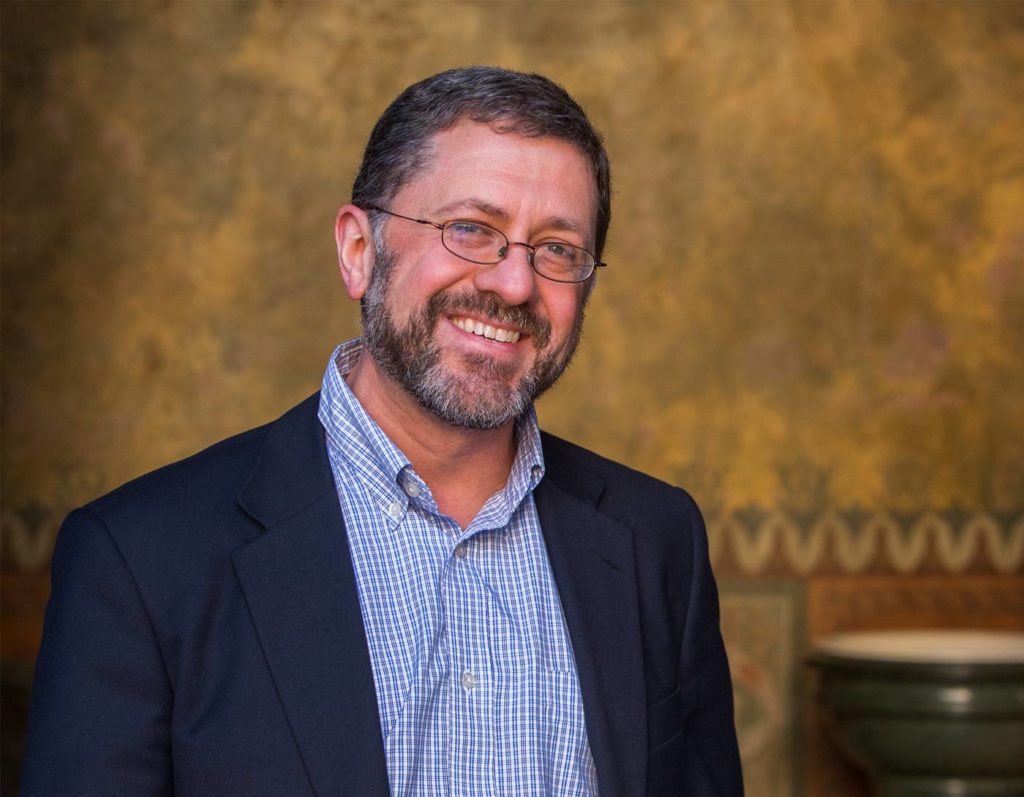
Joseph and His King – St. Joseph and His World with Mike Aquilina
Mike Aquilina and Kris McGregor explore the historical and cultural setting surrounding the birth and early life of St. Joseph, placing him within a small, quiet Nazareth shaped by hope and rooted in the promises to Israel. Though seemingly insignificant, this setting was alive with religious diversity, as groups like the Pharisees, Sadducees, and Essenes offered different approaches to living out the law. Political and religious life were deeply intertwined, often creating tension and instability, especially as rulers manipulated these dynamics for power. This environment formed the backdrop of Joseph’s upbringing—a world both ordinary and quietly charged with expectation of God’s action.
Mike Aquilina also examines the rule of Herod the Great, a brilliant yet deeply troubled leader whose reign combined architectural grandeur with brutality and fear. His attempts to secure power, including violent purges and even claims to messianic status, created an atmosphere of anxiety, particularly among descendants of David, from whom the true Messiah was expected. Against this turbulent background, Joseph’s formation stands out: raised in a devout, working family, trained in both faith and trade, and shaped by traditions tied to King David. His life, though hidden, unfolds within a larger drama where divine purpose quietly advances despite political corruption and human ambition.
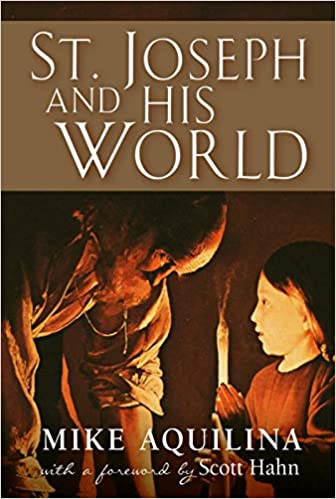
You can find the book on which this series is based here.
Discerning Hearts Reflection Questions
- How does understanding the historical and religious environment of Joseph’s time deepen your appreciation of his role in salvation history?
- In what ways can God be working quietly in your own life, even in seemingly ordinary or unnoticed circumstances?
- How do you respond to the presence of division or differing interpretations of faith within the Church or society today?
- What lessons can you draw from Joseph’s hidden life about humility, work, and faithfulness in daily responsibilities?
- How can you remain grounded in truth and integrity when leadership or culture around you is marked by confusion or corruption?
- What does Joseph’s formation in both faith and practical skills teach you about raising or mentoring others?
- How might fear and uncertainty, like those experienced under Herod’s rule, challenge or strengthen your trust in God?
- In what ways are you called to prepare your heart, like Joseph, for the responsibilities God entrusts to you?
About the Book
fsdfsd
About the Author
Mike Aquilina is a popular author working in the area of Church history, especially patristics, the study of the early Church Fathers.[1] He is the executive vice-president and trustee of the St. Paul Center for Biblical Theology, a Roman Catholic research center based in Steubenville, Ohio. He is a contributing editor of Angelus (magazine) and general editor of the Reclaiming Catholic History Series from Ave Maria Press. He is the author or editor of more than fifty books, including The Fathers of the Church (2006); The Mass of the Early Christians (2007); Living the Mysteries (2003); and What Catholics Believe(1999). He has hosted eleven television series on the Eternal Word Television Network and is a frequent guest commentator on Catholic radio.
For more episodes in this series visit – St. Joseph and His World with Mike Aquilina page.
Hosts & Guests
Transcript
Hi.
This is Chris McGregor.
Before we begin, I want to let you know that discerning hearts needs your help.
To continue offering free, faithful Catholic content, now in both English and Spanish, we
must raise $40,000 by Divine Mercy Sunday.
Why is this important?
Because souls around the world are searching for truth, for hope, and for Christ.
And this mission helps them find him.
Please visit discerninghards.com or tap Donate in the free discerning hearts app.
All gifts are fully text deductible.
Thank you and may God bless you.
ThecerningHearts.com presents St. Joseph and his world with Mike Aqualina.
Mike Aqualina is a popular author working in the area of church history, specializing
in petristics, the study of the early church fathers.
He is the executive vice president and trustee of the same Paul Center for Biblical Theology,
a Roman Catholic research center based in Stephenville, Ohio.
He is a contributing editor of Angela's magazine and a general editor of the Reclaiming
Catholic History series from Ave Maria Press.
He is the author or editor of more than 50 books, including St. Joseph and his world, the
book on which this series is based.
He has hosted 11 television series on the Eternal Word Television Network and is a frequent
guest commentator on Catholic radio.
St. Joseph and his world with Mike Aqualina, I'm your host, Chris McGregor.
Welcome back, Mike.
Hey, thanks for having me back, Chris.
OK, when we last left the people of God, especially those who now have returned to the land
that have been promised to them, the Galilee, we now find ourselves in familiar territory
don't we?
We do.
We do.
You know, it's the territory that we know from the Gospels because this is the land where
Joseph was born and grew up and this is the land where Jesus spent so much of his will
spent all of his young years and returned to often during his ministry.
The first chapter of the book, St. Joseph in this world, that final paragraph is going
to kick us off here.
It's said that later in that century, one of the families in Nazareth, a family of
artisans, gave birth to a boy and his name was Joseph.
His name, like the name of his birthplace, reflected the hope of his people, Joseph
and Hebrew means God will increase.
And that's what's happening, not only for a man named Joseph, but we see that happening
with the people of God in this moment.
We do.
We do.
This is an important moment, although it mustn't have appeared that way to them.
I mean, if this is just another birth and just another town and it's a quiet sleepy
place, population 100 in the middle of nowhere, far away from what everyone would consider
the real action of the time, the cultural centers like Jerusalem.
This is just a sleepy little place where life was quietly lived from day to day.
In the land, the whole part of Israel, there is, can we say, factions or different groups
that we need to be aware of, helping the people not only grow in their face, but also
function in society.
There's a scholar, Bargol Picksner, who refers to it as normative pluralism, that there
were many different ways of talking about how to live in faithfulness to the law.
And at that time, in the Holy Land, there was really a lot of religious ferment going
on, you know, in that first century BC, the two great teachers of Judaism, Hillel and
Shamai, both were alive during that time.
There were different groups who had different approaches to the law.
There were the Sadducees, who were a priestly class, aristocratic.
They tended to be part of the ruling class.
They focused on the ritual worship of the temple.
They were intensely concerned with that.
The Pharisees were a lay movement concentrated on exact observance of the law, to know what
the law required, and to be very just meticulous about its observance, so that you did not
risk fending God in any way.
You know, there were traditions at the time that said, if all of Israel could live faithfully
by the law for just one day, the Messiah would come.
So yes, they wanted to promote the exact observance of the law, the Pharisees.
And then there were the Essens, who were a separatist movement.
They didn't believe that the priesthood in Jerusalem was legitimate in that time, especially
the high priesthood, because the Maccabee rulers who had revolted against the Syrian
Greeks had kind of tinkered with it.
They had established priests and high priests, and then yanked them out of office, and done
a lot of things that played fast and loose with the rules.
So they kind of separated themselves.
They kept to what they considered the old ways, the old calendar, the old observances,
but they also had the respect of a lot of people because of their ascetical practices.
They had quite a following.
It's from this set that we probably got the Dead Sea Scrolls.
They're the likely ones who produced the Dead Sea Scrolls.
There was an Essene community in the Dead Sea near the region where these were found.
Some scholars believe that the Essens had an outsized influence in Nazareth in the first
century BC, farming that was done in Nazareth at that time.
Archaeologists tell us was done according to Essene regulations, according to Essene
standards.
So the Essens may have had quite an influence on the extended family of Mary and Joseph,
and maybe on their immediate family as well.
I don't want to trivialize the nature of the Sadducees and the Pharisees, but it sure
sounds like that in some ways the Sadducees, again, wealthy and largely materialistic.
If I'm not mistaken, they didn't believe in angels, or even the afterlife.
Right.
And they recognized only the five books of Moses, the Torah, as scripture.
Now careful, I don't want to say they were liberals, but they were the opposite in some
ways of the Pharisees then, because they were very much into the regulations, as you said,
and the customs and the traditions, and very meticulous.
So I don't want to say liberal and conservative or anything like that, but they were maybe
just very opposite each other, weren't they?
Well, they were often in conflict, and that was true during the reign of the Maccabees.
It was true later on during the reign of Herod and Herod's descendants, that they were
often jockeying for position and for influence in the capital city, and with the people as
well, because a ruler has to be concerned with the people.
The people can always rise up as the Maccabees did, overthrow their ruler.
So the Maccabees themselves were intensely aware of this, so was Herod, and they worried
about it.
So the rulers tended to play politics with the various religious groups, and they would rise
and fall according to the whims of the rulers.
So yeah, they had their ups and downs during the lifetime of Joseph, and then afterward
as well.
One of the surprising things that we find in the Gospels is just the strange unanimity
of various factions in bringing down Jesus Christ and their opposition to Him.
It's like they couldn't agree on much, but they could agree that Jesus had to die, and
they were willing to work together to bring about His death.
Yeah, it is fascinating, because it seems as though as we understand politics, there
is so much politic going on.
For many people, even today, in speaking from our experience, at least in the United States,
there was always this idea that the church and state are separated, and you could argue
that maybe that's not the best thing that could be happening at certain points, but what
happens is when the religion and the controlling of the governmental structures kind of collide,
it can be very hazardous, because that politicking can have disastrous effects as it did often
in this particular region.
Well, there was no clear separation in that time between government and religion.
It was seen as just part of this culture.
These were not separate phenomena.
Religion touched upon everything.
The law touched upon everything.
The law prescribed the way a ruler ruled.
There was no way to separate the two.
They were going to be united.
The worst rulers were the ones who tried to manipulate religion for their own end, ends
of power, greed, pride, and so on.
Well, as we get closer to the actual time of Joseph, this land, this area that had been
built up, but then began to really begin to have the disastrous effects of so many different
rulers, their corruption really started a big place.
Yes, the Maccabees were great warriors, but they were not great rulers.
This often happens that warriors know how to make war.
They know how to fight, and they're good at it.
Then they take office, and what do they do?
They keep making war, but now they make war with one another.
The Maccabees were always plotting and scheming against one another, one member of the family
trying to rest control from another member of the family.
This happened over the course of a century.
They did manage to do some things well.
They made a strategic alliance with Rome, which was just beginning to be a world power
at that time, this rising power from the West.
That ended up becoming a great economic boon to the Holy Land, because the Romans gained
so much from it, because they could use the Holy Land as kind of a road to get to the
East.
So it was important for trade, it was for important for troop movement, it was important
for so many reasons.
So the Romans got a lot out of this alliance.
The Romans did grow increasingly frustrated with the Maccabees, though, because the Maccabees,
plots and schemes tended to destabilize the region and leave the Roman alliances vulnerable
to incursions from the East, from Persia.
So yeah, there was some degree of stability.
The Romans certainly thought it could be better, and eventually they kind of came in with
a strong arm and established rule in the Holy Land the way they wanted it done.
Yeah, it's kind of interesting to understand it in some ways, why they would bring forces
in, because originally, as you said, it's just a trade route for them compared to everything
else they have going on, the Romans.
And yet, if you cut off that trade route, you cut off commerce, and they need that to
be able to keep going, it would be like if I'm for the odd reason, I'm thinking of the
Panama Canal.
I mean, the United States, we did that so that the East could easily connect through shipping
and everything trade so they could not only deal with the West Coast, but other parts
of the world more quickly.
And if there's destabilization in that particular passage, then it halts everything up
and brings you to attention as a nation.
Exactly.
And that's kind of what was happening there, right?
Yes, the stakes were very high.
And so the Romans eventually decided they were going to take matters into their own hands,
and they installed a ruler in Jerusalem that they thought they could rely on.
And he was an extraordinary young man.
He wasn't a Jew.
That was something of a problem, but he was willing to act like one.
He was an Edamite, his mother may have been Jewish.
In any event, he made a great show of conversion as an adult to Judaism, and he observed the
law with a great public show.
He tried to establish himself as the ruler that the Jews would want in Jerusalem.
And he gave himself to certain projects that he knew would be dear to their hearts.
He stopped banditry on the roads, on the highways, so that you could travel safely.
Commerce could happen more easily for the locals.
So he did these wonderful things.
He did rule with a strong arm, this man, this Herod the Great, and he manifested his rule
in some conspicuous ways.
I would say the two things he did to show his might were build buildings.
Herod was a master architect.
He had just great aesthetic sense, and he built grand projects in order to show off really,
in order to strike his people with awe so that they would be terrified of him.
The other thing he did was murder.
He was famous for his massacres, for his public executions, so that he could instill terror
in his people, and they would be afraid to plot against him.
Herod was a genius of diplomacy, and he was one of these great world figures in his time.
He had diplomatic relations with Cleopatra, with Mark Antony, with Caesar Augustus, all
of the great figures of his moment in history.
So Herod really did earn his title, Herod the Great, and he was called by that title during
his own time.
People recognized his greatness, even though they also feared him and loathed him as a
despot, because he was so murderous.
Yeah, I mean, this is a guy who had a crowd around him that really covered up as you
are bringing forward a suicidal type of depression, maybe bipolar or manic, or maybe even
worse.
Yes, he, you know, he obviously suffered from some mental illnesses.
They may have had organic causes.
They may have, you know, been the result of demonic activity as we find the life of King
Saul, certainly Satan has a great interest in the lives of rulers, because they can
affect the lives of so many others.
We'll return to St. Joseph and his world with Mike Aqualina in just a moment.
Descerning Hearts provides content dedicated to those on the spiritual journey.
To continue production of these podcasts, prayers and more, go to DescerningHarts.com and
click the donate link found there, or inside the free Descerning Hearts app to make your
donation.
Thanks, and God bless.
Did you know that Descerning Hearts has a free app where you can find all your favorite
Descerning Hearts programming, Father Timothy Gallagher, Dr. Anthony Lillus?
On senior John S of Deacon James Keating, Father Donald Haggerty, Mike Aqualina, Dr. Matthew
Bunsen, and so many more, they're all available on the free Descerning Hearts app.
Over 3,000 spiritual formation programs and prayers, all available to you with no hidden
fees or subscriptions.
Did you also know that you can listen to Descerning Hearts programming wherever you download your
favorite podcasts, like Apple Podcasts, Google Play, iHeartRadio, Spotify, even on Audible,
as well as numerous other, worldwide, podcast streaming platforms?
And did you know that Descerning Hearts also has a YouTube channel?
Be sure to check out all these different places where you can find Descerning Hearts Catholic
Podcasts dedicated to those on the spiritual journey.
We now return to St. Joseph and his world with Mike Aqualina.
Herod's life took some strange turns.
He would go into these bouts of depression, as you said, he would become suicidal.
And sometimes during these fits that he had, he would do things that he would later regret.
He was famous for murder.
He murdered several of his sons.
He murdered his favorite wife.
He murdered so many family members and so many people who were close to him.
And this doesn't lead to good mental health either.
So yes, Herod was a tormented man.
And yet he was a genius and his genius is manifest in so many of his building projects,
not only in the Holy Land, but also throughout the Mediterranean.
He's also known for kind of the audacity of his massacres that he was willing to murder
people who were so beloved in his homeland and he was willing to murder people in great
numbers at times.
There was a time when he got it into his head that he wanted to be the Messiah that was
expected.
He wanted to establish himself as the Messiah, lay claim to the title.
So he started minting coins with Messianic symbols, like the star on them.
Again, as I said, he rebuilt the temple on a grander scale than Solomon had built it
originally.
So he wanted to lay claim to this title, to this office.
And he consulted with the priests of the Jerusalem temple according to one account.
And the priests had the conversation over, you know, whether Herod might be the Messiah
and they decided that he probably wasn't because he was a foreigner.
And the law had said the chosen people should not be ruled by foreigner.
Well Herod didn't like that.
He found out who were the advocates of that position, the priest who had brought it forward
in the discussion.
And then he had them massacred.
This is Herod.
This is the ruler who's trying to lay claim the title and the office of Messiah.
And you know, some people believed him.
We find this group called the Herodians that they appear in the pages of the New Testament.
And even hundreds of years later, Saint Jerome and Saint Epiphanius testify to the endurance
of the Herodians as a sect of Jews who expected the Messiah to come from the lineage of Herod.
Very strange idea, but Herod tried to assert it and there were people willing to believe
it because he was so powerful and because he had done such amazing things, he had raised
up the apparent dignity of his people.
He had, you know, reconquered the lands and established a unified rule over the people
there.
And he brought about a renewed observance of the law and renewed worship in the temple.
So he had certain trappings of the Messianic office.
And he was ruling, it seems at the time when the Messiah was supposed to arrive.
So yes, he was, he was like a demonic counterfeit of the life of Jesus.
He had some of the outward trappings of the Messiah.
And yet he had so many other counter signs, you might say, that showed the possibility
of demonic influence.
Well, there you go.
I mean, as far as discerning, and going back and even discerning history, because this
is, as you said, very clearly, and this is based on, but frankly, a lie in being in
cohorts where the father of lies, because that genealogy, that importance of keeping those
painstaking records, he couldn't get around the fact that he was not born in the house
of David.
Yes.
And if you did live in, in one of the villages of David, if you were a descendant of David
himself, if you did live in the house of David, I'm sure that during the reign of Herod,
you would live with a certain worry about whether you might get, you know, gain his attention,
that he might get it in his head, that he needed to wipe out the descendants of David in
order to remove all competition.
Since Herod was a paranoid ruler, since he was always worried about plots against his
reign.
And he was even willing to murder his own sons, because he believed they were plotting
against him, you can bet that the members of the house of David lived with a certain degree
of fear that they might suddenly be noticed by him.
Well, as we've going to, unfortunately, here in the Gospel stories, he's not above killing
children.
Yes.
Yes.
It was probably a small massacre, so it didn't even merit a mention by the historians of
the time, but he did massacre the Holy Innocence when he decided to go after a plausible
messianic claimant, this Jesus who was born in the city of David in Bethlehem.
So he, you know, went looking for the children of that region.
Again, these are cultural backwater.
These are places off the beaten path.
So there weren't many children who fulfilled the description.
So what we call the massacre was probably small by the standards of Herod's massacres.
When he went after the Jerusalem priests, he murdered more than a hundred.
The Maccabees had sometimes massacred thousands in their bids to keep their throne.
But the Holy Innocence probably numbered fewer than ten.
Oh, boy.
But if it's in your family, just even one.
Yes.
I don't mean to minimize it.
No, no, no, I know you're not.
It's just that it's just the fear and the damage it could cause to, and I speak of family,
not just the smaller family, but the entire village, as you said, because of the nature
of the clan.
Yes.
David's clan.
They would not forget it.
Right.
Exactly.
And that memory just stays with it.
And I think it was really beautiful and quite poignant that in the back end of the chapter
that we're discussing chapter two of St. Joseph in his world, you would say so eloquently
in the villages inhabited by David's clan, pregnant mothers were surely reminded quite
likely that this child could be the one.
And certainly there was the expectation because the time, time of fulfillment was at hand.
Yeah, that the small children were raised with the virtues and skills modeled by their
ancestors, the kings.
They had to be brave for battle like David.
They should be wise and discerning like Solomon.
They should be zealous for true worship like Hezekiah.
It would not be surprising if descendants of the psalms received musical training as
well.
And this is the beautiful seed bed that Joseph is born into.
Yes.
I like to imagine that because David was so musical, it's one of the ways that he exercised
his influence and remained in the consciousness of his people for centuries.
And he remains in the consciousness of all those who follow biblical religion even today,
because of the psalms, because of the songs he sang, and we know that they cast a spell,
King Saul himself became addicted to David's music.
So I like to imagine that the Holy Family was a musical family, that this was a tradition
that remained in the house of David.
It's beautiful to sit and ponder.
I don't know how many of us spend time wondering about this, I guess we could say the
identity of Joseph, because we're not sure of his birthday.
We're not sure where he's placed exactly in this period.
I mean, as far as the absolute moment by moment, you know, how many years old, how many,
but these would have been his formative years.
Yes.
Yes, we do know that he was probably raised in family that gave him his trade.
So they would have been a family of carpenters.
You tended to grow up in the family business, so to speak.
So Joseph would have spent his childhood first just hanging around the workshop, you
know, cleaning up.
Perhaps they'd give him a broom and have him sweep sawdust from the floor doing that sort
of work.
And then eventually he would graduate into making small items, carving small items, making
tools, and that sort of thing that could be sold.
And then he would graduate into the more elaborate projects, the construction project that
would likely have been the family's bread and butter, where they earned serious money.
So he would have grown up working.
He would have had some minimal education as well.
You know, there's plenty of evidence of that that the children in a village like Nazareth
would have been educated in the synagogue, educated to know the Torah and to read the Torah
to ponder it.
And this would have happened for at least a couple of years in their childhood, so that they
could attain a certain minimal literacy and the ability to figure mathematically, because
they had to keep their books, carpenters had to build their clients, and they had to collect
those bills.
They had to keep accounts that way.
When you grew up in the business like that, you know, you were an important contributor
to the family's economy, to the family's welfare.
This is just part of your upbringing.
It was a natural thing in that day and age.
Well, there's something very special about Joseph, fact that even in the last line you
would say that somehow the past of Herod and Joseph were destined to converge.
Yes.
And that's where we're going to have to pick up when we come back to the rest of the story.
And our next episode of any final thoughts, Mike?
Now, I'm looking forward to that discussion, because as you mentioned, Herod would have
been the ruler for much of Joseph's life.
Perhaps the majority of Joseph's life, as I tend to think, Joseph would have spent
his lifetime thinking of Herod as the king.
This was something that would have been on his radar all the time.
It would have been part of his consciousness.
So yes, their paths were destined to cross.
I keep going back to these footnotes, but it seems as though we've always talked about
how Mary was so prepared, so beautifully, the macular consumption and her raising and
being prepared for that moment with the angel where she would give her a scent.
And yet have we ever really thought, at least I haven't, but thanks to you, I have now,
how Joseph was prepared and how God will really, at the moment, for Joseph.
Yes.
I mean, such an important figure, not just a righteous man, but the righteous man.
Yes.
Mike, thank you so very much.
Thank you, Chris.
I'm enjoying the conversation.
It's always great to talk about St. Joseph.
You've been listening to St. Joseph and his world with Mike Aqualina.
To learn more about this subject, you can purchase the book St. Joseph and his world on which
the series is based, visit cepterpublishers.org, the website for the publisher, cepterpublishers.
Or you can find it at any fine Catholic bookstore.
To hear and or to download this episode, along with hundreds of other spiritual formation
programs, visit discerningharts.com.
Before you can find it in the Descerning Hearts Free app, this has been a production of the
Descerning Hearts in cooperation with the St. Paul Center for Biblical Theology.
I'm your host, Chris McGregor.
We hope that if this has been helpful for you, that you will please pray for our mission.
And if you feel as worthy, consider a charitable donation, which is fully text deductible,
to help support our effort.
But most of all, we hope that you will tell a friend about DescerningHearts.com.
And join us next time for St. Joseph and his world with Mike Aqualina.
