About this episode
The Tragedy of Sohrab and Rustum — When Warriors Are Forged by Fire
In this episode of the Built By Fire Podcast, David Burnell explores the powerful story behind Matthew Arnold’s classic poem Sohrab and Rustum—a tragic tale of war, identity, legacy, and the fire that forges warriors across generations.
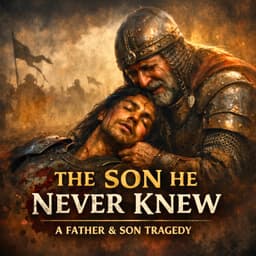
Rustum, the greatest warrior of Persia, unknowingly faces his own son in single combat after years of separation. What unfolds is one of the most powerful stories ever written about honor, misunderstanding, and the cost of a life lived in battle.
This episode reflects on the deeper meaning behind the story:how warriors are shaped by hardship, how fathers and sons carry the same fire, and how the trials of life forge character, wisdom, and purpose.
Built By Fire shares real stories, historical reflections, and leadership principles drawn from lives tested in conflict, service, and faith.
If you have ever faced hardship, carried responsibility, or wondered what the fire in your life is meant to forge—this conversation is for you.
Subscribe for more episodes exploring the lessons forged in the fire.
Get full access to David Burnell at davidburnell.substack.com/subscribe
Get every episode summarized
Each time Echo Valor Podcast publishes, we email you a written briefing from the transcript — the topics, who appeared, and any specific claims, with the ad reads skipped.
Email me new episodesFree for 3 shows. No card needed.
Hosts & guests


Transcript ready
77 searchable segments. Every word is indexed and playable.
Full transcript
Echo Valor Podcast — Built By Fire: Sohrab and Rustum. Machine-transcribed; use the interactive transcript above to jump the player to any line.
This is a built-by-fire podcast episode So Rob and Rustam, when fire tests blood. Some stories survive centuries, not because they are old, but because they are true in ways that time cannot erase. In 1853, the English poet Matthew Arnold wrote a powerful narrative poem called So Rob and Rustam. It is a story about war, identity, honor, and a tragic misunderstanding between a father and a son. But beneath the poetry lies something deeper, a truth about how warriors are forged, and what happens when the fires of life shape two men who do not yet know they belong to the same flame. It is in many ways a story about being built by fire. The story begins with Rustam, the greatest warrior of Persia, a man of immense strength and reputation. The kind of warrior whose name alone could turn the tide of battle. Rustam had married the daughter of the king of the Kurds, but before their child was born he was called away to war.
War has always had that habit, it interrupts life, it fractures families, it leaves unfinished conversations behind. Rustam went to the battlefield believing he would return to raise his child. But his wife feared something about the life Rustam lived. She feared that if Rustam knew he had a son, that son would be pulled into the same brutal world of warfare and glory that defined his father. So she made a decision when the child was born she sent Rustam word that the baby had been a sickly girl. But the child was not a girl, the child was a son, his name was So Rob. And though Rustam never knew it, the fire that burned in him, the warriors fire had already passed into the boy. So Rob grew up hearing stories of his father, stories of courage, stories of victory. Stories of Rustam standing unbroken on fields of battle, and those stories ignited something inside the boy. There is something about a warrior's bloodline, something that cannot be hidden forever.
So Rob grew into a powerful young fighter, and though he was raised among the tartars enemies of Persia, he carried inside him the same strength and spirit that had made Rustam a legend. But there was one thing missing in Sohrab's life, his father. Above all else, Sohrab longed to know the man whose shadow stretched across the stories of his childhood. He didn't just want the stories, he wanted the truth, he wanted the man. So everywhere he traveled, everywhere he fought, he carried one question in his heart. Where is Rustam? One day fate answered. The armies of the tartars and the Persians met near the river OXIS, war was about to break out. But before the battle began, Sohrab proposed something different. He challenged the Persian army to send out their greatest champion to meet him in single combat. And he had a reason for that challenge. Sohrab believed that if the Persians were forced to choose their best warrior, they would send Rustam. And finally, after a lifetime of searching, he would
meet his father. The Persian commanders heard the challenge, and they chose Rustam, the greatest warrior in Persia. But Rustam insisted on one condition. He would fight unknown, no name, no identity, just a warrior on the sand. When the two men finally faced each other, something strange happened. Sohrab looked at Rustam and felt something he could not explain, a pull, a familiarity, a sense that the man standing before him might be the one he had been searching for his entire life. Sohrab did something no warrior would normally do on a battlefield. He stepped forward, he embraced Rustam's knees, he took the old warrior's hand, and he asked a single question, art thou not Rustam? Imagine that moment, the battlefield silent. A son asking the only question that has mattered to him his entire life. But Rustam had lived too long in the world of war to trust such a moment. He had enemies, he had rivals, he had seen deception on too many
battlefields, and though part of him longed for the possibility that this powerful young warrior could be his son, the hardened instincts of a lifetime of war took over. He suspected a trick, he suspected manipulation, he suspected that someone might be trying to shame him in front of the Persian army. So Rustam rejected the question, and he denied the possibility, and he told the young challenger to fight. What followed was one of the most tragic duels in literature, two warriors, two flames, two men forged by the same fire, fighting each other without knowing the truth, and in the end, Rustam struck the fatal blow. Only afterward, only when the battle was finished, did Rustam discover the truth. The young warrior he had defeated was his son Sohrab. And in that moment, the greatest warrior of Persia realized something that every warrior eventually learns. Strength cannot undo tragedy, victory cannot erase a mistake, and sometimes the fire
that builds us can also break us. Why does this story matter? Because Sohrab and Rustam isn't really about Persia, or the Tartars, or a duel on the sands of the oxis. It's about something far more universal. It's about identity. It's about legacy. And it's about the fire that shapes men across generations. Sohrab was built by the stories of Rustam, built by the legend of his father, built by the fire that burns and warriors who believe they were born to stand in hard places, but Rustam was built by a different fire, the fire of responsibility, the fire of reputation, the fire of protecting honor in a brutal world, and when those two fires collided, tragedy followed. But there is another lesson here, a deeper one. The fire that builds a warrior is not meant only for battle. It is meant for wisdom. It is meant for restraint. It is meant for understanding.
And sometimes the greatest battles in life are not fought against enemies. They are fought against misunderstanding, against pride, against the hardened instincts that come from a lifetime of conflict. Every warrior eventually faces this moment. The moment when strength alone is not enough. The moment when wisdom must temper the fire. The moment when the man forged in battle must also become the man who understands the cost of battle. Matthew Arnold wrote Sohrab and Rustam in the 19th century. But the story still lives because the truth still lives. Fathers and sons still wrestle with legacy. Warriors still search for meaning beyond the battlefield. And men still struggle to understand what the fire in their lives is really meant to forge. Being built by fire is not just about surviving hardship. It's about becoming something worthy of the fire itself. Stronger, wiser.
More aware of the fragile threads that connect us to the people we love. Because in the end, the greatest victory is not defeating the enemy. The greatest victory is understanding the fire that built you and using it to protect what matters most. This is the lesson hidden inside the ancient story of Sohrab and Rustam. A story of warriors, a story of legacy, a story of a father and a son. And a reminder that the fire that shapes us must eventually teach us who we are and who we are meant to become. This is built by fire.
More episodes