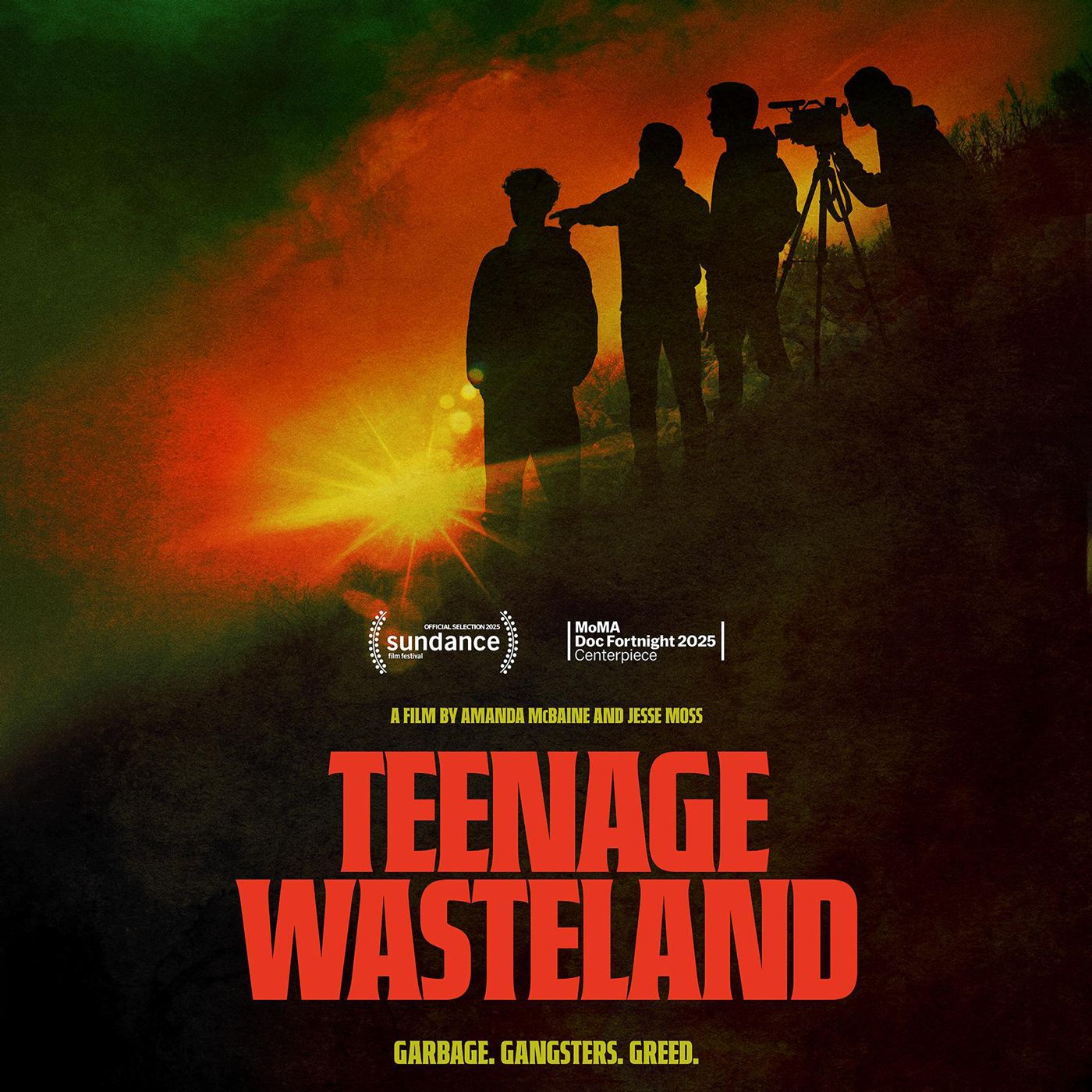
About this episode
Moss and McBaine, the Boys State and Girls State team, describe tracking down Isseks, winning his trust over a twelve-course brunch, and the moment a crayon-drawn map of his gutted classroom convinced them to physically rebuild it on a Hollywood soundstage. They talk about editor Christopher Passig (Telemarketers) cutting the archive down from hundreds of hours, the ethics of dramatizing a documentary about documentary-making, and why they left the VHS's tracking lines and artifacts untouched rather than cleaning them up with AI.
They also get into what it meant to bring Isseks's original students — now in their fifties — back together decades later, a story one of them had never told before about his father, and how a film about a 1990s toxic-waste scandal ended up feeling, in Moss and McBaine's words, urgently "of the moment."
Become a supporter of this podcast: https://www.spreaker.com/podcast/the-projection-booth--5513239/support.
Become a supporter of The Projection Booth at http://www.patreon.com/projectionbooth
Get every episode summarized
Each time The Projection Booth Podcast publishes, we email you a written briefing from the transcript — the topics, who appeared, and any specific claims, with the ad reads skipped.
Email me new episodesFree for 3 shows. No card needed.
Transcript ready
494 searchable segments. Every word is indexed and playable.
Full transcript
The Projection Booth Podcast — Special Report: Teenage Wasteland (2025). Machine-transcribed; use the interactive transcript above to jump the player to any line.
Enjoy big savings with Red Hot deals at Vons and Albertsons. This week at Vons and Albertsons, baby back pork ribs are 299 per pound with membership where applicable limit 3 racks, and ballpark hot dogs or hamburger buns 8 count are 299 with digital coupon. Plus, personal seedless watermelons or canelope are 199 each with digital coupon. Enjoy fresh and delicious savings for every meal. Hurry in, these deals won't last. Visit vonsouralbertsons.com for more deals and ways to save. Stop wasting your nights on a mattress that doesn't get you. Experience the most comfortable mattress in the world. The sleep number smart bed. At the touch of a button, you can personalize your comfort. Choose firmer or softer. Adjust cooler to warmer. And right now, save up to $2,500 during our massive Labor Day event. Go ahead and go to your local sleep number store today. Because we have your number.
Enjoy big savings with Red Hot deals at Vons and Albertsons. This week at Vons and Albertsons, baby back pork ribs are 299 per pound with membership where applicable limit 3 racks. And ballpark hot dogs or hamburger buns 8 count are 299 with digital coupon. Plus, personal seedless watermelons or canelope are 199 each with digital coupon. Enjoy fresh and delicious savings for every meal. Hurry in, these deals won't last. Visit vons or Albertsons.com for more deals and ways to save. Good evening and welcome to Millton High School.
Tonight we have a visual history of Milltown as some other surprises. He never felt like a teacher. He was like a column hippie friend. Other educators would have us believe Fred was a crack putt. You don't learn by sitting in a classroom and taking notes. You learn by doing, by getting involved. Hello. Wow. It's like going back in time. Action. I thought of myself more of a nuisance. There was an outsider misdirected youth. It was sort of against the system, but deep down it was cripplingly shy. In the 90s what called me a poliser. You're a dick, Jeff. You're a dick, Jeff. Yeah, Jeff, you're a dick. The whole school teachers thought it was a joke. Making a movie is not like writing a 5-page essay. Yeah, this is real life.
That's harder. Middletown was picture perfect, but Fred was to take us what's underneath the surface. Toxic waste was illegally dumped for 20 years. We're on the edge of some kind of pond. The smell is making me sick, Fred. We were meddling kids making a documentary. Like that felt really powerful. Cover up. From the county, state, and federal level. I'm nervous for that kid. I know what you're there because I've buried lots of them. I don't think any of us had any sense of the scale of this story. The biggest garbage company was in fact run by organized crime. We're talking about mafia in our neighborhood. There was a perception that Fred was leading us into danger. The guy did threaten me. I think our phones are tough. Mr. B, advice is that I buy a gun. You're going to stop the deal, take me. I have nothing to hide. No! It's more than just a record of environmental crime.
It's this archetype of young people rising up to the challenge and doing something about it. The school had had enough. I remember I asked Fred if we should keep going. He said, yeah, push harder. And I was like, fuck. Yeah! It was a community. Gosh. It's one of the only reasons I came to school. What if we could get it right? What if society could turn the world back right side up? That became one of our models, civic courage. It means acting as if you live in a real democracy. Hey folks, welcome to a special episode of the Projection Booth Emory, host Mike White. On this episode, I am talking with directors Amanda McBain and Jesse Moss about their new
documentary Teenage Wasteland. It's the story of a journalism class in Middletown, New York who kind of stumble onto a real story and made a documentary of their own about it. The film is now streaming on Netflix and I can't recommend it enough. Thanks so much for listening and I hope you enjoy this interview. How did the story of Middletown come onto your radars? Fred has patiently kept the flame alive of this story. He has a wonderful blog. I think it's garbagegangstersangree.com. And a great journalist that we know, Jeff Mann, stumbled on Fred's blog and was like, what is this? And wrote a profile of Fred, which we then read. And we're like, similarly like, what is this? What an incredible story hiding in plain sight. And I think we are of the same generation as these kids who were a little bit older. And I think we could connect with sort of the youthful experiment of the camcorder and growing up in the early 90s and finding our voice.
And when we met Fred online, just to talk about the project, like he was just incandescent and we loved his fighting spirit and felt like something we wanted to invite into our lives and a kind of dark time and gave us hope to hear from him and to learn about this story. Even though it deals with some heavy stuff, as you say, like environmental pollution and crime and corruption, I think it was just feeling like this is one of those stories that the world needs to know. And there was a blip of attention in the early 90s around the project, but like Fred and these kids, they could be an inspiration to so many people. They were to us and hopefully we could transmit that with this movie. How does that go after you talk with him for the first time? Fred and his wife invited us up to their house. He still lives in the same house in Middletown and made us a like 12 course brunch, which we were there for a really long time and then hung out in the backyard and Fred and Denise
are real people and wanted to get to know us before they opened up their basement to us. We had such a great time. Did we even go into the basement at that point? I don't even know, but we spent a lot of time talking and getting to know one another and at some point when we were asking about this classroom, he took out a crayon and in a vocing the memory of the space drew a map of what he remembered it looking in where all the chairs were and what the cameras were and what the camera was. And we were so intrigued by that and the memory of that, that sort of got our creative juices going and we doubled down in our interest in the creative, what the creative possibilities were beyond even just the plot of the story, which was Byzantine and like overwhelming because they've been following this story for many years and there's many players, good and bad players and there's just complicated and there's about 500 hours of archival material
that he had amassed over the seven years he taught this class with these students. He's a good archivist, but that's a lot of material and it's all VHS and it's all from the 1990s and as filmmakers, as storytellers in 2020, whatever that was, three, four, would people care, right? And I think that the more we hung out with Fred, the more we cared, the more footage we saw, the more we cared. So I just always lean into that. Like if I can keep myself interested and we shared some of the VHS material with our 17 year old at the time and she was intrigued by this footage, even though it was on VHS. So we felt confident that we had something that we could put together and do justice to the original film they had already made by the way. So we were coming in, remixing his great song that he'd already written and that's like very intimidating and did we have the goods? I don't know. I've always loved the idea of like a hyper longitudinal film and never most Veritae films
we've made have been a couple of years in somebody's life. And that's already a long time, but this was of 30 years in the making movie and I just, we've probably seen some of the same films that just have that kind of sweeping arc of life and death and we here was a chance to do that with this story and by inviting these young people now, our age 50 plus to revisit their teenage years. We just knew it could have a kind of dimension that would, the central themes of this story I think are utterly of the moment in terms of democracy and journalism and environmental health and the power of teaching and the voice of young people, all that stuff couldn't be more important right now, but like we could bring it, we could frame it with a contemporary perspective and give it a kind of sweep that was attractive. Was there a particular moment where you two looked at each other and said, we have to do this, can you pinpoint that? Remember when we were looking at the archival that was available, it wasn't all available
all at once, but like the first tranche that came in and when the kids present their findings to the local news editor, it's the scene and it's a set piece in our film about 20 minutes in is an amazing face off between like youth, idealism, but also some of the night naivete about what they were confronting, which is real pushback, not just from like the criminal element and the corrupt element, but from like sort of institutional systems, right? And that's the adult world, like there's a lot of things that are rigid or challenge you to have to push back at them. And I think that was that scene as Veritae filmmakers primarily was to us felt like an immersion, like a present tense playing out kind of scene that we like.
So we were like, huh, if we can get through or for those moments or done golden, but then of course things got much harder from there, but that to me was useful, how about you? I think it was that Gary Grossman scene, but also the cram drawing and group drawing that Fred does and the idea that light bulb for us, like we could let's bring this classroom back to life. Let's build, let's fabricate it. It doesn't exist anymore. The school boy has got rid of it. It's now you've seen the film. So we said to Fred and not expecting him to be comfortable with the idea, can we're going to rebuild the classroom because we don't have that much documentation of it. And it was so central to your project, let's bring it back to life and we'll shoot your interview there. And he was like, I love the idea. And that's the kind of the spirit he has. And so we were able to do that and do it with this team in Hollywood. It does like every they did like good night and good luck. Any movie that has like television equipment, they do and it all work.
They grow back to the. They love it. It's yeah. It's a project and we normally couldn't afford to work with. They were working cameras, but they built, they helped us. We had a great production designer who does like Broadway stage and he loved this story. So we were able to conjure. There was so that I think the fact that we had this gritty VHS kid made documentary stuff and then this sort of conjuring on a set was just a collision of filmmaking strategies that got us excited. So that I'd say the crown drawing and Gary Grossman were like the. Well, and Fred, I will say and Fred obviously like what you need. People in your life at the right time, maybe everybody in every. Walk of life has that feeling, but I definitely have that feeling in documentary too. Like we needed to make this film at that moment when I was feeling a little despairing about just generally. Politics and how do you be an active player in. In a democracy that feels overwhelmingly. Chaotic.
And I think Fred walked into our life at the exact moment I needed a refresher in how to be activated. And I would say the footage also made us laugh. We found a wonderful editor, Chris Passag, who cut telemarketers on HBO. I don't know if you've seen that, Mike, but it's a wonderful series unlike anything else on in documentary, I think. And just we laughed so much and Chris is funny. And just we loved that we could have the feels, all the feels while making that. I mean, we have to for us and what we do. And we do do make films about some very hard and dark things like laughing is 100% part of the deal. And it's garbage, it's garbage funny, not really, but like. We had a great time making this film. And I think the film is funny. And a garbage comedy. Not exactly. That's a bit of an. It's all the tragedy, right? A tragic comedy. A garbage tragedy comedy.
A garbage tragedy comedy. A garbage tragedy comedy. Whatever. A toxic waste tragedy comedy. And it already made a toxic Avenger, a trauma way back. We were happy to quote that. How much of yourselves did you see in these kids? I'd say a lot. I did have a journalism teacher in high school and a class. Not quite as radical and renegade as this, but like a space and a group. It felt unlike anything else in high school. And it was like a tremendous glimpse into a freedom of adulthood and adult life and like even a trade, a practice of journalism that was exciting to me that. And I didn't care about all the other stuff in class. So that was, I could just relate to which type was I was probably a little mixture of all of those people on maybe. And none of them fit neatly in types. You were saying this a man of there. We expect high school movies to follow into high school tropes. And there was a little bit of breakfast club in this. But they all are more complicated. What was 100% Rachel? I'm sorry. That's you were angry.
I'm crocker. Yeah. I was a little dark. Yeah, she's amazing. And yeah, unbelievable. I love that in a room, you just see what's on the wall. It's like this David Lynch. And it's just such a portrait of such a time and her soul. And her willingness Rachel was, she's director. And she understandably was like, what kind of movie are you making? And who am I in your movie? And I'm not going to give you my whole movies until I really know you. And so we didn't get her home movies, which are really important. So the last week of that is. Yeah, yeah. Yeah. It's cool. I get it for sure. But yes, we did come of age around the same time. And the 90s were a thing. And early documentary was a thing. And so there's a lot of shared memory there,
even though I grew up on the West Coast and they were in New York. But same music. Gosh, what's playing in her car? What in a commode to you or whatever? All of that music, obviously the music everybody shared, right? We didn't use in our film, right? We partly because it was too expensive. But partly you can't license hip-hop rates. I loved that we could share Veruca Salt. What's the, you know, it's like good stuff. How were the other kids bringing them along? And was there any hesitation from them as well? No, I think that they were, they're so close to Fred still. That's a testament down. Important he wasn't their lives. David Birmingham and Fred still have lunch once a month. And two of them are still in Middletown, Mike and David. And once they knew that Fred had blessed the project, they were like, OK, we're in. And in fact, Jeff and David had gone to see Ward Stone, who's the New York state pathologist,
was on his deathbed when we began the project. We couldn't, we weren't filming it. But actually, Jeff and David went and filmed a visit with Ward. And they were kind of still ready to keep making the documentary. And it was the great. I don't know, expression of their spirit to be a part of this. And they were wonderful, actually, to Jeff had never talked about the fact that his father had been in jail in high school. And I don't think he went into this project thinking he was going to talk about some of that stuff. But that comes later. That wasn't the first thing we talked about. No, no, not it. Also, if it wasn't relevant, then obviously, wouldn't have made it in the film. But like, I think, you know, them as adults realizing how meaningful and father figure like Fred was at the time is certainly why they wanted to do this for Fred. But of course, I think, once they got to know us, it was also a group collaborative effort seen sort of, like I said, as a full collaborative remix
of this thing that they'd all done 30 years before, which is bananas. David Birmingham is like one of the more profound people I've talked with in a long time. And that was just a delight that he's so thoughtful and smart about everything he, like, yeah, so that was a surprise. You just don't know who, how, who are you when you're middle aged after you were in high school? You just, for the most, well, everybody that we hung out with, they just had actualized into these amazing people and amazing parents and, you know, all the good stuff. And I love that. So it was a really positive, you know, kind of expected, like, oh, you know, like everybody's so young and full of potential in high school and, you know, where are we going to get when we're like all facing each other as middle aged people. And actually, it was like the opposite. I was like, this is great. That was good. You know, it was cool and we brought them onto the set and they were all together. We did their interviews on set, but separately.
And then there was like a brief period of time, maybe half a day when they were all together. And Fred just kind of became a classroom again. This kind of set in Burbank suddenly became Fred's classroom. And they were kind of, we just backed off. And that was beautiful. And see some of that in a little bit of, in the film on the set. No, not at all. There was that, there's a moment the set got taken apart. We weren't sure if we would, we weren't sure he should be there. He thought he might be traumatized. But he said, sure, I'd love to come back to the set. And he just joined in the dismantling of the set because that's just kind of who he is. And it became really beautiful and poignant unexpectedly. So there's a way in which we were working in such a controlled way. But it becomes, I don't know if this set became alive and unexpected in kind of documentary ways that we really, I think we truly love. Other than the bulk, you mentioned 500 hours of VHS. Were there any problems having this archive of basically abandoned technology now? Brad had the foresight to digitize the good chunk of it about 10 years ago.
Wasn't done at the highest compression or lowest, whatever that sort of optimal digitization codec would have been. But it was still really good. And probably if we had to re-transfer it at all, now would it decay significantly? So we had, we benefited from that. There were some tapes that he had kept that we had re-transfered it. There was a kind of aesthetic editorial question to have all the imperfections that remain in the VHS like the overscan, underscan, artifacting. A lot of that you could clean up with AI tools and whatnot. But we were like, no, it's sort of the imperfection of the work is what, and the perfection of it for that matter is what we want to celebrate here, all of it. That was interesting. The limitation that we had to face, and this is also part of why we did the re-enactment or the dramaturg, whenever you want to call that space that weird, unreal, real space of the class, the recreated classroom, the reason we had to do that is because a lot of the footage that they shot back in the day was of the thing that they were shooting
or they were standing up. They had taken in a lot of 60 minutes, documentary, so standing up and saying smart things about a thing that was happening behind you or a person you're talking to, you're just very formal. But they were not shooting very, very, very style, penny-baker style, like behind the scenes of the press conference or whatever. They were not really shooting each other that much. The first pass on all this archival was like just grabbing every instance of them that were they appear in the footage, right? And that didn't yield enough of process, right? What if the classroom is a whole look like? Who was working camera when was someone on stage, that kind of on the sound stage, right? So at a necessity for helping people understand the space, the sort of the womb of that classroom, we needed to recreate it. For the audience as much as we needed to recreate it,
for the subjects in the film to have recall on their high school experiences, which were much more impressionistic than Fred's memory of that time, which because he was in whatever 30s, 40s, could remember details. Oddly we made this movie about smoking in the bandit, Bert Reynolds, how neat I'm making that movie. And that was a big Hollywood film. And there was a lot of behind the scenes footage shot. And I haven't really thought about these two films relation to each other. That was made over 10 years ago. But it is a movie about making a movie. And we wanted to kind of do two things simultaneously, which is to make a movie about making a movie. But the audience needs to know what the movies are. It's not just about process. It's about what the movie's about. And they had made a series of films culminating in garbage gangsters and greed, which is their magnum opus. They're sort of culminating movie. But over the years they did the shorter versions of that. And they built on each film in the class afterwards would build on that reporting.
And so we needed to also tell the story, not just the making of the story. So that was a little bit of the balancing act of the film, I think, and also to not get lost in the lab ring, which was also tempting, because you'd be like, well, I love organized crimes, amazing. Like New York gangsters are amazing. And like I'm new Jersey and what love canals amazing. And this is inherently always the challenge of an archive film, too. Or any film from that matter is like, what matters here? And I'm like, this is going to be a feature. It's not a series. How do we chart our way through this? Fred's own political awakening as a young person, fascinating. How much backstory and do you need against the front story? So I would love the challenge of this layer K film. And it's kind of, I think part of the reason we took it on and why we take anything on now is partly formal. And we talked about all the sort of deep meaning of why this story matters. But I think the sort of formal, huge VHS mound over here and total kind of. It's not worth it if it scares you a little bit, right?
I'm sure you've heard that both. It really is only worth it if you're like, I do think you need a big idea to get a movie off the ground with financiers. And we were like, and we're going to recreate the classroom. And they were like, OK, let's see how that goes. And that was that. It's just not something we've done before. We usually work with real environments. Where and when can people see this film? The film will premiere on Netflix on September 4, which is next Friday. And I am so tickled to see Mike Regan's thumbnail on Netflix. Now if you go there and he's wanting to get the dump behind him. Oh, I got in his 90s sweater that's so big. It tickles me so much that this size project is now going out to a global audience. It's amazing. There's Mike and these kids and the work that they've done and getting the attention and threat that they deserve. Mr. Moss, Mrs. Bain, thank you so much for your time. I really appreciate this. Thanks, Mike. Take care.
I'll hear in the fields a pile full of meals. I give my back into whom I live in. I'm going to fight to prove my right. I don't need to be broken. I'm going to fight to prove my right.
Don't cry. Don't raise your eye. It's only today's we say. I'll take my hand. I'll travel somewhere else with you. What I've to fight up is gold and the past and the shoulder. The exodus is here. The happy world's on the edge. Let's get together for the game of the shoulder. Teenage waste land.
It's all the teenage waste land. Teenage waste land. Teenage waste land. They're all wasted. Teenage waste land. Teenage waste land. Teenage waste land.
Teenage waste land. Teenage waste land. Teenage waste land. Teenage waste land. Teenage waste land.
Teenage waste land. Teenage waste land. Corporate terms apply.
More episodes
More from The Projection Booth Podcast

Special Report: Occupational Hazard - The First Coral Reefers (2026)
The Projection Booth Podcast

Episode 814: Tombstone (1993)
The Projection Booth Podcast

Special Report: By Hook or By Crook (2001)
The Projection Booth Podcast
Special Report: Penny Lane is Dead (2026)
The Projection Booth Podcast