About this episode
On Earth Day, it’s easy to talk about sustainability in broad terms—but much harder to connect those ideas to what’s actually happening on the ground. | For tea producers, climate pressure is no longer abstract. It’s showing up in yield, cost, and long-term viability. | What we’re exploring today is a different approach—one that attempts to measure soil health, biodiversity, and resilience, and link those directly to economic outcomes.
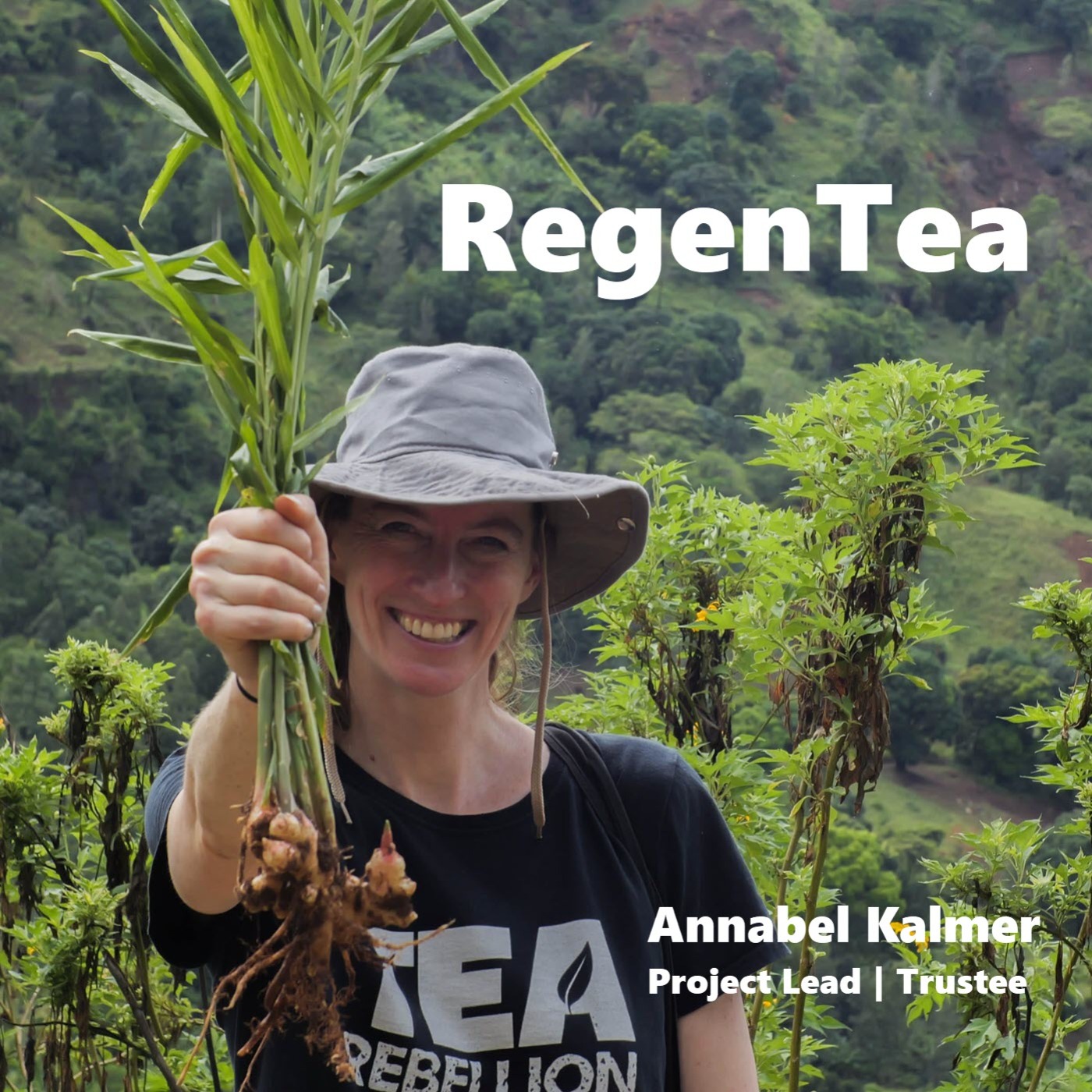
BIO: Annabel Kalmar is the founder of Tea Rebellion and a trustee of RegenTea, a UK-based foundation advancing regenerative agriculture in tea. She works with origin partners across Africa and Asia and is leading a multi-country pilot focused on farm-level data and soil health. | Podlink signup: https://pod.link/1549975153
Advertising Inquiries: https://redcircle.com/brands
Privacy & Opt-Out: https://redcircle.com/privacy
Get every episode summarized
Each time Tea Biz publishes, we email you a written briefing from the transcript — the topics, who appeared, and any specific claims, with the ad reads skipped.
Email me new episodesFree for 3 shows. No card needed.
Hosts & guests

Transcript ready
202 searchable segments. Every word is indexed and playable.
Full transcript
Tea Biz — Spotlight | RegenTea and the Economics of Soil. Machine-transcribed; use the interactive transcript above to jump the player to any line.
Andabel Conner is the founder of Tea Rebellion and a trustee of Region T, a UK-based foundation advancing regenerative agriculture in the tea industry. He works with orange and partners across Africa and Asia and is leading a multi-country pilot focused on farm-level data and soil health. Thank you so much Annabelle for joining us on the Tea Biz podcast. It's Earth Day, something I personally celebrate since the very first Earth Day which I took part in so many years ago. It's a delight to see you. Yeah, thanks you. Thank you. It's a pleasure to be here and there's a pleasure to be back and especially today, given that it's Earth Day, you know, this everything we can do to get attention to what we're working on on this particular day, which should be every day, frankly. Andabel, the tea industry has invested heavily in sustainability certification.
What prompted you to move beyond that system and build Region T? So the origins to this are really kind of my visits to our partner farms. We now have eight tea partners with Tea Rebellion that we work with and visits to Malawi in a pole Tanzania, spurred the awareness that the debt 30 clients today is really a double extra sort for many farmers because of the increasing complexity of it, the increasing cost and the increasing kind of over burdening of the farmer with that part of the requirement given the food system need for transparency, safety and everything else. And so there's also the increased interest in transparency and the food system in terms of knowing where it actually comes from. And of course, we have global commitments with climate crops, biodiversity crops, land decoration, I think the whole happening at the same time this year. So that really kind of that brought backdrop, gave rise to the Regenitivity Action Project,
which was the precursor of this. And then there's the technology side of it, the opportunity that is presented by farmer centric tracking of outcomes and monitoring that really we didn't have. I think in the 70s and the 80s, this is completely new and it presents an opportunity to change how things happen today with that as well. I think on this whole sustainability question, away from complicated audits to just seeing the information right on your screen with the right tools. Regenitivity is involved into a foundation with a broader mandate. What is that structure enabled? It's funded into a foundation. We have three trustees, Michael Ham, from what orchard, Bernadette Kate, from Esther and myself. And we're committed for three years to be trustees. And it's incorporated as a charitable, incorporate organization, which is CIO in the UK. There's such a backlog that we're still waiting for the formal approval check.
It's been months, but everyone is in a backlog. The government is very behind in approving foundation creation in the UK. We set it up as a foundation, because there was really the sense of that if we want to be a lasting, make lasting change in the sector, we have to change our structure and make it more permanent. It allowed us to really kind of move away from Tiva Bally and being the greater and it's kind of very attached to my personal brand, to being something that's industry-wide and allows other key brands to just, you know, to really shape it as well, which is important. And then it allowed us to bring on board a lot of volunteers. And I think that that is easier if you have a foundation. It's very hard to justify if you have a corporate structure, even if, you know, no matter how impactful this is, it really becomes hard to have that many volunteers around, I think. It's enabling us to go to fundraising where the early stages of that and we have a crowd funding campaign live today to raise the initial seed money for this foundation.
But it will really help us when we are going out to donors, going out to green tech, going out to other philanthropists who want to help support and make this change happen. And then the final one is it allowed us to partner more effectively with the genitive organic alliance, which are an amazing organization, really, spearheading regenerative agriculture, as well as signing our technical partner, Lamprin, for the DMRB, digital monotone reporting evaluation, validation system that we have. You've launched a multi-origin pilot. What are you actually measuring at the farm level? So I think I have to say is a caveat that we're quite early in the process. We literally just find the contract with Lamprin, the tool provider. So we have 11 to 15 piloties in this process. And I think it turns out the philosophical approach for the pilot is that it's very much farm level data intelligence, trying to empower farmers, producing regenerative documenting
regenerative outcomes, but also data that gives agronomic resilience or information about actual farming level data. And it's a combination of kind of basic remote information. So if you think about, you've heard of Bumatra, right, the Indian startup, amazingly successful company that's doing this for soil cart soil, carbon data, basically remote monitoring of soil carbon retention, and thereby paying farmers for it. So this is an expanded conceptually, if you think about it, extended idea of not just looking at carbon, but also looking at obviously carbon structures included soil cover, water in the soil and crop health. That's remotely censored through the collared polygons, so basically it's the footprint of a field. So the geodimensions, fewer coordinates of a field that gets uploaded into the data system. And then the farmer has the option to an answer with kind of a ground truth or ground data
to make sure that that information actually is well leveling up, leveled up more intelligence as some ground truth in it. And that's something that will enrich that remote data on in the same kind of spectrum. So all carbon, water, biodiversity, resilience, and then also agricultural practices. So one area that is where we need to be quite focused is we need to focus the pilot in the first year on a couple of practices so that we can then walk away and say, look, what did we actually learn from these practices? Because of course, there's a lot going on and it's important that we focus what we ask the farmers to change onto something that we can then actually say something about. So at the moment, it looks like everyone is very interested in looking at alternative fertilizers. So whether it's composting, whether it's liquid fertilizer, whether it's charcoal, biochar. So whether it's nitrogen-fixing plants that are into crop or anything like that.
So basically the idea of sustaining and enhancing yield's alternative ways beyond chemical fertilizers, of course, is an area that most of the farms have had that they interested in. So we're thinking of focusing the practices change or the practice discussion on that in the first year. But generally, in terms of life, the data that we want to show, we're focusing on what practice change passed and measurable ROI on the farm. That's what we want to get at the end. And what yield drop is X can be expected with how long and when will that kind of be offset by resilience in the system and better soil health? How do you demonstrate that redrettative practices deliver real economic value? I think it's important to help people understand that this is not a fluffy sustainability initiative, right? This is an initiative that is looking at addressing also risk factors in farming, building resilience
and increasing agronomic benefit to the grower. So it's an economic benefit. So this is not about something that you can, like, you know, a carbon neutral batch that goes on your website. It's not that level of debt. It really is something completely different. When we asked the farmers about what they're most interested in getting out of it, they said agronomic benefits, right? So higher yields and saving costs and sustainable kind of small things, using them with the S word again, but what I mean is the better production at a lower cost, basically. And so the way that we want to visualize that and show that is by working, and I think this is why we've chosen a partner that is quite in tune with the TNST process. And the risk and land degradation as to the nature risks that's out there, and the land degradation as one that people are increasingly aware of, and that's also being soil degradation
because, of course, the farmers' main asset is the soil. So I think that is a shift in perspective and an important one. You know, if we can help farmers, if we can help document the return on investments for the farmer from doing regenerative practices by increasing their asset value of their soil, of their forests, and the market price for their tea, then this will have been a fantastic initiative. What does success look like if this works at scale? We want to build the evidence base, develop funding mechanism, and build a knowledge network right, around origin tea. So those are the three kind of, let's say, three pillars of it. And that requires us working with a lot of other parties in order to make that happen. So if you think about being able to develop something like a digital region passports that shows the information of each farm in terms of carbon moisture biodiversity, the practices,
kind of really embody that, and the farmer owning that, and sharing that with their buyers or their partners or the certifiers, those people that they trust, and they want to work with. If that is the first level of kind of information sharing and transformation at the farm level, then we want to intend it would find this time already, be at the position where we can put a revenue generation kind of pillow on top of that, which would give a farm a benefit for having created these, let's say, this asset value or this impact is outcomes through a market. And we call them impact units. So somehow creating, getting paid for having created impact units on the farm, and then thirdly, there is the whole kind of pathway of getting certified and also the market kicking in for actually being able to pay eye up prices for an amazingly regeneratively organic grown tea. That will take some time, and we are all aware that in the transition period, the market isn't quite ready to yet fully pay for this and compensate.
And that the farmers need to be supported for a number of years in that transition. But that is kind of the pathway. First, the transformation at the farm level, then some impact payment, economic benefits for what's being created, and then 30 being certified, and then the market compensating for it. And that requires us to work with a whole lot of different parties to make that happen in terms of funding mechanism, in terms of certification and raw as I've mentioned. But that is the aim. So if we really want to help transform how that all works, and by 2035, that's actually, well, where are we? 2006, so that's more than five years. By 2035, we want to have 10,000 hectares that have transitioned under this verified regenerative process that we are working on, basically, with partners. So how can producers and buyers get involved? There are different ways to get involved. So let's say you are a farm, and you listen to this, and you are interested in learning
more about regenerative farming, you're learning, you want to get inspired by other farms who are already ahead of you in the journey. You want to understand how certification might work. You want to understand what the cost might be to be involved, or just broaden your horizon on this. I invite you to join Regenti in that case. It is a free membership for the first year, at least, we're building that site if it's not live yet. If you look, then it would be under a TV-bellion learned as a tap for people to join there. It should be a pop-up window. And then for others who want to support this change, or also farms who want to make sure Regenti becomes a sustainable organization, it helps us to enter and fund. We have the spread funding campaign, which is live right now, on Earth Day. And then the aim is to raise initially 2,000, but then the 5,000 pounds, and that will bridge us over until we have proper funding. Help us to pay the digital technical provider and help us just IT cost. Because I think value chain partners are hugely important, and we might not have enough
of them in the project right now. We have mostly buyers, like more boutique retailers and farmers in there right now. And it would be probably quite helpful to have hackers, importers, blenders, everyone in the supply chain involved. I think. It's Earth Day, and you're promoting the Earth. Yes. Give us a statement on why that symmetry makes sense. If you're in doubt what Earth means to us, just go for a walk in the green. Just get out there, listen to birds, feel the green for 10, 15 minutes, get off your phone, and you'll already see what it does for you. I mean, the impact is immediate in terms of our wellbeing and our resilience as humans. And that's the evidence that everyone needs. You just get out there, you see how important it is, because we don't want to be so abstract. I think we get huge pleasure and nourishment and enrichment from Earth or not for us with
every single day, and we need to remind ourselves that that is what's at stake. And a welcomeer on Region T, an effort to move beyond compliance in towards measurable outcomes at origin. Produced by Adavita Studios, connect your voice to the world.
More episodes
More from Tea Biz

Tea Price Report | Week 35 | Ending 28 August 2026
Tea Biz

Spotlight | Behind the Cup
Tea Biz

Tea News Recap | Nepal Recovers | India Maps Tea | US Grown Matcha
Tea Biz

Ep 245 | Nepal Tea Recovers | India Maps Tea by Satellite | US-Grown Matcha
Tea Biz