
St. Gregory the Great, pt. 1 – The Doctors of the Church: The Charism of Wisdom with Dr. Matthew Bunson – Discerning Hearts Podcast
About this episode
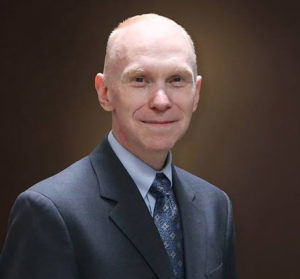
St. Gregory the Great, Part 1 – The Doctors of the Church: The Charism of Wisdom with Dr. Matthew Bunson
- Born: 540 AD, Rome, Italy
- Died: March 12, 604 AD, Rome, Italy
Dr. Matthew Bunson and Kris McGregor discuss the life and legacy of Pope Gregory the Great, one of the most influential figures in Church history. Gregory, often referred to as the last of the Latin Fathers and the founder of the Medieval Papacy, left an indelible mark despite a relatively short 14-year pontificate. Born into a wealthy and noble Christian family in 540 AD, Gregory was deeply influenced by his devout upbringing, which included connections to previous popes and saints.
With a focus on the tumultuous historical context of Gregory’s life, particularly the decline of the Roman Empire and the challenges of governing a city in crisis; despite these challenges, Gregory’s contributions were immense. He reformed the church, influenced the development of Gregorian Chant, and served as a model for both bishops and secular rulers.
Gregory’s decision to leave a promising political career to become a monk is explored: his time as a monk prepared him spiritually and intellectually for the heavy responsibilities he would later bear as Pope. Despite his frail health and the overwhelming challenges of his time, Gregory’s leadership and spiritual wisdom left a lasting impact on the Church and Western civilization.
Discerning Hearts Reflection Questions
- Influence of Family and Upbringing: How did Gregory’s devout Christian upbringing and noble lineage shape his later decisions and contributions to the Church?
- Responding to Crisis: In times of societal collapse, like Gregory’s Rome, how can we, as Christians, fill the leadership void with faith and service?
- Embracing Humility: What can Gregory’s commitment to humility, despite his wealth and power, teach us about living a life of true Christian service?
- Monastic Life and Personal Transformation: How did Gregory’s decision to embrace monastic life prepare him for greater responsibilities, and how can we apply this in our own spiritual journey?
- Balancing Prayer and Action: How did Gregory’s monastic discipline of balancing prayer with work influence his effectiveness as a leader, and how can we cultivate this balance in our lives?
- Legacy of Leadership: What qualities made Gregory a model for both spiritual and secular leadership, and how can we emulate these in our own roles?
- Sanctity and Suffering: How did Gregory’s suffering and deep concern for his people reflect his sanctity, and how can we offer our own sufferings for the good of others?
For more on St. Gregory the Great and his teachings:
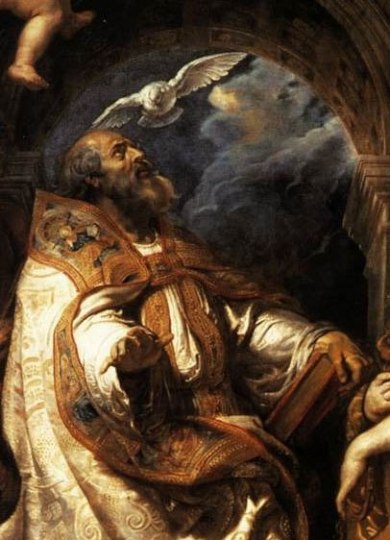
From Vatican.va, an excerpt from the teachings of Pope Benedict XVI General Audience 2008:
“Today I would like to present the figure of one of the greatest Fathers in the history of the Church, one of four Doctors of the West, Pope St Gregory, who was Bishop of Rome from 590 to 604, and who earned the traditional title of Magnus/the Great. Gregory was truly a great Pope and a great Doctor of the Church! He was born in Rome about 540 into a rich patrician family of the gens Anicia, who were distinguished not only for their noble blood but also for their adherence to the Christian faith and for their service to the Apostolic See. Two Popes came from this family: Felix III (483-492), the great-great grandfather of Gregory, and Agapetus (535-536). The house in which Gregory grew up stood on the Clivus Scauri, surrounded by majestic buildings that attested to the greatness of ancient Rome and the spiritual strength of Christianity. The example of his parents Gordian and Sylvia, both venerated as Saints, and those of his father’s sisters, Aemiliana and Tharsilla, who lived in their own home as consecrated virgins following a path of prayer and self-denial, inspired lofty Christian sentiments in him.
In the footsteps of his father, Gregory entered early into an administrative career which reached its climax in 572 when he became Prefect of the city. This office, complicated by the sorry times, allowed him to apply himself on a vast range to every type of administrative problem, drawing light for future duties from them. In particular, he retained a deep sense of order and discipline: having become Pope, he advised Bishops to take as a model for the management of ecclesial affairs the diligence and respect for the law like civil functionaries . Yet this life could not have satisfied him since shortly after, he decided to leave every civil assignment in order to withdraw to his home to begin the monastic life, transforming his family home into the monastery of St Andrew on the Coelian Hill. This period of monastic life, the life of permanent dialogue with the Lord in listening to his word, constituted a perennial nostalgia which he referred to ever anew and ever more in his homilies. In the midst of the pressure of pastoral worries, he often recalled it in his writings as a happy time of recollection in God, dedication to prayer and peaceful immersion in study. Thus, he could acquire that deep understanding of Sacred Scripture and of the Fathers of the Church that later served him in his work.
But the cloistered withdrawal of Gregory did not last long. The precious experience that he gained in civil administration during a period marked by serious problems, the relationships he had had in this post with the Byzantines and the universal respect that he acquired induced Pope Pelagius to appoint him deacon and to send him to Constantinople as his “apocrisarius” – today one would say “Apostolic Nuncio” in order to help overcome the last traces of the Monophysite controversy and above all to obtain the Emperor’s support in the effort to check the Lombard invaders. The stay at Constantinople, where he resumed monastic life with a group of monks, was very important for Gregory, since it permitted him to acquire direct experience of the Byzantine world, as well as to approach the problem of the Lombards, who would later put his ability and energy to the test during the years of his Pontificate. After some years he was recalled to Rome by the Pope, who appointed him his secretary. They were difficult years: the continual rain, flooding due to overflowing rivers, the famine that afflicted many regions of Italy as well as Rome. Finally, even the plague broke out, which claimed numerous victims, among whom was also Pope Pelagius II. The clergy, people and senate were unanimous in choosing Gregory as his successor to the See of Peter. He tried to resist, even attempting to flee, but to no avail: finally, he had to yield. The year was 590.”
For more visit Vatican.va
For more from Dr. Matthew Bunson, check out his Discerning Hearts page.
Dr. Matthew E. Bunson is a Register senior editor and a senior contributor to EWTN News. For the past 20 years, he has been active in the area of Catholic social communications and education, including writing, editing, and teaching on a variety of topics related to Church history, the papacy, the saints and Catholic culture. He is faculty chair at Catholic Distance University, a senior fellow of the St. Paul Center for Biblical Theology, and the author or co-author of over 50 books including The Encyclopedia of Catholic History, The Pope Encyclopedia, We Have a Pope! Benedict XVI, The Saints Encyclopedia and best-selling biographies of St. Damien of Molokai and St. Kateri Tekakwitha.
Get every episode summarized
Each time Discerning Hearts - Catholic Podcasts publishes, we email you a written briefing from the transcript — the topics, who appeared, and any specific claims, with the ad reads skipped.
Email me new episodesFree for 3 shows. No card needed.
Hosts & guests

Transcript ready
253 searchable segments. Every word is indexed and playable.
Full transcript
Discerning Hearts - Catholic Podcasts — St. Gregory the Great, pt. 1 – The Doctors of the Church: The Charism of Wisdom with Dr. Matthew Bunson – Discerning Hearts Podcast. Machine-transcribed; use the interactive transcript above to jump the player to any line.
Descerning Hearts provides content dedicated to those on the spiritual journey. To continue production of these podcasts, prayers and more, go to DescerningHarts.com and click the Donate Link found there, or inside the free Descerning Hearts app to make your donation. Thanks and God Bless! Descerning Hearts.com presents The Doctors of the Church, the Charism of Wisdom, with Dr. Matthew Bunsen. For over 20 years, Dr. Bunsen has been active in the area of Catholic social communications, and education, including writing, editing, and teaching on a variety of topics related to church history, the papacy, the saints, and Catholic culture. He is the faculty chair at the Catholic Distance University, a senior fellow of the St. Paul Center for Biblical Theology, and the author or co-author of over 50 books, including the Encyclopedia of Catholic History, and the best-selling biographies of St. Damian of Malachai and St. Cateri Tekka-Kawisa.
He also serves as a senior editor for the National Catholic Register, and is a senior contributor to EWTN News. The Doctors of the Church, the Charism of Wisdom, with Dr. Matthew Bunsen. I'm your host, Chris McGregor. Matthew, thank you so much for joining me. A wonderful to be with you, Chris, especially to talk about one of the truly remarkable figures among the doctors of the Church. It's a set of Gregory that he's the last of the Latin fathers. He's the founder of the medieval papacy. He is one of the greatest of the popes, such was his position that we attribute to him, Gregorian Chant, which is one of the most magnificent forms of musical expression of faith that we've ever had. He is a model for bishops. He is a model for even secular rulers, because we're going to talk about that. So ironically, he was Pope for barely 14 years, and yet left his mark in so many different ways,
not just in the Latin Church, but on the whole of the Church. And in that sense, he's worthy of the praise we're giving him. Someone who is so extraordinary, what we've come to see through your teaching, Dr. Bunsen, is that they usually spring out of extraordinary families, or should we say very saintly families. Yes, yes. And Gregory is no exception. We know that he was born in Rome, probably around 540, to a family of great wealthy, as a part of what was known as a petrician class of Rome, which meant that this is the upper class. This is the group of nobles who had long run the Roman Empire. The family name was Anicia, or Anicia. And they were also renowned for being great Christians. And his parents, Gordian and Sylvia, in time, were both honored as saints.
And so two were his aunts, in Liana and Tharsilla. And they lived, actually, as consecrated virgins. So you have a sense of this atmosphere in which he grew up. And to that, we can even add that he came from a family that produced two popes, Felix III and Agapatus. So this is a pretty astounding group of people that produced someone who is even more astounding than the rest of them. But there's also the important aspect of the status of the family within Roman life. And I say this because they put such great use to their temporal holdings. The family had estates on, what was called the Kayley and Hill in Rome. And rather than cut themselves off from rest of society. And at a time when they would have very good reason to do that, and we'll talk
about that in a minute, instead, they were constantly looking for ways to put their family estates their wealth to the good of the whole community. And this was a pattern that, of course, Gregory established as well when he created the monastery up on the Kayley and Hill, the what's called the monastery of St. Andrew, and helped to transform the culture of his times. And that is going to be one of the recurring themes in the life, and especially the pontificate of Gregory. He was born in what we would say the mid five hundred's. Yes. What's going on with Rome at that time? It's not the Rome that we think of when we think of those images of Julius Caesar and Augustus Caesar. No, not in the least. If we flash back to our discussion of Pope Leo I the Great, what was going on? Well, Rome was under attack from a host of different
directions. In 452 you had a tell of the hunt threatening Rome in 455 you had the vandals actually sacking Rome. Leo did his best to help have the city spared from utter destruction. In 476 you had the last of the Roman embers of the west, rather pitiful figure of the name of Romulus Augustulus actually deposed by a Magister Milletum, or what was known as a barbarian general. Rome from that time on in the west ceased to exist as an empire. And in its place was a checkerboard of German states and Gothic states you had the Austro-Gots, you had the Visigots, you had the vandals, you had as well to the north, the northern Italy, and the Lombards who were another barbarian group. And into the east you had the eastern empire that under great figures such as
Justinian was working to reinstate some semblance of Roman imperial civilization, not just in the east but in the west. The city of Rome sacked again in the middle of the early part of the 6th century by a Gothen name of Totilla. It was reaching one of its lowest points. Imagine that you're growing up in a devout Christian family, in a family that has long roots to government, to leadership to prestige. Well, you're growing up with that tradition, but you're looking around you at total collapse of almost every institution in terms of government, in terms of society. And you realize that the one bull work in all of this is the Christian church, the Christian faith. And so Gregory understood very profoundly the state of culture in his time. And the obligation that
Christians had to continue to pick up the pieces, but also to fill that vacuum of leadership. And that's exactly what he did. It was a very dark period. He would be a city official then. Correct. Yeah. Well, as a member of this the House of Anicia, he received a great education. We know that his father, Gordian, was a senate figure. He was a very prominent figure in what was left of Roman imperial culture in the west. And so he received a very fine education. His Latin, especially from what we know in reading his 800 plus letters, we'll be talking about, was not the sort of refined elegant Latin prose that we see in Augustine, for example, or in earlier Romans, such as Cicero, or Virgil, but it was a very fine Latin. This was a very educated man,
but we're seeing sort of in how he writes the general decline of Roman culture, at least in terms of refinement. This is a rougher age, but he was groomed to be a leader. And he brought all of those skills to bear. In other words, as he was perfecting the virtues in his own life, he was able to bring those, putting truths of the lie again that somehow you have to divorce who you are, how you lead your life from how you actually govern, which is one of the great myths that we have today. So in 572, to no one's surprise, he became prefect of the city. Now at an earlier time in the life of Rome, that was a very important post because you answered essentially directly to the emperor. And you were the one who was responsible for the daily functioning of the city. That was still true to some degree in 572 when he took up the post, but the city itself was in
a state of decline, the whole parts of decay. And over the next years, the city continued to be buffeted by a host of problems. And so it's not surprising that looking around him, he felt the need to assist in all the different ways that he could. There was also this call to something deeper, something more important. And he answered that call by removing himself from civil government and embarking on that monastic transformation of his life and his home, and ultimately much of the church. Now this is really exceptional because not only is he, well, from what you're describing, he's more than a mayor. I mean, he's got more power in that area than maybe second to
the emperor. And then he's also, if not the richest, one of the richest people in all of Rome. Yes, exactly. But he never abused that. You find in him, as we'll talk, I think, in the next episode, but the, for example, his book on the Pastoral Rule, what were some of the things that he expected from a bishop while one was humility. And he stresses the importance of humility and service. So he did not see himself in a lordly manner. Rather, he saw himself always at the service of the city of the people that he intended to serve. The call to the monastic life, however, was one that he knew he had to answer. In part, because he was being called by Christ to something more important than just an administrative career as some civil servant. And how wise, because
think of the good that he accomplished by not simply being filled with worldly ambition, or even for that matter, having good intentions, but wanting to do it within sort of the confines of the state. He knew that he was called to something deeper, and he answered that call. And as I said, the church, but the wider world benefited from that. Yeah, it's fascinating that he would hold at the virtue of humility to be such an important one, that is such a Benedictine characteristic, as well as giving up everything except for what you really need. And that's when he entered into that monastic life. I mean, I keep going back, but can you imagine someone doing that today? I mean, I'm trying to think of a current figure that has that wealth, has that political power, and yet, and youth as well. And not so much gives it away,
but shares it, gives it, I mean, he does give it, but he does more than that. He makes sure that it gets to where it needs to go. Yes, and he has these estates on the Kaelian hell, as I was saying, and he transforms it into a monastery. And he's building on the great legacy of Benedictine, of Nersia, and he becomes a monk. And I can imagine the perplexity on the part of his friends and trying to understand what was going on, but also some of the other magistrates who were probably a little disappointed at first that someone of this promise was abandoning the city, so to speak. And yet, as we're going to see, because he did that, he actually is an even greater, ultimately political position, because that was thrust upon him by contemporary circumstances.
But we've seen this before. I think of St. Ambrose, for example, who is himself, somebody seen as potentially one of the greatest figures in the Western Empire, and gives that up to the life of faith, the life of deeper sermons, a life of deeper meaning. And that's exactly what Gregory did. But we see too, especially with Gregory here, that his time of monasticism was filled with this greatness of study, of scripture, of the fathers of the church who went before him. And yes, he was emptying himself of ambition, but he was being filled with holiness, he was being filled with the Word of God. And all of this was mere preparation for
the task that Christ had ahead of him. We'll return in just a moment to the doctors of the church, the Charism of Wisdom, with Dr. Matthew Bunsen. Did you know that Deserning Hearts has a free app, where you can find all your favorite Deserning Hearts programming, Father Timothy Gallagher, Dr. Anthony Lillus, one senior John S of Deacon James Keating, Father Donald Haggardy, Mike Aqualina, Dr. Matthew Bunsen, and so many more, they're all available on the free Deserning Hearts app. Over 3,000 spiritual formation programs and prayers, all available to you with no hidden fees or subscriptions. Did you also know that you can listen to Deserning Hearts programming wherever you download your favorite podcasts like Apple podcasts, Google Play, iHeart Radio, Spotify, even unottable, as well as numerous other, work-wide podcast streaming platforms. And did you know that Deserning Hearts also has a YouTube channel? Be sure to check out all
these different places where you can find Deserning Hearts Catholic podcasts dedicated to those on the spiritual journey. The Creed I believe in one God, the Father Almighty, maker of heaven and earth, of all things visible and invisible. I believe in one Lord Jesus Christ, the only begotten Son of God, born of the Father before all ages. God from God, light from light, true God from true God, begotten, not made, consubstantial with the Father, through him all things were made. For us men and for our salvation, he came down from heaven, and by the Holy Spirit was incarnate of the Virgin Mary and became man. For our sake, he was crucified under Pontius Pilate, he suffered death and was buried,
and rose again on the third day in accordance with the Scriptures. He ascended into heaven and is seated at the right hand of the Father. He will come again in glory to judge the living and the dead, and his kingdom will have no end. I believe in the Holy Spirit, the Lord, the giver of life, who proceeds from the Father and the Son, who with the Father and the Son is adored and glorified, who has spoken through the prophets. I believe in one holy Catholic and Apostolic church. I confess one baptism for the forgiveness of sins, and I look forward to the resurrection of the dead and the life of the world to come. Amen. To continue production of these videos, prayers, and more, go to discerningharts.com and click the
donate link found there or inside the free Descerning Hearts app to make your donation. Thanks and God bless. We now return to the doctors of the church. The charism of wisdom with Dr. Matthew Vonson. It is interesting when you think about that Benadicton role, which shows the balance of the day given to work, but then also to prayer, the importance of prayer and the seeping in that. Then when you also look at someone else we look to protect me, maybe in our own contemporary experience, the man that we hold up soon to be Saint John Paul, and we would like to call him the great and all the worth that he did and his time in prayer, his commitment to that balance in prayer. You almost can get a sense of how the fruits of that time, it really pours out in John Paul's work,
but then we can begin to conceive how this could have played a part in Gregory's life. Oh definitely. Yeah, the calls to prayer, the efforts to sanctify the little things, to sanctify our daily labors, to sanctify everything that we do, and to hand it back to God as a gift in humility and in gratitude. You can see this ongoing transformation in Gregory. It's imagining the disappointment of his friends, but I can also imagine Gregory's reaction when he had not been in this monastery for very long, when the Pope, who knew him of course, asks him to serve as what was known at the time as an Apocrysarius or a Nunecio, a Delegate,
an ambassador to Constantinople. He was named Adekin and sent off to this grand capital of the Eastern Empire to work with the Eastern Emperors to try and bring aid to the West at a time when the West needed it because of the threat of the Goths, but also to try to continue to forge relationships between the Eastern and Western churches. It was an enormous task. Admittedly, Gregory toiled for six years in Constantinople with only limited success because of the nature of the city. Encountered, Constantinople was a very cosmopolitan place. It was filled with intrigue. Imagine going back to our discussion about St. John Chris' system, the struggles that
that great St. had in dealing with this Byzantine environment. While he was there, Gregory also lived the life of a monk. In that sense too, he experienced Byzantine Christianity, Eastern Christianity. I think that also had a very great influence and impact on him as well. Notably, he did not learn Greek while he was in Constantinople. He kept to his Latin. In that sense too, he represents a growing gulf between the East and the West. The separation began linguistically, then also expanded theologically. And of course, within short amount of time after these certain disappointments, he was recalled to Rome and named by Pope Pelagius to be his secretary, a post-concindable importance.
What would happen upon his return in Rome? Was he still involved with this monastery? Well, we know that he immediately resumed his monastic lifestyle when he was back in Rome. But events were now proceeding at a pace that he must have felt at times that he was being carried along, swept along by these events. Rome, as I was saying, had suffered immensely under the attacks of the different Gothic and Germanic tribes. And to these difficulties, we're added floods from massive rains, the tibre overflowed. And because of the devastation caused by the rains and these natural disasters, there were famines that plagued whole parts of Italy. And even Rome itself suffered from famine and all of the attendant difficulties in the outbreak of disease. And it was this last part, the plague
struck. And plague had troubled the Roman Empire in previous centuries. It had depopulated whole parts of the empire in the third century. And a new outbreak arrived unsurprisingly because of the great problems that the Roman Italy were having. And among the first of its victims was Pope Pelagius II. And here you have Gregory, his secretary, already a deacon, well-known, beloved, influential. And by far, acknowledged the most talented ecclesiastic, the most talented church leader in the Western Church. And he tried to stamp down any notion of his becoming Pope as successor to Pelagius II, but to no avail. He even tried to flee the city,
because he knew where things were going. And he was brought back and not forced to yield, but finally yielded to the demand. And he was unanimously chosen by the clergy of Rome, by the people of Rome and the Senate of Rome, because that's how hopes that in that particular era were elected. And in 590, he became the one thing he did not want to be. And that was Bishop of Rome and successor St. Peter. If I'm not mistaken, his health wasn't stellar. He suffered from ailments and was often a struggle for him to be able to actually do many of the tasks that were acquired just in services and different things. Yes, it's absolutely true. He practiced tremendous mortifications, almost in a way reminiscent of someone like Bernard of Clervaux. He suffered from
fevers. He had problems with his liver. He had problems of gout. He was constantly ill. And what was already a frail constitution was made worse by the endless hours of work. He came to the Sea of Peter. As I was saying, one of the lowest points in the history of Rome. The empire in the West was gone. The Germanic, Gothic barbarian tribe was roving at will. There was virtually no civil government left in this city. And so he had right from the start two great responsibilities. He had to fill the vacuum left by the civil administration, which he'd been prepared to do because of his experience as prefect of the city as a civil administrator. But then he also had to guide the church in this very difficult time. And
it's quite extraordinary to consider how much he got done without dying long before he did. I mean, he had a pontificate of 14 years. And that meant every day he got up and had two massive jobs in front of him. And he accomplished both of them, even while remaining so faithful to his life of prayer, to his monastic life, to his life as one who's striving to be a saint. And we have a very clear idea of what it must have been like to try to govern Rome from the 800 or so letters. He had to deal with everything. Because the civil authorities in the city turned to him as the last person standing so to speak. And this was being played out, of course, across the whole of the Western,
the now defunct Western empire in which the only government that was left in any meaningful sense were the bishops. So he was a role model for the bishops of the era to deal with these Germanic tribes, what were called the Reyes Grenite, the long haired kings. And so just as he, as we're going to talk about, he was a role model for bishops in their spiritual lives. He was also a role model for the bishops and abates across the West in how to fill the gap, not by choice, but by necessity, as also the civil leaders of their time. And Gregory was immensely popular, not just with the clergy, not just with the people, but with the civil government, because they admired him for his skill. And they were so grateful to the fact that here was somebody who's actually willing to provide leadership in such a woeful, depressing era.
In our next episode, we'll talk more specifically about his various works and continuing contributions. But in closing this particular episode, we should touch on his death. Yes. Well, he continued to work literally till the day that he died. And it's a snapshot of the concern that he had for the people of his city, that he learned one day that under his administration, despite his best efforts, people were starving to death. And he broke down and wep. He wept almost inconsolably because he felt personally responsible for the fact that these people in his care had died. And it speaks volumes of his holiness. It speaks, I think, of his
longing to give completely of himself. And it's a lovely way to think of his last days, even as he knew that as his body was deteriorating. And it was said that his soul consolation was the hope that death would come quickly. And it did on March the 12th and 604. And his successor, hope, Subinion, it seemed at times that he was elected with only one task. And that was to declare Gregory Ascent. And in fact, almost the entire city arrived at the doorstep of hope, Subinion with the simple announcement, Santo Subito. And we've heard that before, haven't we? We've jumped all the second. Santo Subito, that this man must be Ascent. We knew him,
we loved him, we miss him, make him Ascent. And that tells us much about the legacy of Gregory, even at the time of his death. I'm looking forward to continuing our conversation. So am I. Thank you so much, Dr. Matthew Bunsen. God bless. You've been listening to the Doctors of the Church, the Charism of Wisdom, with Dr. Matthew Bunsen. To hear and or to download this program along with hundreds of other spiritual formation programs, visit discerningharts.com. This has been a production of Descarning Hearts. I'm your host, Chris McGregor. We hope that if this has been helpful for you, that you will first pray for our mission. And if you feel as worthy, consider a charitable donation which is fully tax deductible to support our efforts. But most of all, we pray that you will tell a friend about DescarningHarts.com
and join us next time for The Doctors of the Church, the Charism of Wisdom, with Dr. Matthew Bunsen.
More episodes
More from Discerning Hearts - Catholic Podcasts

St. Hildegard von Bingen Novena – Day 6
Discerning Hearts - Catholic Podcasts
Sunday of the Twenty-Fourth Week in Ordinary Time – A Time of Lectio Divina for...
Discerning Hearts - Catholic Podcasts
St. Hildegard von Bingen Novena – Day 5
Discerning Hearts - Catholic Podcasts
Saturday of the Twenty-Third Week in Ordinary Time – A Time of Lectio Divina for...
Discerning Hearts - Catholic Podcasts