
St. Gregory the Great, pt. 2 – The Doctors of the Church: The Charism of Wisdom with Dr. Matthew Bunson – Discerning Hearts Podcast
About this episode
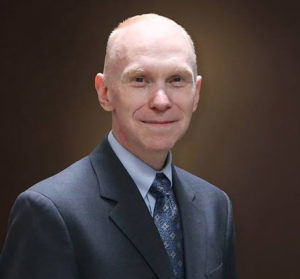
St. Gregory the Great, Part 2 – The Doctors of the Church: The Charism of Wisdom with Dr. Matthew Bunson
- Born: 540 AD, Rome, Italy
- Died: March 12, 604 AD, Rome, Italy
Dr. Matthew Bunson and Kris McGregor continue their discussion on the life and legacy of Pope Gregory I, also known as Gregory the Great. This time, they explore his pivotal role as a civil leader and spiritual giant during the decline of the Western Roman Empire. Gregory, the first monk to become Pope, was a towering figure in the Church who introduced significant liturgical reforms and emphasized the unity of the Church through its liturgy.
His influence extended to Gregorian Chant, although his exact role in its creation is uncertain. Gregory’s writings, including over 800 letters, homilies, and his “Pastoral Rule,” were monumental in shaping the Church’s doctrine and pastoral care. He also wrote a key text on the life of St. Benedict, which laid the foundation for monastic life that preserved Western culture through turbulent times.
Gregory’s focus on eschatology and the salvation of souls drove him to send missionaries, such as Augustine of Canterbury, to evangelize Europe, marking the beginning of widespread Christianization in the West. His humility and dedication to service are encapsulated in the title he coined for himself, “Servant of the Servants of God.” Gregory is seen as a bridge between the era of the Church Fathers and the emerging medieval Church, making him one of the most influential popes in history.
Discerning Hearts Reflection Questions
- Gregory’s Humility and Leadership: How can we cultivate humility in our own lives while effectively leading others in faith?
- Role of Liturgy in Faith Formation: In what ways does the liturgy shape our understanding and practice of the Catholic faith?
- Legacy of Gregorian Chant: How does the legacy of Gregorian Chant inspire us to appreciate the importance of sacred music in worship?
- Evangelization and Missionary Work: What lessons can we learn from Gregory’s missionary efforts in spreading the Gospel to new territories?
- Scripture as Nourishment: How can we deepen our relationship with God through a more contemplative reading of Scripture, as Gregory did?
- Service to the Church: How can we embody the spirit of being a “Servant of the Servants of God” in our daily interactions and ministry?
- Facing Modern Challenges with Faith: In what ways can Gregory’s approach to dealing with the crises of his time guide us in addressing contemporary issues in the Church?
For more on St. Gregory the Great and his teachings:
From Vatican.va, an excerpt from the teachings of Pope Benedict XVI General Audience 2008:
“In the theological plan that Gregory develops regarding his works, the past, present and future are compared. What counted for him more than anything was the entire arch of salvation history, that continues to unfold in the obscure meanderings of time. In this perspective it is significant that he inserted the news of the conversion of the Angles in the middle of his Book of Morals, a commentary on Job: to his eyes the event constituted a furthering of the Kingdom of God which the Scripture treats. Therefore, it could rightly be mentioned in the commentary on a holy book. According to him the leaders of Christian communities must commit themselves to reread events in the light of the Word of God: in this sense the great Pontiff felt he had the duty to orient pastors and the faithful on the spiritual itinerary of an enlightened and correct lectio divina, placed in the context of one’s own life.
Before concluding it is necessary to say a word on the relationship that Pope Gregory nurtured with the Patriarchs of Antioch, of Alexandria and of Constantinople itself. He always concerned himself with recognizing and respecting rights, protecting them from every interference that would limit legitimate autonomy. Still, if St Gregory, in the context of the historical situation, was opposed to the title “ecumenical” on the part of the Patriarch of Constantinople, it was not to limit or negate this legitimate authority but rather because he was concerned about the fraternal unity of the universal Church. Above all he was profoundly convinced that humility should be the fundamental virtue for every Bishop, even more so for the Patriarch. Gregory remained a simple monk in his heart and therefore was decisively contrary to great titles. He wanted to be – and this is his expression –servus servorum Dei. Coined by him, this phrase was not just a pious formula on his lips but a true manifestation of his way of living and acting. He was intimately struck by the humility of God, who in Christ made himself our servant. He washed and washes our dirty feet. Therefore, he was convinced that a Bishop, above all, should imitate this humility of God and follow Christ in this way. His desire was to live truly as a monk, in permanent contact with the Word of God, but for love of God he knew how to make himself the servant of all in a time full of tribulation and suffering. He knew how to make himself the “servant of the servants”. Precisely because he was this, he is great and also shows us the measure of true greatness.”
For more visit Vatican.va
For more from Dr. Matthew Bunson, check out his Discerning Hearts page.
Dr. Matthew E. Bunson is a Register senior editor and a senior contributor to EWTN News. For the past 20 years, he has been active in the area of Catholic social communications and education, including writing, editing, and teaching on a variety of topics related to Church history, the papacy, the saints and Catholic culture. He is faculty chair at Catholic Distance University, a senior fellow of the St. Paul Center for Biblical Theology, and the author or co-author of over 50 books including The Encyclopedia of Catholic History, The Pope Encyclopedia, We Have a Pope! Benedict XVI, The Saints Encyclopedia and best-selling biographies of St. Damien of Molokai and St. Kateri Tekakwitha.
Get every episode summarized
Each time Discerning Hearts - Catholic Podcasts publishes, we email you a written briefing from the transcript — the topics, who appeared, and any specific claims, with the ad reads skipped.
Email me new episodesFree for 3 shows. No card needed.
Hosts & guests
Transcript ready
223 searchable segments. Every word is indexed and playable.
Full transcript
Discerning Hearts - Catholic Podcasts — St. Gregory the Great, pt. 2 – The Doctors of the Church: The Charism of Wisdom with Dr. Matthew Bunson – Discerning Hearts Podcast. Machine-transcribed; use the interactive transcript above to jump the player to any line.
Descerning Hearts provides content dedicated to those on the spiritual journey. To continue production of these podcasts, prayers and more, go to DescerningHarts.com and click the Donate Link found there, or inside the free Descerning Hearts app to make your donation. Thanks and God Bless! Descerning Hearts.com presents The Doctors of the Church, the Charism of Wisdom, with Dr. Matthew Bunsen. For over 20 years, Dr. Bunsen has been active in the area of Catholic social communications, and education, including writing, editing, and teaching on a variety of topics related to church history, the papacy, the saints, and Catholic culture. He is the faculty chair at the Catholic Distance University, a senior fellow of the St. Paul Center for Biblical Theology, and the author or co-author of over 50 books, including the Encyclopedia of Catholic History, and the best-selling biographies of St. Damian of Malachai and St. Cateri Tecacoiza.
He also serves as a senior editor for the National Catholic Register, and is a senior contributor to EWTN News. The Doctors of the Church, the Charism of Wisdom, with Dr. Matthew Bunsen. I'm your host, Chris McGregor. Matthew, thank you so much for joining me. A wonderful bit with you again, especially to talk a little bit more about the remarkable figure of Pope Gregory I, the Great. Can we, just for those who may not have had the opportunity to hear our previous discussion on this, just quickly again, the context in which we find this quite literally great saint? Sure. Well, we have in Gregory I, a member of the Great Petition family, is the last of the Latin Fathers of the Church, he's the founder of the Medieval Papacy, and he gave up a life as a civil servant to become,
quite literally, a monk. And he was elected the first monk to become Pope, and this was, of course, in 590, following the death of Pope Pelagius II. Somebody who had trusted him greatly, he sent him as an ambassador to the Eastern Empire, to Constantinople, had named him his secretary, who had made him a deacon, and Gregory was elected unanimously as successor to Pelagius II. He did everything he could to resist being elected Pope, but he finally accepted the post at a time when Rome, when Italy, when the West were in truly dire straits. Italy was in a state of near ruin. The Lombards to the North, the Germanic tribe were a chronic threat to the eternal city. The Byzantines were unreliable allies, and throughout all of this, Gregory was frequently ill from long-term, ascetical practices, and his incredible work load,
and he devoted himself to solving the problems of his age. In the face of a kind of virtual vacuum of government, he stepped forward and assumed many of the civil powers, a necessary step, that also had the benefit of assisting the temporal position of the papacy. He established charities to feed the starving in Rome. He reorganized what was called the patrimonium petri, the patrimonium of Peter, the extensive territorial holdings of the Holy Sea to improve their financial value to make them more responsive, and because of the way that he treated the Lombards with respect and with dignity, he actually saved Rome from an attack by the Lombards in 592 and 593, and concluded a peace agreement between Gregory and the Lombards. So he was a remarkable civil leader, as we talked about in the first episode, but he also emerged as a towering figure in the life of the Church in the West.
In this particular episode, we want to focus in on the work that has, can we say, has lasted all this time, and it's still so incredibly strong. Definitely. We have, where we're blessed, I should say, to have such a large body of writings, especially given the turmoil of the era. Now, many of Gregory's contributions to the historical life of the Church are not known with great clarity or with enormous certainty, largely because many of his works were rewritten over the centuries. There is much that is attributed to him that he did not necessarily have a direct hand in shaping, but that tells us something about the reputation he had. As I said, this was a colossus of a figure in his time. So, for example, when we discussed the great tradition that he was the founder of Gregory and Shant, well, he certainly was an inspiration for it, and probably had a hand in promoting the use of
that kind of music of plain-chant, but we don't know exactly what role he directly had in bringing about the Gregorian Shant that we know today. Nevertheless, the fact that he was somebody so beloved, who is so influential, that the Gregorian Shant, as named his honor, tells us something about the legacy that he left. What we do know is that he wrote over 800 letters and a host of other exegetical writings, spiritual writings. He wrote a book on morals that was actually written in the form of a commentary on Job. He wrote homilies on Ezekiel and he wrote homilies on the Gospels. There is also the book of the dialogues that he actually wrote for the benefit of one of the queens of the Lombards by the name of Feodilinda at a time when Gregory was encouraging her to remain steadfast in her Catholic faith and not to succumb to the temptation, which was so common
among the Goths of the year, to be an Aryan, in other words, a heretic. And then, of course, there is known as the regular Posterollis or the pastoral rule that in its time became so influential, that it literally shaped the lives of clerics in the Western Church for centuries. It is noted, for example, that it was second only to the books of the Bible in importance and influence in the life and the manners and behavior of priests and bishops. And it was said that at their consecration, the bishops of France, throughout the whole of the Middle Ages, took their oaths on the collection of the cannons of the Church and on the pastoral rule of St. Gregory. And so this tells us how widely read this work was. We start, of course, with the fact that he loved Scripture. He spent years as a monk, sort of, imbibing Scripture and developing a
sense for it. But, you know, Pope Benedict XVI, who greatly admired Gregory I, the Great, made a note of the fact that in all of his writings, Gregory never sought, as Pope Benedict said, to create his own doctrine. In other words, he did not have this desperate effort to be original, which is kind of a hallmark of a lot of theologians today who think that they have to reinvent the theological wheels, so to speak, and ultimately go off the road, or the wheels come off to torture the pun a little bit. Instead, what Gregory knew he needed to do was to echo the teachings of the Church. He wanted, it was okay in Gregory's view as Pope Benedict put it, to be a mouthpiece of Christ and of the Church on the way that has to be taken to reach God. And that is another expression of Gregory's immense humility. Let's return to one area, the liturgy, that I think it's important that we
have a sense that it was so much more than just about music. That the liturgy and that unification that it brings is a transmission of the faith, isn't it? Well, it is, precisely. And again, context is everything. We have an era in which Gregory was building on the work of previous Popes, in particular Leo I the Great, in having the Universal Church recognize that Universal Authority of the Popes. And both Leo and Gregory were very effective in helping the West in particular to accept, to embrace the primacy of the papacy, the rightful place of the Church, of the successor of St. Peter and the Vicar of Christ. Now I say all of that because one of the things that Gregory also recognized is the need for uniformity in the worship life of the Church,
in her liturgy. And he introduced a variety of reforms into the liturgical life of the Church. We know, for example, that he was responsible for various innovations, for example, saying the our father prior to the fraction of the Eucharist. In other words, we're making a testament of what we believe. We know that he promoted the use of the Alawia and he was calling for greater liturgical uniformity at a time when, understandably, in the face of the collapse of the Western Roman Empire, that things like liturgical clarity were always going to be victims. And so he encouraged,
especially in the lands of the Franks, that were only recently converted to Orthodox, faithful Catholic Christianity. There were obviously things that needed to be done to bring everyone together, to be worshipping properly, to be praying properly, to recognize the rightful authority in the Church. So liturgy, then, is absolutely essential to the effective and authentic Christian life. And so the so-called Gregorian sacramentary, of course, is one of those great complicated documents as to how it came about, is attributed it to Gregorian I. And it's proof that he did, in fact, bring about reforms. And we know, for example, from the eighth century, in a life of Gregorian, the great, written by the name of John the Deacon, that he collected,
what was called the sacramentary of Gillesius, which was the so-called Gillesian sacramentary, which is one of the great sacramentaries in the era before him. And reworked it a little bit, added it, and proved to it. And then Pope Adrian, one of his future successors, Pope Adrian, the first, probably between 781 and 791 or so, encouraged who, Charlemagne, the great emperor, to take the sacramentary and to apply it to the lands of the Carolingians, the grand Frankish empire. And Adrian, sending him this book, said it had been originally composed, as he put it by our holy predecessor, Pope Gregory. So we know that the Gregory did have a major hand in what became the Gregorian sacramentary, and more importantly, in that process that we have
to have of the unification of liturgical rights and the liturgical life of the church in the west. Would you say it's true, Matthew, that given the fact for several generations, actually, over a couple hundred years prior to Gregory, there had been the great theological battles concerning the different heresies that you have spoken to in the past, that having gone through those councils and the discussions to hone out the more fuller expression of the faith, that communication through the liturgy, the actual worship of the people in that weekly, if not daily expression, that's why the uniformity was so important, so that, because that's how how heresies creep in, but also this is how you form and you shape the life of the community.
Oh, absolutely. And we see the stress on that, especially in hamalies, that these are instruments of orthodoxy. These are instruments of good teaching, but it's also a way of catac chising the faithful. When you have solid good liturgy, you invariably have solid good teaching of the faith, and we have seen that time and again in the work of earlier doctors of the church, trying to resist heresy. And think, for example, of the hamalies of St. Ambrose, delivered in what a liturgical setting. And the fact that Gregory recognized that the church was moving out of this difficult era of dealing with heresies, even though they were still present to some degree, as an Aryanism was still a problem among the Gothic tribes. But that liturgical
renewal, that liturgical reform, went hand in hand with really helping to shape the life of the church of wider Christian Catholic culture. And so, yes, I think you're absolutely right that liturgy was one of the key instruments in authentic teaching and of uniformity in belief and expression of the faith. And I wonder, forever, truly appreciate the importance of his chronically the life of St. Benedict, in that it helped to offer a foundation for the monastic life that would ultimately preserve a much of Western culture through the turbulent era that would follow the next 500 if not a thousand years. Yeah, I think that's absolutely true. The work that
you're referring to is book two of what was called the dialogues. And why did he write this? Of course, he was among himself, as we said, he was the first monk to be elected pope, which meant that he was steeped in the tradition and the legacy and the life of Benedict of Nersia. But it's interesting to note that the context for his writing about his life was in this wider book, all the dialogues. And the intention was to give a book that was actually addressed to a friend of his when Peter the Deacon, in reply to the argument that saints cannot necessarily emerge in such a dark and terrible time as his own era. So Gregory was making the argument. No, saints are found in every era. And even in the worst of times, holiness will come out, saints will
be found. And so he was looking at the lives of holy people who demonstrate the fact that sanctity is not time specific nor is it location specific. We find that one of the great hallmarks of the pontificative John Paul II who traveled the world for claiming the universality of holiness and the timeliness of holiness. I go back to that famous victim from St. Augustine that you tell me the times are evil will become holier and the times will get better. Well, in this book, Gregory the great is trying to demonstrate that. And in essence, he talks about the immortality of the soul. He discusses the reality of hell. We look at all of the reality of eschatology, the four last things. That itself is a great contribution. But also in that second book, he talks about
Benedict of Nersia and gives to the church this great gift of knowledge of the life, the holiness and that word again, legacy of Benedict. And as you pointed out, the Benedictine monasteries that Gregory himself did so much to encourage is rooted in this phenomenal work of Gregory, the great, but then especially in Benedict of Nersia. Can we say that he was a mystic? You know, in some of his writings, I remember there is a line attributed to him. He calls it the chunk of contemplation that that he saw God as light. It's great, the shaft of light that will come in through our chinks and sometimes just fill a room with light. I mean, this is somebody who obviously has been steeped in great prayer. Yes, yes. I think we can see his holiness, the
mystical quality of his work from his scriptural writings. As I was saying, he spent years contemplating sacred scripture, seeing it as really the kind of nourishment that he needs. And therefore, in viewing in him as well, the humility to listen to scripture rather than try to impose one's own expectations on it, which of course is the great legacy of Protestantism. Intellectual humility of searching, of meditating and pondering on the realities of scripture. And allowing it to become part of you to listen to what God is saying. And it's striking when, for example, we look at the book of morals or the Moralia, which they're saying is this beautiful
textbook on morality. But we did the framework of a commentary on Job. Now, of course, what do we think of when we hear the name Job with its suffering? And he was certainly an adherent of the different meanings of scripture. And we have the literal, the allegorical, and then we have, what's called the moral or the topological. Then in time, we had the fourth sense added, and that is anagogical or the word the heavenly. But for Gregory, he saw the moral sense of scripture as primary. In other words, we find in scripture how to lead our lives. And as it's a go back to what Pope Benedict 16 said about it, you have the moral ideal, consistent realizing that what
Benedict calls that harmonious integration between word and action thought, and deed, prayer and dedication to the duties of one state. In other words, he says, to realize that synthesis, thanks to which the divine descends to man and man is lifted up until it becomes one with God. And so what he's saying is in this book of morals, how to be moral. And it flows then from being an authentic believer. And how rich that is for us today and how universal and timeless that is. And that can only be accomplished through years of prayer and meditation of that contemplatio on the word of God. What other contributions should we look for when we reflect on the life of Gregory the Great? Yeah, I would stress the always looking toward that which is beyond with Gregory.
There is in him a deep concern for eschatology or the four last things. In other words, of always turning to Christ and helping people to understand their eternal destiny. And I stress this because it is very easy. You and I have talked about his great accomplishments of being a civil leader at a time when the imperial civilization of Rome was dying out. And of course his legacy with Gregorian chant, with the Gregorian sacramentary, with all of these great contributions that here was somebody who was taken up first and foremost with this salvation of souls. And the last thing that I think we need to talk about even briefly is his fundamental
role in the evangelization of Europe because he sent out amongst a gustan of Canterbury, for example, to England to convert the Saxons. The great undertaking of the church in the centuries of followed him with Bonifus and St. Patrick and Cyril and Mathodias with the gustan of Canterbury with countless others began realistically with the decision of Gregory to send out amongst his priests to the darkest parts of Europe, not just to the lands of the Western Empire that have been occupied by the Goths, but beyond that to the unimaginable vast stretches of territory. Beyond the confines of what used to be the Roman colony in Britain, all the way into Eastern Europe into the lands beyond the Rhine. This was dark, dark territory. But Gregory knew that the future
of the West, the future of the world rested there, the conversion of those people. But most important, the conversion of their souls, bringing them to Christ was his greatest worry, and I would say his greatest accomplishment. We owe an incredible debt to those men who will never know their names, the ones who were sent by Gregory, who went into those dark places. Yes, yes. To be that lumengentim, to be that light. Precisely. And they were the inheritors of Gregory's greatness. We can finish by reminding everyone, the famous expression of Gregory the Great, servos servorum dei, to be the servant of the servant of God. And he coined this phrase, and it's a reflection of his humility. It's a reflection also
of his determination to serve. And amongst the priests, the men and women who followed him in that call to evangelize, embrace as well the desire towards service, and that desire toward humility. And there we see why he is called the Great. Any final thoughts, Matthew? Yeah, I think that with Gregory, we're moving sort of now out of the age of the Church Fathers. And the doctors of the Church now are going to be taken up with a whole new set of issues of dealing with medieval life of that continuing contemplation on the mystery of God and the beauty of the Church and finding new ways to promote that teaching faithfully and joyously. And so we now move into a new era with the doctors of the Church, and it really begins with Gregory. So in that
sense, he is a great bridge from one age to the next. Thank you so much, Matthew. Wonderful to be with you, Chris. You've been listening to the doctors of the Church, the Charism of Wisdom, with Dr. Matthew Bunsen. To hear and or to download this program along with hundreds of other spiritual formation programs, visit discerningharts.com. This has been a production of discerning hearts. I'm your host, Chris McGregor. We hope that if this has been helpful for you, that you will first pray for our mission, and if you feel as worthy, consider a charitable donation which is fully tax deductible to support our efforts. But most of all, we pray that you will tell a friend about DescarningHarts.com and join us next time for the Doctors of the Church, the Charism of Wisdom, with Dr. Matthew Bunsen.
More episodes
More from Discerning Hearts - Catholic Podcasts

St. Hildegard von Bingen Novena – Day 6
Discerning Hearts - Catholic Podcasts
Sunday of the Twenty-Fourth Week in Ordinary Time – A Time of Lectio Divina for...
Discerning Hearts - Catholic Podcasts
St. Hildegard von Bingen Novena – Day 5
Discerning Hearts - Catholic Podcasts
Saturday of the Twenty-Third Week in Ordinary Time – A Time of Lectio Divina for...
Discerning Hearts - Catholic Podcasts