Loading...
newssocietyculture
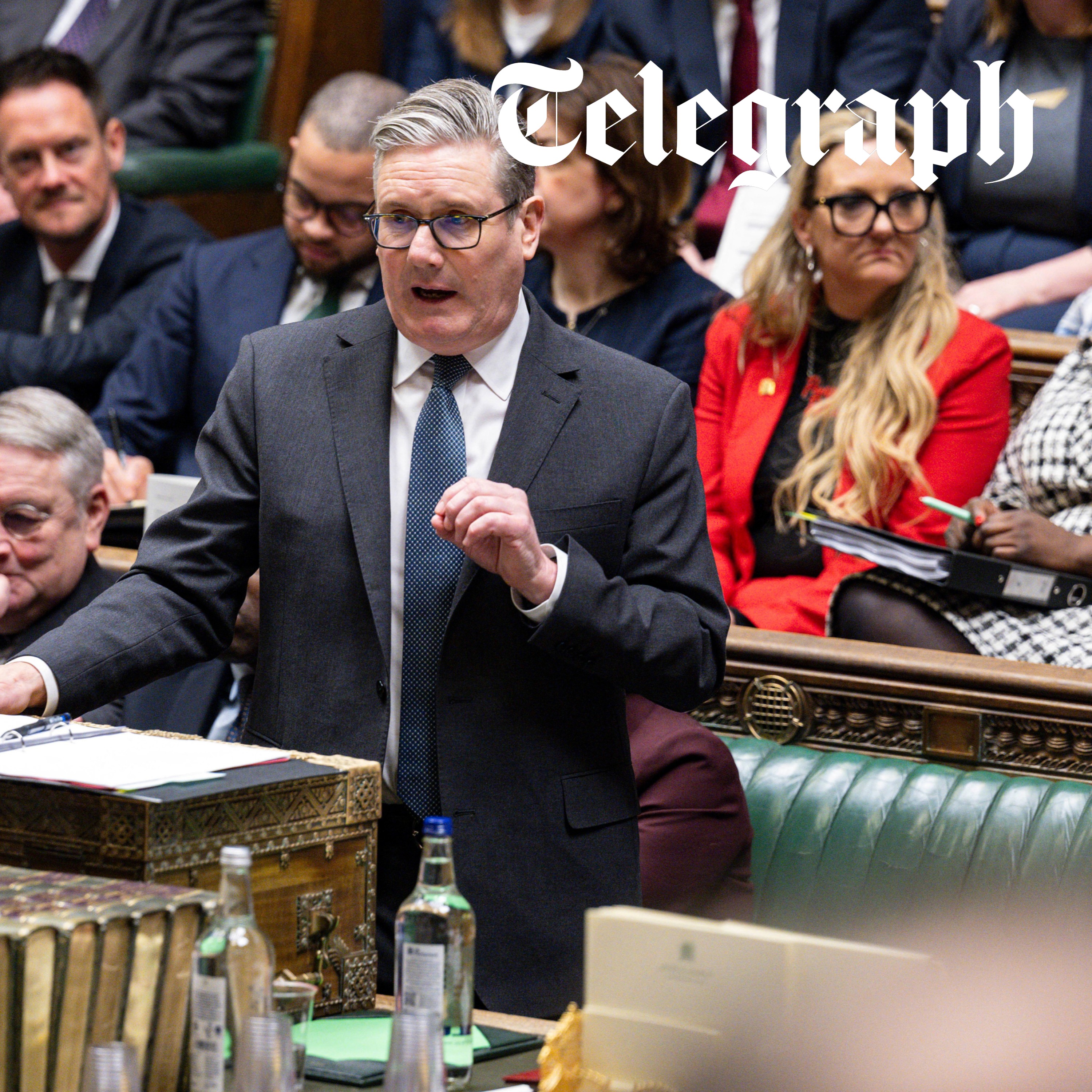
Starmer takes responsibility for Mandelson – but did he lie to Parliament?
About this Episode
It’s the day after the release of the Mandelson files and now attention is turning to what isn’t in the documents. Crucially, we don’t know how the Prime Minister responded once he was presented with clear evidence that the Labour peer had a close friendship with Jeffrey Epstein.
Sir Keir has insisted to Parliament that due process was followed at all times. But Tim and Camilla ask: do the revelations contained in these files make a mockery of that claim?
Plus, the Government has pushed ahead with a formal definition of anti-Muslim hate despite concerns that it will be used to suppress free speech. We’re joined by the former Tory MP and lawyer Dominic Grieve, who co-wrote the new definition, to ask why Labour is prioritising this kind of discrimination just as anti-Semitism is on the rise.
We want to hear from you! Email us at [email protected] or find @dailytpodcast on TikTok, Instagram and X
► Sign up to our most popular newsletter, From the Editor. Look forward to receiving free-thinking comment and the day's biggest stories, every morning. telegraph.co.uk/fromtheeditor
Producers: Lilian Fawcett
Senior Producer: John Cadigan
Executive Producer: Charlotte Seligman
Video Producer: Will Walters
Studio Operator: Meghan Searle
Social Producer: Nada Aggour
Editor: Camilla Tominey
Hosted on Acast. See acast.com/privacy for more information.
Hosts & Guests
Transcript
The Telegraph
Romantic retreats, luxury beachfront hotels, expansive family villas with sensational
sea views, not lots of, just the very best of.
Simpson travel, the magical destinations you love, the personal service you expect.
We visit every one of our properties so we can hand pick the perfect holiday for you.
Simpson travel.com because your time is precious.
You know what's wild?
Most people are still overpaying for car insurance, just because it's a pain to switch.
That's why there's Jerry.
Jerry's the only app that compares rates from over 50 insurance in minutes and helps you
switch fast, with no spam calls or hidden fees.
Drivers who save with Jerry could save over $1,300 a year.
Before you renew your car insurance policy, do yourself a favor.
Download the Jerry app or head to jerry.ai slash a cast.
Kirsta Amar has accepted full responsibility for the Mandels in the scandal.
It's me who made the mistake he says.
It's me who apologizes to Epstein's victims.
Did the Prime Minister mislead the House of Commons and light a parliament?
And is the government guilty of breaking the ministerial code with that £75,000 pay off?
And the government's anti-Muslim definition.
Is it going to suppress free speech and lead to figures like me and Tim being accused of Islamophobia?
We spoke to the man who wrote the definition, Dominic Grieve, and asked,
why do we need this at all when it's already illegal?
And is it the right time to do it when anti-semitism is on the rise?
Welcome to the daily team with me, Camilla Tomani.
And me, Tim Stanley.
Tim, it's the morning after the release of the Mandy files.
We did cover their contents extensively yesterday as we got our highlighters and our folders.
But this isn't going away for the Prime Minister, is it?
No, it's not, because it's a question about his judgement
and whether or not he's been entirely open with us about how Mandy was appointed.
So as we detailed yesterday, there are three killer pages in these files
which amount to 147 pages altogether,
which lay bare all of Mandelsen's quite dodgy associations.
And we discuss yesterday, before you even get to Epstein,
you've got to get through his chairmanship of Global Council,
which had links to China, Russia, Qatar and others.
His links to the Hinduja brothers and his loan from Geoffrey Robertson
over both of which he had to resign when he was previously in government.
We also have an extensive briefing note
informing him of evidence suggesting that Mandelsen's relationship to Epstein
was very close, including a January 2024 piece I contributed to
for the Telegraph, along with two colleagues laying bare in over a thousand words
just how charming they were.
So that's what's in the documents.
What we're now trying to do is piece together what's not in them
and find out what was going on behind the scenes.
Well, one more detail from that release was Jonathan Powell was quoted
in an internal memo about discussions that followed the sacking of Mandi,
saying that he thought the process at the time had been,
quote, weirdly rushed.
And according to the Times, Powell was even stronger in private.
Quote, his view was that Peter is always a disaster
and we always end up having to fire him,
said a senior official.
So that's Jonathan Powell acting as Keirstarmer's national security advisor,
just to remind everyone back in the day he was Blair's
chief of staff.
So he was at the heart of the new Labour project.
You might imagine that there could be loyalty to Mandelsen
because they were both in the same camp, but clearly not.
The impression once given of Powell is that he really did know where the
bodies were buried and he did try and flag how dangerous this
appointment was, which then leads us on to
Starmer's subsequent chief of staff, Morgan McSweeney,
and this notion that actually quite a lot of responsibility
was devolved to him in the appointment of Mandelsen.
Now that's significant because we are trying to interrogate
how much the Prime Minister did or didn't know and it seems very obvious to us.
Now we've read the documents that he was presented with
that he must have known a great deal.
But ever the technocrat Starmer's approach
has not only to be able to blame the staff because of course McSweeney is now
fallen on his sword, he's gone, but it's also to repeatedly insist
Tim that due process was followed at all times.
We'll drill into that in just a moment, but you observed something about an empty
box in the paperwork, Tim.
Oh, I'm not the only person who's observed that I don't take credit for all of that,
but it is true that there is in these documents an empty box
where normally the Prime Minister would write what his responses and what he
wants to see done next.
And the curious thing is that this box is empty.
Now the explanation given by officials inside number 10 is there are
other means for the Prime Minister to communicate his instructions.
But obviously if we're going for full transparency here, we need to know what
those are, where those are, are we talking a phone call, we're talking WhatsApp,
why are they not part of this document if they were written down?
We are also told that the Prime Minister
instructed Morgan McSweeney to go and put questions to Peter Madlison
and the McSweeney then returned with those answers.
So that conveniently puts a bit of distance between the Prime Minister
and Madlison. We're not talking about Prime Minister
ringing up Mandy and saying what's this about your relationship with Epstein,
this has farmed out to someone else who then passed it on.
But it's the wrong person to farm it out to
if that person is the person advocating most strongly for that person to get
the job and is Madlison's protege. So he has got a very close
personal relationship with Madlison, yet he's the person, the so-called objective
observer who is advising the PM on this appointment.
This is like asking Robin to put some difficult questions to Batman.
Yes. Exactly. Others did also express
reservations, Tim, so we have Sir Philip Barton, who is the former
permanent secretary at the Foreign Office. He raised
reservations about the appointment. He was said to have been partly influenced
by Dame Karen Pierce, who was the outgoing ambassador to the US,
who, quote, repeatedly flagged the Epstein risk.
Now, we're going to come on to the question of whether the Prime Minister is
actually lied to the House of Commons, as Kemi Bainock is now claiming
in just a moment. But there is a potential legal
issue on the horizon, and that concerns the £75,000.
Well, can we call it a golden goodbye? It's more like a two-fingered salute
to Peter Madlison and indeed the taxpayer. It's not as golden as the
amount he initially asked for, which is over £500,000.
The government insists that it got, quote, value for money
by knocking him down to £75,000. But we have a story that says that Rachel
Reeves' deputy, James Murray, may have broken the ministerial code by agreeing
to the payoff, because according to the code, ministers must ensure
value for money and must abide by the requirements set out in a document
called Managing Public Money. This document says the department should not
sign off on severance payments to avoid, quote, unwelcome publicity
or reputational damage. And as we mentioned yesterday,
in those documents, there is a communication which seems to suggest
that officials were concerned that if they didn't give Peter Madlison
something, then he would go public. A number of politicians, for instance,
Labour's Douglas Alexander have said that the money should be given to charity,
because that's not something you can compel Peter Madlison to do.
I'm sure he does actually have some expenses that the 75 grand is necessary
to cost. But also, at lighter reminders, politicians,
it's not Peter's money. No. It's tax payers money. No. You're requesting that
someone who got tax payers money give my money to someone else. I know. I'm
honest. I'd rather he just gave it back to me. Well, he could give it
back to you all to be fair. I suppose Sir Eddavie is in the
think of the victim's mould and is thinking that really if Mandlison had any
sense of decency at all, if he really is sorry and regrets his association
with Epstein, then he should probably give that money to an organisation
that helps the victims of sex trafficking, for instance. Again, that's up
to Madlison, but I'm going to double down on this. We are not in the business
in this country of giving individuals large pots of tax payer cash,
and then saying, you might want to give that to a nice cause. That's just not
how the tax system is supposed to work. And also as I said. I didn't sign up to that.
No, as he said yesterday, there is something
venal about him leaving in such disgrace, but clawing as much money as he could
back from his contract. Yes, with a threat of an industrial tribunal hanging
over the government. Now, let's just go back to September
the 10th, 2025, Tim. This is important now, because
can we bade not the leader of the opposition has said this this morning.
It is very clear that he told lie after lie after lie about the appointment
of Peter Madlison. He wanted to make this all about Peter Madlison,
but this is about his judgement. He has been dishonest with
parliament and with the country, and Labour and East have been good conscience
should be looking at whether or not this man should be leaving on country.
Now, why is she saying that? She's going back in time
to the moment that Keir Starmer expressed confidence in Peter Madlison,
as you and I have discussed just a day later, Peter Madlison resigned.
But what's crucial in these parliamentary exchanges
is the number of times the Prime Minister
insists that due process was followed. He actually uses that phrase
on three separate occasions. Was the Prime Minister aware of this
intimate relationship when he appointed Lord Madlison to be our ambassador
in Washington? Mr Speaker, as she and the House would
expect, full due process was followed during this appointment,
as it is with all ambassadors. That was the first time he used the phrase,
here's the second. Part of the appointment,
there will have been extensive government vetting,
including details and timings of Peter Madlison's dealings with Jeffrey Epstein.
So will the Prime Minister publish all these documents, including those about his interests?
Mr Speaker, as I say, full due process was gone through in relation to
the appointment, as would be expected. Those first two tim were two
Kemi-Badenock, and then he said the phrase again to Ed Davy.
Has the Prime Minister asked the ambassador what other compromising material
the Trump administration might have on him, as he leads
Britain's negotiations with the White House?
Well, Mr Speaker, as I've made clear to the House,
a full due process was gone through when the appointment was made.
So Tim, this is the question for Kirstama.
Let's just point out the former director of public prosecutions.
Can you possibly claim that due process was followed
if you are given a document that mentions the reputational risk of appointing
Mandelson on numerous occasions that clearly points out the closeness of his relationship to Epstein?
And we now know, and maybe he did comment elsewhere, that there is an empty box
where the Prime Minister's response to all of this should have been.
If there's an empty box, then the whole of the process can't have been followed,
because the Prime Minister doesn't appear to have reacted to the information,
the evidence that was presented to suggest repeatedly that appointing this guy
was a very, very bad idea that would reflect badly on him personally.
So is that following due process?
Well, can we be knocked?
We'd like the answer to be no, so that she can say the Prime Minister has misled the House.
If that is the case, then that doesn't actually lead to anything.
It doesn't matter if you mislead the House.
It's a convention that that's a bad thing and that you ought to apologize for it,
but it doesn't get you disqualified from Parliament, it doesn't send you to jail.
Nonetheless, it will be a great political win for her.
And there is one interpretation, which is what we infer from Jonathan Powell,
that the process was super rushed, so due process was not followed.
The second interpretation, which I favor as due process was followed,
and the Prime Minister ignored it.
Yes.
That to me seems more likely.
I mean, we have a document which suggests a box-ticking exercise.
In fact, a box-filling exercise, in which officials have put loads of pretty sound advice,
which is proven to be correct, and it was obviously ignored.
Yeah, so I suppose the kind of key premise then is,
it's not even with the benefit of hindsight that we can say
that if due process was followed, Peter Mandelson wouldn't have been appointed.
We can say that at the point that the Prime Minister was given this dossier,
because if you followed the due process and listened to what you were being told in the dossier,
if you followed due process through to its full conclusion,
there is no other conclusion you really could have drawn.
Bar goodness me, we better not appoint him, because of all of his associations, let alone with Epstein,
and because of the reputational risk to me, now, the Prime Minister's defence to all that is,
but when we asked Peter about all this, he said there was nothing in it.
Is that following due process?
Is believing Peter Mandelson's lies a full exercise of the following of due process?
Or is it a case of a Prime Minister either being duped or turning a blind eye,
because he felt that this appointment was politically beneficial to him?
As someone said, this is the first time in his political life that Kierstam had took a gamble,
and it horribly backfired.
Yes.
Normally he does everything by the book to a degree which is, many people find aggravating and annoying.
Some might say he's handling a run and the use of American bases was so by the book,
or the Chegos Islands was so by the book, because international law says you have to hand them over, etc, etc.
This is the first time in his life in which he's been given official advice,
and seems to have gone, I don't care, I'm going to point him anyway, because Morgan McSweeney says
he's fine. In which case, what does that say about his judgment that when he does take a risk,
it's a really bad one. Why does all this particularly matter?
Because, hey, Labour has a massive majority, and surely he can ride this out.
What it's worth listening to this speech by Clive Lewis, the Labour-backed bench MP,
in Parliament, when they were discussing the release of these documents.
This isn't just about technicalities, about lapses of judgment.
This is about a wider, rotten political culture, a 30-year project,
where proximity to wealth and power, isn't a means to an end, it is the end goal.
That's what Peter Mannersen represented, and he wasn't just about him being the ambassador,
so let's to be ambassador. He was at the heart of the political project around number 10.
That has to change. Does the government understand? Out there, this isn't just about one bad set
of decisions. It's about a political culture that he represents, and that it's destroying
party politics, mainstream party politics in this country. Do we get that? Do we understand that?
Will we change? So, what you just heard Clive say is really important, because it goes to the heart
of why Labour is so angry about this, why the backbench is so angry, because they see it as an
indictment of new Labour, of a political project, which abandoned socialism for what?
Yes. For money and power, and it compromised them, and it means you end up with a Prime Minister
who, in their eyes, isn't doing socialism. No. It's just in office, but not in power,
and it's surrounded by the same kind of rich, venal people that you could have had under the
Tories. So, the backbench is getting very angry about this, and Kenny Badenot claims that some
Labour MPs are reaching out to the Tory whips about a possible vote of no confidence. Now,
that does matter. Yes. Because if you lose one of those, the government falls. Or even if you
narrowly win it, the damage is already done. Because people can look forward and say they will lose
the next one. The trouble is with this argument. The trouble is with this argument. Are the
leuaces and the Rachel Maskels and the Richard Burgens and the John McDonald's and the heavy
blare-right critics of this world really going to side with the Tories?
Yeah, I don't believe her, but I think there's a big difference between having serious strategic
conversations, like, you know, famously in the past, Michael Foot, conspiring with Enoch Powell to
stop Lords reform, or Harold Wilson conspiring with Enoch Powell over defeating a membership
of the common market and things like that. Yeah, but they're big things. They're big to get
people with big things. I suspect what's happened is a lefty labour envy has bumped into someone
in the canteen and has said, oh, he's not gone long and that's being translated into their support
for a no confidence vote. But nonetheless, okay, so maybe he can't be brought down that way,
but it could mean that people are more likely to rebel over key legislation. Yes. Because they
don't like the man who's proposing it. No. And so they don't trust his judgment. There's also,
by the way, I think, quite key concern about a lack of scrutiny here of the Prime Minister himself.
The timing of PMQs, and then Darren Jones, so this is the chief secretary to the Prime Minister,
speaking afterwards about this whole issue and releasing the files, meant that Kiastama couldn't
be directly scrutinised by Kenny Baidnock in the House, because by that point he's left.
Yes. We then get the files. So we have to wait until next Wednesday. We have to wait until
next Wednesday and no doubt more developments in Iran will take place overnight and into the weekend.
Yes. He might get lucky. World War Three might break out. Well, it possibly already has.
So we're just now in this holding pattern. So this is all now, in terms of the politics of it all,
where the Baidnock is going to be able to keep this on the front pages between now and next Wednesday.
Isn't it ashamed, by the way, that common sense isn't enshrined in international law,
because Starma could have consulted his friend, Lord Hermann.
That's a very good point. Who could have provided some great legal advice on the
idiocy of appointing Peter Mandelson, and Starma could have said, I'm sorry, but in the interest
of international law, which has enshrined the policy of common sense, which just can't possibly
do this. If only the United Nations have passed a resolution against Jeffrey Epstein a couple of
years ago, this would never have happened. Yes, or the international court of justice had made a
decision or the WWF, anyone, but not the officials. Well, aside from Starma and the Mandelson files,
Tim, there's another subject that has been exercising the telegraph audience.
For the past year, the Labour government has been working on a definition of Islamophobia.
It's settled on one of anti-Muslim hate. We speak to the man who helped author it, Dominic Greve,
and ask, is this just a blasphemy law through the back door?
Romantic retreats, luxury beachfront hotels, expansive family villas with sensational
sea views, not lots of, just the very best of. Simpson travel, the magical destinations you love,
the personal service you expect. We visit every one of our properties so we can handpick the perfect
holiday for you. Simpson travel.com because your time is precious.
He uses blue apron. He says he ordered one pan assemble and bake meals and these things called
milk hits. They're all super easy to bake. He keeps y'all in protein and fiber, baby.
Also, the food, we try to. So good. So maybe you check it out or whatever, blue apron.
Give 50% off your first two orders plus free shipping with codeless and 50 terms and conditions
apply. Visit blueaprint.com slash terms for more.
Tide of your card insurance rate going up even with a clean driving record, you're not alone.
That's why there's Jerry, your proactive insurance assistant. Jerry compares rates side-by-side
from over 50 top insurers and helps you switch with ease. Jerry even tracks market rates and alerts
you when it's best to shop. No spam calls, no hidden fees. Drivers who save with Jerry could save
over $1,300 a year. Switch with confidence. Download the Jerry app or visit jerry.ai slash acast today.
We're now joined by Dominic Grieve, KC, a prominent barrister. You were a member of Parliament
for the Conservative Party and then Lately as an independent. Your top position and government
was Attorney General for England and Wales and you were tasked by Labour with coming up with
a definition for anti-Muslim hate. So my first question is, why do we even need a definition
of anti-Muslim hate when it's already illegal in this country to discriminate on the basis
of race or religion? It's a fair question and there are some people who think that we shouldn't
have any definitions at all. It's worth bearing in mind, however, that we have a definition of anti-semitism
and when we took evidence about whether we should have a definition of anti-Muslim hatred,
it was clear that the majority of people who came in front of us thought that the definition
of anti-semitism had been helpful in identifying what the issues were and therefore being able to
tackle them. So the reason for having a definition of anti-Muslim hatred is that firstly we've got to
face up to the fact that anti-Muslim hatred is becoming a very prevalent phenomenon. Lots of people
going about their lawful business, living in peace with their neighbours, are getting abuse
and harassment from complete strangers because they are identified as being Muslims. If you go
online and go and look on X, there is a torrent of hostility and vitriol against Muslims
generically irrespective of what their views may or may not be. And so pragmatically, I think that
if one can come up with a definition, which is the right one, then it helps identify the problem
and it will then make it easier to address it. And it's worth bearing in mind that they're already
out there, a large number of definitions of anti-Muslim hatred or sometimes the word used is Islamophobia,
some of which I think are quite seriously flawed. And some of the issues one then picks up is that
they are misunderstood or misapplied and that just makes it even worse. So effectively, they are
used to suppress legitimate freedom of expression or try to suppress it. So actually coming up with
a definition which doesn't do that, which I believe ours does not, I think is a step in the right
direction, but I should make clear on its own it doesn't solve anything. And I'm pleased that
the government has announced a separate package which I should emphasize we were not asked to
advise on in detail, but we did make the point in the submission we made to government. We said on
its own this won't do anything. You have got to have somebody who is paying some attention to
social cohesion in this country because we are I think at risk of our social cohesion degrading.
And as we have been historically a cohesive country with a lot of live and let live and a lot of
tolerance, I think that's a very undesirable place for us to go. Did you avoid the word Islamophobia
on purpose in this definition? Most certainly yes. Islamophobia is a word that's been around
for about 20 years. It started as an expression used really in academic communities because
take, given its literal English meaning, it means an irrational fear of something. But rationality
and irrationality are things that we're all perfectly allowed to have. For many Muslims,
the word has simply come to mean anti-Muslim hostility or anti-Muslim hatred. But it's right to say
that given coming back to its ordinary English meaning, it means a fear of a religion. And people
are entitled to be fearful of a religion or dislike a religion if they wish. That's part of our
right in this country. What is worrying is when your dislike of somebody else's views or
generically or of a belief system translates into treating with completely casual hostility,
complete strangers, who indeed may not in fact share those views at all because the reality is
that Islam is a hugely wide term and encompasses widely different belief systems within it.
If you were to do that, if you were to discriminate against someone on the basis of their faith,
that would already be illegal. I mean, this is my perspective. You're quite right. Every
offense you've described against Muslim people is abhorrent and wrong. And it is also necessary
that we have social cohesion. I think people would accept that. But what people like to cling to
in this country is the idea of a colorblind or a faithblind social cohesion. That we treat people's
individuals not as parts of groups. And therefore, we just say that any kind of discrimination
on the basis of faith, on the basis of race is wrong. Why do you need to single out a particular
group? I agree with the first part of your premise completely. And as I said at the beginning,
I can see that there is an argument that we should not have any definitions of any kind of tool.
But we are a pragmatic country. And if there is a problem, I don't think it's wrong to try and
approach it pragmatically. If you look at the definition, the first part of it really deals with
criminal offenses, which are already criminal offenses. The last part deals with the equality act,
although it goes it's tighter than that, because you can reach the equality act and discriminate
against somebody without intending to stir up hatred against them. You can do it negligently or
you can do it by mistake. So the middle part is the most controversial part. I'm well aware of
that. But it is, in my view, well drafted, because I don't think a government has a duty to be
neutral about the issue of people expressing views generically with the intention of stirring up
hatred against groups irrespective of the views of the individuals. Now, they may still do it,
and it will still, it won't be a criminal offense, it's worth bearing in my, this is a non-statutory
definition. But if somebody within my employment, if I were an employer and somebody was doing what
that middle paragraph is saying within my business, I would tell them to stop, and I'd be right to.
I just want to read it, because I think it is, it is the toughest bit of the definition.
Anti-Muslim austerity is also the prejudicial stereotyping of Muslims or people besieged
by Muslim, including because of their ethnic or racial backgrounds or their appearance,
and treating them as a collective group defined by fixed and negative characteristics,
with the intention of encouraging hatred against them irrespective of their actual opinions,
beliefs or actions as individuals. I think my problem with singling out
this as a definition is for the following reasons. We already know in this country that it is
more problematic to criticise Islam than any other religion, and I say that because we've got
evidence for it. The batley schoolteacher who put a cartoon of Muhammad up on a board is still in
hiding five years on from having to lose his job in his position. We had another situation where
a child dropped a Quran and was subject to some kind of community expose. I would suggest that even
in journalism, you have to watch yourself. I can be very critical of my own religion, Catholicism,
Christianity. I could be critical of Judaism as a Christian and say, of course Jesus isn't still
to come. I could be critical of Hindus, I could be critical of Sikhs, but we have to really watch
ourselves if we are criticising the religion of Islam because of community backlash that is
completely disproportionate to my exercising of free speech. And this, people might say this
validates. And so therefore you're almost doubling down on this uniqueness of not being able to
criticise this religion when other religions are fair game. That's my concern about it.
I understand that and all the examples you've given are deplorable. And there is in my view
lot of evidence that there are extremists who are Muslims who try to push such an agenda.
And I think that's something which needs to be addressed as well. But they've all happened
without having a definition. I happen to think that this definition will make it
less likely, particularly if it's linked to the other measures which the government is taking.
I think it will make it less likely that this sort of thing won't be picked up and stopped.
So I accept it's quite a finely balanced issue, but against that you've got to understand the
damage that is being done to our social cohesion within Muslim communities who, most of which,
whom are not interested in these examples, which you give at all, are leaving perfectly
law-abiding lives, mixing with their neighbours, working and contributing to our society,
but are finding themselves at the receiving end of the increasing abuse. And there's no data
at all that some of it, the social media aspects of this, are now getting really quite serious
that the stuff on social media, which is indeed uncontrollable, because most of it comes,
a lot of it comes from the United States. I mean, it really is not in any way different from the
sort of stuff the Nazis were pushing out against the Jews in the 1930s in Germany.
In which case if it's that bad, why is this not a law? This is guidance. It's not statutory.
Well, that's a matter of a government. I personally would not wish to see this turned into a law,
but it was not within our remit that that was where we were asked to produce non-statutory
definition. That would require something completely different and doubtless for the very reasons
you've given. It would also be controversial and I think might be very hard to craft.
What's needed is a bit of focus on this and people of goodwill to come together, both to deal
with the nonsense of the extremist end of this, which is undoubtedly it's a cycle which just
feeds on each other. So the more you get, Islamist extremists saying very unpleasant things,
the more people then start to attribute that to the why the views of all Muslims in the United
Kingdom. And we ought to make a collective effort at trying to tackle it. I think the definition
helps. I certainly set out with the west of the working group with the idea of do no harm.
Whether it will do good, I hope it will, but do no harm. And I think that applied to the other
members of the working group as well. And they were all Muslims. My concern, and I am somebody
who has been accused of Islamophobia for reporting the following, concerns about women being subjugated
in Muslim communities, concerns about the low economic activity, particularly of Bangladeshi
and Pakistani women coming to this country, concerns about the low take-up of English and the
low spoken English among some in the Muslim community, concerns about primary school girls being
made to wear hijab in Muslim schools, concerns about a run in Tower Hamlets that excluded women
and girls over the age of 12. Okay, these are all perfectly legitimate concerns to raise
about some of the practices within the religion of Islam. And yet at the same time,
I am accused of being a racist for pointing them out. That's why I worry about this, because I
think that my critics will latch onto this and use it as a stick with which to beat people who
raise perfectly legitimate concerns about why some practices within Islam do not appear to be
compatible with either British values or indeed women in 2026. I understand that, but I think
you're mistaken. Read the definition. You're not intending to incite hatred against anybody by
raising these points. They're perfectly legitimate points for debating a pluralist society.
They're perfectly legitimate things to raise and you are entitled to criticise Islam as a religion
and its practices. All that is absolutely clear and indeed it's made clear in the notes to the
definition. So I just don't think this definition is going to have any impact on preventing you from
doing that. Now that may not mean that you're still not accused of Islamophobia, but for the reasons
that I've given, I hope that we're getting away from that term because I don't think it's very helpful.
But the context in which this is being produced is one in which police forces have been encouraged
to record non-crime hate crime incidents and also one in which we have been told that racism is
not just a matter of intent but also perception. And I guess that Camilla might say, can she write
those things without fear that because you have defined anti-Muslim hate this way, someone will
read this document, read what Camilla has written, and then say, well, I perceive whether that was
her intention or not, I perceive that she is committing some sort of anti-Muslim hate. And then I have
an Alison Pearson essence, not cut the door. And even if it's not the law, because we were in a
situation in which the police still have to listen, you're creating even more trouble for Camilla and
have to really use the word perception in the definition is about the fact that non-Muslims who
are thought to be Muslims are often at the receiving end of hatred because they are thought to be
Muslims. You get examples of Sikhs particularly who are confused in the mind of those who are doing
this. So coming back to your point, I just don't think that that will happen. And indeed, if the
government sets up a proper social gehesion unit, you should be entitled to some verbal protection
from whoever is appointed to run it. So I think those are all positive steps in the right direction.
Of course, at the end of the day, you talk about knocks on the door and on the door step, all of us
who put ourselves out into the public sphere and say things as I discovered the height of the
Brexit crisis in the 2019 get death threats from people. This is, I'm afraid, is one of the
more unpleasant sides of modern politics, particularly fueled by social media. And I'm afraid there
is a point where one says we have to live with it and we just have to courage to get on with it.
So this isn't a cure all, but I do happen to think it's a step in the right direction and a
bubble, because as I said earlier, there are a large number of places in this country where people
are operating their own definitions. Often, often created for perfectly valid and good reasons,
but open, I think, to miss application quite easily. And I actually think this one is much more
robust. Who's going to use the guidance? We've discussed the police, the CPS, the judiciary, schools,
because on one hand, you could say, look, this isn't going to be binding in legislation. So it's
just guidance, but we've also seen guidance overinterpreted. And I'll use the example of trans
guidance. We got into a situation where guidance was produced. Schools followed it caught up in a
wave, caught up in a transgender trend. They then appeared to be backed up by the Department
for Education. And some of the outcomes were hugely disturbing. For instance, we reported at this
newspaper of the guidance being interpreted so widely that children were transitioning in school
and their parents weren't being told about it. So sometimes when the guidance isn't statutory,
it can actually be more unwieldy than when it is. I entirely accept that, which is why the guidance
has to be well crafted. And there was plenty of examples over guidance of trans issues that it
was poorly drafted and being misapplied. And there is, in the papers and on social media this morning,
a lot of comment about guidance, apparently, in some schools in the north of the country about
what form art and what can be depicted by children in art class. Yes. We reported in that, Dominic,
and we have had a great many thousands of comments condemning this in a Judeo-Christian country.
And very understandably, now I haven't had a chance of reading the entire document, but from what
I understand of it, it's nonsense. I have read it and it is nonsense. The document actually just warns
teachers that some Muslims may be uncomfortable. The point is, it's about leaving the pupils up to
decide what they want to do. But the problem is, as you can just imagine, a head teacher reading it,
misunderstanding it and saying, look, to avoid any potential controversy, let's just not allow any
drawing. That's the problem is interpretation. We're on the same page. Obviously, if you're running
a school with Muslim children, you don't suggest to them that they should draw a picture of the
holy prophet of Islam, because that is regarded within, for most Muslims, not all, but almost most,
as being iconoclastic and improper. But on the other hand, it doesn't mean that you prevent people
from doing an activity card showing the Virgin Mary and the child Jesus, or indeed depicting the
crucifixion. It's obvious. So often, I'm sure you may find this, I am bemused at the utter
idiocy of the way in which people try to apply, even unwritten rules or unwritten ideas. I'm
afraid this happens. And actually, I think this guidance will help in this. I realise maybe
that the proof of the pudding is going to be an eating, but my personal view is that this
will be helpful. And it will also have the consequence of providing, I think, reassurance
for the British Muslims, that the issues to which they are being subject, the problems to which
they're being subject in which are now, I think, much more widespread than we understand,
are being taken seriously. And I think that's important, because ultimately, these problems
are going to be best addressed when sensible Muslims, proud and secure in their faith,
understanding also that they're living in a pluralist society, are able to make sure that
those who are of more extreme views are marginalised. And because of the state of the world,
including the Middle East and lots of other problems, that is not always happening. And allowed
his voices are the most extreme. I just want to add on the school's guidance, because I find it
so it's a classic of the genre. The guidance was produced under a Tory government. And it was run
in Tory, run councils, a little detail, which is getting ignored this morning. But okay, here's
where I think the big problem, big challenge ahead lies. I suspect the reason why you've gone
with anti-Muslim hate, Podoslamophobia is because you want to make this about human beings and
individuals. Not criticism is quite right. The thing is, though, that Muslim-ness is a manifestation
in many cases of someone's religion. So if you criticise Muslim-ness, if you criticise an
individual on the basis of their Muslim-ness, you are being drawn into a discussion of the
validity of the theology itself. So for instance, there is a live conversation in this country,
which I suspect we need to have about the relationship between Islam and women's rights.
There's tension there. Issues like face coverings. And my worry is that if you're going to say
with this guidance, you cannot generalise, you cannot stereotype, so you can't presumably say things
like, you're a Muslim woman, presumably, you don't have as strong a rights as your husband does,
or presumably your husband mistreat you, or you're a Muslim man, presumably, you look down on
your wife and your daughters. Okay, there are some bigots who just want to be nasty about Muslims,
but there is also a genuine interrogation about faith they're going on, which I think is a
legitimate discussion. And my concern is that bad faith actors, again, it uses your attempts
to defend Muslims against discrimination as an opportunity to shut down debate about the thing
that probably most defines them in their life, which is their religion. But we've just heard in
this conversation we're having that this is happening already. Question is, is this definition
going to make it better or worse? I think it will make it better. Of course, these are legitimate
subjects to debate. I'm a Christian. I'm a practicing Anglican Christian. If people wish to
criticise my faith or my practices, they are open and free to do it. And in the same way,
when I was in Parliament, I was leading light in getting the blasphemy law repealed. And actually,
I was also the leading, along with David Davis, we were the two leading parliamentarians that
got the Labour rebellion, which got incitement to religious hatred amended to require intent
and to take out abusive and insulting language, because comedians said we will be at risk.
That's where I stand on this. And I certainly wouldn't be allowing a definition to go forward,
which I was uncomfortable with. I think it correctly encapsulates what the issues are for
British Muslims. It's their limited experience and a real problem for them. And I think it needs
to be addressed. And as I say, there is a wider package of measures that the governments come up
with, which I'm also pleased about. And in many ways, those are likely to be more important in
making progress than the definition itself. But the definition does help identify the problem.
And whilst it's possible that people will try to misuse it, inevitably, anything is capable
of being misused or made people may try, I don't think it would be successful.
I don't want to go around in circles, but again, it's a question that we mustn't be naive about
context. When it came to the rape gangs, we now know there were officials who did not want to
properly investigate them for fear of being accused of what I think you're defining here.
Yeah, anti-Muslimness. Yeah. That may well be the case, but I don't, I think it's also worth
bearing in mind that a lot of it, I'm afraid, and I've said this in the past, has to do with politics.
If you are, or you see yourself as dependent on a particular community vote,
and we've after all seen it in the recent Gordon by election, then I'm afraid, I think my
impression, having taken an interest in this subject for some time, is as a tendency to gloss
over issues. Mr. Grieve, I'm going to accuse you of anti-Muslim hate there. You're implying that
Muslims vote as a bloc, and they just vote for whoever their community elders tell them to hold on
the moment. That's not what I'm saying. Actually, I don't think they do vote as a bloc, but the
perception by some politicians that they are available as a bloc has been the issue that has troubled
me. Yes. Which is a different thing altogether, and that's a mastery in which political parties
need to look at their own ethical standards. Can I just ask a question about timing here,
and I do appreciate what you're saying about the growing levels of anti-Muslim hatred,
but haven't we got a much bigger, more obvious problem with the growing levels of anti-Jewish hatred?
The last time I checked, Muslim students weren't being driven off university campuses.
The last time I checked, people weren't calling for Muslim armies. We weren't calling for death
death to Muslim armies in the streets. We weren't calling for Muslims to be in the ground
at Oxford University. We weren't marching outside mosques and intimidating Muslims.
Only this weekend, Dominic Grieve, we witnessed one man at a so-called peace march
called for the return of Muhammad's army, which famously slaughtered Jews in the seventh century.
I think if you called for that on the streets of Britain, you would rightly be criminalised.
We don't see the same response, so I would suggest that if you're Jewish in the UK right now,
you'd be thinking why on earth is the government prioritising anti-Muslim hate when we are the victims
of arguably the highest levels of anti-Semitism since the Second World War?
Nobody would be abusing Muslims in the street as Jews and Israelis have been abused since October
the 7th. It just isn't happening. I agree that there's a serious issue with anti-Semitism.
As I have many Jewish friends, it's a very serious problem. We have a definition of anti-Semitism
that I think was in part the response by the last government to the issue, but it has undoubtedly
grown much worse since, and there's no doubt that the current events in the Middle East
crystallise it, and there are people who fail completely to distinguish between the actions of
the Israeli government and the wider Jewish community, many of whom, to not support the actions
of Israel. And so there are serious issues there that need to be tackled, but I was simply
point out that we were not told in the course of the evidence we took, which included evidence
within the Jewish community. Nobody suggested that we were wrong in looking at this issue
of anti-Muslim hatred. I want to, finally, I want to raise a point
made by the Free Speech Union, which as they say, this conflicts with the occupying the
field doctrine of law, which says that you can't produce something where there's already
law covering it, and it could potentially contradict it. Now, I suspect you're just going to say
that's the government's problem, but do you see this being resolved by what you have written
turning into law and being integrated into the statute books? No, I never intended to see this
be incorporated into law. I don't think it's necessary. It's there as a guidance document
for public authorities, and that's where I expect it to be used. I never the intention that
it should be turned into law. And indeed, somebody said to me that they wanted to turn it into law,
I would say it's not necessary precisely because I think the law as it stands is sufficient.
And if the law as it stands is not sufficient, we've got to go back to the drawing board.
I certainly wouldn't use this as a basis for change. As for the Free Speech Union, yes, I understand
they're going to mount a judicial review of the government's decision. I shall wait with interest
to see the outcome of that, but I have to say that I don't find it easy to see myself
that adopting a non-statutory definition of this kind of falls foul of any legal principle,
but we will see. Dominic Grief, KC, former Tory MP. Thank you very much indeed for joining us
on The Daily Tea. Thank you.
Tim, before we go, could you lend me a fiver so I can get some lunch? Let's see, what have I
got in here? There it is. This is so staged. There it is. And look at this hand, some devil.
Look at this. The other side is the queen. Oh, the queen, it's an oldie. So we have the queen
and we have Churchill. Yes. But wouldn't we like Churchill, the greatest Britain that ever lived
to be replaced by a squirrel or a badger? Why doesn't Labour go the whole hog and replace him
with a white flag? I love that you're now thinking you might turn at the end at a week which
started with you, channeling your inner Jeremy Corbyn. Now, come to the dark side. This is an
aberration where an earth are we considering replacing the likes of Churchill, Jane Austin, Turner,
Cheering with little beasties, little critters, otters, squirrels. Can I be boring and say it's not
actually the government's decision? I don't know. It's something that we do every 10 years anyway.
In the past, the fiver was Wellington, then it was George Stevenson and then it was Elizabeth
Fry. And you can tell someone's age about what they can remember was on the five-pound note.
And it used to be nothing. So it's just come around. But the problem is its context because we
happen to be going through a period in which it feels like we're retreating from the world stage
and we can't send a ship anywhere anymore. And to replace Churchill with a hedgehog at that
moment, I think is very unfortunate. Also, hedgehogs are the sort of thing that countries do
where they're nervous about their history, the way the EU can't put any faces on notes. I'm
sure listeners will correct me and say they do that now, but I believe until they don't put
faces on notes because they can't agree on who is a national hero of the European Union.
So you end up with viaducts instead and things like that. Well, rather a viaduct than replacing
fry with a ferret. I say, let's have a bit of fun. I want on the five-pound note, I want
direct trotter. Yes. From only fours and horses with the motto, this time next year, it will be
millionaires. Or just other iconic figures from British culture like, for instance, Bungle from
Rainbow. Oh, wouldn't that be lovely? Yes. Or who else could we think of? Or John Inman from
Are You Being Served on the 50-pound note with the motto, I'm Free. Love that. Or let me think,
who else British? It's a fun, because I think everything we do should be done to fox foreigners.
Yeah. So they look at these people. Let foreigners look at it and see Mrs. Slocum and think,
is this Queen Elizabeth the first? Yes. And where's her pussy? And equally, can we just have
Harry N. Field loads of money? Yes. Come on. Can I have that far either? No, you can't.
Okay, you're going to throw in a bit of a toilet because it's the last time we'll see Churchill
on a bank note. No one uses cash anyway. I know. We'll be back tomorrow 5 p.m.
Work moves fast. Every email, report, and proposal counts. That's where Grammarly comes in.
It's your one place to think, write, and finish. Grammarly's AI agents help you find natural
phrasing, fine-tuned tone, and confidently write wherever you work. It's the premier writing
tool that 93% of users trust to get more work done. In a world of generic AI, don't sound
like everyone else. With Grammarly, you never will. Download Grammarly for free at Grammarly.com.


