Loading...
educationself improvementhealth
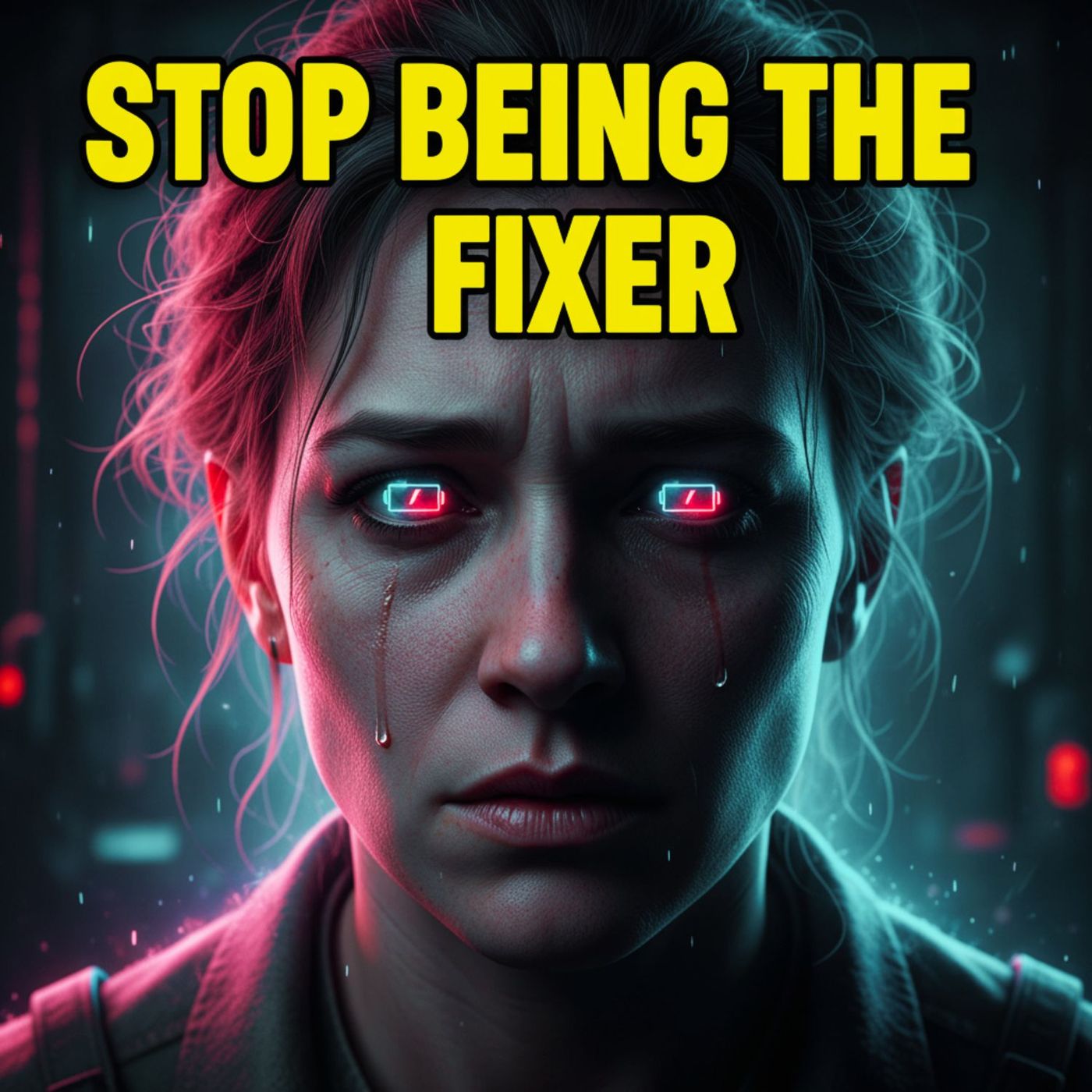
Stop Being Everyone's Emergency Contact: Why Your Kindness is Draining You
About this Episode
Are you a 24/7 repair shop for broken people, or are you actually in a relationship?
Stop setting yourself on fire to keep others warm. In this episode, we dive deep into the exhausting world of one-sided friendships and the energy vampires who treat your empathy like an all-you-can-eat buffet. If you’ve ever felt like your bank account isn’t the only thing going bankrupt after a phone call, it’s time to audit your social circle. 🚩
We expose the 5 toxic personality types secretly sabotaging your growth:
Ready to stop being the 'fixer'? Hit that subscribe button and start prioritizing your peace today. Let’s move away from cycles that leave you empty and build sustainable relationships that actually fuel your soul. 🚀
Become a supporter of this podcast: https://www.spreaker.com/podcast/life-hacks-diy-more-transform-your-everyday-with-simple-tricks-and-diy-magic--5995484/support.
You May also Like my other FREE web apps:
SkyNearMe.com – Your all-in-one "Sky Super-App." Track real-time weather, sunset and air quality, stargazing conditions, 5G signal mapping, drone flight zones, solar potential, track satellites, rocket launches, UFO sightings in your local airspace and even get your Sky Horoscope and more!
MyDisasterPrepKit.com – Gamified survival training. Generate custom survival plans and simulate scenarios ranging from hurricanes to zombie outbreaks.
🤖Nudgrr.com (🗣'nudger") - Your AI Sidekick for Getting Sh*t Done
Nudgrr breaks down your biggest goals into tiny, doable steps — then nudges you to actually do them.
Stop setting yourself on fire to keep others warm. In this episode, we dive deep into the exhausting world of one-sided friendships and the energy vampires who treat your empathy like an all-you-can-eat buffet. If you’ve ever felt like your bank account isn’t the only thing going bankrupt after a phone call, it’s time to audit your social circle. 🚩
We expose the 5 toxic personality types secretly sabotaging your growth:
- The Crisis Junkie: Only calls when their world is a dumpster fire but is 'too busy' when you need support.
- The Professional Victim: Refuses to solve their own problems and views every helpful suggestion as an attack.
- The Success Saboteur: Feels threatened by your glow up and uses backhanded compliments to shrink your confidence.
- The Accountability Dodger: Blames the economy, their ex, and bad luck for their own poor choices.
- The Emotional Sponge: Relies on your empathy to regulate their emotions, leaving you completely depleted.
Ready to stop being the 'fixer'? Hit that subscribe button and start prioritizing your peace today. Let’s move away from cycles that leave you empty and build sustainable relationships that actually fuel your soul. 🚀
Become a supporter of this podcast: https://www.spreaker.com/podcast/life-hacks-diy-more-transform-your-everyday-with-simple-tricks-and-diy-magic--5995484/support.
You May also Like my other FREE web apps:
SkyNearMe.com – Your all-in-one "Sky Super-App." Track real-time weather, sunset and air quality, stargazing conditions, 5G signal mapping, drone flight zones, solar potential, track satellites, rocket launches, UFO sightings in your local airspace and even get your Sky Horoscope and more!
MyDisasterPrepKit.com – Gamified survival training. Generate custom survival plans and simulate scenarios ranging from hurricanes to zombie outbreaks.
🤖Nudgrr.com (🗣'nudger") - Your AI Sidekick for Getting Sh*t Done
Nudgrr breaks down your biggest goals into tiny, doable steps — then nudges you to actually do them.
Hosts & Guests
Transcript
Looking for excitement, Chamba Casino is here.
Play any time, play anywhere.
Play on the train, play at the store, play at home, play when you're bored.
Play today for your chance to win and get daily bonuses when you log in.
So why are you waiting for, don't delay?
Chamba Casino is free to play.
Experience social gameplay like never before.
Go to Chamba Casino right now to play hundreds of games, including online slots.
Ingo, Slingo, and more.
Live the Chamba Life at ChambaCasino.com.
I'm caught up in the game.
My attention is on every play and every whistle.
But what I'm missing is a signal coming from my kidneys.
That signal isn't like a ref's whistle.
It's more of a silent SOS, which could be warning me of an increased risk for events like
heart attack or stroke.
And a way I can catch that signal?
A simple urine test called UACR.
If you have type 2 diabetes or high blood pressure, talk to your doctor about the UACR test.
Detect the SOS.
Visit detecttheSOS.com to learn more.
Let me ask you something deeply personal right out of the gate.
Have you ever given someone everything you had?
Oh, that is a heavy question to start with.
It is, but I mean it.
I'm talking about completely emptying your emotional bank account,
canceling your own plans, swallowing your own pain to show up for them,
only for them just vanish into thin air, the absolute second you need in the back.
Yeah.
Have you ever stayed up at 2 in the morning, your stomach tied and knots literally burning
adrenaline, worrying about someone who's probably sleeping like a baby without a single
thought about you?
That specific anxiety, it's so real.
It's the worst.
And if you are nodding your head right now, or if you feel that very specific, familiar
tightness in your chest, I need you to pause whatever else you are focusing on.
With the dishes sitting in the sink, turn the treadmill down to a walk, listen to every
single word of this deep dive, because this entire conversation is specifically for you.
It really is.
And it's a profound, incredibly painful and deeply universal experience.
What's fascinating here is that from a psychological standpoint, the most kindhearted, empathetic,
generous people rarely figure out these toxic dynamics until they're completely burned
out and broken.
They just give and give.
Exactly.
They give away years of their lives, their most precious mental energy, and they end up
sitting alone in the wreckage asking, why do I always end up here?
Which is exactly what we're tackling today.
Yes.
Our mission today isn't just to comfort you, it's to decode that why.
We are going to examine the hidden psychology behind these one-sided interactions so that
you can recognize the patterns before they bankrupt your soul.
My goal is that by the end of this deep dive, you will never look at your relationships
or your own boundaries the exact same way again.
I am really looking forward to getting into the mechanics of this.
But before we do, I think we need to set a ground rule.
This deep dive is not a masterclass in being cold.
No, not at all.
We are not advocating for turning your back on the world, becoming cynical or losing your
empathy.
Empathy is a superpower.
It absolutely is.
But today, we are specifically targeting five types of people who quietly, slowly, and
methodically, drain your energy and destroy you from the inside.
And the hardest part to swallow.
These aren't strangers.
No, they usually aren't.
They're usually people you love deeply.
People you would walk through fire for.
Okay, let's unpack this.
We have five specific profiles to get through and I want to start with the first one, the
On Demand Crisis Collar.
The On Demand Crisis Collar.
If we look at the architecture of this dynamic, this is the individual you might not hear
from for weeks, sometimes even months.
Just total radio silence.
Right.
You used to be incredibly close.
Maybe you still consider them a best friend.
You've sacrificed heavily for them in the past.
But I want you to think about the last time they actually reached out to you unprompted.
Like just to say hi.
Exactly.
Was it to check on how you were doing or was it because the sky was falling in their
world and they needed you to hold it up for them?
Let me pay to picture for you, the listener, because I have absolutely been the Midnight
Emergency Contact.
I think we all have at some point.
It's so true.
So picture this.
Tuesday, it's 11.30 pm.
You are exhausted.
You've had a terrible draining week yourself, but your phone lights up.
You see their name on the screen and your heart immediately drops into your stomach because
you already know you know you answered the phone.
You spend three straight hours talking them off a ledge, calming their nervous system, offering
your most patient advice while entirely ignoring your own desperate need for sleep.
And then what happens next day?
You finally hang up at 2.30 pm.
You wake at the next morning, feeling like you've been hit by a free train and you send
a text, something like, hey, just check it in how you feel in today and crickets silence.
Left on read.
Left on read.
You don't hear from them again until the next catastrophic event.
You realize they're probably at brunch completely fine while you were carrying the residual
anxiety of their problem.
But silence the next morning is the loudest, most definitive answer you will ever receive.
It highlights a devastating psychological difference that we need to define very clearly.
There is a massive gap between someone missing you and someone missing what you do for them.
Oh, well.
Say that again.
There's a massive gap between someone missing you and someone missing what you do for them.
When the on-demand crisis caller reaches out, they are not seeking a connection with
your soul.
They are seeking the utility of your presence.
The utility.
Like an appliance.
Yes.
They want the seething, the fixing, the validation.
They are essentially treating you like an emotional ATM.
The reason this traps so many highly empathetic people is that the caller is incredibly skilled
at making you feel essential in that moment of crisis.
They really are.
They say all the right things.
They tell you, you're the only one who truly gets me or I literally couldn't survive
this without you.
Let me pause you there because that's the hook, isn't it?
They make you feel chosen.
And because you are a naturally giving person, that flips a switch inside of you.
You think, well, they're in pain and they trust me more than anyone else so it's my duty
to step up.
You feel obligated.
You drop your own needs immediately.
You push your own struggles to the side because their crisis always somehow feels larger,
more urgent, more explosive than whatever you are quietly dealing with.
And how do you tell the difference between an on-demand crisis caller and a friend who
is just having a genuinely terrible, unlucky year?
Because life happens.
Right.
Sometimes life just hits people hard.
That is a crucial distinction.
The difference between a cute, bad look and the on-demand crisis caller lies in the overall
pattern of reciprocity and behavioral conditioning.
Behavioral conditioning.
Let's see what we can explain.
Like, I'm five on this.
Women are a wrap in a maze that learns if it presses a lever, it gets a pellet of food.
It learns the pattern.
Okay.
I'm following.
Without you realizing it, you have become the lever.
You have taught this person that your boundaries are completely flexible when they are in distress.
But they just keep pressing the lever.
They have quietly learned that no matter how long they ignore you, no matter how much they
neglect the friendship during peacetime, if they ring the alarm bell loud enough, you will
always answer.
You will always dispense the emotional pellet.
It is such a stark way to look at it, but it's so accurate.
A friend having a bad year will still ask how your day was, even through their tears.
A friend having a bad year will apologize for taking up so much of your time.
The crisis caller does not.
Okay.
So the defining feature is the absolute lack of curiosity about my life once their fire
is put in.
Precisely.
We have to call it what it is.
This is not a balanced friendship.
This is a transactional relationship where you are the sole, uncompensated provider.
You are being utilized by someone who relies entirely on your inability to tolerate their
discomfort and your inability to say no.
So if you are listening to this right now and a specific name is flashing in neon lights
in your mind, I want you to ask yourself a very direct question.
Go ahead.
When did this person last reach out when they didn't need a single thing from you?
When was the last time they texted just to say, hey, I saw a ridiculous dog on the street
today and it reminded me of you.
Hope you're having a good Tuesday.
It's a great test.
When did they last check on your heart, the way you so consistently relentlessly check
on theirs?
And if you are struggling to remember or if you have to scroll back through six months
of message history to find a pure, unmotivated check in, you already have your answer.
You really do.
The profound takeaway here, the boundary you must internalize is that you are allowed
to love someone from a distance.
You are allowed to care deeply about their well-being without caring their emotional
luggage on your back, caring without caring.
You must resilient from the unpaid position of being someone's emergency contact when
they won't even answer the phone when you are the one struggling.
Caring without caring.
You write that down.
That is a massive shift in perspective.
But let's say they don't disappear.
What if they stick around but the conversation never actually moves forward?
I'm caught up in the game.
My attention is on every play and every whistle, but what I'm missing is a signal coming from
my kidneys.
That signal isn't like a ref's whistle.
It's more of a silent SOS which could be warning me of an increased risk for events like
heart attack or stroke.
And a way I can catch that signal?
A simple urine test called UACR.
If you have type 2 diabetes or high blood pressure, talk to your doctor about the UACR
test.
Detect the SOS.
Visit detectthesos.com to learn more.
That brings us to the second type of person, which I think is one of the most maddening dynamics
to be caught in.
We call this type the problem lover, where the person who finds deep comfort in their
own chaos.
This one is particularly confusing for highly empathetic people because on the surface, it
looks identical to genuine, earnest suffering.
It really does.
This person comes to you completely broken, overwhelmed by their circumstances.
They lay out a massive problem and because you have a good heart and likely a strong analytical
mind, what do you do?
You try to fix it.
You sit with them.
You listen actively.
You brainstorm.
You map out solutions.
You give them your deepest care and your absolute best strategic thinking.
I have to share a personal story here because I fell for this hook, line, and sinker.
Let's hear it.
I once had a friend who hated their job, hated it, cried about it every single weekend.
So I spent three hours on a Sunday making them a color-coded spreadsheet.
Oh, no.
Oh, yes.
I mapped out networking events, resume overhaul tips, specific companies hiring in their
field.
I mean, I went full project manager on this.
You gave them a blueprint.
Yeah.
You complete blueprint.
I presented it to them and they just looked at it.
I had this incredibly heavy, tragic sigh and said, yeah, but the job market is just weird
right now.
And I don't have time to redo my resume.
The classic deflection.
I felt like such an idiot.
But I offered another solution.
I said, well, what if you just do one informational interview a month?
And they said, no, people in my industry are too cliquey.
You just don't understand the nuances of my specific field.
They shut down every avenue.
Every single one.
You can literally break down exactly what they need to do step by step, bullet pointed,
and they will look at you with this wounded expression and swat away every single lifeline
you throw them.
The color-coded spreadsheet is the ultimate symbol of the empathetic fixer.
And what happens next is the real tragedy.
Weeks pass, months pass, maybe even years.
And you are sitting in the exact same coffee shop having the exact same conversation about
the exact same awful boss.
And nothing changes.
Nothing changes.
If anything, the story just gets more dramatically impossible.
As the source material beautifully puts it, you have to stop setting yourself on fire trying
to light the way for someone who keeps blowing out the flame.
That analogy hits hard.
Stop setting yourself on fire for someone who keeps blowing out the flame.
But help me understand the logic here.
Because logically, if you are in pain, if you are miserable at your job or in your relationship,
you want the pain to stop.
You would think so.
Why would someone ask for advice and then aggressively refuse to take it?
If we connect this to the bigger picture, to understand this, we have to look at what
the therapist calls secondary gains.
OK, let's break that down.
Let's do another ELI-5 on this.
Imagine a child who fakes a stomach ache to get out of a math test.
The primary issue is the stomach ache.
The secondary gain is avoiding the test and getting to watch cartoons on the couch all day.
So there's a hidden benefit to the problem.
Exactly.
Adults do this subconsciously with their emotional problems.
Why would they hold onto their pain?
Because a long-standing, dramatic problem serves several vital functions.
First, it provides a consistent, guaranteed stream of attention.
Because everyone is always asking how they're doing.
As long as they have this massive, unsolvable crisis, they are the center of gravity in every room they enter.
So they're essentially using the problem as a conversation starter.
It's their entire identity.
Precisely. It becomes their personality.
Second, and perhaps more importantly, from a neurological standpoint,
the unsolvable problem acts as the ultimate excuse.
An excuse for what?
Human brains are wired to conserve energy and avoid the unknown.
Actual change, quitting a job, leaving a relationship, confronting a family member,
requires immense risk, vulnerability, and effort.
It's terrifying.
The brain interprets that unknown change as a threat.
Complaining, on the other hand, requires zero risk.
It triggers a small, familiar release of stress hormones that the brain is used to.
The problem is an impenetrable shield against the terrifying, grueling work of taking responsibility for their own life.
That makes so much sense.
They are choosing the predictable misery over the unpredictable effort of changing.
But where does the listener fit into this?
Why do they keep coming back to me if they know I'm going to offer solutions they hate?
Because maintaining the problem ensures that you, the compassionate, patient listener, will keep showing up.
The problem is the glue they are using to keep you attached to them.
They're constantly arriving with your tool belt of solutions, your color coded spreadsheets.
You were inadvertently feeding the cycle.
I was feeding the cycle.
Your bottomless patients and kindness are being utilized as their permission slip to stay broken.
They don't have to fix their life because they have you to endlessly, endlessly process it with.
Okay, that is a gut punch.
I thought I was being a good friend, but I was actually just an accessory to their stagnation.
So what does real love look like in this scenario?
It looks very different.
If you have a problem lover in your life, how do you redefine your role?
Because just turning around and walking away feels incredibly callous.
Real love in this scenario requires a complete paradigm shift.
It looks entirely different than what you've been doing.
Real love means looking them in the eye and saying, I hear how much pain you are in.
I also believe you are incredibly capable of finding a way through this.
And then what?
And then you stop talking.
Just silence.
You step back.
You stop offering solutions.
You let them sit with the uncomfortable silence of their own situation.
If someone has carried the exact same problem for five years and viling rejected every single answer,
that problem is a pet.
They do not want to put down a pet.
They don't want to put down.
You cannot drag someone out of a burning building if they are actively fighting you to stay inside.
You just have to let them figure it out.
That is so hard for a fixer to do.
But I see why it's necessary for your own sanity.
Now, what happens when someone actually does take your advice, but it all goes terribly wrong.
This is a tough one.
It transitions us to the third type of person.
And this one is genuinely damaging to your psyche.
This is type three, the blame shifter, or the weaponization of kindness.
The psychological toll of the blame shifter cannot be overstated.
Unlike the problem lover, this dynamic actually starts out looking very healthy, which is why it catches you off guard.
It's a trap.
The person comes to you, perhaps feeling lost, needing direction on a major life decision.
You pour yourself out for them.
You give them deeply thoughtful, considered advice.
The kind of advice that requires you to really analyze their life, their strengths, and care about their future.
Right, you don't just give them a flip and answer.
You agonizingly weigh the pros and cons with them.
Exactly.
And they take your advice.
They thank you profusely.
They tell you how brilliant and helpful you are, and they walk away feeling totally empowered.
Here's where it gets really interesting, though, because then reality hits.
Yeah.
Let me give you a scenario.
Sure.
Let's say you advise a friend to finally confront their toxic landlord.
You help them draft the email, they send it.
But instead of backing down, the landlord retaliates and threatens to evict them, the friend
panics.
Naturally.
They think, wow, this escalated, what's our next move?
They spin around, point their fingers squarely at your chest, and say, this is entirely your
fault.
Yes.
You told me to send that email.
If I hadn't listened to you, I wouldn't be facing eviction right now.
Yeah.
I should have known better than to trust your judgment.
And for someone with a tender heart, a high empathy listener, that accusation is an absolute
direct hit to the core of your identity as a good friend.
It's devastating.
Yeah.
So much.
You immediately internalize it.
You don't get angry.
You get anxious.
You start doubting yourself.
You start mentally replaying the entire history of the conversation.
You lose sleep.
You think, oh my gosh, did I just ruin their life?
Was I arrogant to think I knew it was best?
You take on this massive, crushing boulder of guilt that honestly was never yours to carry
in the first place.
But why do they do this?
Why turn on the one person who was trying to help?
To understand this, I need to introduce a psychological concept called cognitive dissonance.
Let's break that down.
Let's do another ELI-5.
Cognitive dissonance is the severe mental discomfort a person feels when they hold two
contradicting beliefs at the same time.
Imagine the blame shifters brain trying to hold these two thoughts.
Okay.
Thought A is, I am a smart, capable person who makes a good choices.
Thought B is, I just made a choice that resulted in a disaster.
Those two thoughts cannot exist peacefully in the same brain.
The friction between them literally burns.
So they have to get rid of one of the thoughts to stop the pain.
Exactly.
And for the blame shifter, their ego is too fragile to accept thought B. They have a fundamental
inability to tolerate the discomfort of their own failures.
So they engage in a rapid psychological defense mechanism known as projection and scapegoating.
Gapgoating, so finding a target.
They desperately scan their environment for a place to dump this radioactive waste of
a mistake.
And tragically, the most available target is usually the person standing closest to them,
the one who cared enough to guide them in the first place.
They project their own bad decision onto you.
They turn their savior into their villain so they can remain the innocent victim in their
own story.
That makes total sense, but it is so deeply unfair.
They're using you as a human shield against their own shame.
But if I'm the one catching all this blame, how do I stop feeling guilty?
Because a part of me always whispers, well, I did tell them to send the email.
This requires a firm and non-negotiable understanding of adult responsibility.
You have to hear this loudly and clearly.
You are not responsible for what another autonomous adult chooses to do with their life.
I need to agree that on my wall.
You gave them your perspective.
You shared your opinion based on the data you had.
You did not hold a weapon to their head.
You did not physically march them to a computer and hit send on that email.
That's very true.
They took your data.
They weighed it.
They made a choice.
And that choice and its subsequent consequences belongs entirely and exclusively to them.
That is incredibly freeing to hear.
It's vital.
Because the trap here is long term.
If you stay in a close dynamic with a blame shifter, you will eventually find that every failure
they experience carries your name on it.
Because they've learned it works.
Are bad investments become your fault because you recommended a podcast once?
Their unhappiness becomes a condition you supposedly caused by not being supportive enough.
You will spend the rest of your life walking on eggshells, meticulously filtering every
single word you say, terrified to offer even the mildest opinion about what movie to watch,
because you know they will punish you for it later if it goes wrong.
That's exhausting.
Living in fear of being blamed is not a relationship.
It is a psychological prison.
You are allowed to walk out of it.
Drop the guilt.
It's not yours.
Take the invisible backpack full of their rocks and set it down.
Okay, deep breath.
We have covered the crisis collar, the problem lever and the blame shifter.
Those all deal with people bringing negative energy or problems to you.
You're right.
But what happens when things are actually going well for you?
Tyler Reddick here from 2311 Racing.
Another checkered flag for the books.
Time to celebrate with Chamba.
Jump in at chambacasino.com.
Let's Chamba.
No purchase necessary.
VTW Group.
Boy, we're prohibited by law.
CCNC.
21 plus.
Sponsored by Chamba Casino.
This brings us to type 4.
And this one, this one gives me the absolute creeps because it is so incredibly common, but
so rarely talked about out loud.
It's very hidden.
We are calling this the invisible war of envy or the secret competitor.
This type is arguably the most insidious because they rarely look dangerous.
They don't yell.
They don't blame you.
They wear the mask of a very close friend.
The supportive friend.
They are present in your life.
They attend your birthday parties.
They're the first to view your social media stories.
But there is a persistent underlying dissonance in the relationship.
It's an intuitive gut level feeling that something is slightly off.
A feeling you usually experience long before your logical brain can put words to it.
I know exactly the feeling you're talking about.
Let's say you go to this person to share a massive win.
Maybe you've finally got that promotion you worked two years for.
Or you just got engaged or you finally started that small business you've been dreaming
about.
You're on top of the world.
You are vibrating with excitement.
And you tell them.
And they say the words, oh wow, congratulations.
But the warmth just isn't there.
It's hollow.
The smile is completely flat.
It doesn't reach their eyes.
It's this strange, almost tight expression that they quickly try to cover up by immediately
changing the subject back to themselves.
And you walk away feeling heavy.
What is happening neurologically there?
Why do I feel bad after sharing good news?
What you are experiencing is your brain's mirror neuron system picking up on micro expressions
of threat.
To understand the secret competitor, we have to explore the evolutionary psychology of envy.
Envy versus jealousy.
Right.
Yes, we need to clearly distinguish envy from jealousy.
Jealousy is, I want what you have.
It's coveting.
Envy is much darker.
Envy is, I want to destroy what you have so you don't have it either.
Whoa.
That is significantly darker.
It is.
From an evolutionary standpoint, early humans lived in small tribes where status determined
access to food and mates.
If someone else's status rose, your relative status dropped, meaning your survival was
threatened.
So it's a primal survival instinct.
The secret competitor still operates from this primitive zero-sum mentality.
They constantly obsessively measure their own worth against your trajectory.
When you grow, when you succeed, it holds up a harsh mirror to their own stagnation.
Your success highlights their lack of it.
Your light makes them painfully, acutely aware of their own shadows.
So your growth literally makes them feel like they are falling behind in a race you didn't
even know you were running together.
But wait, if my success genuinely causes them psychological pain, what do they speak
close to me?
Shouldn't they just distance themselves and go hang out with people who aren't succeeding
so they can feel better about themselves?
That is the defining paradox of the secret competitor.
They do just enough to stay in your inner circle because they need to monitor you.
Like keeping tabs on the enemy.
They need proximity together, data on your life.
But they will never do enough to actually push you forward.
Think about how they react when your dream is in its fragile infancy.
A true friend gets excited with you and helps you build the scapoding.
Right, they brainstorm with you.
The secret competitor immediately adopts a posture of concern.
They start listing all the reasons your business will fail, the statistics of bankruptcy,
all the ways you might get hurt.
Oh, I've seen this.
They mask it as being helpful.
They frame it as, I'm just playing devil's advocate, I just want you to be prepared.
But the tone isn't protective, it's deflating.
They want you to do well but never, ever better than them.
Because if you rise too high, the gap in your relative success becomes a psychological
reality they cannot tolerate.
What is chilling and what's really terrifying is how they react when you were genuinely
struggling.
When you hit a wall, when you are broken hearted or you fail at something, suddenly they
have all the time in the world for you.
Suddenly they are the best friend ever.
They seem suspiciously calm, incredibly patient, almost comfortable in your pain.
It's like a quiet sigh of relief washes over them when you stumble.
Yes, because your failure restores the equilibrium of their ego.
And here is the darkest aspect of this dynamic.
If you share your deepest fears, your insecurities, your imposter syndrome with this person during
a vulnerable late night chat, they will mentally file it away.
They keep a record of it.
Not necessarily to plot a grand cinematic betrayal like a movie villain, but in their quiet
internal war with themselves, your vulnerabilities are highly useful ammunition.
They will casually bring up your insecurities disguised as helpful reminders right before
you take a big leap just to destabilize you.
I want you, the listener, to do an energy test right now.
Think about the people in your life after you spend an hour getting coffee with them.
Do you walk away feeling energized, inspired, and lighter or the opposite or you get to
your car, shut the door, lean your head against the steering wheel and just let out a massive
exhausting sigh.
That heaviness you can't quite name that is the weight of someone else's envy pressing
down on your spirit.
It's palpable.
It's an invisible brick handed to you one tiny passive-aggressive comment at a time.
You have to protect your dreams fiercely.
As the old saying goes, not everyone standing close to you is standing in your corner.
A vital boundary.
Keep your most fragile dreams away from people with flat smiles, which leads us to our final
category, type 5.
The rescuer's trap or the refusal to change.
This one is rough.
I want to prepare the listener because this is arguably the most heartbreaking dynamic we
will discuss today.
The first four types involve manipulation or hidden agendas, but type 5 usually involves
profound, legitimate, devastating suffering.
This one will absolutely bring you to your knees because the type 5 person isn't faking
it.
They aren't trying to trick you.
They have real pain, real trauma, real wounds that make every empathetic bone in your
body want to give everything you have just to see them okay again.
You see their potential.
We are talking about family members struggling with severe addiction, friends trapped in deeply
abusive cycles, loved ones who consistently make self-destructive financial or life choices
and cannot seem to get out of their own way.
And you love them so much.
So you intervene.
So you step in over and over again.
You care them when they cannot walk.
You speak life and hope into them when they have forgotten how to believe in themselves.
You stay by their side when every other person in their life is thrown their hands up and
walked away.
You become their soul support system.
You love them so loudly and you pour all your precious energy into them, genuinely believing
that if you just love them hard enough, your love alone can fix what is fundamentally
broken inside of them.
This raises an important question, perhaps the hardest question a caregiver ever has to face.
Why isn't love enough?
Why isn't it?
We are taught by movies and literature that unconditional love conquers all.
But the brutal reality of human psychology is this.
You cannot want someone's healing more than they want it themselves.
There is a tough pill to swallow.
It defies the laws of physics and psychology.
You cannot carry a fully grown person up a steep mountain that they are actively refusing
to climb.
All you are in accomplishing is a total destruction of your own legs, your own stamina and your
own life.
On a journey they were never truly willing to take.
I want to challenge this a little bit or rather I want to look at the mirror for a second.
Because I've been in this position trying to save someone who wouldn't save themselves.
And if I am being brutally honest with myself, I have to ask, why did I keep doing it?
I knew it was destroying me.
It's a very fair question to ask yourself.
Does it have something to do with the savior complex?
Like does continuously rescuing someone make us feel morally superior?
Are we sometimes addicted to being the hero in their tragic story?
That is an incredibly brave and profound nuance to bring up, yes.
In psychology we look at codependency.
Often the rescuer is getting a secondary gain just like the problem lover.
We get something out of it too.
When you are the sole person keeping someone else afloat, it gives you an immense sense
of purpose, control and moral elevation.
It distracts you from your own flaws.
If you are entirely focused on fixing their catastrophic life, you don't have to look at
the cracks in your own.
You become addicted to being needed.
Wow.
So I am enabling them, but they are also enabling my need to feel important.
That is a toxic loop.
It's a closed circuit of dependency.
You watch them suffer through the same cycle a hundred times.
They make progress, then they make the same destructive choice.
They fall, they break and you rush in to put the pieces back together.
But there has to be a breaking point, right?
How do you break a codependent loop when the stakes are literally their survival?
It requires a paradigm shift that feels incredibly counterintuitive, even cruel, to a loving
person.
You have to ask yourself a gut-wrenching question, am I actually helping this person?
Or am I just making it easier and more comfortable for them to stay broken?
The difference between helping and enabling.
This is the core concept of enabling.
Often, our constant catching of their falls, our relentless financial bailouts, our constant
emotional rescuing, is serving as a thick buffer between them and reality.
We are systematically removing the very natural, painful consequences that might finally
provide the necessary shock to their system to force real change.
So by always being their safety net, we are accidentally preventing them from hitting
the rock bottom.
They might absolutely need to finally wake up.
Precisely.
Rock bottom is a terrifying place, but it is also a foundation upon which a person can
finally choose to rebuild.
If you keep putting a mattress over the rock bottom, they will just keep jumping.
They never feel the impact.
This requires a total redefinition of what it means to step back.
Keeping back in this scenario is not abandonment.
It is not coldness.
Sometimes refusing to catch someone is the most powerful, difficult, agonizing, active,
profound love you will ever perform.
It hurts to do it though.
It hurts terribly.
But you have to realize that you are not a hospital.
You are not a rehabilitation center.
You are a human being with your own limited emotional reserves, your own wounds, and your
own life that deeply deserves to be lived fully.
You cannot live your life if every single piece of yourself is being poured into a vessel
with a massive hole in the bottom.
This is so heavy, but so necessary.
Let's take a breath and zoom out.
We've covered five exhausting types of people.
The crisis caller who uses you as an emotional ATM, the problem lover who refuses your
solutions to maintain attention.
The blame shifter who projects their failures onto your advice, the secret competitor.
The secret competitor who smiles slightly at your wins, and the refusal to change where
your rescuing prevents their rock bottom.
Let's synthesize this.
To the listener, stop being the on-demand crisis center for someone who vanishes when the
storm passes.
Stop exhausting your beautiful mind trying to pull someone from a problem they love more
than the solution.
Stop carrying the crushing weight of blame for choices that were never yours to make.
Stop handing your delicate precious dreams to someone who uses them to measure their own
worth in the dark.
And please, stop sacrificing your own healing and your own peace for someone who refuses
to even begin theirs.
The overarching theme that connects all five of these types.
What is it fundamentally about?
The overarching theme is the concept of opportunity cost.
We rarely think about our emotional energy as a finite currency, but it absolutely is.
It is as finite as the money in your bank account or the hours in your day.
You only have so much to give.
Every single drop of energy, time, and attention you pour into a taker is energy that is being
actively stolen from other vital areas of your life.
It is stolen from your own career ambitions, your own physical health, your own hobbies,
and crucially, it is stolen from the people in your life who actually do celebrate you
and reciprocate your care.
That is such a vital point.
And we haven't even touched on the internal damage we do to ourselves when we stay in these
loops.
Every single time you abandon your own peace, to rush out and rescue someone who treats
you poorly, or every time you swallow a passive-aggressive comment from a jealous friend just
to keep the peace, you are quietly whispering a very dangerous message to your own subconscious.
What is that message?
You are telling your brain everyone else matters more than I do.
My needs are secondary, my peace is expendable.
And over years, that internal message physically rewires your brain.
It erodes your self-worth until there is almost nothing left.
You become a ghost in your own life, a supporting character in everyone else's drama, existing
solely to manage the emotional states of the takers around you.
But here is the positive pivot.
This isn't just a doom and gloom diagnosis.
True, reciprocal, beautiful friendships and relationships absolutely exist.
They do.
They really do.
There are people out there who will check on you on a random Tuesday.
Not because they need a favor, but because they noticed your voice sounded a little tight
on the phone three days ago and they couldn't stop thinking about it.
People who listen to the subtext.
There are people who will sit in the front row of your life and cheer for your wins like
they just won the lottery themselves.
There are people who will stay with you in the messy, hard, unglamorous moments without
making it about them.
You deserve those people.
You deeply, profoundly deserve to be held and supported with the exact same ferocity
that you have been holding everyone else.
However, the law of capacity dictates that you will never have room for those incredible
people as long as your arms, your schedule and your mind are completely full of people
who were never meant to stay.
You're just too full.
You cannot plant a new garden if your yard is covered in deadwood.
You have to clear the brush.
You have to make space.
So, I want to try a reflective exercise with you right now.
It is simple, but it is heavy.
I want you to think of one person, just one, the face that flashed in your mind the
moment we started talking today.
We all have one.
The person you have been making endless excuses for, the one you keep going back to, even
though it costs you a piece of your piece every single time, got them in your mind.
Now, I want you to sit with this question.
What would your life feel like if you finally stopped giving that person what they have not
earned?
That's a powerful question.
Not what would their life look like without your help?
What would yours look like?
Imagine the lightness in your shoulders.
Imagine the reclaimed hours, the returned mental energy.
It is a terrifying proposition, but it is the key to unlocking your own autonomy.
I want to leave you with one final, provocative thought.
We have spent the last hour looking at the window at the people around us, diagnosing
their behavior, setting boundaries against their drain, but I want to turn the mirror around
for a second.
Self-reflection is crucial.
If we are completely honest with ourselves, human behavior is messy and none of us are perfect.
As you move through your week, I want you to ask yourself, are you accidentally one of
these five types to someone else?
Have you been so caught up in your own stress that you became an on-demand crisis caller
to a friend?
Have you ever secretly felt a twinge of the secret competitor's envy when a coworker
got the promotion you wanted?
Recognizing these traits in ourselves is the ultimate step in emotional maturity, because
you cannot demand healthy relationships if you aren't willing to be a healthy space for
others.
That is a phenomenal challenge.
Self-awareness is the ultimate shield against repeating these cycles.
So what is your stand on all of this?
I'm talking directly to you, the listener.
Have you ever had to draw a hard line and step back from one of these five types of people?
If you did, how did it change your life?
Did you feel the lightness we talked about?
Or, on the flip side, are you sitting there realizing right now that you are currently
trapped in one of these dynamics?
Or maybe even recognizing a flaw in your own behavior?
We genuinely want to know.
Leave a comment, answer the question, and share your thoughts.
Your experience, your realization, might be the exact thing someone else needs to read
today to find their own courage.
The courage to draw a boundary is the courage to save yourself.
We want to thank you so much for joining us on this deep dive.
It was a heavy one, but an absolutely necessary one.
As you step away from this conversation back into your life, remember this today.
You have the power to decide to change the message you sent yourself.
You have always deserved better.
You just forgot to believe it.
Tyler Reddick here from 2311 Racing, another checkered flag for the books.
Time to celebrate with Chamba.
Jump in at chambacacino.com.
Let's Chamba.
No purchase necessary.
VTW Group.
Boy, we're prohibited by law.
CCNC.
21 Plus.
Sponsored by Chamba Cacino.
More from Life Hacks DIY & More - Transform Your Everyday With Simple Tricks and DIY Magic!
View all episodes →
Stop Relying on Willpower: The 5-Minute Brain Hack for Instant Discipline
Life Hacks DIY & More - Transform Your Everyday With Simple Tricks and DIY Magic!
Apr 7, 2026·48:51·pending

Escape the Average: The Brutal Truth About the 1% Gap
Life Hacks DIY & More - Transform Your Everyday With Simple Tricks and DIY Magic!
Apr 7, 2026·42:20·pending

