About this episode
US President Donald Trump warns Iran to open the Strait of Hormuz within 48 hours or the United States will "obliterate" Iran's power plants".
Six people have been killed in a helicopter crash in Qatari territorial waters.
Israel intensifies operations in southern Lebanon.
Cuba is suffering through its second nation-wide power outage in a week.
Thousands of people in France are voting to choose their mayor today and parties will get a peak into their popularity amongst voters.
Ottawa and Alberta are negotiating on a number of energy deals and climate advocates are concerned Canada is sliding back on its climate goals.
Donald Trump is sending ICE agents to screen passengers at American airports.
And Britain launches it's own version of TV's Saturday Night Live.
Get every episode summarized
Each time World Report publishes, we email you a written briefing from the transcript — the topics, who appeared, and any specific claims, with the ad reads skipped.
Email me new episodesFree for 3 shows. No card needed.
Hosts & guests



Transcript ready
107 searchable segments. Every word is indexed and playable.
Full transcript
World Report — March 22: Sunday's top stories in 10 minutes. Machine-transcribed; use the interactive transcript above to jump the player to any line.
Are you noticing your car insurance rate creep up even without tickets or claims? You're not alone. That's why there's Jerry, your proactive insurance assistant. Jerry handles the legwork by comparing quotes side by side from over 50 top insurers, so you can confidently hit by, no spam calls, no hidden fees. Jerry even tracks rates and alerts you when it's best to shop. Drivers who save with Jerry could save over $1,300 a year. Don't settle for higher rates. Download the Jerry app or visit jerry.ai slash a cast today. This is a CBC podcast. This is World Report. Good morning. I'm John Northcott. Iran is responding to date. US President Donald Trump's threat to quote obliterate Iran's power plants if Iran doesn't reopen the Strait of Hormuz within 48 hours. Right now, only a thin trickle of ships are being allowed through.
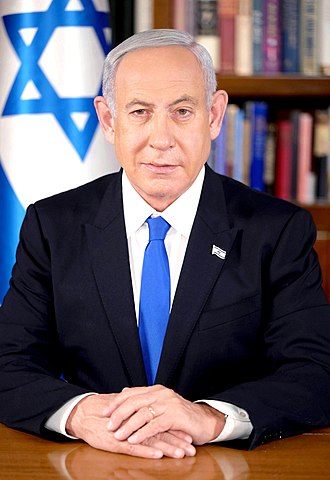
But Iran says if its power plants are hit, it will close the Strait entirely. Meanwhile, Israel's Prime Minister Benjamin Netanyahu is calling for more international support for the war as he visited a city in southern Israel today that was hit by Iranian missiles. The CBC's Crystal Gamancing has more from Jerusalem. In the last 48 hours, Iran targeted a civilian area. They're doing that as a mass murder weapon. Surrounded by buildings blown open and a crater roughly five and a half meters deep. Israeli Prime Minister Benjamin Netanyahu said it's only luck no one was killed. Not their intention. Their intention is to murder civilians. There's no acknowledgement of the Iranian civilians caught up in Israeli bombings. The group Human Rights Activist News Agency, which tracks and verifies death tolls, noted as of Saturday evening, 1,406 civilian deaths since the war began. Like Israel, the Iranian regime and its security arm says it targets military sites.
In Dimona, which also suffered a direct hit from an Iranian missile late Saturday, there's a nuclear facility nearby, but it was not affected. In Avalon says despite some initial shock, there's no fear, even though Israel's air defense systems failed in both Iraq and Dimona. We don't feel scared. We've got amazing army. We've got amazing protection here. Accidents happen. Netanyahu says Israel and the United States are working to protect the entire world and is calling on other countries to step up. Crystal Gamancing, CBC News, Jerusalem. Meanwhile, Israel's defense minister says his country will be stepping up attacks in southern Lebanon. Israel's bombarding parts of Lebanon that it considers home to Iran backed Hezbollah. Now, the army is being ordered to destroy more homes and other structures, and the IDF is being told to demolish all bridges over the Latani River. Lebanese authorities
are today calling that a prelude to an all-out invasion. Six people are dead after a helicopter crash in the territorial waters of Qatar. Search operations are underway to find a seventh person who was on board. Qatar's defense minister says the crash was caused by a technical malfunction. Cuba is suffering through its second nationwide power outage in a week, and it's the third this month. The power grid collapsed as the government struggles with the effect of an oil embargo imposed by U.S. President Donald Trump. CBC's Jorge Barara spent time with a family in Havana as they deal with the latest outage. This is so common now that we've accepted it says 37 year old LaSandra, her one bedroom apartment lit by a battery powered lamp, a couple of hours after Cuba's electrical grid suffered its second national outage this week. We've been forced to adapt, she says. Cuba's Ministry of Energy and Minds posted a statement at 6.45 pm
Eastern time Saturday that power had gone out across the country. Roberto Morales, a top communist party of Cuba official posted on acts that the power failures were caused by the U.S. oil blockade on Cuba that is now into its third month. About 80 percent of Cuba's electricity is generated by oil. This is something where used to says LaSandra's 16-year-old daughter, Claudia, after eating her supper by cell phone light. She says her external cell phone battery charger is much more important now. If there's no power, we don't get water because the pumps don't work since LaSandra. She has 55 liters left and two tanks and is now starting to conserve. Tomorrow, we'll see when we wake up if there's power, she says. Jorge Barrera, CBC News, Havana Cuba. Donald Trump is ordering ICE agents to American airports starting tomorrow. They'll help with screening passengers, a job normally done by TSA agents.
But those agents haven't been paid for more than a month and some are now refusing to work. That's causing long lines for travelers. The agents aren't getting paid because Democrats are unhappy about ICE's tactics in Minneapolis and they're refusing to pass a homeland security funding bill. Voters in France are headed to the polls today, more than 1,500 towns and cities are choosing mayors. But as Dominic Volitis tells us, the vote is being seen as a harbinger of the strength of the far right ahead of next year's national elections. This is the second round of France's mayoral elections, with voting taking place today in around 1,500 villages, towns and cities. Mayors are France's most trusted elected officials. Although many won enough votes in last Sunday's first round of voting, major cities like Paris and Marseille remain undecided. Today's vote is being closely watched. As well as determining
control of France's key cities, it will test the strength of the far right and the resilience of mainstream parties ahead of next year's presidential election. The contest will also reveal shifting alliances and divisions on the left, which have been formed to counter the threat from the far right. It is a tight race in some of the country's biggest cities. One of the closest races today will be in the French capital Paris, where there could be a shift to the right after 25 years under a socialist-led coalition. And in Marseille, France's second-largest city, the far right national rally candidate is trailing the incumbent socialist mayor by just one point in the polls. Dominic Volitis for CBC News, Bristol, England. Leaders in northern communities in Saskatchewan are unhappy with the new provincial budget. They say it doesn't have enough money for fighting fires that grow more widespread and
intense every year. Candace Paul is an emergency management coordinator for English River First Nation. We need more crews. No region should ever be left unprotected without the resources to jump on a fire. Last year, the province endured a record-setting wildfire season. Environmentalists say Canada's growing lacks in setting climate goals. This comes as Ottawa and Alberta negotiate a number of new energy deals. One of the items on the table is methane emissions and possibly an extension to the deadline for cutbacks. Laurel Lynch, host of CBC's What on Earth has more. New federal rules require methane emissions for oil and gas to be cut by 75 percent of 2012 levels by the end of the decade. It's a recognition of both the role methane plays in warming the planet and the already existing ways to fix the problem. Carlton University's Matthew Johnson developed a way to track emissions with planes and drones and he says it shows where the problems are and which businesses are plugging the leaks. Challenge Canada faces as not all companies are doing
that, not all regions are doing that and there are regions where our emissions are objectively high. We shouldn't lie to ourselves about how clean we are unless we're going to back it up. But now there's a fresh worry. A memorandum of understanding between Alberta and Ottawa last fall could see the provinces clean up deadline extended by five years to 2035. Negotiations are underway. That was surprising and ultimately very confusing because the Pembetter Institute's Amanda Bryan doesn't understand why an extension is even being considered. So it's kind of like if my doctor said to me, you need to cut back the amount of cigarettes you smoke by 75 percent and I said to my doctor, well, you know, I can either start tomorrow or I can start five years from now. And Bryan says that means five more years of harmful emissions. The deal is supposed to be done within two weeks, neither the federal nor Alberta governments are saying anything about what's on the table and why. Laura Lynch, CPC News Vancouver. And you can hear more about this story on
what on earth later this morning at 11 a.m. That's the British version of NBC's Saturday Night Live, launching last night. The cold opening, a skit lampooning British PM Kierstarmer placing a rather timid phone call to Donald Trump. Oh, oh, oh, oh, golly. Well, what if Donald shouts at me? What do I say, Labby? Just be yourself, Prime Minister. Yourself is who everyone likes. Hello? Ah! UK's Sky TV worked with the American shows creator Lauren Michaels to bring the concept to a British audience. Michaels is Canadian, by the way, and his broadcasting career began right here on CBC Radio. Well, that is the latest national and international news from World Report. If you like us, follow our podcast and tell a friend. I'm John Northcott. Thanks for spending part of
your weekend with us here at CBC News.
More episodes