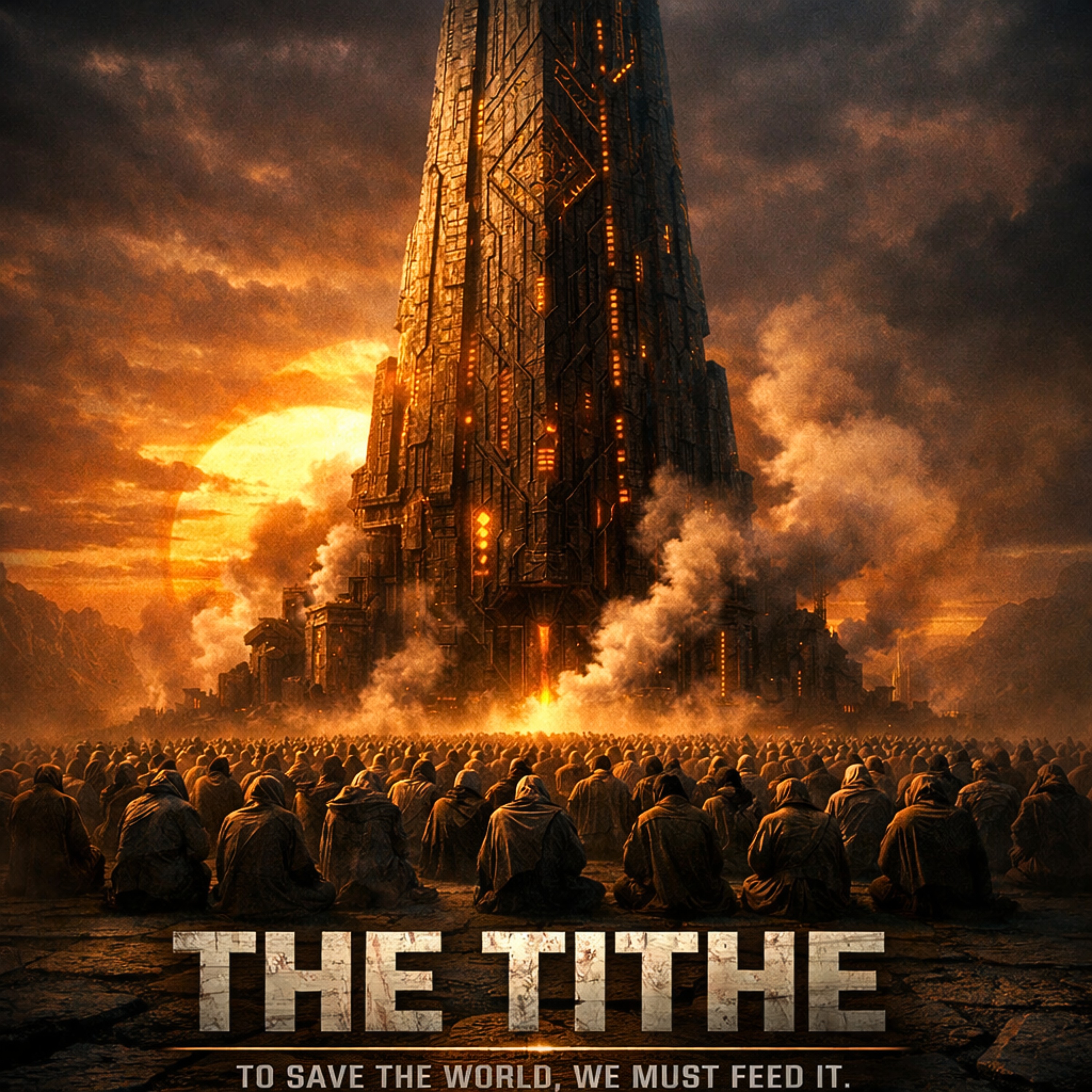
Survival On This Human Colony Demands A HORRIFYING Price | Sci-Fi
About this episode
📖 Written by Galactic Horrors
Finn Kincaid, a cultural anthropologist from orbit, arrives in Sable Verge to document the rites of a frontier town perched in the twilight belt of a tidally locked world. At the center of the square stands an ancient obelisk that quiets the cracking ground only when the settlement feeds it living flesh, turning kinship, debt, and survival into the same brutal language. What begins as fieldwork descends into a close study of alien machinery, ritual mutilation, and the uneasy logic that keeps a settlement alive between a day side that burns white and a dark side buried in ice. The arrival of refugees from the frozen frontier pushes the town’s fragile balance toward crisis, forcing every promise of shelter, protection, and family to carry a hidden cost. This is bleak space horror built from social dread, body horror, and moral compromise, with hot stone bread, blood-choked channels, and a black monument waiting at the center of it all.
⚠️ Content Ownership Notice
All stories, artwork, thumbnails, and animations featured on this channel are original creations of Galactic Horrors. I do not accept or feature submissions from other creators. Unauthorized reproduction, redistribution, or re-uploading of any content from this channel, in any form, is strictly prohibited and constitutes a violation of copyright. Legal action may be taken against any parties found infringing these rights.
📜 Fictional Work Disclaimer
This story is a work of fiction created for entertainment purposes only. The events, characters, and organizations portrayed are entirely fictional, and any references to governmental bodies, entities, or individuals are not intended to represent reality. Any resemblance to actual persons, living or dead, or real-life events or organizations is purely coincidental.
#scifi #scifihorror #creepypasta
cosmic horror, space horror, sci-fi horror, tidally locked planet, twilight belt settlement, alien obelisk, ritual sacrifice, body horror, frontier survival, refugee caravan, anthropologist horror, underground machinery, dystopian colony, moral horror
Disclosure: This episode includes AI-generated elements.
Hosted on Acast. See acast.com/privacy for more information.
Get every episode summarized
Each time Galactic Horrors publishes, we email you a written briefing from the transcript — the topics, who appeared, and any specific claims, with the ad reads skipped.
Email me new episodesFree for 3 shows. No card needed.
Hosts & guests
Transcript ready
781 searchable segments. Every word is indexed and playable.
Full transcript
Galactic Horrors — Survival On This Human Colony Demands A HORRIFYING Price | Sci-Fi. Machine-transcribed; use the interactive transcript above to jump the player to any line.
Are you noticing your car insurance rate creep up even without tickets or claims? You're not alone. That's why there's Jerry, your proactive insurance assistant. Jerry handles the legwork by comparing quotes side by side from over 50 top insurers, so you can confidently hit by, no spam calls, no hidden fees. Jerry even tracks rates and alerts you when it's best to shop. Drivers who save with Jerry could save over $1,300 a year. Don't settle for higher rates. Download the Jerry app or visit jerry.ai slash a cast today. With almost half a million customers and over a trillion dollars of secure payments, Bill isn't new to intelligent finance. It's the proven way to simplify bill pay and maximize cash flow. Want to learn more? Visit bill.com slash proven for a special offer. The Bleacher Report app is your destination for sports. Right now, the NBA's heating up, March Manus is here and MLB is almost back. Every day there's a new headline, a new highlight,
a new moment you've got to see for yourself. That's why I stay locked in with the Bleacher Report app. For me, it's about staying connected to my sports. I could follow the teams I care about, get real-time scores, breaking news, and highlights all in one place. Download the Bleacher Report app today so you never miss a moment. The obelisk stood over Sable Verge like a blade driven point first into the world. Sable Verge was the largest town in the twilight belt. The narrow band of livable land between a dayside that burned white and a dark side buried in permanent ice. I saw the monument before I saw the houses. It rose from the square in one clean length of dark metal, taller than the bell tower, and older than any prayer spoken beneath it. Age had taken the shine from it. Wind had skinned the corner's roar. Cords of old offerings hung from iron pins around the base. Rings carved finger bones,
little hooks for lost hands. Family tags cut from boot leather. Men crossed the square around it with bowls, crutches, and baskets of hot stone bread. Few looked up for long. My shuttle had left me at the ridge road an hour earlier. The pilot kept the engine's hot while I climbed down with my field pack and recorder case. He wanted the hull pointed back toward orbit before the crust shifted again. On this world, which the survey map still called Pellagos despite the dust, the ground never reached peace. One hemisphere faced the star all year. The other kept its ancient night. The belt between them took the strain. Heat pushed from one horizon, cold locked the other. The crust twisted like a rope under both hands. I had come as a cultural anthropologist, which meant my employers paid me to learn how people lived after every rule from home had stopped mattering. The settlement studies division liked men like me in places where
officials wanted understanding without responsibility. We named the custom, traced the kinlines, explained the logic, and sent home reports that turned pain into policy. I had once thought that work carried a trace of mercy. It was easier to believe before I came to worlds where the thing being explained had teeth. A boy met me before I reached the square. He carried a pole across his shoulders with two waterskins hanging from it. His left arm ended in a polished cap of bone and brass. He balanced the load. You're the doctor from orbit. I am. Fin can cade. He shifted the pole and looked at my hands, both still there. Today has been kind. He gave me a glance with no amusement in it. Elder Rusk says kindness uses up men. Come on. He led me to the guesthouse, a low building with fused stone walls and a roof buried under black sand for insulation. A man waited inside by the
half pit. He stood tall despite his age. Coolant exposure had changed him in ways the settlement no longer bothered to remark on. His skin carried a dark bronze cast under the suit. The whites of his eyes were webbed with red. Scar tissue had half sealed the rims of his ears. A carved wooden foot stood by his chair. He wore it when the ground stayed steady. He leaned on a crutch when it didn't. I'm Saul Rusk, he said. I keep the kinbooks here. That makes me elder when the ground permits titles. He took my hand with a dry hard grip. His own right hand had only three fingers. The missing pair had healed old. The scars shone pale. I gave him my papers. He slid them onto the table without reading them. Your office says you're here to study our rights around the obelisks. That is my brief. Your brief came from men who like quiet words. You'll need stronger ones.
A bowl of stew reached me from a younger man at the hearth. He was broad across the chest with butchers forearms and a nose broken more than once. He had both hands. After the boy outside that fact drew my eye. Geron Walker, Rusk said. He manages the square when an offering day comes. Manages, Walker said. That sounds cleaner than the floor ever looks. His tone made a place for me without welcoming me. I ate and listened. Rusk asked about orbit, cargo rates, birth numbers in the coast habitats, and whether the Bureau had sent medicine. He knew which questions might carry hope. I told him the truth where I could. The medicine crates sat in customs over a tariff dispute. Cargo prices had climbed again. Men in orbit preferred the story of bright water and mirrored towers over the dayside sea. The belt was a wound under the hem of the maps. The square bell rang before dusk shifted. The sound drew everybody outward. Rusk rose with a grunt, fixed the wooden
foot under his knee-socket, and beckoned me along. You wanted our rights, he said. Here is one. By the time we reached the square, the town had formed a ring around the obelisk. Families stood together. Children sat on shoulders. A man knelt at the base of the metal shaft with his left arm stretched across a block of black stone. He had washed himself for the right. Water still ran from his head down the back of his shirt. His wife held a leather strap between his teeth. His daughter, perhaps ten years old, tied a ribbon above his elbow in the family color. A cutter stepped forward. He wore a leather apron and carried a short blade shaped for one job. Walker took my elbow and moved me closer. Watch the hand, he said. Dead flesh spoils the run. The cutter brought the blade down in one brutal stroke. Bone snapped on the edge. The second stroke freed the hand. The kneeling man folded over the block with the strap between
his teeth. His wife caught the arm and tied it fast with a pressure band. The daughter lifted the severed hand in both of hers. The obelisk opened. A seam appeared in the metal, thin as a cut. Then it widened into a mouth at chest height. Inside, rows of interlocking teeth moved around a central throat. Their surfaces were more shell than metal, dull and ancient. Strans of dark residue clung between them. The girl pushed her father's hand into the opening, fingers twitched once. The teeth seized the wrist and pulled. Wet crunching came from inside the obelisk, followed by a deeper grinding somewhere below. A spout near the base opened. Thick red gray slurry poured into a stone trough and ran away through channels cut under the square. The ground gave a short jump under my boots. Cups rattled on the shrine ledge. Then the movement eased. My body understood the obscenity faster than my training did. I stayed where I was because I had
spent too many years teaching myself that composure counted as clear seeing. Rusk watched me instead of the right. You felt that. I did. The square had been ticking since dawn. Now listen. I listened. The town still made its usual sounds, cloth in the wind, children being called home, the scrape of crutches on stone. Beneath that lay another note, lower and rougher. It had been there when I arrived, buried under travel fatigue and cold. Now it had softened. The cracks quiet when the channels run. Rusk said. A young man stepped into the blood on the block and began washing it down with hot water. The donor stood with help from his wife. He swayed once. Then set his mouth and lifted the wrapped stump so his daughter could kiss the bandage. Neighbors touched his shoulders as he passed. The town gave him the respect Jew a man who had paid on time. Ritual usually hid a practical pressure. Here the pressure stood in
the open. The slurry ran. The earth calmed. Your people feed the monument to cool the ground, I said. Rusk gave a slow nod. You speak quicker than the last scholar. He needed three weeks in a bottle. Where does the slurry go? Below. That answer covers a great deal of distance. Walker laughed through his nose. You'll see the underworks tomorrow. Tonight you'll meet the face we show the dead. Behind him, men were bringing out long tables and bowls of bread. A singer began a low family song. The donor sat at the place of honour while his wife wrapped the stump again with clean linen. Blood still marked the hem of her skirt. Rusk leaned closer. A caravan comes from the dark side within three days. You arrived at a useful hour. Our rights matter more when new mouths cross the ice. Refugees? Men seeking warmth. Men carrying children. Men who
heard our town survives. He rested his three fingered hand on the stone rail around the obelisk. Studies well, doctor. Hard winters turn every welcome into arithmetic. I slept badly that first night, though the bed held heat from pipes under the floor. Every few hours the house gave a small sharp tremor. Dust drifted from the ceiling seams. Somewhere nearby a man moaned through fresh pain in a worn-out rhythm. Then fell quiet. My field recorded a lay on the table by the bed. I left it closed. Machines between me and a place often made my notes sound wiser than they deserved. Morning showed the town more clearly. Sable verge clung to a slope above a field of cracked black stone. Beyond the last houses the land dropped into a chasm lined with pipes and spillways. Farther out toward the dark side the world flattened beneath ice haze.
Toward the dayside the horizon burned with a white glare that turned every roof edge sharp. I walked with Walker before breakfast. He took me through workshop lanes where men carved prosthetic pegs from local hardwood shipped in at absurd cost from the coast and through family courts whose wall carvings showed women from earlier generations carrying water, needing bread and cutting kincords. Few remained now. The belt killed women faster in childbirth and families guarded daughters hard. The town had grown male, scarred and practical. Everywhere I looked bodies showed the settlement's terms. Missing fingers, missing feet. A man with half a jaw replaced by black ceramic. Boys with healed cuts on their thighs where narrow strips had been taken in lean years. Nobody hid the marks. Their bodies were ledges carried in plain sight. Walker stopped by assistance sunk into stone. You keep staring at the older men, he said.
Their changes stand out. Coolant gets into everything here. Water, mud, food crops, blood. The old stock carries it deepest. He tapped the inside of his wrist. Cut me open and you'd see blood too dark for coast doctors. Rusk bleeds thicker than I do. A child born in Sabel Verge heals fast from shallow cuts. He heals slow from major loss. Flesh from our kind runs hot and thin in the grinder. Migrant flesh gives better flow, he said. Then, perhaps because he caught something in my face, he added. I don't like that fact either. But the channels don't care what I like. That was the first human crack I had seen in him. He led me to a locked door built into the base of the obelisk mound. Two guards stood there with breaker bars instead of rifles. Ammunition cost more than iron. One guard wore a hand with three carved wooden fingers lashed to the stump.
He saluted Rusk with it when the elder arrived. The underworks lay below the monument in a spiral of stone steps and service tunnels cut by hands long dead. The extinct species that built the obelisks had left no bones near them and no records I could read. Archaeologists in orbit called the builders the first hosts. The sort of name scholars gave when evidence ran thin. It meant only this. Someone had lived here before us and the devices they left still worked. Heat rose from below in waves strong enough to sting my eyes. Red lamp glass lined the walls. Water ran in channels beside the walkway, though calling it water came only from habit. The fluid carried threads and clots. It moved toward the deep shafts under the town. This is where the square empties. Walker said. We reached a chamber under the obelisks throat. My skin tightened across my back.
The monuments inside moved behind thick plates of dark shell and metal ribs. Cam's gears and pistons were words from another age. None fit. Parts slid against one another with a wet force that looked grown more than built. Pressure flaps opened and shut. A central drum turned under bands of tendon-like material that tightened with each intake. I put a hand on the rail. Heat climbed through my glove. The obelisks grinds tissue into coolant, I said. Walker spread his hands. There it is. The clean phrase from orbit. A worker below us tipped a bucket into a side-hopper. Bone chips rattled down the chute. The main channel thickened, then cleared. The mash goes into fractures and vents, Walker said. It carries heat away from the worst seams. Some burns, some hardens, some finds the deep water. The old devices beneath the town pull it where it needs to go. You know this from observation? I know it because men die
when the channels slow. Rusk stepped to the next rail down. He had come quietly using his crutch with the care of old pain. The first settlers found the belt by luck, he said. Warm enough to plant, cold enough to breathe. Then the ground began to open. Somebody fed a dead animal into one of the stones. The machine threw it back. During a panic year, somebody fed a living prisoner. The channels cooled. Since then, every child here has grown up under one lesson. He looked at the moving throat. The world eats living flesh, or the world tears itself apart. He said it with the tone another man might use for weather. That steadiness troubled me more than a sermon would have. A boy lay on a cot near the far wall. He could not have seen more than 13 years. Fresh stitching crossed the stump above his knee. His father sat beside him with a
tallyboard on his lap, sliding markers in grooves while a clock copied numbers into a skin-bound ledger. Quote a settlement. Walker said when he saw me looking, the boy's house carried debt from a winter with poor births. Youth mental health is a complex challenge that requires comprehensive solutions. We must strengthen after-school programs. We must make digital literacy tools available in our schools. We must work with mental health professionals to support children, and we must empower mentors, educators, and parents to keep kids happy. Learn more about our commitment to finding lasting solutions at EmpowerOurFutureCoalition.com slash Solutions. Paid for by the Coalition to Empower Our Future. Over 90 of the top 100 US accounting firms trust Bill to handle bill pay processes. Why? Because our tools are built on over a trillion dollars of secure payments. We're not just moving money. We're powering financial workflows
for half a million customers. That's a level of expertise you just can't fake. Ready to talk with an expert? Visit bill.com slash proven to get started and grab a $250 gift card as a thank you. Terms and conditions apply. See offer page for details. The father raised his eyes. He had the dazed, tight look of a man who had spent his grief already and found another bill waiting under it. How much remains? I asked before I could stop myself. The clerk answered because the father had no words left. Half a hand adjusted for age. The phrase hit like an open palm. I moved before I had chosen to. By the time I reached the cot, I knew I had no authority here. I went anyway because I had built a career on arriving half a step too late and still wanting to believe witness counted for something. The boys' lips were cracked white. He tracked me with fevered eyes. Doctor, he said, do they count the bad leg whole or thin? His father gripped the tallyboard
until the wood bent. I crouched beside the bed. They count what was given. That's a poor bargain, he said. The leg was crooked from birth. He gave a small laugh that cut itself short. I had worked famine camps before and triage barges after pressure hole breaches. Men in pain always found jokes where there should have been none. It was one way of holding shape while life came apart. I touched the blanket edge, not him. What is your name? Myker. Myker, who stitched you? Old matter, he pulls hard. I'll speak with him. Walker laid a hand on my shoulder. You came here to see truth. Here it is. Every house owes flesh according to heat, numbers, and kin count. The books keep the square running. The square keeps the ground under our feet. He leaned closer. The caravan from the dark side brings more than hungry men. It brings balance for a while, fresh tissue, new marriages, children who carry less
coolant change. You can help us shape that welcome. A stranger at the table calms accusations. I turned to him. You want me in your intake council? Rusk answered from the stair. I want a man who can hear two sides of a lie. Migrants trust soft hands and educated words. Our own people trust a guest more than a rival household. You can watch, advise, and write whatever truths your bureau enjoys. The refusal rose to my lips and stopped there. A caravan coming through the ice with children. A settlement that would sort them by family debt and tissue value. Men like Rusk and Walker already held the power. If I stayed outside the process, I would record its outcome. If I stepped in, perhaps I could blunt some part of it. I had made that argument to myself in other places. A humane interpreter in a violent system. A translator at the edge of force.
A better voice in a bad room. Men like me loved that role because it let us feel different from the machinery while still helping it turn. I'll observe, I said. I'll speak where a neutral voice helps. Rusk smiled with only one side of his mouth. There is no neutral voice in Sable Verge, Doctor. There are only men who know which blood reaches the channels. The border camp lay half a day from town, closer to the dark side than any sensible man would choose to sleep. Sable Verge kept it there because desperate travelers reached it before they reached the square. The camp gave the town a place to count, sort, and refuse. I rode out with Rusk, Walker, and six settlement men on track sleds fitted with low skids. The route crossed ground ripped by old fractures. In some places, black stones stood in frozen curls where heat had once pushed it through cracks and the dark side wind had hardened it mid-flow. In others, the land sank beneath crust thin as
kiln glaze. We walked those parts. The dark side pressed closer as we traveled. The white glare behind us dimmed to a copper line. Ahead, the world turned blue and iron gray. Ice haze moved over the flats in sheets. I had seen permanent night from orbit, a smooth black half-globe with storm bands drifting over it. Standing near its edge felt different. It had weight. The camp itself was a crescent of low shelters built into a ridge. Canvas roofs sagged under frost. A trench fire burned in the center, fed by pressed peat and crate wood. Men emerged as our sleds stopped. Every face carried cold burn. Beards held chips of ice. Children sat wrapped in hide sacks by the trench. A man stepped out from the largest shelter. He wore a fur coat, patched at both shoulders, and kept one hand on the neck of a boy beside him. The hand never left. The boy's face looked
older than his body from hunger and travel. He had a hard stare that belonged on a minor twice his age. I'm Jacob Walker, the man said. The shared surname with Geron meant some distant branch. Frontier worlds bred that sort of overlap. Jacob came from Black March. Rusk said for my benefit. Black March is a mining camp buried under the dark side shelf. Their wells froze. Their reactor died in stages. Jacob looked at the townmen first, then at me. My insulated coat, gloves and clean lenses marked me as off-world before I spoke. Which of you decides? He asked. Decision comes by households. Rusk said. This man helps us talk cleanly. Dr. Finn Kincaid. Jacob gave me a short, measuring glance. His face shifted, weighing me with the sort of recognition that came from hearing a joke he already half knew. A scholar. That means one of two things.
You either carry lies in better wrapping, or you tell a truth nobody wants. I carry both, depending on who pays my ticket. That earned the first change in his face. The boy beside him kept staring. Jacob touched the back of his neck with his thumb, once, a calming motion so practiced it barely registered as thought. My son, Toby. Toby said. You still have both arms too. You're the second boy to greet me that way. This camp counts better than names. There were two hundred and some souls in the camp by rough estimate, though I kept the count in my notebook rather than in speech. Families had come from three dark side outposts after a chain failure shut down their heating grid. Sable Verge was the nearest warm settlement with a reputation for taking migrants in. Reputation traveled faster than detail. The intake began with bread and broth.
That was custom, and custom mattered. Men facing death through cold, heat, or hunger held fast to form because form made life seem governed by more than panic. Rusk sat with Jacob by the trench. I sat beside them. Walker moved through the camp with two cutters, assessing bodies under the language of first aid. Jacob broke his bread into equal pieces for himself and Toby before he ate. Toby looked at the larger piece in his father's hand, then quietly switched them while Jacob answered one of Rusk's questions. Jacob caught the change only when he bit down. He flicked his son a hard look. Toby stared back like a child who had already decided he was right. Jacob shook his head and ate without switching back. That was the first time I saw them as themselves rather than as roles in the situation. These two had habits already worn smooth against each other. We heard the belt-towns take people into houses, Jacob said. Marriage, adoption,
work, compacts. That's how it goes. That is one form, I said. One form means other forms. Labor bonds, debt kinship, seasonal service. It varies by town. And the cuts, he asked. The trench fire snapped. Men nearby shifted closer without pretending not to listen. Speak plain, Jacob said. Rumor gets larger on ice. I want the shape of it. Rusk looked at me. He wanted my voice, not his, and I knew why. My accent came from orbit universities, not the square. Truth sounded gentler through my teeth. The obelisk stand at the center of settlement life, I said. Families offer living tissue to keep the cooling channels active. The channels protect the town. Toby's eye is narrowed. Jacob kept his on me. What kind of tissue? Usually limbs below a joint, sometimes less, in emergency seasons more. Fresh warm intake runs better than old injury or
dead flesh. Children heal faster, but towns differ on when they call a child grown for levy. Household status shapes the order. In emergency seasons, Jacob repeated. You serve terms like hot broth. He glanced at Rusk. You bring people from the dark and cut them into the ground. Rusk answered without flinching. We bring people from the dark into heated houses, shared names and surviving children. The ground asks payment from every one of us. Jacob pulled Toby closer. My son stays with me. The words came before any offer had been made. That told me what rumor had already said on the road. No household assignments have been set, I said. That answer has a hole in it. He was right, and I knew it. I could have filled the hole then. I could have told him that households in Sable Verge often claimed boys Toby's age because they healed well, worked soon
after the cuts and ran hot in the grinder. I gave him the softer truth instead. The council tries to keep family lines intact where possible. Where possible? Jacob said. Another tidy phrase. A tremor passed under us. This one ran through the ridge in a fast sideways jerk. The trench wall slumped. One of the shelters collapsed at the rear corner. Men shouted. A child began screaming. Then a crack split open twenty paces from the fire. It opened with a hard, tearing sound and a rush of orange light from below. Heat hit my face hard enough to sting through the cold cream on my cheeks. A man standing near the edge dropped to his knees with the skin along one side of his neck blistering at once. Toby grabbed my sleeve before I even knew he had moved. Settlement men threw hooked poles into the ground to pull people back. Walker came out of the dark with a coil of line and a bucket of insulating clay.
He worked at the crack like a man dealing with a burst pipe. Clay went in first, then chopped ice. The light below dimmed to a red slit. Rusk turned to the camp, raised his crutch and called out. You feel the crust begging. Sable verge keeps the belt from breaking wider. Men who enter our kinlines enter life. Men who turn away meet the dark with empty hands. He had chosen his moment well. Fear did half his work. The heat from the crack did the rest. That night I used the camp calmed tower. A thin mast powered by a wind rotor and an old capacitor bank. My sponsors answered after a lag. Assistant director Mero filled the screen. His face smooth and rested in orbit light. Kincaid, he said. Your packet arrived. Your initial notes are rich. Rich, I said. That's what you call a town that feeds living hands into alien machines. Mero folded his fingers. Behind him, a city window showed the dayside sea shining like beaten silver.
Men in orbit chose views that reminded them they had escaped ground truth. Your report confirms our working model. I leaned closer to the screen. Working model means prior knowledge. We knew the obelisks served a climate function. We lacked a social map. You sent me because you wanted that map. We sent you because force would fail. The belt settlements are stable through kinship, ritual and resource exchange. Disruption without replacement would threaten the entire colony line. The entire colony line. I repeated his language because sometimes hearing it back forced officials to hear themselves. Mero was not one of those officials. The coast habitats draw heat vents through bedrock, he said. If the twilight fractures widen, you lose trade corridors, drill access, transport lanes and several million lives over time. Your work may help prevent a
cascading break. My hand gripped the comm shelf until rust bit my palm. You want me to help preserve this. We want you to understand it thoroughly before you condemn it lazily. That was the Bureau's oldest trick. Call outrage lazy and a scholar would begin proving he had depth. Mero went on. A caravan has arrived, yes? It has. Then your value rises, observe the intake process, identify stress points, learn which kin forms, absorb migrants with minimal violence and minimal flight. He spoke like a man balancing freight damage across a ledger. You could have sent engineers, I said. An engineer would ask how the obelisks work. We need a man who can ask why people continue. The signal clicked off after formalities I scarcely heard. I stood at the mast with the dark side stretching beyond the ridge and felt the cold bite through every layer. My assignment had changed shape. I had come expecting ignorance above and cruelty below.
The truth was uglier. Men in orbit knew exactly what this town was. They wanted a scholar because scholars named the cage measured it and helped other men sleep inside it. By dawn the camp had packed. Fear moved them faster than hope. Families loaded sleds with bedding, salvage children and their dead wrapped in stitched sailcloth. A dead man still counted as kin cargo on the dark side. You took him to warmth if you could. The living needed proof that someone might do the same for them. The welcome at Sable Verge began with bells and bread. Any stranger watching from the ridge might have taken it for generosity untouched by rot. When it comes to managing money, forget the hype and look at the results. Bill has a trillion
dollars of secure payments powering our bill pay tools. Instead of just moving money, Bill is powering the financial operations of nearly half a million customers. So stop the guesswork and start scaling with the proven choice. Ready to talk with an expert? Visit bill.com slash proven to get started and grab a $250 gift card as a thank you. Terms and conditions apply. See offer page for details. The town lined the square in family colors. Women who had survived into age stood on the steps with bowls of steaming grain. Children threw petals from the tough dusk flowers grown in heated beds. The donor from my first night is missing hand now wrapped in embroidered linen placed the first loaf into Jacob's arms. Rusk had dressed for ceremony. He wore a heavy coat with kin tags stitched across the chest, one for each household under his counsel. Walker wore a clean
apron instead of a bloody one. I wore my field coat with the bureau insignia covered by a plain scarf. Rusk had suggested that change in a tone too casual to refuse. This is intake, he said while the caravan filed through the square. You make first sight, first sight shapes obedience better than force. I stood at his right hand and translated greetings into the dark side dialect where needed. Men bowed, some wept at the heat under the paving stones. Others kept their faces locked and scanned for exits. Toby stayed pressed to Jacob's side. A town boy offered him a carved wooden bird. Toby took it only after Jacob nodded. He turned the toy over once, found the crack in its wing where the wood had been repaired and tucked it into his coat instead of playing with it. The public feast filled the square with steam, song, and the scrape of benches. The obelisk towered above it all, washed clean after the last offering day.
Family heads came forward one by one to present chords, cups, and names. Accord meant temporary kin shelter. A shared cup meant the household would answer for your conduct in town. A spoken name overbred meant your dead could be buried in their ground if you entered service under them. The rot sat behind the feast hall. That room had once been a storehouse. It now held three long tables, a charcoal stove, and the kinbooks. Sable verge kept records on leather strips, knotted strings, and slate tablets because power failures never stopped the work. Rusk sat at the centre table. I took the seat to his left, walker stood at the door. Household heads came in by turn. Each man carried a private need dressed in public language. House elder Barrow wanted a wife for his nephew, who had lost both feet and needed sons fast. The Mar family wanted a ward son of good age because their old stock
had gone thin in heat, and their last apprentice had died under a fall. Joan and Pike, who ran the North Gardens, wanted children under ten because garden works suit small hands. He smiled when he said it. The smile never touched his eyes. A widow from the old quarter offered room to any convalescent man who could still read numbers. Her sons were dead. Her house needed hands for the books and company for the winter. She was the first claim that sounded like grief before it sounded like appetite. I translated. I asked questions. I tried to keep the tone human. Can this household take Jacob and Toby together? Temporary, Barrow said. The boy transfers after first levy. Can the boy remain with his father until spring? Spring opens the warm cracks. We need his tissue now. By the third household I understood the room with new clarity. Kinship here was not a disguise laid over violence. It sorted violence, timed it, and made it
look survivable. A clerk handed me the settlement balance sheet midway through the afternoon. Local births were down. Local tissue yield was falling. Heat events were rising under the east ward. Emergency stores were nearly empty. The numbers confirmed what the ground had already told us. The caravan would buy survival for a while, but only if absorbed quickly. The more I read, the more I understood how a man could begin ranking harms and mistake that act for decency. Jacob came in near sunset. Toby entered with him. Rusk allowed it because the room had reached that stage where everyone wanted the sight of a child to clean their own intentions. We request one room, Jacob said. One contract. I work stone, pump repair, any field that keeps breath in us. Rusk folded his hands. Your skills have value. Your son's future also has value. My son's future sits beside me. I put both palms flat on the table as if a stable posture could
steady the room. There are options, I said. Some households offer linked contracts. The father enters labor service. The son enters ward status under the same roof or near it. That keeps proximity. Ward status means what? Jacob asked. I answered because the room would punish delay. Guardian ship. Training. Future levy obligation according to the housebooks. Toby looked from me to his father. Tissue debt. He was old enough to hear the hidden word through the formal one. Jacob nodded once. That is the true term. Rusk leaned forward on his crutch. Your son gets food, heat, medical care, and a line into a stable family. You get work in quarters. Black March gave him an ice grave, if you stayed. Sable Verge gives him years. Jacob turned to me. You speak for whom, doctor? For me? For him? For the old man? Or for the thing in
the square? The clean answer would have been simple. I spoke the dirty one. For survival. I believed it while saying it. That is what shames me most. Not that I lied outright, but that I told the version of truth that made a blade feel negotiable. The best house available for father and son together had three adult debtors already marked for winter cuts, one room with a cracked heat pipe, and a headman known for taking bonus flesh from apprentices. The better house, the mar line, wanted Toby as Ward's son, and would place Jacob in a linked labor barrack across the lane. They can see each other daily, I said. Meals can be shared on rest evenings. Toby shelter stays warm. The mar line has influence. They can protect him. Protect him for what? Jacob asked. His face had gone still in a way that frightened me more than shouting. For the life available here. There is a hook hidden in every word you hand me.
He stood. Toby stood with him. Rusk's voice sharpened. Sit back down. The square still holds public goodwill, refusal at table Harden's men. Jacob ignored him and looked at me again. His gaze carried something heavier than rage. He was taking the final measure of a tool before deciding whether to trust it with his weight. You want to think you're saving us by choosing the softer knife, he said. A soft knife still cuts. Walker moved from the door then, not threatening, merely present in the way men like him learned to be. The room followed the shift without turning heads. I should have broken the council there. I should have said the process required rest. Fresh air. Another day. The east ward shook under a new heat tick just then. Dust fell from the roof beams. One of the slates slid from its stack and shattered on the floor. Outside shouting rose in the square. Another ground crack had opened near the migrant sheds.
Men were already running with clay buckets. Through the wall I heard one of the obelisk bells sound three fast strokes. The town's signal for emergency strain in the cooling lines. Rusk seized the moment with a veteran's instinct. You hear the belt asking, he said. Sable Verge takes your son in. The dark side takes him whole and frozen. Choose. Jacob looked at Toby. Toby looked back without blinking. There are fathers who will fight the world for a child and fathers who will trade one child to preserve the rest. Frontier life teaches both species. Jacob had only this boy left. His wife had died in black March and his elder son had vanished during the crossing according to Camp Talk. He sat down again. Linked contract, he said. Across the lane. Daily sight. Rusk nodded to the clock. I gave the terms in dark side dialect. My own voice sounded thin in my
ears though it carried well enough for everyone else. Toby spoke only once. I want my own name kept. The mar elder, a man with a yellowed scar tissue climbing one side of his neck, answered before I could. Ward's sons keep birth names in the private book. House names cover public debt. Toby turned to me. Is that true? It is the local practice, I said. He kept staring. It is, I said again, and the second time I heard myself as he would hear me. A man who knew the knife was there and still called it custom. The rest of the day passed in a run of similar bargains. Brothers split between households. A widow were married by sunset to a woman twice his age because her house needed strong bone. Two little girls taken by the garden line under seedling contracts, which meant light work now and deep debt later. Men left the hall clutching kinkords with faces emptied by gratitude terror or both. By full dark, the unchosen stood outside
the town wall. Sable Verge had a term for them. The unchosen, men for whom no house could claim quota value or shelter space. Some were too sick, some too old, some carried burns that would rot before healing. Rusk promised a second review at dawn. Everyone in the square knew dawn would come after another night of ground strain and another tally of channel levels. I found Jacob by the barrack lane. He had been shown his bunk room, one caught among six, with a locker nailed shut from prior use. Toby stood across the lane under the Marr porch. His new ward sash tied around one arm. The two could see each other exactly as promised. They might as well have stood on opposite moons. Jacob stepped into my path before I reached the door. You signed the cord. I witnessed the contract. You placed the stone on my neck then call yourself witness. I kept you both in town.
That matters. It matters to whom. A tremor cut through the lane. Roof tiles jumped. Somewhere in the east ward, masonry cracked with a sound like a tree splitting. Men shouted toward the square. Jacob kept his eyes on me. If my boy loses so much as a finger to your town, I'll open you from throat to belly before they drag me into the machine. He spoke quietly. That made the promise sound settled, almost domestic. I gave him the only truth left in reach. I believe this place can still be steered towards something less cruel. He gave a slow shake of the head. You already steer it. That night rusts summoned me below the obelisk. The lower chambers had changed since my first visit. More workers moved through them. More buckets stood lined along the wall. The channels ran thinner than before, the fluids skipping over hot stone in ragged sheets.
Steam rose from the main shaft. Men spoke in low, urgent voices around the council table, a slab of old black metal laid over crates. Merrow waited on the wall screen. His face lit by orbit comfort. He had chosen audio only at first. Rusk demanded visual confirmation. A man lies easier when he can see what his lie touches. The elder said. You've seen the intake strain. Merrow said once the chamber settled. I've seen a town turn hospitality into flesh accounting. Rusk made an impatient sound. Merrow went on. Then you also understand that Sable Verge performs a planetary service. The belt settlements moderate crust failure across a wide arc. How many settlements? I asked. Seven major towns. A chain of smaller hamlets. And all use the obelisks. The surviving ones. That answer opened a larger dark. How many belt towns had gone under when their numbers failed,
or when the channels clogged, or when some scholar sent from orbit declared reform and left before the ground answered? Walker dragged a hook through one of the side channels to clear congealed clots. Bone fragments clicked against the grate. Rusk planted his crutch by the table. Local stock runs poorer every year. The coolant works through us and alters us. Fresh blood keeps the channels rich. The caravan buys time. Perhaps a year. Perhaps less. Yet the east ward needs relief tonight. We require an emergency levy from the new households. Emergency, I said. They have been in town a few hours. The crust keeps no holiday for first arrivals. Merrow's voice came again. Smooth as polished stone. This is where your skill matters, doctor. Abrupt extraction risks revolt. Structured obligation preserves legitimacy and throughput. Threwput. There it was at last. Rusk slid a slate toward me. Names were cut into the wax.
Ages. Household placements. Expected yield according to bodyweight and coolant purity. Children and young men sat near the top. You want me to choose. We want you to rank harm. Rusk said. A father loses a hand and then cannot meet labor quota. A growing boy gives a foot and recovers into useful years. A child with deep ward status heals within house care. Every path here cuts. We choose the cut that leaves the town standing. That was the snare made perfect. Once every option carried blood, the mind began hunting for efficiencies. The scholar in me reached at once for comparisons, precedence, recovery rates, social fallout. That reflex shamed me even as it arrived. I had always prided myself on refusing simple moralism in hard places. Here that habit had ripened into exactly the kind of intelligence the room needed. Merrow watched my face. Colonies survive through adaptation, doctor.
Call it by the proper name. This is managed mutilation. Managed mutilation that keeps millions alive across the colony chain. Rusk touched the slate. Words change nothing in the channel. I looked at the names again. Toby stood three lines down under ward sons, grouped with another migrant boy and a local apprentice. Youth, strong tissue, high yield, recovery potential listed as fair. My mouth had gone dry from heat and disgust, though neither would help the men in the room. If you take all from the new household at once, you break the welcome compact, I said. Rusk nodded for me to continue. Stagger the levy across houses. Start with adult men who entered under labor bond and accepted full kin protection. Exempt children under a fixed age. Delay ward sons for one cycle, unless there is direct life risk in the house. Pair each levy with household witness and medical oversight.
Publicly bind the household to future care. Clarify a yield thresholds. No bonus flesh outside the books. Walker snorted. Future care. As if care grows from speeches. It grows from expectation and punishment, I said. If people see raw seizure, you get flight, sabotage, hidden injuries, hidden dead. If they see debt under kin cover, they stay inside the law. The words came too easily. That ease dammed me more than the choice itself. I was building a fairer slaughter-ledger and some trained part of me took pride in how quickly I could make it sound workable. Rusk's eyes sharpened with approval. There he is, he said softly. The scholar are betters paid for. Merrow inclined his head. Record the model carefully. It may serve elsewhere. Elsewhere. Other towns. Other belts. Other men learning how to preserve a machine
that fed on living bodies by wrapping it in family law. I pushed Toby's name lower on the slate with my thumb. Children remain lost, I said. Rusk let that stand for the moment, which was the nearest victory available. He sent runners with the emergency order. Bells rang above us. One slow strike for every household due at first call. The first levy came before the wax on the new schedule had cooled. A migrant youth named Darren, 16 and broad-shouldered, was brought down by his host house. His new wardmother came with him because my terms required household witness. Youth mental health is a complex challenge that requires comprehensive solutions. We must strengthen after-school programs. We must make digital literacy tools available in our schools. We must work with mental health professionals to support children and we must empower mentors,
educators and parents to keep kids happy. Learn more about our commitment to finding lasting solutions at EmpowerOurFutureCoalition.com slash Solutions. Paid for by the Coalition to Empower Our Future. When it comes to managing money, forget the hype and look at the results. Bell has a trillion dollars of secure payments powering our bill pay tools. Instead of just moving money, bill is powering the financial operations of nearly half a million customers. So stop the guesswork and start scaling with the proven choice. Ready to talk with an expert? Visit bill.com slash proven to get started and grab a $250 gift card as a thank you. Terms and conditions apply. See offer page for details. Okay, caller one wins court side seats to tonight's game. What? I won floor seats? You did. I've been calling for 13 months. Wait, Chris? Yes, I finally did it. What are you gonna wear? Men's warehouse. They've got today's looks for any occasion, and I need to look like a celebrity. Don't want to stick out. Exactly. They've got
chill flex by Kenneth Cole, Joseph Abboud, and a tailor at every store for the perfect fit. Congrats. You can stop calling now. Not a chance. Get any look for every occasion at men's warehouse. Love the way you look. She stood by the table gripping the edge of her shore while Walker strapped Darren's arms. The boy had the stunned look of a man still moving inside the sentence that condemned him. You said a hand. He told his wardmother. The council raised the east ward emergency. She said. Her face carried pity. It also carried relief that her own son had been spared this hour. Walker checked the joint, marked a line above the elbow, and looked at me. You wanted medical oversight. The chamber turned toward me with that sentence. Rusk. Walker. The wardmother. Even the boy on the cot by the wall. My own rules had given me a place at the cut. I moved to the table because staying back would have been
another form of cowardice. Darren watched me as I tightened the pressure band. Will I still belong to the house after? He asked. You are in their kinline now, I said. He gave a short hard laugh. Kinline. That phrase keeps coming. Walker took the arm above the marked line with two strokes and a twist. Darren cried out until his voice broke into raw barking breaths. Blood sheeted over the table-lip. The wardmother turned away and pressed both fists into her mouth. Walker passed the arm to the intake shoot while the fingers still kicked. The obelisk took it. The channel's thickened. I washed my hands in hot water after and looked down to see blood caught in the creases of my knuckles. Darren's still breathed. He would likely live. That fact stood in the room like a defense waiting to be spoken. I refused to give it words. Some mercies only make a man filthier. Above us the town heard the bells and began to turn on
itself. The first riot began in the barrack lane. A labour-detter from Black March tried to run with his daughter before his house steward reached the door. Neighbors blocked the lane. Each man protecting his own bargain. Somebody threw a brick. Somebody else dragged the girl back by the ankle. By the time the watch reached the lane, two household marks had been cut from sleeves and trampled into mud. Insable verge that act meant a kin bond broken in public. Blood always followed. I came up from the underworks into a town stripped of ceremony. The square had lost its feast tables. Men carried poles, hatchets, kitchen knives and salvage iron. Families barred doors with furniture. Migrants who had entered under warm bread huddled against walls or ran in groups toward the north sheds, where rumours said the old tunnel out of town still lay open. Walker climbed the shrine steps and called levy orders by household.
His voice carried over the bells and shouting. Rusk followed with kin lore, promising punishment to any house that took bonus flesh outside the books. Even then he worked to keep violence inside channels. I pushed through the crowd toward the Mar House. The sash on my arm, a temporary council mark, parted some men and hardened others. A scholar serving the books drew little love in any town. The Mar porch stood empty. Toby's ward blanket hung torn from one peg. Jacob's barric room across the lane gaped open. The cot was overturned. A neighbor with a split cheek pointed toward the square underpass. Boy's father came through with a pry bar, he said. Took the ward and one of Mars thumbs on the way. I ran. The underpass carried runoff beneath the square and connected three old service streets. It had become a crush point. Men with children on their backs shoved
against men trying to reach the shrine. Water from the cooling channels leaked through cracks in the ceiling and ran pink along the steps. I saw Jacob first because he moved with purpose in the middle of panic. Toby stumbled beside him. His new ward sash gone. Jacob had a bar in one hand and a pack in the other. He drove through the crowd by sheer refusal to yield. Jacob, I shouted. He turned, saw me, and his face set into something colder than his campanger. You chose your side under the square, he said. The north tunnel is shut. The ridge road has opened in three places. You will die out there. Better out there than in your ledger. A quake hit before I could answer. This one came from deep. Stone under my feet rose and dropped. The tunnel wall split in a crack that climbed from floor to ceiling faster than an eye could follow. Light burst through the seam. Men went down in a pile. Water from the overhead channel sprayed
across us, hot enough to raise blisters where it touched bare skin. The whole east side of town groaned, a house somewhere above us collapsed with a booming crash. Then came the sound I had heard only in smaller versions before. A chain of fractures stepping through the belt, each one tearing beneath the next. The channels have failed, someone screamed. Panic turned total. People drove toward the square because the obelisk sat at the centre of every story about survival. Others drove away from it because they knew what failure there would demand. I lost Jacob in the crush for twenty heartbeats and found him again near the square stairs where Toby had gone down under a spill of broken stone. A section of parapet had fallen across the boy's left leg, pinning him from thigh to ankle. Toby clawed at the rubble in silence at first, then in short hard cries when the next tremor shifted weight onto the trapped bone.
Jacob dropped to his knees beside him and heaved at the slab. It moved a finger's breadth and settled, blood ran from under the stone in a steady ribbon. I knelt on the other side and put both hands under the edge. Heat from below came through the broken paving. My shoulder burned from the strain. We need a jack, I said. We need men, Jacob snapped. Men were everywhere. None were free. The square had become a slaughter yard under open sky. One cooling channel had burst from its cover and was spilling half-set slurry down the steps. Two cutters dragged a minor with both feet crushed and fed the ruined lower legs into a side intake trough while he thrashed against the ropes. Families shoved their own marked debtors toward the shrine in hopes of winning house credit before the channel line went dry. The bells rang without interval now. Rusk appeared on the upper step with blood on his cheek and one sleeve burned away. Emergency mass levy, he called. Every household
to the square, every limb still living counts. The words turned men toward us. Walker saw the trapped boy and changed direction at once, three cutters behind him. Jacob rose between them and Toby bar in hand. Back away! Walker took in the stone, the blood loss, and the tremors still rolling under the square. He's already in levy status, Walker said. The leg gives high yield. The rest of him lives if we move now. Jacob swung the bar. Walker caught it on his forearm guard and drove a shoulder into Jacob's chest. They slammed against the broken rail. Toby screamed at the jolt. Another tremor passed under us. The open channel beside the steps had gone from a stream to a clotting trickle. I looked from the failing flow to the trapped leg, to the intake throat open behind the shrine, to the line of men shoving torn bodies forward. Calculation came fast because I had spent the night before learning the logic of emergency triage.
Warm, immediate tissue, major limb, high yield, branch stabilization possible if the line caught it soon enough. If this branch held, the underpass and north sheds might stay intact for another interval. Perhaps more. A father and son lay before me, a town and part of the belt lay under my boots. The world had become exactly the problem Merrow wanted some educated man to solve, rank harm, then choose. Jacob, I said, he was on top of Walker now, trying to drive the pry bar point into the cutter's throat. Walker had one hand on the bar, one on Jacob's wrist. Jacob listened. He looked at me for one raw instant. Hope crossed his face because he mistook my tone for rescue. That look still wakes me. We cut the leg, I said. Now, high at the thigh, he lives if we seal fast. Something emptied from Jacob's eyes, then the bar came at me. I turned. The iron glanced off
my shoulder and skidded across the stone. Walker slammed Jacob into the broken rail. One of the cutters seized Jacob from behind, another pinned his arms. Toby began shouting his father's name. I grabbed the pressure bands from Walker's satchel because my hands had already chosen. That is another truth I cannot escape. Before the excuse formed, before any noble language rose, my hands had moved toward the kit. Hold him, I said. The words came from me as cleanly as any lecture opening. We tied high on the thigh. Toby kicked and struck at us with both fists. His hands were small. One blow landed on my mouth and split the inside of my lip against my teeth. I tasted blood and kept working. I keep my own name, he gasped. I keep my own name. You keep it, I said. I do not know whether I meant the promise or merely needed a sentence to get through the cut. Walker used the saw because the slab left no angle for the main blade.
Bone grated. Toby's scream broke into wet choking cries. Jacob tore one arm free and reached for his son across the men holding him. His fingertips brushed Toby's sleeve as the leg came away. The intake men ran with it at once. Warm blood sheeted over my arms. I pressed the seal pad into the stump while Walker drove the quartery spike around the edges. Toby bit through his own lower lip. His eyes rolled, then fixed on me with a clarity sharper than hatred. Hatred carries heat. This held only record. He was storing my face where it could never be lost. The channel answered. The burst from the side trough hit the main line with a thick violent surge. Below the grates, old pumps woken and pulled hard. Steam rolled from the shaft. The tremor under the square eased by a degree so slight only a town-born man would have trusted it.
Walker trusted it at once. Again, he shouted to the cutters. Bring me living mass. We hold the eastward now. Jacob broke loose with a sound I have never heard from another human throat. He drove into me first because I was nearest. We went down in blood and slurry. His hands found my neck. He had a father's strength, then, which is a different category from ordinary strength. Men pulled at him. He kept squeezing. The obelisk throat opened wider behind us. One of the cutters swung a hook to catch Jacob under the ribs and drag him back. The hook slipped in blood. Jacob rolled, came up on one knee and reached for the dropped pry bar. I was closer. I took it in both hands and brought it down on his temple. He folded sideways. The crowd shoved around us. Someone dragged him by the coat heels toward the emergency intake. I rose to one knee, half blind in one eye from blood, and saw Jacob trying
to push himself up with one arm, while the other flopped wrong. The men at the intake took him under the shoulders. Wait! I heard myself shout. I do not know why. Mercy, witness. Some last wish to keep one more line uncrossed. The square had already moved beyond the reach of words. A fresh rupture cracked through the east paving. Heat roared up. The men at the intake fed Jacob forward to stop the line from failing. He hit the teeth alive. That image belongs to the grinder now. I will not decorate it. The machine took him in jerks. The channel surged again. His coat remained for a moment, snagged on the lip, then vanished down the throat. Toby saw. He had gone gray from bloodloss and shock. Even then he saw. The bells stopped soon after. Not because peace returned. The bells stopped because the men tasked with striking them had joined the line at the intake or fled. By then the square itself had become signal enough. Bodies came from every lane.
Some men gave limbs willingly under household witness. Some were brought fighting. Some had already lost their bargains to falling stone and now traded the wreckage for kin credit on surviving relatives. Children vanished from sight as households locked them below stairs. The east ward still shook. The channels demanded more. A woman from the old quarter carried her own severed foot in both hands and laid it in the trough like bread before an altar. A miner trapped from the waist down begged for the cut before the collapse reached his chest. A boy whose arm had been crushed under a beam, laughed while the cutter worked because the nerve damage had turned his pain into a bright wrong exhilaration. I moved through it all with pressure bands, seal pads, and the calm voice I had once used in refugee camps. Men grabbed for me because I wore the council sash and still had orbit gloves clean enough to mean skill. Each case looked immediate. Each case served the machine. Then the main channel
started again. Walker came to me with blood to both elbows. The core line needs more. We have fed half the square. The core line needs more. Rusk stood a step behind him, leaning on his crutch so hard the wood bowed. He had taken a cut across the scalp. Blood ran through his brows into both eyes. We lose the lower pumps and the whole belt tears east, he said. This one hour decides what lives from here to the garden towns. The words could have come from Merrow. Frontier horror and administrative speech had found the same mouth. I looked around for another answer and saw only aftermath. Men collapsed against walls. Cutters slipped in slurry. The intake line had thinned because the men best suited for emergency mass had already gone through it. The machine wanted living tissue. Warm. Whole enough to count. My own left arm was blood to the shoulder from Toby, Jacob, and a dozen strangers. The flesh beneath the sleeve remained mine.
I had used it to point, restrain, and sign. I had spent other men all day while keeping both my own hands. That fact stood over me more heavily than the obelisk. I stripped off the council sash and handed it to Rusk. Take the next levy from the books without my voice, I said. He understood before Walker did. You are worth more intact, Rusk said. I have been worth too much intact since landing. Walker grabbed my elbow. A hand buys little now. Then take the arm. I lay on the donor block where the man on my first night had knelt. The stone held old warmth from blood and pipes below. I set my left arm across it and rolled my sleeve to the shoulder. My field recorder fell from the inner pocket and struck the step. The casing cracked. A ridiculous detail. I watched it skitter away as if I were protecting the wrong loss. Walker tied high near the shoulder socket. He had gone silent.
That frightened me more than any speech. A working man without words has reached a true task. Rusk stepped to my head. You give this under witness of Sable Verge, he said. Under witness of every man I helped bring here. The old formula failed him for once. He gave a single nod. The first cut burned white through my body. White is the only word for it, a total blank force that shoved every other fact away. I bit through my lip and came back to the world with the second stroke. Walker worked fast. Bone gave with a wrench that threw sparks across my vision. Warmth poured down my side. Then my severed arm, the hand still flexing around nothing, went into the intake. The obelisk took it. The square lurched once under the surge through the channels. Then the movement eased. Men around the shrine gave a cry that might have been triumph or grief. On Pellagos, those often shared the same breath. I woke in the recovery room under
the obelisk. My left side ended in bandage and weight. Phantom pain crowded the missing limb with impossible fingers. A drip tube ran from a glass bottle into my neck. The room held five cots. Two were empty except for blood. Toby lay three beds away. His face waxy under fever. The stump of his leg wrapped in clean white. He was awake. He looked at the bandage where my arm had been. Then he looked back at my face. There was no comfort in it. My loss had bought no pardon. It only made us members of the same ruined order. Rusk died before dawn. The quake that split the eastward had driven a stone shard through his side during the last surge. He stayed on the square long enough to see the channels hold. Then bled out in the shrine chamber while arguing over burial allotments. Men repeated that detail with admiration.
Sable Verge valued utility even in the final minute. Jacob went into the kin books as emergency mass under no house claim. That meant his body had saved the town without earning debt credit for a living relative. I changed that entry myself when I could stand. I wrote Toby's name beside his father's with Ward's son release from future first cycle levy. The gesture was small, bureaucratic, almost absurd after what I had done. It was the only repair left within reach. Merrow sent a message on the second day. His face appeared on the wall screen above my cot while the room healer changed my bandage. You succeeded under extreme conditions, he said. The cooling line held across a critical interval. Your notes when possible will be of immense value. My notes can drown with me. Self-pity wastes a costly survival. The healer,
an old man named Mato with eyes ruined by heat glare kept working through the call as if high orbit carried no authority underground. I envied him that freedom. What now? I asked. The bureau can arrange extraction after stabilisation. The sentence arrived too easily. I stared at him. Behind his shoulder the coast habitat still shone. Morning there. Fine weather over the sea. Extraction to wear. Orbit. Rehabilitation. Debrief. Future advisory role if you remain able. It was a promotion disguised as rescue. They wanted my arm, my witness, and the authority that came from blood paid into the system. A scholar who had only observed remained vulnerable to conscience. A scholar who had gone through the block himself could be used as proof. I would return as what? I asked. Merrow's expression altered by less than a degree.
A subject matter specialist. I laughed once. The sound hurt my chest. You mean a priest with better shoes? I mean a man qualified to explain necessity. Mato tied off my bandage and shut the screen off at the wall switch without asking either of us. Merrow vanished. The old healer tucked the cloth end under my stump wrap. Good cut, he said. Walker kept the shoulder clean. That is the kindest praise I've had in days. He rinsed his hands in a basin. Kindness uses up men. Rusk said that when he still had both feet. I heard the echo of my first day and almost smiled. The attempt stopped halfway. Recovery and sable verge allowed little softness. By the fourth day men wanted decisions. Half the east ward lay in rubble. The migrant barracks had turned into convalescent sheds and funeral rooms. Household heads crowded the shrine chamber with new disputes.
Which surviving migrants counted as full kin now that their sponsors were dead. Which boys moved up the levee order after the emergency losses. Which houses could claim children from families that had lost both parents in the square. Walker could keep the cutters in line. He could not sue the room. Rusk's death had left a hole shaped like authority spoken in old phrases. Men began looking toward me before I understood why. The reason stood in plain sight. I had orbit speech. I had council knowledge. I had given my arm under public witness. Sable verge trusted mutilation more than theory. My missing limb made me legible to them in a way my doctorate never had. I went to see Toby before the first open council. He had been moved to the Mar House because the household still owed him ward care. The porch rail had been repaired. New cord hung where the old sash had torn away. Toby sat by the window with a crutch cut to his
height. His face looked older than the weak behind us. The Mar elder left us alone. That itself was a statement. Households gave privacy where they believed debt ran deep enough to keep a man from flight. I stood awkwardly in the doorway. One arm changes the mathematics of every room. I had to relearn balance, door latches, cups, shame. I altered the book, I said. Your father's entry carries your name now. The house loses claim to first cycle emergency levy. Toby's expression did not move. You can keep your birth name in public record too, I said. I have the authority for that now. Authority, he said. His voice had ruffened since the square. That word grew well on you. I took the blow because I had earned it. The bureau offered extraction, I said. I could leave on the next supply-run. And you came here to tell me you choose guilt over distance. The boy had a
harder tongue than most men twice his age. I came to tell you I know what I am now. He looked out the window toward the square where the obelisk rose over the roofs. You are the man who taught my father to trust warm bread. You are the man who held my leg while they cut it. You are the man who sent him into the grinder. Every sentence landed cleanly. He had no need to embellish. Then he turned back to me. If you leave, another man from orbit takes your chair. He will come in with both arms and cleaner lies. If you stay the cuts keep coming anyway. That is the joke your town built. I listened because he was right in both directions, and rightness gave us no doorway out. What would you choose? I asked. He gave a small shrug with one shoulder. The sort of motion boys use when life has already made a mockery of preference. I would choose a world that
starves before it eats children. We were born on the wrong one. I left the marhouse and walked to the welcome ground by the dark side road. Bodies had been cleared from the camp. The crack near the trench had been packed with fresh stone and coolant cement. Wind drove ice dust over the ridge. In the distance, far out on the flats, tiny dark marks moved against the blue white haze. Another caravan, word had spread already. Sable Verge held. The channel still ran. Warmth remained possible in the belt. Men from the dark would keep coming until the dark side ran out of men or the belt ran out of limbs. Walker found me there. He stood with his hands in his coat and looked at the distant line. Rusk wanted you in the chair, he said. He wanted my voice. He wanted a man who could make strangers step forward. I watched the caravan inch nearer.
You assume I've accepted. Walker glanced at the bandage under my empty sleeve. You accepted in the square. Perhaps he was right. Perhaps the acceptance had come earlier in the chamber beneath the obelisk when I chose structure over rupture. Men like me often marked the visible sin and missed the quieter one that made it possible. The caravan reached the first marker poles by evening. Men stumbled behind freight sleds. Two children rode on a broken door lashed to runners. A woman in the rear carried an infant wrapped inside her coat. She moved with the fragile care of a body already near failure. The sight of her startled me because Sable Verge held so few women now that my mind had begun shaping the world around male survival alone. The frontier corrected a man's assumptions with cruelty more often than grace. The lead traveler raised a hand when he saw us, hope and fear fought openly in his face. I hear this town takes people in. He called.
The sentence crossed the cold exactly as Jacobs had days earlier. My chest tightened around old pain. Behind me Sable Verge prepared its bread, its cords, its bowls, its kinbooks, and the quiet rooms behind the feast hall where strangers became quota. I could still have left then. I could have walked to the shuttle pad, begged orbit for extraction, and carried my missing arm into lecture halls where students would stare while I explained frontier adaptation in careful terms. Men like Merrow would have seated me well. They would have called my survival insight. They would have fed policy with it. Instead I stepped toward the caravan, one arm gone, mouth full of the right words, authority earned in blood. This town gives heat, food, and household shelter, I said. You'll need to hear the terms clearly before you cross the ridge. The man nodded, relieved by my calm. Behind him fathers drew their sons closer, children watched the steam rising from Sable Verge
with hollow devotion. The woman with the infant kept moving because stopping in that wind could kill the child. I began with warmth because that is where every lie here begins. Then I moved to kinship, debt, care, protection, household witness, levy rank, and the promise that families would be kept together where possible. I spoke every phrase in plain speech. I defined each term as I introduced it. I gave them the cleanest version of the truth the town could survive. Night gathered over the ridge, the obelisk bell sounded from the square, calling the houses to welcome. Men shifted forward. Nobody turned back toward the dark. That was my last illusion gone. I had once believed understanding a culture might spare me from serving it. I had once believed a softer knife changed the wound. On Pellagos, the ground taught otherwise. A man could study the machine, hate it,
bleed for it, and still become the hand that fed it. So I stood at the edge of the twilight belt and guided the next line of strangers toward the square.
More episodes
More from Galactic Horrors

A Dead Gas Giant Has A Horrifying Secret Hiding In Its Lower Atmosphere
Galactic Horrors

Deep-Core Miners On A Frozen Planet Accidentally Awakened A Subglacial Bio-Engin...
Galactic Horrors

A Deep Space Prison Uses Crushing Gravity To Restrain Inmates. Tonight, They Bre...
Galactic Horrors

A 3-Million-Year-Old Vessel Drifted Into The Solar System. It Hides A TERRIFYING...
Galactic Horrors