Loading...
musichistory
Swans - Uncompromising
About this Episode
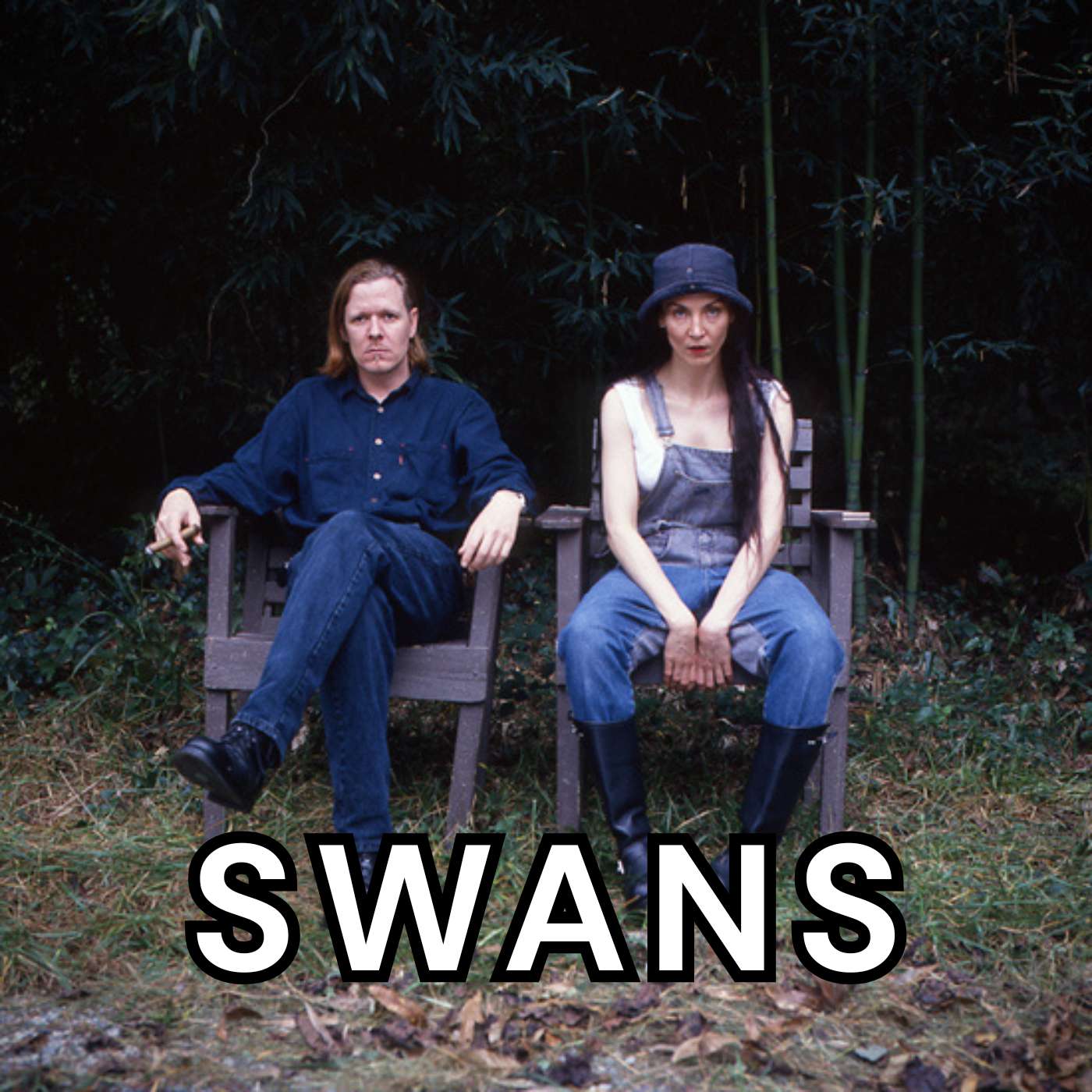
The band Swans formed in 1981 by singer, songwriter, and multi-instrumentalist Micheal Gira and began as part of the New York City based no wave scene. Swans early years' music was known for a very intense and abrasive sound.
Following the addition of vocalist and keyboardist Jarboe in 1986, Swans began to slowly incorporate melody into the music moving beyond the brutal music of the early years to a more diverse sound. The band's music would venture through a variety of styles and explore many different genres over the years including industrial, post-rock, drone, and neo-folk, among many others.
Throughout their career, Swans become known for creating intense and experimental music that has often led to the band being referred to as "Uncompromising."
This episode will tell the story of Swans from their beginning through the end of their initial run as a band in 1997.
Hosts & Guests
Transcript
Welcome to Inside the Milky Way, a look at early alternative music.
I'm Jeff and I'm your host for the show, thanks for joining and thanks for listening.
Swans are an experimental band formed in 1981 by singer, songwriter, and multi-instrumentalist Michael Jira.
The band formed as part of the New York City-based Noave scene before changing their sound through a variety of styles
and exploring many different genres, especially some that are not so common.
Initially, their music was known for its sonic brutality.
Following the addition of singer, songwriter, and keyboardist Jarbo in 1986, Swans began to incorporate melody and intricacy,
moving beyond the abrasive music of the early years.
Beginning with a more industrial approach, over the next eight albums, the band would venture through noise rock,
Gothic rock, blues, folk, neo-folk, Americana, psychedelic, post-punk, post-rock, drone, art rock, and a vat-guard.
During these years Jarbo would remain the only other constant member of the band with Jira until the end of the band's first run in 1997.
Century forming in 2010 without Jarbo, Swans continued to be associated with the post-rock, drone, and noise rock sounds,
as well as the creation of long songs that develop complex soundscapes.
A number of albums from these later years have brought Swans widespread critical acclaim.
This episode will tell the story of Swans from their beginning through 1997,
but we're going to start with when Jarbo joined in 1986.
We'll talk a little bit about the alterations the band made over the years from then forward,
then go back to the early years of this uncompromising band and discuss those unfiltered albums, music, and work from before Jarbo entered the scene.
Alright, so let's first talk about the main couple of people here.
The main person behind Swans is Michael Jarra, who was born in Los Angeles and grew up in California.
As a kid Jarra was arrested in California several times for petty crimes, and he and his father relocated to Germany.
While in Germany Jarra ran away and hitchhiked across Europe, lived in Israel for a year and spent four and a half months in an adult jail in Jerusalem for selling hash.
Returning to California around age 17, Jarra completed his GED, went to community college, and then attended Otis College of Art Design in Los Angeles.
He moved to New York in 1979, where he played in a post-punk band called Circus Mort.
In Manhattan Jarra found employment as a construction worker to help make ends meet.
In 1981, Jarra founded Swans. Initially Swans focus was a raw rhythm and abrasive textures sound, pushing power over melody, and becoming known for their abrasive experimental sound.
The band earned critical notice and had a devoted following.
Jarbo Devoro, also known as just Jarbo, learned as a child to play a Hammond organ and studied opera at the insistence of her father, who hoped for her to have a career as a singer.
Her musical background had consisted of training as a jazz and choral vocalist.
When Jarbo heard Swans debut album Filth, she instantly became interested in Swans.
She reached out to Michael Jarra and attended the band's practice sessions, and soon auditioned for the band leading to joining as a vocalist and keyboardist.
She would debut on the band's third album, Greed, in 1986.
From this point forward, she remained in the band with Jarra until he broke up partially due to Jarra's frustration with various record labels, and he wanted to work on some other projects.
After Jarbo's audition with her ethereal voice, marked a departure from the previous abrasive and brutal sound that Swans was creating, and it began the evolution starting with a more melodic, industrial, and even folk rock sound, and soon some of the work sounded more like conventional music.
Swans' third album and the first with Jarbo contributing vocals and synth was Greed.
This was released in February of 1986 through the record label K422 or K422, the album was produced by Jarra and Esteban.
This is an album marking the turning point when they recorded it in mid 1985.
Instrumentation includes select tracks using drum machines instead of conventional drumming.
The lead instrument on the song Full was a grand piano, and on the song Money is Flesh it used to synthesize it.
This was a lot of different stuff here that the band typically didn't have.
Overall, the album felt more industrial in nature.
The New York Times wrote that some songs are dominated by the hammer on anvil courting of guitarist Norman Westberg, while others feature a welter of chanting voices and sound like some sinister religious ritual.
Trouser Press called Greed, the album where everything finally gels, writing that each track is a complete work in itself, enthralling and narcoticizing.
The quietest deemed intense bleakness with powerplant rhythms tougher than concrete wrapped in leather.
Beginning with this first album with Jarbo, album number three, to the last album with Jarbo as a member which was in 1996,
the ever-changing sound of the band would go in many different directions and so far from the beginnings of swans.
Jarbo's debut as a songwriter was on 1987's Children of God album, and this especially increased the more melodic and intricate elements in their music.
The last album of this era that included the duo as the core, which was just the duo with a number of guest musicians,
was the album Soundtracks for the Blind.
This was the 10th studio album released as a double album on October 29, 1996, through young god records.
Conceived by Michael Jira as the group's final statement before their initial break up, the album incorporates a wide range of archival material collected since 1981.
Its construction drew on handheld cassette tapes, surveillance recordings, found sounds, and multi-track sessions, which were combined with new studio performances through digital editing and layering techniques.
The resulting work has been described by Jira as an immersive universe, and this work also included a lot of collaborations.
Soundtracks for the Blind has often been regarded as swans' most experimental and avant-garde release, being variously characterized as a post-rock and drone record, blending elements of ambient, industrial, folk, and music concrete.
Critics have highlighted its thematic focus on despair, oppression, aging, and human frailty, with several songs incorporating deeply personal recordings from Jira's father and Jarbo's family.
Soundtracks for the Blind received widespread acclaim upon release, and in retrospective reviews, it has been praised for its scale, intensity, and emotional depth.
Since been recognized as one of swans' defining works, citing it as a masterpiece by several critics, after the album swans' disbanded following a tour in March of 1997.
Over the years, in general, swans' music has transformed greatly over the decades, but it's typically dark and apocalyptic, often focusing on themes of power, religion, sex, and death, and has been most generally associated with experimental rock.
According to Spin, the band demonstrates unparalleled ability to translate the absurd violence of the human condition into music that's as intoxicating as it is intense.
But now let's go back to the beginning of swans. Now we've talked a little bit about Jarbo's beginning with the group, the changes, and the ending of the group.
Let's go back and talk about the beginning years, the early albums, and we'll talk more about some of the other albums over the years.
So back to the beginning, swans were born on the lower east side of New York City, during the heyday of New York's No Wave Movement, which is a reaction to punk rock.
Their early work was rooted in the New York City-based No Wave Movement, which started to fade out by the time of their formation, and by the time they really got going, and this would be mostly done no wave would be mostly done by the band's second album.
The music from swans was extremely aggressive, characterized by Michael Jira as stripping down the essential elements of what we consider to be rock music.
The earliest known lineup of swans comprised of Jira on bass guitar and vocals, Jonathan Kane on drums, Sue Handel on guitar, Mojo on percussion, and also on tape loops, and thirst and more of Sonic Youth in the band as well.
Dan Braun and Jonathan Tesla also played bass from time to time in the group.
The debut EP Swans was recorded between August of 1981 and the March of 1982, before an 82 release on the labor records label.
This four-song EP was No Wave, Post Punk, Sounding, is produced by Jira, and it was just the foursome of him, Kane on drums, Bob Pizzola on guitar, and Daniel Galley-Dawani on saxophone.
After the release of the swans EP, Jira and Kane were the only members to remain in the band.
In 1983, when the band began to work on its first full-length release, the album Filth, this bleak environment of Jira's New York City living, and him being poor, proved vital for the sound of the swans' early material, and it was a big part of the No Wave genre in general.
Also important to the conception of the album Filth was the Blues genre, which helped Kane define the crawling and brutal swing of the music.
Filth saw the introduction of guitarist Norman Westberg to swans.
He would remain a primary contributor throughout most of the band's career.
He appeared on every album except the 1992 album Love of Life and the 1996 album Sound Tracks for the Blind, although his playing is sampled a little bit on that record.
Westberg became a full-time swans member once again when Michael Jira reformed the group in 2010.
Back before swans, Norman Westberg was born in Detroit, had moved to New York City in 1980, and then before he joined the band,
he started a band with a friend from a punk rock club, Bookies, and he was a member of the band Carnival Crash.
So the debut album Filth was recorded in the studio of Vanguard Records in April of 1983.
Jira played bass and shouted vocals, Jonathan Cade played drums.
A new member in the band Raleigh Mosseman was a second drummer, Westberg provided guitar, and another new member Harry Crosby also played bass.
The cover of the album came from Mosseman's girlfriend, a dental assistant, who had a spare X-ray photograph she used for the album cover.
The album was released in May of 1983 on neutral records. The debut studio was produced by Jira along with that added drummer Raleigh Mosseman.
Mosseman was a Swiss-born American drummer, electronic musician, and a record producer who worked in genres ranging from industrial to pop.
Though this album did not receive much contemporary attention at the time, Filth has been recognized over the years as ahead of its time and significant to heavy genres of music.
The sound of this debut, Filth, is defined by the band's unusual composition, two bass players, two drummers, and both of which have access to miscellaneous, percussive items.
In one guitarist, all accompanied by a series of programmed tape loops, musically Filth is a heavy album often noted by critics for its uncompromising noise and brutality.
The album featured driving choppy rhythms and abrasive drums. The album is bleak, grinding, and deliberately repetitive, defined by two bassists persistently doubling over the same chord.
The two drummers play chaotically and angularly, occasionally mixing in percussion for metal straps striking tables, and the distorted guitar of Norman Westberg plays in a grating fashion.
The vocals of Jira are scathing and direct, covering topics of social decay, corruption, rape, and abuse of power.
David Raggett, contended that this about this album early swans really is like little else on the planet before or since.
He also described it as angry beyond all anger, and Sasha Geffen of Consequence of Sound called it ugliest, most brutal music possible.
Despite the dismal, overwhelming nature of the music and the topics and concepts and everything that was part of it, some critics have called the album occasionally danceable.
Jira in retrospect has recognized that the stuages and throbbing gristle were primary inspirations for Filth.
Upon release, Filth did not receive much critical attention. Retrospective reviews were positive.
The line of best fits Andrew Hanna called the album a brilliant work of art and praised how despite being from 1983, it still sounded uncompromising and utterly vital in 2014.
Jason Heller of pitchfork appreciated the brutality of Filth and noted how it effectively established what swans would become.
In 2014, John Calvert a fact wrote, a milestone in extreme music, a sound heavier, more vicious, and more all-out evil sounding than any metal band had produced by 1983.
With Filth, swans took the rock form a few gargantuan steps forward.
Over the years though, retrospectively, Jira, Westbrook and Cain have all expressed some reservations about this album and I guess the content of it.
After the album was done, because Jira wanted a more rigid stiff percussion style, Cain left the band at this point, and they would maintain Massaman as drummer going forward for at least a time being.
When it comes to live performances from swans, one of the trademarks of swans early period was playing at painfully loud volumes during concerts, sometimes leading to police stopping shows.
Jira was also notably confrontational with the audience such as stepping on people's fingers resting on the stage, pulling people's hair, and physically assaulting anyone caught in the crowd headbanging, something Jira detested.
This reputation hung around with the swans for years even though they had stopped doing that, and Jira cited this as one of the reasons the band hung it up in 1997.
The next album after this was COP in 1984, which was released along with the originally untitled Young God EP, both on the K-422 record label.
On COP, swans took the style of their previous album, Felt, and intensified it, utilizing slower tempos, more tape loops, and even more abrasive musical textures.
The lyrics again concerned with ambiguous themes like physical and often sexual domination and occasionally submission, some publications recognized COP as swans' darkest most brutal release.
Swans in this era were Jira on vocals, Westberg on guitar, Crosby on bass, and Massaman on drums.
Jira's vocals had changed slightly becoming slower and more melodic, although his roughness to his vocals still remained.
All music, Ned Ragg, wrote of the album, Ugly, compelling, and overpowering, COP remains the pinnacle of swans' brutal early days, calling it quite possibly one of the darkest records ever done, or darkest recordings ever done.
And Jonathan Gold of Los Angeles Times listed COP as one of the 10 most essential industrial albums.
And in 2011, the magazine Terrorizer listed this as the fourth heaviest album ever.
The EP Young God has been known by several names, usually by one of its two A-sides, which would be I crawled or raping a slave.
The music continues in the same vein as the album, Felt, and is again vaguely reminiscent of heavy metal music played in extremely slow motion.
Some of the songs on EDP, particularly Young God and I crawled, have an actual vocal melody, although very rudimentary.
And this is something you would hear from them band later in their career.
The Young God EP is slightly more experimental and was written from the perspective of serial color at gain.
A notable element of this release is the use of unconventional percussion elements such as the chain and metal table, which had led the critics to categorize the album as industrial and experimental music.
A notable element of the release is its use of unconventional percussion elements similar to the chain and metal table that they had been using.
And this led critics to categorize the album as industrial and experimental music.
Similar to the album COP, the cover art features a notice stating that the record is designed to be played at maximum volume.
COP reached number 12 on the UK Indy chart and Young God hit number 9 on the UK Indy chart.
All of this would lead to the addition of Jarbo and the album Greed in the beginning of a new direction.
So we talked about the album Greed.
But at the same recording sessions as the album Greed, Swanche would record and release time is money, bastard, as a 12-inch non-album single in January of 1986.
This would reach number 8 on the UK Indy chart.
It would be the first official appearance of their new vocalist Jarbo.
Also, it's the first official single.
Treasure Press described time is money bastard as a great single and Ned Ragget of all music called it an underground industrial dance hit, noted as aggressively explicit lyrics.
John Leland at spend said, swans make brutal head banging noise with no concessions to listen ability and whale monochromatic homilies for a living descent into hell.
They have no fun. Their music can be cathartic, like a sledgehammer to your solar plexus, or it can sound like someone's been hitting the French lit a little too hard.
At the same time, they also recorded album number 4, Holy Money.
And this album was released in March of 1986 through the same record label K422.
This was one month after Greed.
The single, a screw from Holy Money, would be issued in May.
A screw was a number 4 hit on the UK Indy singles chart, while the album reached number 6 on the album chart.
Greed and Holy Money are referred to as twin albums as they came out very close to each other, and they share much in common with the music style.
Holy Money was the first to feature turbo-contributing lead vocals on the song You Need Me.
Her presence continued to move away from the energy of swans early work, while Holy Money was the first album by the group to incorporate acoustic elements.
In particular, the eight-minute dirge, another you, which starts with a bluesy harmonica introduction, and it also has the introduction of religious themes in swan records.
All music's comments on Holy Money said this.
It well documents the continuing transformation of swans into a more complex and intriguing beast.
In stereo gum described Holy Money as a transitional album, but called it brilliant in its own right.
After this, the album Public Castration is a good idea, would be the first live album by swans.
It was also originally released as a semi-officially approved bootleg through some bizarre records in 1986.
It consisted of performances recorded from shows that London and Nottingham on the tour for the albums Greed and Holy Money.
And over the years, the band would release a number of live albums, actually seven of them, starting with this one, through the years 1998.
Children of God was the fifth album released in October of 1987.
This was on the record label Caroline and on 4K422 in the United Kingdom.
It would go to number three on the UK Indie albums listing.
The album was recorded over the course of six weeks, February and March of 1987, in Cornwall, England.
It represented a dramatic experimental change in sound from earlier swans releases, moving to explore acoustic instruments and more conventional song structures.
Jira had said in a reflective interview about this time, which she considered a major turning point, he had said this.
By 1986-87, swans had run its course with the physical assault of sound that we had employed previously for the most part.
I wanted to move on to other things and didn't want to get stuck in some style, which, as our case, had the potential of becoming cartoonish if we continued in that direction.
So I pushed music into unfamiliar territory.
So this album of 1987, Children of God, further expanded Jarbo's role, kind of offsetting Jira's suffering and all that stuff that he puts into the songs.
The stories portrayed here were more unusual, and it was a mixture of various things, including religious imagery.
And the attention here was not to mock or embrace religion, but to experiment with the power inherent in its messages and the hypocrisy of many of its leaders.
Instrumentation included musicians, contributing things like oboe, flute, cello, and piano.
Children of God is considered one of the band's strongest and most popular recordings, and it's one of the most acclaimed albums from this early period of their time.
In 2003, Brandon Stalsy of Pitchfork wrote that the album is one of the band's strongest releases, and established Jira as an old testament tyrant obsessed with the nature of love, human frailty, and the midnight beauty of black orchids.
After Children of God album, Jira professed himself tired with the band's fearsome reputation for noise, feeling that the audience now had expectations that he had no intention of fulfilling.
He made a conscious decision to tone down the band's sound, introducing the more acoustic elements, and increasingly emphasizing Jarbo as a singer.
The single, New Mind, was a number four hit on the UK indie chart, continuing their string of top ten hits on this chart.
This was a more gothic and industrial record, and this single did come out ahead of the album.
These changes that the band was making in musical direction resulted in two records from a side project by Jira and Jarbo, and this was done under the names of Skin in Europe and World of Skin in the US.
The first Blood Women Roses featured Jarbo on lead vocals, and with many of the tracks still featuring the monumental use of percussion that was common in earlier swans work, but combined with the greater use of melody, and a good song representing this is the song Red Rose.
The second release from this band, or the side project, was called Shame Humility Revenge, this featured Jira on vocals on lead vocals.
Both of these were recorded together in 1987, although Shame Humility and Revenge was not released until 1988.
These albums are full of slow, ethereal, melancholy dirts like songs, sounding like stripped down acoustic versions of songs off of Children of God.
The swans released, created and released a 1988 EP called Love Wolf Terrace Apart, and yes, that is named for the cover of the Joy Division song.
And this was placed alongside two semi-acoustic versions of songs from their 1987 LP, Children of God.
The EP reached number 85 on the UK Singles Chart and number 2 on the UK Indy Chart.
It was unusual for the band to cover a song such as this.
The song was released as a single in 1988 on Product Ink, and in a various different formats of 7-inch and 12-inch records.
Both Jira and Jarbo sang lead vocals on different versions of the song.
This song ended up being a US college radio hit in 1988, and this led to the group being offered a major label deal with Uni MCA.
Jira had said, I'd worked so hard all my life, at 15 I was digging ditches in the desert, and I put myself through college painting houses.
I never saw any money from any of our records.
So by the time I finally got that carrot dangle in front of me, it was like at last I can make a living for what I do.
So that was the motive behind taking this major label deal.
One of their live albums came out around this time. This was called Feel Good Now.
This one happened to be recorded on a Sony Walkman, and this was taken off their 1987 Children of God Tour in Europe.
Well now with the new label, the Burning World would be the sixth studio album released in May of 1989.
This would be through the Uni Records label.
The band's only major label release. It was co-produced by Bill Laswell and with Michael Jira.
The album features a major stylistic shift from their past releases, being very tuneful and accessible compared to the bleak industrialized town of their previous records.
It received a mixed reception and was a commercial disappointment.
The band was dropped from the record label after this due to the poor performance.
That label had made some demands.
And due to Uni's insistence, Michael Jira co-produced the album with that person Bill Laswell.
During the recording session, swans consisted of Jira on vocals and guitar, keyboardists and singer Jabo and guitarist Norman Westberg.
They were accompanied by Laswell and bass guitar, as well as a series of Laswell's regular collaborators as session musicians on multicultural instruments.
According to Jira, the album was recorded piecemeal with no communication between the musicians.
I think this is part of what Jira did not like once he got on with his major label.
The Burning World was the first swans album to feature more conventional pop melodies.
Jira's lyrics still favor themes of depression, death, greed and despair, but they were actually sung rather than the chanting or shouting typical of early material.
The album's style has been described as acoustic folk, world music rock with electric shading, psychedelic rock, equally lush and dark and dark Americana.
Laswell's production work also weighs on the album's sound with a much more somber approach to music making.
The album also features the first vocal duets between Jira and Jabo.
Regarding some of the reviews on this, all music wrote ultimately burning sounds more like a compromised major label Laswell project than a swans album due to its overall detriment, calling the album a great disappointment.
On the other hand, trouser press was more favorable saying the burning world benefits a great deal from the world music instrumentation and structural abilities Laswell brings to it.
The arrangements are uniformly strong, the gentler sounds don't strike one as a compromise and the cover of blind fates can't find my way home, which was issued as a single from this, is both apt and surprising.
Ultimately calling the album a nice one that's almost as haunting as it wants to be.
The single Saved did enjoy relative success, peaking number 20 on the U.S. College Radio charts and number 28 on the U.S. Modern Rock Tracks chart.
This was the band's most successful single.
But as we mentioned due to the commercial disappointment, the band was dropped from the uni record label.
In 1990, Jira and Jabo released the third and final World of Skin album, Ten Songs for Another World.
It wasn't as successful as the first two.
Also in 1990, Young God Records was created, an independent record label formed by Michael Jira.
This was done to specialize in experimental avant-garde and often non-genre specific releases.
The label was named after the EP they had released before, that was originally untitled, that most people referred to as the Young God EP.
And that's what was used to name this new record label.
Also the label was intended to facilitate the release of Swanson's music over the years and mainly because of his disillusionment with the big labels.
And even after the band disbanded, Young God would continue to work as a record label releasing music.
The next album for the band would be album number seven, White Light from the mouth of Infinity, 1991.
It was a successful blending of earlier hard rock and later pop styles.
Produced by Jira, the album blended acoustic rock, blues, hypnotic guitar noises, and it resulted in an album more complex than anything they'd released in the past.
The Los Angeles time wrote that Jira's search for heaven and hell in both minded body continues on its fascinating, sometimes harrowing way.
All music described the album as stunning and a clear starting point for the second half of Swanson's unique career.
In 1991, a compilation album titled Body to Body Job to Job was released through Young God Records.
The release consisted of unreleased live and studio recordings from the early years from 82 to 85.
Some tracks were made during the filth sessions. Several of the songs were simple experimental tape loops that went otherwise unused and were left off of the filth album.
The majority of the release, however, is focused on the Swanson's second album, 1984's Cop.
This album was followed by Love of Life, recorded by Martin Bessie in 1992.
On this, Trouser Press wrote, not as stunning in his passion as the band's best work. Love of Life is still as often beautiful, haunting record.
In all music wrote, Love of Life unsurprisingly proves to be yet another Swanson's masterpiece.
In 1993, Jarbo released her first solo project, Beautiful People.
In collaboration with Keyboardist Larry Sevin, and this offered an entirely different side of her multi-active vocal persona,
it was definitely different, a collection of more like neo-psychedelic pop songs.
And after a couple of live albums and an EP Love of Life amnesia, taking the group even further into experimentation,
they then released The Great Annihilator in 1995. This was album number nine, considered one of the band's most accessible releases,
maybe one of their most straightforward releases. The songwriting style and musical approach would take a more unusual turn after this as they work into their final album of this era.
This album features a shift towards more prominent melodies and cleaner production than the earlier work.
Lyrical subjects include death and the human condition.
Pitchfork described Jarra's singing style as if it's liars as if it's doing a self-consciously evil take on Johnny Cash.
The Great Annihilator received generally positive reception, all music called the album epic, incredible work of art,
and trouser press, though, wrote, reveals that the band is running out of ideas,
commenting that it is unlikely to satisfy long-term followers, a more accessible swans, maybe a less cathartic one.
With other projects occupying his time, Jair decided to end the group with one last studio album and a world tour.
Soundtracks for the Blind was a two-disc album featuring Jarbo's supplied field recordings, experimental music, dark ambient soundscapes, post-industrial epics,
post-rock suites, and acoustic guitar, and we talked a little bit about that album earlier.
In 1998, Swander Dead was released, consisting of live recordings from their 1995 and 1997 tours.
In an interview, Jarra revealed that there is more live material that may be released in the future,
and he described these unreleased recordings as fairly spectacular.
After dissolving swans at this time, Jarra formed Angels of Light, continued his work with Young God Records, and Jarbo continued her solo work.
The band reformed in 2010, Jarra reformed swans at this point.
This incarnation, easily as uncompromising as before, produced the group's most commercially successful work, which included two-be-kind in 2014.
Jarra returned swans to an alternating lineup in 2017, subsequently working with a revolving cast on 2019's Leaving Meaning in 2023's The Beggar, both less intense than past releases, but similarly hypnotic and experimental.
2025's birthing was one final return to the big sound of their previous post-reunion work.
When the band reformed in 2010, they initially had a stable lineup of musicians, and they toured worldwide, and released several albums, but more recently they've had a revolving cast of contributors.
So that concludes our podcast episode on swans. I hope you liked listening to what we had to say about them.
You should check out some of their music. They've gone through a lot of different styles, and Jarra, so there might be some things in there you might find interesting.
We understand some of the stuff may be a little more difficult to listen to, but swans has been influential with their heavy music.
They've been an important part of the music scene over the years, and check them out.
And thanks for listening. I hope you enjoyed the podcast episode. We'll be back next week with another one, and talk to you all real soon.


