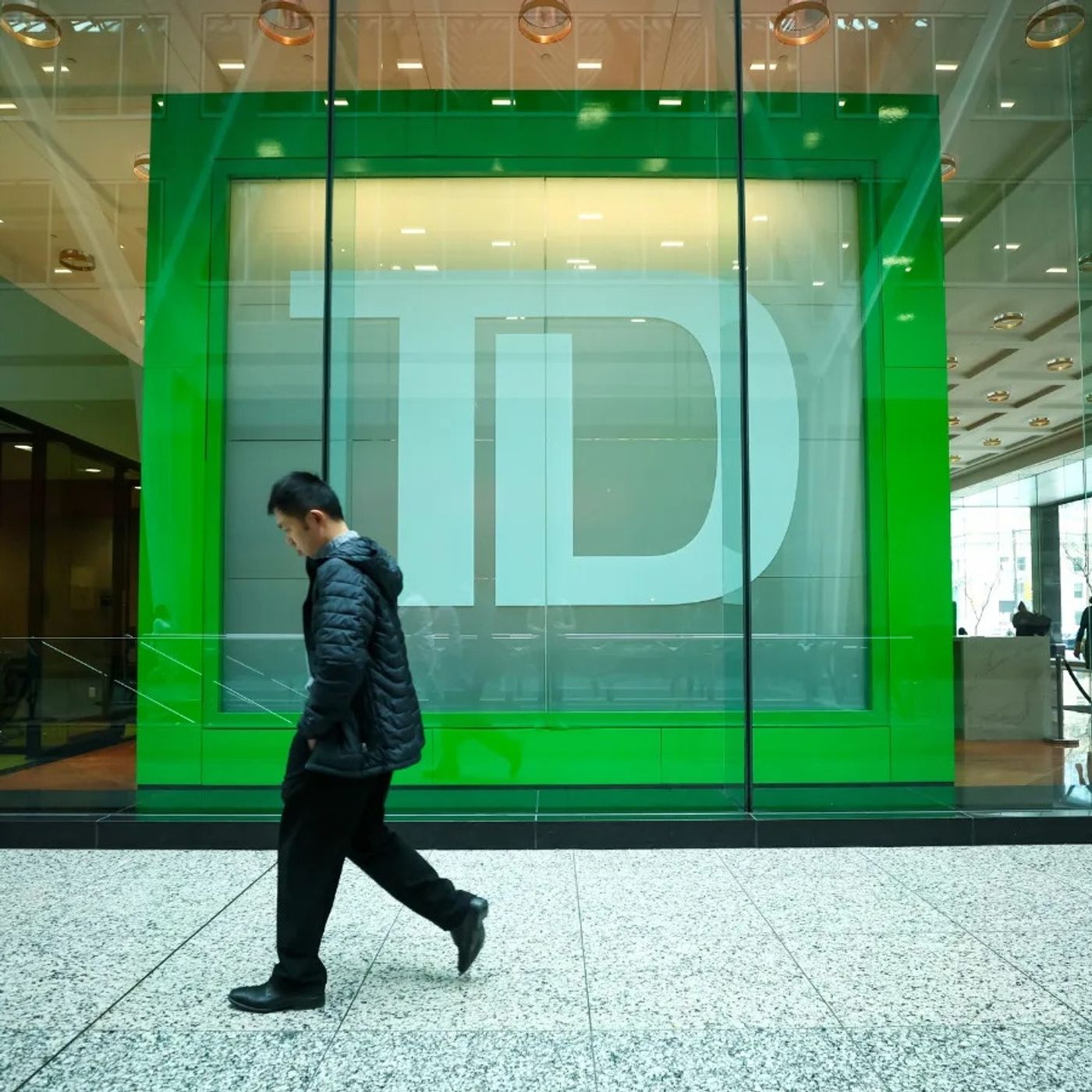
TD Bank targeted policy measures could spark Canadian investment supercycle
About this episode
Become a supporter of this podcast: https://www.spreaker.com/podcast/today-magz--6737390/support.
Don’t miss our latest episodes! Please follow me to stay updates with fresh news everyday. Let’s keep the support this podcast to stay updates news everyday.
Get every episode summarized
Each time Today Explains publishes, we email you a written briefing from the transcript — the topics, who appeared, and any specific claims, with the ad reads skipped.
Email me new episodesFree for 3 shows. No card needed.
Transcript ready
110 searchable segments. Every word is indexed and playable.
Full transcript
Today Explains — TD Bank targeted policy measures could spark Canadian investment supercycle. Machine-transcribed; use the interactive transcript above to jump the player to any line.
Dave Roberts here. There you are surrounded by fans, sharing wings, sharing drinks, high-fiving random strangers. Everybody remembers the game. Nobody remembers the guy coughing behind you until a few days later. At 2am, you wake up with the fever and your throats on fire. Now what? Urgent care, clothes, ER, slam, telehealth, maybe, but the pharmacy's clothes. You needed a medical emergency kit. These aren't first aid kits. They contain essential prescriptions, use for over 30 common conditions, sinus and ear infection, UTIs, stomach bug, travelers diarrhea and more. On hand before you need them. Use your doctor-developed guidebook to select the right prescription or call their telemedicine doctor standing by. It's like an urgent care and drugstore at home. When you're sick, traveling or stranded, you'll wish you ordered a medical emergency kit. Order online in minutes and it's shipped to your door and say $45 with my promo code blue at urgentcarekit.com slash blue. That's promo code blue at urgentcarekit.com slash blue.
In a few weeks, Prime Minister Mark Carney is hosting a major summit to encourage foreign investment here at home. Chief Economist from TD Bank say this could help trigger what they are calling a Canadian investment super cycle. TD says if investors focus on five key sectors, oil, minerals and resources, transportation, defense, and AI, it could kickstart an investment boom of some $1.7 trillion over the next decade and beyond. For more on this, Derek Burlton is the deputy chief economist with TD Bank and co-author of this report. Any joins me now. Nice to see you sir. Thanks for coming on. Thank you very much. So you have a new report out and one of the highlights is this line at least for me. If Canadian policymakers play their cards right the country could be propelled into an investment super cycle lasting for a decade or longer. What sort of cards should auto what play to make this happen? Well, there's no silver bullet. We often hear about things that need to be done. The push needs to be on competitiveness, improving competitiveness. It needs to be
on bold policies, perhaps taking on a little bit more risk in terms of looking at the tax system, looking at regulation, skills of workers. I think that's really the cards that needs to play. There are a lot of levers that can pull, but it's got to go boldly in terms of realizing and some of these investment opportunities that are before the country. You projected at the high end economic investments worth 1.5 to 1.7 trillion could materialize over the longer term if we make some of those meaningful policy changes. What sort of projects are we talking about here? Which sectors are poised for growth? Well, we looked at five sectors in our analysis and we went through and looked at publicly available information on projects that are out there. It can be at the federal project office on provincial sites. These are projects that are out there and tally them up and you get a pretty big number, something like a trillion. The upper end number use site includes the promise,
if you can get a lot of these projects underway, create that private ecosystem through policy changes, as we just talked about, that you could see an even higher potential. But those five sectors, I think, are certainly sectors that the federal government has been touting, where Canada has a lot of opportunities. They're in energy and critical minerals, defense, AI, and infrastructure. So these are five key drivers right now, where there's a lot of focus in terms of opportunity for Canada. A lot of things that the world needs Canada can produce. So those are kind of the areas that we do see the biggest opportunities in. Yeah, as you say, energy and resources, potentially major drivers here, how much of Canada's economic future growth really depends on those two sectors in particular. And is there not a risk really associated with those because those industries, frankly, have been a bit politicized in the past? Yeah, I mean, it's, I mean, these two areas do account for a disproportionate share energy in particular with talk of a pipeline
out west is a huge project alone. And you've got power projects and energy within the resource aside minerals, gold and the likes. So yeah, I mean, these are things that Canada does have a comparative advantage on and has, and as you point out, some of the projects getting them done in the past have run up against political roadblocks. We're going to need to be mindful of some of these constraints and work around them things like getting the involvement and participation of indigenous and, you know, making sure we do clear a lot of the hurdles. But Dave Roberts here, there you are surrounded by fans, sharing wings, sharing drinks, high-fiving random strangers. Everybody remembers the game. Nobody remembers the guy coughing behind you until a few days later, at 2 a.m. you wake up with the fever and your throats on fire. Now what, urgent care, close, ER, slam, telehealth, maybe, but the pharmacies close. You needed a medical emergency kit. These aren't first aid kits. They contain essential prescriptions used for over 30 common
conditions, sinus and ear infection, UTIs, stomach bug, travelers diaria and more. On hand before you need them, use your doctor-developed guidebook to select the right prescription or call their telemedicine doctor standing by. It's like an urgent care and drugstore at home. When you're sick, traveling or stranded, you wish you ordered a medical emergency kit. Order online in minutes and it's shipped to your door and say $45 with my promo code blue at urgentcarekit.com slash blue. That's promo code blue at urgentcarekit.com slash blue. With its abundant natural beauty, charming towns and friendly people, South Carolina offers the kind of discoveries that stay with you long after you've left. Like the realization you're good at something you'd never before tried. Or your first oyster roast and a taste you didn't expect to love. And other times, it just hits. Like the view on a windswept appallacid mount top. So come find the undiscovered you in South Carolina.
Visit discoversouthcareline.com. You know, the good news is that we have seen it done in the past and I think as long as we really focus on working around some of the past issues, a lot of these projects could very well see the light of day. As you well know, the last decade or so has been marked by poor GDP per capita growth, right? Kind of a sluggish economy. High population growth are really to blame for that. Do these new investments have the potential to make us collectively richer? Can we reverse some of the trends that we've been seeing over the last 10 years or so? Yeah, and that's that's the big upside. I mean, investment isn't necessarily a cure all, but it's certainly if you can see investment flow in both domestic source and from abroad, a part of the investment summit upcoming in Canada. It will invite a lot of international investors in that investment, which a lot of it is very labor intensive. You think about all the construction jobs required, the skills involved, the trades,
and you know, eventually when they see the light of day, the innovation to kind of keep the ball rolling. A lot of job opportunities as well. So we do see the potential if, you know, the trillion odd, we can work towards and even maybe see some spin off other investments. As investment can be get investment if we can get the early projects done, then yeah, it can flow through a higher standard of living and higher income. So I think one of the numbers we do cite in the report that kind of got some attention, a 12,000 per person increase in income level over the next 10, 10 plus years could be generated if the investment does bear fruit. And we see some of the growth flow through to the job market and the broader economy. That's a big number. Many Canadians, of course, are feeling anxious about the economy right now, given what we're going through with the trade war. This report suggests, though, you know, all is not lost just because of what we're going through with the Americans. How does that factor into this report that you've put out? How does that trade dispute kind of color what you're thinking
about? And is there the potential for this dispute to actually spur, you know, this investment super psycho that you're talking about? Yeah, I mean, this is a very long-term analysis. Now, given that we do, we've mapped out the investment projects through the next 10 plus years. And you do get initial spurred in projects. Some of them already are underway. You have some that are on the table, but we see the prospect of rotating waves over the long run. But yeah, I think the trade dispute, certainly, hopefully cooler minds will prevail going forward between the US and Canada. But to your point, you know, it can also be a catalyst. Things like defense is one area that we cite as seeing a structural impetus with all the government spending, not only in Canada, but globally on defense. And Canada, looking to carve out supply chain opportunities at home on it, certainly that some of the trade issues can be a bit of a catalyst on that front. And Canada, as well, is being viewed as kind of a trusted, you know,
nation that's open to trade globally. And that's another thing that I think kind of can stand out as well. So, you know, if anything, I think it just increases the need for governments really to use the areas under control under its, their control to really spur investment going forward. So, yeah, the trade issue is certainly in the media right now, but this, I think, long-term narrative that we cite is still stands regardless. I'll see you with their direct burlton deputy chief economist at TD Bank. Nice to see you, sir. Thanks for coming on. Rubric is the security and AI operations company built for what happens after an attack hits, not just the moments before. AI has turned the threat landscape into quicksand, moving too fast for any human to fully predict. That's why an agentic cyber resilience platform matters. Automated recovery, clean data, a business that keeps moving no matter what hits. One platform, not a patchwork
of stitch together tools and gaps. Don't wait for the next attack. Secure and accelerate your business at rubric.com. Again, rubric.com.
More episodes
More from Today Explains

'There's not a lot of faith in Washington' Economist says he's 'worried' about c...
Today Explains

RCMP sergeant on sleeping Tesla driver ticketed by police
Today Explains

Trumps Irish Ballroom hits a SLUGGISH roadblock
Today Explains

Trump is just 'GRIFTING off the American people' as Americans can't keep up with...
Today Explains