
Get every episode summarized
Each time The Disciplined Investor Podcast publishes, we email you a written briefing from the transcript — the topics, who appeared, and any specific claims, with the ad reads skipped.
Email me new episodesFree for 3 shows. No card needed.
About this episode
The Disciplined Investor Podcast is made possible by:
“Now you can trade them with IBKR prediction markets, trade election, climate, and economic outcomes right alongside stocks, options, and bonds all on one integrated platform.”From the transcript
The Debt Story Is Worse (and Better) than the Headlines.
The Fed is boxed in and it Feels like Economic Indigestion.
Oil- could we get to $120 …. and then what?
And our guest today – Dr. Barry Eichengreen, Professor of Economic Studies at UC Berkley

NEW! DOWNLOAD THIS EPISODE’S AI GENERATED SHOW NOTES (Guest Segment)
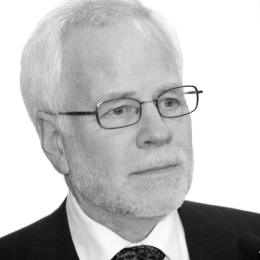 Barry Eichengreen (George C. Pardee and Helen N. Pardee, Professor of Economics) is a distinguished professor of Economics and Political Science at the University of California, Berkeley, where he is the George C. Pardee & Helen N. Pardee Chair.
A leading expert on the international monetary system and global finance, his research covers the history of global financial crises, the international monetary system, economic history, and the causes and consequences of populism.
Dr. Eichengreen holds fellowships from several institutions, including the National Bureau of Economic Research and the American Academy of Arts and Sciences, and has previously served as a Senior Policy Advisor at the International Monetary Fund (IMF).
Learn More at http://www.ibkr.com/funds
Looking for style diversification? More information on the TDI Managed Growth Strategy – https://thedisciplinedinvestor.com/blog/tdi-strategy/
Stocks mentioned in this episode: (V), (MA), (GLD), (QQQ), (USO)
Get every episode summarized
Each time The Disciplined Investor Podcast publishes, we email you a written briefing from the transcript — the topics, who appeared, and any specific claims, with the ad reads skipped.
Email me new episodesFree for 3 shows. No card needed.
Hosts & guests


Transcript ready
636 searchable segments. Every word is indexed and playable.
Full transcript
The Disciplined Investor Podcast — TDI Podcast: Economic Indigestion (#991). Machine-transcribed; use the interactive transcript above to jump the player to any line.
This episode is sponsored by Interactive Brokers, and you know, world events unfold in real time. Now you can trade them with IBKR prediction markets, trade election, climate, and economic outcomes right alongside stocks, options, and bonds all on one integrated platform. These are simple yes or no contracts, price to reflect the market's view of probability. If your prediction is right, you receive $1 per contract, and earn interest while your position is invested. IBKR prediction markets turn market expectations into actionable trades. Prediction contracts are not suitable for all investors. Learn more at IBKR.com slash predictions. The disciplined investor is all about you, your money, and the markets. Sit back and get ready for this edition of The Discipline Investor Podcast. This episode of The Discipline Investor is sponsored by Horowitz and Company.
If you're looking for a portfolio manager, look no further. Horowitz and Company. From seed through harvest, cultivating financial success. The debt story is worse and better than the headlines. The Fed is boxed in, feels like economic indigestion. Oil, we can get to 120 and then one. And our guest this week is Professor Barry Icongrein, author of the new book Money Beyond Borders, Global Currencies from Coices to Crypto, all this. And much more on episode number 991 of The Discipline Investor Podcast. Hey, Andrew Horowitz here in the Huxie in the studio. So much going on isn't there? I mean, we have the Fed doing all sorts of maneuvering, saying they're increasing rates by 25 basis
points now to the range of 3.75% to 4%. And at the same time saying, you know, well, we're not exactly sure what's happening. But yet at the same time talking at the other side of the mouth saying, you know what? Inflation is too high. We got to do something about that. Markets were all over the place on that information. And there was a considerable amount of consternation that brought in some of the bearish tendencies on the moment. This is something we're going to have to watch pretty interesting that before a midterm election. And with the president so incredibly verbal and desirous of taking rates down, this happened. I find it pretty interesting that it happened. I was thinking even though there was a 90% or 92% chance through Fed fund futures of a big Fed rate hike that the possibility, even so, was a hold.
But nonetheless, the idea that we are in the potential now for a rate hiking regimen for a period of time is really here. It's something that we need to think about and we need to plan for. Now I will tell you that I've seen this before many, many times. And usually when we get the initial rate hike is not the signal that the economy is slowing down. It actually takes some time to filter into the economy. And therefore, earnings still hold up and things are pretty good, making it for a really good opportunity actually in the near term to be invested because there's a lot of negativity that goes on. But then you got to figure out when that sweet spot ends and when the earnings are going to start rolling over if that rate hike, that tightening cycle, maintains. Something to look at and something to think about. Now I want to answer a question that I thought was pretty interesting because I'm thinking to myself, how is that even possible?
Because I received a question last week asking if we, Horowitz and Company, are financial planners, wealth managers and I guess we don't mention it enough. But yes, that's exactly what we do. And that's, you know that, you should know that because the way that we discuss the items that are on the agenda from a news perspective and how we then talk about like last week, the difference between various EEM and SPEM, the various funds is usually from the research that we're doing here and actually implementing for our clients. So yes, we do manage money. We do IRAs, we do regular accounts, we work with clients on their state planning, roll overs, tax matters. I'll leave it at that. So now, you know, you know, now it's very clear that that's what we do. So if you need some help, I'm here for you.
Simply go to the discipline to investor.com, easy place to get to, click the contact us and I will personally spend some time with you. Don't be shy. If you need help if something's going on, let's do that. Now I have something I want to talk about. I have a, maybe a financial itch that needs a little bit of a scratch. I've said these words before, you're going to hear three words, 40 trillion dollars. That is now the headline number for the US, the government debt that we are holding, but the number itself is really, I guess it's so big. It's almost tough to really think about what that exactly even means. I looked back and I was thinking about when I started in the business, the debt at that
time was three trillion and it grew rapidly through the 80s and 90s. You know, a lot of defense spending that went on tax policies. So I want to put this into context to kind of talk about where we are and really cement in why we're having a problem with our bonds now that were 5% on, it was a Tuesday of this week, they clipped 5% to be clear, this is not just an American problem. When we look at governments around the world and we look at the debt that they have incurred, that debt has reached now 94% of world GDP in 2025. And the international monetary fund, the IMF, has been talking about it recently and they talked about that they see it reaching 100% by 2029 and that's only a few years from now.
That level of 100% of global GDP to debt ratio only seen once before and that was back in the aftermath of World War II. And what happened to World War II, right? There was a big rebuild because of all the incredible amounts of destruction that was done, et cetera. But here we are in the United States and we're clearly at the center of all this because Treasury Secretary has been talking this up and the securities are not just another country's bonds. The United States Treasury bonds bills notes, et cetera, our debt here in the United States is the centerpiece of global finance because what happens with all of that, it helps price mortgages, corporate borrowing. We have things like the impact on currencies around the world and also the impact of government
debt around the world really revolves around what is happening here in the United States. These strongest, the most foundationally sound economy in the entire world. Now the IMF, this piece that I read that talks about how there's now an estimate that government deficits are running between somewhere around 78% of GDP. And that's with our economy running pretty much full blow, right? Full capacity right now. In fact, through the first 11 months of the fiscal 2026, the CBO, the Congressional Budget Office has estimated that the federal deficit of roughly get this $2 trillion is going to occur just in the first 11 months of 2026. We put on another $700 billion since July.
Net interest, the amount of money that we have to pay on our debt right now is already above $1 trillion, up 12% from the same period just one year ago. And when somebody says to us, hey, don't worry, we're just going to grow our way out of debt. Oh my God, if I hear that one more time, I'm going to choke somebody because I think that argument is bogus and it needs to be challenged directly. And this is what's going on in Washington right now. The conversation is don't worry about the debt. We'll grow ourselves out of it. I'll grow our way out of it. If we have and grow our way out of it up until this point, what makes anybody believe that we have a chance, a snowball's chance, by the way, in hell of doing it in the future. And growth helps. Of course, of course growth is good. We want growth. If the economy grows faster than the debt, well, that debt to GDP ratio can fall. That doesn't mean the debt's going to fall, but the debt to GDP ratio will fall.
Fast to growth. What does it also do? It's more tax revenue, something that this administration likes, but doesn't like at the same time. So the entirety of all the things that happen due to growth are important, vital and can in fact make a big difference when it comes to the debt. But growth is not a magic eraser. You have to see those things, the white things that you can rub on stuff. It's actually sandpaper, but magic eraser, you can do incredible amount of things. Growth is not that. It's like I just wipe out the debt. And that argument that assumes that growth is going to remain strong and interest rates will remain manageable. And I guess we have to also put into that the idea that the theory that government is going to stop adding large new primary deficits. Oh, come on.
If the growth right now is being supported by more borrowing, then saying what will borrow our way into the growth that rescues us from the borrowing begins to sound like a ridiculous circular argument, something that is impossible. And if you look back at history, I don't think there's any doubt that we all recognize and knew what happened going back to let's say World War II because US debt fell from about 106% of GDP in 1946 to 23% by 1974. And that's a long time, right? And that particular time frame is also presented as the definitive example of how America can grow its way out. The problem is that's not exactly what happened. You could look at a lot of the recent economic research, which found that the decline also
dependent heavily on primary budget surpluses. We saw surprise inflation and government policies held rates below what an undistorted market might have demanded at that time. If you remove those factors, researchers now are saying that the debt would have fallen only to about 74% of GDP, not 23%. Clearly, growth participated, but growth wasn't the star of the show performing a solo act. And that is the broader historical record. When you look at an OECD study that was done on 34 major debt reduction episodes during the histories of various countries found that the stronger economies were extremely important. There's no question about that. But in roughly four out of five periods, the primary budget balance also improved.
What is that? What are we talking about, right? What we need fiscal consolidation. In other words, stop the spending. No, it's not just on social services. It's on crazy amount of deals that were done through the inflation reduction act on divide and the one big beautiful bill act under Trump. These are all spenders. They spend because they could do so and then pass it on to their next person for eight years from now. From the case of Trump, 12 years from when he began. So I think the conclusion of this entire discussion is that number one, growth is important. It's not in a relevant situation. It's important. It's just growth alone has not been a reliable debt strategy or a debt reduction strategy.
The only way you have successful reductions have involved a combination of a few things which include things like growth, fiscal restraint. Can somebody please talk to a congressman about fiscal restraint? Higher revenues important, but that again only comes from growth to a degree. Inflation important and unusually low interest rates or in distress countries, debt restructuring. That brings us to another claim that deserves a little bit of scrutiny here. Because as you read some of the commentary and you listen to the powers that are talking right now, the idea commonly called this wait for it trickled down economics that phrases not so accurate. Because the serious policy arguments that we hear is about reducing taxes on high incomes, a corporate profits can improve incentives and stimulate investment and eventually what
is going to do. What happens? We see productivity rise and on the heels of that, wages are rising. People are making more money. It's a good thing. It's a great thing. And part of that can be real. There was some research back in 2017 that concluded that tangible corporate investment increased during that period of time. But the same research found that the corporate tax revenue fell sharply. Now, this is when we're talking about all the various reductions in taxes that were put on corporations and all these companies made all sorts of money, which was great. Did it help reduce debt? Did it help the GDP, labor income, etc. All the advertised policies that were put into place that were going to be all this wondrous thing.
They really didn't come true. But nobody talks about that. There was even a bigger study that was done that covering major tax cuts for high income households across 18 advanced economies. And that found that those tax cuts actually increased the income share of the top 1%, but produced no statistically significant improvement in economic growth or the unemployment rate. So really, in plain English, here's the deal. A tax cut can affect behavior. We know that. And if it's carefully designed, there's an incentive that can produce investment. But this idea that, which I can't argue on a tax cut, don't you? But this promise, the idea that large tax cuts at the top will generate enough broad prosperity and enough tax revenue to repair the government's entire financial system is definitely not supported.
Now this is where the negativity starts to take over in this discussion because we may see some more government bonds coming to market. I'm not talking about only here in the US, but we're talking about all over the world. And central banks are not really participating like they were during the quantitative easing cycles like they did. So they're not buying as much. And more of that debt, therefore, has to be absorbed by private investors, including leveraged institutions that may demand higher yields. And those higher yields, what do they do? They increase the government's interest bill and a larger bill, create a larger deficit. A larger deficit requires more borrowing. I see where I'm going here. And more borrowing can put further upward pressure on yields.
So that loop, that's a legitimate risk. So I think that there is a lot to talk about with this and there's no universally valid debt to GDP cliff, 90%, 100%, I don't know what that magic number is. I mean, Japan, look at Japan. They showed that huge debt can persist for a really long time under the right financial and institutional conditions. They were involved in the market. They were the last resort, the Japanese government and the Japanese central bank, the bank of Japan, were all over this. No one can really tell us when there's going to be a tipping point in our debt. So the concern is not that everything is going to be blowing up tomorrow. I think that we look at this in two parts that we have an economy here in the United States
and that is not the balance sheet of our government. We saw, right, in August payrolls increased by 162,000, unemployment rate held at, what was it 4.1% average hourly earnings 3.1% higher than a year earlier on a global basis. We look at the international labor organization. They have projection that unemployment around the world is going to be 4.9% in two, two, two, two, 20, 26. These are not depression numbers. They're not even close to recession numbers. Yes, I'm not, you know, obviously there could be a lot of things happening in markets at any given time. But purchasing power remains a complicated situation. Real weekly earnings are still up. People are employed. Part checks are larger. All of this can be true and we still have a big problem. And that's, that's the controversy, the tension at the center of what I'm talking about
today. Strong employment does not cancel a financial risk and high government debt does not mean that private economy has already collapsed. The doom anders and gloomers, they were wrong to treat every debt milestone at the start of the immediate, you know, as immediate like that's it. It's over. We got a crisis done. Let's get out. We all turn into bond vigilantes. And there's a lot of people that are just looking at growth as a substitute for arithmetic. I think the real question and closing of this is, is not whether the United States can keep borrowing tomorrow, it almost certainly can. The real question is what borrowing on the scale gradually does to interest rates investment. I, I, there's a lot. And then what does that do to the dollar and what does that do to the, the, the purchasing power, you know, of, of the dollar around the world? And that is where we're going to begin our segue today to today's guest, Professor Barry
Icon Green. And before we do that, I want to talk about just for a moment, I want you to hear about something. I want to talk about interactive brokers because you know, there's something we all know. We spend time listening to podcasts like this and you do a lot of work. You research your investments. You analyze markets. But have you researched your broker for the past three years, interactive brokers, individual clients, average 24.3% annual return, beating the S&P 500 lower costs, competitive rates, and access to more than 170 global markets, help investors keep more of what they earn. Listen, the broker you choose matters, interactive brokers, member SIPC learn more at IPKR.com slash performance. That's I B K R dot com slash performance. And I guess today I mentioned Professor Barry Icon Green.
We had him on once before, but I went out of mon again. I thought it was really timely to have him on. He is a professor of economics, a George C party and Helen N. Par D professor of economic economics, a distinguished professor of economics and political science at the University of California Berkeley, where he is the George C party and N Helen N. Par D chair. He's a leading expert on the international monetary system and global finance. And his research covers the history of global financial crisis is the international monetary system, economic history and the causes and consequences of populism. All of the recently released book Money Beyond Borders, Currency, Global Currencies from Creases to crypto. Let's start this discussion right now. Barry Icon Green is great to have you back. How have you been? I've been fine. Good to be back. So I have a lot to talk to you about because you have a new book and I want to get into
that into that discussion. But start off with some of the things that I think maybe where we left off a little bit last time, which was a number of months ago and remind people about your thoughts about what's going on and probably some of the things that are happening right now are very pressure to your studies, your reviews. But you've spent your career studying currencies and crises and monetary history, right? So I guess the first thing I want to ask you is what kind of still gets you going and excited about this work? Well, every week, every month brings around something new and unexpected. So Treasury Secretary Besant has entertained us in the last month by using some of the euros in the account of the Exchange Equalization Fund to help prop up the Japanese yen and
take some pressure off the US Treasury market. He's up the Treasury's purchases of longer term bonds to try to bring down interest rates. I would not have anticipated either of those actions. They get the blood flowing. They do. So that it is kind of exciting because we have these, well, I'm going to talk a little bit deeper about what Besant did. I have a little bit of a title that I've been calling it and I'll give it to you a second. It's kind of fascinating how what we've seen, I don't know, I don't know if you see this, but do you see that there's been, oh, and last take as many decades as you want that we've been involved in this, you and I, that there's been a move away from utilizing economics to really understand what's going on in things like stock markets. The, they're no longer as correlated or coupled as they have been. Are they? Well, some of the traditional correlations like those between the stock market and the
bond market, you know, the 6040 rule was predicated on the idea that stocks and bonds move in opposite directions, typically and that by diversifying in that fashion, you're able to stabilize your returns no longer the case it would appear. So, you know, a number of the historical correlations have changed or as you put it broken down, I don't think the importance of the underlying economics has gone away. Economic laws still hold and we always knew people like Bob Schiller won the Nobel Prize for reminding us that psychology matters as much as economics in markets and we've had several reminders of that as well. This created a whole subset of financial investing processes, you know, behavioral finance has been quite the amazing thing that's come out, which seems like, well, that should have been
obvious for some time, right? When people are doing technical analysis, it's pretty much based on that whole fear greed, peak trough, you know, this whole idea that people are human and make those kind of decisions and it took that long to actually codify this sector of financial research. Yeah, you know, the idea that financial markets efficiently process all the available information, that's an elegant model. It has a static appeal to economists and finance types and to think about the messy psychology of the human mind, the fact that it's expensive for us psychologically to process information. So we and other inhabitants of markets use rules of thumb. That's a messier and more difficult model to develop, but I think a more important one. So let's talk about the US dollar. This is something you've studied, you've taken apart,
you know about and I guess I want to just get into the question about is the status of the US dollar and is is is is the status of the US dollar as as by all standards, the world's leading currency, right? Is it really at risk or is this whole big de-dollarization story still somewhat overstated? Well, I think the de-dollarization story can be overstated and the dollar can be at risk going forward both at the same time. I do believe that investment managers, central bankers, government officials around the world are trying to de-risk the United States from the United States and the dollar. They are actively trying to create alternatives, develop alternatives, hold their reserves in other currencies, develop other means of executing cross-border payments.
That can be true and if you talk to European officials or Asian officials, they will tell you they're at work, but at the same time it can be the case that developing these alternatives takes time and until they are more fully developed, the dollar will continue to be the central currency and in the global monetary and financial system. But there's been a ongoing discussion. The bricks were going to come out with this dominant, you know, alternative to the dollar and China was going to press this and Brazil was going to get in there because they had the oil and they were the ones that were going to really be the petrol dollar, really governing body because everybody was, I guess, aggravated or disappointed or bothered the fact that everything commodities are priced in dollars, not all, but commodities are priced in dollars. That's changed a bit over the years, but I guess the question is that, you know, who, where is the play on this? And I guess is there an alternative that you found that would be
reasonable? Yeah, so at the retail level, the answer is things like fast payment or instant payment systems like PIX in Brazil and UPI in India, these are now being linked across borders so they can be used to exchange local currencies directly for one another without having to go into the foreign exchange market and first buy US dollars in order to buy the counterparty currency. So Singapore and Thailand, Singapore and Malaysia have linked their systems. India and Brazil are pursuing linking their respective systems. So that is happening on the retail front and on the wholesale front. In other words, for the big transactions done between banks, we have blockchain and various initiatives that not only the banks, but Visa and MasterCard and Swift are pursuing to
tokenize bank deposits and other assets, create digital representations of them that can be exchanged directly for one another on a distributed ledger on a blockchain without having to go through the US-Coresponded banking system. So the retail part is going faster than the wholesale part, but I think they're both underway. What they're telling us is that digital technology is opening up alternatives to the traditional dollar-based US-based correspondent banking system-based system. It's unbelievable. I mean, obviously what's happening is retail's pushing. Hoseil doesn't want to do it because there's still a lot of bucks in it for them. I mean, that's probably what I'm thinking is going on in behind the scenes. Is that somewhat ring true? Yeah, no, that brings exactly true. And if you ask what about other currencies that might become meaningful rivals to the dollar on the international stage, the euro is the most obvious
candidate. I continue to believe, but those in entrenched incumbent interest banks, investment funds, and others in various European countries don't want to see a deeply integrated liquid euro security market, which is what the euro area needs in order to compete with the US and the dollar. Now, you've argued, I would say rather persuasively, that and you'll have to fix my words if I don't get this exactly right, but the dominant currencies are often damaged from within rather than displaced by arrival, right? And I guess the question is, with that being the case, if that was something you believe and you've talked about, is Washington and our current administration, or not even current, let's forget the current, administrations, a bigger threat now than let's say Beijing. That is exactly what I conclude in my book, Money Beyond Borders, that if there is a threat to
the continued global role of the dollar, it's coming from Washington, DC. It's the United States of America shooting itself in monetary and financial foot by issuing large amounts of public debt that the markets come to view, come to view as unsustainable through threats to the independence of the Federal Reserve, which are deeply demoralizing to international investors. We've moved from a situation 10 years ago where foreign investors held the majority of US Treasury securities. Now they hold a minority. We can't count on them to the same extent to hold our assets and finance our deficits. And then there is the political noise around Washington, DC at the moment. I think questions about rule of law, separation of powers, control of corruption,
all of which make foreign holders and users of the dollars think twice. Yeah, because it was a time when we were all freaked out about, oh my god, what if China sells, what if Japan sells? And the fact is they've been diversifying for a while. And you know, this then goes into some of the discussion about how Washington, again, writ large, the whole batch of them, whatever department you want to look at is creating, I think, a question in terms of the, you know, the old America, right? You know, was the country, there was a D America or migration away from America and so many things. And when you look at what happened with recently with Besent, which I call Besent's big bond blunder, we saw this coordinated intervention. First of all, the week before with Besent, remember that little note pad that he had so conveniently out with only by what was it, $10 billion of the yen that was sitting out there
for all reporters to take a picture of? And the yen did in fact move. And then the week later, we have a situation with him doing an operation twist, but let's go back to this whole yen situation. How abnormal or maybe problematic do you see it or not that Besent went in or at least they said they're going to do this with the, with the yen, somehow this global intervention. What is that, what is that signaling and what are your thoughts on that? Well, I think Besent was sympathetic to the Japanese cause. The Japanese were worried about the sharp depreciation of their currency, which reflected weaknesses in Japanese economic growth and Japanese finances. But fundamentally, he didn't want more pressure on the US Treasury market. He didn't want large sales by the Bank of Japan of its reserves of US Treasury bonds. So he did two things. Number one,
he supported the the end directly, taking pressure off the BOJ by selling euros in accounts of the US Treasury. And number two, he used open mouth operations to encourage the Fed to expand the repo line that it had with the BOJ. So the BOJ could mobilize its other dollar assets without having to sell them into the market. It could repo them to the Fed. Instead, the message was that to foreign central banks, I think it was that your treasury holdings, your dollar reserves are not as liquid as you thought they were. We're not going to be happy in the Treasury Department if you actually sell them as central banks normally do when they intervene to support their currencies. So that message once it's fully processed, I think will lend additional momentum to the
reserve diversification that we have seen. And do you consider this? Both of these things probable, whereas we'll continue to see the momentum for interest rates moving higher due to the fact that we have a strong economy here. I heard today or recently something about our nominal GDP is like 7% last quarter and or coming quarter, that's the expectation, I guess. And at the same time, you look around the world and you see there's a lot of pockets of strength. But are people going to say, well, we're going to sell the dollar into that? Is it because of not because of our economy? It's going to be something else. Well, you know, higher interest rates, other things, equal make holding dollars more attractive for foreign central banks and corporate treasures. I think one of the reasons we saw gradual but continuing reserve diversification in the decade that ended with COVID was that you had interest rates were near zero for a long time.
So the fact that they're now back up to historically normal levels ought to be dollar supportive. The question is whether those higher interest rates are going to be matched going forward by higher inflation and dollar depreciation, which would offset their impact. Or whether the Fed will be serious about hitting its inflation target, in which case where interest rates go will depend as with the stock market and many other things at the moment on the AI financing. I think, you know, budget deficits are part of the high interest rates, not only budget deficits here in the US, but in Europe and Japan and elsewhere. They will probably continue indefinitely into the future. The big unknown, I think, is whether the trillion of dollars of data center and related borrowing and investment continue to push up
interest rates. That's going to be net that and the debt issue is out there. The 40 trillion dollar debt that we have as a country here, all that probably is a big part of it as well. So, but, but, you know, we'll see. This is the great experiment, isn't it? This is the, um, this is, this is the, the next level of debt financing that we'll see if we can actually come out of because I remember you for years, we all scoffed at, look at Japan, look at, look at Europe, look at Greece, look at the pigs, right? It was all this whole story about we're so much better, we're so much cleaner, we're so much, you know, we have our debt to GDP and all this stuff was like, and then now it doesn't matter. I was like, I'll just rack it up, who cares? Nobody ever has to really pay for it. But, um, I want to talk about your book. In money beyond borders, global currencies from croissants to crypto, did I say that right? Croissants? Croissants. Croissants. Croissants. Croissants. Croissants. Oh, oh, oh, oh, croissants. All right. So now this is a, a,
a history about 2500 years. I want you to take me back and all of us back about 2000 years. Rome had the narr, denarius and, and the, the orius, I think it was called China had something called the, the Wuzhu, Wuzhu, I think it is. And they have all strange names here. Um, and back then, there was really no single reserve currency. It seemed like it was more like whoever was the strongest power out there was like, okay, this is what it could be. So back then, when you go back there, was there, what, I don't even, it was there. And if there was what it looked like from an international monetary system, was there something out there before it was the dollar is at the center of it? Yeah, there was, it was typically something out there. So in the period of the Roman Republic, uh, Roman golden silver coins circulated everywhere from Scotland in the northwest of Europe, uh, into the Middle East, into Asia, into what today we would call Persia,
Afghanistan, uh, India, they have even, uh, China, they have even been found in Japan, although they probably got to Japan at a later date. Uh, the Romans paid their legions in these silver coins that came into, uh, local circulation everywhere. Um, Julius Caesar, when he crossed the Rubicon with his troops carried a mobile mint with him, really, pay the legions, keep them loyal, but the fundamental was that Rome was a formidable trading power. It was Athens was the leading crater. I'm sorry, uh, Rome was the, the leading trader of its, of its day, it had that formidable military being able to, uh, defend your trade routes and your ships against pirates, is part of being a commercial power and from being a commercial power, uh, flows the status as um, uh, financial and, and monetary power. So that, those factors go together historically and
on the downside, uh, um, if there are, uh, factors that, that tend to, uh, weaken, uh, checks and balances in the political system when we'll move from the republic to the empire and Nero started spending on himself, building a 300 room, uh, mansion, if you will, engaging in more foreign military adventures, uh, that was followed the, the, the, what we would call today, budget deficits gave weight to currency, debatement. And, and, and, and, and the end of the denarius as a global currency. So I think we've seen this life cycle before. So it's kind of like when you spend 900 million, maybe to rebuild the White House, uh, and you spend recklessly in all this that, that's when the downside of your currency could pop possibly happen is what you're saying. Yeah, I didn't, I didn't
give you the example of Nero and, and, and his, um, his palace randomly. Yeah, no, I just got that. I got that. So I just want to go back to something because I'm kind of curious, you know, you're, you're schlepping along with all your gear and your camels and your horses and all that and you got some kind of a mobile mint. What is, what does that even look like? Well, it, you know, amendment, basically, um, uh, place where guys with hammers could use a template and they had lumps of silver and they could pound out an image with, um, the emperors profile monitors, yeah, like, so it wasn't, uh, a, a mint building like, no, it wasn't obviously a thing with paper money coming through. I know that, but I just kind of was interested in, you know, it's obviously had had some kind of smeltering operation or some kind of to heat it, uh, pour it, and, uh, and, and, and grave it, let's call it, uh, stamp it. Exactly. Cool. So what, what, when you
look back at all these different things that happened, uh, in the history of international currencies, was there kind of like something like, wow, that was, that's pretty cool. That's pretty wild that that happened or maybe something that was, uh, just super interesting that you can bring to us from the centuries worth of material that you studied. Well, um, an example of, uh, of an international currency whose importance I didn't appreciate until I went into this project was the Spanish pieces of eight. So when, you know, Spain colonized much of the western hemisphere, they discovered, uh, big silver deposits in present day Peru and present day, Mexico. They established mints which, uh, turned out these Spanish silver pesos or dollars or pieces of eight, you know, a silver coin that was cut up into eight, uh, slices resembling the,
the slice of a pizza to make small change. That was the first true global currency. It's circulated throughout the western hemisphere. Spanish pieces of eight were legal tender in the United States until 1857. Is that right? Until we discovered enough golden California and silver and Nevada to actually get Alexander Hamilton's mint fully up and running. But they were also, uh, the legal money in China for three, the, the leading money in China for 300 years, the Manila galleons which sailed from Acapulco to Manila, uh, uh, silver was then transferred to China. That was the, the money with which China did business internally and with the rest of the world. It was the main monetary circulation in Europe and in the Middle East. So it was, uh, Spanish silver, which was the first true global currency, I think the most direct predecessor to the dollar. So in the book,
you also, I think, well, and from your discussions and what I know of you, you, you, you kind of go deep into crypto and maybe not so much crypto in the area. I guess the sidebars is, uh, central bank digital currencies, much different than crypto conceptually, right? But I mean, has some of the, some of the similarities, but generally speaking, there's a, there's a differentiator between the two those. So either of those in your opinion have any kind of ability to challenge some of the traditional national currencies that we have now. So I go into crypto and to all things digital because one of the things you see in the 2500 years of history is that states or kingdoms or nations that are able to capitalize on new financial technology, new monetary technology. Those are the states whose currencies take on a leading global role. So now we have blockchain. We have distributed
ledger technology. That's a new, uh, fundamentally different financial monetary technology. It's a set of payment rails that can be used to complete all kinds of international transactions. So the question is, uh, what will the unit be that runs on those new rails? What will the train that runs on the rails be? Will it be stable coins? Uh, uh, crypto tokens, uh, designed to be linked one to one to a fiat currency like the US dollar? Or will they be the tokenized bank deposits that I mentioned before? Will they be tokenized central bank reserves, central bank digital currency? As I, you know, we know that, uh, the United States is taking a bet on stable coins, following passage of the genius act. Yes. Last year, reflecting if you will, the political sway, I'm using my choosing my words carefully of the crypto lobby. Whereas the Europeans and now the Chinese
are betting on a combination of tokenized central bank money and tokenized commercial bank money. But doesn't that just bring us back to the same thing? We're fighting over their tokenized money, our tokenized money. Isn't the same thing just a replacement of a baseline currency to begin with? So these are, uh, updates of the kind of monetary transactions that we are accustomed to, but the question is, will, which ones will be gaining market share at the cost of the others? Yeah. Uh, the view in the United States is that the future lies in stable coins. And because we are the first mover, 99% of stable coins out there at the moment are linked to the US dollar. Right. Um, this digital revolution will cement the dollar's role as the leading global currency and repel the challenge it's facing from other units and Europe and China view the prospects in exactly the opposite way. So there's always a competition between actual and perspective
international currencies. And the question is, how will, uh, the digital revolution tilt that competition? Yeah. Because right now we have a major fragmentation in the current monetary, another global basis, right? Current monetary systems that everybody's pushing and pulling in wants their own and obviously, um, you know, there's threats. And I think there's a lot of concern. I think there's a lot of fear out there from central banks, uh, about the currencies and what's happening. And I think, you know, right now everybody is overwhelmed and overloaded with, with debt. And so nobody looks good. I mean, if you just take each one individually, put them all together. It's like, ah, everybody's about the same. It looks terrible, right? But if you put them individually, you say, well, that's really bad. Uh, and, and I wouldn't want to even really refer to that compared to everybody. But is this fragmentation of the global monetary system going to be in your opinion, is it in a number of years too? Is it going to be something that's
going to be resolved towards a more unified global monetary system? And is that actually good thing? I don't think it's going to be resolved in my lifetime. I think we have, uh, different countries and different economic and political blocks with different interests. They don't want to delegate control of their monetary and financial affairs to someone else or who will their prospects and control with other countries. We have not seen progress toward a bricks currency because the bricks are a very heterogeneous, diverse grouping of countries with different structures and different interests. Um, they had such promise for a minute. Didn't they've like a minute? They were just at that one moment and then just disappeared. We, but, you know, China is making progress with its central bank digital currency and with a platform called Project Embrids that enables exchanges of its CBDC with the CBDCs of other
countries participating in that project. But the countries that are participating and will participate are politically aligned or economically aligned with China. The United States is not going to participate in a China-led project. So I think there will be a, a number of different schemes centered around different currencies to which other countries attach themselves. And then we'll have to see whether the interaction between those different currency blocks moves, precedes smoothly or not. We had that kind of system before 1913, uh, when the pound sterling, British pound sterling and French Frank and Sherman Mark all played consequential international roles. That system worked smoothly. We had another such system in the 1920s at dollar block and a pound sterling block and that system collapsed in the Great Depression. So I think the lesson is if your policies
and financial markets are stable as they were before 1913, this fragmented system you describe can work smoothly and if not, not. So let's, uh, let's wrap it up with a, uh, a exploration of the future. If you had to write one more chapter, a final chapter in your book and let's say that it was, I don't know, 20 years from now or something of that nature. Let's, let's go out that, that period of time. And by the way, I'm going to mention this again, the book is, uh, money beyond borders, global currencies from crisis. I got that hopefully right to crypto this time. It's, uh, looking back 25 hundred years of, of, of all of this amazing stuff that's gone on. But now if you were, if it was 20 years later and you have to like just, uh, modify, adapt this best seller that you have and you think about, well, what, what is it going to, what, would you actually append to say about this period of time? Well, um, I, I would say this, the, um, middle of the third decade of the
21st century was when the fate of the international monetary system was provided, was, was determined. It was when, uh, Washington DC and its wisdom took steps that effectively dethroned the dollar and gave rise to a system that was led by, uh, 20 years from now. Is it going to be the Euro area in China or is it going to be Brazil and, uh, India? We don't know. Um, or that, uh, 2026 and the surrounding years were, were when the United States and Washington got their act together and, uh, uh, stabilized, confidence in sentiment toward the dollar and the prevailing system lived on to see a couple of more decades. Might I say that part, part of that potential, your, your secondary and, uh, uh, your review of the, of the getting it together would probably be to have somewhat of a less self-serving
group that is running the country. And, uh, again, I'm, I'm, I'm spanning a couple of decades here, right? Uh, I'm not just saying this particular administration, but the self-serving nature of, uh, of what we have, it seems to be a really big problem. If they continue down that road, I don't have much faith in the fact that we can pull it off, to be honest. Right. This administration and its advisors think that international trade and international finance, what you and I have been talking about for the last half hour are zero sum games. Right. Either we the United States gain, or they out there in the rest of the world, those nefarious Canadians gain, where, uh, economists, fine-large belief, that's code for, I believe that it's a positive sum game and that everyone can benefit from, uh, trade as well as from the US providing the global public good of, uh, stable and liquid dollar. It's like a simple business, right? You beat everybody down. Who does that help? You
build everybody up. We all prosper. That's as I see it as simple as that. Barry, I can green Dr. Professor. Do we go to Dr. Professor? I forgot what we call you in big, I'm sorry. Dr. Dr. Professor works on the instrument. I like it. Thank you so much for joining us. I appreciate it. Thanks. Thanks. Wow. Wow. That was pretty cool. I mean, the history that we look, we can look that far back and talk about currency is pretty remarkable. Pick up that book, uh, money beyond borders. Hey, we're going to be back next week or some really interesting conversations as well. If you haven't done so already, make sure to go over to Instagram and follow Horowitz and company, one word, Horowitz and company. And of course, follow me on Twitter. Andrew Horowitz is my, as my Twitter feed. We have been posting up some videos from this. You can see what we're saying because you can actually see what we're saying and hear us with a video. So make sure to hop on Twitter, follow us. And again, if you need any help, go over to the discipline investor.com
I'm there for you. I'm here for you. And let's keep this going. Thanks so much for joining me this week and every weekend. I'll see you again. Real soon. This podcast is intended for informational purposes only and does not constitute personalized investment advice. Investing involves risk, including the possible law, a principle and past performance is not indicative of future results. The views and opinions expressed are those of the hosts and any guests and may not necessarily reflect those of Horowitz and company ink and investment advisor registered with the US Securities and Exchange Commission. Registration with the SEC does not imply a certain level of training or skill. Advisory services are only offered to a client or prospective clients where Horowitz and company is properly registered or is excluded from registration requirements. Any mention of third party companies, products or services is provided for informational purposes only and does not constitute an endorsement. Hypothetical scenarios or forward-looking statements are for illustrated purposes and should not
be viewed as guarantees. Content is intended for US residents only and may not be applicable in other jurisdictions. Listeners should consult a qualified financial advisor before making any investment decisions. Please visit our website for additional information, disclosures, as well as a copy of our form CRS. Advertisement is not related to the host or affiliates and are not considered recommendations by the host of the show or any affiliates and Horowitz and company.
More episodes
More from The Disciplined Investor Podcast

TDI Podcast: Don’t Buy the Label (#990)
The Disciplined Investor Podcast
TDI Podcast: Wile E. Coyote Market
The Disciplined Investor Podcast
TDI Podcast: Big Changes Coming (#988)
The Disciplined Investor Podcast
TDI Podcast: Ross Gerber Unplugged (#987)
The Disciplined Investor Podcast