0:00
This episode is brought to you by Athletic Brewing Company.
0:03
No matter how you do game day, on the couch, in the crowd, or manning the snack table,
0:08
Athletic Brewing fits right in.
0:10
With a full lineup of non-alcoholic beer styles, you can enjoy bold flavors all game-long.
0:15
No hangovers, no buzz, no subbing out for water in the second half.
0:19
Stuck the fridge for tip-off with a variety of non-alcoholic craft styles available at
0:24
your local grocery store or online at AthleticBrewing.com.
0:27
Near beer, fit for all times.
0:58
I want to share something very important with you, relating to your immune system,
1:04
to get through the winter and avoid getting sick, and even if you did get sick,
1:08
to have very good outcomes.
1:10
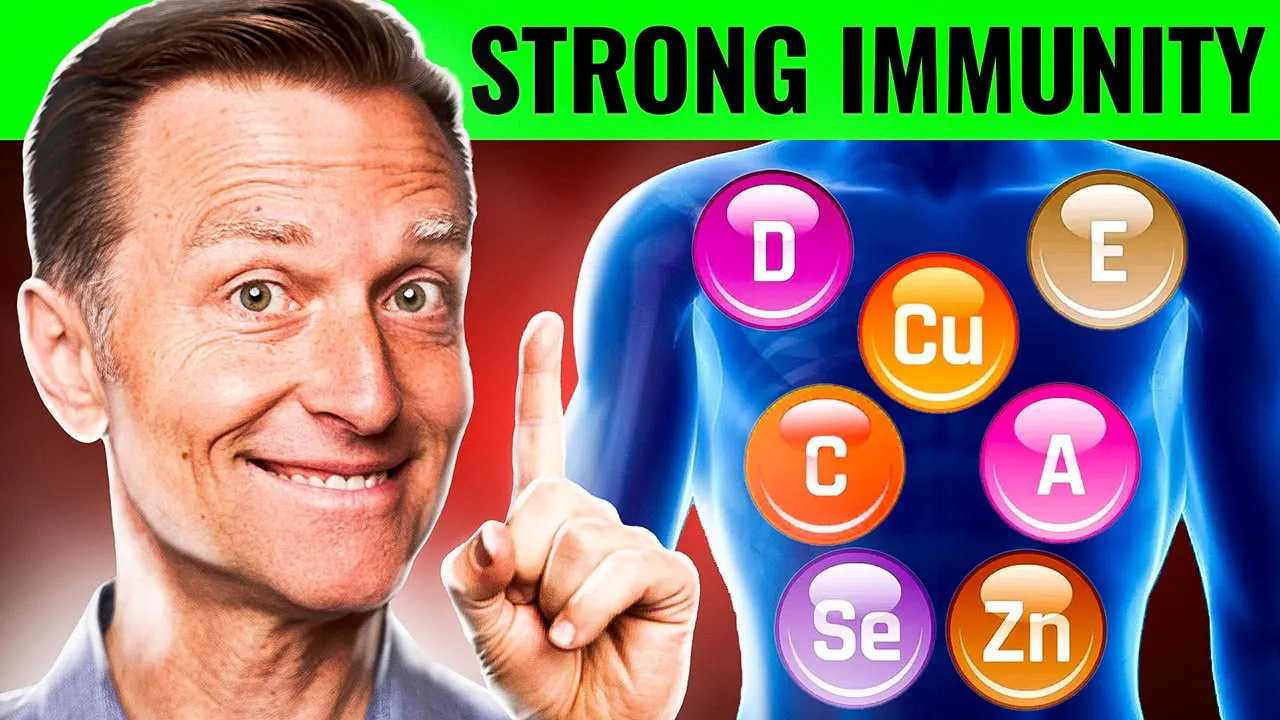
There are seven really vital nutrients that I think are more important in other nutrients,
1:17
and I'm going to try to explain this in a really simple way, so you really get it,
1:20
and also how to get these nutrients from the food that you eat.
1:24
Some of these nutrients I'm going to talk about are very deficient in a very large
1:28
percent of the population, so if that includes you, you need to a little more
1:32
information on what this nutrient does, and where to get it.
1:35
Let's start with the nutrient number one.
1:38
Vitamin A. It's one of the more important vitamins for your immune system,
1:42
especially for lung infections. Vitamin A helps you make antibodies.
1:50
Now, what's an antibody? It's something that helps tag a bad guy in your body,
1:55
like a pathogen, and it helps the other parts of your immune system know who's the bad guy versus
2:01
the good guy, so we don't want to attack the wrong cell, right?
2:05
So the antibody is all about tagging someone, so it would be like a bounty hunter
2:10
that's going out to find some criminal. They may not do the punishment, put them in jail,
2:16
but they help find the criminal. That's what your antibodies do.
2:21
I mean, think about what a job that is. You have so many cells, the body is huge,
2:27
and these antibodies are going around scanning, looking for these pathogens,
2:32
and somehow they can identify them, and then they can tag them, and then they then communicate
2:38
to the rest of the immune system to kill, okay, so that's what your immune system does.
2:43
And without enough vitamin A, your ability to produce antibodies in tag pathogens are greatly
2:50
reduced. So now your body has a lessened ability to recognize the bad guys, and there's something
2:59
else. Vitamin A helps your immune system coordinate this attack, because it increases this very
3:08
specific T cell called a T helper cell. That's all about coordination. I guess it'd be equivalent to
3:14
like a symphony orchestrator, which is out there coordinating the various musicians and their
3:19
instruments. If you didn't have that person, it would all be chaos. So the T helper cell
3:26
does a lot of coordination in this attack. So without vitamin A, you can't tag the bad guy,
3:33
and then you can't coordinate this attack with your army. Now, where do you get vitamin A?
3:39
A good source would be grass-fed butter. You can also get it from other things too, like egg yolks,
3:45
liver, but I would not count on giving your vitamin A from plant foods, because that mainly
3:50
is going to be beta-carotene that has to convert into the active form of vitamin A, which is retinal,
3:55
and for most people, it's not going to happen. So more butter through the winter, more butter to
4:03
support your immune system. All right, the next vitamin, which you may not connect the dots between
4:09
this nutrient and your immune system, is vitamin E. Now, vitamin E is a very potent antioxidant
4:15
that protects the lipid membranes. So all your cells have a little fat layer. It's a membrane,
4:24
and it's made from lipids. And vitamin E protects that membrane from being damaged by your immune
4:32
system and many other things. I mean, think about what's happening. You have this immune system,
4:37
which is your army that's going to fight these pathogens, right? So they're going to use weapons.
4:42
One weapon they use is hydrogen peroxide. If you ever put hydrogen peroxide on an open wound,
4:50
you see it all fizzing, and it starts to oxidize, and it starts to create this reaction. Well,
4:54
think about what that will do to a pathogen. It literally kills pathogens, right? Well,
5:00
all this is happening inside your body. So you're getting exposure to hydrogen peroxide,
5:04
and many other weapons from your own immune system. So vitamin E is there to protect against
5:10
all this collateral damage. And if you didn't have enough vitamin E, or you'd have a lot of damage
5:16
that's occurring from your immune system, that is unnecessary. This is also another problem with
5:21
people taking like chemotherapy or radiation therapy. Yes, it kills the cancer, but it also kills
5:27
off the immune system, right? If you have to take chemo or radiation therapy for cancer,
5:34
I would highly recommend also at the same time doing things like vitamin E, taking other nutrients
5:42
to protect you against all this collateral damage. And just as a side note, one thing you can do
5:46
to protect yourselves against the damage from chemotherapy and radiation therapy is fasting,
5:52
prolong fasting. Your cells will automatically become stronger and live longer if you're fasting.
6:22
Really feel the respect in this battle. Pick a meal to pick a side.
6:28
Participating in tunnels while supplies last. Same time, you have to do the chemo and radiation
6:32
therapy. So vitamin E protects against the collateral damage, okay? That's one thing it does.
6:37
Also, without enough vitamin E, the ability of your T cells and other things called the phagocytes
6:43
that actually eat up pathogens just are less strong. So that's about a mini dust, and guess where
6:49
you can get vitamin E from butter, okay? You can also get it from leafy greens. You can also get it
6:55
from nuts and egg yolks, because it's a fat, soluble vitamin. The next most important vitamin,
7:03
which is probably the most important vitamin is vitamin D. I've done lots of videos about
7:08
vitamin D on the importance of what it can do to your immune system. I mean, just across the board,
7:12
it influences every single part of your immune system. But one of the most important things
7:19
that vitamin D will do is it helps to curb or calm down an overactive immune system. So if your
7:29
immune system is a little too enthusiastic, okay? And it's like going in hyper mode, and you have
7:35
too much inflammation, vitamin D can come in there and chill it out. So any condition that you have
7:44
that involves too much inflammation, especially chronic inflammation, like chronic arthritis,
7:51
autoimmune, or even the cytokine storm involved in like an infection, vitamin D can come in there
7:58
and just turn that thing right off. It can also lessen the duration of infection. One of the most
8:05
amazing things it does is it just puts out the fire, okay? But you need a lot of it. You need not
8:11
just 600 I use. You need about 10, 20, 30,000 I use if you're going through an infection. And guess
8:19
where you can get vitamin D? You can get it from butter. You can get it from cobbler oil. You can get
8:23
it from the sun, but not during the winter. So many people just take it as a supplement, but it's a
8:28
very important nutrient. And you should know more about that because most people are deficient
8:34
in vitamin D. The next most important vitamin is vitamin C. You can get a lot of it from raw sour
8:40
crowd, not pasteurized sour crowd, but raw, okay? You get like 700 milligrams. That's 10 times
8:48
what you really need in one cup of raw sour crowd. Incredible. But vitamin C is one of those
8:55
vitamins that helps to increase your resistance and lowers your susceptibility to getting a pathogen.
9:02
But because it's an antioxidant, it also can lower the collateral damage just like vitamin E will
9:09
do. But vitamin E protects the fat-layered membranes. Vitamin C helps other things in your body
9:18
from getting damaged. So if there's a lot of oxidation, ferritical damage, inflammation,
9:24
vitamin C protects the tissues against all this collateral damage from your own immune system.
9:30
And a lot of times when you feel sick or you feel lethargic or you feel tired or you have a fever
9:39
or you have any negative reaction when you get sick, it's this collateral damage that's causing it.
9:44
So vitamin C can help clean that up and make you feel better as you're going through the infection.
9:50
The same thing with vitamin E. But the other thing that vitamin C will do is it increases neutrophils.
9:57
Neutrophils really do three things, okay? They eat pathogens for lunch, right? They eat viruses,
10:03
bacteria, parasites, yeast, fungus, mold. That's one thing. They also will release weapon tree
10:10
like microbial agents that kill microbes. So it's kind of like they have this shotgun that they can
10:17
use against microbes. And the third thing that they do, it's pretty cool. They actually throw a net
10:24
over the pathogens and contain the pathogen so they can then inject certain chemicals to dissolve
10:31
and kill the pathogen. They're like a little spider that can throw the net over the pathogen.
10:36
So those are the three ways that neutrophils work. And they are dependent on vitamin C. And again,
10:42
you can get vitamin C from sorrow crop, but you can get it from all the leafy greens.
10:46
Even you can get some vitamin C from grass-fed, grass-finished beef, believe it or not,
10:51
as well as grass-fed, grass-finished liver. The next most important nutrient that you need to know
10:56
about is zinc. You probably already know that, but zinc is involved in several hundred enzymes,
11:02
okay? Without zinc, a lot of things can't work in your body. But one of the most important
11:07
interesting things that zinc will do to your immune system is to allow the thymus to do its job.
11:14
The thymus makes tea cells. It's like a training camp for your immune system. And it's dependent
11:21
on zinc. Without zinc, the thymus actually shrinks way down. It can't work right.
11:27
Zinc allows the training of...
11:30
Exema is unpredictable, but you can blur less with Ebglyce, a once-monthly treatment for moderate
11:36
to superior eczema. After an initial four-month or longer dosing phase, about four and ten people
11:42
taking Ebglyce achieved itch relief and glare are almost glare skin at 16 weeks. And also those
11:46
people maintain skin that's still more glare at one year with monthly dosing.
11:49
Ebglyce, LibriKizumap, LBKZ, a 250mg per 2mL injection is a prescription medicine used to treat
11:55
adults and children 12 years of age and older who weigh at least 88 lbs or 40kg with moderate
12:00
to severe eczema. Also called atopic dermatitis that is not well controlled with prescription
12:03
therapies used on the skin, or topicals, or who cannot use topical therapies. Ebglyce can be used
12:08
with or without topical corticosteroids. Don't use if you're allergic to Ebglyce, allergic reactions
12:12
can occur that can be severe. Eye problems can occur. Tell your doctor if you have new or worsening
12:16
eye problems. You should not receive a live vaccine when treated with Ebglyce. Before starting Ebglyce,
12:20
tell your doctor if you have a parasitic infection. Ask your doctor about Ebglyce and visit
12:25
Ebglyce.lily.com or call 1-800-LilyRX or 1-800-545-5979 of your immune system. So without enough zinc,
12:33
your t-cells get suppressed so they can't go to battle. They can't fight. The weapons that they
12:41
are supposed to have are limited, and the ammo that is released is suppressed. So you're basically
12:48
cutting down your army without having enough zinc, and there's a lot of people that don't have enough
12:53
zinc. Primarily because you're eating a lot of refined grains with fatates that are blocking the
12:58
zinc. A lot of cereals, breads, pasta cereal crackers, things like that. Whole grains, okay?
13:05
And you can get zinc from shellfish, oysters. You can also get zinc from other things like
13:11
eggs, red meat, as loaded with zinc. There was an interesting study on mice, okay? Where they had one
13:17
group that was deprived of zinc, and the other group was fed enough zinc. And both groups were
13:25
exposed to a deadly parasite. And in the group that was zinc-deficient, there was an 80% mortality
13:34
rate. 80% of these mice died, the zinc-deficient group. And in the other group, only 10% of the mice
13:43
died. And this was the group that had enough zinc. It tells us that zinc is very important in surviving
13:50
infections, okay? Number one, and having an immune system to protect us against these pathogens,
13:58
no matter if it's virus, parasite, bacteria. The next nutrient I want to talk about is
14:04
selenium. Selenium is a trace mineral to help you make glutathione, which is another antioxidant,
14:11
which protects the body from fruacal damage, oxidation. It protects the lipids as well. And it also
14:19
protects against inflammation, okay? All that collateral damage. And if you're deficient in selenium,
14:24
your immune system is no longer as potent as it should be. It has a more difficult time fighting
14:31
pathogens. And it also has a difficult time protecting your normal tissues from all the
14:36
collateral damage. There is another study on mice that had a group that was deficient in selenium,
14:43
and compared that to a group that had enough selenium. And they were both exposed to a parasite,
14:48
not the same parasite, but a different parasite. And in the group that was selenium-deficient,
14:53
okay? They all suffered multiple organ failure, okay? As compared to the group that had
15:01
sufficient selenium. So that would be just another example, even though the studies weren't done
15:05
on humans, I think it's something to look at. It's something to appreciate. And the problem with
15:09
doing human studies is that who's going to volunteer for this study, not me. So where can you get
15:14
selenium? Seafood and Brazil nuts. And the last nutrient I want to comment on is copper. Copper
15:20
works with zinc. I haven't talked a lot about copper, but copper is very important for your
15:25
immune system as well. If you don't have enough copper, you're more susceptible to getting infections,
15:31
okay? Copper also works with selenium in making certain enzymes to protect against
15:39
collateral damage because it can act as an antioxidant. But it's also directly involved in immune
15:46
function and specifically in recruiting help with other parts of the immune system. So if you
15:51
don't have enough copper, your cells won't be coordinated enough to recruit for help,
15:57
to have the full capacity of your immune system at the barrier that you're defending from.
16:02
And copper can be gotten from shellfish, seafood, and beef meats, it's an egg,
16:07
it's not a lot of different foods. Now I've recently did a very interesting video on what
16:12
vitamin D does to your immune system. It's a little bit more in depth. And you really need to watch
16:16
that because once you watch that, you'll have the complete knowledge of vitamin D in this relationship
16:23
to bulletproofing yourself against pathogens. And I put that video up right here, check it out.