Get every episode summarized
Each time The Daily AI Show publishes, we email you a written briefing from the transcript — the topics, who appeared, and any specific claims, with the ad reads skipped.
Email me new episodesFree for 3 shows. No card needed.
About this episode
“I'm Brian, I'm one of your co-owners of the Daily Eye Show. Now you probably heard me say this if you listen to your friends episodes, but if you knew here Monday through Friday we do live shows. A bunch of co-hosts including myself, they happen at 10 a.m.”From the transcript
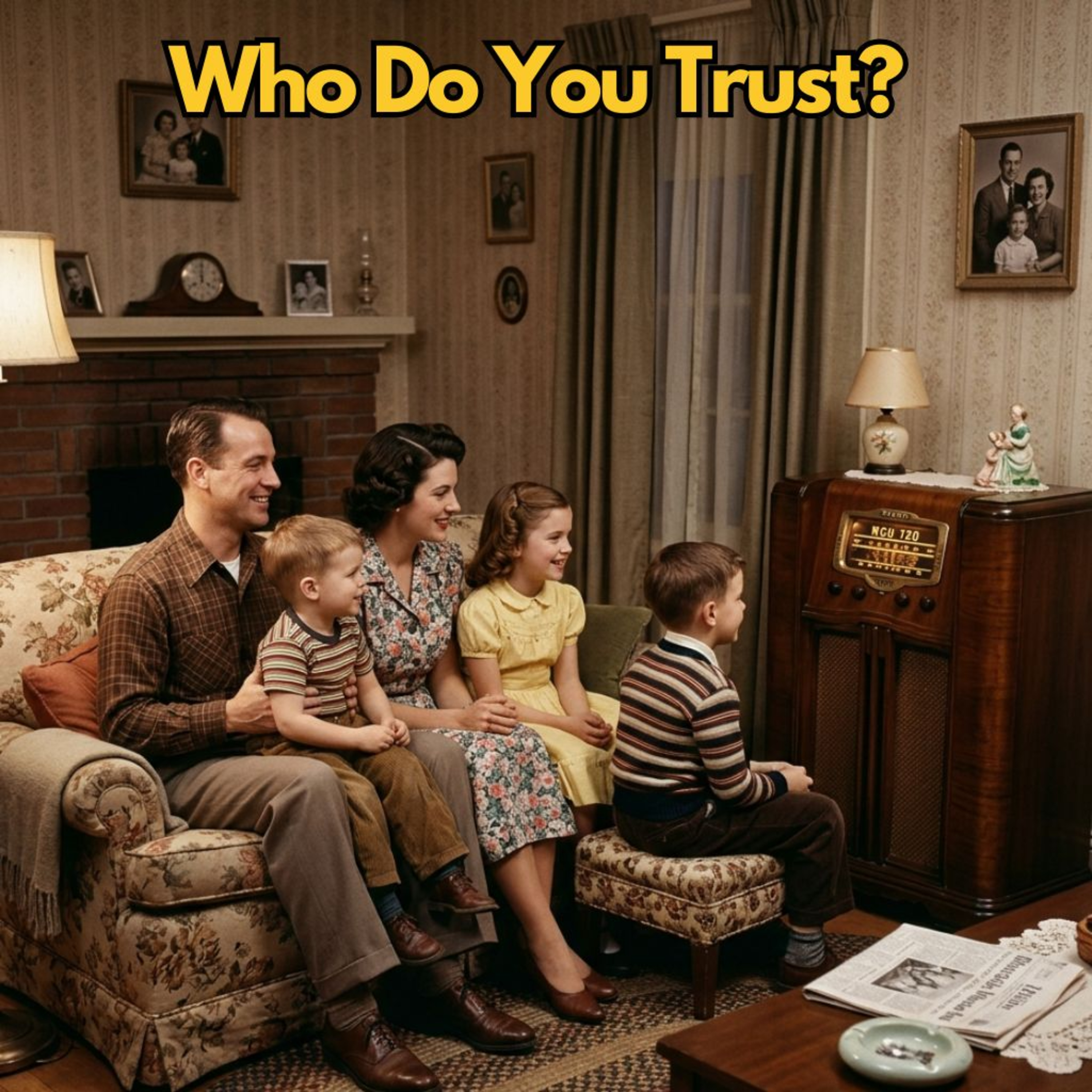
Voice is losing its status as proof. A voicemail, a phone call, a video clip, a recorded meeting, any of it can now be fabricated well enough to fool ordinary people and, in some cases, trained professionals. That changes more than fraud risk. It changes the default social contract around speech. For a long time, hearing someone carried a baseline level of trust. Now every piece of audio starts under suspicion.
That pressure creates a clear response. Build trust into the media itself. Signed audio. Provenance standards. Device-based identity. Verification layers that show where a recording came from and whether it was altered. Those tools solve a real problem. They give people a way to separate authentic speech from synthetic impersonation. But once those systems spread, they also start to change what counts as legitimate speech online. Verified audio gains status. Unverified audio loses it. Anonymous speech becomes harder to trust. Informal participation starts to look second-class.
The Conundrum:
As synthetic audio gets harder to distinguish from human speech, what should carry more weight, open participation or authenticated trust? One path puts more value on verified origin. Speech becomes more credible when identity and provenance travel with it. That would reduce fraud, protect reputation, and make high-stakes communication more reliable. The other path keeps speech more open and less tied to formal verification. That protects anonymity, lowers barriers to participation, and avoids turning everyday communication into an identity check. The stronger the trust layer becomes, the more power shifts toward the systems that issue and recognize trust. The weaker the trust layer becomes, the more everyday speech lives under doubt.
Get every episode summarized
Each time The Daily AI Show publishes, we email you a written briefing from the transcript — the topics, who appeared, and any specific claims, with the ad reads skipped.
Email me new episodesFree for 3 shows. No card needed.
Know when Jane Smith turns up
Follow Jane Smith and once a week we email you every new episode they appeared on — including guest spots the show notes never mention, because we read the transcript.
Follow Jane SmithFree. Pick your own day and time.
Hosts & guests

Transcript ready
552 searchable segments. Every word is indexed and playable.
Full transcript
The Daily AI Show — The Acoustic Trust Conundrum. Machine-transcribed; use the interactive transcript above to jump the player to any line.
Hey everybody, welcome to another Saturday Conentrum. I'm Brian, I'm one of your co-owners of the Daily Eye Show. Now you probably heard me say this if you listen to your friends episodes, but if you knew here Monday through Friday we do live shows. A bunch of co-hosts including myself, they happen at 10 a.m. Eastern, but you'd always catch the replay on it at the podcast, platforms, or YouTube or LinkedIn. And on Saturdays I like to do these Conentrum episodes. So what you're gonna hear is me do a little bit of an intro, and then you're gonna hear two AI co-hosts debate both sides of this AI Conentrum. Now this week is a bit meta, not the company, in the sense that it's about the acoustic trust Conentrum, meaning it's all about audio. It's all about, can we trust what we hear anymore? You know for sure that I didn't use 11 labs for me to do this intro. Well, the reality is I didn't, and there's probably a couple ways you can tell. I have certain cadences, I have certain pauses, I may have certain vocal flexions where I push more air across my vocal cords. And those are things that are getting, that are hard currently for AI to do.
But if you didn't know me, if you didn't listen to me a lot on the show and I was a stranger to you, you may not be able to tell whether it was me or not me because you don't know me that well, right? So we know, or at least I feel like I know, that there is a day in the future where one of the AI tools comes out, and it is nearly if not impossible to distinguish between whether something was authentically recorded or whether it was actually AI driven. So now we have some choices, right, in our society about how we want to handle that. So let me get into the intro here, and then we're going to kick it off and hand it off to our two AI co-hosts. Now if you, if you are new here, and by the way, we've been growing a lot on Spotify as well as some of the other platforms. So you might be new. This might be the first conundrum you've done. I think it's like my 80th one. So there are plenty more for you to go back. If you like these discussions, go back and look at any Saturday going back well over a year, and you're going to find, well, like I said, about 80 other conundrums on there.
So there's plenty to choose from. But today, like I said, it's all about, well, this, it's about audio. So voice is losing its status as proof. As voicemail, a voicemail phone call, a video clip, a recording meeting, any of it can now be fabricated well enough to fool ordinary people, and in some cases, train professionals. That changes more than fraud risk. It changes the default social contract around speech. For a long time, hearing someone carried baseline level of trust. Now every piece of audio starts under suspicion. That pressure creates a clear response. The trust into the media itself, singled audio for providence standards, the vice-based identity, verification layers that show where a recording came from, and whether it was altered, those tools saw a real problem. They give people a way to separate authentic speech from synthetic impersonation. But once those systems spread, they also start to change what counts as legitimate speech online. Verified audio gains status. Unverified audio loses it.
When a speech becomes harder to trust, informed participation starts to look second-class. So here's the conundrum. A synthetic audio gets harder to distinguish from human speech. What should carry more weight, open participation, or authenticated trust? One path puts more value on verified origin. Speech becomes more credible when identity and providence travel with it. That would reduce fraud, protect reputation, and make high-stakes communication more reliable. The other path keeps speech more open and less tied to formal verification. That protects anonymity, excuse me, lowers barriers to participation, and avoids tuning or turning everyday communication into an identity check. The stronger the trust layer becomes, the more power shifts towards the systems that issue and recognize trust. The weaker the trust layer becomes, the more everyday speech lives under doubt. Okay, there's your intro. This is a fun one, like I said, it's very meta because we are literally about to kick
off or I'm about to hand it off to two very identifiable AI voices. But once that are getting better, like I said, I've done this like 80 times though, and every week they do hear subtle improvements in what Google Notebook is doing, and there might be other tools out there that do it much better than them. So it's even getting harder for me to hear the unique differences between the two AI co-share about to hear, and maybe two people that I didn't know to begin with. Okay, let's get into it. Have a great Saturday, and I'll see you again for another convention next Saturday. Imagine answering your phone, right, the caller ID. It says it's your bank. Yeah, a totally normal thing to happen. Exactly. So pick up, and the voice on the other end is undoubtedly your local branch manager. I mean, they know your name, they know your recent account history. Right. They even have that exact same like slight southern draw. You've heard a dozen times in person, but it's not them. Wow.
It's a string of code running on a server halfway across the world, and that string of code just initiated a transfer that stole like $600,000 from your business. It is just a staggering reality to wake up to, honestly. It really is. And today's deep dive is into this terrifying reality where our ears, you know, biological lie detectors, we've relied on for thousands of years, have basically become completely obsolete. Yeah, we're actively watching the default social contract around human speech just right down, simply because our voices no longer function as proof of our identity. And that right there is the core of the fascinating research document we are unpacking for you today. It's called the acoustic trust paradox verified identity versus open speech. It's a more really great paper. It is. And our mission today is to explore this massive, fundamental shift happening right inside our eardrums. We are like moving from a world of ambient trust where you just assume a voice as a person
to a world of ambient suspicion. Right. Which changes everything. It really does. But before we get into the weeds, I need to make one thing crystal clear to you our listener. The source material touches on highly charged topics, right? Absolutely. We're going to be navigating government regulation, First Amendment rights, corporate surveillance, the fundamental structures of the internet. So I want to state explicitly that neither I nor our expert are endorsing any political viewpoints today. No, not at all. We're not taking sides. We are strictly here to act as impartial guides, you know, just conveying the ideas, the data and the arguments contained in the source text, nothing more, nothing less. Yeah, we are just here to look at the architecture of these arguments and the tech behind them. Not to tell you, you know, which vision of the future you should vote for. Exactly. So let's jump straight into the deep end. If we're going to look at the radical structural solutions being proposed to fix our audio reality, we first need to understand why the current status quo is collapsing. Right. The empirical failure. Like just how bad is the failure of human hearing right now?
Well, the statistics in the research are honestly hard to process. Like in the past year alone, one in four Americans received a deep fake voice call. I mean, one in four. That's 25% of the country. Yeah. And the financial toll is accelerating at this terrifying pace. By mid 2025, deep fake enabled fraud losses hit $897 million. Almost a billion dollars. And it gets worse. The projected global cost by 2027 is $40 billion. Hold on. I need to stop you there. $40 billion. Yeah. I mean, I get that artificial intelligence is improved, but how are we getting tens of billions in losses? Are there no secondary security checks happening? Well, it comes down to the sheer scale and the sophistication of the attacks, particularly at the enterprise level. Like contact centers for major corporations saw a 1300% rise in deep fake attempts in 2024 alone. That is a 1300% spike. Right. There's this audio security company cited in the research called Pindrop.
They analyzed like 1.2 billion customer calls. And they found that synthetic voice attacks jumped 475% at insurance companies. Wow. And 149% at banks. In fact, over 10% of banks have suffered deep fake vishing. Vishing. Yeah, voice fishing. They've seen losses exceeding $1 million per incident with the average sitting right around $600,000. Okay. Let's unpack this. What you're describing isn't just a few gullible people falling for a prank. No, not at all. You're talking about professional bankers and insurance agents handing over massive sums of money to a computer program. Exactly. And the human cost on the consumer side is just as severe, you know. Seniors targeted by these AI voice clone scams, they lose an average of $1,298 per incident. Ugh, that's heartbreaking. It is. It's actually three times what younger victims lose. The scammers just use a few seconds of audio scraped from social media, clone the voice of a grandchild, and manufacture a completely convincing emergency. So think about the last time you answered a call from an unknown number, or even a known
number acting strangely. That baseline assumption that a voice equals a physical human being is functionally destroyed. It really is. But this brings up a massive question. If my naked ears can't spot the fake, why can't we just rely on better technology to catch it? Right. The algorithm defense. Yeah. I mean, we have AI that generates the audio. Shouldn't we have AI that detects it? You would think so, but the research from our coax cited in the text, it demonstrates a structural failure on both the human and the algorithmic fronts. How so? Well, the synthetic voices have firmly crossed the uncanny valley. They match real human speech in naturalness, intonation, identity. Humans simply cannot hear the difference anymore. Yeah, the biological lie detector is broken. Exactly. And the detection algorithms are struggling just as much. Why are the algorithms failing, though? I mean, aren't they analyzing the microscopic audio wave data that we can't hear? They are, yeah. But the modern text to speech and voice conversion systems achieve such high perceptual
quality that they smooth out those microscopic artifacts. Oh, wow. So they're too clean. Right. Furthermore, the synthesis methods evolve incredibly rapidly. And algorithm might learn to detect the flaws in one specific AI voice generator today. But by next week, a new generation of that software is released without those flaws. The detection models just cannot generalize fast enough to catch new techniques. It's essentially an asymmetrical war. Man, so if the detection algorithms are fundamentally broken, then we can't just play defense anymore. We have to change the audio itself before it even leaves the microphone. That's the current shift, yeah. Which means we're shifting from the messy problem of deception to the cold, hard mechanics of verification. What does that actually look like in practice? Well, it looks like an entirely new technological toolkit designed to build trust directly into the audio file itself. And it has matured incredibly fast like who is building this? There is a group called the Coalition for Content Provenants and Authenticity or C2PA.
The founding members are heavyweights. We're talking Adobe, Microsoft, Google, the BBC, Intel. Okay, so massive industry players. Very massive. They've developed a specification for cryptographically signed provenance records that attach directly to digital content. They call them content credentials. Content credentials, okay. And by 2026, version 2.3 of this standard has been adopted across major platforms. I want to make sure I'm visualizing this correctly. Is this like attaching a digital shipping label to the audio file that says where it came from? Um, a shipping label is a bit too fragile of analogy because you can just peel a label off, right? Fair point. Think of a cryptographic signature as being less like a wax seal on an envelope and more like weaving a microscopic mathematical thread of DNA through every single fiber of the paper. Oh, wow. Okay. So it's woven in. Yeah, it embeds a continuous chain of custody. It records who created the audio, what specific device they used, whether it was altered by software and exactly when. So you literally can't mess with it.
Right. If someone tries to erase a word or change the pitch, they have to tear that mathematical DNA and the system instantly registers that the file has been tampered with. That makes a lot more sense. It's structural to the file itself. Exactly. And the industry is layering even more techniques on top of that. The text details resemble AI's neural Perth watermarking. Perth watermarking. What is that? It involves embedding persistent, inaudible acoustic markers directly into the sound waves. And these markers are designed to survive being compressed into an MP3, sent over a terrible cell connection, or even redistributed across social media. It's robust. Very. And then you have the global AI trust authority, or GAIDA. They are developing protocols that go as far as checking the specific microscopic hardware characteristics of the microphone being used. Wait, wait, check in the microphone itself. Yeah. How does software know what physical microphone I'm holding? So every physical microphone has microscopic imperfections in its manufacturing, right? It creates a unique acoustic signature, almost like a fingerprint.
No way, really. Yeah. GAIDA protocols cross-reference that hardware fingerprint with environmental context and tamper-evident timestamps. It mathematically proves that a real human spoke into a real piece of plastic and metal at a specific moment in time. They are really trying to lock down every single syllable before it even hits the internet. Can I imagine, with billions of dollars in fraud on the line, governments are pushing this hard? The institutional backing is massive, like the EU AI Act, which takes full effect in August 2026, explicitly requires transparency labeling for AI content, which these C2PA credentials satisfy. Right. The European regulations are usually first on this. Yeah. And in the US, the Cybersecurity and Infrastructure Security Agency has endorsed these credentials. Plus, the IRS just awarded Identity Verification Company ID.Me a blanket purchase agreement valued at up to $1 billion. A billion dollars for Identity Verification at the IRS alone. That's wild. But you know, the motivation goes far beyond just stopping financial scams.
Oh. Yeah. Forensic audio expert Lars Daniel brings up a critical argument in the text that we have to consider. It's about stopping the fabrication of evidence after the fact. Okay, I'm listening. He argues that without authentication, we face something called the liar's dividend. I need you to break down the liar's dividend. Like what does that mean in a practical scenario? So imagine a corrupt politician or a fraudulent CEO is caught on a genuine, completely real recording admitting to a crime. Okay. Like a smoking gun tape. Exactly. But in a world where deep fakes are everywhere and indistinguishable from reality, that bad actor doesn't need to destroy the tape or intimidate the witness. Right. They can simply sit back in court, shrug and say, I never said that. It's an AI deep fake. Wait. So you're saying the danger isn't just that I believe a fake audio clip. Nope. The danger is that a corrupt CEO caught on tape committing fraud can just smile and say, prove it. Yes. Oh my God. Yeah.
If everything can be faked, nothing can be proven. Yeah. That is absolutely chilling. That is the core of the liar's dividend. If audio cannot be authenticated from the moment of creation, entire categories of evidence become legally deniable. Wow. So proven standards aim to kill the liar's dividend by proving mathematically that a recording is genuine. And the governance momentum is absolutely moving in this direction. Like with laws being passed. Yeah. With legislation like the US Digital Authenticity and Providence Act of 2025, which mandates these disclosures for federally regulated media. Here's where it gets really interesting. If the government and corporations are heavily backing this and we're talking international mandates and billion dollar contrast, huge structural shifts. Yeah. We're essentially talking about attaching a digital passport to every single word a human being speaks online. And that is the exact friction point that transitions us to the other side of this paradox. Right. If you require a digital passport to speak and be heard, the immediate question becomes who gets stopped at the border?
Right. If we build this massive, inescapable security apparatus to protect our trust and audio, we have to look at the collateral damage to open participation. Absolutely. And the source text makes a very strong heavily researched case for keeping speech unverified. It does. And it roots this argument not in some like desired to protect hackers or scammers, but in deep constitutional and historical foundations. Tell me more about that. The argument is that anonymity is not a loophole in our society. It's actually a fundamental feature. The Supreme Court has explicitly established that anonymity is a shield from the tyranny of the majority, calling it a protected aspect of the First Amendment. That tracks historically, actually, like the Federalist Papers, which help ratify the US Constitution, were written under a pseudonym, right? Yeah. Exactly. Revolutionary Arab pamphleteers used assumed names so they wouldn't be hanged for treason. People rights activists fought for the right to organize without disclosing their membership
lists to hostile local governments who would use that information to retaliate against them. The underlying principle is that people must be able to speak, dissent, criticize, and organize without permanently attaching their legal identity to their words. Right. For safety. Yeah. Whistleblower protection researchers note that digital communication technology already makes it incredibly difficult to report wrongdoing safely. I can imagine. And investigative journalists and media lawyers are sounding the alarm about the vulnerability of confidential sources. Forcing audio to carry a verified identity doesn't just inconvenience internet trolls. It's structurally endangered people. Yes. It's structurally endangered people who face life altering consequences for speaking truth to power. It's like we were trying to fix a counter-fitting problem by replacing the public town square with a VIP club. That's a great way to put it. If you have to scan a government issue digital ID just to criticize your employer on a forum or to report a hospital's misconduct to a journalist, the people who need to speak up the
most are the very ones who will be silenced by the system designed to protect them. And the text points out that we actually have a real world large scale example of what happens when a government tries to mandate identity online. Oh, where did this happen? The text details South Korea's 2012 internet real name system. The government required users of all major websites to register their real verified registration numbers before they were allowed to post anything online. Wow, that isn't it. Very. The stated goal was to reduce harassment, stop misinformation, and increase trust. And how did that actually play out in practice? I'm guessing not well. Not well at all. The South Korean Constitutional Court ended up striking it down unanimously. It completely failed to achieve its goals. Really? The offline harassment didn't meaningfully decline. Instead, it just drove users to overseas platforms like Twitter and Facebook that didn't require real Korean names, which probably hurt their local economy. It ended up crushing domestic tech companies.
But far worse than the economic impact, it created a massive cybersecurity nightmare. Let me guess, if every website has to verify your real identity, then every website is suddenly holding a database of millions of real government IDs. Exactly. They became the ultimate honeypots for hackers. Over 35 million users of the South Korean social networks side world had their personal information stolen in one massive data breach. 35 million people, just because they wanted to post online. Yeah. The policy failed to reduce harm but succeeded wildly at producing catastrophic new risks. And the open speech advocates argue that audio authentication mandates will face the exact same dynamic. So the bad guys just route around it. Right. Legitimate anonymous speakers will be penalized while bad actors will just use unverified tools outside the ecosystem. Meanwhile, the platforms issuing these voice credentials will be hoarding unprecedented amounts of sensitive behavioral and biometric data. Because every trust infrastructure requires an issuer.
Someone, whether it's Apple, Google or a government agency, has to decide who gets a credential, how much it costs to get one, and when it gets revoked. Yes, the centralization of trust. Most identity systems generate data that can easily be exploited to infer your political preferences or psychological traits. It's a massive expansion of surveillance architecture. Stanford Center for Internet and Society notes a broader trend here where security and civility are actively being prioritized over freedom and openness on the internet. It's a huge trade off. It is. The question the open speech advocates ask isn't whether this trust infrastructure will be abused because history suggests that absolutely will be. The question is, what is the acceptable cost of that abuse, and who is forced to bear it? I understand the deep philosophical divide here. It's profound, but I have to push back on the technology itself for a moment. Sure. We've talked about the dangers if this verification system worked perfectly. But based on the research, does the technology even work well enough to justify giving up that anonymity? According to a comprehensive empirical study presented in the text, the Technological Foundation
is far shakier than the advocates want to admit. Researchers evaluated 22 different audio watermarking schemes against 109 different attack configurations. What kind of attacks we were talking about, like someone trying to hack the file? Mostly what they call signal level processing. This means a bad actor takes a watermarked audio file and alters it to try and break the watermark. They might add background noise, run it through aggressive MP3 compression, subtly shift the pitch of the voice, or like recording it off a speaker. Exactly. Physically playing the audio out of a speaker and re-recording it with another microphone. And out of those 22 advanced watermarking schemes, how many survived that battery of tests? Zero. Zero. Are you serious? Not a single one of the surveyed schemes could withstand all the tested distortions, but here's where it gets truly paradoxical. The researchers found that adding an audio watermark to prove a file is real can actually interfere with the anti-spoofing countermeasures designed to catch fakes.
I'm completely lost. Good year. How does the security measure break the other security measure? Well, the researchers explained that watermarking introduces what they call complex domain shifts. Okay. Domain shift sounds like a sci-fi concept. Do you just mean the invisible watermark accidentally makes the real audio sound like a synthetic robot to the detector algorithm? That is actually a very practical way to translate it. Yeah. And embedding an invisible signal into the audio wave to prove it's real, you are fundamentally altering the acoustic properties of that file. Right. You're changing the sound itself. Exactly. And the detection algorithms are trained on pure, unwatermarked human speech. So when they analyze a watermarked file, the acoustic environment has shifted so much that the algorithm gets confused. I see. It misclassifies genuine real human speech as a fake AI generation. In some configurations, the authentication system directly undermines the exact detection mechanisms it was designed to help. So what does this all mean?
If the sophisticated fraudsters, you know, the ones stealing millions of dollars from banks, can just use signal processing to strip the watermarks anyway. Aren't we just building a broken security game? Pretty much. The criminals just walk right around it while everyday people without digital credentials are automatically treated with suspicion. And that is the ultimate social consequence outlined by the Center for Democracy and Technology. If we proceed down this path, we are heading toward a heavily two-tiered speech ecosystem. That two-tiered system. Yeah. It creates what they call a credibility gradient. Platforms, news organizations, and financial institutions are terrified of liability. So they will naturally prioritize, amplify, and trust verified audio while suppressing, flagging, or hiding unverified audio. Even if that unverified audio is a completely real recording of a human being. Exactly. Marginalized communities, people who can't easily navigate credential systems due to geography, income, documentation status, or political exposure, they won't just lack a digital verification
badge. What happens to them? They will lack social trust. As a peer research study noted in the text, the demands for authentication are coming from highly legitimate concerns about safety and fraud. Sure. People want to be safe. Solutions required to fix trust are social and cultural, not just technical. If you require credential to be believed, those without credentials start every conversation under suspicion. Not because they sound like an AI, but because the system has no cryptographic record of them. It is a phenomenal paradox we are looking at. These are two entirely different ways of viewing the risk in our world. It boils down to a debate about where the default risk should sit in our society, really. The authentication advocates look at the landscape and say that the current default of ambient trust is a harm in itself. It's a condition that overwhelmingly advantages fraudsters, scammers, and synthetic impersonation. To them, requiring verified provenance redistributes that advantage back to authentic human beings. Right.
But then the open participation advocates look at the exact same landscape and say, building that trust infrastructure creates an entirely new systemic kind of harm. Exactly. It's massive power to the corporations and governments that issue those credentials. The real danger isn't the asymmetry between authentic and synthetic voices. No. It's the asymmetry between those inside the VIP verification system and those locked outside of it. Because historically, that asymmetry always replicates existing social hierarchies and suppresses vulnerable voices. We are all negotiating this new reality in real time. This isn't theoretical anymore. It's not happening in some distant sci-fi future. It's happening right now. Every time you are listener, leave a voicemail for a client or join a Zoom call with your team or read about a whistleblower's leaked audio on the evening news, you are participating in this shifting social contract. The rules of how we prove who we are have fundamentally changed. They really have. And I want to leave you with one final thought to mull over. We spent this entire deep dive talking about how this acoustic trust paradox affects our
financial lives, our legal systems, and our public discourse. And think about your private life. That's a scary thought. If the legal, financial, and digital systems eventually demand cryptographic proof that a voice is real before they trust it, how long until that baseline suspicion bleeds into our personal relationships? Will there come a day when you receive a frantic phone call from a loved one and before you ask, are you okay? Your first instinct is to ask them a security question to prove they're human. Yeah. The world where our biological lie detector is entirely replaced by a password. It's a heavy thought, but an important one is we navigate this new era. Thank you so much for joining us on this deep dive. Stay curious, stay informed, and we'll catch you next time.
More episodes
More from The Daily AI Show
Are Call Center Jobs Close to Extinction?
The Daily AI Show

The AI Agent Queue Conundrum
The Daily AI Show
Nvidia Is Reinventing the PC
The Daily AI Show
Is Middle Management the Real Job AI Replaces?
The Daily AI Show