Loading...

businessmanagementeducation
The Chris Voss Show Podcast – BIG RED Kindle Edition by Matthew Gene Stephens
About this Episode
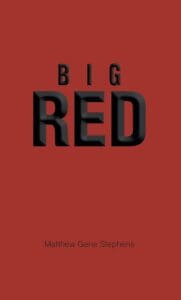
BIG RED Kindle Edition by Matthew Gene Stephens
https://www.amazon.com/BIG-RED-Matthew-Gene-Stephens-ebook/dp/B0G39Z5YBQ
Big Red, whose given name is Horatio Coonrod, is a teenaged boy in September 1864, the waning months of the War Between the States, in this historical novel that combines fictional characters and actual historical events and persons. He lives in the Florida Panhandle, in Jackson County, just east of Marianna, the county seat, as does his betrothed, Sue McKinnie. The times are desperate for the Confederacy but more so for Jackson County and the surrounding area, with a large force of battle-hardened Union veterans converging on Marianna. The Southern town is defended only by a few Confederate regulars, walking wounded, and citizens who make up a Home Guard, ranging in age from thirteen years to seventy-eight-a force half the size of the Union cavalry. The battle goes badly for the Southerners. Red was wounded, captured, and taken to the war’s most infamous Union prisoner of war camp in Elmira, New York, but he is protected and guided by the hand of the Lord as he makes his way back to his home, family, and the only girl he’s ever loved. He must then engage again in deadly combat in an attempt to regain what has been forcibly taken from him.
Red is transformed by the devastating trials he endures on his 1,100-mile journey home. He realizes the unfortunate transformation he went through and his need to seek the redemptive grace the Lord makes available to those who seek it. Sue McKinnie also struggles during this time, not knowing whether her beloved is alive or not. She clings to hope when it seems there is none. Her trials are recounted, illustrating how the Lord buttresses her against utter hopelessness through her extremely strong and devout faith. Together, their story is a tale of hope, faith, and love triumphant.
Hosts & Guests

Transcript
You wanted the best, you've got the best podcast, the hottest hotest podcast in the world.
The Chris Vosho, the pre-eminent podcast with guest so smart you may experience serious brain bleed.
The CEOs, authors, thought leaders, visionaries, and motivators.
Get ready, get ready, strap yourself in, keep your hands, arms and legs inside the vehicle at all times.
Because you're about to go on a monster education roller coaster with your brain.
Now, here's your host, Chris Vos.
Hey, those Vos here from the Chris Vosho.com.
There you go.
There you go.
As always, for 16 years, 200 episodes, we've been bringing the Chris Vosho because we care.
We do, actually.
We really care.
We care about our audience.
We care about making the world a better place.
And we love the authors that come on the show and show their stories, their journeys, their lessons of life.
Because without stories, those are the fabulous criminal, fabric of our lives.
And we wouldn't know what to do with ourselves.
Maybe if we didn't have stories because we'd just be like, who the hell are we?
Which is what I say every morning at 5 a.m.
Opinions expressed against the podcast are solely their own.
They do not necessarily reflect the opinions of the host or the Chris Vosho.
Some gets to the show me that advertising on the podcast, but it's not endorsement or review of any kind.
Hey, guys.
We have an amazing man on the show.
We're going to get into it with him in his book.
But in the meantime, go to Goodreads.com for Chris Vos, LinkedIn.com for Chris Vos, YouTube.com for Chris Vos and Facebook.com for Chris Vos.
He's the author of the latest book to come out called Big Red by Matthew Jean Stevens, who joins us in the show.
It's a novel that came out November 21st, 2025.
Welcome to show Matthew.
How are you?
Thank you very much.
I'm doing well on yourself.
Thank you.
I'm doing excellent as well.
Glad to have you on the show.
Give us any websites, emails.coms, social media.
I don't have a website.
My email address is my full name.
Matthew Jean Stevens at Yahoo.com.
It's a small case.
No skips or underlines or anything.
No skipping, folks.
Give us a 30,000 overview.
What's inside your book, Big Red?
I'm sorry.
Give us a 30,000 overview.
What's inside your book?
The book is about this teenager in late war between the states.
September 27th, 1864 is the opening site and scene of the book.
And the Battle of Mariana was fought on that day.
Mariana was the county seat of Jackson County, Florida still is.
And it's also my place of birth.
But the Union Army had come up from Pensacola and come up through what is today
much Washington County and Western Panhandle.
And got to a little town called Campbellton.
And then from there, it came southwest till they reached Mariana, Florida.
And the general and command general Alexander Asbest was under the impression that he would be
welcomed with open arms instead of force of arms, which he went up getting.
But anyway, there were like over 700 Union Calvarymen with repeating carbons.
And there were very few Confederate regulars mostly walking wounded.
Most of the regular Confederates had been, you know,
sit further north where the war was more active.
But there was several home guard units.
In fact, my great-great-uncle Cornelius Stevens was a member of one of those units.
And all in all, there was about 350 Confederate defenders to face the 700.
And the Confederates were armed with antiquated weapons like single shot,
muzzle loaders, and a good soldier with a muzzle loader could get off three shots a minute
where a soldier with a carbene could fire seven, nine, ten shots a minute.
Oh, wow.
So there was a short, it was a bad day for the Southern herself.
In the book, Big Red, who his real name is Horatio Cunrod.
And Cunrod was a family name.
My great-great-grandmother was Stella Cunrod, but he gets wounded and is captured
and is taken to Elmira Prison in New York.
And he's there till pretty much the war is over,
which from the time of the Battle of Mariana,
wasn't just months away, but it was a very difficult time in the dead of winter.
And if you're from North Florida and you're having to spend the winter
and the most lethal prisoner of war camp in the North,
that had a 25% mortality rate.
Oh, wow.
And it's comparable to the Andersonville,
which everybody that knows anything about the war between the states is pretty much familiar with.
But Elmira is not so much familiar, but it was just as lethal.
Oh, yeah.
So in a way, the majority of the book,
there's a lot of action in it on his journey home.
He gets detoured and disappointed several times,
and it takes him a while to get back.
And the things that I tried to bring out in the book
were the value of faith and loyalty.
He was engaged to his vitro,
the girl named Sue McKinney back home in Jackson County.
And so he thought of her and of course he thought of his family
and he kept those thoughts in his mind.
And that in his faith
were what he relied on to get back.
And also there was like a there's kind of a parallel narrative going on
because Sue doesn't know what's happened to Big Red.
And she doesn't get any word from him for months and months.
And there's some reasons for that.
It's not that he couldn't write.
He did write some, but letters didn't reach it.
But that's all covered in the book.
Covered in the book folks,
you can pick it up where five books are sold.
Now is there any, you know, this sounds like it happens
at some events that actually took place in history?
Is this a historical fiction where maybe it was based on
something that you knew about or something sort of history?
It is actually based on real events.
The Battle of Mariana was the second largest battle
of the war between the states in Florida.
The Battle of Olusty over near Jacksonville was larger.
Like I say, in the Battle of Mariana there was around 700 union soldiers.
There was 350, 300 confederates.
But there was not a whole lot of organized fighting going on in Florida.
What happened mostly in Florida was raids on salt works and all that.
Florida's probably largest contribution to the confederacy
was in foodstuffs and like beef and salt,
because salt was what they used to preserve the beef.
Oh yeah.
And they would boil the salt water down on the coast
and they'd boil it until the Yankees come along, turn the pots over,
and then they'd let the Yankees leave and turn them back over and start it again.
Isn't that a while that they used to keep meat back in those days?
Now the story of the character, the protagonist in the book,
is there any, how did you build that character?
Is it built on anybody in real life?
The way the novel came about, my father is 93 years old
and he lives two doors away from me.
Oh wow.
And I moved there to help him with my mother when she was living.
She had dementia for several years and he needed help just in caring for her
and I had a flexible work schedule, so I was able to provide help
and also take them to medical appointments,
doctor's appointments, things like that.
And we live in Chattie, Houston.
That's about 50, 55, 60 miles west of Tallahassee
and I remember to get the most bang for the buck.
We used to schedule our cardiology appointments 15 minutes apart
so we could get the most out of a trip to Tallahassee.
That's the way to do it.
That's the way to do it.
So this is your first book you've ever written, is that correct?
Yes, and I hope to do at least a trilogy,
like I say, following Big Red's family,
him and his family through the latter part of the 19th century
into the 20th century.
I want to show how it was for most of the families
in the Panhandle and South Georgia,
Florida State Hospital when it became,
when it was established in 18, what was 1877,
and then on into the 19th, Florida State Hospital
was like on the cutting edge of mental treatment.
There was a lot of things that were probably first seen or heard about
around here in Chattaheuchi.
When I was in high school,
there was over 7,000 patients at the hospital.
They had a staff of like 2,500 to 3,000 people.
So most of the people in Chattaheuchi
or around Chattaheuchi,
their livelihood came from them.
And a lot of them were like my family.
They moved from Jackson County over here to be near the job.
And then also in bringing the story forward,
the period of time after the war between the states,
which people have heard the term reconstruction,
that that applies to about the 10 years following the war.
It was a really turbulent time in this area.
Jackson County, the citizens,
did not want to secede before the war.
In fact, they had instructed their delegates
to the succession convention to vote against it.
And the other reason they voted for it was
because it'd be the only ones voting against it.
And I guess maybe that's part of why I asked,
but thought he might get welcomed with open arms.
Like I say, after the war,
when the Union attacked Mariana,
there was 25% of the male population
that was either killed, wounded,
or captured in that battle.
Wow.
And there was a lot of resentment and anger because of that.
And so there were...
Let's just say that Jackson County went from being one
about the most peaceful crime-free counties in Florida
before the war,
to having more than all the other counties
combined afterwards.
And it was a...
And so I'd like to document that.
In fact, that time is also called the Jackson County War.
Oh, really?
Yes.
There's a book entitled,
and I've researched...
The process of researching all of this.
And that'll be our movie in the second book
and moving through with the same character.
And why did you land on the title, Big Red?
And of course, that's the given name.
Well, that's the...
I guess the shorthand name of the character.
But why Big Red?
I mentioned my father.
He's been singing gospel music since before I can remember.
And like I said,
and I've been having coffee with him every morning
for several years.
And so one morning, two, three, three, four years ago,
I came over and sat down,
and he said,
I want you to write a book.
Okay.
And this was like, right out of the blue.
Right out of the blue.
What about?
He said a song I wrote.
It's called Big Red.
Oh.
Then he sang some of it,
and narrated part of it.
So that's where the title Big Red came from.
Wow.
He had no idea about the story,
about how Big Red came to get the nickname.
I had to come up with all of that.
Oh, really?
So it was based on a song.
Wow.
Yeah.
So what happened was Big Red
didn't like his first name, Horatio.
That is so long.
Horatio and Rod was the name.
So he just didn't like it.
And so he told his,
he was telling his,
his betrothed Sue McKinney.
And she said,
that's easy to solve.
We'll just tell all of our friends to call you Big Red
because you're bigger and taller than anybody else.
And you got the reddest hair around.
So I got his name.
Big Radney's got red hair.
So the good stuff there, good stuff there.
Now, you've never written a book before.
What sort of techniques did you use?
And,
and how did you learn to flesh out the characters and all that stuff?
Like I said,
I had to come up with the song that Daddy wrote is,
I think it's a great song.
But, you know,
it's limited into the,
as far as the time frame that it covers.
So I had to come up with,
you know,
a world and people in that world to,
so I just,
just kind of,
I enjoyed it very much.
You just let my imagination run wild.
And I've always had a love of history.
And so I thought this,
this would fit in real well
and start at the Battle of Marianne and bring it forward.
And so that,
and what I like to do is,
in writing this book,
I try to
determine the general direction I wanted to go in
and then fill in the details as I go.
And I would,
I think a good way to do that,
you know,
it used to be that reporters and journalists,
they lived by the old adage,
the five W questions,
if you're writing a story,
investigating a story,
or whatever,
who, what,
when, where,
and why.
And I would add to that,
how,
and if you cover all of those bases,
I think you can come up with a complete story.
Yeah, I mean,
what a great first time.
And,
and turning into a trilogy,
should be interesting to see,
do you have an expected date
that you're trying to get to for the second book?
I could only say as soon as I can,
but it's,
I've got a lot of things going on,
but I want to get,
seriously writing,
you know,
you know,
like right away,
but it's going to take a little while.
It took a little while for this.
In fact,
I was, I had some downtown
due to some medical procedures I went through,
and so I spent a lot of my down time writing the book.
There's a lot of great books that got written during COVID.
It was a great time,
or, I mean,
we eat so many people wrote books during that time.
It was crazy.
You know,
what it works,
what, what sort of process
do you use to,
you know,
some authors are right,
an hour a day,
some will write,
yeah,
they'll,
the right,
there's different offerings that they'll do in time.
I,
I would like to,
well, like I said,
it worked out,
where I had a lot of time to devote to it.
And when,
when you really get going in it,
you look forward to getting back into it,
because you think about it,
and you get excited about it.
But I didn't have to say,
I'm going to sit down, you know,
and spend from nine o'clock
to 11 o'clock,
three, four, five days a week doing this.
I mean,
I wasn't,
I was not that rigid with it,
but I, I just tried to do it as much and as often as I could.
You have a love,
I believe,
for this county or city.
You're, you're,
you're in their county seat right now, I believe.
Yeah,
Jackson County,
where Mary Ann is,
is the county
to the west
of Gantston County,
which Chatea Huchie is in.
But I,
like I said,
I was raised in Chatea Huchie.
I went to school here,
first grade,
through the twelfth grade,
grew up here.
It was a great place to grow up.
Everybody knew everybody else.
And, you know, we just,
everyone had kind of looked out for each other.
And I've, I've got,
I've done a lot of things here.
In the seventies,
I was a police officer
of,
really,
medical technician,
fireman,
a volunteer fireman.
And, and dad,
he's loves it so much
because when he moved over here,
and he had grown up on the forum in Jackson County,
and he,
when he moved over here,
he got a job at Florida State Hospital,
and that's where he met my mother.
And,
they, they were married
until she passed away.
And,
in,
so 22,
I believe it,
I mean, 21,
September,
November,
in the February of 22.
So,
yeah.
And, so,
do the characters come to you
and talk to you?
Do they kind of
control you to write the book
or,
do you have to develop on your own?
Some people have different ways
their characters
kind of come to life.
Oh.
Yeah.
The two main characters,
really,
the only three characters,
I guess you'd have to say
there were three main characters.
It was red.
And, there was
slim.
That's the,
the protagonist.
The song is about
red coming to our little town.
That's in the song that daddy wrote.
And,
he,
he envisioned
red coming into town.
And,
meet that was slim on the back alley.
And,
they, they,
they have a shootout.
And,
then Sue is,
the,
is red's betroth,
who,
when he's gone,
when he's taken away against his will,
after the battle of Mariana,
he doesn't see her for,
like,
over a year.
He doesn't know what's
happening.
She doesn't know
if he's still alive.
And,
she just keeps holding out,
hope against hope.
And,
a lot of people,
more or less telling her,
you know,
you, you,
you need to kind of face up to facts here.
We haven't heard anything.
And,
but,
her faith,
that,
I think the biggest thing
that I wanted to come through in the book,
was,
the faith
that she had,
that she would see red again.
And,
red went to a,
a real metamorphosis
through all of the trauma.
And,
in today's terms,
that he would probably
have been diagnosed
with PTSD.
And,
it really affected him,
because,
you know,
he had never,
you know,
never had a real serious
fight,
you might say,
before the battle of Mariana.
And,
he winds up killing several people.
Oh, wow.
And,
so,
on his journey home,
a lot of the book,
is about how,
you know,
the Lord deals with him
and convicts him
of his need for redemption.
And,
that,
that's a big part of the story.
Needing redemption.
You know,
I,
those, those battlefields,
there was somebody
who lived in my neighborhood
in California when I was a kid.
And,
he loved to go out to the battlefields
and collect,
like bullets
and
mementos
and,
I think,
he had a collection of
the,
the lead bullets,
I think they were,
he used them
in the battlefield.
And,
he,
he had some
that were still new,
looking at an attack
that he'd found.
And then,
there was some
that clearly
had passed
through someone.
And,
they would,
he showed me
the,
the,
basically,
when they would hit something
like a bone or,
you know,
probably a body or whatever,
smash and then expand outward and so what would what would be a bullet would hit and they would
just kind of never I don't melt this right word but they would just kind of crush and but they
would leave a bigger hole out the backside than let an enter and show those to us those bullets
that it did that and we're just like yeah that's not gonna end well that the pretty much the standard
rifle which was a rifle musket during the war between the states was a 58 caliber
you go in the field or springfield and they fired what's called a mini-ball which you describe
the bottom of the of the bullet is hollow and that's why it would expand when it hit and it would
expand like from point 58 caliber to a lot larger maybe 75 80 caliber oh wow yeah
that's yeah it says and you just like let's gonna blow everything out the backside so that
does look very fun at all it was a it was a crazy time it was a crazy war it was a very sad war
yeah very sad a lot of people died and it was interesting how how I don't know it was a strange time
for us but I guess we have some interesting things going on nowadays the and and in the future book
for him do you see him involved with I guess rebuilding the South thinks of that nature or do you
have any sort of ideas behind the story yet I'm kicking around a lot of ideas in my head red and
pretty much all of his neighbors just like my my family at that time they were it was and they
were all farmers it's very rural area and it's pretty much what they did and and what the hospital
at Chatechia did it it gave a lot of people a way to leave the farm and get it to a less uncomfortable
working environment I guess you would say because it gets hot out in a peanut field or a watermelon
field or whatever because I've loaded a lot of watermelons and I've heard peanuts that'll do it
yeah lots of lots of juicy stuff there but what do you hope people come away with when they read
the book what do you hope is the lessons that they learn I tried to see I've got a little note here
who are trying to the the spiritual and emotional aspects of the book are very meaningful I like
for people to come away you know with the value of the faith and not giving up and the value of love
or you know especially between the husbands and wives or people who are betrothed those are all
extremely important and I just like for people to come away thinking you know that if you are
determined into the power of prayer the power of faith the loyalty that you have to other people
especially family members now if you if you pursue those ideals my own life I have dealt with a
lot of different things that I didn't think that I was going to get there and I have learned at the
power of prayer not only my prayer but the prayer of other people for me and perseverance and just
trying to do the right thing and it will I think eventually turn out like it ought to
and that's that's the story of life that's the story that you know people love the you know
rising the Phoenix from the fire the story of the emergence of hope and triumph over adversity
and certainly you know some of those challenging times I mean back then you worked lived in carts
or you wrote in carts to go places and very slow and and yeah I can't imagine being in a prison
where I had a 25% 25% death rate that's not it that's like a good ratio man you know the average
low temperature was like from the mid to high teens to the mid to upper 20s during the winter
up there and the the federal government had a policy that they only gave each prisoner one blanket
wow and there was some of them were sleeping in tents and and you know it was it was a bad time
to be a prisoner of war anywhere yeah yeah south the north wherever but but if you're if you're
from north Florida and you suddenly have to spend a winter in the shivering in the cold of New
York it's going to be that much worse I think oh yeah it's been wonderful to have you on the show
and we'll look forward to the future book that's coming out in the trilogy a big red thank you very
much for coming on Matthew thank you very much for having me thank you and thanks for my
thanks for tuning in order a big red wherever you can find it by Matthew Jean Stevens thanks for
tuning in go to goodreads.com for chess christmas linkedin.com for chess christmas christmas one
that's you talking and all those crazy places and that big of each other stays safe we'll see you
next time you've been listening to the most amazing intelligent podcast ever made to improve your
brain and your life morning consuming too much of the christmas show podcast and lead to people
taking your smarter younger and irresistible sexy consume and regularly moderated amounts
consult a doctor for any resulting brain bleed
all righty then
More from The Chris Voss Show
View all episodes →
The Chris Voss Show Podcast – Successful Transformational Change in a Fire and E...
The Chris Voss Show
Apr 23, 2026·41:45·failed
The Chris Voss Show Podcast – If I Don’t Return: A Father’s Wartime Journal by L...
The Chris Voss Show
Apr 22, 2026·49:40·failed
The Chris Voss Show Podcast – How to Say What You Mean Without Being Mean by Jan...
The Chris Voss Show