Loading...

businessmanagementeducation
The Chris Voss Show Podcast – CultureWerk: The Twelve Pillars of Leadership Multiplication by Tom Kereszti
About this Episode
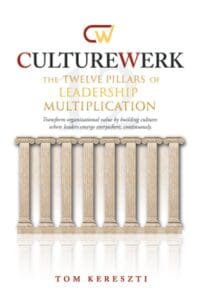
CultureWerk: The Twelve Pillars of Leadership Multiplication by Tom Kereszti
https://www.amazon.com/CultureWerk-Twelve-Pillars-Leadership-Multiplication/dp/166578833X
What if you could build organizations that thrive without you? In CultureWerk, you’ll discover the 12 Cultural Pillars that transform exhausted executives into architects of self-sustaining success. These aren’t consultant theories-they’re hard-won lessons from Tom Kereszti’s journey through five continents, turning disasters into triumphs for companies like Colgate-Palmolive, Benckiser, and Strauss Group. You’ll learn the same frameworks that helped transform a money-bleeding Prague operation into a profit powerhouse. The partnership approach that outmaneuvered Sara Lee and Kraft in acquisition battles. The trust-building secrets Navy SEALs use to turn ordinary people into extraordinary teams. Why Disney-Pixar created billions while Daimler-Chrysler destroyed value-and how to ensure you’re on the right side of that equation. But here’s what matters most: you’ll finally understand why your best people leave (hint: it’s not the money), why your team waits for you to solve everything (you trained them to), and how to break the cycle that’s keeping you trapped. This book won’t just change how you lead-it will free you from the prison of being indispensable. You’ll build something more valuable than a successful business: a legacy that multiplies through others. Your future self-rested, strategic, and watching your organization thrive without your constant intervention-starts here. You’re the only one who can close the big deals and fix the real problems-that’s not leadership, that’s a life sentence. Discover the 12 pillars that transform organizations and executives into architects of self-sustaining cultures where leaders emerge naturally at every level. “CultureWerk is not another leadership book built on theory-it’s a masterclass forged in the real world. Tom Kereszti doesn’t just talk about culture; he shows you how to engineer it, protect it, and multiply it so your organization can thrive long after you step out of the room. What makes this book rare is its focus on leadership multiplication, not leadership dependency. Too many organizations rise only as high as their most visible leader.
CultureWerk teaches you how to embed leadership so deeply into your culture that your people grow, your teams self-correct, and your mission outlives any single personality. Through the Twelve Pillars, Tom delivers a practical, global, and deeply human blueprint for building teams that perform with excellence and sustain impact across generations. This is the kind of book that changes how you lead on Monday morning-not just how you think on Sunday night. If you are serious about building a culture that scales, lasts, and multiplies leaders at every level, CultureWerk is not optional-it’s essential.” – Chris Robinson USA Today Bestselling Author, From Drift to Drive Executive Vice President, Maxwell Leadership “Different companies, different industries, strategies, technologies, and products – peel it all back, and what ultimately seals a company’s success is its culture. This book focuses precisely on that – on what truly transforms organizations into lasting legacies. It brings together the vast experience, deep insights, and extensive knowledge that Tom – whom I’ve had the privilege of knowing since our days at Strauss – possesses.” – Erez Vigodman Co-Founder Terra-A AG, Former President & CEO of Teva Pharmaceuticals, ADAMA and Strauss Group. “I get asked to “endorse” a lot of books these days, and I always count it an honor. This book is quite different in the fact that I know the author personally and have had the privilege of seeing firsthand the fruit of his life up close. As a member of my church, Tom is a brilliant man, originally born in Hungary immigrated to the USA and this books carry’s a potent fusion of ‘old world’ Austro/Hungarian nobility, fused with ‘new world’ USA entrepreneurial pragmatism.
About the author
Tom is an industry influencer and is a highly sought-after coach, speaker, educator, and mentor. Tom’s new book C-Suite and Beyond was just published by Harper Collins. His approach to leadership comes from a lifetime of international experience. He has built and led executive teams in Fortune 500 companies in Europe, Asia, the Middle East, Latin America, and the United States. His accomplishments include establishing global alliances, acquiring companies, leading successful start-ups, and creating brands. Tom is a certified member of the John Maxwell group, a leadership training organization built to grow and equip others to do remarkable things and lead fulfilling lives. Tom’s servant leadership principles are time proven and founded on biblical principles. “Man of God, leader of men.” That vision statement has guided every life choice Tom has made since 1995. Tom is down to earth and able to strike a balance between business challenges and common-sense solutions. His motivational and engaging style will leave you with practical and applicable solutions that you can put into practice. He is passionate about mentoring and coaching executives. He will empower you, your team, and your company to succeed. Tom is also an international speaker.
Hosts & Guests

Transcript
You wanted the best, you've got the best podcast, the hottest hotest podcast in the world.
The Chris Vosho, the pre-eminent podcast with guest so smart you may experience serious brain bleed.
The CEOs, authors, thought leaders, visionaries, and motivators.
Get ready, get ready, strap yourself in, keep your hands, arms and legs inside the vehicle at all times.
Because you're about to go on a monster education roller coaster with your brain.
Now here's your host, Chris Vos.
I'm those Vos here from the Chris Vosho dot com.
Do you know when the earliest things are that makes it official?
Welcome to the big show.
I'm so glad I don't have to sing that line after 14 years we could do that.
For over 16 years and 20 in the episodes, we've been bringing the Chris Vosho.
And if you want to hear me singing the old line, the Chris Vosho dot com.
You can go back and listen to other 2500 episodes or whatever, 100 episodes, whatever it was.
Today we had an amazing young man we're going to talk to and about leadership and all sorts of different cool things.
I'll improve your life and your business and all those things.
Because that's what we do on the Chris Vosho.
Look at these amazing guests that come on.
They're super smart.
They have the super brains.
And they share all their wonderful knowledge.
And then you can have one too.
You can grow one of those brains, Dan Acroid in that one SNL skip with the big alien brains.
That's what you'll look like when you get done with the Chris Vosho.
Hey guys, we have an amazing young man on the show.
We're going to talk to him about his books, his insights.
But in the meantime, go to goodries.com.
ForchessChristVos LinkedIn.com.
ForchessChristVos YouTube.com.
ForchessChristVos and goodries.com.
ForchessChristVos.
Opinions expressed by guests on the podcast are solely their own.
They do not necessarily reflect the opinions of the host or the Chris Vosho.
Some guests on the show may be advertising on the podcast, but it's not endorsement or review of any kind.
Today we have an amazing man on the show.
I've said that three times now that he's just that darned amazing.
What can you say?
This book is entitled Culture Work.
And that's Culture Work with a workspelled W-E-R-K.
So if you're googling that, you should know that for Amazon.
Culture Work, the 12 pillars of leadership application,
transform organizational value by building cultures where leaders emerge everywhere continuously.
Because that's what we need is more leaders in a company and more people to success.
Tom Kerresti joins us on the show today.
We're going to be talking to him.
Welcome to the show, Tom.
How are you?
Great.
Thanks for having me again and coming back for the second time.
So I must have done something the first time.
You invited him back a second time.
You passed out to pizzas last time.
So we had to have you.
Whatever works.
Thanks for calling me a young man.
That was a long time ago, but thank you.
You know, a couple of years ago.
Yeah.
You written this book as a hands-on guide for C-suite executives who want to diagnose the design
and build the kind of culture that drives performance and skill.
Tell us about some of the stuff you do there.
I'm sorry.
Let's lead off with the .com so we can get that out of the way.
.com's any promotion, yeah?
If you're listening and you would like a free copy of the book for the first 50 listeners,
so the first 50, if you just send me an email to say send me a book.
And you can send that to Tom at culturework.org.
And I'll send you a free copy of the book for you download.
What a deal.
What else could I, that's better than free pizzas, I think, now?
Yeah, yeah.
Way better because we're going to learn more.
You don't really learn much with pizza.
Other than, you know, later you get to indigestion.
You're like, I shouldn't have done that.
So you're an industry influencer speaker advisor coach and mentor.
You've done this for spanning six continents in the C-suite of Fortune 500 companies.
And helping turn around struggling businesses, launching new ones.
And you're also a Maxwell leadership certified team member,
mentored directly by John Maxwell, who wrote so many amazing books on leadership.
And still does, I think, if he's up to that.
So give us a 30,000 over you.
What's inside this book?
Culture work.
I call it the 12 pillars of leadership multiplication.
And why multiplication?
It's pretty simple.
I think Warren Buffett once said that he likes to invest in companies that have great brands
that any dummy could run because one day a dummy will run that, right?
So the thing.
So similar philosophy to say, look, in any organization,
it's only a function of time before you get that fish at the head.
And I'll just, it's got, there's going to be an incompetent leader that runs that company sooner or later.
And if the culture is set right and you're constantly raising up leaders throughout that organization,
then that culture will out less that one bad leader.
It will sustain itself.
If it doesn't have a strong culture where you're kind of raising up leaders all the time,
then you get a bad guy at the top or a bad woman at the top.
And things can go south real quickly.
And there's all kinds of examples of that.
Twelve pillars.
Let's get into some of the details on some of this.
Can you tease out some of the pillars of them?
They're in the book and why they're important.
Yeah.
There's four sections, I would say.
So there's three pillars for each section.
The first section is really kind of discovering what your organization, what your DNA is.
And I call it equivalent, you know, a person's character is equivalent to an organizational culture.
So it's really finding an organization's DNA to say, what are they all about?
You know, what makes them tick, why are they unique?
Look, every organization is going to have a different culture.
It's going to have a different DNA, which is good.
It's just really identifying what that DNA is.
And the second portion of it is really discovering how you build your teams.
Okay.
Now you know what your DNA is, you know what your culture is.
Now let's spend some time to say who's on the team.
And how do we compliment members of a team with what I call diversity of mindset and have a cultural ad,
rather than just a cultural match?
You know, a lot of us hire people says, hey, we've got Tom and we love Tom because he fits our culture.
Our organization is look at that and say, what does Tom bring to a culture?
What does he add?
He doesn't just match it, but he adds it.
It makes us better.
That's also extremely significant when you're doing mergers and acquisitions to say, okay,
if I'm putting two companies together, chances are likely that the new culture of the joint organization
is going to be some kind of addition of one plus the other.
It's just not going to be totally one or totally other.
You can't have two cultures, so you've got to pick one.
But you'll probably take some good from either one.
So you kind of identify that.
And then I'm big on forming habits and rituals.
You know, how do you, how do you reinforce that culture that you want to create?
You know, one of the one of the stupid examples I always use was my first job.
When I graduated college and I had a boss and he had this, this silly little piece of paper,
eight and a half, I live in piece of paper that says, out of boy on it.
And then on the, underneath it says, by the way, one out, shit, wife's out of thousand out of boys.
But, but anytime somebody did something good, they would get this little piece, eight and a half piece of paper
and say, hey, you got an out of boy, you know, right on the spot.
And, and people feel for that stupid little piece of paper.
It didn't cost any money, but it was just one of those habits, those, you know,
one of those rituals that, you know, you do all the time.
And it rewards the habits that you want to see, the rewards, the culture that you want to build.
And then the last one is going forward is, is the ones you take yourself out of the picture.
How do you build that legacy?
How do you keep that going forward?
You know, one, two and three, sections one, two and three, really all about,
identifying, putting the team together, leading it and getting it to a certain level.
And then the fourth one is, you're gone, even probably the team that you hired are gone,
but the culture's just thing itself.
So how does that legacy build?
Hmm.
Yeah.
The, let me ask you this.
I've been talking, I was talking to my young nephew, Jen Zier, and he's looking for a new job now.
And one of the things that they have out there is, is, you know, you have AI
doing the first filtering for a lot of applicants and, you know, that send in their resumes.
And I was thinking, geez, you know, it's so different.
You know, I was big in what you talk about with culture, building a healthy environment,
building a learning environment, Peter Senge, I think, turned me out of that,
and probably some of John Maxwell's books too, that I read later in life.
You know, building that learning organization to help what you're talking about,
bringing up those new leaders, and, you know, fomenting that sort of future.
And, you know, with it, I could go to places, maybe I didn't quite qualify for work
at some places, really young, but I would just use a lot of my, what did you just be?
Look at Huxba, or, you know, am I, my sort of ability to be personal and social and lead,
and just kind of shine who I was in the interview, and they would go, you know,
you know, I have a college degree, because I started my first company 18.
You know, I have a college degree, but, you know what, you got a lot of gumption.
Maybe that's the word I'm looking for.
And it's, and, you know, and, yeah, I think you would fit in here in our culture.
And, you know, part of my jobs were always selling.
So the fact that I could sell myself in the interview, you know, that was the thing.
But you can't do that anymore.
And I've often wondered with AI running the front of hiring, you know, and filtering.
Can it really, can it really filter for culture?
You know, or is that really more of a human thing?
You know, you and I sitting across from each other.
We can see if we click and we've got a good working maybe possibility and working together.
You know, we can tell if we, if we're seamless, I don't know that a computer can pick up on that
or filter for what are your thoughts?
I probably can, but I would say the generation Z is, look, be smart about it,
because even if you create this great AI resume, even if you get through the AI filter,
there will be a day, day one, where you actually enter through the doors of that organization,
you start interacting with other human beings.
So do yourself a favor and do a little research upfront,
and make sure that whatever the culture of the organization is,
whatever the values of the organization is, what are the vision of the organization is?
You first do a gut check and say, could I thriving that organization?
Because sooner or later you're going to work there, and if you get hired, and it's the wrong culture,
and it, you know, kind of raises the hair up on a back of your neck,
then you're going to either be fired, or you're going to be quitting in about six to nine months anyway.
So why waste anybody's time, including your time, you know, time is precious.
So especially, look, you know, today with technology is so easy to research companies,
see what their culture is, and if the culture is not evident on the company's website,
don't even take the interview.
If it is evident, do a gut check and you thrive, not just survive,
but can you thrive in that organization?
And if you think it can, then okay, get through the front door,
and if it takes an AI tool to design your resume,
because you can't do it yourself, okay, then have AI help you and get through the door,
but just remember, once you're through that door, you know,
the AI is, it got you through that door, just like a resume got you through that door,
just like the interview got through the door door, but then there's the one.
And, you know, the one is, I joke all the time when I don't know if I shared this joke with you,
but guy dies and it goes to heaven and St. Peter says, hey Tom,
we got a choice for you today.
You can either go to hell or you can go to heaven.
You can spend the day in hell and you spend the day in heaven,
you tell me what you want to do.
So Tom gets on the elevator, goes down,
and the doors open up, and there's hell, and there's a pristine beach
and Calypso music playing, and people are drinking beers and having a great old time.
So he spends 24 hours and it flies by like it's two seconds.
Next day, he goes to heaven and just like you imagine heaven,
it's sitting on a cloud with the heart playing, eating grapes.
So St. Peter goes after the end of the two days,
it's just, you know, so Tom, what do you think?
St. Peter, you know, heaven was just, I imagine, but it's kind of boring.
And heaven wasn't bad at all. I thought it was kind of fun.
So I think I'll take hell.
So St. Peter goes, all right, they take the elevator down,
the doors open, and now it's really like hell.
It's fire and dust and people are slaving and they say,
what happened?
Is it yesterday?
We were recruiting.
Today he started.
Wow.
Wow.
That is a powerful story of some of the things you see.
You know, I mean, and so let me just say this,
if you're looking at culture, and I suppose glass door is what you're kind of maybe referring to
seeing if the culture works at the company.
Is that a good reference point?
Yeah, glass door is a great tool.
It'll tell you employee satisfaction.
It will tell you, I mean, I look at glass doors when I do canvassing for
potential companies that could be part of my portfolio.
And glass door is great.
Now, people are very honest.
You know, they'll say the leadership of this organization sucks.
They'll say, you know, the culture is terrible.
I mean, people honest on glass door.
Yeah.
It's pretty amazing.
And you'll have companies with a 2.3 rating.
And you'll have companies who are 4.5 rating.
Yeah.
It's a great tool.
Yeah.
I mean, sometimes if I'm just bored and I want to, I'm going, you know, I can't sleep or something.
I'll just doom scroll glass door.
There's a few of my friends that I know that are just monster narcissists,
egomaniacs.
And that's saying something coming from me.
They're beyond me.
Let's put this way.
They're more advanced in their levels.
But we know they run their businesses really poorly.
And they're pretty shitty and awful to other people.
When I say friends, I say people I know on Facebook.
So sometimes we just take turns going and cruising their glass doors,
because we know how they are.
And yeah, it's kind of, it's kind of a laugh.
It should be sad.
I probably shouldn't laugh at it all, but, yeah.
But yeah, you know, let me ask you this then.
We're going down the culture wormhole here, folks.
If, you know, I bash a lot of this over the decades.
This culture by PR decree or edict.
You know, I'm talking about where a company thinks that they can set culture
just by putting about a PR bullshit.
And really, you know, maybe the CEO is operating completely the opposite of the ethics of morals.
He's disposing.
And, you know, people are seeing that he's full of shit.
And you're just like, you guys are just putting out PR.
Spin.
And then doing everything different, you know.
We care about our employees 44,000 relate off.
You know, that's kind of crap.
What do you think about that sort of operation?
The biggest challenge for a large organization is really sustaining a culture that they want
to have the organizational levels.
Because you may have some spots inside the organization that work well on.
I mean, one of the first jobs that I took when I came out of college
was Colgate Pemolev.
And one of the reasons I worked for Colgate Pemolev is I had the pleasure,
because there was no internet back there.
So they used to take me on tours of companies to see, you know,
kind of give you the nickel and dime show to get you try to work for them.
I remember going in this one company and I was always an extrovert.
I would pull people aside.
Hey, what's it like working here?
Whatever.
This one guy says to me,
this sucks.
But what's Colgate?
Every person I talk to, they said, this is a great place.
We love working here.
So that's the company I started with out of college.
And they had a saying that people are, or most important resource.
And my first job at Colgate was a shift supervisor on a production line in a factory.
I was an engineer on the grad engineer graduate.
So they stuck us in the factory to learn.
So I had two weeks of day shifts, one week of 4 to 12 shifts and one week of midnight shift.
So we get a word that Ruben Mark, who was the CEO at the time,
brilliant guy, granted a great organization.
He was the CEO and chairperson for, I don't know, probably about 10 or 12 years or something, maybe more.
Really had a great run with Colgate.
And we got a word that Ruben's coming through for a plant tour.
So we shut down the entire factory, or my, you know, area of the factory for the entire midnight shift.
Just cleaning stuff up and make sure that those tunes are finally, you know, the machines are finally tuned.
Nothing breaks down.
But that moment that Ruben walks through.
So we lost an entire production for the entire midnight shift, place looks sparkling.
I stick around the next morning to see Ruben.
And he walks through with his cronies, probably about five or six guys.
And literally if he stops short, five or six guys would go, you know, ran right up his butt, you know.
Yeah, they were like, you know, like, like, but, but they just, they didn't talk to anybody.
They didn't say anything to anybody.
They were just kind of look, but instead of engaging the local workers, they were just talking among themselves.
And they were in and out of there in about 45 seconds or two minutes, something like that.
Really?
And annoy the shit out of me because people are most important resource.
And obviously they're not living that because they couldn't care less about any of the employees they were working on the factory.
They were just kind of huddling themselves apart, you know, and kissing each other's, you know, buts.
They're a lower rank kissing, you know, Ruben Marx, but just kind of walking through.
And that's what I would never do that again.
So when I was CEO, when I would go into the factories, I would spend time with the local workers, even, you know, having translators was, it was different countries.
And just, hey, how can we make your life easier?
How could we make, you know, do better for you?
And then it was the responsibility of the local management team to follow up with whoever we talked on that production floor, whatever ideas they gave us.
It was my team's responsibility to get back to their employees and say, hey, we, thanks for your advice.
Thanks for your suggestion.
We're not going to do it because it's not going to work XYZ or we are going to do it.
And thank you so much.
So it was a closed loop and I would never walk onto a production floor ignoring people because I thought it was just stupid.
And I was just like, you live your values.
I used to call back the day touching hearts and minds when I'd walk the floor, shake hands, you know, give people a pat on the shoulder.
Hey, how's it going, Mike? Ask him about their family.
And, you know, people can tell if you're genuine, you know, they can tell if you're genuine, if you're full of shit, how's your family?
Give me your TPS reports.
You know, that sort of thing.
And it was checking into people, getting a lot of my floor was sales people.
And if their heads are not in the right band space, you know, if there's some homes bugging on or, you know, something else they got going on,
there's all sorts of crap they can get in your head and muck you up.
But when you're a salesperson, if that interferes the ability to sell, your sales are going to go down.
And, you know, I call it touching the hearts and minds.
I think heart, I think HRS is a can't call it touching anymore.
But I mean, that's what you do. I shake hands.
I, you know, maybe give a pat on the back or shoulder touch.
Hey, how's it going, Mike?
And just let people know that you're fucking human beings and we're all trying to do the best we can here.
And I've seen, you know, great leaders.
I remember watching a little documentary or I don't know what it was.
Something about, I think it was the head of HP.
And he would do that.
He would walk through the different levels of his corporation.
He was in a different place every day.
And he would, he would meet everybody.
But he would always check in on the front line too.
You know, he'd go down through the levels.
And he would do that.
He would talk and shake hands, take pictures, ask how he could serve people better.
And he'd go down the front line.
And, you know, a lot of people don't go to the front.
Or they do what you do.
They show up with the presidential White House security detail and kind of alien to everybody.
Yeah.
I mean, you know, a great example is, is, I do apologize because I forget the guy's last name.
But Jim, and he was the president of Costco for many, many, many years, the old guy.
He retired probably, I think, about five or eight years ago.
And, and Jim was famous for walking in every store.
And, and he knew just about every employee's name and every single store.
Because he visited all the stores.
And, and, and you didn't have to give him the numbers.
He would just by walking through a store looking around could tell you what your numbers were.
So he even had his hand on the pulse.
And he was a really people center guy.
And people used to love working for Costco.
Costco employees loved working that they were being paid well.
They were compensated well, they had great attitudes.
I would say if you go into Costco over the last five years, it's like a different store.
It's, you know, it's, it's not the same as it was on the Jim's leadership.
It's very, very different.
People are not as pleasant, the workers are not as pleasant.
I don't think they're that happy working there anymore.
It's a, it's a, it's a different culture now.
Yeah.
And the culture is really important.
And, and like I say, some companies think they can just decree it with the PR notice.
Oh, we're highly in, tell it.
And we believe in the innovation and integrity.
And, and, you know, the CEO is outlying his ass off about something.
Yeah.
And, you know, I think, I think it's the number one, if I recall rightly,
Krick me for wrong.
It's the number one reason people leave a company is poor leadership.
So there's your proof in the pudding that why leadership is so important in culture.
Absolutely.
Yeah.
But what are some other aspects of the 12 pillars?
Maybe the year favorite we should flesh out.
And then I'm going to throw this at you because you can just pick which question you want to answer.
Then you're talking about the 12 pillars of leadership multiplication.
What's the multiplication thing going on there?
There's three levels of leadership.
And, you know, you, you talked about John Maxwell and John Maxwell defines this three levels.
First level is leading yourself.
The second level is developing followers.
And, you know, most leaders get pretty sufficient and pretty good at this level too.
And then the third level is where you're developing future leaders.
You're multiplying leaders.
So you're no longer worried about, hey, I'm making my team a really, really good team.
And I'm making my team a really successful team.
When you go to level three, when you go to leadership multiplication, as a good leader,
the majority of your time should be developing people, mentoring people,
among them the way, making them better versions of themselves, lifting them up,
putting them into situations where they can fail, fail quickly, you know,
without devastation and learn from those failures, you know,
put them into situations where they're learning or they're growing.
So your, your emphasis is on developing on future leaders.
Your emphasis is land on getting really teams to function really well,
or at a level one guy would just try to get himself to function really well.
So that's what multiplication is all about.
And if you do it right, you're going to have a 10x growth in your company.
Because people are all of a sudden throughout the organization are empowered, right?
You're chosen well, so you're not going to empower people that you don't trust.
So you have to stop micromanaging, get those people ready,
empower them, make them, you know, making them responsible for their own actions,
have them own those situations because there's a huge,
there's a huge difference between delegation and empowerment.
Delegation means I own it.
I watch over you, I give you the authority to do some stuff,
but it's still my ownership and I'm still watching over you.
Empowering, hey Chris is yours.
For good or for bad, you got to figure it out.
If you fail, you failed, if you succeed, you succeeded.
And it really my chore in that is just to make sure that you're ready.
I've put you enough situations that I have all the confidence in a world that when I empower you,
you're going to do great.
So it's getting into that multiplication where you feel confident of empowering people, trusting people,
that they're going to succeed and creating an environment where they can be successful.
Oh, I mean, it's so important, so important.
Let's talk about some of the things you offer on your website,
some of the services and products and different things you have there.
We let off the thing where you're giving away, I think,
53 copies of the book and stuff like that.
Tell us about some of the other things you have going on here.
I see the pilot tier max and the tools to invest in your growth.
Yeah, we do traditionalizing and consulting,
which could be something as simple as becoming and do some workshops.
You may be having a difficulty situation with either growth or trust or empowerment
or something that we can help you with that has to do with culture.
So I wouldn't come in and do a marketing workshop that's not our bread and butter.
Our bread and butter is really doing workshops on culture, leadership, things like that.
We can do as part of that workshop.
Sometimes we come across executives that want to have some executive coaching.
So we'll do some executive coaching to bring that individual along.
We'll do consulting on projects.
We'll do keynote speaking.
If you want to come in and have me fire up your sales force,
or you've got a management team meeting or something you want me to help,
get really support your ideas across and share so much stupid stories from all over the world
that may help you.
So we can do that.
And so those are the traditional tools of consulting, workshops, masterminds, stuff like that.
And then there's a really cool tool that I came across a while ago.
It's called Pile with your maximum.
You mentioned about AI before.
This wasn't possible five years ago or even four years ago, three years ago.
Really, the whole AI revolution allowed this to happen.
And it's a pretty cool tool that gives you a constant feedback on how you're doing as a leader.
So think about you're in a Zoom call or a team score or a Google meets call.
Now, there's already tools out there that transcribe that meeting and tells you what happened in that meeting.
Now, imagine that after the transcription, you got a dashboard across 12th criteria,
which is predetermined, what makes you a better leader, things like empathy, things like communication.
And then it marks you on those from a zero to five and say, hey, you know, on this particular call,
your empathy was a four zero, but your communication or or something like that was maybe a two and a half.
So you got to work on that.
So it marks you on these 12 criteria.
And in fact, it looks at your body language.
So if you're like, if you're looking down constantly on your phone, playing with your phone or something like that,
or you're rolling your eyes or you're falling asleep, you know, it's going to also mark you on facial features.
And it's also buzz you know, we've got a little pop up window.
Say, hey, Tom, you know, you're not letting anybody out speak.
So back off a little bit because you're really hogging all the time.
You talk down to somebody, right?
So it'll give you a little pop up windows live to help you correct.
And then if you're in a regular conference room, it's a little bit more burdensome because you got to set up your phone
and your phone is watching you.
So that's the same thing.
Because if you're in a conference room, you know, Zoom, you can distinguish it from you or me.
You know, they know who you are and you are.
But in a live conference room, you really can't tell who's talking, whether you're talking or I'm talking.
And so that's why you kind of point your phone at you.
You kind of log into the system, point the phone at you.
So it gives you feedback on what you're doing.
It's a great little tool for truth, especially for your traditional coaches.
Because if I'm a coach and I'm coaching you, I meet with you maybe once a month.
We have a one hour power out.
We have a debrief and then you go away for another month and I don't see you.
So I don't know how you're doing and all those meetings that are taking place in your company for that month.
And with the pilot here, it gives you feedback.
How are you doing it?
Also, I see how you're doing.
Hmm.
You can find out some people are going to sleep on you.
They're in the meeting.
What is the name?
I think Amazon does meetings where everyone stands up.
We've had a few Amazon folks on.
And they have some interesting stuff.
So as we go into it, you also have, what was the other thing I wanted to ask you about?
The live to lead.
What is what is that?
Live to lead?
I'll live to lead.
A live to lead is an event that Maxwell organization puts up once a year.
Okay.
They have some pretty cool speakers there every year and they license that material.
So I do the event in San Diego because that's where my hometown is in San Diego.
So we do a big powwow, a leadership event every year in San Diego where we have guys like John Maxwell or Craig Bush.
This year was Craig Bush on John Maxwell, but they have about five or six speakers each year on the event.
So it's a pretty cool event.
And we have local leaders come in.
We had a couple of panels.
We had some two years ago.
We had Navy SEALs last year.
We had fighter pilots, top-going fighter pilots.
So kind of transition or transform what they learned in the cockpit or what they learned on a pilot field.
That's an effect business.
So it's pretty cool.
We got some interesting people in.
Yeah, that's pretty wild.
I mean, we've had some of those people on the fire to pilots and the air forces stuff.
Boy, they have to make some quick split-second life and death decisions a lot of times.
You know, they've got, you know, they've got an enemy.
They're targeting or me.
They're being targeted by the enemy.
Maybe they're, you know, they've got, you know, boots on the ground.
So they've got to worry about, you know, if I drop this ball, I'm going to kill all the people in the blast of, you know, what's out there.
You know, they, you know, a lot of times they have to make these decisions, you know, in split-second.
And a lot of times it involves a multi-billion dollar machine, like, you know, an F-35 or 16 and stuff.
And, you know, even ditching, like, ditching for the plane can be catastrophic for them health-wise.
Oh, one of the pilots shared this great story.
And he said, look, and he translated into business really well.
He said, look, when you're in business, your sales may be falling, your profits may be falling.
You know, you may be in all these kind of different things and you're trying to correct too many things, trying to fix too many things and climb out of, you know, maybe a lost situation.
It says, look, I'm in the cockpit.
And, you know, my engine's on fire.
I don't worry about my engine being on fire.
What I'm worried about is keeping the plane straight and getting back to that ship.
You know, we can put out the fire later.
I just want to steady that plane so I can get back to the aircraft carrier.
That's my focus, right?
I'm going to do everything that I can to be able to steady that plane, to be able to land that on that aircraft.
And what happens is, in business, we have a fire and we're so worried about putting out the fire and everything else.
Just don't worry about that.
I think that business first, you know, get those, you know, performance indicators doing the right way and performing the right way.
And then worry about putting out the fire later.
So I thought it was a pretty cool, you know, pretty cool device.
I mean, what's that old?
We had one of the astronauts from Apollo 13 on and he wrote a book called Never Panic Early.
And it was a lot of the things that the fighter pilots in the US talk about.
You can't let your emotions take over because then you start making bad decisions.
And they'll compound as the other problem you have with emotional decisions.
And so you've got to stay focused. You've got to stay on point.
And in business, sometimes there's, you know, there's fires.
You know, somebody goes viral.
You know, was that one at the baseball park where the CEO was cheating or something?
Oh, the cold play concert.
Yeah, you know, you have some employees say something.
Suddenly you're viral or front page on the internet and you're getting all the arrows.
You know, there's all sorts of things that can happen, you know, food recalls and different things.
But, you know, you got to be prepared for all that.
But you also got to, like you say, study the plane because if the plane's on steady, you know, you can put out the fire.
But if your plane is turned down and going into the ground because you didn't study it, you probably have your problem coming real quick, actually.
But anything else we want to tease out or tell people about before we have you go.
Just thanks for being, you know, inviting me on the show again was a lot of fun.
All you listeners, again, if you if you're working inside of an organization where, you know, people are churning left and right going out the door because they don't like it.
Or they can't retain good talent. I can't recruit good talent.
You know, if if the culture's just not right, just give a book or let me know.
You know, follow up.
Maybe, maybe you should do it.
Are there consultants and coaches that go through Glassdoor and then they call the people and they go, hey, we just kind of read your Glassdoor and they're shit.
So you really need to hire me.
I'm trying that.
I'm like, you're recruiting.
They're marketing.
Yeah, I'm looking at glass.
Look, you know, the tough part about is is if you reach out to the CEO, let's say you read a common glass door that says, you know,
leadership in this company sucks.
And then you go to the leadership and the company said, you know, your employees are telling you suck.
They don't think that too well.
Yeah.
I mean, it's really interesting to me.
One of the things I always find amazing when I talk to leaders is like what's your leadership style?
How do you how do you develop culture?
How do you how do you see it?
How do you maintain it?
You know, how do you lead?
What is your leadership sort of thing?
Because there's different there's different versions.
You know, one version I always see is the popular high school version version the high school version.
Then I don't think they have those anymore.
But the high school versions where it's about popularity and adulation.
It's almost like a fascist sort of management position where, you know, just they're surrounded by sick of fans who worship them.
And the people who doing the work are sitting over going to the work going.
I don't know why I'm by their working because those people aren't.
And they just kiss the boss's butt all day.
And the bud just the boss just loves the adulation and the thing.
Those are all face through.
And I was talking about face through is like that particular person.
Good leader or bad leader is into being worshiped.
You know, they they have to be there.
A good, you know, if you go to the next level, which is phase three, they don't worry about that.
Because in fact, they're trying to work themselves out of a job.
Because they don't want to be needed.
Then that's the best kind of leader there is.
Yeah, I like that thing.
Can I get some grapes over here in the palm leaf guys not waving to keep me cool?
Can we get that fixed people?
All right, let's get on it.
Anyway, yeah, I never want to be one of those people that mixes and plays worship people.
I do have them carrying me around on one of those thrones though around the office.
Hey, if it works, good for you.
You don't want to see my glass door reviews.
Anyway, so it's been wonderful to have you on again.
It's very insightful as well.
Give us comms.
All those people tell them where to pick up the book and pitch out whatever offers you want.
Yeah, so again, culture work that's culture and then W E R K dot org.
That will redirect you to my website.
Which is caressty.com.
That's my last name K E R E S Z T I dot com.
And you'll find all kinds of information about not only this book, but other books about the different tools that we are Christian.
I discussed.
And like I said, just or you can just find me on LinkedIn and start from there.
Because there's not a lot of caress these on LinkedIn.
It's me and my two daughters.
And like I said, first 50 on this podcast, whoever you're listening to just drop me an email.
So send me a free copy and I'll send you a free copy of your book.
And if you know anybody that could benefit from it, let them know and let me know.
All right, sounds good then.
Thank you very much for coming to show.
We really appreciate it and all that good stuff.
All right.
Thanks, Chris.
Thank you.
And thanks for tuning in.
It's a book is entitled culture work.
The 12 pillars of leadership multiplication out January 30th, 2026.
And it's culture work.
W-E-R-K.
Because he's cool that way.
It's kind of like, what's that one thing?
That was just a tronic man.
I forget techno work or something like that.
Anyway, guys, thanks for tuning in.
Go to good or use that guy before it says Chris Foss.
LinkedIn.com.
For it says Chris Foss, tell us crazy place in it.
We go to each other.
Stay safe.
We'll see you next time.
You've been listening to the most amazing Intelligent Podcast ever made to improve your brain and your life.
Good evening.
Good evening to much of the Chris Foss show podcast.
Can lead to people taking your smarter, younger, and irresistible sexy.
Consume in regularly moderated amounts.
Consult a doctor for a resulting brain lead.
All right, Tom.
Great show.
More from The Chris Voss Show
View all episodes →
The Chris Voss Show Podcast – Successful Transformational Change in a Fire and E...
The Chris Voss Show
Apr 23, 2026·41:45·failed
The Chris Voss Show Podcast – If I Don’t Return: A Father’s Wartime Journal by L...
The Chris Voss Show
Apr 22, 2026·49:40·failed
The Chris Voss Show Podcast – How to Say What You Mean Without Being Mean by Jan...
The Chris Voss Show