Loading...

businessmanagementeducation
The Chris Voss Show Podcast – Drownproof: Eight Life Lessons to Keep Your Head Above Water by Andy Stumpf
About this Episode
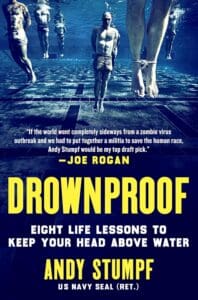
Drownproof: Eight Life Lessons to Keep Your Head Above Water by Andy Stumpf
https://www.amazon.com/Drownproof-Eight-Lessons-Above-Water/dp/125037961X
Featuring a foreword by Jocko Willink!
A motivational guide to success and leadership based on the author’s experience as a Navy SEAL.
Drawing from his extensive military career, renowned Navy SEAL Andy Stumpf shares his hard-earned wisdom by reflecting on his own journey and offering advice to empower readers to avoid costly mistakes and navigate the complexities of life with confidence and purpose.
From the grueling training programs to intense combat situations, Stumpf recounts the highs and lows, the challenges he faced, and the pivotal moments that shaped his leadership abilities. How can you take the toughest situations in your life and make them the most formative moments you’ve ever had? How do you take a leap of faith in your life? How can you combat fear when it comes to crush you? How can you build discipline in your life instead of building regrets? In his down-to-earth, sometimes humorous but always honest voice, Stumpf addresses these questions and more in Drownproof.
Readers of Drownproof will:
*Understand how they are in control of their destiny
*Grasp how preparation leads to execution
*See the value of planning for the worst-case scenario
*Learn how to approach goals
*Realize why people actually fail
*Discover practical insights learned from the military that apply to all spheres of life
About the author
ANDY STUMPF is a former Navy SEAL with a 17-year career, including time on SEAL Team 6. He is also a public speaker, podcast host (“Cleared Hot”), and entrepreneur. He was medically retired in 2013 but continues to be active in the military community and various sports like jiu-jitsu and hunting.
Hosts & Guests

Transcript
You wanted the best, you've got the best podcast, the hottest hotest podcast in the world.
The Chris Vosho, the pre-eminent podcast with guest so smart you may experience serious brain bleed.
The CEOs, authors, thought leaders, visionaries, and motivators.
Get ready, get ready, strap yourself in, keep your hands, arms and legs inside the vehicle at all times.
Because you're about to go on a monster education roller coaster with your brain.
Now, here's your host, Chris Vosho.
Hi folks, Vosho here from The Chris Vosho dot com.
I believe you've done a book of the big show for 16 years, 20, 800 episodes.
We're going to hit 3,000 folks here in another month or two episodes of The Chris Vosho.
We bring you to the brilliant minds, the greatest stories, the wonderful journeys, the flestants of life.
Everything you could possibly imagine, or if you just want to entertain yourself with some wonderful novels,
we have it on The Chris Vosho in the hundreds per category.
I refer to the show to your family, friends, and relatives, or else I'll haunt you at night in your nightmares.
I go to God of Peace, God of Fortune, that's Chris Vosho.
He's threatening his audience.
Go to facebook.com, youtube.com, linkedin.com, fortress, Chris Vosho.
You can find me all over the place there.
Today we had an amazing young man on the show.
We're going to be talking about his book called Drown Proof.
Eight life lessons to keep your head above water.
Out April 14th, 2026, Andy Stump joins us on the show today.
Welcome to show Andy.
How are you?
I'm good.
I'm worried though.
I was listening to your intro.
I don't meet any of the criteria of the type of people that you have on the show.
I'm not a CEO.
I'm definitely not a thought leader.
I'm not revolutionizing anything.
So yeah, I mean, we could just wrap it up if you want.
I mean, I'm going to meet the criteria.
So I have to give us the .com.
Where could be we'll find you on the anyways?
All the social and versions of my name.
The most active on Instagram, Andy stump to 12 Twitter.
I think is a stump 77.
And all of this is because somebody stole Andy Stump before I got on there.
So I have to create versions of it.
And then Andy, Andy stump.com is going to land you at kind of just everything
that I have my fingers in.
Yeah.
Just call out the person and who has that dot com.
It should be like,
person who has that.com and should be like, you know, I'm a Navy seal and I make people
disappear sometimes. That's what I used to do. And I'll be honest, I wish it was that
cool. I wish it was that cool. I give it the, I'd be like, by that man of beer, because
I've read a lot of books and we've had a lot of people on the show that have come from
the seal background and there are military branch around of course. So give us a 30,000
overview of what please of Drownproof. Oh, where to begin. You know, the best place to
begin is how much fun of the authors I have made from my previous community and how
many times I told them I would never write a book and that I was disgusted with them,
which I wasn't actually disgusted with them because most of my friends, I'm just giving
them, you know, a good natured hard time. The reason that I didn't think I could ever
write a book is that at least in my opinion, I served with people who were absolute legends.
I look at my own career, I would value it as a sea. If you're looking at an academic
standard and I was just surrounded by people who were a plus, maybe not in every area,
but they could exceed my ability, maybe not the same person, but this guy is better at
me than this and this guy at this and this guy at this. And so what do I have to offer?
And also, you know, the real military experiences that I had in the global war on terror was
nothing to really write home about, no pun intended, but never these national level missions
that people have necessarily heard of. It wasn't making headlines. It was just down
at the center of the road, which was still important. I'm very proud of it. But how do
I, you know what I mean? And I'm watching all these other people who are recognizable
inside of the community for these things. And the idea was presented to me. And it was
more from, instead of trying to tell those type of stories, because so many people look
at the SEAL community as if the experiences are unavailable to everybody else. And the
reality is statistically, almost nobody will make it into the community. But that's just
because such a small percentage of people actually apply and then a small percentage of
those people actually make it through training. But the more I was thinking about it, the
lessons that I learned, the mistakes that I made, probably more than anything, which
is largely what the book is about, are the mistakes that I've made and the things that
I've learned from them in that community have shaped the rest of my life. And the longer
I've been out of the military, I've realized that all of those lessons have applicability
in the civilian world, whether the person is able to experience them through their first
hand POV like I was able to. And the book is my best attempt to try to take those experiences,
those lessons learned, the mistakes that I made and give people an architecture and a framework
that they can go solve whatever problems or challenges life is presenting to them. Because
I can't solve anybody else's problems, but hopefully I can give you some tools that
will make a difference in your life.
Damn, I came on here with a list of my problems for you to solve and I'll give you a place
where you can pre-order the book.
I like that. I like that. I like that.
We've had a lot of great military people on the show. We've had people that are Navy
captains, that are from the SEAL community background, from Air Force. You name it all over
the place. I think we've had some leadership people that teach it. Oh, what's the big military
college?
There's a couple, West Point, Naval Academy, yeah.
You know, our military teaches an amazing amalgamation because I guess each branch has
its own different version a little bit, but it's all kind of round about the same
of leadership, of character building. It's extraordinary. And I really didn't realize how
big or important it was until I saw what used to be deemed as the second best military in
the world, the Russian military. And we found out that the second best is the military in Ukraine.
Yeah, and by a large margin too.
Yeah. And you see the difference in leadership. I really started seeing the structures of how
our leadership is in there. And you really, man, we should do so. I mean, I don't know why
military people are not hired directly out of the military as soon as they leave and put into
leadership positions because they have that innately with the way our training is so that they can,
so they can, you know, if their command is cut off, they can operate as a unit and function
of themselves. And that's, you know, in Russia, with the Russians, you cut off, you cut off
ahead, you, you know, the downline is lost. And I think some of that is tied to how and why
people are serving in the Russian military. I think a lot of the times they're being
violent told versus volunteering. You know, in the US military, yes, I would say leadership in
all the services, the services are defined by their similarities, not by their differences.
There might be a different vernacular that they use, but I would agree that many of the
core nucleus of the messages are the same. They put their own color on it, depending on what
branch that they come from. There's a difference when you establish that NCO core, that non-commissioned
officer core that is the gap between people who are first joining and then senior leadership.
Without that NCO core, which is people who are in the military, I'll say six to ten years,
you really can't function without them because that's, I mean, if you, that's how the
sausage is made. Those are the wheels that are turning that are getting things done in the military.
And I'll tell you this, I would say anybody in the military who has experience is probably going
to have a better understanding of leadership, but I would actually caution civilian organizations
hiring people for leadership roles just because they were in the military.
Leadership is a very soft skill and it takes time. And I've now, I mean, I was in for 17 years,
I've been out for 13 now. Leadership outside of the military is more difficult than it is inside
of the military. Your people are contractually obligated. They've gone to a variety of crucibles
depending on what program they've come through. They've bought in on the mission, you know, you get
issued your flag instead of buying it. You're there for the right reason, so you can be a little bit
more heavy handed and a little bit more directive at times. And that actually falls flat in the
civilian world. Definitely give veterans the benefit of the doubt, but hire them because they're
qualified, not just because they came from service, because leadership is like anything else.
It's a tool. It requires practice and not everybody views it from that perspective or gets many
laps in the saddle of that practice. Or discipline for that manner and character building. I mean,
if anything, there's a there's a discipline in the military and it serves a purpose, you know,
I remember seeing a thing with the Marines where they were talking about. I can't remember what it
was, but it was something I have to do with their, the badges that they wore, the awards are
or recognition of rank, I guess that they have. And there's a reason that they're
posted at a certain point, one of an inch of something or other. And it just has to do with that
preciseness of if you fuck around, you find out. So you got to be disciplined and all that.
So I know you're talking about everything on the uniform quarter of an inch apart and
your shoes have to be on a certain way and your laces have to be left over right or right over left.
And people on the outside will look at that and say that is so ridiculous. And it actually has
nothing to do with the quarter of an inch on the uniform of the shoe laces. It's that how you do
anything is how you do everything and discipline in the real world execution of the military role,
which to fight and win wars can be the difference between life and death. So you're teaching a lesson,
a concept through an act that isn't directly or associated directly with where you need the
expression of that to be. But yeah, people like why the military, why is it the way that it is?
If you looked at it very deeply into what the job is, you got to kind of follow instructions
and directions from time to time. And you've got people's lives on the line. So you know,
you miss around people can die and catastrophes can happen. So you wrote this book. We've got
eight of these life lessons. Well, what's one of your favorites or one you'd like to talk about
and is in the eight there? They're all good and they're all tied together.
But if I had to not necessarily tie together, I would say they work well together.
If the total system was a wheel, each of them are a spoke, the wheel can go on without all of
them. But I tried to do it in a way where they all kind of made sense and you could use them in
combination as opposed to just isolation. Probably the most impactful tool that I didn't realize I had
been taught at a very young age, but was reinforced substantially, indirectly, indirectly,
while I was in the military was the idea of breaking your goals down into digestible pieces.
And this isn't revelatory by any stretch. And there are so many conversations that I had when I
went back as a seal candidate instructor, the basic pipeline is called buds, basic underwater
demolition seal. I went back as an instructor and we talked really deeply about should we be
reinforcing this lesson to the students before they show up here? Would it be a difference? Would
it actually help them make it through training? And the reality is you can understand a concept,
living that reality and knowing the reality are two very different things. It doesn't make anything
easier. It makes things more digestible. And what I realized when I went back as a seal
instructor is that is the world's best laboratory on why people fail. On winter months,
15% of a class will graduate. So almost 9 out of 10 people that will raise their hand and tell you,
this is what I've wanted to do my entire life. This is the only goal I have in my life. There's
nothing that you can do that will make me quit and I will be here on graduation day.
9 out of 10 of those people will not be there. So to me, you want to talk about a laboratory of
just a graveyard of dreams. Actually, it's so wild because when they quit, they ring a bell,
which is symbolic. I was going to say the bell. Yeah. But after that, they take their helmet off
and they put it down next to the bell. So for every class, there's the first helmet down,
but then there will be a row of sometimes 150 helmets. And I started looking at those as
tombstones. Those are just tombstones of people's lifelong dreams. Dream dying. Yeah. And so
as an instructor, I got to spend time with the students who had just made that decision to quit.
And I was very kind with them. There's no need to do anything other than be empathetic and
supporting somebody who's just made that decision that they likely will regret for the rest of their
life. But I was curious as to why so many people quit because it is my theory. If you can determine
why the vast majority of people quit, you should be able to reverse engineer that upstream and
figure out how you can kind of bulletproof or drown proof your mind, depending on the word you
want to use. Drown proof. Yeah. They all almost exclusively told me exactly the same thing. And
this is hundreds of students, maybe thousands. I didn't use the same words. They didn't say it was
exactly because of this. But what they all described to me were versions of this. I didn't think I
could be fill in the blank for long enough, meaning I didn't think I could be that cold for
any longer or for as long as you were going to ask me to. And I was like, dude, I didn't ask you
to do it any longer. I didn't tell you how long you were going to have to be cold. You did this
to yourself. I couldn't be that tired. I couldn't be that hungry. I couldn't be that far behind
for whatever it is. What they're describing is being overwhelmed. And what I mean by that is
they are viewing where they are. And the only thing that they are looking at is the distance
between where they are and where their goal is. So they have this huge optic on time or distance.
And the bigger that optic is and the bigger that distance is the more likely they are to quit if
that's all they can think about. The people that are able to get past those moments are the ones that
don't care how far away they are from their goal. They focus on the next step that they need to
take. So they chunk their goal down into a digestible step and all they focus on is the next step
that they have to take. And there's so many ways you can do this. Like how weak is the or was the
fifth week of training when I went through butts? Starts on a Sunday. It ends on a Friday. You get
about two hours of sleep on Wednesday. And the best advice I was given though is don't pay attention
to what day it is. Don't pay attention to if the sun is up or the sun is down. Just make it to your
next meal. And I remember asking the guy who told me them like, why does that matter? Dude,
that feeds you every six hours, which I didn't know. I'm like, oh, that's actually really attainable
as opposed to trying to figure out how many hours are left, 136, 135. You are the coldest you
ever been in your life. So that concept of chunking and how to do that and how to break things down
into those moments and how to focus on that moment almost to the exclusion of everything else,
whether it's your frustration, your anger, your fatigue, whatever it is, that is the difference
between students who graduate and those that put their helmets down. And as far as an impactful
tool, the most impactful tool in my life from the book, that one's it. That has gotten me through
the most difficult things in my life to include buds, even though that was not the hardest thing I've
ever done. And it's also helped me in how I achieve goals that I don't necessarily know how I'm
going to get there. I just need to focus on maintaining my momentum and not paying attention
how far away I am from it. Because as soon as you get frustrated and overwhelmed, man,
the bad decision matrix is starting to creep in on you. Do you kind of feel like you turn
emotional at that point or and you lose kind of the logic perspective? So you can. You can.
You can. Bad decisions and emotionality. Yeah, I am not aware of a single way that emotions
benefit decision making. You know, if you're if you're scared or excited, right to polar
opposite emotions, neither of those, if they involve themself in your decision making process,
actually make things better. But I believe it could have an unlimited downside.
And because when people get scared and I've seen this in my own self, you really start making bad
decisions and you can actually make things worse by emotionally allowing your decision making
process to continue. And so part of that is an awareness of yourself and realizing that you are
starting to get emotional and how can you work your way through that? You take a little bit of a
step back, you know, not like physically, depending on what's going on. But just look at the
situation that you're in, take a deep breath and figure out that next step you need to take and
keep doing that regardless of how you feel. You know, it's I've read a lot of books from
military folks like yourself and about seal training and the stuff that goes into it. Yeah,
I always wondered, you know, who the people were that rang the bell. And I just always kind of
figure, you know, they just made whatever the reins they don't have the gumption. But you know,
I've used that technique in my life and business and stuff, you know, sometimes and I'm a procrastinator.
I'm an ADHD procrastinator. If I can find something else to do, which I usually can't be an
for sure. It's kind of your jam. Yeah, it's my jam. It's a CO disease. I mean, it'll make you a lot
of money, but it'll cost you a lot of money, too. So you got to you got to it's a constant battle.
And but I call it email if it won't bite at a time. Yep, or a whale. I've heard both versions.
Or a whale. Yeah. Yeah. And you know, whales probably, I don't know, which is tastier, which is
chewable. We're gonna do a whale probably. I think so. I might switch from elephants to whale then.
I think I might change my diet. What's interesting about the students who quit, sorry, not to
interrupt you. It's not about the gumption actually. A lot of the times, they're just not ready.
They might know the lesson. They might know the technique, but they're not, they're not at a
place in their life where they can execute it. Because again, you can understand this chunking
technique. And if I take you and tell you you're going to be awake for five days and you're going
to be hypothermic nearly the whole time and running around boats on your head and telephone poles
and more shape than you've ever been with sand. That concept, you'll tell yourself day one, okay,
here's what I'm going to do. I'm just going to chunk this. It's going to make it easy. And about
the end of day one, you're like, oh my god, this is not easy. I'm trying to focus on just the next
step. And this is the most painful thing ever. So knowing the path and walking the path are two
different things. This is a tool that takes reps. What a lot of people don't talk about is you can come
back to butts if you quit. As long as you don't leave for a reason that would be, it's usually
administrative in nature. It's going to be like an alcohol related incident or if you get in trouble
with the law out in town. If you just quit, if your command will let you come back in a couple years,
you can absolutely come back. And the students who come back a second time have a much better
pass-through rate than the ones were there the first time. And I think it's probably because they
have a little bit more life experience, a little bit more ways, probably more reps practicing
that concept of chunking. Because it's probably more, it's probably going through seal training,
which is it more of would you say a mental game or a physical game?
The only more so that matters in buds is the one between your ears. Now having said that,
it is physically challenging. It's kind of cliché to say that, but the reality is the brain is what
controls the, you know, the meat suit that we're all walking around in. But if you show up,
so day one of training at buds doesn't occur in a vacuum. You don't just like teleport and you show
up there. You join the military, you raise your hand and say, hey, I want to go to this training
program. So you take a very, very basic physical test and aptitude test, then you get pipelined
into the program. There are more people that want to go to the program than there are slots available.
And this has gone on and off. So I don't know where it's at currently, but there's a treat
pre-training program where you're practicing the physical evolutions. You're taking the testing
standards to the best of their ability to replicate them. And then you're competing for your slot
in the program. Then you check into the program and you have to wait for your entire class to get
there from all over the Navy. And that whole time you're being trained by instructors, you're doing
the test gates. And my point in all this is you have to do a lot to get there on your first day.
And I personally believe if you can physically arrive at your first day in training,
you physiologically possess what it takes to graduate. But that's not the muscle that fails. Now,
yes, some people do get hurt and then I'll carve that out as a second category. But it's, yeah,
so in the injury rate, I was astounded by it when I went back as an instructor. I didn't realize
it was as high as it was. But the vast majority of people make the decision to quit, which is a
failure to control yourself and your mind. Yeah. And we've had people on that have coached the
Olympics. And a lot of them talk about, you know, the visual, visualizing in your mind what's
going to happen. So if you're going to Super Bowl, you think about each play, you think about
how you're going to react, how your body's going to feel. Because one of the problems people have,
like with the Super Bowl, especially if they've never been in it before, is they kind of get that
anxiety and that overwhelm. I'm, you know, this is what they waited for their whole life, right,
is football players. Yeah, they're amped up before they even get in the game. And they're amped up.
And then that throws them off because, you know, sometimes those chemicals and emotions,
you know, and, but if you're like, Tom Brady, you're just like, nah, it's super.
Autonomous robot. Autonomous emotionless. Yeah. But I used to hate him because I have a
Raiders fan and he stole that one Super Bowl from us with a tuck roll. I mean, here's the thing,
he can't argue the man can perform. Oh, yeah. I mean, once that, that Falcons game where he came
back against every single line, I think it was, it wasn't the Falcons. I am where he was drafted,
right? The last guy, Mr. What did I call that guy? I don't forget there's a name for the guy
who's drafted last every year. Nobody probably would have thought that he would have had two hands
full of Super Bowl rings when that happened. Oh, yeah. It's crazy, man. Now you talk about how people
understand how people are in control of their destiny. We see that a lot of people today,
as a victimization competition seems to be huge. But how can I get in control of my destiny when
my girlfriend always wants to go to Target every day? Depends on what she wants to go to Target for
because sometimes there's good snacks there, right? So you got to determine if this is like a snack
mission or she's getting top of where definitely you go. Hey, you off. Did she sent you some money?
I know exactly what you're talking about. Suffering to a degree has almost become a competitive sport.
And I get it. I mean, I think people are looking for this path for an easy life. I haven't found it
yet. And I've actually worked my way to a place that I'm not actually looking for. I don't,
nothing that I value in my life came to me easily. And the reality is that you can't control what
happens to you in your life, but you have 100% control over how you respond to it. And one of the
things I talk about in the book is, well, it's another one of the tools. And I do this every year.
You just get a piece of paper out and you draw a line down the center. And on one side,
the left hand side usually I'll put concern or you can put whatever worries, whatever you would want to.
And on the other side, I put influence or you could put control. Things that you on the right hand
category, you can only put something in that category that you personally can physically actually
control. So the left hand category, when I first did this, I was a little shocked. I'm like,
okay, this is almost everything in my life. I am worried about everything. How much money am I
going to make? Am I going to be successful? What do people think about me? Should I do this?
Should I do that? And then I started scratching my head. I'm like, okay, what can I put on the
right hand side? And to this day, there's only one thing that I can put down there. And that is
myself. So that is at least an eye opener for people to realize or ask themselves,
where am I dedicating most of my time? Because that's what shocked me. I was doing high 90th percentile
of my time on the concern side of the house, which I actually have zero direct control over.
Now, anything that happens that I'm concerned with, I might have to react to, but I am in control
of how I can react. I can control my thoughts. Yes. Do they get away from me at times? Sure. Can I
recognize that and work my way back? Yes. Do I get angry, frustrated, all the emotions? Yes.
And I've worked as I get closer to 50 than 40 to being able to catch those earlier and work on
those things. But those are the only things I can control. Not what happens. You know, so the
girlfriend who always wants to go to Target, your mechanism of control there, as you say either,
yes, or you say no, right? You get to control the environment, but that is it. You also can't control
whether or not she wants to. Why does she have to go to Target? Why do you want to do this?
Oh, man. That's a roundabout to hell right there. And she'll be able to control leaving me for
someone else. That's a fear that I have as well. But okay, if you actually, and for people out there,
if you think that it's okay, what would stop somebody from doing that? How about you take control
over what you do have, which is everything in your actual sphere of influence? You're going to
go to the gym. You're going to work on your diet. You're going to rest. You're going to be the
absolute best expression of a human being that you can be. And guess what? She's not going to
want to leave you. Yeah. And that my, my, my darkest plan is to eventually buy Target and
banker and shut it down so that, anyway, now I'm just, I could be, I could be an early adopter in
that plan. My wife spends a lot of time at the old tarjet. I know. I've got guys who got wives
to go twice a day. I don't know what that's unacceptable. That is unacceptable. That says psychopathy.
Yeah, there should be a book on that. Anyway, so now you mentioned, you know, how you react to
different things is really important. A lot of the military folks we have on the, the book
meditations with Marcus Aurelius is kind of their Bible. Have you found any sort of alignment
with stoicism in the book? I mean, I think it's great. I think there's broad applicability inside
of the military or out. I think the reason a lot of people in the military probably gravitate
towards that is one is it's in a lot of the curriculums inside of the military because again,
he was talking about military service and stoicism during that time and being a leader. And again,
it's another, it's, that's, you could read some of those things. Well, I'm never going to be
who Marcus Aurelius was. It's okay. We'll take that out of the equation. He's not talking about that.
You could, I mean, imagine if regardless of Target, you're, you have, you check people out at Target
and you're dealing with different personalities all day long and some people are fired up to be there
and some people are really pissed at you for existing as their person who's there, you know,
checking them out. Stoicism is going to help you in both of those situations. I mean, it's just
so widely applicable. And again, because of the close parallels to the military, I think that's
why it's so aligned with a lot of military people. But great lessons. Yeah. How to, how to, you
know, control your motions. You know, we had one of the astronauts on from Apollo 13 and the
title of the book was Don't Panic Early or Never Panic Early. It was one of those two. And basically,
they talked about what you mentioned. You know, don't, as soon as you lose, as soon as you panic,
as soon as you lose control of your logic and reason, you're, you're screwed. And you'll make
bad decisions. And that's what they taught him in NASA. And, you know, they would run him through
thousands of these fails that would go on and they would train them. And, you know, he even said
that the movie, you know, the only time his heart rate ever really got up or he was kind of,
they were a little concerned was when they were coming in to the atmosphere. And they was
starting to get a little too hot. And that was the only time the whole time where he's my heart
kind of went. Yeah. Might not be pulling this one off. But the rest of the time, they just,
they just stays through it. They stay on topic and, and you know, he espoused that idea like you said,
you know, once you start letting emotions slip in, you start making bad decisions and then
they compound and then, and then people's lives are on the one too. Sometimes you're on maybe.
And you know, the, the Apollo 13 astronauts are, I mean, are amazing. I feel like they had to just
walk to the space capsule with a wheelbarrow with their testicles in it because, you know,
it's, you know, I mean, like, where do you keep that in the capsule? Is there a secondary capsule
for that? But those people, you know, their ability to do that, they're not autonomous robots. And
that's important for people to understand the controlling your emotions is very different than
trying to remove yourself from them or not have. I think our emotions are some of the things that
make human beings what we are that are unique and we can feel and communicate the way that we do.
I mean, I think empathy is one of the most important emotions that you can have. So it's not a
matter of trying to be emotionless. It's a really important point. It's a matter of over time
working with yourself. Like for me, I can tell like my face gets flush, not red, but I'll feel like
there's heat in my face any time I start to get frustrated or angry. And I recognize that because
I let it go too far before it started working my way backwards. I'm going to have to action review
like how did this happen? Because it was a train wreck. Can we go upstream and try to figure this out?
And it's sometimes for people, it's the pace in which they talk or they start fidgeting or
these are all cues to people. You got to work with yourself. I mean, nobody can do this work for you.
Yeah, you have to do yourself. One thing I want to run by, I've had, you know,
in our business world, we used to look at things, whether or not we can put up with the worst
case scenario. We'd call it looking at the dragon or looking at tiger in the in the mouth.
And when we make really big decisions with our companies, we would sit down and be like,
what's the worst case scenario and can we live with it? And we're going to spend 20 grand doing
this one thing and hopefully this piece of hardware we're buying is going to, you know,
create profits and better, better systems. And we found that really workforce because once we found
we could live with the worst case scenario, we're like, I mean, it's not going to be so bad then.
And you talk about that in your book. Tell us a little bit about that, the value of planning.
Yeah, planning specifically like best case scenario is amazing, but most of the time in our normal
72 hour planning process, I would say eight tenths of that is spent on contingencies, which is
what you're talking about. We would look at things like the most likely course of action from our
enemy, but then the most deadly course of action, not for them, but for us. And that's exactly what
you're talking about. You're looking your dragon in the face. And this is how you know that you're
spending the requisite amount of time, especially given what it is that you may be doing or what
you're risking. You can analyze and assess risk and then you can array things against them. Is there
a piece of equipment we could use a different type of helicopter? Could we drive instead of flight
to reduce risk from anti-aircraft fire? So what's the worst thing that could happen?
Is there a way we can mitigate it? Then look at what that risk remains and then you have to make
your decision off of that. You can either tolerate it or you cannot. And in the military, depending
on the residual risk, that's where you have to go to for different levels of authority. Like low
risk, you're probably going to be able to do it locally, medium to high risk. I mean, you might be
all going all the way up to the White House at the most extreme levels of risk. And then they're
looking at the dragon. And a lot of that, though, success in those environments comes from contingency
planning. The best time to make decisions and figure out what you're going to do is before the
emergency presents itself. If you could, in a perfect world, like the best way to be a combat
leader, if you could, and this is impossible, but if you could strive for this, it would be amazing.
Is that if everything presented itself to you, it would go down to a branch diagram because
you've already thought about it. If this happens, I'm going to do this. If this doesn't happen,
I'm going to do this because that just frees up bandwidth, right? You've already answered the
question. You know what you're going to do. And that's all front end work that doesn't make any
of the movies. I've yet to see a movie about the CL community. We're for three days straight.
They stare at Microsoft PowerPoint and argue with each other about what flock you're going to use.
Because, and I know why? Because that movie would suck.
That would save you put some really good music to it. I don't know.
It sets this expectation, though. If you don't openly talk about that, people think that that
doesn't happen. But that's, I mean, for a normal operation overseas, if you have the time,
you will take 72 hours and dissect every single phase to analyze, assess, and mitigate risk.
And then it's all what ifs. What are we going to do? What do we lose our radios? What are we going
to do? What if, how many people can we have get injured before we have to stop this and call for
a Medevac? What if the weather comes in? You know, and that is what allows you to be fluid and
maneuver on the battlefield because you've thought through all the contingencies.
Yeah. I mean, one of the great examples, I'm sure you probably have a million in your history,
but one of the things that always stuck out to me was when we captured or when we killed Ben
Lawton, you know, they planned for everything, you know, Pakistan scrambling jets because
there was space been violated, you know, making the target aware of, you know, that there,
you know, something was going to go down. Yeah. And they, and they, so they planned for all that.
And the other thing you plan for is being prepared for everything. So one of the helicopters had,
as it called the hard landing, I think it is, or, yeah, that was a crash. Yeah, that was a crash.
Okay. And it's called an uncontrolled, unintended landing.
I do that with my life sometimes. Gravity. Yeah, gravity, gravity, damn gravity gets
every time, especially when you get older. But, you know, and so they, and so they knew what to do
when it happened to destroy the helicopter so that you couldn't, you know, the technology can
fund a bad hands and whatever. But, you know, I, I just, I read what happened. And I was like,
were they there for four hours? What the fuck? Like at the amount of time that they got like all
this shit done, even with the contingency of how to get another helicopter back up, you know,
deal with that helicopter and destroy it. And, you know, women and children, they even got like
hard drives and everything. And I'm just like, what were they camping out there for a day or two?
But you look at the, I don't know, I can't remember what the exact time is that they pulled all
that off. Just 40 minutes. Yeah, just crazy. I mean, I can, I can see here and look at my computer
in 40 minutes, go by. It's, it's wild. And I'm friends with a bunch of guys that were there.
And you ask about that. Yeah, then you ask them about that. And they're like, yeah, it was no factor.
I mean, we just literally, but because in, I mean, you do, you practice that stuff. What if a
helicopter you're getting ready to launch to begin with? And all of a sudden one of the helicopters
has a mechanical, do we still be have enough people? Do we need to shuffle people over? You figure
all that stuff out before. So once they got there, it's just a tactical problem. So yeah, they were
supposed to fast rope. I mean, I guess it saved them a little bit of time there. No risk to your
ankle for falling off the rope. Potential risk to life for being in a helicopter crash. But at the
end of the day, once they got their feet on the ground, they didn't really care. I mean, I don't
think they would volunteer to go for that ride again, but it didn't change anything that happened on
target. Yeah. So planning for the worst case scenario, I mean, that's what our military does.
That's why we see you guys do all the drills and the practice and stuff because practice makes
perfect. And then when you're in those scenarios, you know, I've had Air Force pilots on the show
talk about, you know, some of the split decisions they have to make in the military. And I'm sure
you did too, where you've got to make sometimes complex life and death decisions for yourself or
for, you know, other members of the team or even civilians. And you have to be able to make that
logical conclusions and calculations in milliseconds sometimes. And then be comfortable with that
decision. Yeah. You know, a lot of people will say practice makes perfect. I would add to that
perfect practice makes perfect. If you're just going to practice and not hold yourself to the
standard that you're trying to achieve, an argument, you'll be made that you're wasting your time
a little bit. So you need to practice smartly. It's not always about time on the range. It's about,
you know, what time you are spending on the range and how you are training it. But in hyper realistic
training helps in those situations. I mean, the training we do was extremely difficult. People
would begin injured sometimes. It replicated the environment that we were going into. And it's
layered over decades for a lot of guys or at a minimum multiple years. And it helps you make
those decisions because by the time you are presented with those situations, it really is,
it's like information presents itself fall back on your training. I mean, it's a snapshot.
It's a very rote decision making process, but that all is because of the work that you put it
on the front end. You can't just throw somebody to that environment and expect them to perform.
Yeah, definitely, definitely. Anything more you want to talk about on the book or future stuff,
maybe you're working on future books, speaking events. You know, people, first of all,
since my answer was I was never going to write the first book, how do I even answer? When people
say you're going to write another one and say, no, it'll be like a liar. We know. We'll wait
for it. So here's what I'll say. I don't know. I don't know what I was what I would write about.
It wasn't really my idea to write this book. And truly, you know, it's interesting. I'm very
new to this process. I had no experience and exposure to it. The book comes out in April 14th. So
all the, you know, the leading up to it talking about this is all very new to me. And I know that people
are in the literary space, you know, there's some marquee things that they're aiming for. I like
New York Times bestseller list, USAIDA day list, Amazon list. And although I can appreciate those
things, I mean, truly at the end of the day, I just would like to have an impact on the world
in a positive perspective. I would like to leave this place a fraction of percentage better
than it was when I came in. You know, I did enough damage on my own. So I don't care if I hit any
of those. If people can find their way to the book, again, I can't solve anybody's problems for
them. But I can talk to them about my mistakes and what I learned from that and hopefully give
them another tool on their tool belt. And that's where the idea of drown proof comes from, right?
Because before you can thrive, you have to be able to survive first. You got to be able to keep
your head above water before you can even talk about thriving in any environment. And to me,
the water is the least forgiving. I mean, it's, it's wild to me how little people respect water. And
it will take your life like that. So yeah, it's, it, I hope that it has impact. I hope that it
means something to people. And I put my best foot forward to try to take those experiences.
The people have told me my whole life, oh, man, I must be so cool or I can't believe you got to
do that. And nobody else gets to it. Yeah, the experiences. And if I lived my life and never
did anything with that, it would have only had an impact on my life. I feel obligated to try
to take those experiences and use them in a way that it can have impact on other people.
Yeah, that's the goal to book. If people want to find me and just go to AndyStump.com. I do
a good amount of public speaking, but all that stuff is there. I host a podcast called The Clear
and Hot Podcast. Oh, and again, that's just the best repository for me is the, is the website.
Because it's just again, it's all the little tentacles of stuff that I've
absolutely, you know, stumbled my way into over the years.
You know, it's like we say on the show stories of the fabric of our lives. And without them,
we're pretty much nothing. And you know, we don't get owners manuals. So we share stories with
each other. We entertain. We teach. It's the greatest way to learn, you know, many times,
you know, someone like you has a blueprint where you've, you know, you've gone through some
cathartic moment or some crisis. You survived it. You've figured out a way to get through it.
And so you're sharing your blueprints with other people. And so people see that and that resonated.
And I mean, you'll, you'll literally change and save lives. I'm sure I've got it loaded up
of my audio book pre-sale. So awesome. Thank you. Yeah. Isn't it wild that, you know, we,
we got a few iterations of human beings at this point from like generationally, no instruction manual.
What's it? I'm just waiting for my end of the meal. I mean, a toaster, I bet you in the toaster's
second iteration, it came with a piece of paper that said, don't put a fork in this.
Don't put a fork in it. Don't pay it with the toaster. Yeah, that's like within three
generations maximum. And we're like, you know, depending on beliefs or how many generations
we're at, we got nothing. We're like, do your best. Yeah. I mean, we don't even come with the
warning label. I think some of us should come with the, maybe me should come with a warning. Everybody,
everybody is warning that will trust me. You're not unique in that. Don't let this your plastic and
it might, it might affixiate itself. Yeah. Just like the, you're dry clean. Maybe don't rip the tags
off this something like that like a mattress. And it's been wonderful to have you on delightful.
Thank you for your service. And thank you for sharing your, your lessons of life so that people
can learn these things. Are you had a most unique experience being in the top percentage of
people to get qualified and, you know, stay in this program and, and serve our country and
serve our constitution. So we certainly appreciate it. Thank you very much, Andy. Definitely my
pleasure. Like 98% of it was awesome. So that was not my pleasure. Part the other 2% suck,
but whatever. It's part of the job. Sometimes that you get here, you know, that's the way it goes,
man. Cost of it. As an entrepreneur, they're like, that's so great. What you did. You're like,
my back hurts. My knees don't work anymore. I can't. And you're missing me at 10 other ventures
that didn't get me to this place. Yeah. The 10 year overnight success. Yeah. But I, I, I don't
know where I'd be without it. So there you go. Thanks, Andy, for coming in. Odip is book,
Drownproof, eight line lessons to keep your head above water. You can preordering now for April
14th, 2026. I can't believe we're almost halfway through the year. Wow. Thanks for tuning in.
Go to Goodreads.com for Chess Chris Foss. LinkedIn.com for Chess Chris Foss. Chris Foss won
on the TikTok and he on all those crazy places in the internet. Be good to each other. Stay safe.
We'll see you next time.
Consult a doctor for a resulting brain bleed.
All right, Andy. Great show. This will be up in
More from The Chris Voss Show
View all episodes →
The Chris Voss Show Podcast – Howie, The Unusual Bear by Laure Stack
The Chris Voss Show
Apr 16, 2026·35:49·failed
The Chris Voss Show Podcast – Hearing The Voice of GOD: The Exciting life of a P...
The Chris Voss Show
Apr 15, 2026·34:50·failed
The Chris Voss Show Podcast – Unseen Leadership: Interrupt the Instincts That Bl...
The Chris Voss Show