Loading...
businessmanagementeducation
The Chris Voss Show Podcast – Everyday Genius: Hacks to Boost Your Memory, Focus, Problem-Solving, and Much More by Nelson Dellis
About this Episode
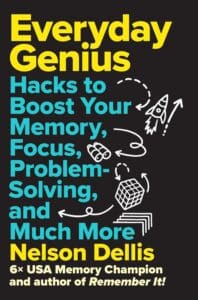
Everyday Genius: Hacks to Boost Your Memory, Focus, Problem-Solving, and Much More by Nelson Dellis
https://www.amazon.com/Everyday-Genius-Hacks-Memory-Problem-Solving/dp/1419784811
What if genius isn’t something you’re born with―it’s something you build?
Everyday Genius, by six-time USA Memory Champion Nelson Dellis, upgrades your everyday life through practical skills, whether it’s memorizing names at a new job, doing lightning-fast mental math when it counts, honing decisive intuition, and beyond.
Written by Remember It! author Nelson Dellis and with a foreword by New York Times bestselling author Barbara Oakley, Everyday Genius teaches you the skills that make genius-level thinking accessible to anyone. Better memory. Sharper focus. Faster learning. Creative problem-solving. No natural talent required, just the right methods.
In 2009, after watching his grandmother struggle with Alzheimer’s, Nelson Dellis set out to strengthen his own mind. That mission led to six USA Memory Championships, two Guinness World Records, and a career dedicated to proving that anyone can develop genius-level cognitive abilities.
Everyday Genius teaches you to memorize names and faces instantly, speed-read with deep comprehension, calculate mentally with surprising accuracy, and focus intensely when it matters most. You’ll learn strategies for chess and strategic games, techniques for acing exams and public speaking, and methods for creative problem-solving that help you see connections others miss.
From mastering a Rubik’s Cube to holding complex ideas in your head, from reading a room to thinking on your feet―this book gives you the mental toolkit for a sharper, more engaged life. At a time when outsourcing our thinking has never been easier, Everyday Genius shows you how to reclaim and strengthen your most valuable asset: your brain.
You have far more potential than you realize―an inner genius waiting to be awakened. This book unlocks it.
Dellis breaks down complex mnemonic systems into digestible, actionable strategies. By following his lead, you will learn:
Memory Mastery
Speed Reading
Focus and Concentration
Learning Mastery
Mental Calculation
Problem-Solving and Creativity
Strategic Thinking
Social Skills Mastery
Beyond Genius
About the author
Nelson Dellis is a 4x USA Memory Champion and one of the leading memory experts in the world, traveling around the world as a competitive Memory Athlete, Memory Consultant, Published Author and highly sought-after Keynote Speaker. As a Memory Champion, Mountaineer, and Alzheimer’s Disease Activist, he preaches a lifestyle that combines fitness, both mental and physical, with proper diet and social involvement.
Born with an average memory, Nelson was inspired by the passing of his grandmother from Alzheimer’s disease in 2009 to start training his memory so that he could keep his mind strong and healthy throughout his lifespan. In a short period of time, he transformed into one of the leading competitive memorizers in the world, claiming four U.S. titles along the way, the elite Grandmaster of Memory title, as well as a number of U.S. memory records for:
– Memorizing the most names in 15 minutes – 217 names
– Memorizing the most words in 15 minutes – 256 words
– Memorizing the most digits in 30 minutes – 907 digits
– Memorizing the most decks of playing cards in 30 minutes – 9.02 decks
– (former record) Memorizing the most digits in 5 minutes – 339 digits
– (former record) Memorizing a deck of cards in the fastest time – 40.65 seconds
Nelson is the Founder & CEO of Climb For Memory, a non-profit charity that aims to raise awareness and funds for Alzheimer’s disease research through mountain climbs all around the world. Nelson has climbed numerous peaks around the world for this cause, including three times on Mt. Everest.
Nelson has been featured on FOX’s Superhumans, The TODAY Show, Fox and Friends, The Katie Couric Show, CNN.com, ABC Nightline, The Dr. Oz Show, The Science Channel, Nat Geo, SuperBrain China, among many other media outlets.
Hosts & Guests

Transcript
You wanted the best, you've got the best podcast, the hottest hotest podcast in the world.
The Chris Vosho, the pre-eminent podcast with guest so smart you may experience serious brain bleed.
The CEOs, authors, thought leaders, visionaries, and motivators.
Get ready, get ready, strap yourself in, keep your hands, arms and legs inside the vehicle at all times.
Because you're about to go on a monster education roller coaster with your brain.
Now, here's your host, Chris Vos.
I'm Vosho here from the Chris Vosho.com.
Play a zoom in there and let's see the mix of fish.
Welcome to 60 years, 20 hundred episodes of the Chris Vosho.
We just keep bringing the most amazing minds on one of the oldest podcasts still regularly broadcasting.
Today we have amazing and now we're going into his books, his learnings.
And what he's going to teach you how to use your brain better.
But it means I'm going to go to goodreads.com, fortress, Chris Vos, LinkedIn.com, fortress,
Chris Vos, facebook.com, fortress, Chris Vos, and youtube.com, fortress, Chris Vos.
His newest book is out on March 17, 2026 called Everyday Genius.
Hacks to boost your memory, focus, problem solving, and much more.
Nelson Delis joins us on the show.
We're going to be talking to him, getting all the insights of his books and how we can all be smarter.
Because it sounds from the title of this book, we all could probably use it.
Nelson is a 4X USA memory champion and one of the leading memory experts in the world.
Travis around the world is a competitive memory athlete.
I did not know this is a thing. There we go.
Memory consultant published author and highly sought after keynote speaker.
He's a memory champion, mountaineer, and Alzheimer disease activist.
He preaches a lifestyle that combines fitness, both mental and physical, with proper diet, and social involvement.
Welcome to show Nelson. How are you?
I'm great. Thank you so much for having me.
Thanks for coming. We're sorry to have you.
Give us the dot com's. Where can people find you on the interwebs?
Yeah, everything's linked through my website, NelsonDelis.com.
I'm pretty active on YouTube as well. A lot of brain memory content there.
And you can just search my name, NelsonDelis, and you'll find it very quickly.
So give us a 30,000 overview. What's in your book every day genius?
Yeah, so every day genius is basically a compendium of all these mental skills that anybody can learn.
But that seemed like something that is maybe reserved for someone that would be, quote, unquote, a genius.
So the whole premise behind the book is that we all can tap into genius abilities.
It's something that can be trained and not necessarily that you're just born with.
They do say that we only use maybe at best for maybe the smartest people, I think.
I don't know what the curve is. I'm just making shit up now.
A five percent, I think.
Yeah, it's a hundred percent, you know, it's just a ballpark figure.
People on Twitter, it's more like two percent or something.
It depends on the group of people, sure.
We do a lot of, we bash the old Twitter.
We're not calling you next time.
Tell us how did you, how did you develop this technology that you espoused in the book?
I guess might be the best way to say it.
Yeah, I started, you know, from average roots.
And I kind of found myself stumbling into the memory world.
That's really where I started.
And I had an average about that.
I'm sorry.
I forgot about that.
Yeah.
I get that all the time.
But yeah, so I started in the memory world because I was watching my grandmother lose her
memory from Alzheimer's.
Oh.
Eventually she lost her life in 2009.
And it was at that point that I thought to myself, you know, I do not want the same thing to happen to me.
More my parents or, you know, for my kids to go through that either.
And my future kids at the time I was just 25.
But I started reading memory books and started reading about these memory competitions that existed.
And how there were people who trained their memories and, you know, have average memories before.
But they use these ancient memory techniques to do these phenomenal, seemingly impossible feats of memory.
And I was skeptical, but fell down the rabbit hole and let them behold the techniques work.
Anybody can do them.
And if you practice a little bit, just like any skill, you can actually become quite good at them.
And win championships, apparently.
So the brain's kind of this muscle you need to work out, stretch, do a little gym memory worker.
Yeah, exactly.
It's just like a muscle in the sense that, you know, if you don't use it, you kind of atrophy a little bit to lose that strength.
But when you work on it and you're doing these difficult, seemingly difficult tasks a lot and figure out how to do them more efficiently with techniques, you can get better at them continuously.
Wow.
Yeah, I have a fear of dementia and Alzheimer's and stuff.
I mean, I don't have, it's not like it terrorizes me or anything, but, you know, there's like a subtle fear.
It's kind of like a, I don't want to fall for building either, you know.
This is going to be like a fun way to go.
But, you know, my sister has got dementia with MS in the care center that she's been in for 10-15 years.
Yeah, and it's hard.
And it sounds like you were kind of shaped by what your, I believe your grandmother went through with Alzheimer's?
Yeah.
They really had an impact on you.
Yeah.
It's just hard to watch somebody lose their memories.
And she was such a storyteller in our family and had all the memories in her brain and they just disappeared.
Yeah, that's so sad.
I mean, I, you think when you're old, you're, you know, you're going to spend probably less time doing stuff, you know.
And more time just kind of reflecting on your life and, you know, enjoying the things.
I get great memories that come back to me, you know, some of the people I've met in life.
I'm like, oh, yeah, I remember that one thing.
Yeah, that was, that was really cool.
I've faced this.
You know, I, I've taken lots of pictures over my life.
And I, I, so many great stories have collected.
I've, like, agreed on.
And I'd like to lose them.
And then, you know, I worry about my mom getting dementia.
And she's doing really well and seems to have some really great DNA.
Oh, but I carry on with hers.
But, you know, I don't, I don't want to see any more people disappear.
I watched that with my sister.
And yeah, it's hard.
And so you, this is kind of interesting.
I mentioned the bio that you're a memory competitor or champion or, or how do you work?
Yeah, yeah. There's a memory competition.
Well, there are many different kinds of memory competitions out there.
I've competed since my first one was 2009.
After my grandma passed away.
And then I've been competing ever since.
There's some years I took off, but over the years I've worn six times.
Wow.
I didn't know there was like a, I didn't know there was like a men's for this sort of thing.
And most people don't, you know, but it's kind of a quirky little competition.
But most people forget there's an event.
That's a problem.
So you can't win the memory competition.
You forget to show up.
No, I will tell you that those people who forget to show up do not win.
That's usually the life problem too.
And we say with business people, you say, what's your success, Chris?
And I show up every day.
Show them up.
What is the 80% of the thing for success that you got to show up?
But no, this memory thing's a big deal.
Now, you know, being able to recall problems and stuff like that,
have you ever bet?
Have you ever beat the final boss where your girlfriend says to you,
you know what you did wrong?
I'm not going to tell you.
And then you have to remember what you did wrong.
And you can't remember.
Have you ever beat that final boss?
You're referring to my wife.
I don't know if I'm referring to your wife or just a wife.
Yeah, no.
No, she's undefeated.
I think all women are in that when they use that.
Yeah.
No, my wife has a phenomenal memory.
I do have blunders from time to time.
I still have to apply myself.
And sometimes I will admit I'm maybe thinking about something else
when she tells me something and that busy.
But focus is a big part of having a better memory.
And most people should start there if they want to remember more.
Now, let me, this is actually kind of, in my funny joke,
just kind of took us into something, I think.
Now, is it true?
I don't know how much you study the science of memory.
I mentioned you wrote a book, so maybe you've done the research.
But I believe women's memory centers in their brains are bigger.
And it's kind of designed that way for a biological survival,
the species sort of thing.
And so they have a bigger, I don't know what the portion of the brain is.
But that's why they retain memory more.
The other reason that they retain memory better women do
is because they connect the motion to it.
And we've had people on the show who've talked about this as a psychologist.
Any time you can attach a lot of emotion to a memory,
it's really going to stick with you.
You know, you're jogged eyes.
That really freaking hurts.
Whereas, suppose the flower is dying in your garden,
you're probably going to be okay with it unless you're a real green thumb.
Have you studied that?
Is that true?
And then maybe is that a way that you use to boost your memory,
attaching the motion to stuff?
Yeah, I'm not familiar with the structure of women's brains versus men
if there's any distinction there.
But potentially, I have seen firsthand at memory competitions
that the women competitors, I think, are stronger.
They usually perform better.
Some of the top memory athletes in history are women.
And it's amazing to see.
Sometimes I try my hardest and I cannot get to their level.
But yeah, there could be something to the emotional side of things.
One of the main techniques to make things more memorable is just that.
Is to take information that is dull and abstract
and turning it into something that you can visualize,
attaching sensory data, emotion to it.
So just exactly what you said.
The more emotionally charged you can make something
as mundane as it may be.
If you can fuse that emotional aspect to it,
that's just like wildfire for your memory.
Yeah, research suggests this is according to the internet,
which of course is true at all times.
But women generally have proportionally larger and more active hippocampus,
a key brain reach and responsible for memory and emotion.
And that's why they have their emotions
and we're kind of more logic and reason.
But it gives them that ability to remember stuff better
and probably functions as a way, you know, survival technique and stuff.
Yeah, and probably, you know,
they have a lot of multitasking to do to take care of children
that they're designed for to be able to multitask
where we're kind of more on that focused thing.
But I know one of the things I had as I was aging
was I started having brain fog.
I don't know when it started.
But somewhere about two and a half,
almost three years ago, two and a half years ago,
I started testosterone therapy.
And I woke up from severe brain fog.
I mean, I was like a week out with brain fog.
And I was at this moment of my life
where I was starting to really,
I just felt like I was waking up
and five minutes later I was crawling into bed.
And I would just be like,
what the hell did I do today?
And you know, we do three shows a day.
I'm like, there's record nobody did.
But I would just sit there and be like,
we're not going, man.
I just did the basics every day.
I'm like fighting just to do, you know,
the basics when there's other stuff
that I envision and want to do.
And so that really gave me,
when I started taking testosterone,
it brought me out of it fairly quickly within three days.
And though for the next week or so,
I totally came out of it.
But living in that brain fog really scared me
because, and realized I was living in it,
because, you know, dementia Alzheimer's,
all that sort of thing,
where, you know, the fish can't see water.
So you're not aware that you're in the fish tank.
And, you know, that just made me go.
God, man, I really need to exercise the old brain.
What are some techniques and stuff,
maybe that you suggest in the book
that we can, you know, everybody can use
to try and strengthen the memory,
especially old people?
Yeah, I mean, I think you're,
you're touching on some important things there
that as we age and as life takes hold of us
this thing, brain fog, fog is a real thing.
It's not as simple as just learning techniques
to kind of get rid of it.
I think it's a very, it's close,
very tightly knit to the environment around you
that you live, the diet,
the amount of sleep, the stress, the amount
that you use your brain.
You know, so kind of keeping all those things in mind,
really the first step to having a better mind,
a better memory is to take care of your brain, right?
We all recognize that what we eat,
how we are physical and active in the day,
like affects our body, you know,
if we want to lose weight,
we don't kind of roughly what we got to do.
And you can take that to the end of the degree,
you know, mildly diet, whatever,
but sleep better, all those things.
But the same things can affect your memory and your brain.
And I think it's time that we start to think about our brains
and what we put in there and how we treat it.
In terms of memory training and practice,
that's a big part of keeping your mind healthy, right?
If you use your brain every day in some capacity,
nowadays it's so easy to outsource our thinking, right?
We put everything in our phones,
we don't store anything up here.
I mean, how many people out there can remember a single phone number,
somebody important, right?
I always worry about that,
if I ever get arrested,
I'm like, you know,
thank God I do know my mom's number
and she's had a landline for 50 years.
Yeah.
But, you know, the more you use your mind
and memory techniques can help that be an easier process.
But the more you generally try to challenge
and make your mind, you know,
do some gritty, harder things,
the more it'll pay off in the end.
And that brain fog will start to go away.
Your intellect will increase.
Your confidence in your mental abilities will also increase.
But it's so tempting these days to not do it
because there are tools, AI tools now,
that will just think for you in a second.
But I don't think the, you know,
the outlook for our brain health
in the next 10 plus years looks very good
if we describe to that.
Yeah.
We've had a lot of people on the show
that have talked about,
we have 20,800,
20,800 interviews.
Yeah, there's a few of everything,
a few hundred of everything.
But so we've talked to AdNosiem about,
not AdNosiem, I think it's,
I'm just joking,
about gut health,
affecting brain health,
and how what you put in your gut
can actually lead to swelling in your brain
and different memory problems.
And some, you know, some people,
I don't think there's science on this,
but some people tie that to,
you know, we've had,
we've had the physicians on the show
that by reducing gut inflammation,
it reduces brain inflammation
and brains operate better.
Sometimes people with autism
run the spectrum,
will have some improvements
in their functioning condition.
It's not, it's not a cure all.
But, you know, I've,
I've experienced putting all sorts of garbage in my gut
for, I'm 45 years,
I was eating, you know,
out all the time,
drinking 10,
15-pound do's a day,
and then putting some vodka in there at night,
every in the night or so.
And, you know,
I experienced how shitty my brain operated
during those years.
And now that I've, you know,
gotten on clean diets
and eaten well for the past,
I don't know, was it 10, 12 years?
I feel, I feel like my brains,
you know,
better off,
I can function better,
I can memory better,
I can do everything better.
And then, yeah, I mean,
what you eat is,
I think that's a big effect in your brain
from what everyone says.
100%.
You know, your brain is using
a tremendous amount of calories a day.
So you got really?
Yeah, yeah, yeah.
So, can I lose more weight
if I use my brain more?
That's a good, good point.
I know that we just found out
why Americans are fat and stupid.
Yeah, we're just dumb.
No.
They did some studies on chess players
who were just playing chess all day
and the amount of calories they burnt,
just sitting there.
Is it intense thought?
And I'll even mention,
you know, some experiences that I had
where I've been in a three day memory competition
where we're spending hours
just sitting there,
you know, straining our brains.
And it is so tiring.
I mean, part of it obviously
you have to focus for that long
and that can take a lot of demand.
Yeah.
But just, just depleted, you know,
I feel like I've done a workout
of a long marathon kind of thing.
Yeah.
Brain marathons.
Yeah.
It's usually what I'm on
when the girlfriend says,
yeah, you don't want to go,
what do I, why are you mad?
Why did I do wrong?
And she's, you know,
you're the brain marathon.
Now to figure out what I did wrong.
Yeah.
Turns out it was existing.
Yeah.
Watch that, boys.
Anyway, so now you,
the simple fact,
did you ever play that game Simon
when you were a kid?
What sort of,
what sort of things do you guys
use in these hackathons
where you guys are practicing your memory?
Do you remember that old Simon game?
Yeah, I was looking around
to have one right here
because of all the,
I made content around it.
Yeah, I'll let you go.
Yeah, this guy.
Well, that brings back my childhood.
Yeah.
Wow.
These are really fun as memory
champions.
There's a few of us who have
made content around playing the
Simon game.
We can just keep going.
It's really an easy game to beat.
You know,
it really depends how much time you have.
If I had a couple of hours to kill,
I could get like over a hundred.
Wow.
But anyways, yeah.
So unfortunately,
that event is not at the
memory championships.
You know, usually they'll
choose things that are
completely randomizable,
although I guess that
a sequence on a Simon game
is randomizable.
But it would be a lot of noise
if everybody in the competitive
room would be playing their own game,
a lot of beeping going on.
But they usually have us memorizing
decks of cards,
shuffle decks of cards.
Really?
And long strings of phone numbers,
hundreds of digits,
names of faces,
poems that have been
unpublished,
list of words,
things like that.
That's all timed.
There's a certain amount.
You've got to memorize as
much as you can.
Obviously as accurately as
possible.
Have you ever thought about
going to acting?
That's the one thing
keeps me out of acting.
It's memorizing all lines.
Oh, man.
I could memorize the lines.
I'm probably a terrible actor.
That's probably, I'm the
opposite.
I could probably
act some bullshit out.
Because I've been,
I don't know.
But I'd be like,
oh, it's my line again.
Yeah.
Yeah.
I wouldn't be that guy.
I'd just be like,
Nelson, the director of
me.
I'm just not believable.
I'd be like,
Marilyn Monroe on the set.
I wouldn't remember
any of my lines, but I was
hot enough that you didn't
farm me.
It didn't matter.
Yeah.
Whatever that works.
Yeah.
I'm not sure that's going to
work in Hollywood with me.
What are some other
things we need to know about
your book that we want to
tease off to get people to
pick it up that maybe I
haven't asked?
Yeah.
As I mentioned at the beginning,
obviously in the title,
we're talking about genius
here.
So I really try to
challenge what people think
genius is.
One of the reasons why I
feel like I'm going to
place where I can talk about
it is because of my memory
over the years, people have
always seen me do these
mind-bending to them,
feats of memory.
Other people will encourage
me to do things for them,
be like their little show
pony.
But inevitably, somebody
will say, wow, that's
your genius.
That's something a genius
could do, right?
And in my mind, I don't
know what I'm going to do.
I don't know what I'm
going to do.
And in my mind, I'm like, I
am not a genius at all.
Like, I can be dumb
as rocks.
And, you know, I've just
learned a technique.
I've practiced the hell out
of it.
And the person kind of
making that assessment
just doesn't know what's
actually happening there.
And even if they do
maybe I explain it, they
think, I can't do that
Nelson.
But they can.
And everybody can.
So it really led me to
understand that genius is
subjective.
You know, if you're to
think, so the listener is
out there, who you might
label genius.
And then think about like
why a lot of it, you
may not have a very
tangible answer to that.
And that, you know, that's
what I kind of challenge
in the book, because I
want people to understand
it.
You can tap into a lot of
these things.
I'm proof, right?
I couldn't memorize a dang
thing.
And now I can win memory
competitions.
And I can play the
Simon game up to infinity
basically.
And anybody can do that.
So the whole book just goes
through, we start with memory
because I think that's a
very important part to
exemplifying genius.
Then we talk about reading
faster, learning for the
long term.
There's a whole chapter on
calculating with numbers in
your mind a bit quicker.
Really?
Yeah.
Problem solving, creativity,
intuition, all these
different cognitive
abilities that can, in
some, to some extent, be
trained.
Wow.
The brain trained.
You know, I think it's
interesting.
We only use what people
estimate is the three to
five percent of our brains.
Although George Carlin, I
think his number of
his better.
He said, think I've done the
average person is and
realize that 50 percent of
the people are dumb
other than that.
You've seen the news
lately.
Anyway.
So this is really great.
I mean, this is a book I
want to read and learn
more about because, you
know, like I said, I like
you, I've watched the
disappearance of a love
one.
And it has an impact on you.
In fact, my love one is
seven.
My sister is seven years
younger than me.
So it's really weird.
To have her in a in a
care center with a bunch of
you know, people that are
twice her age.
And she's been there since
her 30s.
And so to have someone
young, you know, you kind of
expect your older folks, you
know, there's age is going to
happen.
We have people living
longer than they ever have
before in human history.
And so yeah, we're
experiencing some
things.
But some of you are
younger than you.
You're just like, what the
this is just up.
It shouldn't.
But MS is an evil drug
or an evil, whatever.
And so tell us about some
of the offerings you have on
your website.
You do consulting, coaching,
speaking, training,
things like that.
Yeah.
You know, this, this, this
I started this whole
journey for myself in honor of
my grandmother and just this
fear that I have for myself.
But naturally people,
everybody has a memory.
Everybody has a brain.
And so when they see that I
learned this for myself, inevitably
people came to ask me, came
to me to ask, can they, can I
speak to their school, to
their businesses?
And over the years, I've kind
of transformed what I was
going to do with my career.
And now, for the last 10
plus years, I've been a memory
consultant, memory coach.
Do one-on-one sessions,
webinars, webinars, speaking
engagements.
I have some memory courses.
And I make a lot of content
on YouTube.
That's a very introductory
photo of everything.
It's just my name.
Nelson Delas.
Okay.
All sorts of musings and how
to's on how to do memory related
or brain related.
It's just my name.
Nelson Delas.
Okay.
All sorts of musings and how
to's on how to do memory related
or brain related.
But yeah, I have a whole
coaching program for people
who want to improve their
memories and sharpen their
brain and tap into that
genius intellect.
And again, everybody can do
it.
All sorts of, I work with all
sorts of ages.
I've worked with as young as
a five-year-old to, right now,
I have a client who's 89.
And it's so interesting
because a lot of people will
just label themselves and say,
I can't memorize anything.
I'm well past my prime where
I just, I'm not going to
name's or whatnot.
But at times I'm not going to
just, it's very clear that
the human brain can remember
better than most people think
they can.
You know, and maybe this is
laziness in my part.
You're welcome to tell me
what's wrong with me.
But I've always had that
problem for most of my life.
I'm great at faces.
Like, if I see a face,
most times I'm going to
remember that face.
I'm the same way.
If I go somewhere, I know
how to go there.
Like, I don't have to consult
with the map again.
You know, who else is great
with recognition?
You know, I don't
have to consult with the map
again.
You know, who else is great
with recognizing faces?
Who?
Pets.
Dogs.
Like dogs.
That's so many people
say that.
And it's like, I think
that we are naturally great
at remembering faces.
Oh, okay.
But it's the name.
It's the information.
That's the hard part.
But we all can do it too.
So the fact that you can do
that, I think everybody can
do that.
You just got to take advantage
of an add this bit that
will connect the name to
your already great ability
to recognize faces.
So do you, do you do
a mnemonic?
Or how do you, what do you,
what's the, what's the
you recommend?
Yeah.
You know, the idea behind
memorizing names quickly is
kind of tapping into a few
of the things we've already
talked about.
One is that emotional thing.
So you get a name,
this, this word that represents
the human in front of you.
And the first goal is to
turn that into some kind
of mental picture.
That's always the goal
with memorizing and remembering.
But when you come over
the picture is also in that
technique is embedded this
idea of coming up with
something emotional and
sensory.
So if you meet someone
like a Nelson, right?
What's the first thing that
comes to mind for you when
you hear that?
Yeah.
Perfect.
Yeah.
Nelson Mandela.
Very memorable.
Iconic.
You know, different people
will have different
associations to what they know
about that image.
You can have a different
Nelson in mind.
Willie Nelson.
I don't know.
But whatever.
You know, you come up with a
picture of the guy
that you said that, you
know, you can maybe imagine
that pot smell.
And maybe even smoking
yourself.
That's why I don't
base.
So people will remember my
smell.
Yeah, exactly.
Like Jesus.
No, when you tap into
smell, taste, vulgarity,
kind of discussed and even
eroticism sometimes.
Like eroticism.
Yeah.
Wow.
You can make it as kinky
as you want.
But that will make it more
memorable.
I tried the tasting thing
in nature as a can't do
that anymore.
Okay.
Yeah.
I would lick people instead
of shake their hands so I
could remember.
And I'd be like, well,
you're trying to remember
your name, man.
Yeah.
Yeah.
Now, this is, I should clarify
all of this stuff that I'm
asking you to do is mental
in your mind, not
mental.
It is also, as the
Brits say, mental, absolutely
mental.
But it works.
But anyway, so the second part
to it is when you're looking
at a person meeting them,
you're obviously looking at
them.
So you want the name to be
attached to them.
So you want to use a feature
that you notice about them
while you're talking to them
to attach the image to.
All right.
So if you notice me and maybe
I don't know, you notice my
beard.
It's usually a bit more red in
person.
But just imagine that's what
you notice.
And then you have this image
of Nelson Mandela.
Now you interact it with the
feature.
You anchor it to the feature
in your imagination, of
course.
And as we were doing,
I'm going to call you Nelson
Mandela.
You know, listen.
I'll anchor your beard
in Nelson Mandela, right?
Yeah.
And then the wilder it is,
the weirder, the connection is
the more memorable it is.
I know it sounds wild, but
this is how we all do it.
This is how I can memorize a
room full of 100 people.
Plus, you know.
You're going to have a
lot of time.
If I ever bump into you, I'll
be like, I love what you did in
Africa, man.
Anyway, you're like, you did
it wrong, Chris.
You got the name right.
Just wrong.
You flipped it.
You flipped it wrong.
But it put the beard.
Anyway, no, these are great
because I've done that all my
career.
I've done that all my career
have been long.
I've done that all my career
have been long.
I've read something once that
they're the people that do it.
They put more value in the
person as opposed to making
them a name plate.
And I'm genuinely curious
about people.
I love people, this is why
I do the show.
I love interviewing people
talking to people about their
journeys because mine's
boring as fuck.
I'm tired of hearing about it.
But, you know, the only
problem is, I think there's
a lot of people that I have
attached and name
mononic to their face.
And I really think that
to their face. And the problem is every time you meet them, I go, Hey, how's it going?
I want to choke the fuck out of you stupid bastard. And anyway, it's a strange weird joke
there, but to have work. Yeah, it seems like there's a lot of people on Twitter that I have
that sort of name recognition too. Anyway, Twitter call their jokes. How can people get a
hold on you? How come they on board with you? It sounds like from five-year-olds to
nine-year-olds or potential clients for you. Oh, that could. Yeah. I've been teaching my whole life
that's and I have kids myself. So I'm used to any age, any problem you come to me with regarding
your brain. I'm happy to work with you. But yeah, people can go to my website. There's a little
form they can contact me through and tell me what they're trying to fix in their life with their
brain and I can help. Yeah, I might just I might just be referring to a shit from people on
all Facebook. Oh, hey, fix this idiot on social media. So I got an endless supply of clients
for you, buddy, especially the people that I can't ever remember why they're a hypocrite.
Oh, man. Didn't you tell people not to do that? And you went and did it. And you said it was
hell-firing damnation if they did it, but you did it. Dude, did you remember what you said?
I don't know if that's a memory problem. I feel like that's stupid. Yeah, I don't know.
I think that's a George Conway or not George Conway, a Carlin joke, the 50% reference thing.
Yeah, it's a curve, people. Not everyone can be smart. That's what I see every day. But the one
thing I was going to ask you, yeah, I need to I need to work on that name thing because names
are important. You know, we have people on the show. We ask them there. There are things. You
know, we don't want to we don't want to sow people, but we also want to, you know, this is their name.
This is their value. This is valuable to them. And especially when they're doing a brand, but yeah,
I think this is a great book. I've got my audio book list there. And I'm probably going to
maybe see if we can get one for my mom. But yeah, this is this is really good. You know, it's so many
people sit around and oh, that was the other thing I wanted to mention. If I could squeeze this in
real quick. Sure. You you alluded to the AI issue. And there's been discussions within the AI
community. I think everyone at this point because we're all kind of wondering when we're going to die
by AI. The terminators come is that, you know, by relying so much on on chat GPT and other things
to kind of think for us and do the hard work, you know, especially like research like research is
kind of a pain in the ass. But you do kind of learn a lot of shit. Like sometimes you learn stuff
in doing research for a book or something. You learn stuff that you didn't know. Oh, here's a
you know, these kind of fingers or tree line limbs of of concepts and ideas. You're like, oh,
I didn't think of it from that area. But yeah, it kind of has taken some of that gear away from
us. Oh, yeah, I think the important thing, you know, I'm not saying to eliminate AI and the
tech that's advancing quite quickly these days. But I think there's a way to use it that still can
preserve, you know, our cognitive abilities. And I think the difference is by using it more as a
coach as a guide rather than a crutch, right? And I think while we can right now, we have that
choice to do that. I don't know how much longer we have that choice. We may not get a choice.
Use it or not in the way we want. But as of now, you know, what I encourage people to do, you know,
it's it's so tempting to just go flat out use it and not even have to think oftentimes that might
be the fastest way. So in a crunch time, you know, maybe that's what you got to do. But at what cost?
So I'm always encouraging people. And this is what I do because I will use my memory and brain
first. Maybe it's not the best way. Maybe it's slower. But at least I'm using my brain. And I'm not
losing the ability to still be as creative as I used to to be as well spoken when I craft an
email. Let's say as I used to to be as good as I was memorizing, you know, all these things I
want to keep. And I'm always trying to do that first. I'm trying to use this, this computer before
I use that. Yeah. Yeah. And there's probably some good work to that. I've had my first AI computer run
in this week. Yeah. First time where I've seen, okay, this, this, this shit can go bad. And it
was really, it wasn't that big of a deal. But I was on the podcast, let me just show like I do
now. And there's a giant camera. This is on the screen. So I can't fully see everything. But I
can kind of see stuff. And I've got the Gemini on the Gmail, I guess, I don't know what it's always
prompting me. Do you want us to be an answer for you? And shut the fuck up. I haven't figured out
it's able to yet. And but if you're, if you're not careful and you hit like a return key or I think
it's a backside key, it will put in a suggestion of what it thinks your email should say. Yeah.
And I had a, I had a model I do photography, amateur photography on the weekends. And I had a model
that wanted to shoot on a shoot I'd advertise for. And I've shot her before. So I, I didn't want
to shoot her again because I wanted to, you know, vary my portfolio that I'm building. And so I
was responding her during the show. So I was kind of not really engaged. But you know, here we are
with AI. And I was telling her, you know, sorry, we, thanks for playing, you know, we don't,
I want to vary my looks. I've already shot you. And, and I thought that's what I wrote. And I
swear to God, I wrote some of that effect. And then I hit return or maybe I hit some keys during
the podcast that changed it to the automated response. And that AI bookter. Oh, no. Oh, wow.
It took our conversation because I'd booked her before. And it just decided that he must want
a booker again. And somehow I tapped something that triggered the on me. And then it sent.
So I had, and this was money. And, and, and these models, they don't make a lot of money. They're
kind of between things. And so she was so excited because she, she'd been bugging me to get shot
because she was like, I, you can pay a dime and see jobs lately. I'd love to work again. And
so here I had to call that back and break her heart. And she, she written me the way I knew I was
I'd fucked up was she written me and she says, so thank you. I'm, I'm planning. Here's my outfits
and planning on something like what? Wow. So AI, you know, yeah, maybe we shouldn't rely on it so much.
At least I can remember that what are we for what your intention really was. Yeah, I can remember
how it screwed me. You know, maybe we shouldn't have the Pentagon playing with AI. I'm just saying,
I'm just saying, you know, there's a movie, a deocracy. Yes, it's from a long time ago. But that's
what my fear is that we're all ahead of that. You notice that it's been re-released in documentary
form in 2026, evidently. It's alive around us actually. That's pretty much where I'm at with
that adiocracy. That's one of my number one references on social media. Because that's that's how I
just feel like the world's gone fucking mad. Before, you know, in 2025, I said, I'm going to or no,
in 2024, I said, I'm going to trust my fellow Americans. And, you know, people are going to wake up
and and hold their politicians accountable. I guess as many of them as they say it. And they're
going to give a shit. They're going to quit watching the Kardashians. And, you know, a lot of this
media that we take in, you know, even like YouTube, you know, you've got a channel on YouTube,
I got a channel on YouTube. You know, one of the problems that I have with my channel that I've,
you know, always had. And I watched this develop with YouTube because I came up with YouTube,
was just, it seemed like the more intelligent shit you put on YouTube and other social media places.
That doesn't go as far as idiots that jump off of roofs and into tables and just mindless,
mind numbing bullshit. And people love that. Maybe we can blame. It was the first show that kind
of iterated that most of TV. But what was that one video? VCR thing. America's funniest home videos.
I'm just started the whole stupid craze of throughout the side of your mouth. Maybe when MTV
switched to reality TV shows, that seems to made it stupid. But, you know, consuming that data,
I think, and just not really thinking and imagining ourselves, Einstein said,
imagination is more important than knowledge. Be because you're using those brain juices and memory
to, you know, stretch that fabric up in your brain. But I think sometimes just sitting watching
this mind numbing shit, I don't know, the bachelor at, you're sitting there just losing brain cells.
I don't know. What do you think? No, it's just just falling asleep, not challenging the mind.
You're just like taking a seat on the couch there when you, when you watch that stuff.
Other than, you know, there's the time to relax and kind of unplug. If you're balancing that
out with, you know, some heavy lifting with your mind, that's a good one story. But I don't think
many people are doing that. That's why I always do doom scrolling on social media. Because then
it's attached to a lot of fear panic and the world is going to end tomorrow. We're all going to die.
So, yeah. I remember all that stuff. Thank you very much for coming the show. We really
appreciated it. Give people a final pitch on Nellis on ordering up your book and getting to know you
talking about your services. Yeah. Yeah. Please check out my latest book, Everyday Genius. It just
came out and I'm really proud of this one. It's got so much in there. And I think people have a
lot of fun trying out some of the techniques to make themself smarter. And if you want to work
even deeper with me, go to my website, Nelsonbells.com and reach out. And I'll tell you what I offer,
my coaching, my speaking engagements, group cohorts, stuff like that. So, there you go.
So, it's fun to have you on the show and pull the memory jokes. I've got it in my audio book
library. And so hopefully I don't forget it's there. I'll have to mount it up first. Because,
you know, retaining stuff like books I read and stuff is important as well. Thanks for coming
the show. We certainly appreciate Nelson. Thank you so much. Thanks for tuning in. Go to Goodreads.com
for just Chris Fos and all those places on the internet or to his book wherever fine books are sold
every day, genius, hacks to boost your memory, focus, problem solving, and much more out March,
17, 20, 26. Thanks for tuning in. Be good to each other. Stay safe. We'll see you guys next time.
All right, there we go. Great show, Nelson.
More from The Chris Voss Show
View all episodes →
The Chris Voss Show Podcast – Across the Creek: Buried Legacy by Kaaren Terry
The Chris Voss Show
Apr 2, 2026·29:44·failed
The Chris Voss Show Podcast – Old Grandmother’s Tree: A Collection of French-Can...
The Chris Voss Show
Mar 31, 2026·24:43·pending
The Chris Voss Show Podcast – Pangaea – Book 1: Enforcers’ Pursuit by Mr Camren...
The Chris Voss Show