Loading...

businessmanagementeducation
The Chris Voss Show Podcast – From A Dirt Road to the United State Supreme Court: 6 Stones for Goliath by Charles Arline Sr
About this Episode
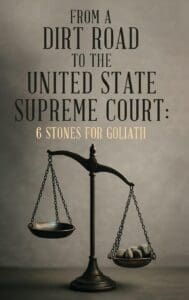
From A Dirt Road to the United State Supreme Court: 6 Stones for Goliath by Charles Arline Sr
https://www.amazon.com/Dirt-United-State-Supreme-Court/dp/1968519378
Embark on the true journey spanning seven decades as childhood sweethearts Charles and Gene build a life that leaves an indelible mark on those near them. The true basis of the box office hit, “Philadelphia.”Behind the ongoing legal fight against a discriminatory firing, is a heartwarming story that highlights the traditional values of family, love, community, and respect, all while providing aromatic memories of good old fashioned soul food.The pandemic hits hard, and Gene tragically passes away from a non-COVID-19 illness. During the funeral, Charles begins to relive their life of love, angst, and tragedy.The narrative then delves into the nine-year war that Charles and Gene fought against the school board, which resulted in six true to life court cases, ultimately fought on the battlefield of the U.S. Supreme Court.The story highlights how the State Health Department exposed Gene’s medical records to the public through local news outlets, a move that spurred Charles and Gene to stand up for their family and name. The precedent-setting Arline vs. Nassau County School Board of Education case resulted in a true-to-life 7-2 victory, including Judges Thurgood Marshall, Sandra Day O’Connor, William Rehnquist, and more.This landmark case not only broke down barriers for the disabled and disenfranchised citizens of the US but also crossed cultural boundaries. The novel provides a rare look at an African American couple, who were transported into a fight against the machine, where justice was the true issue, rather than politics, race, or religion.From A Dirt Road to the United State Supreme Court: 6 Stones for Goliath is a powerful narrative that weaves a vision of unity, highlighting the importance of fighting for justice and breaking down barriers, while reminding readers of the true values of love, family, and community
Hosts & Guests

Transcript
You wanted the best, you've got the best podcast, the hottest hotest podcast in the world.
The Chris Vosho, the pre-eminent podcast with guest so smart you may experience serious brain bleed.
The CEOs, authors, thought leaders, visionaries, and motivators.
Get ready, get ready, strap yourself in, keep your hands, arms and legs inside the vehicle at all times.
Because you're about to go on a monster education roller coaster with your brain.
Now here's your host, Chris Vos.
I'm a Vosho here from the Chris Vosho.
God God.
Ladies and gentlemen, the only thing that makes official welcome to the big show.
As always, the Chris Vosho.
It's been a pleasure.
It does judge you.
You know why?
Because people listen to Chris Vosho.
They're here for the amazing stories, the journeys, lots of the life.
The ways to improve the lives and make their lives better.
So now we don't wear one of the shows where we bring on weird-ass conspiracy theory or quirky coaches.
You'll find out later.
Our full of it.
We bring in the smartest people, the ones who write the wonderful books and all that good stuff.
And so please, the love of whatever.
We're asking you to bring in your friends, family and relatives, refer them to show.
Tell them to go to Goodreads.com for just Chris Vos.
LinkedIn.com for justgrisvosyoutube.com.
So we're just Chris Vos.
And Facebook.com for just Chris Vos.
We know the love and help we can get.
Because I don't know.
I'm a vacuous, empty human being who needs lots of love.
Does that guilt you into sending your friends over?
Whatever.
I'll say whatever.
No, I'm just kidding.
Opinions expressed by guests on the podcast are solely their own.
They do not necessarily reflect the opinions of the host or the Chris Vosho.
Some guests on the show may be advertising on the podcast.
But it's not an endorsement or review of any kind.
Today's featured author comes to us from books to life marketing.co.uk.
With expert publishing to strategic marketing.
They help authors reach their audience and maximize their book's success.
Anyway, guys, we have an amazing man on the show.
We're going to be talking about his insightful new book.
That's probably very important.
In one of the reasons we made Hippilaw's in this country.
It's entitled From a Dirt Road to the United States Supreme Court Six Stones For Goliath.
Out February 20th, 2026 by Charles Arline Senior.
We're going to get into his book.
Find out more about these details and the fight that he took to the Supreme Court,
which is quite an honestly Goliath versus David Goliath's story.
Oh, that good stuff.
Charles Arline Senior is the author of the formative book he was raised in the rural south.
He and his wife fought a nine year legal battle that reached the Supreme Court of the United States,
resulting in a landmark.
72 victory that advanced protections for disabled Americans.
Their story inspired them.
Their story inspired the film Philadelphia.
Charles now shares a message of perseverance, justice, faith, and family.
Welcome to the show. Sir, how are you?
It's good.
I'm going to be with you too.
This was a privilege of being able to do this show with you.
It was a privilege to have you answer.
It's an honor to have you as well.
And give us a dot com's websites, social media, where we want people to contact you
and get to know you better on the Internet.
Like I said, you got YouTube, Facebook, you have any media outlets.
I mean, like I said, we're looking forward to Amazon or whatever to pick this book up.
Because actually it's one that like I said, I think it affects everybody.
Many people that can have it, especially the schools,
libraries and stuff like that.
The young people need to know about history.
A lot of times history just show up upon the rug and people don't know why it's there.
Know the person that really it was instrumental in this coming about.
This is what I wanted to be out there wearing everybody can have a copy of this book.
And we need to get the word out there.
Give us a 30,000 overview of what this book is about.
It's about my wife, Jean and myself.
It's about a precedent in case she had a continuing contract,
stating that she could not be fired for personal illness.
And they went into her medical records and exposed that to the media.
What?
They find it is bad by itself.
But what's only going to your medical history and use that to do it.
I mean, that's damaging.
It's hurtful.
And something that really is hard to deal with.
Who did she work for?
She worked for the school.
She was a school teacher.
Okay.
She taught in Nassau kind elementary elementary school.
And she had to work there for years.
And like said, to have this information put out.
We live in Jacksonville, but she had to drive about 50 miles every day one way to go to school.
Yes, one way to be a teacher.
And, you know, teachers so wonderful.
I, my mother was a teacher for 20 or so years.
Sister, we've had a lot of great teachers on the show.
And there are the people who really move this world and influence the youth for a lifetime.
Now, what was the impetus?
You know, there's hippo laws.
I believe hippo laws are, are supposed to prevent the release of,
or keep our records confidential,
at least until doge went and got everything and gave it to Planet Earth.
That's another story.
But what was the motivation behind releasing her records?
What was the attempt they were trying to do to damage her?
It was like they say people need to know this.
And once they know somebody in the media,
and it should be given to them and it happens.
Like somebody even prior to this,
it was exposed.
They were saying,
because she lived in Jacksonville,
and she had an occurrence and a doctor was saying,
look, it's nothing wrong.
You, you, you, you're not going to affect anyone.
But like I said, because you work in another county,
it has to be turned over to them.
And this, this is why they said,
look, she'd come in through the back.
She'd come in, you know, different times when it won't be so obvious.
But that didn't happen.
They made it come right through the front and sit down with everybody else.
It was like intentional to expose her.
Now, was this a racial thing, a religious thing?
What was the context?
Was this one person that was helping on, you know, hurting your, your wife?
I can't.
I don't know.
Sometimes people have authority and they can do stuff.
They do it.
Yeah.
It doesn't necessarily have to be raised.
It could just be prejudice in one way or another, you know.
Now, was this, was this somebody who worked at the board of education or at the schools
or was this a private citizen that released?
Well, this was, this was in the health department.
Oh, really?
Yes.
Yes.
Wow.
Were they trying to get out of paying for disability or, or, or medical issues or something?
Like I said, not that.
I don't know because when that, when Jean came home that day, she told me what had happened.
So I just jumped in my car and I went down and I, the principal was just leaving.
Confronted and I had told her what was going on.
Actually, what was going on?
He had the look in his thing all kind of ways.
And this was just the outcome she was going to become.
So I said, wow, that was, that was shocking.
So I, I came home and like I said, naturally, I was trying to console her because she loved children.
I mean, she was really good.
And, and for this to happen and the way it did, it was like I said, not good.
So what was in her medical report?
They were trying to damage her with help us kind of understand.
I'm trying to lay a foundation for the story on what takes us to the Supreme Court.
It's insulting me the principal is in on it.
Yeah.
It was, it was two tuberculosis.
Oh, tuberculosis.
But now they came out shop.
They didn't say that term.
It's a TB.
You know, I mean, they wanted to make sure it was, got some attention.
It was, it was like,
like I said, she was really, it's real sensitive.
And I mean, she has broke down.
But like I said, to battle like that, I mean, I mean, who can you go to?
Yeah.
Now, so she had tuberculosis.
Yeah.
In fact,
Yeah.
And then I know that tuberculosis is highly spreadable.
So were they trying to, now there was something else you mentioned that she would have to come in the back.
Was that because she had tuberculosis?
No, no.
This was to more or less protect her from scandals.
Oh, from people that might be upfront, be a jerk's.
Yeah.
Now, tuberculosis is highly contagious.
Were they firing her or giving her time off to deal with it or?
What happened, like I said, and naturally was concerned,
because I had to, to the doctor that told us that he was going to release it.
But he was just saying that, you know, really is.
Now, it's almost not contagious at all, because they can arrest that in a matter of minutes, shots.
So it's not like it used to be when it used to be hospitalized a person for heaven.
Yeah.
And now, like I say, it's something that can be checked almost immediately.
This is why, like I say, I personally, we both personally wanted to find out about it.
So we, we have a lawyer.
Yeah.
And you said, I told him if it was something that was really contagious and stuff like that,
we would willing to step back and let it go, you know.
Now, I don't, I don't mean to correct you, but there, there is, you know,
we, we try not to platform misinformation.
It's according to what I'm seeing online through, you know, this is Google.
Active TV does require a strict regiment of antibiotics for at least six to nine months
and cannot be cured right away.
Now, that's an issue.
I do know it's highly contagious because I've worked with hospitals and stuff like that.
And it's, and it's a big issue in hospitals because, you know, you're in combined space with stuff.
But releasing your medical history is against HIPAA laws and HIPAA HIPAA.
Yeah, I think it is or HIPAA is a big deal.
And so you, you said you talked to the doctor and he was the one who made the decision to release it.
I know.
No, he had released it to the health department.
Oh, he had to tell the health department that she picked up TV.
Yeah.
But he had been treated and everything.
So actually, they have what it cost to spoon test and stuff like that.
Okay.
Like I said, but it was.
I had went to the health department as well.
They were just saying in her case, no, it was almost.
She had good spray, anything, you know.
So what do you feel the health department was?
Was there any knowledge or data or discovery that you came upon and this legal challenge to find out why these people in the health department of the board of this education group decided they wanted to, you know, make your wife and, you know, her life horrible.
Well, I don't know.
Like I said, it was like.
A lot of things happen.
That this was just a matter of a done deal.
This was going to be shoot that's going to be removed because actually they said they had tested it more than one time.
And as a result, it was always come back positive, you know, so that was she had to go.
And this is where, like I said, it.
Talking to those words that had authority.
Like what are they saying?
That's going to happen.
This is going to be a done deal.
She's going to be gone, you know.
And like I say, and it's not a handicap.
So it's nothing we could do.
Yeah.
I showed you're even latent TB dormant.
Requires treatment typically three to nine months.
What's the time in your state that the health departments of organizations need to be notified.
If certain diseases like TB, I think there's other.
There's other highly contagious stuff that needs has to be disclosed.
Like I think herpes have some regulations and stuff like that.
I'm not sure I'm not a professional in this field folks.
But was there a law that said, you know, that needed to take place at the time?
What was the, what was the precedent or the legal statute that you were finding with this,
that you eventually took the Supreme Court?
Like I said, they didn't, they brought in doctors and stuff like that.
One doctor in particular.
And she testified that she recommended her being removed.
Okay.
And like I said, so that's where to start it into the court system.
We went to the governor and he ruled and I'll have an upward.
And then it went to the state Supreme Court.
And at that time, Jean was expecting out a young child, you know, like I said, she was just born and they,
it was one lady just this and she was saying we brought the child here to try to get sympathy.
But that didn't work for her, you know.
Yeah.
I said, we just have the money to hire anyone.
And we had to drive to Tallahassee.
Anyway, you know, yeah.
It wasn't because of trying to impress somebody, you know.
But anyway, she, they ruled the state Supreme Court ruled against her.
But actually, I'm going to go too much into this and because what's happening.
We want people to read the book.
Yeah, we don't want to get away too much.
Yeah.
But let me give you a little background.
Jean and myself.
Sure.
I remember when I was, we was mixed with neighbors.
Not initially.
I was there.
I was stepping on an outcome.
When there was building a house, I said, hope a little girl moved in next door.
I'm sorry.
I want to do that.
I said, I don't tell them to put it on you.
I was, I was hoping a little girl moved in.
And she, the car moved, drove up.
And three boys came out.
I said, oh, my goodness.
And then after that, you know, they came and she got out.
I said, that's it.
And she became my best friend.
Really?
Okay.
And two thousand, I'm going to tell you, you asked me how old I was.
But now this was in 1953.
That's been a long time.
And, and really we, really good friends.
And then like I said, she, she didn't have an occurrence during that time.
So she went, doing that time, they hospitalized you.
And, and at that time, like I said, we kind of like got apart for a while, you know,
but after that, we got back together.
And then like I said, after that, we, she and I,
so I see him another and, and we got married.
And like I said, so actually, we had to go through this situation.
What we talked about now in the coast.
What year, what year was this that you started this battle with to the Supreme Court?
This was, it was in 1979.
Wow.
So that's not wow.
Yeah.
Now, you, you, it said in the bio reading they did that you guys,
this was the inspiration for the movie Philadelphia.
Yes.
How did that come about?
This was when they got to the Supreme Court.
They, in my face, even before that, when they went to the, like I say,
back to the federal court, they rule and I ever had.
And they, they appeal that to the United States Supreme Court.
Oh, wow.
And that's how I got there considering that.
And then they would switch it off on the age situation, you know.
The age situation?
Yeah.
They were saying during that time, they were saying age was contagious.
Oh, the AIDS situation.
Yeah.
Okay.
But that's how I got to the Supreme Court, like I say.
But I'm telling you, it's just so much that it will just take
an hour to just go through the things that we had to go through.
Yeah.
We want people to read the book.
So we're just going to tease out a few high points.
Now, you use the phrase six stones for Goliath in this title.
Tell us what those are and what Goliath symbolizes in the world for you.
All right.
Okay.
Six stone.
That's the six Caucasus because you know what the five stones in the,
and then with Goliath, you know, and even even even even one.
Oh, the whole idea was one.
Yeah.
But the thing is showing you that this was almost impossible feet.
Yeah.
Like I said, they're saying you don't have no chances with this.
This is not going nowhere.
You know.
You need to look somewhere else because it is.
Don't have a chance.
Wow.
But for it to come off.
Seven to two.
I mean, I let you know just how flow of this situation was.
It was like the judges and we say just this.
That's what we want.
And like I said, so this is what this book is about.
And that's for everybody.
You can come to my very road.
That means you, you, you kind of know low on the chain.
Yeah.
To get to the United States Supreme Court.
That's unthinkable.
Yeah.
I mean, that is.
It takes a lot to make that happen.
Nine years.
That's a long time to have to wait for resolution on the case.
And I had a principal.
He said, Jean and I was his best students.
And he had a term you use stick to it.
Tivity stick to activity.
That means that you don't give up.
Don't give up.
Never give up.
That's it.
So that's like I say.
So he said the only thing that he regret.
I try to get him the reporters and stuff to take pictures of.
He doesn't know really.
He's not important.
We don't want this picture.
You know, I will say this.
Yeah.
Jean had a seizure in court.
Now, this is what you got to read.
Because it was this was interesting.
And he said.
His daughter.
I mean, it needs to say.
She was an urge.
She said, he said, don't take off your clothes.
Get out there to see Jean.
I can't go because I'm sick.
But I want you to go and sit you some.
She said, my uncle never did.
And then make that to nobody.
You know, but you almost be special.
She would let me change clothes.
Go and let us know.
We're there for.
I'm there for.
And always I'm not the end because I'm sick.
That's the one came up with that stick to activity.
Yeah.
Was there ever a time where you wanted to quit?
I mean, I would, you know, even in my state.
I don't have any health issues or any issues.
You know, spending nine years fighting.
You know, I know the sort of battles it takes to get the Supreme Court.
The time and.
There's money involved too if you have to pay for attorneys.
Was there ever time you wanted to quit?
Never.
Never.
Never.
Never.
Never.
Never.
And you know something.
See, yeah, I don't know whether you can see this tonight.
Give me one sec for the computer to kick in.
Happiness is being married to your best friend.
That's it.
See, and that's what she was.
My best friend.
We were best friend with each other.
Oh, wow.
And.
And really.
And really, like I said, but it's a lot more to that than just those nine years.
Jean had
rheumatoid arthritis as well. Oh, wow.
And she did not just say that he had never seen it happen so quick.
There was like an explosion that she had with the rheumatoid arthritis.
She fell outside. She was wet to see my uncle.
And she fell on the concrete. They had a
break in the concrete and she fell and I was taking pictures
and they came and they wanted to take my camera.
I said, no, I said, and so anyway, Steve was
something different now. She was driven for 20 years.
20 years she was better in wow.
She was driven by rheumatoid arthritis.
And let me show you something.
If you have time, I want you to see this.
Yeah, we got this is how many of them she was.
This is something you have to put up on the slide and make it.
You see that? She, like I said, I used this to move her to what she could even sit on the side of it.
Oh, wow. So you said to move her so that she could get some movement and get some circulation.
So move it, like I said, this was 20 years ago.
Uh-huh.
So the doctor didn't give them about five years to live.
Really? And she lived 20.
Oh, good.
That means she didn't think.
Now, let's, you know, if a person feels like that,
they're a burden on somebody, they just give up.
She did just let me just go.
You know, but that's going back to what it said.
It happens as being married to your best friend.
Yeah.
So you're married for life, but you see so much today.
People marry and they think you know, they go.
Oh, yeah.
They give up when you get a cold.
You're just like, I think I have a cold.
Oh, you're going to die, ma'am.
But I'm not sticking here through the, you know, that's another thing.
Like I said, I wanted this out there when people could really
realize the seriousness of the commitment that you make when you marry somebody.
If you find out, just give it to them on my nephew.
My mother was 102 when she died.
Really?
You know, no, I'm sorry.
102, she was 104 when she died.
But she was 102.
My nephew came and he had a wife and children.
And he was talking and I was videoing.
And they were just saying how good a marriage that they had.
It was like 50, 50.
And I said, that's not good.
Oh, yeah, I said, oh, yeah, it's good.
Because both of us were in there.
I said, let me cut the camera off.
I said, let me tell you something.
I said, so now you said 50, 50, right?
I said, so now one of y'all gets sicker and accident.
And maybe the face or something gets disfigured.
That person can't do the 50.
Yeah, I said, so if it's not based on loyalty and faithfulness,
what good is, and they said, cut the camera back on.
We then reconsidered.
It's got to be 100, 100.
Yeah.
See, but that's what you need to know, really.
And I'm just glad, Jean and I was able to be able to stay together.
And that's why I showed you this with this thing that I had to put a put this thing up on it
for her to even sit on the side of the bed.
Yeah, yeah.
So this is why this book is important as well, showing the you you can't give up.
You got to be there all the way.
Yeah.
And so many people that just give up down run.
I mean, that's kind of the thing.
The average marriage now only lasts like seven years.
And it's not going to be the last of you.
And seeing it based on money and stuff like that, I mean, that's crazy.
It's pretty wild.
So I'm still single.
What's the story from the, no,
here's the question I wanted to ask you.
I like these questions.
So not a lot of people get to experience what it feels like to have your case number one,
taken and approved by the Supreme Court.
And number two, to win, what does that feel like to when you get the word that,
hey, your case is important enough to the Supreme Court's looking into it.
And they feel that they want a rule on this.
What does that feel like?
Because most people will never experience that probably.
Right.
Like I say, it feels real good.
That is even going to be considered by the Supreme Court.
And like I say, to win it, that is really something that you just can't imagine.
Because everybody I'm told you, this is not going to go nowhere.
You know, you should forget that, you know, and not just come off.
You come off when you don't want it.
That's that's a whole different picture.
See, but that kind of thing, that this was called justice.
We were talking about it.
It wasn't raised, religion, or politics, justice.
And that's exactly what we were looking for.
The only thing I'm kind of sad about is that gene
wouldn't be here to see a book been put out.
And you know, it was put in the museum and they took it down.
I see, you know,
really, yeah, I say, you know, that's like, you know,
there's some other thing in the more important.
I said, oh my goodness.
I said, somebody have a precedent in case,
and that's not, you got something that's more important than that, you know, that's what I mean.
It's a wild, it's a wild world, man.
It's a wild world.
People have to buy the book and read the book.
And, you know, what a story, what a journey you guys did through life
and supporting each other.
You know, this is something you just don't see anymore,
but there's a different sort of character right then.
But, you know, people will read the book.
They can understand the impact.
How did you finance this?
I mean, it usually takes a lot of attorneys to work a case all the way that far.
How did that work out?
How did you find help?
Maybe that can help some other people who need to find help in the future.
Yeah.
Well, like I said, let me let you know this.
It's with this, it was like, you know, who can you look to?
Who can you turn to?
And like I said, for nine years, and you said about first winning.
You know, a couple came by my house and they said, look, we don't want nothing from you.
We just want to shake your hand.
Oh, it's been a simple situation with us.
Oh, wow.
And it's been about a year and you talk about nine years.
We, even with our parents, we go by the house and time,
they start shedding the blasts.
Oh, wow.
And if they, then cook some barbecue, they put it in the refrigerator.
You know, so you said, for y'all to go 10 years, you know, I mean, nine years, that's, that's a feat.
Yeah.
That's definitely is.
So really, like I said, but we had a lot of, like I said, the media at the time,
we won't be in, and you said my ratio.
And that's why we couldn't say anything about race because
everybody in that, when we won't be in the newspaper,
everybody was white.
And they are saying, a connoisse to work with us and everything.
You, you was right there.
Most cases that we had, you was there.
And they were editorials also about this particular cage.
See, so that's what I can say.
And then you had a person did what they call
amicus briefs.
Amicus briefs, yeah.
See, so that's what I can say.
So we had that kind of support.
You know, like I said, so this is why we didn't say,
can say racial, religious, because we don't have nobody really.
And this is why I can say it was kind of like a feat.
For us to get from that point all the way to the United States of people.
And one thing I wanted to keep my family to get to you.
So now, and
Gene was almost like black boys, you couldn't work.
Overqualified or whatever, you know, you know, it was all on me.
Wow.
And at the time, I was, they say, I'm gonna tell you, I was a janitor, you know,
a janitor, they'll make a whole lot of money, you know.
Yeah.
But I had to work sometimes seven days a week, you know, to keep paying.
Gone.
Oh, wow.
See, but I was happy to be able to do it.
Yeah, so
I didn't realize.
And the other thing is to keep my family together.
I want them all to be up on the one roof.
And that happened.
I mean, I was just thankful to be able to do what I did.
So I didn't have to spoil it.
I just did what was necessary.
And what I should have did in it, you know, let's see.
Happiness is being married to your best friend.
You're not too good a friend if you can't.
Be there for your family.
That's true.
That is true.
Now, as we go out, give people a final pitch out to order up your book, find out more from you.
And I don't know if is there any forthcoming books maybe coming up here?
Yes.
This one here is, like I can say, kind of like
is could be international because like I say, because it could affect, I'm saying about it,
but like I said, but I do want it to be when it'd be
in a school system where, and really, like I said, it's cheap enough.
It got e-books and stuff like that.
So therefore, like I say, it could be inexpensive for anybody to get it, you know.
But you have this here and let you know that you can't succeed if you don't give up.
You can't succeed if you don't give up.
Yeah.
One amazing story, one amazing journey.
And I'm glad you wrote about it and stuff like that.
And you know, just celebrate the life that you led.
And I bet you have in fact, it probably millions of people, if not hundreds of thousands of people,
with the decision that the Supreme Court set, that set a precedence to, to, you know,
give personal rights to people.
Does that sound about right?
Yes, it sounds good.
That's one surprise.
And then they have persons that like,
Jean didn't get a chance to hear it.
And it's been recorded.
They're good marshals talking, you know, about this case, you know.
Yeah.
So that was, that was one of the things that was in the museum.
And they took that down.
Wow.
That's interesting.
As we go out, give people.com,
tell them where they can find out more about you in the book,
et cetera, set her any website you might have.
And now, like I said, I know I'm John and like I said, probably you too,
Facebook probably have it, you know,
Barnes and Noble, they should have it.
Most of, most of them should have it now, you know,
but like I said, it wouldn't be that hard to find it, you know, like I said,
so, I'm sure you're everybody in that, really,
to try to get a copy of it anyway.
Thank you very much for coming to show Charles.
It's been delightful to have you in an honor.
It's been my pleasure.
You've been good.
I can see you best holds of the bench can have.
Thank you very much.
I certainly appreciate that.
I've done one or two shows and we'll always work to get better.
2800 shows, in fact, to be exact, but one or two, one or two thousand.
So, thank you very much.
Hey, 60 years we've been podcasting or the oldest podcast still broadcasting.
So, yeah, we've done one or two of these shows.
So, thank you very much, Charles, for coming to show.
Thanks, John, it's for listening in.
Word up Charles's book, where refined books are sold.
From a dirt road to the United States Supreme Court
six stones for Goliath out February 20th, 2026
by Charles Arline Senior.
Thanks for tuning in to my audience.
Speak to each other.
Stay safe.
We'll see you guys next time.
And you're alive.
Warning, consuming too much of the Chris Vosho podcast
can lead to people taking your smarter, younger, and irresistible sexy.
Consume in regularly moderated amounts.
Consult a doctor for any resulting brain lead.
You wanted the best...
You've got the best podcast, the hottest hotest podcast in the world.
The Chris Vosho, the pre-eminent podcast
with guest so smart, you may experience serious brain bleed.
The CEOs, authors, thought leaders, visionaries, and motivators.
Get ready, get ready, strap yourself in.
Keep your hands, arms, and legs inside the vehicle at all times.
Because you're about to go on a monster education roller coaster with your brain.
Now, here's your host, Chris Vosho.
I've got some Vosho from the Chris Vosho dot com.
Ladies and gentlemen, the earliest things that makes official look in the big show,
as always, the Chris Vosho.
It's fantastic to love you.
It doesn't judge you.
You know why?
Because people listen to Chris Vosho.
They're here for the amazing stories, the journeys,
the less of the life.
The ways to improve the lives and make their lives better.
So now, we don't wear on to one of the shows where we bring on weird-ass
conspiracy theory or cracky coaches you'll find out later.
Our full of it.
We bring in the smartest people, the ones who write,
the wonderful books, and all that good stuff.
And so, please, the love of whatever.
We're asking you to bring in your friend's family and relatives,
referring them to show.
Tell them to go to goodreads.com for just Chris Vos.
LinkedIn.com for justgrisvosyoutube.com.
So, we're just Chris Vosho.
And Facebook.com for just Chris Vosho.
We know the love and help we can get.
Because I don't know.
I'm a vacuous, empty human being who needs lots of love.
Does that guilt you into sending your friends over?
Whatever.
I'll say whatever.
No, I'm just kidding.
Opinions expressed by guests on the podcast are solely their own.
They do not necessarily reflect the opinions of the host
with the Chris Vosho.
Some guests on the show may be advertising on the podcast,
but it's not an endorsement or review of any kind.
Today's featured author comes to us from bookstolifemarketing.co.uk.
With expert publishing to strategic marketing,
they help authors reach their audience
and maximize their book's success.
Anyway, guys, we have an amazing man on the show.
We're going to be talking about his insightful new book
that's probably very important in one of the reasons
that we made Hippilaw's in this country.
It's entitled from a dirt road
to the United States Supreme Court six stones for Goliath.
Out February 20th, 2026 by Charles R. Line Sr.
We're going to get into his book, find out more about these details
and the fight that he took to the Supreme Court,
which is quite an honestly Goliath versus...
Who's the David and Goliath story?
All that good stuff.
Charles R. Line Sr.
is the author of the aforementioned book.
He was raised in the rural south.
He and his wife fought a nine-year legal battle
that reached the Supreme Court of the United States
resulting in a landmark.
72 victory, the advanced protections for disabled Americans.
Their story inspired them.
Their story inspired the film Philadelphia.
Charles now shares a message of perseverance
just his faith and family.
Welcome to the show.
Sir, how are you?
It's good going to be with you too.
This was a privilege being able to do this show with you.
It was a privilege to have you answer,
what's an honor to have you as well.
And give us a .coms website, social media,
where we want people to contact you
and get to know you better on the internet.
Like I said, you got YouTube, Facebook,
you have any media outlets can...
Like I said, we're looking forward to Amazon
or whatever to pick this book up
because actually it's one that, like I said,
I think it affects everybody.
Many people that can have it,
especially the schools, livers, and stuff like that,
the young people need to know about history.
A lot of times history just shows up upon the rug
and people don't know why it's there.
Know the person that really,
it was instrumental in this coming about.
This is what I wanted to be out there
where everybody can have a copy of this book.
And we need to get the word out there.
Give us a 30,000 overview of what this book is about.
It's about my wife, Gene, and myself.
This was about a president in case
she had a continuing contract
saying that she could not be fired for personal illness
and they went into her medical records
and exposed that to the media.
Their side is bad by itself.
It was only going to your medical history
and use that to do it.
I mean, that's damaging.
It's hurtful.
And something that really is hard to deal with.
Who did she work for?
She worked for the school, she was a school teacher.
She taught in Nassau County Elementary School.
And she had to work there for years
and like said, to have this information put out.
We live in Jacksonville, but she had to drive
about 50 miles every day one way
to go to school.
Yes, one way to be a teacher.
And you know, teachers are so wonderful.
My mother was a teacher for 28-some-odd years.
Sister, we've had a lot of great teachers on the show
and there are the people who really move this world
and influence the youth for a lifetime.
Now, what was the impetus?
You know, there's HIPAA laws.
I believe HIPAA laws are supposed to prevent
the release of or keep our records confidential,
at least until Doge went and got everything
and gave it to Planet Earth.
That's another story.
But what was the motivation behind releasing her records?
What was the attempt they were trying to do to damage her?
It was like they say people need to know this.
And once they know somebody in the media
and it should be given to them and it happens.
Like somebody even prior to this, it was exposed.
They were saying, because she lived in Jacksonville
and she had an occurrence and a doctor was saying,
look, it's nothing wrong, you're not going to affect anyone.
But like I said, because you work in another county,
it has to be turned over to them.
And this is why they said, look, she'd come in through the back.
She'd come in different times when it won't be so obvious.
But that didn't happen.
They'd come right through the front and sit out with everybody else.
It was intentional to expose her.
Now, was this a racial thing, a religious thing?
What was the context?
Was this one person that was hell-bent on hurting your wife?
I can't, I don't know.
Sometimes people have authority and they could do stuff.
They had to do it.
Yeah.
It doesn't necessarily have to be raised.
It could just be prejudice in another, you know.
Now, was this somebody who worked at the Board of Education
or at the schools or was this a private citizen that released?
Well, this was in the health department.
Oh, really?
Yes.
Wow.
Were they trying to get out of paying for disability
or medical issues or something?
Like I said, by that, I don't know, because when
when Jean came home that day, she told me what had happened.
So I just jumped in my car and I went down.
And that the principal was just leaving.
Confronted and I told her what was going on.
Actually, what was going on.
She said, then look at this thing all kind of ways.
And this was just the outcome she was going to become.
So I said, wow, that was shocking.
So I came home and like I said,
naturally, I was trying to console her because she loved children.
I mean, she was really good.
And so this happened.
And the way it did, it was like I said, not good.
So what was in her medical report?
They were trying to damage her with help us kind of understand.
I'm trying to lay in foundation for the story on what takes us to the Supreme Court.
It's insulting me the principal is in on it.
It was tuberculosis.
Oh, tuberculosis.
But now they came out shop.
They didn't say that term.
It's a TB, you know, I mean, they wanted to make sure it was
got some attention.
It was it was like,
like I said, she was really, it's really sensitive.
I mean, she has broke down.
But like I said, to battle like that, I mean,
I mean, who can you go to?
Now, so she had tuberculosis?
Yeah, in fact, and then I know that tuberculosis is highly spreadable.
So were they trying to, now there was something else you mentioned
that she would have to come in the back.
Was that because she had tuberculosis?
No, no, this was to more or less protect her from scandals.
Oh, from people that might be up front.
Be it jerks.
Yeah.
Now tuberculosis is highly contagious.
Were they firing her giving her time off to deal with it?
Well, what happened, like I said, and naturally,
it was concerned because I hadn't talked to the doctor that told us that
he was going to release it.
But he was just saying that, you know, really is now,
it's almost not contagious at all because they could arrest that
in a matter of minutes, shots.
So it's not like it used to be when it used to be,
you had to hospitalized a person for having it.
Yeah.
But now, like I say, it's something that can be
checked almost immediately.
This is why, like I say, I personally, most personally,
wanted to find out about it.
So we, we had a lawyer.
Yeah.
And he said, I told him if it was something that was really contagious
and stuff like that, we would willing to step back and let it go, you know.
Now, I don't, I don't mean to correct you, but there,
there is, you know, we, we try not to platform misinformation.
It's according to what I'm seeing online through, you know, this is Google.
Active TV does require a strict regimen of antibiotics for at least six to nine months
and cannot be cured right away.
Now, that's an issue.
I do know it's highly contagious because I've worked with hospitals and stuff like that.
And it's, and it's a big issue in hospitals because, you know,
you're in combined space with stuff.
But releasing your medical history is against HIPAA laws.
And HIPAA, HIPAA, I think it is, or HIPAA is a big deal.
And so you said you talked to the doctor and he was the one who made the decision to release it.
I know.
No, he had released it to the health department.
Oh, he had to tell the health department that she picked up TV.
Yeah, but he had been treated and everything.
So actually, they, I was with the cost, you know,
spume tests and stuff like that.
Okay.
The, like I said, but it was.
I had went to the health department as well.
They were just saying in her case, no, it was almost.
Okay, she had good spray, anything, you know, so I feel the health department was,
was there any knowledge or data or discovery that you came upon and this legal challenge to find
out why these people in the health department of the board of this education group,
but decided they wanted to, you know, make your wife and, you know, her life horrible.
Well, I don't know.
Like I said, it was like a lot of things happen.
I guess that this was just a matter of a done deal.
This was going to be shoot that's going to be removed because actually they said they had
tested it more than one time and as a, it was always come back positive, you know,
so that was she had to go and this is where, like I said, it, it,
talking to those ones that had authority, what they were saying,
really it's nothing that's going to happen.
This is going to be a done deal, she's going to be gone, you know, and like I say,
and it's not a handicap, so it's nothing we could do, but, you know,
I showed you're even latent TB dormant, a required treatment, typically three to nine months,
but it was there a lot at the time in your state that the health departments of organizations
need to be notified if certain diseases like TB.
I think there's other, there's other highly contagious stuff that needs,
has to be disclosed, like I think herpes have some regulations and stuff like that.
I'm not sure I'm not a professional in this field, folks, but was there a law that said,
you know, that needed to take place at the time?
What was the, what was the precedent or the legal statute that you were finding with this,
that you eventually took the Supreme Court?
Like I said, they didn't, they brought in doctors and stuff like that.
One doctor in particular, and she testified that she recommended her being removed.
And like I said, so that's when we started into the
court system, we went to the, the governor and he ruled and I'll have, and I'll work.
And then he went to the State Supreme Court, and at that time, Gene was
expecting our youngest child, you know, like I said, she was just born and they, it was one
lady's justice, and she was saying we brought the child there to try to get some of them,
but that didn't work for her, you know.
Yeah.
I said, we just announced the money to hide it one, and we had to drive to tell Asick,
anyway, you know.
Yeah.
It wasn't because of trying to impress somebody, you know.
But anyway, she, they ruled, the law of the State Supreme Court ruled against her.
But actually, I'm going to go too much into this and because what's what's happening,
we want people to read the book.
Yeah, we don't want to get away too much.
Yeah, that's it.
Yeah.
But let me give you a little background in Gene and myself.
Sure.
I remember when I was, we was mixed with neighbors, not initially.
I was there.
I was standing on an outcome when there was building a house.
I said, hopefully, no girl moved in next door.
I'm sorry.
I won't do that anymore.
I said, my daughter told me to put it on mute.
I was, I was hoping a little girl moved in.
And she, the car moved, drove up, and three boys came out.
That's all my goodness.
Then after that, a young lady came and she got out and I told her, that's it.
And she became my best friend.
Really?
Okay.
And see, that's, I'm going to tell you, you asked me how old I was.
But now this was in 1953.
That's been a long time.
And, and really, we, really good friends.
And then, like I said, she, she didn't have an occurrence during that time.
So she went, during that time, they hospitalized you.
And, and at that time, like I said, we kind of like got apart for a while, you know,
but after that, we got back together.
And then, like I said, after that, we, she and I, so I see him one another and we got married.
And like I said, so actually, we had to go through this situation
what we're talking about now in the coast.
Yeah.
What year, what year was this that you started this battle with to the Supreme Court?
This was, it was in 1979.
Wow.
So that's been a while.
Yeah. Now, you, you, it said in the bio reading they did that you guys,
this was the inspiration for the movie Philadelphia?
Yes.
How did that come about?
This was when they got to the Supreme Court.
The, in my face, even before that, when it went to the, like I say, the back to the federal court,
the rule and I ever had.
And they, they appeal that to the United States Supreme Court.
Oh, wow.
And that's how I got there considering the, and then they would switch it off on the age situation,
you know, the age situation?
Yeah, they were saying, during that time, they were saying AIDS was contagious.
Oh, the AIDS situation.
Yeah, okay.
But that's how I got to the Supreme Court, like I say, but I'm read by, I'm telling it, it's
just so much that if we just take an hour to just go, go through the things that we had to go
through the, yeah.
We want people to read the book.
So we're just going to tease out a few high points.
Now you use the phrase six stones for Goliath in the title.
Tell us what those are and what Goliath symbolizes in the world for you.
All right.
Okay, six stone, that's the six court cases, because you know what, the five stones in the,
in the, with, with Goliath, you know, and even even one, and even even one.
No, all you need was one, yeah.
But the thing is showing you that this was almost an impossible feat.
Like I said, they're saying, you don't have no chances with this, this is not going nowhere.
You know, so for you to, when this case, you need to look somewhere else, because it's,
it's, it's, don't, don't have a chance.
Wow.
But for the come of seven to two, I mean, let's, you know, just how flawed this situation was.
It was like the judges and we say, justice.
That's what we want.
And like I said, so this is what this book is about.
Just this and that's for everybody.
Showing you to come from my very road.
That means you, you, you kind of know, low on the chain.
Yeah.
To get to the United States Supreme Court.
That's unthinkable.
Yeah.
That is.
It takes a lot to make that happen.
Nine years, that's a long time to have to wait for resolution on the case.
And, and I had a principal.
He said, Jean and I was his, his best students.
And he had a term you use stick to it.
Tivity stick to activity.
That means that you don't give up.
Don't give up.
Never give up.
That's it.
So that's like I say.
So he said the only thing that he regret.
I, I tried to get him the reporters and stuff to take pictures of.
He, they said, no, really, he's not important.
We don't, we don't want this picture.
You know, as I, I will say this, yeah, Jean had a seizure in court.
Now, this is what you got to read because it was, this was interesting.
And he said, his daughter, I mean, it was nice to say, she was an urge.
She said, he said, don't take off your clothes.
Get out there to see Jean and I can't go because I'm sick.
But I want you to go and use them.
She said, my uncle never did.
And then make that to nobody, you know, but you're must be special.
Cause she, she would let me change clothes.
Just go and let us know.
We're there for, I'm there for an always on the end because I'm sick.
That's the one came up with that stick to activity.
Yeah.
Was there ever a time where you wanted to quit?
I mean, it, I would, you know, even in my state,
I don't have any health issues or any issues.
You know, just spending nine years fighting, you know, I know the sort of battles it takes
to get the Supreme Court the time and, and you know, there's money involved too.
If you have to pay for attorneys, was there ever time you wanted to quit?
Never, never, never, never, never, never.
I don't know what you can see this, man.
Give me one sec for the computer to kick in.
Happiness is being married to your best friend.
That, that's it.
See, and, and that's what she was my best friend, we were best friends with each other.
Oh, wow.
And, and really, like I said, but it's a lot more to that than just those nine years.
Jean had rheumatoire arthritis as well.
Oh, wow.
And she did not just say that he had never seen it happen so quick.
There was like an explosion that she had with the rheumatoire arthritis.
She, she fell outside.
She was, went to see my uncle and she fell on the concrete.
They had a break in the concrete and she fell and I was taking pictures.
And they came and they wanted to take my camera.
I said, no, I said, and so anyway, Steve was something different now.
She was driven for 20 years.
20 years she was better in, wow.
She was driven by rheumatoire arthritis.
And let me show you something.
If you have time, I don't want you to see this.
Yeah, we got to.
This is how the man brings you up.
This is something you have to put up on the slide and then see that.
She, like I said, I used this to to move her to what she, she could even sit on a side of
the bed.
Oh, wow.
So you used that to move her so that she could get some movement and get some circulation.
So move it.
Like I said, this was 20 years ago.
Uh-huh.
So Dr. Daniel gave them a five years to live.
Really?
And she did 20.
Oh, good.
Uh-huh.
That means you see the thing now, let's, you know, if, if a person feels like that,
they're, uh, burdened on somebody, they just give up.
Yeah.
She did.
So let me just go, you know, but that's going back to what it said.
It happens as being married to your best friend.
Yeah.
So you're married for life, but you see so much today.
People marry and the next thing you know, they go.
Oh, yeah.
They give up when you get a cold.
You're just like, I think I have a cold.
Oh, yeah, you're going to die, ma, ma, ma, ma.
I'm not sticking here through the, you know, the,
that's another thing.
Like I said, I wanted to decide there when people could really
realize the seriousness of the commitment that you make when you marry somebody.
If you, if you find out that just give it to them on my nephew,
my mother was 102, where she died.
Really?
You know, no, I'm sorry.
102 for four, she was 104 where she died.
But she was 102.
My nephew came to get his wife and children.
And he was talking and I was videoing and they were just saying
how good a marriage that they had.
It was like 50, 50.
And I said, that's not good.
Oh, yeah, I said, oh, yeah, it's good.
Cause both of us were in there.
I said, let me cut the camera off.
I said, let me tell you something.
I said, so now you said 50, 50, right?
I said, so now one of y'all get sicker and accident.
And maybe the face or something get disfigured.
That person can't do the 50.
Yeah.
I said, so if it's not based on loyalty and faithfulness,
what good is it?
And they said, cut the camera back on.
We then reconsidered.
It's got to be 100, 100.
Yeah.
See, but that's what you need to know, really.
And I'm just glad you and I was able to be able to stay together.
And that's why I showed you this with this thing that I had to put up.
Put this thing up on it for her to even sit on the side of the bed.
Yeah.
Yeah.
So this is why this book is important as well.
Showing the, you, you can't give up.
You got to be there all the way.
Yeah.
If so many people just give up down and run.
I mean, that's kind of the thing.
The average marriage now only lasts like seven years.
And it's amazing.
And seeing it based on money and stuff like that.
I mean, oh, yeah, that's crazy.
That's pretty well.
That's why I'm still single.
What's an exact story from the,
no, here's the question I wanted to ask you.
I like these questions.
So not a lot of people get to experience what it feels like
to have your case number one taken and approved by the Supreme Court.
And number two, to win, what does that feel like to,
when you get the word that, hey, your case is important enough
to the Supreme Court's looking into it.
And they feel that they want a rule on this.
What does that feel like?
Because most people will never experience that probably.
Right.
Like I say, it feels real good.
That is even going to be considered by the Supreme Court.
And like I say, to win it, that is really something that
you just can't imagine.
Because everybody I'm told you is, this is not going to go nowhere.
You know, you should forget that, you know,
and not just to come off, you come off when you don't want it.
That's a whole different picture.
See, but that kind of thing that, that's why it's called
justice, we were sorry, it wasn't raised, religion,
or politics, justice.
And that's exactly what we were looking for.
The only thing I'm kind of sad about
is that Gene wouldn't be here to see a book,
been put out.
And you know, it was put in the museum,
and they took it down.
I say, you know, really?
Yeah, I say, you know, that's like, you know,
they said, those things are more important.
I said, oh my goodness.
I said, somebody
have a precedent in case,
that's not, you got something that's more important than that, you know, that's why.
That's wild.
It's a wild world, man, it's a wild world.
People have to buy the book and read the book, and you know, what a story,
what a journey you guys did through life and supporting each other.
You know, this is something you just don't see anymore,
but there's a different sort of character right then.
But, you know, people will read the book, they can understand the impact.
How did you finance this?
I mean, it usually takes a lot of attorneys to work a case all the way that far.
How did that, how did that work out?
How did you find help?
Maybe that can help some other people who need to find help in the future.
Yeah.
But like I said, let me let you know this.
It's with this, it was like, you know, who can you look to?
Who can you turn to?
And like I said, for nine years, and you just had about four of the winning.
It was a couple came by my house and they said, look, we don't want nothing from him.
We just want to shake your hand.
I was just been a simple situation with us.
Oh wow.
And it's been about a year and you talk about nine years.
We, even with our parents, we go by the house sometimes.
It's like shedding the blasts.
Oh wow.
And if they cook some barbecue, they put it in the refrigerator, you know,
so you said, for y'all to go 10 years, you know, I mean, nine years, that's that's the feet.
Yeah, that's definitely is.
So really, like I said, but we had a lot of, like I said, the media at the time,
we won't be in, and you saw my ratio.
And that's why we couldn't say anything about race, because everybody in that, when we
walked in to the newspaper, everybody was white.
And they had signed a columnist to work with us and everything.
You, you was right there.
Most cases that we had, you was there.
And they were editorials also about this particular case.
See, so like I said, and then you had a person did what they call
amicus briefs.
Amicus briefs, yeah.
See, so therefore, like I said, so we had that kind of support, you know, like I said,
so this is why we didn't say, couldn't say racial religious, because we didn't have nobody really.
And this is why I like to say it was kind of like a feat for us to get from that point
all the way to the United States of people.
And one thing I wanted to keep my family to get to see so now, and
Jean was almost like black boys, you couldn't work.
Overqualified or whatever, you know, and it was all on me.
Wow.
And at the time, I was, they say, I'm gonna tell you,
I was a Jonathan, you know, Jonathan don't make a whole lot of money.
You know, yeah.
But I had to work sometimes seven days a week, you know, to keep things going.
Oh, wow.
See, but I was happy to be able to do it.
Yeah, so I didn't realize.
And the thing is, to keep my family together,
and I wanted them all to be up on the one roof,
and that happened.
I mean, I was just thankful to be able to do what I did.
So I didn't have to spoil it.
I just being what was necessary.
And what I should have did in it, you know, let's see,
happens to be a guaranteed best friend.
You're not too good a friend if you can't be there for your family.
That's true.
That is true.
Now, as we go out, give people a final pitch out to order up your book,
find out more from you.
And I don't know if there's any forthcoming books, maybe coming up here.
Yes.
This one here is, I can say, kind of like,
it could be international because, like I say,
because it could affect almost everybody.
But like I said, but I do want it to be when it'd be
in a school system, when, and really, like I said,
it's cheap enough.
It's got e-books and stuff like that.
So therefore, like I say, it could be an inexpensive for anybody to get it, you know.
But you have this here and let you know that you can succeed if you don't give up.
You can succeed if you don't give up.
Yeah.
One amazing story, one amazing journey.
And I'm glad you wrote about it and stuff like that.
And, you know, just celebrate the life that you led.
And I bet you have impacted probably millions of people,
if not hundreds of thousands of people, with the decision that the Supreme Court set,
that set a precedence to, to, you know, give personal rights to people.
Does that sound about right?
That sounds good.
I guess that's what's surprising.
And they have persons that, like,
Jean didn't get a chance to hear it.
And it's been recorded.
They're good muscles talking, you know, about this case, you know.
Yeah.
So that was one of the things that was in the museum.
And they took that down.
Wow.
That's interesting.
As we go out, give people.com,
tell them whether you can find out more about you in the book,
et cetera, set her any website you might have.
And now, like I said, I know I'm John,
and like I said, probably YouTube and Facebook probably have it, you know.
Barnes and Noble, they should have it.
Most of them should have it now, you know.
But like I said, it wouldn't be that hard to find it, you know, like I said,
so everybody that really to get it, try to get a copy of it anyway.
Thank you very much for coming to show Charles.
It's been delightful to have you in an honor.
It's been my pleasure.
You've been good.
And I see you best hosts.
I think that's good.
Thank you very much.
I certainly appreciate that.
I've done one or two shows and we'll always work to get better.
2800 shows in fact, to be exact.
But one or two.
One or two thousand.
So thank you.
Hey, 60 years we've been podcasting over the oldest podcast still broadcasting.
Yeah, we've we've done one or two of these shows.
So thank you very much, Charles, for coming the show.
Thanks for listening in.
Word up, Charles's book, where refined books are sold.
From a dirt road to the United States Supreme Court.
Six stones for Goliath out February 20th, 2026
by Charles Arline Senior.
Thanks for tuning into my audience.
Be good to each other.
Stay safe.
We'll see you guys next time.
More from The Chris Voss Show
View all episodes →
The Chris Voss Show Podcast – Successful Transformational Change in a Fire and E...
The Chris Voss Show
Apr 23, 2026·41:45·failed
The Chris Voss Show Podcast – If I Don’t Return: A Father’s Wartime Journal by L...
The Chris Voss Show
Apr 22, 2026·49:40·failed
The Chris Voss Show Podcast – How to Say What You Mean Without Being Mean by Jan...
The Chris Voss Show