Loading...
businessmanagementeducation
The Chris Voss Show Podcast – Why Me?: The Brain on Tilt by Dr David Arthur Kent
About this Episode
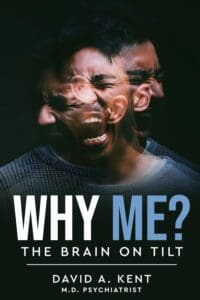
Why Me?: The Brain on Tilt by Dr David Arthur Kent
https://www.amazon.com/Why-Me-David-Arthur-Kent/dp/B0FZSF5PW4
This book provides a comprehensive overview of mental illness, emphasizing that these conditions are biological and medical in nature, not signs of weakness or moral failings. It focuses heavily on evidence-based treatment, detailing how recovery is possible for conditions ranging from depression and OCD to bipolar disorder and schizophrenia, often through a combination of medication, psychotherapy (such as CBT, DBT, and ERP), and innovative biological interventions like TMS and ECT. A critical theme is the essential role of family support and education in improving outcomes and reducing relapse rates, alongside the need to combat stigma which remains a major barrier to seeking timely and effective help. The book illustrates these concepts through detailed case studies of individuals managing chronic illnesses successfully, redefining recovery as functional improvement rather than chasing a complete cure.
About the author
Board-certified psychiatrist with 30+ years of clinical expertise in mental health treatment and neuropsychiatry.
Founder and owner of NuMe TMS Clinics in Idaho, specializing in advanced brain stimulation therapies (TMS, Deep TMS, ECT) for treatment-resistant mental illness.
Education & Research Background:
Medical degree: University of Iowa School of Medicine
Psychiatric residency: University of Iowa (1986-1990)
Conducted influential research on conversion disorders and functional neurological conditions
Contributed to multi-site clinical studies on Deep TMS for OCD
Clinical Philosophy: Evidence-based medicine combined with compassionate, patient-centered care. Mental illness is a treatable medical condition—not a character flaw. Recovery is possible.
Mission: Reduce mental health stigma through education, advance access to innovative treatments, and help people understand that proper psychiatric care offers genuine hope for meaningful recovery.
Hosts & Guests

Transcript
You wanted the best, you've got the best podcast, the hottest hotest podcast in the world.
The Chris Vosho, the pre-eminent podcast with guest so smart you may experience serious brain bleed.
The CEOs, authors, thought leaders, visionaries, and motivators.
Get ready, get ready, strap yourself in, keep your hands, arms and legs inside the vehicle at all times.
Because you're about to go on a monster education roller coaster with your brain.
Now, here's your host, Chris Vos.
Folks, Vos, here from The Chris Vosho, John.
I don't know what that long thing was about, I just could pour sometimes folks.
These three shows a week there. What do you want from me?
Every now and then we got to have some fun with this leading.
I'm getting tired of this bell error, this opera, opera gal.
Maybe a higher ballet gal, but that might be weird because the show is mostly audio.
I wanted to show my family and friends for 28 to 100 episodes and 16 years we're bringing the Chris Vosho.
Because we want you to be smarter, we want the world to approve, we want goodness to prevail,
and people to be better to each other than human nature seems to have a habit of allowing.
Before they show to your family, friends and relatives, don't make me pull the car over there and come back there.
Go to goodreads.com for Chess Chris Vos, LinkedIn.com for Chess Chris Vos Facebook.com for Chess Chris Vos.
And YouTube.com for Chess Chris Vos, you can find all those wonderful things we built in 2008.
Opinions expressed by guests on the podcast are solely their own and do not necessarily reflect the opinions of the host with the Chris Vosho.
Some guests on the show may be advertising on the podcast, but it's not an endorsement or review of any kind.
Given we have an amazing young man on the show, we're going to be talking to about his insights and learning.
He's a learning gentleman. He even has a doctor. He's a doctor. So that makes him ultra smart.
And I'm just an idiot podcaster of the mic. Dr. David Arthur Kent joins us on the show. His book is out November 3rd, 2025.
It's called Why Me? The Brain Untilt. I think that was the first rendition draft title of the podcast.
The Brain Untilt. We're going to end with him. Find out some insights on his books and how he can help you deal with the maybe some of the issues you're having.
Mental illness or other things. I mean, you're listening to the show. So clearly there's something mentally wrong with you or mentally right with you.
But that is somewhere in between. But we'll find out because he's a psychiatrist. See how I did that. Yeah, I just worked that right out. Mr. Dr.
David Kent is a board certified psychiatrist 30 years of clinical expertise in mental health treatment and neuro.
Psychiatry founder and owner of new me TMS clinics and Idaho specializing in advanced brain stimulation therapies for treatment, resistant mental illnesses.
That was also the second draft of what we're going to title the podcast before we set on the Chris Vosho.
Because we just kind of figured if you say the Chris Vosho, we figure that there's some brain stimulation mental illness is going on there.
I mean, David, Dr. David Kent, welcome to the show. How are you, sir?
I'm excellent. Thank you so much. I appreciate your reference me as a young man. That's very kind of you.
It's an old Carson trick. We learn gas up the gas making feel really good. And they shine. So that's what we do. Flattery gets us everywhere.
It's it's working for sure. We want people to feel good about beyond the show. So give us your dot com. David, where do you want people to find you on the
two places for my book. I have David Kent author dot com and that takes you to my author book website.
Get some background on myself as well as the book and then how to get the book. And then my clinic in Idaho is new me TMS dot com.
It's N U M E as that's the new me part new me TMS dot com. And that's my clinical practice, at least part of my clinical practice.
So that's the two ways to find me. And as long as we're we're using terms, what is TMS stand for the new me TMS clinic you have?
What is a TMS part? TMS transfer transcranial magnetic stimulation. It's been around for quite a long time. It's FDA approved since 2008.
Well, I'm being used worldwide. So it's always surprising to me when people have heard of it. But that's just it's just it suffers from an awareness problem.
That's why you're here, right? That's why I'm here. Let us know what this is and how it can work. No, it's just where I hit people over the head with the magnet and they get better or worse or so to speak.
It's been highly developed. It's actually the most where we search treatment of all time psychiatry probably all over 100,000 worldwide papers.
Use some electromagnetic device that targets the specific part of the brain that's under performing so to speak.
And it stimulates in such a way that it takes it to the gym and it works it out. And when it actually works, it stays working for months or even years with
there without any further intervention, which is kind of amazing. We call that durability. Yeah. And the other nice thing about one more thing is there are no
long-term side effects to TMS never ever been discovered. And that's highly unusual. Everything has long-term side effects. Just not TMS. Yeah. Yeah. So does my Red Bull. I'm drinking. That's the 30 minute or 30 seconds elevator pitch right there.
TMS FDA approved and so you have all these devices in your office that that help help fix the brain. Do you think there's anything you can do for the people on Twitter because we've been over there.
And I'm not sure brains are even. Do you have to have a brain to use the service? I just don't know if the science has evolved yet to do that.
You have to have a brain to start. You have to have a starting point. So give us like a 30,000 over you. What's inside this book of yours? Why be?
I took me a minute to think about this. I wanted to write a book for a while, but just didn't feel like I could. But there was no book out there written by a psychiatrist about mental illness in general.
But I didn't want to write something dry or I didn't want to write a textbook. I wrote it in such a way that it hit the major mental illnesses.
But each chapter, not every chapter, but about half the chapters are in story fashion. So they're about an individual who struggles with state of depression or bipolar or OCD or mortal and precise disorder or schizophrenia.
Things like that. So it's relatable. People resonate with it. It kind of tells a journey.
But before that, I talk about the brain science around mental illness because there's a real brain science around it.
And then the last few chapters are about what families can do and how they can support and have the resources they need to help their loved one.
So it's kind of a journey through the book. It's not very long. It takes about an hour to have to read the book. It's 11 chapters.
At the very end of the book, there's an appendix with enormous amount of resources.
And the thing I say about the book is it's not my opinion and it's not my belief system. It's an authoritative evidence-based book.
And so there's over 200 sightings in the book of research behind the book. And if even my colleagues came along and said, I don't think this part's true, I would change it if it weren't true.
So I always want to keep it up-to-date and sort of current contemporary science behind it.
And there's FDA approvals there. I don't know if it's... I mean, to me, FDA approvals seems like it should be a standard of what you could maybe trust.
Yeah, I only recommend... There's some non- FDA things, but I only recommend pretty much FDA-approved things.
But this whole book is about evidence-based treatment. So evidence behind it, I don't put it in the book. Only in stuff that's based on evidence.
Now, do you also talk in the book about ECT? And if so, tell us what that is.
Yeah, I do talk about ECT. I really talk about everything. I don't really leave anything out because I don't think that's fair.
ECT stands for electro-convulsive therapy. It's been around since the 1950s and developed over the 70s and 80s to what it is today.
Use electro-electricity to stimulate the brain to go into a grandma seizure. This is all currently done under anesthesia with some muscle blockers, so you don't have a full-on seizure.
Wow. It's also quite safe. Over time, you run the risk of having some problems with the short-term memory loss, which is also reversible.
You know, that can limit how much you can do with ECT, but it's still in heavy use today. I've still, I can sulked on it, and I've done it since the 1980s, so I've done a lot of ECT.
So, anything related to biological interventions and mental illness would be my expertise, like all these things.
I'm going to send you everyone I've been texting in my phone. Now, who are the patients that these treatments are ideal for? Is there a certain targeted group or just anyone with the brain?
How does that work?
It's definitely defined. ECT is primarily for major depression or refractory depression. We sometimes use it for kind of runaway mania, but that's pretty rare.
It's really more used for people who haven't responded to medications and other treatments for depression, and they get quite hopeless in suicidal.
So, that's primarily how it's used. TMS started up being used exclusively for depression. It's also quite powerful.
However, they found other places in the brain that it's also good for. It's also good for OCD, and then it's been FDA approved for that.
So, depression and OCD, there's a company out of Israel called Brainsway that's also developed an FDA approval for smoking cessations.
We think it'll dovetail into other addictions, so that's kind of an exciting aspect of it as well.
Now, the first thing, the TMS, that's designed to reactivate the brain in certain sections that aren't activating properly. Is that correct to understand?
Yeah, that's the simplistic way of looking at it. It does stimulate the brain in a targeted fashion, and we call it circuits in the brain.
These are all fairly new concepts that the brain actually has circuits, and TMS targets a particular circuit, usually stimulating it.
Sometimes, there are certain circuits we want to inhibit or slow down, and in general, we tend to stimulate the circuit.
And what we found over time is it actually causes neuropusticity in that circuit, meaning that the anatomy actually changes, and that's why TMS can have a long-lasting benefit, not just short-term, but long-term.
Now, does it help people with schizophrenia, bipolar disease, stupidity, etc., or just maybe the first two?
I haven't seen a stupidity indication yet. Schizophrenia not so far, it doesn't really treat psychosis.
Oh, really? In terms of bipolar, it is effective for bipolar depression, just as it is for regular depression, and I've seen that by myself firsthand with people.
So, it does have that. The FDA has been slow to approve that for bipolar, but it does work in my experience, and it also works for obsessive-compulsive disorder.
The TMS does, and I actually got one of the first machines in the United States to treat T.O.C.D., and that's why my name will appear in some of the research papers, because I supplied data to the company that did that.
So, this is pretty wild, this EMP stuff. It's like an induced stroke, is that correct? I mean, it's controlled, but...
I mean, the TMS?
Yeah, or no, is it the EMP or the TMS that's a controlled stroke? Is it the... I think I'm getting my terms right now.
Yeah, I think I'm getting a mixed up. I don't know what the controlled stroke is, but TMS is heavily controlled.
We control the parameters really tightly, and the standards that I follow are worldwide standards, and there's never been found to be a long-term side effect at TMS, which is pretty remarkable.
Especially since it's such an impactful treatment, you expect something to be kind of a mess a little bit, but there just isn't.
In fact, Moore is probably better with TMS, so that's also unusual.
Moore is not always better with medications that often makes things worse if he goes too high, because he's checking his side effect problems.
Okay. I guess the ECT...
You talk about ECT.
ECT is the induced current.
Yeah, it's electrical shock kind of thing in the brain. It causes the brain to go into an epileptic seizure, and the seizures felt to be therapeutic, and it is for depression.
It is under control, so if it goes on too long, we stop it with medication.
It's a very controlled setting, anesthesia is involved.
Patients don't really feel any discomfort, and we've been doing it forever, so we really have...
We're really good at it, and I've done it forever myself.
I don't do it so much anymore, but I've done it a lot of treatments. I've been involved with a lot.
I understand the parameters around it pretty well.
That's pretty well. I had a talk there, and I didn't know it would be a bad way to induce that.
Does it help with schizophrenia and bipolar then?
Not so much with schizophrenia, but it can help with bipolar depression, or like I said earlier, if you have really an uncontrolled mania.
I've done it once in my career.
I had a really manic lady back at my training in Iowa. The meds just would not touch her at all.
We decided to do ECT, and she walked out of the hospital like nothing had ever happened.
She did awesome, so I've seen where I could work there.
But we don't use it that way much because we have a lot of medications that are disposal these days.
Do you find it? Why does this work?
We talk a lot about in the discussions we've had over the years.
We've done one or two episodes where we talk about how the body keeps score,
and how the body will house trauma, will house damage,
and it seems to make it almost a physical part of itself,
or at least there's an anchor there for the repetition of the thing that's in a physical thing.
Is this part of that where the body's keeping the score in the brain,
and there's certain elements that aren't functioning properly because of something maybe?
I think it's partly true like that. The brain can be really entrenched.
Most of the progressions that we treat today that are long-term, they're long-term,
and a lot of patients will tell me that dates back to adolescents or even childhood, early adulthood,
and then they might be 50, 60, 70 years old, and they still have it.
So it becomes entrenched, really entrenched, but the remarkable thing with TMS doesn't really matter.
If they could be 80, and they could come out of the depression with TMS after all those decades.
So TMS has a unique way of working it.
It helps me wire the circuit that's defective.
On the medication side, we've always had this party line that's chemical balance, chemical balance,
and there's some maybe true to that, but they haven't really shown it that way.
We just know that these medicines affect different neurotransmitters in the brain,
of course, in our gut as well, because they have the exact same neurotransmitters as our brain.
So that science is still unclear at times.
We have data to show that they work. We don't really know how they work.
If I give you an aspirin and your headache gets better, we don't really know how.
We've been using aspirin for decades, or I give you an ibuprofen.
We don't know exactly how it works, or our Tylenol for that matter.
We just know that they do work.
That's some of the challenge we have still.
But with TMS, we know more about that than anything else in terms of its mechanism, how it works, where it works.
We can show it on brain scans that it works.
It's pretty phenomenal.
But outside of that, it starts to become a little muddier, so to speak.
The brain's one of those things I think we're still trying to figure it all out.
The brain is sort of the last frontier, in my opinion, because it's slightly complex.
In my book, I talk about the brain. I talk about how complex it is.
It's considered one of the most complex machine pieces of machinery in the universe, at least as far as we know.
Even though we have supercomputers that AI that can do amazing things,
it takes a tremendous amount of computing power to even come close to what our brain can do.
And our brain is only three pounds.
And it doesn't use near the energy that a super computer uses.
We still have a huge advantage over the rest of the universe.
And so that's why it's going to take us a minute to figure this thing out.
Yeah, and it's though, you know, you can do a readout on it and stuff, or you can diagnose it with, you know, where you get like a car readout that tells you the air codes.
But that day seems to be coming, so I don't think it's going to be very long.
It's started to get these narrow interfaces.
Wow.
And the neuro imaging is getting more sophisticated.
They couple that with electrical mapping of the brain with neuro imaging.
And we're getting closer and closer.
And I think genetics play a huge role when we can start to see how genetics play out and what the blue prep looks like.
And so I think it's coming.
I really do.
You know, my sister is MS and one of the problems with MS and I'm not a doctor, so you can correct me all you want.
But basically what it does is a lot of it is a misfiring across the the cushioning system of the brain.
There's like a gel or something that I don't know, sits in or something, sounds like some scientists movie.
And then it goes down the spine.
There's kind of like a protective thing.
And I guess to my understanding with MS, there's scars that scar tissue and scars that develop across that membrane.
And it randomizes different things like one day my sister's leg won't work the next day.
Her eye won't work.
You know, the next day it's something else.
And is there any way to maybe prepare stuff like MS or Alzheimer's, dementia, things of that nature as we age?
That falls under the category of an autoimmune disease.
So the body is attacking itself.
Wow.
Just like rheumatoid arthritis is attacking our joints.
So we have different autoimmune disorders that turn on ourselves.
And so an MS, the immune system is turning on the brain and that's why.
But it migrates.
So, you know, if you look at an MRI of someone with MS, you see these little lakes in the brain where you have these MS spots.
And that's where the brain is being attacked at that particular time.
But over time, it migrates and changes.
That's why your sister's symptoms aren't consistently always.
It's not like she had a stroke in part of the brain and it's just fixed.
It's kind of just taking turns targeting different areas of the brain, which we don't really understand why.
But it's really an autoimmune process.
Until we can understand the autoimmune process better, which I think we will.
I think we'll start to learn why the brain, why the immune system turns on itself and how to shut it off.
Yeah.
So, I have to take medication to keep it in check.
Although, as my joints would be disfigured and I'd be in a lot of pain all the time.
But because of the drugs, at least it tones it down.
So I can function normally, thankfully.
But, you know, sometimes hoping that they'll have a cure for it just like for your sister.
So, that's the thing the brain can be affected by so many things.
You know, there's strokes, there's infection.
You know, there's a variety of brain trauma.
There's autoimmune diseases, there's ruptured aneurysms.
There's just so many things that can go wrong with the brain.
And so, the more we understand it, the better we can have answers to help people.
That's another good question you kind of triggered me on there.
Can it help with brain trauma?
I've had some friends that have gotten brain trauma.
And it's changed their lives indefinitely forever.
We've had people on the show that written books about their children getting brain trauma.
And what it was like to try and, you know, circumvent it all and understand it all.
And is there any help for brain trauma patients?
I think TMS is being researched worldwide.
It's one of the most heavily researched brain treatments ever.
So, there's thousands of researchers around the world,
even neural surgeons use TMS to some extent,
to find and see how it would help people who've had a stroke or damage to the brain.
There's some preliminary data suggest that there's possibilities of that.
I still think they have a lot to work out in terms of protocols.
There's several different devices, TMS devices in the world.
One is called the figure eight coil.
The other one is the brain's ways, age coils.
And they both have value.
The figure eight coils are much more accurate, like a scalpel.
And brain space can be act a little bit more broadly and hit more tissue.
And target areas that those figure eight coil can't target.
So, I think that I think just hope that some of this stuff was going to make a difference
in someone who's had a test of brain trauma,
it depends on where the trauma was, as well as strokes,
to some degree, depending on how sizable the stroke is.
And how much tissue may not get it back?
Yeah, that's true.
It was interesting to me, my first friend had gotten it.
I never heard of brain trauma, brain injury sort of thing.
I don't know what the correct term is.
But I remember, you know, we used to go to lunch all the time,
hang out, have a coffee, shoot the shit.
You know, we had just a great friend.
We were going to write a book together before my book.
And he did drink it a bunch of vodka at home.
I've been guilty of the same thing.
And I guess he passed out in his kitchen and he fell backwards.
And slammed his head into the floor.
And he woke up with blood coming out of his ear
and he had bleeding on the brain.
And they had to go in.
And I think that actually made it worse.
They had to go in and drain the blood from the brain.
They were concerned about it.
But it gave him this permanent thing.
And suddenly he couldn't go out anymore.
You know, anything with lots of noise or stimulation
would really muck him up.
And so we couldn't hang out anymore.
And if I did, it was like, you know, 10, 15 minutes.
And he like, Chris, I'm overwhelmed.
I got to go.
And I just, you know, I just had to understand his condition.
But it was even more shocking to know that it was lifelong.
I guess it's good.
A lot of these things are being developed and have been developed.
How does it take for me to do one of these
if I qualify for this sort of treatment?
Like TMS, I mean, yeah, the TMS.
All insurance has covered 36 treatments, depending on the,
depending on the manufacturer, but it's typically a 20-minute session,
five days a week.
So it's about six or seven weeks of treatment.
It's 20 minutes a day.
So you have to be willing to commit to that.
But most people are because the people who come forward
have failed everything else.
So they're pretty desperate.
And then people come even from out of state to come treat with me.
And it was worth it.
But I've had people, I've got a guy now.
He's driving about two hours a day one way
for the last two and a half months to get treatment.
So people can get real desperate when they feel hopeless
and they don't see any way out of this.
So it's just so people who live in my area, it's okay.
So no brainer.
I'll just go get a 20-minute treatment and go back to my,
so everything else I do.
Now the procedure, according to Google here,
and you can tell me if I'm right or wrong,
because sometimes it is wrong, folks.
Big surprise is that there's a device that goes onto the head
that delivers some electromagnetic pulses
to the prefrontal cortex, which regulates mood.
Now I remember when I suffer from massive depression,
OCD, ADHD, I still have massive ADHD,
but we try and manage it as best we can with vodka.
No, I'm just kidding.
Don't do that, folks.
I used to.
Anyway, and the one thing I learned about being on Zoloft
and taking depression medicine
was part of what was going on with my prefrontal cortex
was it was being overwhelmed with data information.
And so instead of having a clean flow through here,
it was just bogging down nasty.
It was like trying to ram 50,000 ships through a dam.
And you're like, eh, that flow is not going to work there, buddy.
Is that a good analogy of what's taking place
with this procedure of TMS?
Kind of, I mean, the initial discovery of TMS
was in 1985 in London, England,
where they found an effective area in the left,
what they call a left-rosolateral prefrontal cortex.
They got kind of lucky.
They found a psychiatrist out of South Carolina
helped develop the technology named Mark George.
They started treating it.
They did double black placebo control trials
to show that it was better than placebo.
They proved that then the world took notice
and it just exploded from there.
So the prefrontal cortex is really critical
in a lot of things.
When it comes to mental illness, depression,
schizophrenia and other things,
it's the last part of the brain to develop
and embrace in humans.
So it developed the late-ass adolescent 30-20s
about two years later in males than females.
And so it's kind of the breaks, like,
it shows, once it develops,
she starts to have a little bit better judgment
is maybe a little more cautious.
And that's why an adolescent males are not so cautious,
because that part of the brain is not fully developed yet.
So it plays a lot of different functions and roles,
but it's super critical.
And yeah, we do target that with TMS,
but there's some other locations that we can also target.
There's a singular gyros that also has the depression
and an OCD circuit.
And it takes a specialized coil to hit that,
but only in brains ways,
the only one is really developed that.
And I use the brains way device.
But to begin, we're starting to find different circuits
and the brain that do different functions.
And the science just keeps marching forward.
So that's the exciting part.
Now, schizophrenia is a big deal.
I have a, sadly, I have a good friend on Facebook
that I've known for probably 10 years.
He's a Silicon Valley guy.
And his daughter has schizophrenia.
And she's literally gone off her meds
and walking the streets and disappeared
and they're trying to find her.
And they found her close.
So they're even more worried now about
where she's at.
And I've had employees that have had family members.
There's schizophrenia and heard the stories.
And it's heartbreaking.
And a lot of cases is this pretty helpful?
Or some of these, some of the work,
I know if there's a schizophrenia chapter
in the book here.
There is, you know, a TMS hasn't been shown to be helpful.
It just gets a friend of that could change.
It's still medications.
And we treat what we call the positive symptoms
as the psychosis piece.
And even that, we don't always fully control it.
But we often dampen it.
Or even get rid of the psychosis.
It's the negative symptoms of schizophrenia
that are notoriously difficult to treat.
That's the lack of motivation,
the lack of sex drive,
the lack of social abilities.
They become really just,
they some, that's the disabling part of it.
Until scientists can figure that piece out,
we're still going to struggle with it.
But without medicines and leaving them psychotic,
it's even worse.
So we partially treat it enough to kind of keep them
hopefully off the streets.
But it takes, it takes a village for that to happen.
Oh, it does.
We call it a downward drift.
The more they go off their meds, the more they drift downward.
And they're almost inevitably homeless at that point.
So it's very, very difficult on families.
But, but the right support, the right medicines,
a lot of times that can be avoided.
It's great to have something for us
to deal with the prefrontal cortex.
You know, I was reading how my medication would slow it down.
And this is great for people that they have like severe depression,
other issues that have not responded to medications.
Is that correct?
Correct.
Yeah, that was from the Mayo Clinic.
The, you know, I mean, back in the day,
what they would do to fix stuff like this is the frontal lobotomy.
And that's what my psychiatrist still says I need.
But.
That's a good idea.
We kind of moved away from that.
We used to do ice, by ice baths.
We used to do all kinds of things.
And I worked at a state hospital when I was my resident in the 1980s.
And Iowa.
And it was, it was like a turn of the century facility.
And they had different buildings on campus, huge sprawling campus.
And they had these tunnels underneath to connect the,
the different buildings.
And at night, I have to go down to these dark tunnels.
And you can see where they used to have chains on the wall.
They chain them to the wall.
Oh, my God.
They had one of the floors on the top floors where they didn't use them anymore.
Kind of like a museum.
You can see these ice baths they would use.
And the things they would use very barbaric, right?
But they didn't have any medicines.
They didn't have anything to do.
You know, they did exorcisms and whatever they thought they could do
because they were really struggling with,
really nothing in their, at their disposal,
rather than taking them out of society.
Yeah.
It's really all they could do.
And, you know, trying to keep them from injuring themselves.
You know, my sister was more cerebral palsy
and she would hit herself in the head over and over again.
You'd have to get her stopped.
The, you know, one of the, one of the,
the frontal lobes,
that frontal prefrontal corplex,
that really seems to affect a lot of people.
And so I'm going to do something like this.
So they come in the office.
Now, these are people who can't tell a medicine in for this.
They have to show up to an office that's localized,
whether it's your office in Idaho or,
or maybe other offices they can find around the world.
Yeah, they have to get to a machine.
And people who do TMS,
there's several forms of TMS.
There's brainsways, deep TMS.
That's what I do.
I find it to be,
research has shown it to be a little bit more reliable
because it doesn't miss the target as much.
And then there's figure eight coils,
which have been around forever.
And so you can, you can Google it in our TMS
and your area for providers.
If you go to brainsways site,
they have, you put your zip code in,
and it'll find your brainsway provider.
And I think that they are very good,
a good place to start, for sure.
I'm going to start referring stupid people to you on,
I found on Twitter.
You're asking, you're asking,
that's a big ask right there.
That's a big ask.
Yeah, it's,
you got to have a brain first, folks.
Anyway, yeah.
Now, tell us about this magnet.
You mentioned the coiled magnet a few times.
Can I just take five refrigerant magnets
and kind of just put them up against my head
and go to sleep for a while with that work?
But they're not, they're not like traditional,
traditional magnet.
They're a type of electromagnet.
And they use a certain geometry and configuration
because you don't want just this broad,
wide magnetic field
because then you're just using a shotgun
because with TMS,
it targets specific areas of the brain.
So it has to be a fairly narrow beam.
Anybody can actually build a figure eight coils
on patented.
So you could build that in your garage
if you know what you're doing.
And you could use it.
You just wouldn't know what you're doing.
I wouldn't recommend it.
Now, the Brainsway device is not a figure eight coil.
It is patented.
They use these H coils inside of a helmet.
So you can't build those
without violating a patent violation.
And you probably wouldn't know what you're doing anyways.
I don't know what I'm doing.
It comes to those.
But the figure eight coils technically,
you could build legally.
It just wouldn't know how to use them.
Yeah.
All right.
So fridge bandings are out then.
Go to professional peoples.
Yeah.
Yeah.
It's magnetic fields
and the brain runs on electricity, right?
It's electrochemical organ.
Ah.
If you have one on Twitter.
So how can people on board with you?
How can they reach out?
How can they find out more?
And then maybe if they can work with you
and your services, handshake.
If they're, you know, my area or whatever,
obviously they can contact my,
they can go to my website,
newme-n-u-m-e-t-m-s.com.
And if you can do a self-assessment,
you're going to reach out to us through an email.
If there's a phone number on there, they could call us.
If you want more information on my book,
you go to davidketauthor.com.
And at the bottom there's also a way to email me through that.
So there's several ways to contact me.
I certainly can't give up my private phone number
and have it to not be called as long as times.
What?
I get a ton of spam calls.
I wouldn't even be able to discern who's real and who isn't real.
I don't even, I can't even answer the phone anymore
unless it's somebody close to me.
Oh, my mom, I know her.
Of course people believe messages.
So that way I can sort it out.
It's crazy.
I mean, I get all these spam calls with AT&T.
And I'll even say,
we're pretty sure this is a spam call.
Do you want to accept it?
And you're like,
if you're sure it's a spam call,
why am I getting the ring?
What's going on here?
I thought.
Yeah.
I get that.
I get that too.
I don't know why.
We had a telemarketing.
You just see with a mortgage company in the 2000s
and late 1900s.
And they invoke that,
was that do not call this?
And I'm like,
how are these people still allowed to call me?
I'm like after 26 years.
Anyway.
I know I get that.
That's a different show.
That's a different show.
That affects my mental health.
That's for sure.
I might need some of that electoral therapy.
Because you know,
you know, it's funny.
You never take their call and you always send it to spam.
And they'll just keep calling from other numbers.
And it's like,
how many times you have to call with me and I'm answering
to determine that I'm savvy on to you?
That's what your game is.
But they're never going to answer it.
But they're using rubble callers.
So they don't care.
Yeah, they just say,
just the machines are doing it.
Not them.
Yeah.
That's the problem.
I'll give people a final pitch.
I had to pick up your book.
And all that good stuff.
Yeah.
I do.
I think it's,
it's very much that resonates with people.
I want anybody to read it.
Because it helps you understand them.
And it's far, far better.
It helps you understand anybody you know.
Everybody's touched by it.
So it's,
I think I just really feel like you'd get a lot out of it.
And I think you,
you know, people,
it gives you also a language on how to talk to each other.
That's really important.
Yeah.
Yeah.
The evidently, but you know,
give it out for Christmas and Thanksgiving.
That way when you go to your dinners there,
Thanksgiving and Christmas, you know,
maybe help me better.
We have Easter coming up.
But we have,
we have,
Satan,
Patrick's day.
You know,
you know, I try to allow electric shock therapy when I was a kid.
But as most of you,
me stuck in a,
a fork I licked into a socket.
And that did not make me smarter.
So that was a curly hair came from?
Pretty much.
Yeah.
Pretty much.
So good set up there.
But yeah, folks,
yeah, it didn't work.
So just a word to the wise.
I also sucked on those tasty,
lead paint chips.
My grandpa had me peel off the house.
Yeah.
That was really nice.
Right now.
Yeah.
Right now,
my audience is going.
Everything started to come together and make sense here after 16 years.
Dr.
David Kent.
Thank you for being on the show.
We really appreciate it.
I appreciate it,
man.
Thank you.
And thanks for tuning in.
Order up his book.
Why me?
Well, until out November 3rd,
20, 25,
and yeah,
maybe we should rename the,
the podcast that,
the Brain Untilt podcast.
I know.
Do you have a podcast yet, doctor?
I do not.
It's a lot of work to do a podcast.
I can't catch up to someone like you.
I've done it for 16 years.
How could I catch up to that?
Well,
probably five months.
I had, I hosted a radio show for a while.
But it was so much work.
I said, I just can't do it.
I don't want to get hit by a bus or lightning.
You'll, you'll be able to catch up eventually.
But no, I, the Brain Untilt,
that would be great podcast name.
That's all I'm saying.
That could be.
Yeah.
Good title.
The Brain Untilt.
Welcome to the Brain Untilt.
You get that guy from,
let's get ready to rumble to do your intro.
But I would need your voice to do that.
I don't think I got that.
Let's get ready.
I don't want to get sued.
Yeah.
Anyway, thank you, doctor.
Come in the show.
You're welcome.
Thanks for having me on.
Thank you.
And go to goodreads.com for just Chris Voss.
LinkedIn.com for just Chris Voss.
Facebook.com.
Swords says Chris Voss.
And YouTube.com.
Swords says Chris Voss.
And remember,
if you don't,
refer your family friends or relatives,
get to the center for the show.
I'll haunt you in your nightmares.
Thanks for letting your audience always work, Chris.
Anyway, guys, good.
We certainly appreciate you guys.
Thanks for tuning in.
Be good to each other.
Stay safe.
We'll see you next time.
Bye-bye.
You've been listening to the most amazing intelligent podcast ever made
to improve your brain and your life.
Warning.
Good evening to much of the Chris Voss show podcast.
And lead to people taking your smarter, younger, and irresistible sexy.
Consume in regularly moderated amounts.
Consult a doctor for any resulting brain bleed.
All right, duck.
Good job.
More from The Chris Voss Show
View all episodes →
The Chris Voss Show Podcast – Howie, The Unusual Bear by Laure Stack
The Chris Voss Show
Apr 16, 2026·35:49·failed
The Chris Voss Show Podcast – Hearing The Voice of GOD: The Exciting life of a P...
The Chris Voss Show
Apr 15, 2026·34:50·failed
The Chris Voss Show Podcast – Unseen Leadership: Interrupt the Instincts That Bl...
The Chris Voss Show