
The Fourteenth Rule – Discernment of Spirits /w Fr. Timothy Gallagher – Discerning Hearts Podcasts
About this episode
The 14 Rules of the Discernment of Spirits with Fr. Timothy Gallagher with Kris McGregor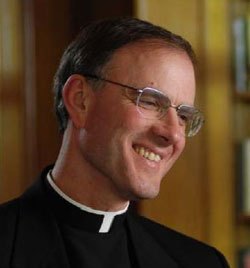
Episode Sixteen: Rule Fourteen – Strengthening the Weakest Point
Episode 16 – The Fourteenth Rule:
Likewise, he behaves as a chief bent on conquering and robbing what he desires: for, as a captain and chief of the army, pitching his camp, and looking at the forces or defenses of a stronghold, attacks it on the weakest side, in like manner the enemy of human nature, roaming about, looks in turn at all our virtues, theological, cardinal and moral; and where he finds us weakest and most in need for our eternal salvation, there he attacks us and aims at taking us.
Episode Sixteen of The Discernment of Spirits: Setting the Captives Free brings the First Week rules to completion with Rule Fourteen, the final and culminating insight of St. Ignatius. Fr. Timothy Gallagher, in conversation with Kris McGregor, explains how the enemy studies the whole of our spiritual life and attacks precisely where we are weakest.
Ignatius describes the enemy as a leader intent on conquering and robbing. This is not a noble battle. It is theft and destruction. Like a captain surveying a fortified town, the enemy circles patiently. He studies the defenses. He looks for the crumbling wall. When the weakest point is found, the attack begins there.
Fr. Gallagher unfolds this image with care. He invites us to picture a fortified town on a hill. Strong walls. Towers. Gates. Yet one section is cracked and fragile. That single weakness renders the entire defense vulnerable. Ignatius teaches that our spiritual life works the same way. The enemy does not attack randomly. He attacks where discouragement most easily takes hold.
Fr. Gallagher names how this appears in lived experience. A person notices a repeated pattern. The same exhaustion. The same fear. The same frustration. The same loss of confidence in God’s love. These are not coincidences. They reveal Rule Fourteen terrain. This is the place where the enemy returns again and again.
Ignatius does not leave us without a response. Fr. Gallagher explains that the remedy is proactive and hopeful. The town does not wait for attack. During a time of peace, the people examine their defenses. They identify the crumbling wall. They rebuild it with care. Stone by stone. What was weakest becomes strong.
This is the goal of Rule Fourteen. The discerning person learns where the enemy is most likely to strike. Even before temptation arises, growth begins there. Virtue is strengthened. Balance is restored. Interior wounds are tended with honesty and patience. When the enemy returns, he finds no easy entrance.
Fr. Gallagher draws wisdom from St. John of the Cross, who teaches that growth in one virtue strengthens all the others. When the weakest point is healed, the whole spiritual life gains stability. Freedom deepens across every area.
Kris McGregor raises an important connection to healing. Often the weakest point is rooted in a wound. A memory. A fear. A place of pain that continues to influence responses. Fr. Gallagher affirms this insight and turns to the Gospel. Jesus is revealed again and again as the healer. Growth in discernment often includes allowing Christ to heal what lies beneath repeated discouragement.
Episode Sixteen presents Rule Fourteen as the doorway into a lifelong discerning life. The rules do not end here. They begin here. When the weakest point is strengthened, the enemy loses ground. The heart grows resilient. Freedom becomes stable and enduring. Captives are set free.
Discerning Hearts Questions for Reflection and Study
Personal Reflection
-
Do you notice patterns where discouragement returns repeatedly?
-
What situations most often weaken your prayer or confidence?
-
Are there wounds or fears beneath these recurring struggles?
-
How might you begin strengthening this area with patience and grace?
-
Where might Christ be inviting you toward healing?
Group Reflection or Study
-
Why does Ignatius place Rule Fourteen at the end of the First Week?
-
How does the fortified town image clarify the enemy’s tactic?
-
Why is proactive growth more effective than reactive resistance?
-
How does healing relate to long-term spiritual freedom?
-
How can communities help one another strengthen weak points?


 Explore the complete Discernment of Spirits series with Fr. Timothy Gallagher
Father Timothy M. Gallagher, O.M.V., was ordained in 1979 as a member of the Oblates of the Virgin Mary, a religious community dedicated to retreats and spiritual formation according to the Spiritual Exercises of St. Ignatius. Fr. Gallagher is featured on the EWTN series “Living the Discerning Life: The Spiritual Teachings of St. Ignatius of Loyola
Get every episode summarized
Each time Discerning Hearts - Catholic Podcasts publishes, we email you a written briefing from the transcript — the topics, who appeared, and any specific claims, with the ad reads skipped.
Email me new episodesFree for 3 shows. No card needed.
Hosts & guests
Transcript ready
246 searchable segments. Every word is indexed and playable.
Full transcript
Discerning Hearts - Catholic Podcasts — The Fourteenth Rule – Discernment of Spirits /w Fr. Timothy Gallagher – Discerning Hearts Podcasts. Machine-transcribed; use the interactive transcript above to jump the player to any line.
Deserting Hearts.com In cooperation with the oblates of the Virgin Mary presents The Desermin of Spirits, setting the captives free, with Father Timothy Gallagher. Father Gallagher is the author of seven books published by the Crossbroke Publishing Company, on the spiritual teaching of St. Ignatius of Loyola, and the life of Venormal Brunel and Terry, founder of the oblates of the Virgin Mary. Father Gallagher is featured on the EWTN series, living the Deserting Life, the spiritual teachings of St. Ignatius of Loyola, the Desermin of Spirits, setting the captives free, with Father Timothy Gallagher. I'm your host, Chris McGregor. The 14th Rule. Likewise, he conducts himself as a leader and tent upon conquering and robbing what he desires, for just as a captain and leader of an army in the field of pitching his camp and exploring the fortifications and defenses of the stronghold,
attacks it at the weakest point. In the same way, the enemy of human nature, roving about, looks and turn at all our theological, cardinal and moral virtues. And where he finds us weakest, and most in need for our eternal salvation, there he attacks us and attempts to take us. Have we really reached Rule 14? We have now reached the 14th and final rule. Actually, could we say that it's not really the end, but actually just the beginning? It's the end of the 14 rules and the beginning of a spiritual adventure of living the Deserning Life. And being set free. And being captives who are set free. As God never called us to captivity. If in Rule 12 Ignatius wants us to see that the enemy is essentially weak in his temptations and the importance of standing firm right in the beginnings. And if in Rule 13 Ignatius wants us to see the enemy's desire that we keep his troubling suggestions
and burdens secret and not reveal them, and the need to do exactly the contrary. In Rule 14, what Ignatius wants us to see is the enemy's astute sense of our weakest point and the fact that he will attack us right there and how we can respond to and negate that tactic of the enemy. I think the simplest thing for us is just to look right at the text of the rule. And again, we have the metaphor or the parable and then the application from the parable. So Ignatius says likewise, in the enemy conducts himself as a leader intent upon conquering and robbing what he desires. Now, the robbing tells us that this is not a noble leader. Leading forces in a just cause. But this is simply the leader of a group of thieves who wants to pillage and rob and destroy. For just as a captain and leader of an army in the field, pitching his camp and exploring the fortifications and defenses of a stronghold, attacks it at the weakest point. There's the metaphor, now the application. In the same way, the enemy of human nature,
roving about, looks in turn at all our theological, cardinal, and moral virtues, which is to say in Ignatius language, says though the enemy kind of looks at the whole of our spiritual life. How we pray, how active we are in the service of God, where we become afraid easily, where we lose patience, so we become frustrated, all the different aspects of our spiritual life. And where he finds us weakest and most in need for our eternal salvation, there he attacks us and attempts to take us. Let's play out the figure a bit in the Spain of St. Ignatius Day. You know when we go to Europe, we see the towns in Ignatius Day, how they tended to be built on the heights for reasons of defense. And so you'll see these landscapes. Let's just picture a landscape in Spain, maybe of a plane, and somewhere, centrally in the plane, is a hill. And set up upon this hill is one of these small towns, or a castle, as Ignatius says, with its walls and its tower and gate and defenses.
And on this day, the towns people look out over the walls of their town and see approaching in the distance, they're rather ragged agg-modally but deadly, group of thieves of brigands. And as they watch, this group sets up camp down on the plane below. And as they continue to watch the leader of this group of thieves accompanied by a few lieutenants, rides out of the camp, up toward the town, safely out of distance of shot. And as they continue to watch, makes slowly the circuit of the walls of the town. And they watch as he studies and explores the approach, the lay of the land, the thickness, the repair of the walls, the towers, the gates. And as they watch, they see the point when the leader of these thieves notes that one point where the wall is in disrepair, where the stone is crumbling, that's the weakest point. And shortly thereafter, the attack begins right there. This Ignatius says is the way the enemy acts. And that is the enemy looks at the whole picture of our spiritual lives.
And in that point where we are weakest, there the enemy will attack us. And again, this is one of these points where I need to speak with great reverence and great sensitivity. Somewhere for each of us, there will be this point where we are most susceptible to the enemy's attack. You know, at times we find ourselves saying in the spiritual life, I always seem to get into this situation. You know, I always somehow seem to push so hard that I wind up exhausted and my prayer life kind of gets out of kilter. Or I make this kind of effort and wind up frustrated or fearful or unsure of the Lord's love in my life. These kinds of repeating situations that always seem to happen again. It's the same old thing that keeps happening and sort of undoes the energy in my spiritual life. This would be rule 14 terrain probably. That place where we seem to be most susceptible to the discouraging, disheartening attacks of the enemy. Now, if that's the enemy's tactic, what is our response?
Let's play out the metaphor a bit further. Here is a day of peace that towns people gather together inside the walls of the town. And they say, you know, from time to time we get these roving bands of thieves. Let's take a look at the repair of our defenses. And the leader of the town accompanied by a few assistants rides out the gate, slowly rides the circuit of the walls. And studies the approach of the land, the thickness, the repair of the walls, the gates, the tower, and sees that point where the stone is crumbling. Look, of what value to the town's people are defenses 10 feet thick of stone. If in one place the walls are crumbling, the defenses are only as strong as the weakest point. And the town's people see it and they set to work. They remove the crumbling stone, rebuild with new masonry and firm up and shore up and strengthen the spot that was the weakest spot in the defenses. Now a day comes when the towns people look out over the walls, see in the distance the group of thieves approaching, set up camp, see the leader, ride up safely out of distance of shot, and slowly ride the circuit of the walls, studying the repair of the walls, the tower as the gate.
But this time things are different. The weakest point is no longer weak. And now the enemy has only two choices. Either to attack in the face of strong defenses or to give up the attack entirely. And this is the final point of growth to which Ignatius would guide us in the last of these 14 rules. This is the person who already knows even before the enemy's attack comes, where the attack is likely to come and is working to shore up and strengthen and grow in that area that was the weakest, but now is becoming stronger and stronger. St. John of the Cross says that when we are growing in one virtue, we are growing in all of them simultaneously. And if that is true of any area of growth in our spiritual life, it will have a special resonance and importance if we know what that weakest area is and we are working to grow precisely in that area. Father Gallagher, would that be a prime motivator then for what has been termed for spiritual healing, going back and examining those areas in our lives?
Areas in our life which has caused us pain and memories that have maybe affected our ability to be able to grow closer. And it always seems to be that wound that rails up and causes us to respond, not necessarily in virtue. Chris, I think you are right on the mark with Rule 14. If we look at Jesus in the Gospel, who is Jesus when the crowds come, he is the healer. He is the other things, he is the teacher in the rest, but Jesus is very much the healer and people come to him for healing. The reason I say that you are so much on the mark with this is because whatever the sort of presenting or surface difficulty is, I get discouraged in these situations. I always seem to push so hard that I wind up exhausted and lose energy in the spiritual life. There are always roots, there will be some kind of wound in this somewhere. To some degree in all of us, all of us need Jesus the healer and there is no shame in that. There is actually a beauty in coming to Jesus that way. And so yes, if we seek the means of spiritual healing to let the Lord Jesus heal these deep places in our hearts, that will be the most powerful thing we can do to shore up what on the surface level presents itself as the weakest point in the defenses.
When the healing touches the roots, not just the branches, but the roots, then that healing is deep and that transforms us and the weak point ceases to become the weakest point. For example, one day a letter showed up on my desk and it was from a woman who was beginning to try to live these rules, to live the discerning life. She told me in the letter, she said, this is what she called an unsolicited testimonial and she said, please feel free to quote this letter if you ever wish. And so it's with her explicit permission that I'll read a sentence from this letter. And this is a woman who really loves the Lord. She says, what I can see now is that the core of the difficulty was the same old problem. Dressed up a bit differently, perhaps, but still the same, of doubting God's love for me with all the morass of negativity that brings with it. It's beautiful to hear someone touch this kind of clarity and you can see the freedom for healing that's beginning to emerge. The same old difficulty, that's rule 14 language, the same old thing.
And here, said with great reverence for this woman, as it may be, she's not alone in this. The real weakest point is, can God really love someone like me with all the morass of negativity and so on. She says that that brings with it. Now let's just dream of this woman who has now seized this so clearly, beginning to shore up this weakest point, if we can call it that, in her spiritual defenses. And so she goes and speaks with a wise competent spiritual person and is able to put this into words and get helpful advice about this. And maybe with the help of that wise competent spiritual person or she goes to a helpful retreat begins to discover passages in the Bible that she can pray with that keep telling her of God's, you are precious and honored in my sight and I love you. Isaiah 43 and many other texts that she begins to pray with, it's kinds of spiritual reading that she can do. Living the life of discernment and daily and all the spiritual tools which are available, this what was the weakest point in her defenses begins to get stronger and stronger.
This woman is going to fly toward the Lord. And again, as I say, this is, this is really the final point of growth toward which Ignatius is guiding us in these rules. Here is another person who loves the Lord but can easily get discouraged. No thy self, the most ancient saying in the spiritual life, no thy self and I get to know what these places are and begin to work with them. In 1975, Pope Paul VI declared venerable an Irishman named Matt Talbot. Matt Talbot was 69 years old when he was walking to Mass when Sunday morning at a heart attack and died there in the street. No one knew who he was. They took him to a hospital and when they undressed the body to prepare it, discovered instruments of penance that this man was wearing. That was the first sign that there was something special about this man. They discovered that this was Matt Talbot. Matt Talbot spent most of his life as a simple worker in a timber yard. He was known to be honest. He would lend a helping hand if he was able. He was somewhat quiet and retiring. He was respected by his fellow workers but that's all anyone knew of him.
When Matt Talbot was 12 years old, he left such schooling as he'd had. The Christian brothers in those days would come into these slum areas and Dublin and set up schools in such fashion as they could. He had the equivalent of first grade and a second grade through that kind of schooling. When he was 12, he left even that schooling and became a messenger boy for a firm of wine merchants. Within a year, he was 13 and was a complete alcoholic. He spent the next 15 years of his life in the classic pattern of a confirmed alcoholic. He would get his paycheck head to the pub by midweek. It would be spent. The rest was borrowing and begging and punting. When he was 28 years old, the day that changed his life took place. He was there in the pub with those who will call and quotes his friends, his body crying out for alcohol and begged each of these companions for the money for alcohol they all refused him.
Either because they simply were not interested in helping him or because perhaps they pitied what he had become. He went home to his mother and told her that he was going to take the pledge. He said, don't take it unless you mean it. He took it for three months, then six months sent for life. From that day, never touched another drop of alcohol. But as you can imagine, it was a bitter struggle for him. With a kind of spiritual intuition, this man who had never really paid much attention to the spiritual life to this point knew that he was too weak to be out on the streets where the pubs were. He was desperately in need of help. He began rising early. The priest, when he would open the church in the morning, would find Matt out there on the steps waiting in whatever kind of weather. He would stay there until he went to work and return after work to the church on Sundays, would attend a number of masses. He later said that in those early days there was only one prayer he could make, kneeling in the church. This man who had never really tried to pray before, with every cell in his body crying out for alcohol and simply repeating over and over this prayer.
Lord, in your mercy, give me the gift of prayer. And gradually, what had become was painful, the attempt to pray, became less painful, became more possible, became simpler, became attractive and transformed him. With another kind of wisdom, he reached out, this man who had such a basic level of education, the few writings we have, are misspelled in their grammatical errors, began reading. We still have his Bible with the passages he loved, marked and underlined lives of the saints one day during the lunch hour, a fellow worker in the Timberyard notice that he was reading, looked over to see what he was reading, and it was John Henry Newman's Apologia Provi to Sua. And said to him, isn't that kind of difficult? And that maybe just smiled a bit and just said, the Lord helps me, reading with his finger, line by line. He also knew that he could not hope to deny his body alcohol if he allowed his body anything else his body wanted. And so began a very strict life of penance.
In all of this, he had the guidance of a priest, whom he had gotten to know and in whom he had confidence and with whom he would meet from time to time. His meals were very simple, his sleeping arrangements were very spare and simple, and of course the instruments of penance, which they found after his death. Now this was a man who knew what his weakest point was, and he built his whole spiritual life on strengthening the weakest point, and it made him a saint. And that's the blessing of rule 14. If we see where that point is, and we begin to work to grow right there, it will transform us. Chris, let's think back for a moment to where we began in the rules with the young St. Augustine heading away from God toward mortal sin. And we can see how far we have come over the course of these rules from that first rule to the person who already knows even before the enemy begins his attack where that attack is likely to come and describing to grow right there.
In a very real way, it's that fulfillment of to thine own self be true. To thine own self be true as God sees us, and not as the enemy of human nature would want us to become absolutely. To thine own self be true, be true to what God has called us to be, created in his image and likeness called to eternal life, called to live in communion with him and to that self, which is the true self be true. We'll return in just a moment to the discernment of spirits, setting the captives free with Father Timothy Gallagher. Did you know that Deserning Hearts has a free app where you can find all your favorite Deserning Hearts programming, Father Timothy Gallagher, Dr. Anthony Lilis, on senior John S. of Deacon James Keating, Father Donald Haggerty, Mike Aqualina, Dr. Matthew Bunsen, and so many more, they're all available on the free Deserning Hearts app. Over 3,000 spiritual formation programs and prayers all available to you with no hidden fees or subscriptions.
Did you also know that you can listen to Deserning Hearts programming wherever you download your favorite podcasts, like Apple Podcasts, Google Play, iHeartRadio Spotify, or even Unautable, as well as on so many other worldwide platforms? And did you know that Deserning Hearts also has a YouTube channel? Be sure to check out all these different places where you can find Deserning Hearts Catholic Podcast, dedicated to those on the spiritual journey. Hello, my name is Deacon Omar Gutiérrez and I want to ask you to support Deserning Hearts in a special way. We, Chris McGregor, or the board and I all know that not everyone listening can help financially. We know we have listeners from all parts of the world, and we have made a commitment since the beginning to make the truths shared through Deserning Hearts totally free. So while you may not be able to contribute financially, what you can do is certainly pray, but also give us positive reviews on whatever platform you use to listen to us. If it iTunes, Android, Stitcher, Spotify, however it is that you get these podcasts, or if you're on YouTube and you like our videos, please give us a good rating and write a review.
The more good ratings and reviews we get, the higher our profile, and the more listeners will discover us, listeners who may have the means to contribute in the future. Please consider rating us and writing a positive review today. We now return to the discernment of spirits, setting Captus Free with Father Timothy Gallagher. The 14th Rule. Likewise, he conducts himself as a leader and tent upon conquering and robbing what he desires. For just as a captain and leader of an army in the field, pitching his camp and exploring the fortifications and defenses of the stronghold, attacks it at the weakest point. In the same way the enemy of human nature, roving about, looks and turn at all our theological, cardinal and moral virtues. And where he finds this weakest and most in need for our eternal salvation, there he attacks us and attempts to take us.
Well, at this point, we've seen the 14 rules. It's just a few final reflections now on where we've been, what we've seen in these rules, and on what lies ahead. As please, God, we try to live them and find strength through the teaching of St. Ignatius. G.K. Chesterton, who is a marvelous writer and a master of paradox, takes that well-known saying, you know, if the job's worth doing, it's worth doing well. Flip sit around and says, if the job's worth doing, it's worth doing poorly. And he's absolutely right. If the best we can do at a job, at a task, which is worth doing, if the best we can do is to do it poorly, then it's worth doing poorly. That is eminently true of trying to live these rules as of so many things, prayer itself and so many things in the spiritual life. If the best we can do in trying to live these rules, these 14 rules is to live them poorly, not always aware, not always understanding, not always taking the right spiritual action.
But since he really doing our best, then it is eminently worth doing. If we think back to where we began, that day when St. Ignatius tells us until one day his eyes were opened a little, they weren't opened a lot. They were opened a little. But that was all God needed to transform his life and through him transform many others. If I think in my own experience, as I try in my imperfect, but I really do try as best I'm able to live these rules in daily life, of how much of my own spiritual experience, the consolations and the desolations and the enemies, temptations and the rest, of how much of this am I aware, how quickly do I pick up on it, how much do I understand, how accurately and quickly do I take the right spiritual action? I don't know how you give a figure to these things. Let me just try this. Maybe do I miss 80% of it, 90% of it, 95% certainly a lot.
But I know that what I do see changes my life and I am forever grateful for the gift of these rules. And we will all experience that. What is important that no matter how poorly we feel, we are trying to live the discerning life that we never give up? St. Teresa of Avalas says at one point after the wealth of counsels about prayer that she gives in her writings, that finally in the end, that finally in the end, having a growing life of prayer comes down to one thing. And that is fidelity. Just never stop praying and you will have a growing life of prayer. I cannot tell you Chris how grateful I am to enter. St. Teresa for that teaching and how that has helped me in the days when my prayer seems so distracted and so much less than I'd want it to be. Just never stop and you will have a growing life of prayer. And the same can be said of living these rules, of living the discerning life. Here is a day when I look on my desk and there is a corner of a sheet of paper sticking out from the pile.
And I wonder what that is and I pull it out and there is the text of the rules. And I haven't even thought about them for the last three weeks. Let me begin again today. Just never lose heart. If we stay with it, the rules will bless us and we will have a growing life of discernment. Finally, I'll conclude with the last verse from John 16, which is John 16, verse 33. In a sense, it's the last thing Jesus says to his disciples in the last supper because John 17 is what we call the priestly prayer. Jesus turns to his father in prayer. And then in John 18, he heads off to the Passion Holy Thursday evening and all that follows. And he says to his disciple, he knows that his disciples, hearts are heavy on this Holy Thursday evening. And so he says to them, in the world you have tribulation. And we do. In so many ways, there are so many things around us in the world and in our lives that bring tribulation into our hearts.
In the world you have tribulation. But be of good cheer. I have overcome the world. And it's in that spirit that we live the discerning life. It's in that spirit that we live these rules because the power that is with us, the infinite faithful, personal love of the Redeemer, has overcome the world, has overcome anything that could ever stop us from receiving, returning and growing in the love of God. And that's my prayer that we live these rules with good spiritual cheer because the one who is with us is infinitely strong. Amen. Amen. One day Jesus entered the synagogue in Nazareth. The spirit had come upon him in his baptism. He had gone out into the desert and overcome the tempter, received the help of the angels. And there in the synagogue in Nazareth, the scroll of the prophet Isaiah was handed to him and Jesus began to read,
the spirit of the Lord is upon me. He has anointed me to preach good news to the poor, to proclaim liberty to captives, and to let the oppressed go free, to let the oppressed go free, to set the captives free. Lord Jesus, we turned to you as we conclude these reflections. We ask that you pour out your grace on all of us who have shared this journey of discovery of these 14 rules. Set our hearts free. Fill us with your love and call us ever in growth toward you. Amen. Amen. Thank you Father Gallagher. Thank you Chris. Thank you. You've been listening to the discernment of spirits, setting the captives free with Father Timothy Gallagher. To hear and or to download this conversation, along with hundreds of other spiritual formation programs, visit DescerningHards.com.
This has been a production of Descerning Hearts and cooperation with the oblates of the Virgin Mary. I'm your host, Chris McGregor. We hope that if this has been helpful for you, that you will first pray for our mission. And if you feel as worthy, consider a charitable donation, which is fully text deductible to help support our mission. But most of all, we hope that you will tell a friend about DescerningHards.com and join us next time for the Desermin of Spirits, setting the captives free with Father Timothy Gallagher.
More episodes
More from Discerning Hearts - Catholic Podcasts

St. Hildegard von Bingen Novena – Day 6
Discerning Hearts - Catholic Podcasts
Sunday of the Twenty-Fourth Week in Ordinary Time – A Time of Lectio Divina for...
Discerning Hearts - Catholic Podcasts
St. Hildegard von Bingen Novena – Day 5
Discerning Hearts - Catholic Podcasts
Saturday of the Twenty-Third Week in Ordinary Time – A Time of Lectio Divina for...
Discerning Hearts - Catholic Podcasts