Loading...
sportsrugbynews
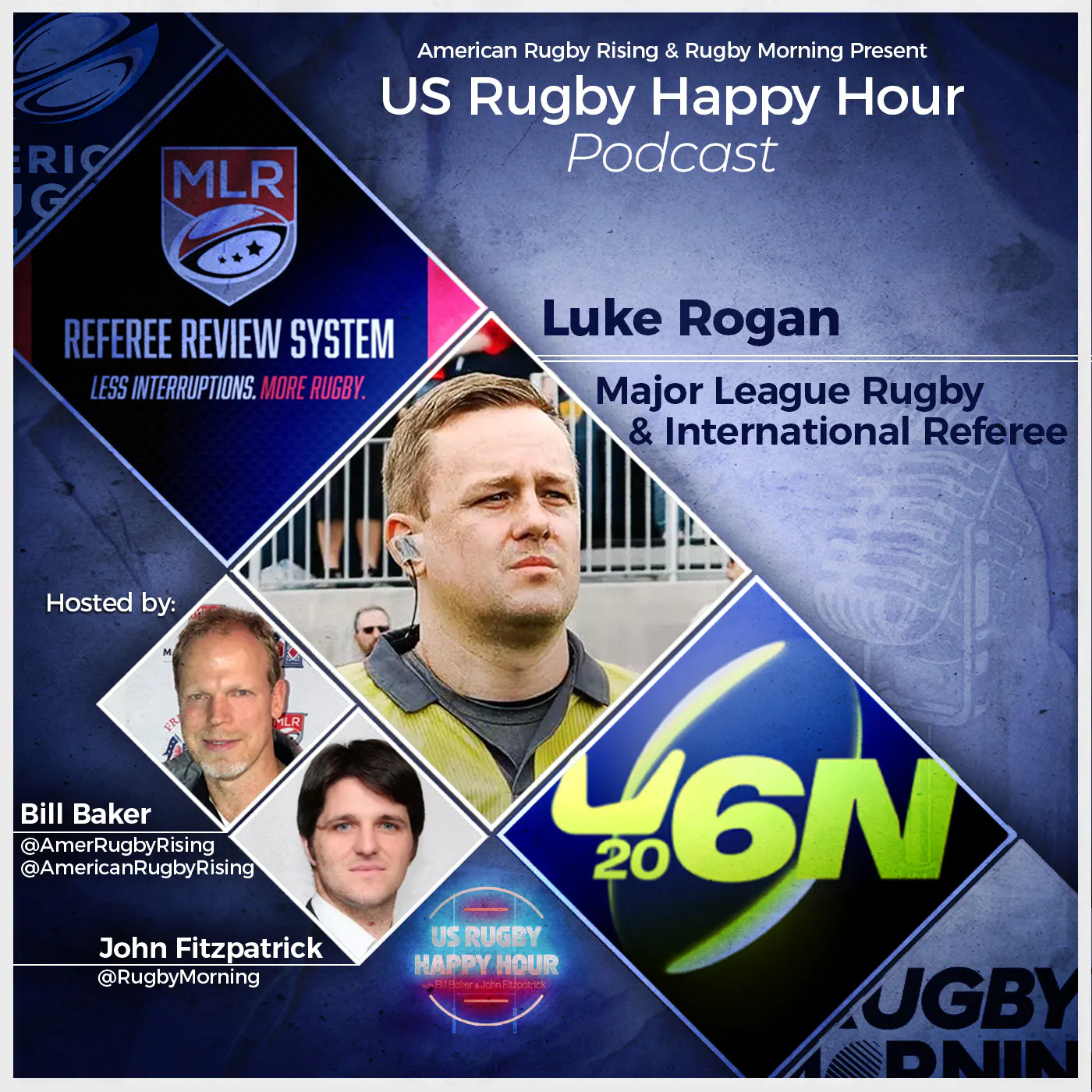
The Future of the Whistle: Luke Rogan on MLR’s New Review System and the 6 Nations Stage
About this Episode
This week, we are joined by one of Major League Rugby’s most experienced officials, Luke Rogan. Fresh off a prestigious assignment refereeing the U20 6 Nations in Europe, Luke gives us a front-row seat to the atmosphere of international rugby and the unique pressure of managing the next generation of global stars on some of the game's most historic grounds.
The conversation shifts to the cutting edge of the domestic game as we break down the brand-new MLR Referee Review System (RRS). Luke explains how this technology will function on the pitch and its goal of providing a safety net for officials without slowing down the fast-paced action fans love. We also take a look back at the law variations implemented last season to see which changes have truly improved the flow of the game. If you’ve ever wondered what goes on behind the whistle in a professional match, this is the episode for you.
🎧 Listen to this and previous episodes of US Rugby Happy Hour on Youtube and your favorite podcast player today!
iHeart: bit.ly/3A43Tff
Apple: bit.ly/3Uuj9u7
Spotify: bit.ly/3ZxjAa0
Youtube: https://bit.ly/3ZUs7oV
Like, follow, and subscribe and please leave a comment!!
Check out americanrugbyrising.com for the latest on your USA Eagles, schedules, news and more, and visit rugbymorning.com for the latest on ALL rugby!
Hosts, Bill Baker and John Fitzpatrick are available for media opportunities and appearances. Contact information below.
Bill Baker, an Emmy award winning editor and producer, has curated Eagles Overseas Rugby since 1996, providing updates and news stories about USA Eagles plying their trade around the world.
http://www.americanrugbyrising.com
[email protected]
John Fitzpatrick is the brain behind Rugby Morning, serving rugby news everyday via email newsletters to rugby fans around the world.
[email protected]
http://www.rugbymorning.com
Youtube | X | Facebook | Instagram | LinkedIn | Tiktok | Bluesky
Learn more about your ad choices. Visit podcastchoices.com/adchoices
Transcript
So good, so good, so good.
Spring styles are at Nordstrom Rack stores now, and they're up to 60% off.
Stock up and save on Ragnbonne made well.
Vince, all scenes and more of your favorites.
How did I let no rack as a deedus?
Why do we rack for the hottest still?
There's so many good brands.
Join the Nordie Club to unlock exclusive discounts, shop new arrivals first and more.
Plus, buy online and pick up at your favorite rack store for free.
Great brands?
Great prices.
That's why you rack.
Score more with the college branded Venmo debit card and earn up to 5% cashback with Venmo
stash.
Got paid back?
With the Venmo debit card, you can instantly access your balance and spend on what you want,
like game day snacks, gear, tickets, and more.
The more you do, the more cashback you can earn.
Plus, there's no monthly fear minimum balance.
Sign up now at Venmo.com slash college card.
The Venmo master card is issued by the Bank Court Bank NA, select schools available.
Venmo stash terms and exclusions apply at Venmo.me slash stash terms.
Max $100 cashback per month.
Protein is now at Starbucks and it's never tasted so good.
You can add protein, cold foam to your favorite drink or try one of our new protein lattes
or matcha.
Try it today at Starbucks.
I think with the referee reviews system, I think it's going to be a whole lot more power
back in our arms and hands to yes, no, yes, I agree that that's a card.
Or, no, that's not, this is a rugby accident.
And we have the feel of the game that's going on at the time, right?
Which also was the hard thing, the TMO's being off-site.
Being in stadium, you get a bit of a feel of the game and you don't go on crowd reaction,
but you understand that it's a bit heightened, the game's a bit higher in terms of intensity
or a bit lower in terms of intensity and that kind of stuff, which helps you to go,
yes, no, that doesn't really matter or that does actually matter.
So that was difficult for them and I think putting it back in our hands is going to allow us
to be, okay, well, this is a high, a huge moment here and this is a high intensity moment.
It'll be interesting, like I haven't used it yet, it's going to be a definitely a change.
Luke Rogen!
Welcome to U.S. rugby happy hour live, interviews with the biggest names in American rugby.
I'm Steve U.S.I, my history in Paris, U.S.A. rugby is heading to Australia.
You're Roots, Bill Baker, and that other guy.
Hello and welcome to U.S. rugby happy hour live.
I'm Bill Baker, this is John Fist Patrick.
How are you doing on this wonderful day?
Don't great, and we made the rugby's back, training camps are underway, we've got a new
referee review system, let's talk about it.
We should probably talk about that tonight, that very thing.
So, in this show, we are pulling back a curtain, probably for the most scrutinized and
arguably the most fit people on the pitch, a majorly referee specifically with Luke Rogen
here in a couple minutes.
Luke's also just refereed to U20's Six Nations, which is a great accomplishment for him,
and we'll talk to him briefly about that too.
But also, there's some news that came up in full disclosure, Fitsy, I think you know
this too.
We booked Luke before the news came out about the review system.
That is true.
Getting rid of the TMO.
So, I'd like to say was the other way around, oh, we got him right away, but we already
had him booked so good timing, unless MLR said with Luke's on the show we should release
it before the show.
No?
Okay.
Yeah, with that said, yeah, we're going to have a lot of fun with him again.
Luke Rogen joins us just in a couple minutes.
Fitsy, it's spring too.
You said rugby is going to be kicking off again soon.
I'm so excited about it.
I feel like it's going to be here, like before we even know it, I'm going to go, oh, crap,
there's a game this weekend.
We have to go.
Yeah, I don't know what to say with that.
I'm just excited.
Yeah, I mean, in March, I think in March 28th, California, Legion versus Anthem, that's
going to kick off the originally rugby season.
You know, if you're following along on Instagram, you're seeing all the team photos, seeing
like who's in camp, who's not there.
They have these issues happening.
You know, it's always fun to see the player photos, but yeah, I mean, it's two weeks away.
A very turbulent off season, but here we are on the cusp of the regular season, getting
more excited.
Turbulence.
Turbulence, what happened?
I don't know.
All right.
Yeah, stuff.
All right.
Let's get into it here in a minute.
But first of all, listeners and viewers on the YouTube channel as well, please like, follow
and subscribe to this show, to the podcast.
They come out on Thursdays or available on every podcast player, pretty much every podcast
player.
Go ahead and comment.
Give us a nice five star review and just be gentle.
We're, it's you know, I have, we have emotions and just be kind.
You go for it.
I said, yeah, we're fed G lay.
Let's get into our first guest.
And as usual, we'll do it for you to today's guest, from the club grounds of New South
Wales, to Major League rugby, an MLR referee with merely 72 appearances, one of the most
experienced refs in MLR history.
Yes.
Please welcome to the show, century in the waiting, international referee.
Which of that done that's really loud.
Look, broken.
How are you?
Yeah, great.
How are you?
Good.
Thanks for giving us your time here.
And you know, just I don't think the, the rugby podcasts in America give referees enough
attention on podcasts with the, with the referee on.
I'm sure they do.
Another way is put.
Man, thank you for jumping.
No, I appreciate it.
I don't know how I'm going to follow that entrance though.
That was, that was great.
Thanks for that.
Well, if you'd like, we can give you the MP3 and you can ask the stadiums to play it
for you when you walk out into the pitch.
Definitely.
Yes.
So Luke, who are you when you're not refereeing a game and please say spy?
I wish.
I'm just the house husband.
My wife is, it runs the place.
I just look after it.
That's what all it is.
That's just me.
So I'm quite happy with that.
So I just put around and referee rugby around the world when I get the opportunity.
So Luke, I kind of imagine that might be a good training for like your method for just
ignoring the noise around you.
Do you hear it all from the crowd, the things you block, the things out.
Do you ever like smirk?
Do you hear the neighbor mark?
Look, the good remarks are the ones that you do here.
The ones that are intelligent, the ones that have been thought through, the ones that
you go.
So that's smart.
Like, I like that one.
Yeah.
Look, most of the time, I don't hear it.
Like we've got one year, generally, that's clogged up with a communication system and
you're only hearing your assistance and the PMO and that sort of thing.
And then I'm lucky enough that it's hard of hearing in the other ear.
So we're all good on that side.
So you don't hear too much of it, especially with 30 odd players on the ground and then
the likes of Seattle where you've got 4 or 5,000 people and they're all screaming at
the same time.
You can't hear anything.
Yeah, I hear those fans up in New England, Bill knows he's a New England fan.
They're just completely obnoxious.
Super polite.
Extreme polite.
Super polite.
Super polite.
Yeah.
But yeah, Luke, tell us a little bit about yourself because you know, when you hear about rugby
people, when they're young, they're like, oh, I want to go up to be, you know, a rugby
player.
And the rugby world cup, you don't hear too often from kids saying, I want to be a referee.
I want to be a match of fish.
I want to be a baseball umpire.
So like, tell us about your journey into that role.
What got you into it and what led you along to keep going?
Yeah.
I wasn't one of those either.
I was, I want to play for the World of East, right?
I grew up playing since I was about 4 or 5.
My old man played when he was, he was my age and growing up and then stopped because
of his job.
So soon as I was, I was able to, um, I was down at the rugby club and, and we were playing
rugby every time that I had some free time, um, you know, continued that till I was around
sort of 15, 16.
And my old man started referring as well because I was the way that works in Australia.
The under 10s you play at 8am, something ridiculous in the wintertime in the fog, um, and then
it slowly builds into the day from there and about 16, 17, 18, you played about three
o'clock in the afternoon.
So as I got older, it was, it was easier for dad to sort of, and he was always involved
in the rugby club.
He was a president at the first club that I played for, um, and then mum was secretary.
So it ran in the family.
So he, he, once he, I moved to clubs, it was closer to home.
Um, he wasn't on the board, um, but wanted to give back to rugby.
So he became a referee, um, started referring after my games and then ended up before my
games.
Um, and I sort of ended up that I was training sort of three, four nights a week, uh,
playing Saturday and Sunday, um, going to school.
So it got to the point where I was a teenage, you're going, I need some money to actually
do some things that I want to do around the, around the place, um, but no job was going
to take me considering on training ridiculous times and, and playing both weekend days.
So I joined, joined referring, um, like dad, um, and, you know, paid 20 bucks a game
or something like that.
It was just a bit pocket money and, and a good warm up for, for my games, um, and I saw
it as a way to just learn a whole lot more about the game, um, be better at what I did.
Um, yeah, and that sort of got, went from there, um, and then sort of around 16, 17,
18.
I can't remember exact timings, um, I decided I'd, uh, I'd get myself knocked out a few
times, um, in a few weeks and this was pretty, uh, the concussion stuff, um, yes, I am
that old, um, and broke my nose a few times and, you know, decided sitting in a classroom
at one point that, you know, I'm, I'm not exactly focusing here and, uh, maybe I should
give up playing.
I'm, I'm not the biggest guy, you know, 60 kilos, ring and went back then, um, not the
biggest guy, let's, let's give this away and, and focus on referring and, um, I was
lucky enough to get into some, some programs, uh, through New South Wales Rugby and then
Australian Rugby and it sort of got from there.
Well, you, you clearly have, uh, practice quite a bit and learn to your crack really well.
And, and when you, when you're looking at rules, sorry, uh, laws of the game, they can
be pretty intricate and at times complex, uh, especially for the fans, but so how often
do you, uh, get into the laws, dig into them and review them?
When it changes a lot, right, um, that's, that's when things start to occur.
Um, yeah, often at the moment, um, you know, there, there was a classic one a few years
back, uh, more than a few years back now where, um, uh, well rugby bands, the, uh, receiver
coming into the line-up, which changed the numbers.
Um, so they banned them from doing that, but they had forgotten about the law or had not
remembered that there was a law saying you could change direction or positions with anybody
in the line-up at any time during the line-up.
Um, so you couldn't add a number in, you couldn't add that receiver in without somebody
coming out.
So then you had to read and make sure that, yes, I understand that those guys can't come
in, he's got to start two metres back, he's got to, he can do all of these things, he
can come in this time, this is when he can add in, so when the ball's thrown, you can
actually add the receiver in, um, because the ball is, is in the air already.
So that's the sort of times you go back and go, I need to, to really read through the
law again and make sure that I'm, I'm across that, um, because there are, uh, consequences
for every change, right?
Um, you know, look at the, the, the, the 20 minute red card laws, uh, that now has consequences
for, uh, substitutions, um, you know, there's flow on effects every time we change, we change
the law, so, um, that's when you go back and you review it and you go, okay, I'm comfortable
with this and, and comfortable with all the permutations that can, can, can come from
that.
Yeah.
Now, if it's you wanted to play a game with you, he wanted to do a law number game with
you and throw a number at you and see if you could tell I'm terrible with this, I'm
terrible with it all.
Well, well, I don't think we know any of the numbers, any of them.
Yeah.
I change it all the time too.
That ad ones and nurse a problem and the new World War Cus cut down and yeah, that's
a change.
So if I were to say law nineteen dot 17, which, yeah, I look it up too.
What is this, is that what I'm getting, um, yeah, well, let's, let's talk a little about
some other aspects of the game and, and Bill mentioned it off the top right, just, you
know, match officials have to be very fit.
Like, what is the physical, mental preparation like to ref a game?
So there are like, does MLR or maybe World Rugby have certain fitness standards
that match officials have to meet?
Yeah, yeah.
So we are quite strict is not the right word for it.
You know, we are tracked on our fitness.
So we are expected for Bronco time around five minutes.
Not too far over it.
Not, you know, you want to be as under it as you can, but the goal is always five minutes.
And anyone that's run a Bronco will know that, you know, that sounds pretty easy,
but by the third or the fourth Bronco turn, you're dying and you're trying to get through it.
So, you know, with this pretty strict there in terms of, you know,
you have to maintain a level of fitness, you can't rock out with an eight minute Bronco
and expect to be, you know, referring in the MLR and then higher.
And then sort of the mental side of that, you're making sure that you're physically able to think
when you're fatigued.
So, you know, getting on a treadmill,
in the gym and then looking at clips when you are very fatigued is sort of the one of the ways
I do it anyway, just to make sure that when I am at the, you know, 79th minute, 81st minute,
whatever it happens to be in a game, I can actually focus on the job I have to do
and be at the position to make those decisions as well.
So, yeah.
Are you wearing, do you wear, do you wear, do you wear one of those trackers at the players where?
Yes, yeah.
Yeah. So, depending on the game, like every game is slightly different.
I think one of the games last year, I did about seven and a half K in a game.
I can't do the Miles thing still.
I've been here for eight years, I still can't do the Miles thing and I kind of start
Kilometers makes more sense to me, but yeah, I think it was seven and a half Kilometers.
I think there's the 26 nations games I've done recently. We're about six and a half roughly
Kilometers per game. So, it doesn't sound like a lot in an 80 minute game, but when most of those
sprint numbers and then you stop and you're getting up line-outs or setting up scrums,
it's quite a high speed. You're doing high speed numbers.
So, you were just involved in the referring to you 26 nations.
Congratulations on getting that assignment.
Thank you.
Talk about that experience of doing that. I know it's you 20 level European rugby.
Very good. You know, talk about the experience of doing that and some stuff you took away from it.
Yeah, I met a great experience. I was lucky enough to be in North Hampton in England
for the first match in the Wales and then do Italy and Ireland in Cork the week after.
Great experiences, both games, you know, since Franklin's Gardens in North Hampton.
There's amazing. It's a stunning place to go and play rugby. It may have been in each
worth of water floating on the pitch at the time because it had rained for three weeks straight,
but there's still a great atmosphere. I think there was 6,000, 7,000 people there in the stadium
and they were loud. You know, you're the English singing swing, swing low sweet chariot
where you're trying to pack a scrum and that kind of stuff, which was great.
And, you know, those boys, the 20s are out there to just go as hard as they can for as long as they can.
So, you know, the sum of the rugby there was great.
They really just went hammer and tongue at each other for a lot of that.
And then in Cork was the same. That was an artificial pitch, so there was no standing water
and the Italians and the Irish went at it and it was great. Like, I don't think I've ever blown
as many turning, holding on turnover penalties as I did in that match.
I think one of the Italian and got five turnovers alone and three of those penalties.
So, yeah, great, great rugby. They know what they're doing. They're doing it at pace.
They're pushing as hard as they can for as long as they can and then they're going off stumbling
off and somebody else is coming on and doing the same thing. It's a six five week sprint
or six week sprint this year and they just go hard. So, it was a great experience.
Thinking back on that experience, you know, what is or is there one thing maybe you learn from
the international stage or the matches that maybe you're most eager to bring back to MLR this year?
Yes and no. I mean, there are, we are pretty well aligned at the MLR with
what World Rugby are trying to do, which is a great thing. You know, you've spoken to Wilco
on here before. Him and his coaching staff, Alain Raland and Dave McEw are pretty well aligned
with what's going on at World Rugby, which is really good for us. So, you know, when I went to
the 26 nations, I knew the expectations and I knew what referring was going to be like there
because they had to prepare me quite well and through the MLR we'd been quite well prepared.
But there are probably little things like not chasing some little decisions here and there
that I'll bring back and that's, you know, always a good thing. You know, just put the whistle
in the pocket occasionally for some little things that yes, they happen and yes, they kind of
matter, but they kind of in the bigger picture don't. Yeah, that's probably the biggest takeaway for me.
So, so last year, one of the, I mean, I think MLR is interesting there. They want to stay within
obviously how the game has played around the world, but also maybe tweak little things on the margins
to keep it exciting to try and draw on new fans. So last year there was a big hubbub over,
oh, there's a new scrum along. It's going to emphasize the scrum. It's going to be nowhere scrums,
originally rugby. It's like league now, nothing wrong with league, but like it's not rugby union
anymore. It seemed like that blew over because while there were certain elements at the end,
it may have changed a little bit. I don't think there was too much of a reduction in scrums that
really fundamentally changed the game. Did you, enraffing an MLR last year? Did you notice really any
difference in the flow of play around scrums? Not really, not at all. You know, there was still
a lot of options to take a scrum when the teams wanted to, you know, the knock-ons. We were still
going scrum. It was just taking away some of the scrums at timings where, you know, we blow
free kick for something and we then spend another minute packing a scrum and it takes away from the
game. You know, that sort of stuff, I think you guys had Will go on here the first, after the first
week, last year and we actually had one more scrum on average per game than we did the previous
years. So, you know, the whole taking away of scrums, you know, I don't think that's the plan.
I think we want to entertain and be entertaining and we still want the traditional values of rugby
and still have scrums and still, you know, allow the power of the forwards to come to the forefront.
But, you know, when we can get rid of some of the downtime moments where, you know, we can speed
things up and you look at how L.A. played last year, they played everything at a very high tempo
and tried to tap and go at a lot of the times where normally we would have a scrum and it was
a lot quicker. So, and it was a whole lot more entertaining. So, yeah. Yes, I understand,
we're taking away options of scrums, but at the end of the day, on the field, I didn't feel
anything like that, don't they occasionally? You know, speaking of new laws, just came out this
past week, a new, majorly rugby referee review system, our S could potentially speed up the game
as amongst many things, replaced in the traditional TMO, I know people are for or against TMO or
how much it's used or how little it's used and what impact it has. So, talk about this new law
trialing this new law, I believe, if you want to call it that. You know, maybe the reason for this
new system, you know, to speed up the game, is it back to traditional ways of refereeing?
There's a couple of things, I think, for us, it was difficult not to see what we were rolling on,
as a referee in the middle of a bitch. You know, that wasn't to take away from the job that the
team owes were doing. I think most of, you know, they were doing a great job. There was times,
and there are things that we aren't going to see. It's just the way that rugby is. We've got
30 odd blocks on the field that we have to kind of look around and look through and get around
sometimes. So, there are times and there are things that, unfortunately, we just, you can be in the
best position possible, but you're not going to see. So, you know, there's the TMOs were doing
a really good job, but it was difficult because we couldn't see on field what was being ruled on,
and, you know, we're having to make a decision and give a card on something that we haven't seen,
which just doesn't work in the long run. So, I think with this, the referee review system,
it's going to be a whole lot more power back in our hands to, yes, no, yes, I agree that that's
a card or no, this is a rugby accident, and we have the feel of the game that's going on at the
time, right, which was also the hard thing for TMOs being off-site. You can't get there. There's
being in stadium, you get a bit of a feel of the game, and, you know, there's a bit of a,
you don't really, you don't go on crowd reaction, but, you know, you understand that it's a bit
heightened. The games are a bit higher in terms of intensity or a bit lower in terms of intensity,
and that kind of stuff, which helps you to go, yes, no, that doesn't really matter or that does
actually matter. So, that was difficult for them, and I think putting it back in our hands is
going to allow us to be, okay, well, this is a huge, a huge moment here, and this is a high
intensity moment. We need to rule on this in this way. So, it'll be interesting, like I haven't
used it yet. I've seen footage, I used in the Six Nations, I could go up and see a screen,
which was great. Yeah, we'll see what happens with it. It's going to be definitely a change.
Well, talk about, let's get a little dig into a little bit, like, there are, to talk about what
each team gets, they get to challenges a game. Also, who can request these challenges? The head coach,
the captain on the pitch, I don't know, the water boy, which is sometimes a head coach.
Yeah. So, Ed, are we two captain's challenges or two team challenges that they can do
following a try, which goes back to phases, so they can challenge something within the protocol
back to phases, and the protocols, I think, public on the MLR website. So, if anybody wants to go and
have a look and delve into it, I could go into it, but, you know, that'll waste the whole hour
of our podcasting. I won't do that, but, you know, they can review it on the protocols back to phases,
which means, and two phases is a bit of a, the way it's done in rugby, it's two rucks,
and then back to the past from the nine of the previous ruck. So, it's not the three rucks, but
it's the end of that third ruck, if you want to say that, and then you get one ruck, two rucks,
and then the tri-scored, you can review all the way back to when that nine past the ball from that
ruck. So, they can, they can review stuff there, following a try, or they can review
foul play incidents. So, hearing the live match, if coaching staff feel that there's, you know,
a bit of foul play behind our back, or that the tackle was upright and has made head contacts,
they can go to our fourth official. I think it's this throwing a flag.
They'll go and talk to the fourth official, they'll let them know what they're going to review,
and our in stadium operator will tee that all up for us. And then when we stop the match at the
next stoppage, our fourth official will let us know that there is a review that's been requested,
and we'll call time off and go and review that. So, within those two, if they are successful
with their query, their review, they retain that review, if they're not, they lose it.
Within the last five minutes of both halves, if I think it's both halves, I'd have to double check,
but I'm pretty sure to stop the potential of slowing down, we're slowing down the game,
where that kind of stuff, if they are unsuccessful with the review, they will lose their reviews.
Within that five minute period. So, there's a bit of, we're not going to just waste our two reviews
here, because our guys are struggling, hopefully, there's a bit of equity there.
To that, so it will speed the game up, but yeah, they are able to have two reviews, and if successful,
they'll hold on to them if not, they lose them. But then with that as well, I can review things,
I can trigger reviews for foul play or try stuff. Yeah. Don't go anywhere, we'll be right back.
America leads the world in medicine development. It matters. We get new medicines first,
nearly three years faster. Five million Americans go to work because we make medicines here at home,
and not relying on other countries keeps us safe. But China is racing to overtake us.
Will we let them, or will we choose to stay ahead? When America leads, America cures.
Let's tell Washington to keep us in the lead. Learn how at AmericaCures.com, paid for by Pharma.
Now back to the show. Luke, I think the most important question out of all this is,
do we know the color of this challenge flag?
No, not yet. I think I'll find out we've got our camp in this weekend, next weekend, down in Atlanta.
So I think that'll be all covered when we get down to camp, and we get us all in one room,
and we can go over it and know what color it is, and all that kind of stuff. And we'll go from there.
So what they should do, MLR should do, is plan off a Nigel Owens, the big reveal of the color of the flag,
you're in a bathtub, and you pull out the flag color, and everyone can see what it is.
I'm not as stylish as Nigel, so I won't be doing that personally, but let's see,
we can get Wilcoe to be the one that does that, I think.
Question there, oh, clarity on this, and because you see another sports, particularly in
Major League Baseball, they have a system where, if a batter doesn't like the umpires,
calls, strike or ball can tap the helmet, initiate a review, to review a rest call,
that won't be taking place here in Major League rugby, right? Like a team can't say,
no, Luke, you got that wrong, I want to challenge that, that's not happening here.
It's got to come through the captain. So the same thing across rugby,
in general, right? Like if a number 10 runs at me and screams at me that I've got something wrong,
I'm not going to be like, you're right, I'm going to review that, um, that's not going to happen.
It'll be through the captain, and it'll be, you know, a conversation about what you want to review.
We have, I think there is a provision in there saying if we do have teams and water carriers,
and people screaming at us that we need to review something and trying to trigger our,
our referee review without triggering their review, we can actually analyze.
Yeah, it should go through the captain. Most of it probably will go through the captain,
there will be times where people do get frustrated, and we understand that, like,
you know, as a player myself, I was sometimes when you get penalised, you go, well, that's crap.
There was no way that I was off my feet there, but, you know, we're pretty understanding
with that sort of stuff, but yeah, it'll go through the captain. So,
not so many miles will be screaming at me.
I don't think I've ever heard of a number 9 talking too much to a referee, that's a strange.
No, we're generally too busy talking to everybody else, but,
yeah, there's plenty of times where I had a crack.
Yeah, so like you said, you know, listeners, you can go to the website and really see all the
details on the RSS, but let me just hit off what you said earlier again about when this could be
thrown, when a captain can request. You mentioned after a try. Is that the only time?
We'll be a foul play. We'll be a foul. Okay, so in the middle of the match, the game is still alive,
or does it need to be a dead ball still, or just the sidelines also in the red flag,
or whatever color it's going to be, it comes flying in.
Game can be live, game can be live, but we're not going to, you know, the flag gets thrown.
It's we're not going to immediately stop the game, because we don't.
So from that moment, the flag, yeah. Right, like we could. It's a similar thing with the TMO.
We would have a TMO say, no, no, you need to stop the game immediately,
which would be for a serious act of foul play that's team in possession, that kind of stuff.
But generally speaking, we would continue to play until there's a natural stopage,
and then we'd go back and review what would happen. So that's going to happen with the
flag of the challenge. It will come to a natural stopage and then we'll review from there.
So there won't be flag thrown immediately stop, because we don't know what we're reviewing yet
either. So the information's got to get passed to our guys on the sideline and then T,
that all up with the in-state immoperator and that way, we're not wasting time by going
over and saying, okay, what do you want to review? Okay, let's find that in the time,
you know, because we could have five, ten minutes worth of play where they're going,
you know, generally, we're not going to get ten minutes of platinum stop play, right? But
we could have a big window, two, three minute window where there is a lot of play,
and they want to review something right back at the start, and we'd have to rewind back
and waste time doing all that. So it'll be a natural stopage while the in-state immoperator
tees it all up for us. And speaking of in-state imm,
are you aware? Do you know what are the minimum requirements that each stadium needs to offer
up for the system of work? I mean, most of I know Starifier, Quincy, they have larger video boards.
Are there minimum requirements? Are they all going to be the same for each one of those
stadiums? I'm not sure if there's minimum requirements. I know that there'll be a big screen for us,
or there will be a pitch side monitor for us. So depending on, you know, some stadiums,
it's just not possible to get a big screen in there, or the technology to get in there. So
there'll be probably a pitch side monitor that some stadiums, like you said, have got big screens
and boards. You know, Quincy's got that wonderful board behind the sticks there. So,
you know, hopefully it'll be played up there. And everybody in the stadium can see what we're
looking at as well. Well, look, and I think this, this, this needs to be said, right? Like,
respect for the official, whether you agree with the Colorado's, the value of the sport,
that other sports should heed. I mean, and seriously, I mean, you know, I think a lot of that
starts right with the captains and how they communicate the team, and just everyone's
approach going into the game. I guess as part of that, given this new RSS system, and it may not
factor in too much into the games, but will anything change in terms of how you speak with the
captains, maybe I guess, like before the match, especially if one of the captains or player
disagrees with maybe what an RSS ruling may be. I hadn't really thought about it, to be honest.
Being that we haven't had our camp yet, you know, all of that sort of stuff gets hammered out
at camp that we sit down as a group and and go through it. How are we going to deal with this sort
of stuff? But for me personally, you know, off the top of my head, I don't think it's going to
change my interactions too much with the captain. You know, if any player generally was to the point
where I needed to tell the captain, hey, I don't want to hear from this player anymore. It was
that conversation, hey, captain, I'm sick of hearing from this player, like he's not adding value
to what he's going on out here. You know, you deal with it, and before I have to deal with it,
and I think that'll be the same sort of conversation I have. Hey, you deal with this. This is your
teammate. You know, you don't want me dealing with this because the only way I can deal with this
is to put him on the sideline. So, and I, you know, I don't want to get to that point, you know,
generally 99 times out of 100. I don't want to get to that point. There's the one time where you
but, you know, to keep players on the field as much as possible and we understand it's a spectacle
as well. So, you know, we want to let the team play and play with their full combo. So, yeah,
no real change from me, I don't think. When you, when you look across Major League,
rugby took charge of your first match, played back in 2018. Did you imagine, you know, the league
and your career would, you know, reach this level of longevity? No, honestly, no.
I moved here where whenever it was just before the first season started and I'd kind of
given up to the fact that my referee inquiry was over. I referee back in Sydney and finished my
career with New South Wales rugby as a referee at Williamson Development Officer. It was quite
sort of happy to be done. And then, you know, things happened and people spoke and, you know,
people found out that I was here and I got an opportunity to referee and I got lucky and got
one of the first sort of AR, traveling AR positions in the AMLR that first year and spent a lot of
time working with guys like Scott Green and Chris Asmuss and, you know, learned a lot from them
and was lucky enough to get a game and I didn't expect it to be to go any further than that.
You know, just to take it one year at a time, one game at a time and go from there and
that's what I think it was eight years later now. It's, you know, 70 odd games and
and, you know, I've done two finals, which has been amazing and, look, I just hope it continues,
I think AMLR is a place where it's developing players in a very good way, like, you know,
the skill level and the speed and the physicality have definitely gone up from year one.
And that's only going to continue to grow and I think, you know, long way to continue.
So, look, a question here maybe just match officials in the US and I'll start from my point of
view as a youth coach in Southern California youth rugby. You tend, so it's the first year of
tackle rugby. Love all of onto your coaches and staff and administrators and the referees that come
up because it seems like there's oftentimes there's like a scramble or shortage of referees to have
someone come, ref the match and then the coaches from each side say, okay, all right, I'll ref this
match. Like, you got, we have a pretty decent understanding of the rules but certainly not the,
you know, understanding that someone like yourself has. So that certainly is a challenge there.
I mean, I guess from your point of view, like, you know, what ideas are have you seen to try and
get more, I don't know, current or former players into wanting to try to become a ref. Because
certainly if the level of rugby here in the US wants to get better, you know, it starts with
the players and the coaches, but certainly starts with the level of officiating across all leagues
even at such a young age. So I don't know, thoughts on ideas on how to get more people wanting to
try to be a ref. Nate, if you could answer that question, I think unions across the world would
love you and employ you if you could figure out why there's a shortage of referees.
Unions across the world are struggling in terms of referee numbers. You know, we struggle here
in the States. When I was back appointing referees in Sydney, we struggle, you know, they're definitely
as a shortage of referees around the world and that's for a number of reasons. You know, abuse can,
it can be one of them and tends unfortunately to be a big reason. And then people, especially
players, want to coach more than they want to referee. Because they look at referees and they say,
oh, that's hard, there's a lot of laws. You know, how am I going to keep up with it all? With law
changes and, you know, you get given a law book that's that thick and you go, oh, I don't want to
read that and I have to learn that. But it's not as hard as, you know, once you get into it,
it's not as hard as it always feels like it is. You know, it's quite enjoyable. Like, it is a cliche,
but it is the best seat in the house. You know, even at under 10s. Like, I remember doing under 10s
games where you'd say, no, no, run there. Go that way, sweet. Yep, great. Oh, look at that. Like,
you know, push, push, push, push past that ball. Don't go, I want to push, don't put your hands on it.
Yeah, exactly. So, look, I'd encourage anybody that's involved in rugby, you know,
pick up a whistle and give it a go. Like, even if it is under 10s, like, they are some of the most
enjoyable games you're referee. Because, you know, their kids just out there having fun. And
as you know, knowing that as a referee, you're out there to facilitate that fun, you know, parents,
pick up a whistle and enjoy it as well. Don't sit on this eyeline and, you know, another rugby game
or another weekend. It's cold. It's like, get out there, run around. You know, like I said, I had
my old man as a referee and he loaded lucky enough to referee a couple of my games. And that was
that was great fun. Like, you know, it's the closest we're ever going to come to playing a game,
a rugby together. You know, we'll play cricket together. But, you know, it's great fun. And I always
remember those, those experiences. So, yeah, look, if you could solve, solve the, the question,
Fitsy, I think people would love you for it. But, yeah, that's a good question.
Yeah, look, look, you know, obviously players have their idols in the game. Do referees have
idols? You know, like, what would be one of yours? You know, Fitsy mentioned Nigel earlier,
you got Jonathan Kaplan, Wayne Barnes, of course. And Fitsy said he did coach, he did referee
also a little bit. So, do you have your own referee idol?
Yeah, a good question. Like, I mean, it's hard to go past Bansy.
Yeah, you know, he was such a good referee for such a long period of time.
And look, I've been lucky enough to meet Bansy and a bunch of these guys that I grew up watching.
Jonathan Kaplan, I grew up watching referee in Australia and in the Super Rugby. And then he
was my boss at one point. So, you know, I've been lucky enough to meet these guys and work with
some of these people. And, you know, I think we take a lot from, little bits from everybody,
right? So, as a referee, you take a little bit from Nigel and you take a little bit from Bansy
and you take a little bit from Karl Dixon and you take a little bit from all of these guys. And,
you know, Craig Jubair and the calmness that he always had. And stuff like that and make it your own.
So, you have guys that you look up to and girls that you look up to and go, you know,
the way they did that was excellent. And I want to emulate that and put it in my own way. But,
you know, like I said, hard to go past Bansy, you're right.
Yeah.
Yeah, you know, maybe this is the the Nigel Owens influencer. Maybe it's just social media and microphones
everywhere, you know, enhancing the broadcast experience. But it seems like every referee has
like that mic drop moment, right? That little witty one-liner that, you know, they share and
they get shared out on social. But have you ever had a witty one-liner that you said and you realized
maybe the mic stadium, the stadium mic was off or realized it was on after you said something
you shouldn't have said.
There are times, yes, that I've looked back on the footage and go, oh, I should not have said that.
Or yes, that was what I got set on. Or, yeah, a bunch of times that, you know, it's coming out
that I shouldn't have said what I've said. And, you know, generally it's, you know, a slip of the
tongue and, you know, something that happens and you go, oh, look, I can't say that. But I'm not
not a massive one-liner guy. You know, Scott Green was and still is a great one-liner guy, but
unfortunately, I have to script most of what I say and just pull it out of the back pocket when
I need to say it. You know, I'm not a witty one-liner guy, unfortunately.
All right. If it's actually, I want you to ask her a second or last question here, because I feel
like I would be biased because I would be part of one of the crowds that he's about to talk about.
Oh, so, okay. So Bill, Bill, is that, I believe it's still a season ticket holder of New England,
freejacks. I'm a founding member, baby. Founding member. There you go, a founding member. So Starfire,
obviously, in Seattle, a great atmosphere, same-back veterans and more of us taking the
there, where the freejacks play. We talked a little bit about it maybe off the top, but is there
any moment that stands out to you in terms of maybe the most creative or perhaps the most
scientifically inaccurate insult of fantasy every other? Do you understand, say, do you remember? Here?
Not specifically. Not one that I will share anyway.
Funnily enough, I'm pretty sure it came from Quincy, which is fun.
Fair enough. Yeah, like I said before, we do hear the really good ones. The ones that are
intelligent, the ones that, you know, I mean, we've all heard the your blind draft for, you know,
go to spec savers or any of those ones, like we've all heard in before. But the witty ones,
the witty ones are good, and I think they're the last one, the witty swan, I remember, was
was upwards at New England, up at Quincy there, and it was pretty good. Oh, like I said,
I won't share it, but, oh, I mean, it could possibly come from the section I stand in,
right there, right about the tunnel where some of the loudest people in the in the crowd are,
and I've probably heard it, and I probably said, oh, come on guys, stop. And then I yelled
something out. No, just kidding. It's a lot of fun all that far corner, that far corner where
everyone stands on the other being tense. That's always a corner to be. That's a tight corner too,
yeah, so they're right above you. Yeah. Well, yeah, there's a rule in Little League where if a
parent yells at an umpire and certain little leagues, that parent then has to umpire the next game.
So if you get caught yelling at Luke up there in New England, I don't know what the next match.
I try not to say anything on the field. If it's Woody, it makes my day a little bit easier
knowing that there's and I can get a little bit of laugh out of it. That's that's always good.
Yeah, it's a salty punch. So Luke, one more question for you.
Serious now. Here we go. What are your goals? You know, you did the U26 nations recently.
What are your goals as referee? I mean, there are a few. You know, I want to, first and foremost,
put my best foot forward for this season, AMLR. It's going to be a sprint of a season with the
amount of weeks we've got. So put my best foot forward from game one. You know, the goal is obviously
to do a final every year, right? So have that goal as well and that's the AMLR side and then
sort of world rugby side. Who knows, but the goal is always to go as far as I can, right?
And push as far as I can forward. And like I said, lucky and you've said lucky enough to do the
26 nations, you know, I want to keep going and do hopefully men's six nations and then forward
from there. But as I said, kind of before, try and take it one game at a time and put the best foot
forward at each game. And you know, there's a thing in in referring and it's the same as players
and any sport you do, you get to control your own controllables. You know, there's people sitting
there that will select you and they may have different opinions and that's fine. It's totally
valid. So you've just got to do what you can do to put your best foot forward and if they pick you,
they pick you, if they don't, you've just got to be happy with that and comfortable knowing that
you've done the best you can. So that's always the goal is to be the best that I can go from there.
And the World Cup happens to be on U.S. soil and in a number of years. So,
could be a good time. Yeah, that's it. Yeah.
Luke Rogan, man, thank you so much. It's great to talk to the non-players or non-staffer to
get your perspective on me to the rugby and the growth in this new RS. R-R-S.
R-R-R-R-R-R-S. R-R-R-R-S. I always now say it out because R-R-R-S. It's not to get a big
tingle. It's absolutely. Luke, thanks again and hope to say hello to you in person in the frosty,
rough tundra of Quincy. Thank you. No, thanks guys for having me and hopefully we'll speak
again soon. All right. Cheers. Good stuff. Yeah, I was serious about that. It's really good to get
input from these guys. They're human, right? Unlike us, we're machines. So, it's good. It's good
to get their perspective, especially with this new system, which I think. I'm pretty sure it's
going to be another one of these that will raise eyebrows around the rugby world. Yeah, I think
I think overwhelmingly people are the vibe has been positive, right? The, you know,
that Major League Rugby is seeking new ways to keep the game going, not have the TMO be like
to sign the sky and come back and be like, oh, wait a second. You know, and give the control
back to the referees. A lot of it will be coming in the implementation and how it works. But,
yeah, overwhelmingly, I think it's been a pretty positive and we'll see how it plays out.
Yeah, absolutely. I guess we'll see. Like you said, just a few weeks.
All right. Listen, thank you so much to Tune In. Please like, follow, and subscribe to this
podcast or the YouTube video that you were watching. You know, watching. Thanks again for Tune In.
And we'll see you guys again soon.
Two teams. One cup. The prime time stage is set for the TGL presented by SoFi Finals,
Los Angeles Golf Club versus Tiger's Jupiter links. Keep up. It's playoffs. Tune In Monday,
March 23rd, 9 p.m. Eastern on ESPN 2 and Tuesday, March 24th, 7 p.m. Eastern on ESPN and on the ESPN app.
Monster Energy. Everybody knows white monster, Zero Ultra. That's the OG. It kicked off
this whole Zero Sugar Energy drink thing. But Ultra is a whole lineup now. You've got strawberry
dreams, blue Hawaiian, sunrise, and vice guava. And they all bring the monster energy punch.
So if you've been living in the white can, branch out. Ultra's got a flavor for every vibe.
And every single one is Zero Sugar. Tap the banner to learn more.


