Loading...
About this Episode
For decades, renowned environmental writer Elizabeth Kolbert has taken readers to remote corners of the planet to understand how all life is connected—and how our planet is changing. She’s covered everything from the collapse of insect populations to the success of one town’s effort to go carbon neutral.
Host Flora Lichtman speaks with Kolbert about the undeniable heaviness of our current climate moment, how the splendor of the Great Barrier Reef “tilted” her worldview, and the messy business of trying to solve environmental problems.
In March and April, the Science Friday Book Club is reading Kolbert’s latest book, “Life on a Little-Known Planet.” It’s a collection of essays she’s written over the years. Check out the Book Club to read along.
Guest:
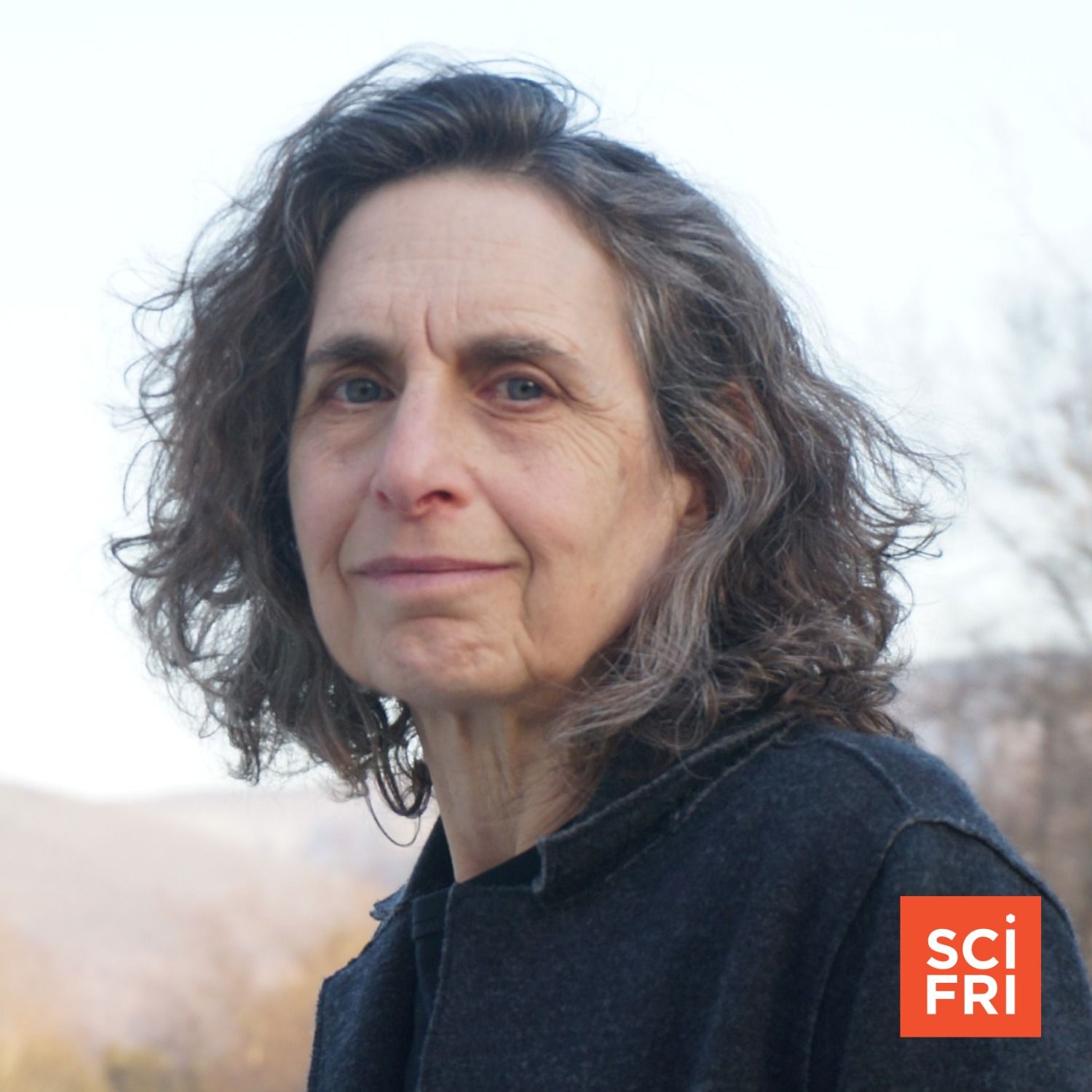
Elizabeth Kolbert is a staff writer at The New Yorker and the author of several books, including “Life on a Little-Known Planet: Dispatches from a Changing World.”
Transcripts for each episode are available within 1-3 days at sciencefriday.com.
Subscribe to this podcast. Plus, to stay updated on all things science, sign up for Science Friday's newsletters.


Transcript
Science Friday is supported by MathWorks, creator of MATLAB and Simulink software for technical
computing and model-based design, MathWorks, accelerating the pace of discovery in engineering
and science. Learn more at mathworks.com. Science Friday is brought to you by Progressive Insurance.
Do you ever think about switching insurance companies to see if you could save some cash?
Well, Progressive makes it easy to see if you could save when you bundle your home
and auto-polices. Try it at Progressive.com. Progressive casualty insurance company and affiliates.
Potential savings will vary, not available in all states.
Hey, it's Floralictman and you're listening to Science Friday. We are talking to one of my
journalism idols. Elizabeth Colbert has been writing about climate and the environment
for decades. I remember being odd in the early 2000s by her groundbreaking series in the New Yorker
on climate change and the wannabe science writer that I was was really moved. Colbert's writing
takes you all over the world and shows you how these giant existential threats are playing out
for people, animals, and ecosystems. And she takes you inside the messy business of trying to
solve these problems that we've created. Colbert won the Pulitzer Prize in 2015.
The Science Friday Book Club is currently reading her latest book, Life on a Little Known Planet,
Dispatches from a Changing World. It's a collection of essays she's written over the years and
today we're diving into some of those stories and reflecting on her career that has shaped the way
we think about climate and the environment. Elizabeth, welcome back to Science Friday.
Oh, thanks so much for having me. There's a story in the book that starts with you whacking a
bush with a stick. What were you doing? I was out with an entomologist named Dave Wagner,
one of the world's leading caterpillar experts and we were looking for caterpillars. I
would like to say that before I started out with Dave, before I headed out to Texas with David,
I did not know that that was how you search for caterpillars but it turns out that what you do is
you take what's called a beating sheet which sort of looks like a kite and you put it under a
bush or a plant that you're interested to see what lives, what's eating off of and then you
whack it with a pole and whatever is on there, caterpillars mainly also leaves and just bits of debris
falls into this beating sheet and then you have to sort of sift through it to see what you've gotten.
It's kind of like it's a little bit like going on a treasure hunt. It's a little violent
sounding. It's a little violent sounding but I think no caterpillars were really harmed in making
this film. You know, whatever falls in there, most of it just gets released because it's not
terribly interesting and makes its way back onto the bush. If something's very interesting,
it does get put into a vial for study. So I guess some caterpillars do sacrifice their lives for
the sake of science. Yeah, and some get squished under a shoe in a hotel room.
Yes, unfortunately, that also happens.
You know, caterpillars seem to be a little under song. What are people miss about them?
Well, caterpillars which are just the larval stage of any moth or butterfly, they are
hugely important to ecosystems. They transfer a tremendous amount of energy from
leaf matter. So photosynthesis basically to the animal kingdom because they're huge food source
for many other creatures, particularly birds. And yet a great deal is not known about
what caterpillars need, what food sources they need. So in a sense, you could argue the
conservation of a lot of species of moths and butterflies depends on knowing that entire
life cycle. Wagner, the scientist who you profile is working on this four volume encyclopedia of
just Western North American caterpillars, which like struck me as like my struggle caterpillar
version. That's a very, that's a very, very apt analogy. I really like it. But yes, let's just say
a deep dive encyclopedic supposed to be the definitive source on on Western caterpillars.
And there are many, many of them, probably many more than even Dave will be able to collect
in one lifetime or describe in one lifetime. But I think that's just a testimony to how little
is known about caterpillar. Such a work does not exist. It does exist for many, many other creatures.
Well, let's zoom out for a second. I mean, like much of your work, we start somewhere
intriguing and delightful and somewhere really depressive. This caterpillar, John,
takes us to the insect apocalypse. I mean, obviously that's powerful branding. But is that truly
what's happening? Well, the news from the insect world is really bad. It's very, it should be very
disturbing to all of us because insects are makeup, you know, the majority of species on earth.
I mean, there is a famous joke that to a first approximation, all species on earth are insects.
They just, this number of insect species just, you know, really dwarfs all other groups. And
they are what makes the world run. They are, they just perceive, they pollinate, they decompose.
They're a huge food source for many other different groups. So if you're starting to lose your
insects, you are really doing something very serious to the planet. And just about everywhere
that people look, they find very serious declines in insect numbers. And that should really be a
much bigger story than it's, than it has been. Let's switch gears a little bit. I want to talk
about another story in the collection. You wrote back in 2008. It's about this small Danish community
that goes carbon neutral. Tell us about it. So that story is about an island called Samso.
The people who live on Samso are mostly farmers, potato farmers and strawberry farmers. And there's
fairly significant tourist industry as well. But as they all put it to me, you know, they were not
unusual people. They were just ordinary people. And the message of the piece really was that
a small group of people that put their minds to it and really had a plan and some smart policies
also on a national level. So it's, it was a very hopeful story. And it was an example of what
can be done when people put their minds to it. And one of the things that has sort of shocked me
to be honest in the interim of almost 20 years is how few communities have followed that example.
You know, what was interesting to me is that like you said, it was, it was a community of ordinary
people. They didn't identify as sort of like energy ideologues. But what happens is that
energy use becomes a kind of sport on the island. Yeah, I think it showed the power of just focusing
attention on something. If you just sort of get people to focus on something. And it became almost,
as you say, a game. How can we do this? How much energy can we save? How can we make this transition?
But coupled with that, you know, I have to point out were policies that made it make economic sense.
So this is an island, you know, and it has a lot of wind power. It's a very windy place. And so
there were policies in place that really encouraged farmers to put up turbines on their own land.
And then they put up some really significant offshore wind. And I actually, as part of the piece,
I climbed a wind turbine. I climbed to the top of a wind turbine, which was a really interesting
and terrifying experience, but quite exciting. Coming up after the break, I want to get a little
personal and sort of reflect on your career and how you think about the urgency of these
issues that you cover and how you handle it. Are you up for that? Sure.
An enthusiastic shirt. I'll try.
WNYC Studios is supported by Odoo. When you buy business software from lots of vendors,
the costs add up and it gets complicated and confusing. Odoo solves this. It's a single company
that sells a suite of enterprise apps that handles everything from accounting to inventory to
sales. Odoo is all connected on a single platform in a simple and affordable way. You can save money
without missing out on the features you need. Check out Odoo at odo.com. That's odo.com.
How does AI even work? Where does creativity come from? What's the secret to living longer?
Ted RadioHour explores the biggest questions with some of the world's greatest thinkers.
They will surprise, challenge, and even change you. Listen to NPR's Ted RadioHour wherever you get your
podcasts. So you have devoted, you know, a huge chunk of your career to covering climate and the
environment. How depressed are you right now? Well, I'm certainly, it's hard to look at what's
happening in the world right now and in the US right now and not be dispirited if your concern
is climate change and the environment. I think that's very difficult. I think a lot of people
are trying to maintain a hopeful attitude and, you know, there are glimmers of hope. I certainly
don't want to suggest that there aren't, but the political situation and simply the numbers
are very, very daunting right now. I mean, I asked you, we were at an event together recently
and I asked you what what gives you hope and you quoted James Hanson and he said, I hope you're
listening. So I wanted to talk about that. Like I got the impression that hope is not the framework
that you use, at least when you were thinking about these issues. I mean, can you talk about that
a little bit? Yeah, I think it's become a kind of a, it's become sort of a almost a cliche almost
that, you know, we should end these stories on a hopeful note. And I think that the theory behind
that is, you know, if you give people a bunch of bad news and you suggest that there's, that it's
hopeless, they're not going to change work to make the situation better. And I certainly understand
that and I, you know, completely believe in working to make the situation better that it couldn't
be more urgent. You know, that is one of the reasons I wrote the piece about SAMHSA to sort of show
people that there are, there are paths forward and there certainly are paths forward and they're
the, you know, the good news is that many of the technologies that we need to address climate change,
I never use the word solve climate change because climate change is something that doesn't go away,
even once you stop emitting carbon, you don't get the climate back that you had, but we really need
to stabilize the climate. That is what we need to do. And the technology, solar, wind, various,
you know, batteries, these are all have all come down tremendously in price since I started working
on this issue. And that, that is a huge, boon that is a huge positive and shows that there are
tools and there are toolbox to address this. Now, you know, that being said, the current
administration is doing, it's darned us to promote the use of fossil fuels, which is exactly
what we shouldn't be doing. So we are living at this very, very strange moment where the tools to
really make a big, big difference are there and they are affordable. But in fact,
we're sort of doing our best in the US at least to sort of try to strangle them.
Do you feel like the window is closed for a verdict in real crisis?
Well, I think that, you know, what climate scientists would tell you is we are, you know,
basically leaving the climate envelope under which humanity evolved. You know, humans have not lived.
Humans, modern humans are not that old as species, you know, few, few hundred thousand years old.
And the climate for most of that period has actually been a good deal colder than it is now.
And we've had these interglacial periods in there, like the ones we're in now, which have been,
you know, roughly as warm as we are now. And now we're pushing beyond that into into a hotter world
that, you know, even our distant ancestors haven't experienced. And what that world is going to look
like is very, is hard to know exactly. All we have to go on is history. And we don't have, you know,
in the whole history of the planet, basically, or certainly for many, many millions of years and
analog for what we're doing to the climate right now. So we are sort of pushing into the unknown
and we're doing so. We're sleepwalking into the unknown. And that, I think, is a pretty dangerous
situation to be in. I mean, you can read in your writing how moved you are by the natural world.
And that's one of the things that I admire so much about your work. You've described the great
barrier reef as a place you love. Take us there. So the great barrier reef is the world's largest reef.
I once had the amazing experience of of living with some researchers on this tiny coral island
that had basically, you know, been formed out of little bits and pieces of the reef just sort of
poking above the waves. And when the researchers weren't out there during the research, they were
snorkeling off this island. And that experience of looking down into this extraordinary profusion
of life, you just you just can never see that many different species of animals on land. It's
just impossible. But when you look through the sort of kaleidoscope of life from the sharks,
you know, to the sea cucumbers, to the amazingly beautiful fish, who are just all these fantastic
colors, it really gives you a whole new view of life itself, I think, that we here who grew up,
you know, in the temperate regions. In this also, I should say sort of impoverished ecosystems
that most of us inhabit, it really tilts your worldview. Well, I want to avoid the trope of
ending on something inspiring and hopeful. So we should just say the great barrier reef also takes
us somewhere very depressing, right? Yeah, coral reefs are a very threatened ecosystem, you know,
scientists believe they could sort of be functionally extinct by the end of this century. And that's
huge, huge, that would be just phenomenal loss. If you raise the water temperature sort of out of
their comfort zone, what happens is that they expel their symbionts. They basically have these
algal symbionts that live inside them and provide them with a lot of their nutrition. And they
expel them, they turn white, that's the phenomenon known as coral bleaching. And we've had
really serious coral bleaching events, global coral bleaching events, several of them in the
last several years. And then you have, you know, these big dead patches and the reefs. Now, I don't
want to end on a cliched, hopeful note either. But I will say that, you know, there are there are
some really fascinating work going on in terms of, you know, could we sort of breed up or encourage
corals to take up symbionts that are more heat tolerant. And I was actually just in Miami,
at the University of Miami and some scientists there were doing some really interesting work on
this. And we're achieving some some success. The problem is the great barrier reef, just to name
one reef is huge, it's the size of Italy. So doing anything at the scale of the size of Italy
is really difficult. So, but a lot of scientists are trying to think about, you know, how can we
sort of try to scale up some of these efforts that might assist corals, you know, to get through
the next century. And look, you know what, this is telling me this story. We can't help but fall
into the hope trap. Yes, I think that, you know, I think obviously humans have, you know, we've
gotten through, you know, some some really hard times for our species. And there have probably been
moments, you know, when the number of of humans on earth was was really pretty small, you know, after
some major volcanic eruptions, for example, it's theorized that the human population was really
pretty tiny. And so we have gotten through and what what has gotten us through. Well, we are a
species that can foresee the future that can, you know, worry that can take action that can be
very creative. And we have gotten through pretty hard times in the past. So maybe there is something
in our wiring. And maybe it will come to our rescue again. That is that is certainly the hope
that we're very, very ingenious creatures. And here we all are. So maybe there is something, you
know, deep in our in our in our wiring that will preserve us. And maybe we have to believe that.
Maybe that is is how we got got here. And I guess the open question is, you know, will it get us
to where we we need to go through the rest of the 21st century? Elizabeth Colbert is a staff
writer at the New Yorker and author of several books, including Life on a Little Known Planet,
Dispatches for a Changing World. Thank you so much for joining me today. Oh, thanks for having me.
The Cypheri Book Club is diving into Elizabeth's latest book to read along with us head to
science friday.com slash book club. This episode was produced by Rasha Aready. And catch you next time.
I'm Flora Lichtman.
WNYC Studios is supported by Odoo. When you buy business software from lots of vendors,
the costs add up and it gets complicated and confusing. Odoo solves this. It's a single
company that sells a suite of enterprise apps that handles everything from accounting to inventory
to sales. Odoo is all connected on a single platform in a simple and affordable way. You can save
money without missing out on the features you need. Check out Odoo at odoo.com. That's odoo.com.


