About this episode
Connect with Pop Culture Happy Hour:
Letterboxd / Facebook
Our weekly newsletter
Support public media with NPR+ and enjoy perks for over 25 podcasts like this one. This show’s perks include bonus episodes and sponsor-free listening. Learn more at plus.npr.org.
See pcm.adswizz.com for information about our collection and use of personal data for sponsorship and to manage your podcast sponsorship preferences.
NPR Privacy Policy
Get every episode summarized
Each time Pop Culture Happy Hour publishes, we email you a written briefing from the transcript — the topics, who appeared, and any specific claims, with the ad reads skipped.
Email me new episodesFree for 3 shows. No card needed.
Hosts & guests

Transcript ready
337 searchable segments. Every word is indexed and playable.
Full transcript
Pop Culture Happy Hour — The hidden money financing your favorite songs. Machine-transcribed; use the interactive transcript above to jump the player to any line.
You count on sunscreen to protect your skin, but that SPF rating on the bottle might not be exactly as advertised. So you could measure an SPF 50 at one lab and an SPF 30 at another? On the Sunday Story, is it time to update sunscreen guidance? Listen now to the Sunday Story from the Up First Podcast on the MPR app. Do you have a person who turns you on to new music that fits and expands your tastes? Maybe it's a music savvy friend or a family member or a music site or a social media influencer with good recommendations. But our influencer is taking money to promote music and not telling you. And what does that mean for regular music and joyers who just want a trusted source for music discovery? I'm Stephen Thompson. Today on NPR's pop culture happy hour, we are bringing you an episode of It's Been a Minute. Host Brittany Loose sat down with NPR Music Reporter, Isabella Gomez Sarmianto,
to get into the juicy details and the broader implications of this practice. Here's Brittany. Who's music recommendations do you trust and why? I mean, this is going to sound annoying, but I have to save my colleagues at NPR Music. That's sweet. I love the recommendations. I trust the recommendations. I think they all have incredible taste and they all have a different specialty of music. So I go to them all the time. And also my best friend Kendall, she has great taste in music. I listen to anything that she recommends. I love that. I get mine from my friend Jordan, who I have been friends with since 2003. So you trust those recommendations? Yes. I have been taking his music recommendations for 23 years. Okay. He's the friend who introduced me to MIA back in 2004. She's not an easy artist to find in Michigan, in the pre-social media era, you know? Yeah, totally. It's good to find people who are going to put you on to some hot new music that is just your taste.
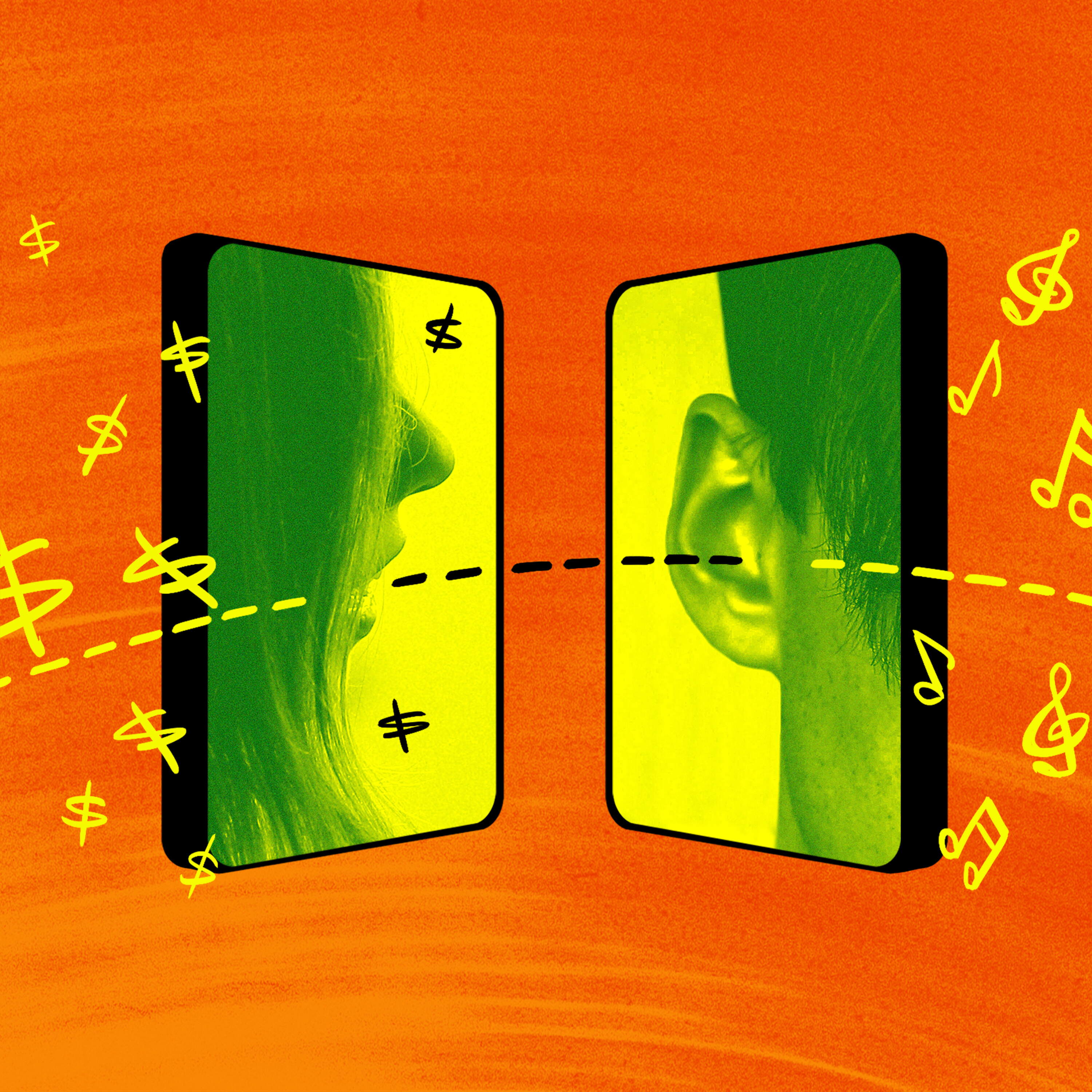
But lately, it's getting harder and harder to trust online taste makers, because they might be getting secretly paid to show for labels. This is not a conspiracy theory. It's real. Indie musician Eliza McLam posted a substack about this a few months ago that went viral about a billboard interview she watched with the founders of chaotic good, a digital marketing agency. These founders described their quote, narrative campaigns and user-generated content that basically make viral moments happen through creating or paying social media accounts to post about specific artists. MPR Music Reporter Isabella Gomez-Sarmiento saw this and wanted to talk to the online taste makers that are paid to post and don't tell you about it. Which, by the way, is potentially illegal. And there's a lot of questions that came up from me around this. Like, why does this mean for us regular music enjoyers? And can we ever disentangle money from the internet and from culture?
Isabella is here with me to get into it. Welcome back, Isabella. Thank you for having me. Hello, hello. I'm Brittany Loose and you're listening to its beneminent from NPR, a show about what's going on in culture and why it doesn't happen by accident. I want to first start by talking about these interviews that you've done with online creators. Like, how much are they getting paid? So it's a sliding scale. I talked to five content creators. Some of them requested anonymity, so they could speak freely about the relationship between creators and record labels. But essentially, they all told me they're making hundreds of dollars off of these videos. Lowend was about 150. Highend was about $600 per video. They told me that either marketing agencies or record labels will come to them and ask them to make videos promoting a specific song or promoting a specific artist.
Then they kind of like come up with a script. The marketing agency or label approves that and then the video gets made and goes up. So there's a lot of back and forth. Wait, so okay, describe me like, what do these videos look like? It usually looks like a normal person talking to their phone. Maybe they have a little microphone and they're saying something like, here's a great album that came out this week that you should know about. Or if you like so and so artist, have you heard of this person? Or sometimes they're also reaction videos, which are becoming more and more popular. And that's where there's like a split screen where maybe the top half of the screen will be like a music video. And then at the bottom you have a creator that's like live reacting to the video. Some of the people I talk to told me that they do these for money from record labels. Wow, okay, I've seen lots of videos that are like that. But those aren't spawn con but like, I don't know. Maybe they are. I would say the key thing about these videos is they don't necessarily look like ads because all of the people I talk to told me they often don't disclose
when something is being paid for by a label or agency. So there's nothing that's like, you know, hashtag partner or hashtag sponsored content. Usually I feel like it's pretty clear when something is an advertisement. There's like a label at the bottom flagging that for you. And I think a lot of us just keep scrolling. These videos tend to not have that. Who are they promoting? What kinds of artists? I mean, I think across the board, this is way more widespread than we realize. Two of the artists that were named to me explicitly in the interviews were the up and coming pop star Bella Kay. She assigned to Atlantic. I reached out to Atlantic for comment about this, whether they could confirm or deny that they had been a part of these, you know, marketing campaigns and they did not get back to me. The other artist on the other end of the spectrum was the Rolling Stones. Somebody told me they got paid to promote a single off the Rolling Stones new album and that it wasn't disclosed. And that one was particularly interesting, Britney, because the Rolling Stones put out this music video where they used AI technology to like deep, fake younger versions of themselves. Oh my God. And it was for that same single. I also reached out to the Stones label and they also did not get back to me.
So this is so yeah, continue, but there's just something about this. It's so desperate. And interestingly enough, the influencer told me that they asked him not to talk about the AI in the video. So it was kind of like a trying to shift the narrative back into the music, like to talk about the song and how great the song was and to not mention the controversy over the video. But yeah, I think a lot more artists than we realize are probably participating in this. The influencers told me it's a really common practice. But I think those two examples just show how this is happening across the board. If you have someone who's like an up and coming pop star with their first viral song and then you have the Rolling Stones, it's like safe to assume a lot of people in between those two levels of success are probably participating in some kind of social media paid campaign. Yeah, I'm wondering like how did the influencers view the sort of ethics of what they were doing? Like how do they think about this? To be honest, most of them expressed some kind of unease with the whole thing. You know, some of them said that they didn't want to feel like they were selling out to the music industry.
They all said they would only accept payments for songs that they would be already likely to promote or like that they would reject a song promo if they felt like it didn't already fit the kind of music. They usually recommend it or didn't already fit their taste. But for the most part, there seemed to be a real great area in understanding like the legality around what it means to accept money and not disclose it to promote a song. And also I think there seem to be some confusion about the sort of moral and ethical guidelines around these practices because I think, you know, in the old school days, if you like worked at a newspaper or a radio station or some kind of media company, there was probably some kind of ethical handbook that you were supposed to adhere to. There was something. There was something that like everyone kind of understood was like best practices and things that are frowned upon. I think influencing is kind of the wild, wild west. All of these people are independent contractors. They're all kind of figuring it out on their own and they're all coming up with their own rules. So there are more great areas, I think, for what some people find acceptable versus not acceptable.
Right. This is all makes me think of Paola, which I'm sure some listeners are familiar with. It was a big thing in radio in the first half of the 20th century where record labels were paying radio stations or even individual DJs to play particular songs. But it was officially outlawed in 1960. And now, you know, as you also noted, online creators have to say, whether they're post our advertisements in accordance with FTC laws against deceptive advertising. But if they're promoting a song, it's free to listen to, right? Does that count? Right. And that's the reasoning some of the influencers gave me. You know, they were like, this feels different than trying to sell like makeup because you're not telling people to go buy something. You're just telling people to listen to a free song. But I think what gets lost in that is that songs aren't free. Songs are technically products. They're products that labels an artist sell. Even if you're not buying an album, but you're listening on say Spotify, there are people getting royalties for those streams. If you're using a sound repeatedly on TikTok, like, and then listening to it that helps drive, you know,
the Billboard charts, like I think there's all these waves of how listening to a song or promoting a song does sort of then inspire conduct that makes people money. It makes the record companies money. It makes the artist money. And according to the Federal Trade Commission, if there's any kind of financial relationship or endorsement, the influencers are supposed to be disclosing it in the caption. They're supposed to be disclosing it a super-imposed text on the video and in the audio. So regardless of whether people think a song is free or not, they are accepting a financial relationship from a record label or a marketing agency and they're still not following those guidelines of clearly disclosing it to the public. We're going to take a quick break, but first, if you're a long-time listener or brand new to its hit a minute, be sure to come back every Monday, Tuesday, Wednesday, and Friday for brand new episodes. And did you know you could make it even easier to get new episodes by hitting the follow or subscribe button on your favorite podcast app? Whether you're a new friend or a loyal bestie,
join the team by subscribing today. Coming up after the break? It does make you sort of question, like, oh, do I like this because I like this or do I like this because I'm being exposed to it every time I open an app on my phone and all of these people that I think are cool also think this is cool. Like, it kind of makes you question your personal taste. Stick around. Hey, you know that nagging voice in your head? The one telling you to put the phone down and stop doom scrolling? Well, it's time. Look up. Take a daily curiosity break with Shorewave, NPR's Science Podcast. Let your mind wander to the edges of outer space or wonder about what's lurking in the depths of the sea floor all in under 15 minutes. Shorewave, your daily mental reset. Listen on the NPR app or wherever you get your podcasts. This week on Newsmakers, after more than a decade in comedy, I wasn't sure that we would get here. Robbie Hoffman is fearless. I had a small feeling I wasn't sure. And fully herself. My line, Lord.
Hello. You can go out and flash. Well, I'm not home now. I'm doing something. We plunge into comedy and success with Robbie Hoffman. On NPR's Newsmakers. I'm wondering why is there this kind of fuzziness in the music industry specifically? There are plenty of brands for makeup or clothes or food or whatever that have open relationships with online creators. What makes music different? Why is this such an issue in music where people are really upset
and offended by this in a way that maybe this is not the case in other industries? And I think there are a couple of reasons. One, being the gray area that you noted that maybe people feel like there is more fuzziness around listening to music versus buying a product. People don't necessarily see music as products. I think... I mean, that's a whole issue in and of itself. Yeah. You know, we see music as art. And I think it's something that people really take to heart. Like, you build community through music. You connect to other people through music. You build parts of your identity through the music that you listen to. And I think people are really attached to this idea of like taste making and music discovery as being these organic activities, as being this thing that you do because it's a reflection of who you are as a person and the things that you like. And I think that people don't want to feel like they're actually just being told what to listen to by labels. They don't want to feel like they're just like cogs in a machine of corporate greed. And so I think there is a little bit more of a backlash because
music represents something about who you are in a way that maybe, you know, makeup or coffee does not. For some people maybe it does. That makes sense. I mean, it's like if I'm looking for, if I want to buy a certain concealer or I don't know, a type of olive oil, there's a very specific hole, like a use hole in my life that I'm looking for a product or the best product to fill. And that's not how we think about listening to music. It's not like you're necessarily thinking, I must drive. What is a song that could fill that time? Exactly. More emotional than that. Like people listen to music because they love it. People love music. And I think that you have a different relationship to music than you do to most products. And you have a different relationship to listening to music than you do to like regular consumption. Or at least a lot of us who our fans of music do. So I think that that's kind of why there is this backlash, understanding that some of the stuff is being kind of engineered behind the scenes by record labels. And also I think on social media, the apps have become so, so important to success in the music industry.
Like music and audio is so native to an app like TikTok. You know, it's how new artists like build buzz and get signed. It's how they promote their music. It's how, you know, like this year at the Grammys, we saw that every single best new artist nominee was someone who had had a big song on TikTok the year before. Like it's a real marker of success. If it feels like music discovery on those platforms is fake, then that success is also in a way maybe not fake, but being engineered in a way that feels uncomfortable to people who have like a real emotional attachment to the music. I also feel like we see a lot of like skepticism with music, like people, lab accusations that certain artists are industry plants. Regardless of whether we even really know what's going on with them. That feels like something that's kind of central to this conversation as well. Yeah, totally. I mean, I think like industry plant, Netbo Baby, there is this sort of cynicism around the music industry. And like fans do already kind of have this suspicion that Stardom is being highly engineered behind the scenes.
And I think when you have something like the chaotic good projects, conversation at Billboard, or you know, when you find out that an influencer who is posting on behalf of a record label without disclosing that it's on behalf of a record label. Like, I don't know, I think that that kind of confirms people's suspicion that these narratives are being highly manipulated online. A lot of these artists have real deal fan bases. The Rolling Stones has a real deal fan base. I think we can say that even newer artists, right, like they do have real fan bases that didn't come from fake burner accounts, like even geese, right, the band. They were at the center of the chaotic good controversy. And I could see how those real fans, which the band does have, right, might feel betrayed perhaps. You know, like there's also like historically been gatekeeping among indie music fans. Totally. Like the stereotype of a guy who's like name five songs. Like someone who believes in keeping some obscurity around their favorite artists, you know, like what's behind that impulse to keep the borders around a music community closed.
And how are these kinds of campaigns interact with that culture? That's a great question. I mean, yeah, I think there is an instinct, particularly in indie music. You're saying two gatekeepers to kind of, you know, keep someone as like a hidden secret. There's already this kind of concept of like fake fans, even without the marketing social media layer. Oh, yeah. Like the people who go to the concert because they know the big song and they're there to take pictures and whatever. And I think that that's personally an exclusionary and like not very cool attitude to take towards music. I think we should let everybody enjoy music at the scale that they want to interact with it. I think that that's not cool. Like the people who are like name five songs or like if you come to this concert and you only know the hits, like you're not cool, whatever. But it is a very pervasive culture. And I think that these kinds of campaigns might make people upset if like you're trying to get tickets to go see geese on their next tour. And they're already sold out. And there's a sphere of like, oh my god, these campaigns are blowing up the band. And it's kind of like main character syndrome because it's like fans thinking like it's not all people who are invested in the band as I am.
But I think also people don't want to feel like they've been fooled. Like I love geese. And I do remember there was a moment where it felt like geese was very, very pervasive on my algorithm. It does make you sort of question like, oh, do I like this because I like this or do I like this because I'm being exposed to it every time I open an app on my phone. And all of these people that I think are cool also think this is cool. Like it kind of makes you question your personal taste or makes people dig their heels in a little bit. Like, oh, no, I was a real fan before chaotic good and yeah, you know, it creates this other level of exclusion. You know, musician, Eliza McLam, talked about this in her sub stack newsletter. But what does this mean for musicians who don't have these paid creators or burn your accounts, like lobbying for their virality? I mean, I think it creates an even higher barrier of entry. I think for the musicians that do have access to these kind of marketing tactics, it most likely puts them in a morally difficult position.
It must be difficult if you're an artist who wants to be signed to a big label or who wants to have all these resources behind you for it to then be normalized that like this is how we're going to market your music. I can't imagine all artists are happy about that. And like, I think that creates its own set of complications. And then I think for the artists that don't have that, it's already a difficult industry to break into, you know, it's already inaccessible. There are all these sort of class divides within like, who is able to sustain a music career at a time when working as a musician is often not a very lucrative career. And even less so if you feel like everybody else has these paid bots essentially to make them go viral and to make their music pop off and you don't have that, I mean, I think it creates an even wider divide between like the haves and have nots of the music industry. And that's a very slippery slope because ultimately I don't think anyone's interested in only having a music industry where only the artists who have these massive campaigns around them are able to be successful and are able to like flood the zone. Even the fact that chaotic good would be so open about this in an interview, right? That even feels like we've sort of made a turn where it's like the industry doesn't even have to like pretend with the audience anymore.
It normalizes having these like people who probably started out as actual regular music fans turning into billboards for these record companies because they're just getting these offers and like the affordability of crisis and it's easy for them to say yes. I was going to say and I understand why they understand where they take the money. Yeah, but it normalizes a system that is maybe not the most beneficial to the artists and like the fans that they're looking to connect with and is maybe not the most beneficial to a creator who genuinely loves music and wants to share music with an audience and is now developing a relationship with a label or an agency that raises a lot of like ethical and legal questions. You also talked to someone who said that it used to be more hip hop and R&B songs that labels poured this kind of like secret money into and now it's country. What does that say to you? I think it speaks to how so many of these trends aren't accidents and they're intentional and we should be aware or at least approach them with some skepticism when it seems like the trends that we are seeing in music or in other forms of art.
Reflect a certain cultural or social agenda. The influencer that told me that I was really shocked to hear that like you know there was a big movement of like bedroom rap and protest music especially I mean I'm thinking during the summer of BLM during 2020 like hip hop played such a core part of the musical scene and how we talked about music in like a racial and social context and understanding that there's been a concerted effort from some labels to move away from that. And towards country music which may be aligns with different political values and a different sociocultural context I think that that says a lot about the goals of this industry and like what kind of politics there in line with and it's shocking and I think it's concerning because I think it's easy to look at the charts and be like wow that's crazy that country music all of a sudden is popping off but it's like these things aren't necessarily happening on accident. Yeah that is that's a lot that's like a lot to really true and a lot to think about how are you thinking about like how this reflects some sort of where we're at with whatever era of the internet we're in now to me like what sucks is that the internet used to be a great place to find music through real people you just followed on like I don't know maybe my space or tumblr definitely for me.
I mean like oh my gosh blog era blog era internet oh so good yeah and this kind of pale stuff we're talking about it just it seems like kind of like more dead internet theory like we've discussed this idea on the show before but for those who don't know dead internet theory is the idea that the internet is no longer centered on organic human activity and instead most of the content interactions and social media accounts on the internet are actually bots like to put it plainly. To put it plainly dead internet theory positive a lot of what we see online is fake right fake accounts fake posts and so at odds with how I used to experience using the internet to discover music I don't know like is the internet is dead and like this this marketing strategy is another way to deal with that. It feels like it because I think to your point Britney like social media in particular used to feel so democratic and fun when it was like you only interacted with the people that you follow like I remember being on tumblr and Twitter as like a young teenager and like making friends with other people who were like yeah ran fan accounts for a particular pop punk band or for one direction or whatever in those communities all felt like real 13 year old girls behind their computer screens and it just feels more and more like now so much of what's on our feet.
It's being programs for us and there's not always like a real person with intention on the other side of the screen like more often than not it does feel like it's I don't know a record label or a bot or a paid UGC campaign or all these other examples of things that point to dead internet theory where there's an agenda and it's hard to say like who is driving that agenda but it's lost a lot of its humanity. Hmm I wonder like where do you think music discovery is going to come from next like if people are skeptical of algorithms and and now online creators. I feel like we're going to see a return to the basics or maybe this is me being polyanna about this but like and yes radio college radio live music. Independent communities where people know for a fact that what they're consuming is not being sponsored or influenced like I'm going to shamelessly plug and PR music I love a shameless plug I appreciate that and T.S. radio for people who are listening who may not know what that is he explained and T.S. Radio.
Yeah and yes radio is a global radio network they're streaming from a bunch of different cities around the world. You can tune in any time and just hear what different like DJs and curators and artists and music fans are listening to in a bunch of different places all over the world and it's really fun you can kind of just drop in and like feel like you're having this. Experience outside of your own home outside of your own bubble just through your headphones it's it's really really cool. That's really cool actually I was in it. I was in a bathroom at like at a hotel restaurant recently and they for some reason had a gigantic TV in the bathroom and it was playing NTS radio and it was like this the most industrial sort of almost sounded like it sounded like really old German techno but whale sounds. Hell yeah it was a vibe that's something that I don't think that a record label would pace somebody to talk about online. I think when you were asking earlier about like you know what does this mean for artists who don't have the resources it does raise all these questions about like what if labels don't want to invest in international artists from other parts of the world who aren't in the US or people who make more political music or more experimental music like I think you lose so much.
Richness and diversity if it's not something that labels necessarily want to pay for and when you go to places like NTS or underground college radio stations are you know ask your friends for music recommendations like I think we need. Go back to making it feel real and human and organic I love it also like going to the club. Yeah we need people in the club you know that's how people used to hear songs just person to person just actually sharing music to is so nice. Yeah I think music is such a communal experience and not just when you experience it live I feel like it means so much to share it with people. I mean that experience you had with NTS like you're in the bathroom somewhere you're in a public place and a song comes on that like catches your ear like that's the magic of like listening to music and discovering music and loving music. So I think we just have to like keep our ears open and be out in the world. Ah just keep our ears open I love that Isabella thank you so much for coming on the show you give me so much you think about it and you give me another excuse to try to go to the club in the middle of the week so thank you.
Thank you for it and I'll see you at the club. That was Isabella Gomez Sarmianto reporter for NPR music you could find her piece on social media payola on NPR dot work. This episode of its been a minute was produced by Liam Nickdain this episode was edited by Nina Patuck our supervisor producer is Sheriff Vincent our executive producer is Barton Gerdewood our VP of programming is Yolanda Sanguini. Alright that's all for this episode of its been a minute from NPR I'm Brittany loose talk soon. How will a historically unpopular president navigate a midterm election season that may leave him with a lot less power. Stay caught up on the latest news with trumps terms the podcast where we curate NPR's coverage of president Trump in short episodes focused on a single story. Follow trumps terms on the NPR app or wherever you get your podcasts.
Hi there I'm Brittany loose and not to brag but I host a really fabulous podcast it's called it's been a minute I love making it and I think you love listening to it. Over the last year hundreds of thousands of listeners have been tuning in and I got to say if you haven't yet you're missing out listen to the it's been a minute podcast from NPR today. Big news stories don't always break on your schedule but with the NPR app news culture and podcasts are ready when you want them in your pocket download the NPR app today.
More episodes
More from Pop Culture Happy Hour

Practical Magic 2 and What’s Making Us Happy
Pop Culture Happy Hour

Unapologetically basic TV and movies that we love
Pop Culture Happy Hour

Watch this: Filipiñana
Pop Culture Happy Hour

Sterling Point and What’s Making Us Happy
Pop Culture Happy Hour