About this episode
Jump to the AD-FREE Safe House Edition
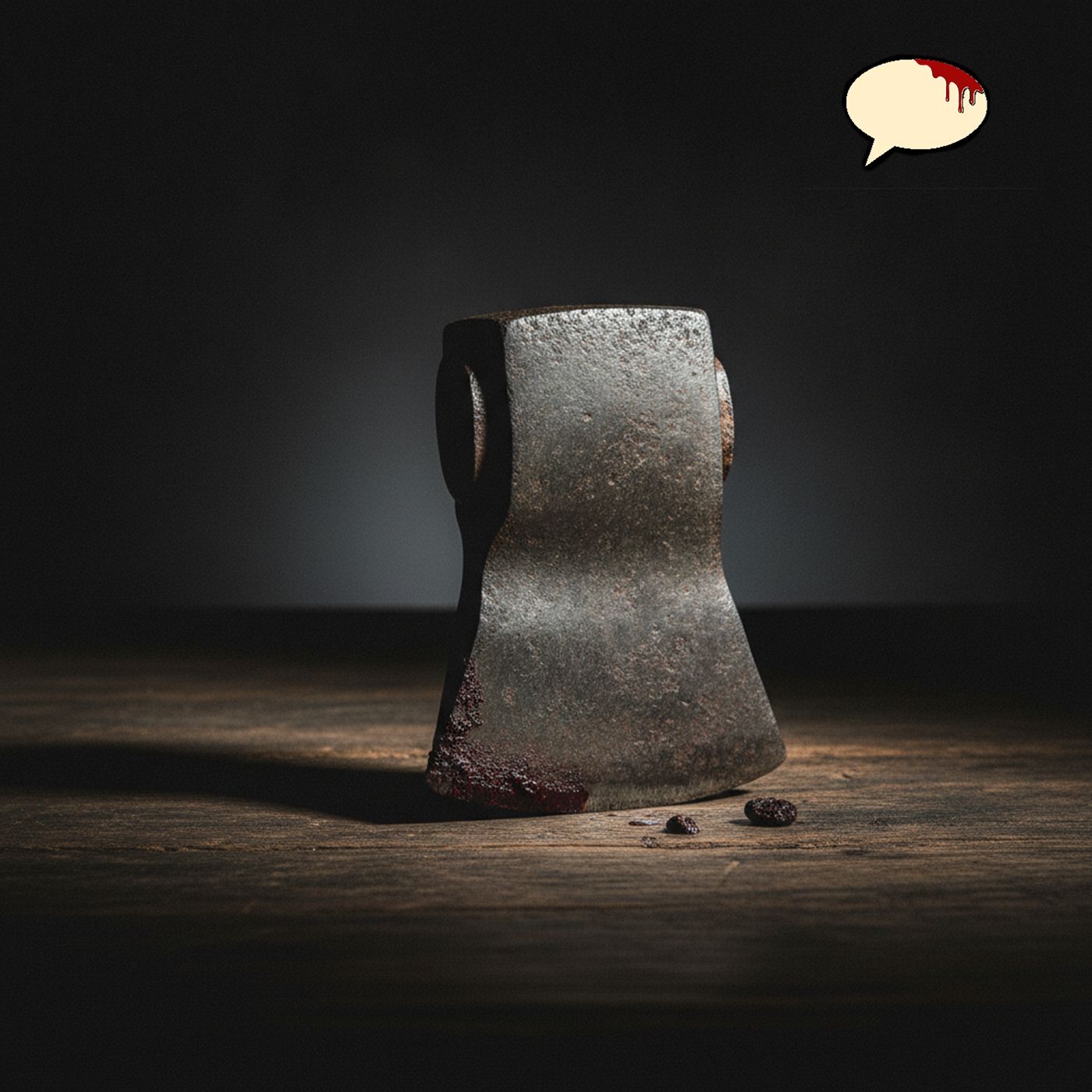
Episode 499 revisits the most famous event in American crime history, a sweltering August day in 1892, when Andrew and Abby Borden were hacked to death with a hatchet in their locked Fall River home. Thirty brutal blows, yet not a drop of blood was found on Andrew's respectable daughter, Lizzie. She was acquitted, but the famous double murder remains officially unsolved. The house on Second Street still holds its secret.
Hear our other episodes about Lizzie Borden:
I: Murder In Broad Day
II: The Hunt Progresses
III: Lizzie Has Been Arrested
IV: The Great Bordon Hearing
V: Edmund Pearson’s The Borden Case
Become a supporter of this podcast: https://www.spreaker.com/podcast/true-crime-historian--2909311/support.
You can pay more if you want to, but rent at the Safe House is still just a buck a week, and you can get access to over 400 ad-free episodes from the dusty vault, Safe House Exclusives, direct access to the Boss, and whatever personal services you require.
We invite you to our other PULPULAR MEDIA podcasts:
If disaster is more your jam, check out CATASTROPHIC CALAMITIES, telling the stories of famous and forgotten tragedies of the 19th and 20th centuries. What could go wrong? Everything!
For brand-new tales in the old clothes from the golden era of popular literature, give your ears a treat with PULP MAGAZINES with two new stories every week.
Get every episode summarized
Each time True Crime Historian publishes, we email you a written briefing from the transcript — the topics, who appeared, and any specific claims, with the ad reads skipped.
Email me new episodesFree for 3 shows. No card needed.
Hosts & guests
Transcript ready
903 searchable segments. Every word is indexed and playable.
Full transcript
True Crime Historian — The House On Second Street. Machine-transcribed; use the interactive transcript above to jump the player to any line.
I heard the bell at City Hall strike 11. Bridget Sullivan. I was lying on my bed in the attic room, third floor trying to keep still. The heat that day was something unholy. It came up through the floorboards and it pressed down through the roof and there was no place in that house where you could get away from it. I'd been washing windows all morning, inside and out, and my stomach was turning on me the way it had been turning on all of us for days. I thought if I could just lie still for a few minutes, I might be alright. The house was quiet. Mr. Borden was downstairs on the sofa. I'd let him in myself not 20 minutes before. The front door was stuck, locked up with the spring lock and the bolt both, and I had to wrestle with it. I said something under my breath, a word I won't repeat, and I heard Miss Lizzie laugh from somewhere up on the landing. He thought that was funny. I got the door open and in he came, carrying a little parcel, and he sat in the dining
room while Miss Lizzie told him that Mrs. Borden had gone out. Received a note, she said from someone who was sick. So he lay down on the sofa, and I went up to my room, and the house went quiet. The way that house always went quiet in the middle of the day. Not peaceful quiet, not the kind of quiet where you feel easy. The kind of quiet where you can hear the clock in the sitting room, and the flies against the window glass, and the sound of your own breathing. And underneath all of it, something else, something you couldn't name. I'd lived in that house for nearly three years, and I never could name it, but I felt it every day. A heaviness, like the walls were holding their breath. Then I heard her voice, not screaming. People always think she was screaming, but she wasn't. It was sharp, clear, like a woman calling you in from the yard. Maggie, come down quick. Father's dead. Somebody came in and killed him. That's what she said. And I came down those stairs, and I went into the sitting room, and I saw Mr. Borden
on that sofa, and I will tell you this one time, and then I will not speak of it again. What was on that sofa was not a man anymore. His face was open. His eye, his left eye, was split clean through. The blood was on the wall behind him, and on the picture above the sofa, and pooled on the carpet beneath his head. And the room smelled like a slaughterhouse in August. I turned around. Miss Lizzie was standing there. She told me to go fetch Dr. Bowen. So I went. I did what I was told. That is what I have always done. True crime historian presents other voices. A dramatic rendering of the scandals, scoundrels, and scourges of the past. Episode 499 revisits one of America's most persistent mysteries. The crime took place August 4, 1892, at 92 Second Street Fall River, Massachusetts.
Two people are dead. Andrew Jackson Borden and his wife Abbey hacked apart with a hatchet on the hottest day of the summer. In a few hours, this will be the most famous crime scene in America. But right now, it's just a house on a street where the neighbors are starting to gather. And a young woman named Lizzie Borden is sitting in the kitchen, dry-eyed, waiting for the doctor. I'm true crime historian, and for your horror and indignation, I give you. The house on Second Street. The Borden murders. Act 1, The Hottest Day. Let me tell you about Fall River because you need to understand the place before you can understand what happened in that house. A reporter from the Fall River Herald. Fall River in 1892 was a cotton mill city, the biggest in the country. Dozens of mills lined the K Keshen River and the waterfront along Mount Hope Bay. Four and five stories of red brick and granite.
Their smoke stacks painting dark lines against the sky from dawn until the last shift let out. The river dropped 130 feet and half a mile, and every foot of that fall had been put to work. The looms clattered so loud you could hear them from the street, and the air downtown smelled of sizing and dye and coal smoke, and when the shifts changed the sidewalks were packed shoulder to shoulder with workers streaming home, their clothes dusted with cotton lint that settled on everything like a second skin. The men who owned those mills lived on the hill. The boardens, the durfies, the chases, grandhouses with broad porches and gaslighting and indoor plumbing and all the modern conveniences their fortunes could supply. The workers lived in the tenement rows below, Irish and French Canadian and Portuguese, families stacked in triple-deckers in the shadow of the very mills that employed them. That was Fall River. Two cities sharing one name, and everybody knew which city they belonged to. Everybody except Andrew Borden.
Andrew Borden was worth a quarter of a million dollars by the time he died. President of the Union Savings Bank. Director of the Durfies Safe Deposit Company. Owner of farms and commercial buildings and rental properties across the city. He had built that fortune from an undertaking establishment, one shrewd deal at a time, and he was the kind of man other men took their hats off to on the street. He could have lived anywhere. He could have built himself a house on the hill that would have made the durfies nervous. Instead he kept his family in a narrow house on 2nd Street in a neighborhood that was already slipping in a house with no running water and no gas and no electricity. Chamber pots under every bed. A privy in the basement. He fed his household mutton. Cold mutton. Warmed over mutton. Mutton broth. A man worth a fortune who could not bring himself to spend a dollar on comfort. I covered the money men of this city for years, and I never met one like Andrew Borden.
Most rich men want you to know they are rich. Andrew Borden wanted you to know he did not care. They called me Maggie, all of them. Miss Lizzie, Miss Emma, even Mr. Borden when he spoke to me at all, which was not often. Maggie was the name of the girl who had the job before me. I was Bridget. Bridget Sullivan from County Quark, 25 years old, in this country seven years. I came to Newport first, then South Bethlehem, then Fall River. I worked for Mrs. Reed before the Borden's hired me, and Mrs. Reed called me by my name. The Borden's did not. I do not think it was cruelty. I think it was simply that it did not occur to them that it mattered. One Irish girl was the same as the next. My room was on the third floor, above the master bedroom, up a narrow set of back stairs that creaked on every step. It was an oven in summer and a freezer in winter, and the ceiling was low enough that I could touch it flat-handed.
My work was washing, ironing, cooking, and sweeping. I did not tend to any bed chamber except my own. That was the rule of the house, and in that house there were many rules spoken and not. The house itself was a strange thing. Built as a duplex, Mr. Borden had turned it into one home, but the conversion was half done, like most things in that house that were meant for comfort. There was no hallway upstairs. The front stairs led to the girls' rooms and the guest room. The back stairs led to the master bedroom, and up to my attic. The doors between the two halves were kept locked. If you wanted to pass from one side to the other, you went all the way downstairs and came back up. I used to think about that. Two families under one roof, with bolted doors between them. Mr. Borden was up early every morning and out on his business by eight. He spoke in short sentences and did not waste words or money. Mrs. Borden was a large, quiet woman who moved through that house like she was trying not
to disturb anything. She and Miss Lizzie did not speak unless they had two. Miss Lizzie called her Mrs. Borden. Never mother, never step mother. Just Mrs. Borden, as if the woman were a border. Miss Emma was nine years older and gentler in her way, but she was gone more and more. Visiting friends, staying away for weeks at a time, I do not blame her. That house made you want to leave. It had a way of pressing in on you, the dark rooms and the locked doors and the silence between people who lived close enough to hear each other breathe, but chose not to speak. She came to see me on the evening of August 3rd, the night before it happened. Alice Russell. It was late for a visit. Later than Lizzie usually came. And when I opened the door, I could see that something was wrong. She was not herself. She was agitated, but it was more than agitation. She seemed like a woman who had already crossed over into something and could not find her
way back. She sat in my parlor and she told me she was afraid. She said that someone had been watching the house. She said she and her father had enemies that his business dealings had made people angry, that someone had broken in once before in broad daylight while the family was home. She said she felt something terrible was going to happen. She said it like a person who had already decided it was true. I told her she was frightening herself for nothing. I told her to go home and get some rest. She looked at me and she said, I feel as if something is hanging over me that I cannot throw off. Those were her words. I have never been able to forget them. I have turned them over in my mind a thousand times and I still cannot say whether she was telling me about something she feared or something she already knew. I learned later that on that same day she had gone to a pharmacy on South Main Street and asked for Prussic acid.
Hydrogen cyanide. She told the drugist a man named Eli Benz that she needed it to clean a seal skin cloak. He refused to sell it to her. She left. I did not know this when she sat in my parlor that evening. I did not know it for weeks. But when I learned it, I thought about her face that night, the look behind her eyes. And I wondered whether the fear she described was the fear of something coming toward her or the fear of something she was walking toward on her own. The morning of August the 4th started the way every morning in that house started slow and grudging, in heat that had been building since before dawn. I was up at 6 and I felt wretched. My stomach was still wrong from whatever had made us all sick. I started the fear and the kitchen stove with hard wood and coal and began breakfast. The kitchen was already close and hot and the air in that house smelled of old grease and the remains of the night before.
Mr. Borden and Mrs. Borden and Mr. Morse sat down together. John Morse was the brother of Mr. Borden's first wife and he had arrived unannounced the night before, which was his habit. The 8-mountain, mutton soup, Johnny Cakes, bananas, cookies, coffee. Miss Lizzie and Miss Emma never ate with their parents. That was the custom of the house and I had stopped thinking about it. After breakfast, Mr. Borden and Mr. Morse left together through the back door. Miss Lizzie came through to the kitchen. I asked her what she wanted for breakfast. She said she didn't know if she wanted anything. She guessed she would have coffee and cookies. I went outside and was sick in the yard. When I came back, I hooked the screen door. Miss Lizzie was gone from the kitchen. About 9 o'clock Mrs. Borden told me to wash the windows and I set to work. I spent the next two hours going back and forth. Inside and out, the parlour windows, the dining room windows. I saw no strangers. Nothing out of place. Just the morning.
Doing what mornings in that house always did. Around 9.30, Mrs. Borden went upstairs to make the bed in the guest room. I did not think anything of it. That was her habit. She went up the front stairs, slow and heavy the way she always moved. And I heard her footsteps above me as I worked. I did not see her come back down. I did not hear her come back down. I did not see her again. Around 10.30, Mr. Borden came home. I was inside by then, washing the sitting room windows. He came to the front door and it was locked. Both locks, the spring latch and the deadbolt, which was unusual for the middle of the day. Someone had locked that door uptight. And there was no reason for it to be that way with people coming and going. I struggled with it. I said a word I should not have said. And from somewhere above me, from the landing or the top of the stairs, I heard Mrs. Lizzie laugh. I got the door open. Mr. Borden came and he sat in the dining room. Mrs. Lizzie came down and told him that Mrs. Borden had received an alt from someone who
was sick and had gone out. Mr. Borden went upstairs briefly, then came back down and lay on the sitting room sofa. I finished the windows and went up to my room to rest. It was just before 11. The house was quiet. I closed my eyes. The next thing I heard was her voice. I was in my house next door when I saw Bridget Sullivan come rushing out the side door and I knew. I do not mean I knew what had happened. I mean I knew that something had happened that was outside the ordinary course of things. You live next to a family long enough. You learn their rhythms, the sounds of their days, and what I saw in Bridget's face was not any rhythm I recognized. I went over. The screen door was open. Lizzie was in the kitchen near the back entry. She was sitting on a chair or leaning against something. I cannot remember which, but I remember that she was still. Very still. I asked her what was the matter. She said, oh Mrs. Churchill, someone has killed father.
Ask those words, not crying, not shaking. Her voice was flat. The way you might tell someone the milk has turned. I did not know what to do with that voice. I have thought about it a great deal since and I still do not know what to do with it. I went to the sitting room. The sofa was against the wall and Mr. Borden was on it. And what I saw was not something I am able to describe in full even now. I will say that his face was not a face anymore. I will say that the blood was still wet and the room smelled of it. A smell like hot copper that got into your throat and stayed there. I will say that I turned around and left that room and did not go back in and would not go back in if you paid me the whole of Andrew Borden's fortune. But then someone said we ought to look for Mrs. Borden. Lizzie had said her mother went out, but someone thought we should be sure. I went up the front stairs with one of the neighbors, a woman whose name I cannot recall,
and we pushed open the guest room door. She was there on the floor between the bed and the bureau, face down. I could see the back of her head. I do not want to tell you what I saw, but I will tell you this. She had been there a long time. The blood was dry, the body was cold. Mrs. Borden had not gone out that morning. Mrs. Borden had not received any note. Mrs. Borden had been dead on that floor since before Mr. Borden came home, since before Bridget washed the sitting-room windows, since before Mrs. Lizzie stood in the kitchen and told her father that his wife had left the house. I went home. I sat in my own kitchen and I looked at my own walls and I thought about that house next door, that narrow house where I had been a hundred times, where I had sat in that very sitting-room and made small talk with Mr. Borden. And I tried to understand how two people could be murdered in broad daylight on a busy
street, with the maid washing the outside windows, and no one saw a thing. No one heard a thing. The house just held its silence the way it had always held its silence, and the only person who had anything to say about it was standing in the kitchen without a spot of blood on her dress, telling me that somebody came in and killed her father, somebody, as if she did not know, as if the house would not say. By 2 o'clock that afternoon, dozens of police officers were moving through 92 second street. Photographs were taken. The doctors performed a post-mortem examinations on the dining room table, the same table where the family had eaten their last breakfast of mutton and cold soup that morning. Officers and curiosity seekers pressed against the fence, and the crowd on the sidewalk grew by the hour. A hatchet head was found in the basement. Its handle freshly broken off, its blade, clean of blood. The police searched for evidence of an intruder and found none. Every door had been locked from the inside.
The neighborhood was canvased, house by house. No stranger had been seen. No one had entered. No one had left. And the note that Lizzie said, her stepmother had received. The note from someone who was sick, the note that explained why Abbey Borden had left the house on the morning she was murdered in it, was never found. No sender ever came forward. The note did not exist, or it had vanished, and either answered lead to the same dark place. You can pay more if you want, but rent is just a buck a week at the safe house for all the horror and indignation you can stand, with full access to over 400 commercial free episodes exploring the scandals, scoundrels, and scourges of the past. Plus direct access to the boss and whatever personal services you require. Register at www.patrion.com slash true crime historian. The past is present.
Act 2. The trial of the century. The city went mad. Hundreds poured into second street within hours. They stood on the sidewalk and stared at the house as if the clapboards would confess. The rumors started before the bodies were cold. First, it was a Portuguese laborer who had come to collect wages that morning. Then it was a mysterious stranger seen near the barn. Then it was a deranged transient, a burglar, an anarchist. Every new theory was more elaborate than the last, and every one of them had the same purpose to point the finger anywhere but where the evidence pointed. I watched the investigation from the inside as close as they would let me stand. The police searched that house from seller to attic and found nothing that settled the matter. No bloody clothing. No bloody footprints. No murder weapon that anyone could link to the wounds. They pulled a hatchet head out of the basement with a freshly broken handle, but one officer
said he found the handle nearby and another said he did not. The detectives walked through the crime scene in their boots and let half the neighborhood in behind them. The doctors cut the heads off both victims right there on the dining room table, and I stood in the doorway and watched and thought, they are ruining this. Every step they take is a piece of evidence they will never get back. The turn toward Lizzie came slowly. The way a river changes course. You did not see it move, but one day it was flowing in a new direction and everyone acted as though it had always been that way. Every door locked from inside. No intruder seen by Bridget Sullivan who had spent the morning circling the house. The note that no one sent. The stories that shifted each time Lizzie told them. And then Alice Russell, Lizzie's own friend, went before the grand jury and told them she had watched Lizzie burn a dress in the kitchen stove four days after the murders.
That was the end of speculation in the beginning of something else. They arrested her on August the 11th. They took her to the jail in Tonton. In this city, this city built on cotton and propriety and the certain knowledge that things like this happen to other kinds of people tore itself in two. The trial of Lizzie Borden began on June 5, 1893 in New Bedford. The venue had been moved from Fall River, a concession to the impossibility of finding impartial jurors in a city that had talked of nothing else for ten months. The prosecution was led by Hosea Moral-Nolton, district attorney of Bristol County and his co-counsel William Henry Moody, a young prosecutor who would one day sit on the United States Supreme Court. The defense had assembled a team that signaled by its composition alone the forces arrayed on Lizzie Borden's behalf. Andrew Jennings, the family's long-time attorney, Melvin Adams, a skilled trial lawyer, and
at the head of the table, George Dexter Robinson, former governor of Massachusetts, a former governor defending a bank president's daughter, the jury could do the arithmetic. I will tell you what I believed then and what I believe still. The prosecutor, Nolton. Lizzie Borden killed her stepmother sometime between 9.30 and 10 o'clock on the morning of August the 4th, while Bridget Sullivan was outside washing the parlor windows. She struck Abby Borden 19 times in the back of the head as the woman knelt beside the guest room bed. Then she waited. She waited in that house with her stepmother's body cooling on the floor above her for an hour, perhaps 90 minutes, until her father came home and lay down on the sitting room sofa. And she killed him, too. Eleven blows. His face split open as he slept. The motive was not difficult to find. Andrew Borden's estate was worth between $200,000 and $300,000, and he had died without a
will. Everything would pass to his two daughters, but money alone does not account for what happened in that house. Lizzie Borden despised her stepmother. She had despised her for years. She refused to call her mother. She told people that Abby had married her father for his wealth. When Andrew transferred a piece of property to Abby's relatives, Lizzie and Emma confronted him so forcefully that he gave them a property of equal value just to quiet the dispute. That family had been at war with itself for a decade, and the house they lived in was the battlefield, with its locked doors and its separate stairs and its meals eaten apart. The opportunity was absolute. Only two people were confirmed in that house during the critical hours. Lizzie and Bridget Sullivan. Every exterior door was locked from inside. No intruder was seen. The bizarre architecture of the house meant that anyone entering from outside would have
had to navigate a set of locked doors and narrow stairways without being detected by Bridget, who was circling the exterior washing windows. It was, for all practical purposes, impossible. And then there was the note. Lizzie told her father, told Bridget, told Adelaide Churchill, told everyone who asked, that Abby had gone out that morning after receiving a note from someone who was ill. No note was ever found. No sender ever came forward, despite public appeals that blanketed the city. If that note did not exist, then Lizzie fabricated a story to explain why her stepmother was absent at a time when she already knew the woman was dead on the guest room floor. That lie is the spine of this case. It tells you everything. They put me on the stand on June 7th. I came to court and address I had bought for the occasion, maroon colored, with a large
hat and black gloves. I saw the reporters look at me, and I knew what they were thinking. The Irish maid cleaned up, the servant playing dress up, let them think what they liked. I had stood in that house for nearly three years answering to the wrong name. I would not stand in that courtroom looking like I still worked there. I told them what I saw. I placed Miss Lizzie in the house. I described the morning, the locked door, the laugh from the stairs. The moment she called me down. I confirmed what she had said about the note. I told them what Mr. Borden looked like on that sofa, though not in the kind of detail they wanted, because there are things a person should not have to say twice. But when they asked me about the family, I held my ground. They wanted me to say that Lizzie hated Mrs. Borden. They wanted me to say I had heard arguments that I had seen cruelty that the house was a place of open hostility. I told them what I chose to tell them. Everything was pleasant.
I said, Lizzie and her mother always spoke to each other. I saw Mr. Nolton's face when I said that, and I knew it was not what he needed. I knew what he needed. I knew what I could have given him if I had wanted to. I chose not to give it. At the inquest the year before, they had questioned me for hours. From early morning until four in the afternoon, longer than any other witness, longer even than Lizzie. Mr. Nolton was never satisfied. He came back at me the next day and questioned me again until three. He believed I was holding something back. He was not wrong. But what I held back and why I held it, that is mine. I walked out of that courtroom on the last day of my testimony, and I knew I would never sit in a witness box again. I had said what I was willing to say. The rest of it I was taking with me. The defense made much of the blood. I will not pretend it was not a problem. Andrew Borden was struck eleven times in the face at close range.
Abby Borden, nineteen times in the back of the head, thirty blows with a hatchet and not a drop of blood was found on Lizzie Borden's person, her clothing, her shoes, her hair. Robinson asked the jury where the blood was, and I had no satisfactory answer. The truth is that I believe she disposed of the clothing. I believe the dress that Alice Russell saw burning in the kitchen stove on August 8th was not stained with paint. I believe it was stained with something else entirely, but I could not prove it. I could point to it, and I did, but I could not prove it. And in a court of law that distinction is the width of the world. The investigation was not what it should have been. I will say that plainly. The fall, river police were capable men, but they were small city men accustomed to small city crimes. They had no experience with a case of this magnitude.
Fingerprinting was becoming standard practice in Europe. Our police did not trust it. They refused to test the hatchet head, refused to test the door knobs, refused to test any surface in that house. The crime scene was compromised within the first hour. If this case had happened ten years later, or in a larger city, the physical evidence alone might have been sufficient. But it did not happen ten years later. It happened in Fall River in 1892, and the tools that might have settled it did not exist in that place at that time. So I built the best circumstantial case I could, and then the judges took the two sharpest weapons out of my hands. Lizzie's inquest testimony was ruled inadmissible. She had given shifting contradictory accounts of her whereabouts on the morning of the murders. She could not keep her story straight about whether she was in the barn, in the kitchen,
on the stairs, in the yard. That testimony was the clearest window into the mind of the accused, and the court sealed it shut. Then the judges excluded the prosick acid evidence, the fact that Lizzie had attempted to purchase hydrogen cyanide the day before the murders. The drugist Eli Benz was prepared to testify. He was certain of the identification. The judges said no, so I went before that jury without the defendant's own contradictions and without the poison, and I asked twelve men to convict a Sunday school teacher of hacking her parents to death on circumstantial evidence. I knew, even as I made the argument, what I was asking them to overcome. I liked our chances from the start. I will be candid about that. Defense attorney George Robinson. The evidence was circumstantial. The physical case was weak. The investigation had been handled by men who were out of their depth, and the prosecution
had been dealt to blows by the court's own rulings that would have been fatal to most cases. What remained was motive and opportunity, and motive and opportunity without physical evidence is speculation dressed in a suit. The blood was our strongest argument, and I used it without mercy. Thirty blows, not a spot on the defendant. I asked the jury to picture it. I asked them to imagine the act itself, the spray and the spatter, the proximity required, and then to look at Lizzie Borden, sitting in that kitchen twelve minutes later, clean, composed, calling for the maid, how. By what mechanism does a woman deliver thirty hatchet blows and emerge without a drop of blood on her person? The prosecution had no answer, and I made certain the jury understood that they had no answer. That was not a gap in their case. That was a canyon. The timeline helped us further.
Between the last moment Andrew Borden could have been alive, and Lizzie's call to Bridget Sullivan no more than eight to thirteen minutes elapsed. In that window the killer would have needed to commit the murder, wash the blood from her hands and face and hair, change or dispose of her clothing, hide the murder weapon where the police would not find it, and compose herself sufficiently to call the maid in a voice that was sharp but controlled, not hysterical, not panicked, clear. I asked the jury to consider whether that was possible. I asked them to imagine the mechanics of it, step by step, in a house where every floorboard creaked and the maid was one flight up. And then I asked them to look at the defendant. I make no apology for this. I asked them to look at Lizzie Borden and tell me what they saw. A woman of good family, a woman of the church, a daughter who taught Sunday school and collected for the fruit and flower mission and served her community with the quiet devotion of a life
lived in faith. I asked them to reconcile that woman with the savagery of what happened on that sofa. I did not tell them that a woman of her breeding could not have done it. I did not need to. I told them that the evidence was insufficient and I told them that a reasonable doubt is not a small thing and I let them look at her and reach their own conclusions. Twelve men. All of them from small Massachusetts towns, all of them churchgoers, all of them fathers and husbands and men who believed that there was a natural order to the world and that order had a place for women like Lizzie Borden and that place was not behind a hatchet. There was one moment in that trial that cut through every legal argument and every rhetorical strategy and reached something deeper. Having prosecutor Moody's closing statement, he handled the evidence spread across the prosecution table and carelessly tossed aside a blue dress.
Beneath it sat the skulls of Andrew and Abby Borden. Their heads had been removed during the autopsy and preserved his evidence. The skulls sat there on the table exposed to the courtroom and Lizzie Borden looked at what remained of her father and stepmother and collapsed in a faint that lasted several minutes. The courtroom erupted. The judges called for order and the question that moment produced has never been answered. Whether that faint was the involuntary collapse of a grieving daughter or the response of a guilty mind confronted with the physical evidence of its own violence. Both explanations fit. Neither can be proved. The skulls offered nothing but silence, the same silence that had settled over 92 second street ten months before and has never lifted. The jury retired on June 20th. They were gone for 90 minutes. Some of that time it was later reported, was not spent deliberating but taking a ballot and ordering their dinner.
When they filed back in the courtroom was packed so tight you could not have dropped a handkerchief without hitting someone. I was in the press gallery. I had my pencil ready. The foreman stood and said one word. Not guilty. The room erupted. Women wept. Men pounded the railings. Lizzie who had not broken her composure once in 13 days except for the moment with the skulls put her face in her hands and cried. It was the first unguarded emotion I had seen from her since the morning of August the fourth, and I am still not certain what it meant. Relief. Grief. Exhaustion. The collapse of a woman who had held herself together through the worst year of her life. Or the collapse of a woman who had gotten away with something and could finally stop holding her breath. I did not know. I do not know now. I filed my dispatch and walked out into the new Bedford evening and I thought about what I had just watched.
Thirteen days of testimony. Dozens of witnesses. A circumstantial case that was substantial but not quite sufficient, argued by case capable men against a defense that had the money and the connections and the cultural wind at its back. I thought about the jury. Those twelve men from small towns, church-going men, men who could not look at Lizzie Borden and see a killer. I thought about Bridget Sullivan on the witness stand, giving the prosecution just enough and holding back the rest. I thought about the note that never existed and the dress that burned in the stove and the hatchet head with no handle and the blood that was nowhere. And I knew that this story was over, legally, and that it would never be over any other way. I had covered the trial of the century and the only verdict it produced was doubt. Lizzie Borden walked out of the new Bedford courthouse a free woman. She went back to Fall River, the only place she had ever lived. The law had cleared her name.
The city had not. What waited for her there was not a homecoming but a long, slow reckoning and the silence that followed the verdict would prove louder than anything said in the courtroom. Enjoy Add Free Listening at the Safehouse www.patrion.com-true-crime-historian Act 3 The Long Silence I need to tell you about the dress. I have told it before to the grand jury and to anyone who asked and every time I tell it. I feel the same thing I felt that morning in the kitchen, which is the feeling of watching something happen that you cannot stop and cannot unsee and cannot explain away, no matter how badly you want to.
It was August the 8th. Four days after the murders. I was at the house as I had been most days that week because Lizzie was my friend and that is what you do when your friend's parents have been murdered. You go to the house, you sit with her, you bring food and you answer the door and you do the small useless things that people do when something enormous has happened and no one knows what else to offer. I walked into the kitchen that morning and Lizzie was standing at the stove. She had a dress in her hands, a light cotton house dress, the kind you would wear on a hot day when you were not expecting company. She was feeding it into the fire. I stopped. I said Lizzie, what are you doing? She said the dress was ruined. She said she had brushed against wet paint and the stain would not come out. I looked at that dress going into the stove and I looked at Lizzie's face and I said, I wouldn't do that if I were you.
Not now. Not while people are watching. She looked at me. She did not stop. She put the rest of the dress into the fire and closed the stove door. I want you to understand something about what came next because people have judged me for it and I have judged myself. I did not go to the authorities that day. I did not go the next day. I went home and I sat with what I had seen and I turned it over and over in my mind. Address, paint, a stove. It could have been nothing. People burn old clothes. It does ruin fabric but four days after her father and stepmother were hacked to death in that house with the police watching the property and the whole city whispering her name. Lizzie Borden stood at that stove and fed a dress into the fire and did not flinch when I told her to stop. That is not nothing. I knew it was not nothing and my conscience would not let me pretend otherwise.
In the grand jury convened, I went. I sat in that room and I told them what I had seen. I was not eager. I was not righteous. I was a woman who had watched her friend do something that I could not explain and could not ignore and I did the only thing I could do which was to tell the truth and accept what it cost me. It cost me the friendship. It cost me something in myself that I have never gotten back. You do not betray a friend and walk away whole even when the betrayal is just the truth told plainly. Lizzie never spoke to me again. I do not blame her. I would not have spoken to me either but I could not have done otherwise. I have thought about that morning at the stove every day since and I have never once believed the dress was stained with paint. After the acquittal Lizzie Borden did the thing she had wanted to do for years. She bought a house on the hill, the neighborhood where the real money lived, where the mill owners
and the bank directors kept their homes behind broad porches and iron fences. Seven French Street, a mansion with seven bedrooms, six fireplaces and every modern convenience her father had refused to install. Running water, gas lighting, space. She had the name Maplecroft carved into the top step of the front staircase so that everyone who entered would know this house had a name and the woman who lived in it had a name too, not Lizzie, Lizbeth. She left the old name behind the way she left Second Street behind, deliberately and completely as if the act of renaming could make her new. I watched what happened to her. I had covered the trial that set her free and then I watched the city take it back. One closed door at a time. It was not dramatic. There was no mob, no public denunciation, no scene in the street. It was quieter than that and worse for being quiet.
The invitation stopped. The old friends from Central Congregational Church found reasons to be elsewhere when she arrived. Women she had served with on the fruit and flower mission crossed to the other side of Main Street rather than pass her on the sidewalk. The Sunday school where she had taught for years made it understood that her services were no longer required. Fall river is a small city. Everybody knows everybody and everybody remembers everything and what they remembered about Lizzie Borden was not the verdict. They remembered the hatchet and the blood and the skulls on the prosecution table and the 90 minutes it took the jury to let her go. 90 minutes. That was not the deliberation of twelve men who had wrestled with the evidence. That was the deliberation of twelve men who had made up their minds before they left the courtroom. Everybody in Fall River understood that, whether they said it allowed or not. So she lived in Maplecroft. The grandest house she had ever occupied with more rooms than she could fill and more silence
than anyone should have to bear. She kept servants. She went to the theater in Boston. She developed a taste for things her father would have considered sinful extravagance. In a strange way she became the woman Andrew Borden's money should have produced all along if he had not been incapable of spending it. But comfort is not belonging and Lizbeth Borden of Maplecroft belonged nowhere. She had escaped the house on 2nd Street. She could not escape what happened there. The city would not let her and the city did not have to try very hard because everybody knew and nobody said it and the silence did the work all on its own. I was in Fair Haven when it happened. Visiting friends. I had been away for weeks and I was in no hurry to come back because that house made you tired in a way that sleep could not fix. Emma Borden, Lizzie's older sister. When the telegram came I did not understand it at first.
I read it twice. I read it three times. And then I came home to a city I did not recognize. To a house full of police and reporters and strangers. And to my sister sitting in the kitchen with that look on her face that I knew better than anyone alive. The look that said she had decided how this was going to go and she was not going to discuss it. I stood by her. I need you to understand that because what came later makes it easy to forget. I stood by Lizzie from the day of the arrest through the months in Taunton and through every day of the trial. I sat in that courtroom with my gloved hand over my eyes during the worst of the testimony and I did not waver and I did not leave. And when people asked me whether I believed in my sister's innocence I said yes without hesitation. Our mother made me promise. Before she died when I was 12 years old and Lizzie was not yet three. Our mother took my hand and asked me to look after her, always, no matter what.
I kept that promise for 30 years. We moved into maple croft together after the trial. The first year was bearable. We had the money, we had the house, and we had each other. Which had always been enough when we were growing up on second street with a father who would not spend a dollar and a stepmother we could not love. But something had changed between us. Not all at once. It was like a crack in a foundation that you do not notice until the wall above it starts to lean. Lizzie was different after the trial. She was harder. She was less careful about appearances as if the acquittal had freed her not just from the charge, but from every expectation she had ever lived under. She began hosting a woman named Nancy O'Neill, an actress from Boston. She threw parties for the theater company. She spent money in ways that would have given father a stroke, and she did not care what anyone thought. And for the first time in our lives, I understood that I did not know my sister as well as I
had believed. I left maple croft. I will not say exactly when, because the leaving was not a single day, but a slow withdrawal, a pulling away that took months and then years. I moved out. I left Fall River. I went to Newmarket, New Hampshire, where no one knew my name, and no one asked me about Second Street. Lizzie and I stopped speaking, not because of an argument, not because of a single terrible conversation. We stopped speaking, because we had run out of things we were willing to say to each other, and the things we were not willing to say had filled up all the space between us until there was no room left for anything else. I kept my mother's promise for as long as I could. I kept it longer than anyone had a right to ask. But there are things that outlast a promise, and whatever lived in the silence between my sister and me was one of them. On June 1, 1927, Lizzie Borden died of pneumonia in maple croft.
She was 66 years old. She died in the house she had wanted all her life in the neighborhood she had coveted since she was a girl on Second Street looking up at the hill. Nine days later on June 10th, Emma Borden died in Newmarket, New Hampshire. Kidney disease. She was 76. They had not spoken in years. They were buried in the family plot at Oak Grove Cemetery in Fall River, alongside Andrew and Abby. The father and stepmother whose deaths had defined their lives and whose murders had never been solved and never would be. I am not a man given to uncertainty. The law does not reward it, and the practice of prosecution cannot afford it. But I will tell you what I carried out of that courtroom and what I have carried since, which is not certainty, but something close enough to keep me awake at night. The blood. I have never been able to account for it to my own satisfaction, and neither has anyone else.
Thirty hatchet blows and not a spot on the suspect. I believe she disposed of the clothing. I believe the dress that burned in the stove was the dress she wore that morning. But belief is not evidence, and evidence is what I was short of, and I know the difference even if it costs me sleep. The note. No note was ever found. No sender ever came forward. If you believe the note existed, then you must explain its disappearance from a house that was searched by dozens of officers. If you believe it did not exist, then Lizzy Borden told a deliberate lie to explain why her stepmother was not in the house at a time when her stepmother was dead on the guestroom floor. I know which explanation I find more persuasive. I will let you find your own. The handle. If the hatchet head in the basement was the weapon, someone removed the handle because it was soaked in blood. That handle was never recovered.
It was not in the house. It was not in the yard. It was not in the barn. It vanished. The way the note vanished. The way the blood vanished. The way everything in this case that might have settled the matter vanished into the locked rooms and sealed doors of that house on 2nd Street. And there is Bridget. I questioned her longer than anyone. I questioned her at the inquest until I was horse, and she was gray with exhaustion, and neither of us had given an inch. She knew more than she told me. I am certain of that. I am certain she saw things in that house that she chose not to repeat, and I am certain that her testimony at trial was crafted to give the jury just enough and not one word beyond. I do not accuse her of complicity. I accuse her of silence and silence in the face of what happened in that house is its own kind of crime, though it is not a crime the law can touch. I did my job.
I built the best case the evidence allowed, and I presented it to 12 men, and they disagreed. That is the system. I do not quarrel with the system. But I will go to my grave believing that Lizzie Borden killed her father and her stepmother on the morning of August 4, 1892, and that the truth of it died in a house with locked doors and a jury box with closed minds, and that no amount of time will change what happened, only what we are willing to say about it. I want to say something about silence, if you will let me. People think silence means you are hiding something, and maybe that is true. Maybe it is. That silence can also mean that you have looked at a thing squarely, and you have decided that speaking will not change it, and will not help it, and will only make it yours in a way that you do not want it to be yours. I was 25 years old. I was in a country that was not my country, working in a house that was not my house, for
a family that could not be bothered to learn my name. I was called Maggie every day for nearly three years, as if the girl before me and I were the same person. As if when I reached girl, was the same as every other, I washed their windows and I cooked their mutton, and I slept in their attic, and I heard what I heard, and I saw what I saw, and I was there on that morning, and I will carry it with me until I am done carrying anything. That is the truth. Not the whole truth. I have never claimed it was the whole truth. But it is mine, and it is all I am willing to give, and if that is not enough for you, then I am sorry. But I have made my peace with it, and I will not make it now. I left Falla River. I had to. That city was too small, and that story was too big, and every face on the street was a face that wanted something for me. A confession, an accusation, an answer I did not have, or did not choose to give. I went west.
I found a place where no one knew my name, and no one cared that I had once worked in a house where two people were murdered. I married, I grew old. People who knew me said I was kind. I would like that to be enough. I would like that to be what someone says about me when the rest of it has been forgotten, though I know it will not be forgotten, because that house will not let it be forgotten, and the people who walk through it will not start looking for what I did not leave behind. I made my choices. I chose what to say, and I chose what not to say. I chose to walk out of that city, and into a life that was my own, and I chose to keep the quiet. That is what silence is. It is not the absence of knowing. It is the decision that some things belong to you alone, and you will take them where you are going, and you will not be sorry, and you will not explain. Bridget Sullivan left Fall River around 1897.
She moved to Anaconda, Montana, a copper smelting town in the shadow of the Rockies. She married a man named John Sullivan in 1905. They lived at 701 Alder Street for the rest of their lives. Those who knew her remembered her as kind and sweet and quiet. She never discussed the Borden case, not with her husband, not with her niece, who remembered her mentioning a woman named Lizzie Borden, but never mentioning any murder. She died in Anaconda and was buried at Mount Olivette Cemetery, and whatever she knew went into the ground with her. The house at 92 Second Street still stands. The address was changed to 230, but the house is the same, the narrow rooms, the split staircases, the architecture of separation and silence. It is a bed and breakfast now. The most requested room is the guest room on the second floor, the one where Abbey Borden was found face down between the bed and the dresser. Visitors sleep there. They eat a breakfast of bananas and Johnny Cakes and coffee, a recreation of the Borden's
last morning meal. They walk the stairs where Bridget led Andrew in for the last time. They stand in the sitting room where his blood stained the wallpaper, and at night when the guests have gone to bed and the lights are out, the old house creeks and settles in the dark, keeping it secrets the way it has always kept them, completely and without apology and forever.
More episodes


