Loading...
historyartsfood
The Industrial Revolution: Tinned Fish Edition
About this Episode
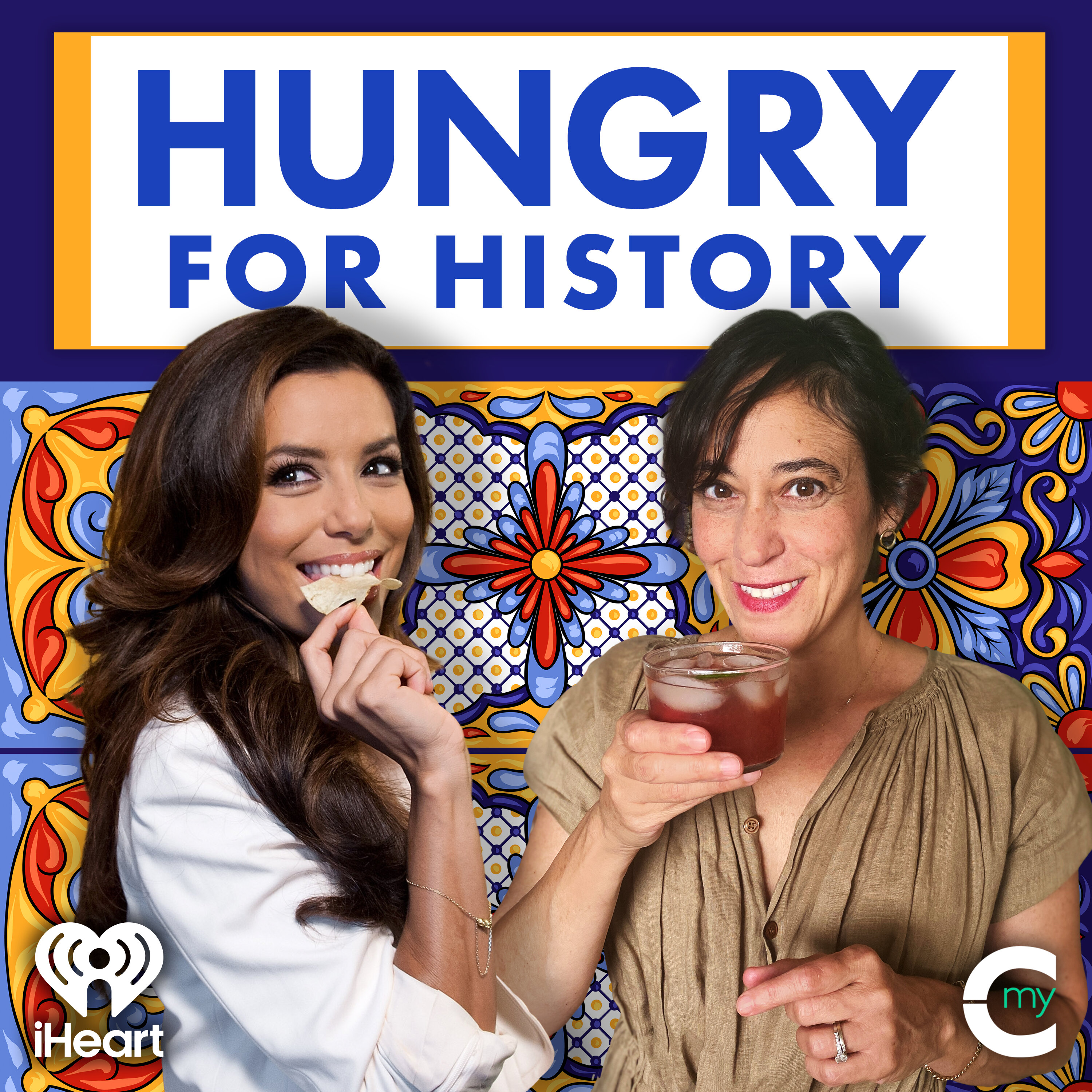
The Industrial Revolution didn’t just remake factories and cities, it transformed how the world eats. In this episode, Eva and Maite trace its origins in England and its uneven spread across the United States and Latin America, shaping labor, extraction, and global trade in very different ways. They explore how these industrial systems laid the groundwork for today’s climate crisis, then zoom in on tuna and tinned fish. From mass production to fancy cans, it’s a story of how industrial systems turned ocean life into shelf-stable commodities, and how we’re now rebranding them as luxury.
Food Chains Documentary: https://www.youtube.com/watch?v=6vw-qTCW8fo
See omnystudio.com/listener for privacy information.
Hosts & Guests
Transcript
This is an iHeart podcast.
Guaranteed Human.
Every small business owner has that one moment
that could have broken them.
But remarkably, it didn't.
Hi, I'm Ben Walter, CEO of Chase for Business.
And on season three of The Unshakeables,
my co-host Kathleen Griffith and I are bringing you more incredible stories
of overcoming the impossible.
We're really proud to share that The Unshakeables
is nominated for Best Branded Podcast
at the 2026 iHeart Podcast Awards.
Listen to The Unshakeables wherever you get your podcasts
and learn more at chase.com-podcast.
JP Morgan Chase Bank and a member FDIC
copyrighted 2026 JP Morgan Chase & Company.
Hi, I'm Wilmer Valderrama.
Nissan wanted to make a new pathfinder
and to achieve it,
I needed the most creative minds.
As soon as I made an imaginary adventure
for three children
and brought to the real life
by a Hollywood director
and his team.
It's the story of an infantile drawing
that turned into an epic test
of the power of Nissan.
From the world's imagination
all the challenges were 100% real,
without tricks, nothing more to say.
Only the power of engine V6.
Discover the behind-the-scenes
and how the new Nissan Pathfinder
turned out to be
impensable in something inevitable.
Nissan is committed
with the quality,
reliability,
and durability.
That's why JD Power
named Nissan the brand No.1
in quality of new vehicles
among the commercial brands.
To get more information
of the initial quality premiums
from JD Power 2025
in the United States,
visit jdpower.com-dagonal-awards.
The premiums are based
on the 2025 model.
You can show yourself
more recent models.
Life is just better
when you've got a good friend
to go through with it.
I'm Guamabajurama
from those Amigos Podcasts
and I know that
whether it's podcasting,
acting, parenting,
or just making it through the day,
it helps to have someone
you trust in your corner.
Like with Amigo,
that just gets it.
Your State Farm agent
can help you choose
the coverage you need.
And if needed,
your State Farm agent
can help you file your claim too.
Like a good neighbor,
State Farm is there.
I love my life,
the hustle,
connecting with incredible guests,
sharing stories,
elections with you all.
For me,
it's friends,
familia, work,
repeat.
But even I need a little
me time to reset.
That's when I sit back
and stream my favorite series
and Oscar Novelas.
Uro drama para esta mama.
And now that I'm a team mobile member,
my streaming feels upgraded.
With team mobile's best plan,
I get Hulu and Netflix included
all on America's best network,
Divino.
La conexión,
solid,
simple.
Plus, I get amazing perks
and access to exclusive experiences,
like $5 movie tickets,
mass movies baby,
ready to switch?
Bamos.
Switch today and shop online,
in-store or on the app.
You choose.
Visit teammobile.com for more info.
Receive Hulu with ads
and Netflix standard with ads
while you maintain
a qualifying experience
beyond line and good standing.
The mobile is the best mobile network
in the U.S.
based on analysis
by Ucla of Speed Test Intelligence,
data to H 2025.
In previous episodes,
we've explored canning
and pickling and chocolate butter,
bread,
just tons of other food products
that really underwent transformation
due to industrialization.
But we have really dived
into the industrial revolution itself.
My name is Eva Longoria.
And I am Maite Gomez Rejón,
and welcome to Hungry for History.
A podcast that explores
our past and present through food.
On every episode,
we'll talk about the history
of some of our favorite dishes,
ingredients, and beverages
from our culture.
So make yourself at home.
Even brodjo.
Yeah, the industrial revolution
was in a revolution per se,
like we did our whole
revolution series.
It was a period
roughly from the late 18th
to the 19th centuries
when societies shifted
from handmade
agrarian economies
to machine-based industrial ones.
I'm so excited
in today's episode.
We're going to explore
how the industrial revolution
sparked modern industry,
transformed daily life,
and really set the stage
for the world that we live in today,
which includes, you know,
the current global climate crisis.
I feel like we look at,
when you say industrial revolution,
you think that advancement,
evolution, production,
productivity, like endless growth,
the industrial revolution
really introduced this idea
of consumption, you know,
factories just churning out goods
faster than ever before,
cities expanding jobs available,
and then that went
alongside this boom in population.
Yeah, totally.
And, you know,
before this mass production,
people ate what was grown,
hunted, gathered,
most meals were made from scratch.
There were few stores
selling prepared foods,
and people would salt,
and pick, go, and dry,
and all of this,
but everything changed.
And then we see factories burning coal,
leading to the release of carbon dioxide
and to the air,
and, you know,
on this massive industrial scale,
and then oil and gas followed coal,
giving us cars,
and airplanes,
and plastics,
and, you know,
we're living with the repercussions
of this chain reaction
that began over 300 years ago,
you know, scientists
can trace this raising carbon dioxide levels
directly to the certain smoke
of Victorian England,
like these were the first warning signs.
Yeah, yeah.
And so it was England
that kicked off this transformation
that was in Europe,
and then came to North America?
Yeah, England kicked it off
in the late 1700s.
And so this was, you know,
in England,
it had, in this time,
1700s, late 1700s,
they had a really large labor force,
limited land,
because it's, you know,
it's a very small country,
and a very rigid class system.
And so we start seeing factories,
and they drew workers,
including women and children,
and to mills,
mostly textile mills,
and coal mines,
and disurban workshops,
and life really shifted.
Yeah, long hours, bad work conditions, no.
Bad work conditions.
Yeah, cramped housing,
little wages,
and there was this really sharp divide
between the industrial capitalist
and the newly formed urban working class,
like overnight, right?
Yeah, yeah.
And then also I would assume
the railroads and steamships,
like transportation,
really collapsed distance
between countries,
continents,
cities,
because then all of a sudden,
all countries were connected,
and when,
where that connected,
easily,
then it became global.
Yeah.
In fact, you started turning out food,
like flour, sugar,
canned goods,
like everything was made at scale,
everything was sold year round,
everything kind of tasted the same,
so it became the sort of standardization of taste,
and it was the birth of the modern,
industrial food economy.
Everything moved from the out of the home
and into the market.
And so we see these urban populations,
they become dependent on butchers,
and bakeries,
and you know,
street vendors,
and railroads and steam,
ships made it possible to ship meat,
and produce,
and also exotic goods,
like bananas,
and spices,
and sugar,
into these growing cities.
But I would assume that,
like this new system,
well,
it was unregulated at the time,
in the 1700s,
like there was no regulation,
which made it not only dangerous,
but like work conditions,
and workers,
and women,
and children,
like it was just so not,
you know,
nobody was overseeing this,
but it also reduced the quality of the food, you know,
milk was diluted with water,
flour was cut with chalk,
spoiled meat was like,
either chopped up and sold as something else,
or of course, you know,
they marketed spoiled meat as fresh,
so this obviously led to public outrage,
because this was unsustainable,
this kind of system
that was unregulated.
Totally, totally,
and this led governments
to pass the first food safety,
and also reform laws,
and this is,
an interesting one I think is one that happened
in the US, actually,
around this,
in the 1800s,
these women called the Lowell Girls,
that I didn't know about these women,
and they're not directly related to food,
but this idea of reform
and public outrage
and the public getting together,
these were mostly unmarried white women
who worked in the textile mills
in Lowell, Massachusetts,
in the 1800s,
and these were among the first women
in the US to earn wages outside of the home.
Right.
They were recruited from New England,
farming families,
and they lived in these boarding houses,
they worked 14-hour days,
six days a week,
under very strict rules,
like they had a strict curfew,
they were obligated to go to church,
and these mill owners were promoting,
you know,
education and independence,
it was like grueling work,
and they organized,
these women organized strikes
and reform groups,
and they helped launch early labor activism,
and shaped debates about women's work,
rights and industrial life in America.
They formed the female labor reform association
when the first women led organizations in the US.
Right.
Well, and I would assume,
there's so many parallels to immigrant labor.
Right.
Obviously, so,
because in 1850,
this was what?
This was 1800s,
so these were like white women.
These were white women.
Yeah, they were white.
Yeah.
And then in the 1850,
they was kind of replaced with the Irish women,
who were paid less,
and the Irish who were at the bottom of the wrong
during this time.
But it really,
I think this moment really laid the groundwork
for the regulations that we have today,
the definition of unions,
that the labor struggles really didn't end.
This is where it started.
This is where it started.
Exactly.
This is where it started.
And this is also around this time,
the 1800s is when industrial civilization spread to the US.
So it started in England,
and it spread to the US.
I would imagine it were,
of course, it spread to the US,
because we had far more land.
Yes.
I mean, because we had 1800s,
it wasn't that many people,
but we had a lot of land and fewer people
than the concentration in England.
Totally.
And because of this,
it unfolded much more unevenly in the US.
Oh, really?
I thought we would be better at it.
No.
We saw it.
We always saw it.
We had more land,
a lot less people.
So in England,
industrial labor,
often was like a lifelong reality.
Like you worked at a factory,
and this is what you were going to do
for the rest of your life.
In the US,
it was different.
A lot of people saw this factory work as temporary.
It's something to do before moving west,
before moving,
buying land,
this idea of upward mobility.
Sometimes it was real.
Sometimes it was a myth.
But this is how Americans understood labor.
And so then when immigration increased
in the late 19th and early 20th centuries,
factory work in the US became more permanent,
and working conditions mirrored those of Europe.
But it was different, right?
And also in the US,
much of the industrial economy was built
on enslaved labor.
So everything was just slightly different
than it was in England.
Hello, this is Wimibla de Rama.
The new Nissan Pathfinder is made
for those who are not comfortable with the basics.
Under the hood,
it has a powerful engine.
Sometimes,
it is more premium for words
in the last 30 years.
That is proven power,
which leads you to where you want to go with confidence.
And with capacity of up to eight passengers,
with premium technology,
it is designed to go to the distance
and more far,
comfortably.
The Pathfinder leads you
with all the security that your SUV will
respond to any surprise on the road.
The new Nissan Pathfinder.
Potência confiable para cada escapada.
People talk about distance like it's a real thing.
But in Latino families,
it's not existing.
You're never far.
You're one call,
one text, one meme away.
And with that though,
if you don't answer,
because your hermanos,
your cousin, Tutia,
they're all calling till you do.
That's why T-Mobile is the play
if you want to stay connected with your gente.
With unlimited talk,
text and data between US and Mexico,
home is always close.
Every convo con mi gente
leaves me happier,
just like being a T-Mobile member.
Switching took me what?
15 minutes on the T-Life app?
15 minutes that unlock
the best benefits in wireless.
Everyone has three phones,
but with T-Mobile,
I have value that lasts.
My peeps keep me centered,
but T-Mobile keeps me in total.
You won't believe
all the benefits you can get
when you switch to T-Mobile.
Switch today,
online, and store,
or on the app.
You choose,
visit T-Mobile.com,
switch in 15 minutes,
per line,
qualifying plan required.
Hola, it's Honey German here.
Let's be honest,
in our community,
especially us mojeres,
we do it all.
We work,
we take care of the family,
we hustle,
so that we don't miss anything.
But even the strongest need a break.
Own chinchin de ayuda.
That's why I love talking about real stuff
on my podcast,
Gracias, come again.
Because we're all out here doing our best,
and sometimes having
alguien into esquina,
eso hace toda la diferencia,
like a State Farm agent.
They're the kind of hint
that shows up,
listens,
and helps you get the coverage you need.
It's not about needing help.
It's about knowing you deserve
to feel supported.
Comun buen besino?
State Farm is that I.
State Farm proudly supports
my culture podcast network.
Escucha to shows favorito
wherever you listen to your podcasts.
Imagine never having to buy gas again.
Sounds like a dream,
except it's real.
That's everyday life
with an electric vehicle.
No long lines at the pump.
Just plug in at home and go.
EVs are as easy to charge
as your phone
and build for real life.
Most Americans drive about 40 miles a day.
And most EVs go 200 to 400 miles
on a single charge.
And with fewer moving parts,
you've got fewer repairs.
And style?
There are hundreds of new
and used EV models to choose from.
In EV to fit every lifestyle
and every budget.
Learn more at electricforall.org.
I do think because the US is so known for agriculture.
I mean, this is the beginning
because we have a plan
so that kind of mechanization
of agriculture,
meat packing plan
that may be from pork and canned meat.
You know,
they made that widely available.
And industrial diaries
allowed milk and cheese
to travel far
so that transformed breakfast again.
Like in a serial episode,
transforming breakfast
tables in particular,
especially, you know,
with pork and bacon
and, you know,
pork chops
and all that fun stuff.
And then transportation
made a difference too.
Made coffee
and tea
and the tropical foods
part of everyday diet.
So I love how, like,
in industrial
advancements
really affected how we ate.
And what about convenience foods?
You know, bread
and cookies
and just turned into these daily treats
as opposed to, like, on Saturday,
we'll go to the bakery.
This just,
you could have it in your house.
Yeah.
Yeah, yeah, yeah.
Totally.
And we start seeing, you know,
additives.
All of this,
it's sort of the beginning
of this,
of this health crisis as well.
So everything became more convenient.
And, you know,
one of my,
one of my favorite things
is the greatest thing
from sliced bread.
I say that all the time.
I'm like,
I love that.
That's the greatest thing
since sliced bread.
So that was, like,
popularize the 1950s
when they actually started
to slice the bread.
And then you could just
take sliced bread home.
Yeah.
I was like,
yeah.
Well, in 1920,
in the 1920s,
is when we start seeing sliced
bread,
but that slow
again was popularized
in the 50s.
Wow.
Yeah.
Industrial food
made eating cheaper
and more convenient.
But it also made production
invisible.
And so, you know,
like just behind closed doors,
but you'd get this beautiful
bread that was sliced
and packaged perfectly.
But you don't know
really what happened
behind the scenes of,
of that journey.
So protest started to happen
when people realized
there,
there,
there was unsafe food.
When people realized
that unsafe food was
a symptom
of unsafe labor.
And so this fight for workers
rights and fight
for food.
And so this fight for workers
rights and fight for food
safety grew
out of that same beer
that an industrial system
that moves too fast
or too cheaply affects
people
and food.
Right.
And this is interesting
up to enclair.
Remember this book,
The Jungle?
Yes.
It was published in 1906.
He was the first one
to expose this,
the Chicago meat packing
industry.
There were rats
in New York.
I thought a lot.
There were rats in New York.
I didn't know anything
about the�i
and like diseased animals
were processed anyway.
Like workers
were falling into rendered
Vazig
disgusting.
And so he spent weeks
uncovering these practices
at the stockyards
and slaughterhouses.
And he wanted to
really focus on the people
and the treatment
of the people,
the workers.
But the readers were
outraged
by the food quality.
And so he was like,
the stomach. But this is when the public demanded reform. And
President Roosevelt in 1960 signed these two landmark laws, the
meat inspection act and the food drug, the pure food and drug
act, which eventually would become the FDA because of this,
because of this public outrage. Yeah. But you know, the law
didn't big labor overnight. Because you know, if you target
the consumer, which is by default, that's what the jungle
exposed was just like, oh, this oral meat. Wait, am I
eating it? Am I buying that? You know, but we didn't fix
the labor. Right. And so we haven't fixed the labor. We
haven't fixed the labor. But I always say this because I'm
obviously a big advocate for farm workers is like how
things get to your plate need to matter to you. Because what
happens to workers and what ends up on your plate are in
that verbal. And so I think the people producing cheap food
the people who are doing this labor are underfed, injured,
and they're very disposable. You know, I remember I remember
I did a documentary on the tomato farmers in Florida. And
they would have to they would get 50 cents of bucket. So they
would pick all the tomatoes so fast and they would turn a
bucket in, pick turn a bucket in turn a bucket in just to
make 50 cents of bucket. I mean, I mean, I mean, these
buckets full of tomatoes. And we followed this one woman
tomato picker and she went to the grocery store and she
put in a for the tomato that she picked to such a crime.
Nick crazy. It's a crime. We'll link to that document. And
that was a really great document. Yeah, it's called food
chains. Yeah, the oppression of labor. So how did the
industrial revolution differ in Latin America though?
Because I feel living in Mexico and I live between Mexico and
Spain, but living in Mexico, we still go to the the
carinceria. We still go to the fun of that. Yeah, we still
like we still do that. Obviously, there's industry and
factories and manufacturing. Obviously, because you know,
Latin America has cheaper labor. Right. But like how did it
unfold in Latin America? Yeah, it was really quite
different. So in England and the US, the industrial
revolution centered on factories and manufacturing and
growing these domestic markets. But in Latin America,
it was kind of folded very unevenly and largely from foreign
capital and interest. Right. So these. So this is, you know,
we're talking 1800s. A lot of Latin America are now
newly independent from their, you know, Spain or, you know,
Portugal. They became exporters of raw materials like sugar or coffee
or silver. And importers have finished goods rather than
as major industrial producers. And so railroads and ports were
built to facilitate export of these commodities to foreign
markets, but really often times without connecting to local
economies. So the labor systems were super unequal and they
relied on indigenous and afro descendant rural workers. And
they worked in this really horrible conditions, you know,
exploitative conditions. And rather than breaking from these
colonial era hierarchies, industrialization in Latin America
kind of enforced it and created deeper economic divides.
And this eventually fueled political movements. That linked labor rights and
to struggles over land and national control. And this was a driving force
behind the Mexican revolution. So we talked about that, you know,
with the foreign investors and the railroads and all of this. So it
was really, really quite different in Latin America than it was in the
US and England and Europe. Speaking of like mechanization
and preservation of food, you know, we did a canning episode.
Can I? I love canning. Let me show you. But canning is a
bright product of the industrial revolution, right? Yeah, yeah, yeah,
yeah, it totally is. It totally is. And we did a whole episode on it.
And it was developed out of this contest in France. And it was like this whole,
it's like a whole thing. But of all of the foods you could find in a can,
we have to talk about tuna for tuna to sardines. Let's talk about this.
There's a long, long history that stretches back to
sitting down store of revolution when we talk about all the trendy fish
tinned fish today, which I'm on the trend, by the way. I'm still on the trend.
I love it. In the fish, you know, my favorite fish. Why?
But you know, there's a tinned fish store here in LA. We've got to go to
it is inch one. I don't know. I don't know. I tagged it. I mean,
I saw it on Instagram. And so I saved it. And I was like, I got to tell my
thick. And it has everything. And there's a tinned fish,
a sommelier, basically. No. Yeah. She's like, this is a little more briny.
And this one's a little more less, you know, less ocean.
And it's a whole thing. And you can go do tasting there.
You have to go. That's my dream. Like, oh my god, I love it.
Sometimes going to a restaurant like a Spanish restaurant. And they'll open up
the tinned like they'll serve the tinned just like they'll just open it off with
bread. And oh my gosh, I have tinned fish at least once a week at home.
Oh, sorry, at least, but it has to be a good quality.
Yes, it has to be a good quality. And I will say, you know,
if we talk about tinned fish at the start of the 20th century,
tuna was barely eaten in the US. Like, that's crazy.
In 1900, we weren't really eating tuna, much less canned tuna.
Oh my gosh, yeah. Even though tuna had a long global history,
it's been eaten for centuries in the Mediterranean and Latin America.
And of course, Asia. And it's abundant off North America,
off the shores of North America. But we didn't even consume it.
Mexico thumb vocal, let me tell you, because there's a very popular restaurant,
Guldramar,
art friend Gabi, and who will you call it?
She's one of the popularized tortillas.
Oh, really? And this was like, by the way, 20 years ago.
Like they didn't even have it in Mexico City.
They weren't really a fish kind of city, because they felt like they were landlocked,
right? I would tune up the year. And she's like, we have the best fish in Mexico.
Oh my gosh.
All the challenges were 100% real, without tricks, nothing more to say.
Only the power of engine V6.
Comercials General's.
People talk about distance like it's a real thing.
But in Latino families, it's not existing.
You're never far, you're one call, one text, one meme away.
And Cuidado, if you don't answer, because your hermanos, your cousin,
Tutia, they're all calling till you do.
That's why T-Mobile is the play if you want to stay connected with your people.
With unlimited talk, text, and data between US and Mexico,
home is always close.
Every convo con mi gente leaves me happier, just like being a T-Mobile member.
Switching took me, what? 15 minutes on the T-Life app?
15 minutes that unlock the best benefits in wireless.
Everyone has three phones, but with T-Mobile, I have value that lasts.
My peeps keep me centered, but T-Mobile keeps me in full though.
You won't believe all the benefits you can get when you switch to T-Mobile.
Switch today, online, in-store, or on the app.
You choose, tuelihis.
Visit T-Mobile.com, switch in 15 minutes per line, qualifying plan required.
Life is just better when you've got a friend to go through with it, right?
Someone who gets you, who's got your back, and someone who shows up with your matters.
Whether it's work, family, or the unexpected,
it's always easier when you're not doing it alone.
Hi, I'm Wilmer Valderama from the Los Amigos Podcast.
Every week, I get to sit down with one of my best friends and talk about all the wild,
unpredictable, and sometimes hilarious parts of my life.
And it reminds me that's the kind of support we all need.
Not just in good times, but when things go sideways.
Quinter con estate farm.
They're the kind of friend you want in your corner.
Your state farm agent can help you choose the coverage you need,
and with things don't go as planned.
Your state farm agent can help you file your claim.
It helps to have someone who really listens.
Someone who's there, like a true amigo, like a good neighbor.
State Farm is there.
And State Farm supports my Cotuda podcast network,
helping to share stories that bring us together.
Catch those amigos and more wherever you get your podcast.
Imagine never having to buy gas again.
Sounds like a dream, except it's real.
That's everyday life with an electric vehicle.
No long lines at the pump.
Just plug in at home and go.
EVs are as easy to charge as your phone and build for real life.
Most Americans drive about 40 miles a day.
And most EVs go 200 to 400 miles on a single charge.
And with fewer moving parts, you've got fewer repairs.
And style, there are hundreds of new and used EV models to choose from.
An EV to fit every lifestyle and every budget.
Learn more at electricforall.org.
It was rarely consumed in the US.
And so California changed it, right?
California 1898 tuna fishing took off around Catalina.
Catalina around Catalina right here in our backyards.
And around the same time can tuna from France
in Italy began arriving in small quantities in the US.
So people were like, what is this?
But the American tuna industry begins around,
you know, in the 1880s, this man named Albert Halfel
established the first US tuna cannery in LA.
And in 1908, he began canning albacortuna.
And this part rapid growth across the country.
And so then marketing tuna became mainstream.
Their company is like, wait a minute.
Is this where chicken of the sea come from?
Yes, yes.
This van cam seafood.
They were operating under brands like chicken of the sea.
People thought it was chicken.
Well, it helped people embrace this.
It says like, okay, this is familiar.
This is mild.
This is familiar.
I know what chicken is.
And it became popular.
And by 19, there were like 36 tuna canneries
lining the West Coast.
Doesn't this make a problem?
Because then then you over fish like it becomes so popular.
And then you end up,
Albuquerque ended up, Albuquerque tuna specifically,
basically disappeared from California waters.
Yes.
And it all collapsed the whole industry.
Just as it was becoming a staple, a national staple,
oops, the industry collapsed.
Oh my god.
How did the how did the industry adapt?
Well, they shifted to yellow fan, which has darker meat.
But Americans were used to white Albuquerque.
So though they were only using the lighter fish
than it drove waste and like further fishing pressure.
And then yellow fan stocks were soon over fish.
And so boats had to go deeper into the Pacific
or like further south.
And it just became, you know,
it just becomes a bigger problem.
Yeah.
Well, then then the yellow stock was over fish.
Yes.
It's just like this, this like what is it?
Like a cycle, the cycle, but also like this,
just yeah, the cycle of like,
we just keep moving on to the next thing
and exploiting it and creating a problem.
And then we go, okay, done with that.
Yeah.
But then the like, we love things to death.
Oh, sorry, yeah.
We love to death literally.
And then the Great Depression came,
which really sealed tuna's place
because tuna was cheap and shelf stable, high in protein.
So then, you know, during the 1930s,
tuna became the most consumed fish in the US.
And that's where we get these recipes
that were really practical and easy and healthy.
Tuna salad, tuna sandwiches, tuna, noodle casserole.
When I was in college, I had cans of tuna and ramen.
That's the bag of ramen.
I grew by $10 per dollar.
And I would have so many cans of tuna
and I would mix my ramen noodles
with ramen noodles once or healthy.
But the tuna and I was like, I'm good.
I got my meals for the week.
Oh my gosh.
Yeah, I survived don't tuna when I was in college.
I still love tuna, love tuna, love it.
Now I get a bougie bitch with my tinned fish.
Yeah, I get the fancy cans tuna
because I make a mean tuna salad sandwich.
But then I'm going to make that today.
Oh, you got to make it a celery,
get full of celery, and then get a little
djajjane, red onion,
lobejane, little dill,
yes, and anyway,
but health concerns emerged
because tuna was considered a health food
but industrial pollution
introduced mercury
into our rivers and oceans.
And so let's talk about this mercury
because I feel like a lot of people
don't eat so much fish, especially tuna
because you're going to get mercury poisoning.
Tuna fishing can be very damaging to the environment,
especially when you do it on an industrial scale, right?
Yeah, yeah, totally.
Overfishing is push species like blue fin
and big eye tuna towards collapse, right?
And also with these large fishing nets
and these fish aggregating devices,
they killed dolphins and sharks and turtles
and also a little tiny fish as bycatch.
And tuna takes a really long time
to grow into adulthood as well.
So as local stocks decline,
boats travel further,
increase in fuel, carbon emissions.
Yeah, that's what I'm going to say
in the pollution adds this whole
whole other layer of risks
because then the tuna
accumulates the toxins like mercury
from this contaminated food chain.
So I think the sustainable alternatives
like pool and line fishing
or well-managed hip jack fisheries,
all of that exists,
but still most of the grown global tuna supply
rely on practices,
unfortunately, that still strain our oceans
and ecosystem.
And though by that late 1980s,
there was only one tuna cannery
in the continental United States.
Most of them were processed in Puerto Rico,
American Samoa,
Corsair Labor Custard Cheaper.
And so most tuna now is important.
60% of the tuna consumed in the U.S.
comes from abroad.
It really shifted.
Totally shifted.
That's fascinating.
So I'm not a chicken at the sea consumer.
But I know Tintfish has gone gourmet
and I'm a consumer of gourmet Tintfish.
For sure.
For sure.
For sure, the Spanish, the Portuguese,
the Spanish, from Galicia,
you have most canned,
the muscles from Galicia.
But you're living life.
So good.
And you know what I love about them too,
other than the beauty, the packaging.
Yeah, the aesthetic.
The aesthetics are so gorgeous.
And I do like that small fish
are having their moment right now,
the startings and anchovies.
Because those, by the way, are super sustainable.
Yes, exactly.
They don't require cooking.
And I just love that this is like modern eating.
Yes, even though the idea of preservation is rooted
in the Industrial Revolution,
it's now been reimagined with this, you know,
regional storytelling,
chef-driven brand.
Like you said, the packaging.
And it's affordable.
And global.
Mm-hmm.
And so shall, it's kind of casual.
You open it at the table.
You pair it with bread.
It got some wine.
It's just like this old and new at once.
It's like, yeah, it's very practical,
but it's artisanal.
And it's just, I love it.
I love it.
We talked about the origins of Kenny last season.
So check out last season's Canal.
You can episode, which was a really fun one.
If you guys have any tuna fish,
tuna fish recipe.
Let us know.
Don't forget to read us and leave us your messages.
Thank you for listening, everyone.
Thanks for listening.
Bye.
Hungry for History is a hyphenate media production
in partnership with I Heart's Michael Thura Podcast Network.
For more of your favorite shows,
visit the I Heart Radio app, Apple Podcast,
or wherever you get your podcasts.
Hello, I'm Wilmer Valderrama.
Nissan wanted to get the new Pathfinder.
And to achieve it,
I needed the most creative minds.
It was born an imagined adventure by three children,
and led to the real life
by a Hollywood director and his team.
It's the history of a infantile drawing
that became a epic proof of the power of Nissan.
From the real world imagination,
all the networks were 100% real,
without tricks, nothing more.
Only the power of engine V6.
Discover the behind-the-scenes
and how the new Nissan Pathfinder turned out,
it was impensable,
something unforgettable.
Nissan is committed
with the quality,
reliability,
and durability.
That's why J.D. Power named Nissan the brand number one
in quality of new vehicles
between the commercial markets.
This is Angela Yee from Angela Yee's lip service.
One in four people in the U.S.
has been to a Planned Parenthood Health Center
for a life-saving, life-changing care.
We're talking about birth control, annual exams,
cancer screenings,
STI testing, and treatment, and more.
High-quality, expert judgment-free care.
And despite lawmakers' efforts to shut them down,
they're not going anywhere.
Care continues at Planned Parenthood
so that you can get the unbiased
high-quality health care that you need
to learn more, visit omforpp.org.
Hey, I'm Freddie Prince Jr.
On my podcast wrestling with Freddie,
we talk about what happens
when things take a turn in and outside of the ring.
Like when the heel wrestlers back you up into a corner
and your tag team partner jumps in to have your back.
It helps to have backup.
That's why so many people turn to their state farm agent
to help choose the coverage you need
and to be there when it counts.
Because when life gets unpredictable,
it's good to know someone's in your corner.
Like a good neighbor, state farm is there.
Imagine never having to buy gas again.
Sounds like a dream, except it's real.
That's everyday life with an electric vehicle.
No long lines at the pump,
just plug in at home and go.
EVs are as easy to charge as your phone
and build for real life.
Most Americans drive about 40 miles a day
and most EVs go 200 to 400 miles on a single charge.
And with fewer moving parts,
you've got fewer repairs.
And style, there are hundreds of new
and used EV models to choose from.
An EV to fit every lifestyle and every budget.
Learn more at electricforall.org.
This is an iHeart podcast.
Guaranteed human.
