Loading...
fictiondramatrue crime
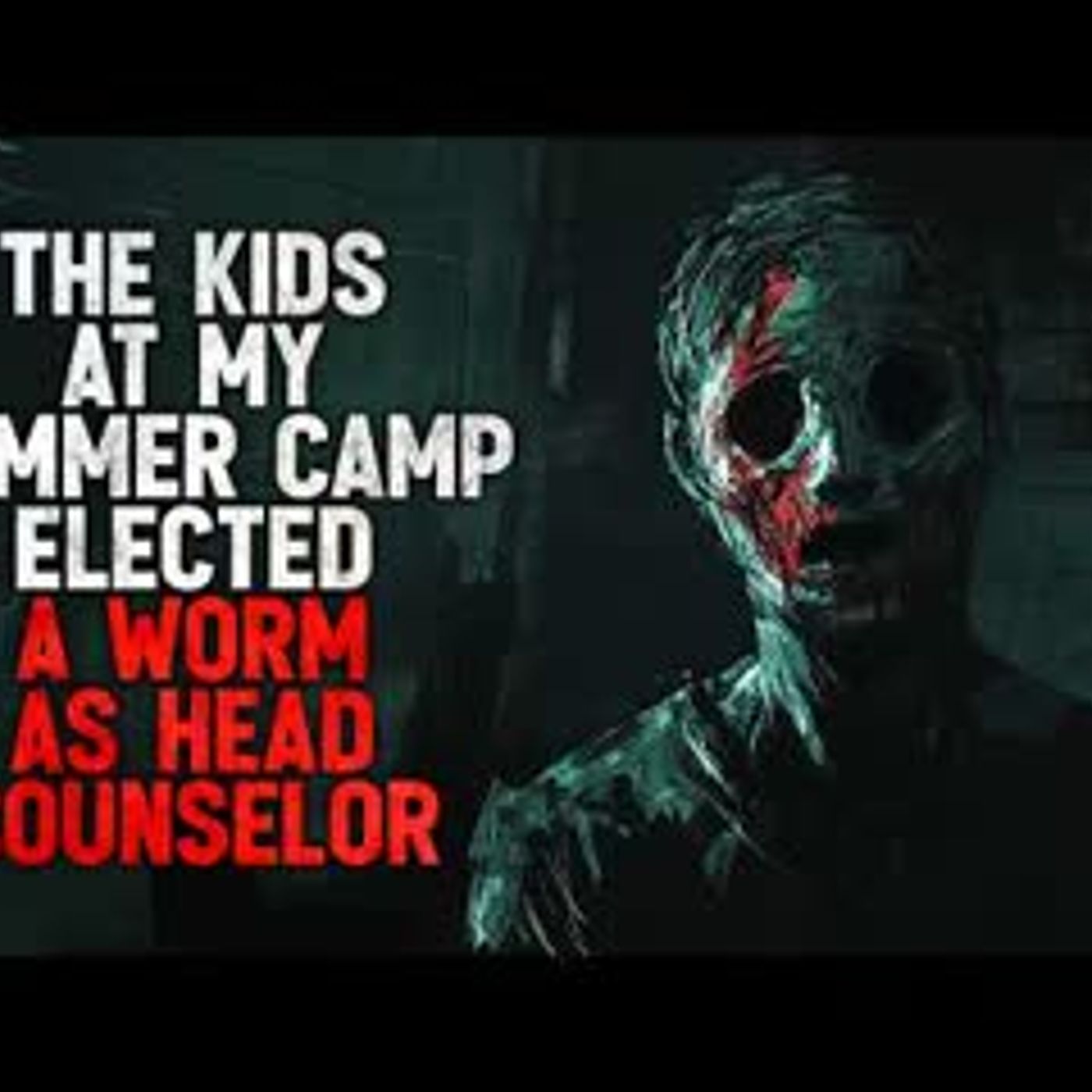
"The Kids at My Summer Camp Elected a Worm as Head Counselor" Creepypasta
About this Episode
CREEPYPASTA STORY►by frequent-cat: / frequent-cat
Creepypastas are the campfire tales of the internet. Horror stories spread through Reddit r/nosleep, forums and blogs, rather than word of mouth. Whether you believe these scary stories to be true or not is left to your own discretion and imagination.
LISTEN TO CREEPYPASTAS ON THE GO-
SPOTIFY► https://open.spotify.com/show/7l0iRPd...
iTUNES► https://podcasts.apple.com/gb/podcast...
SUGGESTED CREEPYPASTA PLAYLISTS-
►"Good Places to Start"- • "I wasn't careful enough on the deep web" ...
►"Personal Favourites"- • "I sold my soul for a used dishwasher, and...
►"Written by me"- • "I've been Blind my Whole Life" Creepypasta
►"Long Stories"- • Long Stories
FOLLOW ME ON-
►Twitter: / creeps_mcpasta
►Instagram: / creepsmcpasta
►Twitch: / creepsmcpasta
►Facebook: / creepsmcpasta
CREEPYPASTA MUSIC/ SFX-
►http://bit.ly/Audionic ♪
►http://bit.ly/Myuusic ♪
►http://bit.ly/incompt ♪
►http://bit.ly/EpidemicM ♪
This creepypasta is for entertainment purposes only
Creepypastas are the campfire tales of the internet. Horror stories spread through Reddit r/nosleep, forums and blogs, rather than word of mouth. Whether you believe these scary stories to be true or not is left to your own discretion and imagination.
LISTEN TO CREEPYPASTAS ON THE GO-
SPOTIFY► https://open.spotify.com/show/7l0iRPd...
iTUNES► https://podcasts.apple.com/gb/podcast...
SUGGESTED CREEPYPASTA PLAYLISTS-
►"Good Places to Start"- • "I wasn't careful enough on the deep web" ...
►"Personal Favourites"- • "I sold my soul for a used dishwasher, and...
►"Written by me"- • "I've been Blind my Whole Life" Creepypasta
►"Long Stories"- • Long Stories
FOLLOW ME ON-
►Twitter: / creeps_mcpasta
►Instagram: / creepsmcpasta
►Twitch: / creepsmcpasta
►Facebook: / creepsmcpasta
CREEPYPASTA MUSIC/ SFX-
►http://bit.ly/Audionic ♪
►http://bit.ly/Myuusic ♪
►http://bit.ly/incompt ♪
►http://bit.ly/EpidemicM ♪
This creepypasta is for entertainment purposes only
Hosts & Guests
Transcript
I was 22 when I took the job at Redfern Summer Camp.
It wasn't supposed to be anything serious, just something to fill the gap between graduation
and whatever came next.
A few months in the woods, a little structure, something to make my CV look less like it
spent the year drifting.
The posting made it sound wholesome in a very curated way.
Nature-focused, child-led development, unplugged creativity.
The kind of place where kids built rafts out of driftwood and came home with bug bites
and self-esteem.
The camp itself looked exactly like it'd expect when funding runs out, but the philosophy
stays ambitious.
The cabins were built from dark stained timber, with gravel paths that turned a mud after
rain.
The mess hall smelled fairly of pine cleaner, an old oatmeal.
Everything was a little crooked, but still functional.
We had about 30 campers the first week, ages 7 to 11.
Most of them came from the same two or three towns nearby.
You could tell by the way they already knew each other's names.
There was the usual chaos you expect from a group of kids dumped into the woods together,
but they lined up when asked, and they listened when spoken to.
Even the youngest ones kept their voices hushed as if they were in a library, so there was
hope to keep some sanity after this job.
The kids were separated into a sign cabins, each a team to earn points through various
camp activities with prizes and praise to be earned.
The first ask was to elect a head counsellor for each cabin, one who best represents their
cabin.
I got a sign to cabin redfern, one of the smaller ones tugged near the edge of the
tree line, eight campers all on the younger end of the age bracket, they greeted me politely
when I walked in as if I were a substitute teacher on the first day of term.
One of the girls asked if I'd like to meet the head counsellor.
I figured they meant one of the older kids had taken charge, the natural leader type who
organises games and settles arguments.
I played along.
Sure, I said, where are they?
They exchanged glances, a few of them smiled.
He's already here, one of the boys said, we elected him.
They moved toward the back corner of the cabin where a shoebox sat on a low crate, a flatstone
placed in front like an offering plate.
I laughed under my breath, okay, I said, what's his name?
They all looked back at me and not in a mischievous way, just serious.
He's the soft, one of them quickly reached for the lid, another stopped gently placing
a hand over it, slower, she said, he's resting.
They gently opened the lid together, inside the shoebox lined with dirt, leaves and a bit
of bark arranged for surprising care, pine cones had been pressed into the corners, a few
pebbles were arranged in a rough circle like someone had tried to build a fence.
In the centre of it lay a pale and thick worm.
It was large, but not larger than any worm I'd expect to find under a log.
Its body was smooth and faintly translucent, the kind of soft pink you see when skin has
emit the sun in years.
It moved slowly, pushing through the soil with an unhurried rhythm that felt less like
wriggling and more like breathing.
One of the girls leaned in close and started humming under a breath, a low, tuneless sound
that made the others fall quiet.
Another picked up a pine branch from the windowsill and began fanning gently over the box.
We elected him fair and square, the boy from earlier said, he got the most votes.
I waited for someone to laugh, no one did.
There was nothing playful about it, they weren't giggling like it was a joke, no glances
to see if I was impressed.
At lunch I watched them slide carrot sticks and bits of sandwich crust into napkins instead
of eating them.
One by one they took the scraps into their pockets, for later a girl told me when she
caught me looking, we bring them back for Mr. Soft.
I mentioned it to the director that afternoon half amused, half concerned.
He didn't seem bothered.
They're pretending, he said pouring coffee from a dented thermos, probably saw something
online or a movie reference, let it run its course.
That night, after lights out, I stepped back into the cabin to check for any kids staying
up.
The shoebox was still in the corner, but it wasn't where they left it, it had been
pushed a few inches closer to the centre of the room and the lid wasn't open anymore.
Until the next few days, the kids in Redfern stopped talking over each other.
They waited until the person before them had finished, even if it meant uncomfortable
pauses where everyone just sat in silence watching the speaker think.
There were also no more arguments, no games that involved chasing or shouting.
They played quietly, if they played at all.
After the time, they sat cross-legged on the floor, reading or drawing or arranging
things they collected in careful little lines.
They also started waking up at the same time, early, with no need to repeatedly jostle
someone awake.
All eight of them would sit up at once as if responding to the same sound I couldn't
hear.
Other kids began drifting from different cabins.
At first it was just one or two, stopping by to ask if they could borrow a marker or play
a card game.
But by the third day, I'd walk in to find four or five unfamiliar faces sitting on the
floor near the shoebox.
They didn't touch it, they just leaned in and whispered.
I caught the same phrases more than once.
This piece, softest patience, softest ours.
They said it softly, like a rhyme they were afraid to forget.
I asked one of the boys where they'd heard it.
He looked at me like I'd missed the point.
We just remember, he said.
That afternoon, while the kids were down by the lake for swimming hour, I lifted the lid
of the shoebox again.
Missed the soft lay where he'd been before, coiled loosely in the soil.
But he didn't look the same.
It wasn't dramatic, not enough to make me jump.
Just more of him.
A slight thickness along the middle, a length that seemed to fill the box more completely
than it had on the first day.
By midweek, the atmosphere in the cabin had started closing in on itself.
The kids didn't invite me in anymore.
If I stepped inside during free time, conversations would trail off, drawing would stop.
Some would move subtly to stand between me and the shoebox.
One afternoon, when I asked them to head out early for archery, a girl shook her head.
We don't want you to upset him.
She said, glancing back at the corner.
He's helping us be good.
I asked what she meant by that.
She didn't answer.
Just went back to folding a blanket with slow, careful hands.
After that day, out by the trails, one of the campers from another cabin screamed.
I ran over to find him crouched in the dirt, sobbing over a worm.
It had been crushed into the soil by the heel of his shoe.
He kept saying it was an accident that he didn't mean to.
His hand shook so badly I had to help him stand.
The redfern kids silently gathered around the spot, digging a small hole with sticks
and fingers.
They placed the worm inside, covered it gently, and then knelt around the mound.
Soft as peace, one of them whispered, soft as patience, another replied, soft as ours.
They said it again and again.
I tried to interrupt to tell them to wash their hands before dinner, but they didn't seem
to hear me.
I had lost the little authority I had.
Back at the staff cabin that evening, I mentioned it to the other counsellors, one of them laughed.
If it keeps him quiet, let the worm lead, he said, reaching for another marshmallow.
The joke got a few tired chuckles.
I could only dwell on how hard it was to describe things without sounding pedantic.
The next morning, the loudest kid at camp stopped talking.
His name was Jamie, 10 years old, non-stop energy.
He'd been in trouble every day since checking.
But now, he sat perfectly still during breakfast, hands folded in his lap.
He didn't throw food at the other kids or cause any trouble.
He just smiled and followed the rules.
His eyes didn't seem to focus on anything at all.
By the end of the week, I started seeing the same patterns in other cabins, kids sitting
in silence during a wreck time, waking before the morning bell without being told, meals
eaten in neat, identical bites, soft as peace, soft as patience, soft as ours.
Someone built a second place for him.
I found it by accident, behind the camp stage, a hollow, scooped out beneath the planks,
lined with moss and twigs, a shallow bowl of damnsoil rested in the centre, with bits
of apple peel and carrot arranged around the rim.
There was no worm inside, but the dirt was warm when I touched it.
Later that day, I noticed the boy from Blue Cabin, the one with the inhaler he kept
on a lanyard around his neck, wasn't wearing it anymore.
I asked him where it was.
I don't need it, he said, calm as anything.
He helps us breathe better.
I reported it to the nurse.
She checked his bunk and found the inhaler wrapped in leaves, tucked under his mattress.
The cook started locking the pantry after that, not because of theft, at least not the
usual kind.
We weren't missing sweets or soda or anything obvious.
Instead, it was things like dried mushrooms, tree bark from the foraging bin, ground oats
and salt, anything dry enough to crumble.
One afternoon, she found four kids in the craft room using a mortar and pestle from the
pottery station.
They filled it with bark shavings and something that looked like lycan.
That evening, one of my campers pulled me aside while the others were brushing their teeth.
He's helping us get ready.
She said quietly, for what?
She thought about it for a second as though checking the answer against something I couldn't
hear.
He says the choir will come soon.
I didn't sleep much that night.
One time after three, I heard movement outside the cabin, a low rustling that didn't belong
to wind or animals.
I stepped onto the porch.
In the open field beyond the tree line, a dozen of them stood in a loose circle.
They were moving, dancing, slowly and deliberate.
Eyes closed, hands lifted as though feeling for something in the air.
The feet shifted to the grass in perfect silent rhythm.
One of them turned toward me as I stepped closer.
It was Jamie.
His smile was wider than before.
And then they all ran back to their bunks.
I went straight to the director's office after breakfast, didn't wait for a staff meeting,
just walked across the gravel with that sick, electric feeling in my chest that comes
when you know you've let something go too far without saying anything.
The door was already open.
He was sitting behind his desk with his hands folded, staring down at a stack of paperwork.
I knocked once, then stepped inside.
Do you have a minute?
I think a kid's game is going too far.
He looked up when I said his name, blinking slowly like I pulled him out of a dream.
They're not pretending.
He said, that's what's beautiful about it.
I hadn't told him what I'd come to talk about yet.
I backed out without replying.
The landline in the staff cabin gave me nothing but a low steady tone.
My phone still showed signal, but every call I tried dropped before the first ring.
I checked the van.
The keys weren't in the hook where they were supposed to be.
By lunch, I couldn't find two of the other counsellors.
Their bunks were empty, their phones still charging in the window sill.
The ones who were left didn't seem concerned.
They're probably helping set up for tonight.
One of them said, ice fixed on the mess all wall, despite nothing being there.
Campfire started just after sunset.
We usually did songs on Fridays, skits, smalls if the cook had the patience for it.
This time, no one brought instruments, and no one asked for marshmallows.
The shoebox had been placed on a stump near the fire pit.
It's from every cabin lined up without being told.
One by one, they stepped forward and knelt in the dirt.
Some closed the rise, others pressed their foreheads to the lid.
No one spoke above a whisper.
I pushed through the back of the crowd and reached for the stump.
The lid was already off.
The soil inside had been disturbed, hollowed out in the centre like something had pushed
its way free.
Missed the soft wasn't in it anymore, and when I looked down, I saw a narrow, child-sized
opening at the base of the stump, fresh wet earth crumbling inward, a tunnel leading
under the camp.
I turned around, looking at the lining crowd, tried to do a fast-head count, but they moved
around too much to confirm.
But I had to assume, and it was a stronger assumption that some of the kids had crawled
in.
Feeling like I was the only sane person here, it felt like my responsibility to get them
out and shot this whole thing down.
The tunnel was narrower than expected, I had to crouch almost immediately, one hand
brace against the top as I followed the slope down.
The air smelled weird, the kindness been turned over too many times, packed and repacked
until it halted its shape.
This was too big for the kids to have done in an evening.
I had to pretend it had been here the whole time, opened up by the kids, because the alternative
was too overwhelming to think about.
I thought it would open up eventually, that there would be some kind of chamber where
they'd built a nest, a hollowed out room with a worm in the middle, surrounded by candles
or leaves, or whatever it was they thought they were doing down here.
It didn't.
The tunnel split, then split again.
Low crawl spaces branching off in different directions, all of them shallow enough that
I had to get on my hands and knees to follow.
The soil had been pressed smooth along the walls, as if someone had taken the time to
pat it down with their palms.
I picked one path at random, after a few feet, the ground dips slightly.
A shallow depression had been carved into the dirt, just enough to cradle something the
size of a fist, inside it, was a worm.
Every lay coiled in on itself, pale against the dark soil, moving with that slow, steady
contraction I'd come to recognise in the box back of the cabin, and beside it, a child.
He was lying on his back, eyes open, hands folded neatly over his chest.
I recognised him from cabin blue, the one who always forgot his water bottle during
the hikes.
He didn't react when I said his name, didn't blink, just kept breathing, slow and measured.
I crawled further, another hollow, another worm, another child beside it.
This time, a girl from my cabin, a braid to come loose and spread out in the dirt behind
her, like something rooted, a worm rested across a collarbone, its body rising and falling
with each breath she took.
Further in, a third, the worm had been placed across the child's mouth, its body curled
gently along the curve of his lips.
He didn't move, didn't flinch, they weren't afraid of being down there, they weren't afraid
of anything, they were copying it.
Each child lay beside their own hollow, matching the worm's posture as best they could, stillness
with a should have been fidgeting, silence with a should have been whispers, the chests
rose and fell in time with one another, identical.
I tried again, said their names louder this time, nothing.
One of them turned their head toward me, just a slow, careful motion, they kept the rest
of her body perfectly aligned, her eyes met mine, he's teaching us, she whispered, a
pause, not to be soft.
I reach for the boy closest to me, it was Aaron, he cried the first night because he missed
this dog, he used the talk through every activity narrating what he was doing even when no one
asked.
Now, he lay beside the hollow with his hands folded neatly of his chest, watching the
ceiling of packed dirt above him, I took hold of his wrist and pulled.
His arm came up easily, slack at the elbow, fingers still curled in that same relaxed shape.
When I tried to sit him up, his body followed in pieces, head last, spine loose, I could
forgotten how to support himself.
Behind me, I heard movement.
The other children were sitting up now, one at a time they lifted themselves from the dirt
and turned to look at me with faces full of concern.
He doesn't like it when we struggle, one of them said.
I turned back to Aaron, his eyes hadn't left the ceiling, he's helped us, another
boy's added, no more fighting, said a third, no more shouting, no more wanting things.
The boy with the inhaler lay two hollows down, chest rising and falling with the same,
slow rhythm as the rest of them.
The lanyard was gone, so was the tightness that usually showed up around his mouth when
he laughed too hard.
One of the younger girls picked up the worm from a hollow and placed it gently into
our open palm.
She pressed down until the skin of the base of a thumb turned white, until the soft body
beneath her hand bulged at the edges.
"'Pain is loud,' she said, smiling faintly.
"'Soft is quiet.'
They weren't worshipping it, they were practicing, learning how to lie still, how to let things
happen without resistance, how to stop asking, stop objecting, stop moving.
I backed out the way I came, no one tried to stop me, the tunnel stayed quiet behind
me, just the slow, shared breathing fading as I crawled toward the light.
By the time I pulled myself out into the open air, my hands were shaking hard enough
that I couldn't tell if it was from the dirt or something else.
I went straight to the cabin, the door was open.
One of the missing counsellors was lying on the lower bunk, perfect posture, hands folded
neatly over his chest, eyes open.
For a second I thought it was dead.
Then I saw his throat move.
A worm rested in the hollow just above his collarbone, its body curved gently along the
tip or his neck met his chest.
It rose and fell with each shallow breath he took.
I said his name, nothing.
I stepped closer and grabbed his shoulder, shaking him once, then harder.
His head rocked with emotion, but his eyes didn't shift.
They stayed fixed on the ceiling, unblinking.
When he spoke, it was barely louder than a breath, soft, his peace, I let go.
He wasn't sick or hurt, he was corrected.
Outside, I heard footsteps on the gravel.
When I turned toward the door, they were already there, a handful of kids from different cabins
stood just beyond the threshold, more gathered behind him, moving slowly out of the trees.
No one pushed, no one tried to come inside.
They were waiting.
You don't have to be scared, one of them said.
It's easier when you stop trying.
A girl from Redfern stepped up beside the doorframe, her hands clasped in front of her.
She looked at me, the way you look at someone who's struggling with something simple.
Do you want to be good too?
I just passed them.
No one reached for me, or tried to block the door.
The girl by the frame moved just enough to give me space, the way you would if someone
needed to leave the room in a hurry and you didn't want to make it worse.
Outside, the clearing had filled.
Campers from every cabin stood in loose rows across the gravel and grass.
Some still in pyjamas, some barefoot, all of them facing their cabin like they'd been
waiting for something to finish.
They stood in silence with their hands folded, watching me, the way the others had watched
from the tunnels, calm, patient and unafraid.
I walked down the steps, no one followed.
Past the fire pit, past the empty benches, through the line of trees that mag the edge
of the main field.
My legs felt unsteady, like I was stepping through water, but nothing reached out from
the dark, no one called my name, no one ran.
When I reached the path that led to the road, I turned back once.
They were still in the clearing, every one of them, waiting.
One of the younger boys lifted his hand and gave a slow, careful wave.
Not goodbye, just acknowledgement, and from somewhere behind him, or maybe from all of
them at once.
I heard it again, soft enough that I almost missed it.
Soft is peace, soft is patience, soft is ours.
It's tax season, and by now, we're all a bit tired of numbers, but here's an important
one you need to hear.
$16 billion.
That's how much money and refunds the IRS flanked for possible identity fraud, but it's
not all grim news.
Lifelock monitors millions of data points per second and alerts you to threats you could
easily miss on your own.
If your identity is stolen, they'll fix it, guaranteed.
Leave up to 40% your first year.
Visit lifelock.com-slash-i-heart.
Terms apply
Here's the truth.
You could literally be adored by everyone, and then come home and still get completely
ignored by your own cat.
It's classic cat behavior, but new Shiba Premium Puree is a lickable treat that changes
all that.
Their protein rich, made with bone broth and have the smooth, creamy texture cats go
crazy for, especially when it's hand-fed.
Yeah, it's more than a treat.
It's a fast pass to favorite human status.
So feed your cat Shiba and go from totally ignored to truly adored in just 12 days,
guaranteed, or your money back.
Learn more at Shiba.com