The Liberal consensus gave us mass migration and broken boarders
About this episode
In this week’s dispatch from the sanctuary of sweet reason, co-pilots Pearson and Halligan examine a growing sense of national insecurity as Britain faces a big economic hit from the US-Iran war and the systemic economic vandalism of a new tax year.
The duo discuss the ongoing scandal of NHS waiting lists, with Alison analysing the apparent waiting list cleansing and the statistical chicanery used to massage figures ahead of local elections.
Liam highlights a tax-bonanza of pre-announced tax rises hitting family farms and small businesses, arguing that the government is the true price gouger as it rakes in millions from fuel duties.
Returning stowaway Professor Matt Goodwin joins your co-pilots to discuss his new book, Suicide of a Nation, and why the government is still ignoring the migrant crisis.
Sign up to our most popular newsletter, From the Editor. Look forward to receiving free-thinking comment and the day's biggest stories, every morning. telegraph.co.uk/fromtheeditor |
Read Allison ‘The elite can’t stand the truth about mass migration’: https://www.telegraph.co.uk/news/2026/04/01/elites-attack-matt-goodwin-immigration/ |
Read more from Allison: https://www.telegraph.co.uk/authors/a/ak-ao/allison-pearson/ |
Read ‘It’s time to stop pretending we have a First World health service’: https://www.telegraph.co.uk/news/2026/03/31/socialist-nhs-failed-time-to-change-funding/|
Read Liam ‘Britain’s small firms are needed to rescue us from this slump’: https://www.telegraph.co.uk/business/2026/03/29/britains-small-firms-are-needed-to-rescue-us-from-slump/ |
Read more from Liam: https://www.telegraph.co.uk/authors/liam-halligan/ |
Read Liam’s Substack: https://liamhalligan.substack.com/ |
Need help subscribing or reviewing? Learn more about podcasts here:
https://www.telegraph.co.uk/radio/podcasts/podcast-can-find-best-ones-listen/ |
Email: [email protected] |
For 30 days’ free access to The Telegraph: https://www.telegraph.co.uk/normal |
Hosted on Acast. See acast.com/privacy for more information.
Get every episode summarized
Each time Planet Normal publishes, we email you a written briefing from the transcript — the topics, who appeared, and any specific claims, with the ad reads skipped.
Email me new episodesFree for 3 shows. No card needed.
Hosts & guests
Transcript ready
785 searchable segments. Every word is indexed and playable.
Full transcript
Planet Normal — The Liberal consensus gave us mass migration and broken boarders. Machine-transcribed; use the interactive transcript above to jump the player to any line.
5. He's always taking decisions in the British interest. Absolute rubbish. 4. The Factors. The NHS is itself a grotesque, self-serving interest group. 3. He's in a raging bull phase, is he really? 2. The British people are tolerant. The British people want fairness, but millions of people consents are being treated like second-class citizens. 1. We have the dog. Welcome once again to Planet, nor will the Telegraph podcast without a person. Hello, I'm me Liam Halligan. The UK faces a big economic hit from the US-eraan war than any other major nation. According to last week's study from the organisation for economic cooperation
and development, warning of significant energy shortages, the OECD says growth will slump this year, with UK inflation hitting 4% plus. As an energy importer highly reliant on natural gas, Britain is quote, particularly exposed. That's the International Monetary Fund earlier this week. Another highly credible international institution, the world's most important financial watched up, though less, calling out the UK's vulnerability. And now, with no end of this Middle East conflict in sight, even our own Bank of England is raising the alarm, warning that British households are now facing high mortgage and other borrowing costs, along with soaring fuel and food prices. With Iran lashing out and attacking the oil and gas infrastructure of other Gulf states, chronic fuel shortages could last months, hammering energy importers like the UK. Go get your own oil says Trump, or buy it from the US where you have plenty, because you haven't really got a navy. My paraphrase, but not a lot.
And amidst all this, as the new financial year begins, a whole host of free announced fixed rises are kicking in with labor putting up the exercise duty, a passenger duty, land filled tax, plastic packaging tax, climate change levy, and there's the business rates where you have evaluation, higher rates of dividend and capital gains tax, the continued freezing of income tax, and that's the insurance thresholds. And on top of that, the start of April also sees the introduction of disastrous reforms to agricultural property relief and business property relief that will send inheritance tax bills, soaring for countless modest family farms and precious family owned small businesses, as I wrote in my Telegraph column on Sunday, Link in the Show Notes, which will see many farms being sold and valuable employment intensive, small fat building. It's utter ethylomic vandalism. Meanwhile, you've written about the ongoing scandal of NHS waiting lists analysts and Link in the Show Notes, inspired by various planet normal listeners. And our beloved health service seems to be using statistical chicaneery now to lower the 7 million plus
waiting lists ahead of next month's crucial local elections. These are tough times dear co-pilot, but at least we're recording on April 4th's date so we can keep the corny jokes flowing. Talking of which, I heard a rumour. Have you really bought a cherry can? I don't want this turning into one of your running jokes. Have you bought a cherry can? I do. You've been around my shed begging. You've been saying. I have a lend of your cherry can, Alan. Who cares about a cup of sugar if we've got a gallon of diesel, Governor? The only trouble is I need the weight lifting to carry the bloody thing. I have got a cherry can. Something about a cherry can, isn't it? It's kind of got a nice little wartime waff. Yeah, you know, give the oval tenies on your crystal set, can't you? Yeah, it is. You can almost feel the bacon like radio under your fingertips. It is. Dating a spitfire pilot. It's all there, isn't it, really? By the way, just because we've got this April full, so as you said, I have
written this week about, oh, not so beloved NHS. And hundreds of replies, of course, from telegraph readers who've had to run the gauntlet, this not functioning, not first world health service. And it was a particularly nice one from a gentleman who just described himself as Wigan Lancaster. I don't think this is an April full, but as was so much to do with our government and the NHS, it easily could be. So Wigan says, so in the last week alone, my GP surgery has lost all my medical records. I've had a text to confirm my appointment fit a contraceptive coil, but I am male from birth and remain that way. So that would prove rather difficult. And to cap it all, I have had a call to arrange a pre-op check for procedure. I had done three months ago, privately, having advised them of that fact. My faith in the NHS stands just above zero. I'm real, unreal. But you've written in serious terms. It must be said. We've had
quite a few emails, haven't we, from Planet Normal listeners and viewers who've connected us on Planet Normal at telegraph.co.uk. People literally being shunted off waiting lists against their will, being invited to import appointments that were last month before the letter even arrives. Real nastiness going on now. I mean, that's why I talked about it this week, because it's interesting now. They're not even bothering to hide these roses. So what's just happened this week, in fact, yesterday is the problem now. The NHS will ration hospital referrals with GP's being ordered to review at least one in four referral referrals rather than sending them straight to the hospital. So this is outright rationing now. And we know from Dr Claire, our wonderful Planet Normal GP that she's been struggling with this seeking advice and guidance, which is clearly a total lottery. Sometimes she might hear back. Sometimes she has to resubmit.
She says many of the patients she sees now are people who become so depressed because they can't work. So lots of art. It's all connected, isn't it? The unemployment right here. The benefits bill is at least what we call it by a really dysfunctional health service. She says she's got a jeweler who's 10-denitists. He needs an operation on his hand. Can't work. And then they get depressed. And then they put on weight. And so it goes on. But I think that what's behind this, you've mentioned the local elections, Starmer and We're Streeting, obviously very, very keen to present a good news story. They're claiming that the waiting list is down to 7.25 million, which most other countries wouldn't think was anything to boast about. But yeah, I mean, I think it is interesting. I found this thing, which I thought would appeal to called Campbell's Law. And it says the more any quantitative social indicators used for decision making, the more subject it will be to corruption. And I suggest that what we're seeing at the moment is former Soviet Union star corruption, because the law says really the system shifts
towards gaming, distorting or outright falsifying the data rather than fixing the problem. So what we're seeing in the NHS, I gave in the column some examples. It used to be an emergency overflow into corridor care. Well, we all know what that means. But now they're actually advertising for corridor care nurses, right? This is someone's put up a kind of flimsy curtain. So, you know, our parents or, you know, other people's elderly relatives are spending their last hours in some God forsaken corridor purging the waiting list, as you just described, which is called waiting list cleansing, which sounds quite starkness, doesn't it? Lessons will be learned huge problem with maternity care. 67% of maternity units in England are unsafe or inadequate. Well, that's after the Seminole Ockenden report a few years ago, which we featured very heavily on planet normal. You actually interviewed Donna. Yes, she's absolutely it's Donna. She goes
from one trust to the next. And the babies keep dying the bills for maternity negligence and babies, you know, either dead or born disabled as NHS legal costs and billions of pounds. And of course, we can't imagine the hidden heartache involved beyond the money. Oh, yeah, absolutely. Blighting whole generations of families. As we heard last week from Lucy, the mum with the young, young daughter with mental health problems waiting for five years, only to get within touchy distance of 18th birthday and basically being invited to leave the waiting list. And this is happening the whole time really because, you know, do you, are you sure you want to stay on this waiting list? And I think Liam, and one of the tricks that's not really commented on is that many, many people are frightened of dying or on the waiting list or being in so much pain that they are then, you know, raiding their savings to go to a private hospital. Lots of private hospitals I've heard of are now saying they're crowded 50% of people in private hospitals are
NHS patients. So they're doing that really on the choir. What I want to say to you now and to planet normal listeners, we have this basically socialist government right. They will fight to the bitter end any attempt to move to a mixed provision, private and state funded system, which works much better than ours. For our Italy, Belgium, Spain, Greece, they all have better health outcomes than us. All of them have better health outcomes than us. And we know, for fact, I was in Israel and they said where streeting had been there before he became health secretary on a fact, finding visit. Israel has a fantastic health service. He'd also went to Australia on a fact, finding a mission. So where streeting knows perfectly well that you get much fast superior care, better cancer outcomes, better survival from strokes in these systems, which have some private element. But this is the point. This government is prepared to spend taxpayers
money paying for thousands of NHS patients to go into the private sector, but they are not prepared to take the logical step, which is that the private sector could be used. And we keep talking about this, don't we? More formally, more systematically, not on an pure ideology. We've got this pure NHS system unpolluted by evil capitalism. Pure ideology. But it doesn't, it's killing people, babies, old people, people with mental health problems. It doesn't work. We don't want it. We want a system that works. And where is the political party that will come out and say, you know, it's done very well over many years, lots of excellent people. But now it's letting people down and they are lying to us about the state a bit. And that's where we've got. The state is rotten. In so many areas, the state is rotten and is lying, whether it's energy provision, which we're
going to go on and talk about. But I'm really, really upset about it now. You've written powerfully about it, Alison, the NHS are highly litigious, as I know, from making various documentaries over the years. They would deny what we've said about their failures and so on. But the fact is that waiting lists are chronically high. The fact is, as we've pointed out, endlessly on planet normal, that when you look across the OECD countries, the sort of 30 odd most advanced economies in the world, the UK spends about average in terms of state health care, and yet our outcomes on the big three, oncology, stroke and heart disease are the worst or second or third worst systematically. And of course, labour indulges in this pathetic reductionist view of the world, as does the BBC, that the only option is the NHS, as it currently is, a massive state monolith employing how many one, two million people, a complete blob, an insane bureaucracy
that drives everyone that works in it in crazy, let alone the people who are paying for it. You'd think from Labour's rhetoric and the BBC's treatment of this vastly important subject, it was either America, where I'm silly to show you a credit card, you don't get any health care, which isn't actually true most of the time, but anyway, or it's our NHS system. The fact that there are several dozen countries who have mixed systems, still free at the point of use, that's absolutely key in those systems, there might be a small charge here and there as there is for prescriptions and in dentistry, means tested, but still free at the point of use, you can have a mixed provision system, the fact is the NHS is itself a grotesque self-serving interest group, and while there are many good people working in the NHS, of course there are, there are also many people that are just in it for themselves, you know, doctors coining it and restrictive practices going on and endless strikes going on, and lots of doctors being trained by the state and then spending most of their
life part time working in the private sector. This isn't how it should be, there should be a much more logical system, and as you say, Alison, the politics of this are shifting, us ridiculously banging pots and pans for the NHS during lockdown, what we've seen as a high point of kind of propaganda really about our healthcare system. Yes, there's lots of good people there, plenty of my family have worked in the NHS for years and years, as nurses rather than doctors, I should say, it's full of good people, but the good people, the efforts of them are being stymied by the system, and if you talk to these people up close and personal, as I often do, not least because quite a few of them are my relatives, and you've got deep contacts in the NHS as well, we talked to George, our incredible NHS statistical rider, Dr Claire, other healthcare practitioners operating at the highest level that talk to planet normal, anonymously and on the record. We're not just saying this for ideological reasons, the system doesn't work as you rightly say, and it's fantastic that you've
really marked that in your column this week, I think. I mean, it's everything else that's going on with Donald Trump saying, oh, you haven't really got a navy, have you, and let's tear up NATO. What's going through his head? He's in a raging bull phase, isn't he really? Raging man, baby, my god. I know, I was quite keen on the Iran war initially, but he's really, he's testing my patients, Liam, he's testing my patients. It's quite serious, isn't it, because this threatening to leave NATO, that wouldn't be okay for us because we can't really, we can't access our nuclear arsenal without America. They've got the key, haven't they? I think they've got the, they've got the fob. So it is very, very serious, and I think it's, you know, he's, he was on fine form this week, you know, Britain needs to learn how to fight all of these countries that can't get jet fuel because of the Strait of War moves. Like the United Kingdom, which refused to get involved, I have a suggestion, as you said, buy it from the US, build up some delayed courage and go to the Strait of War reason, take it, you'll have to start learning to fight for
yourself, go get your own oil. I mean, it is pretty inflammatory stuff, it's not really. There's a lot going on here saying that where the Brits is in century to a certain generation of newspaper commentators, you know, people, well, of our generation, frankly, who grew up on stories, passed down one generation about, you know, the Brits standing firm and, you know, the finest hour America took a long time to turn up to the Second World War, whatever you read, whatever the Hollywood glossing of Save It Private Ryan is actually, for a long time there, the Brits were standing alone, Brits and the Commonwealth nations against Eve or it wasn't, you know, my family weren't even British back there. We were picking spuds in the West of Ireland, but I feel incredible pride, actually, at the UK's role in the world at that time. And for Trump to say this is pretty turn-ed, but on the other hand, you know, even the first sea lord is saying, we haven't got a navy, right? And at the same time, what is true is that the Americans don't actually need the
straight of hormones, right? Back in 1973, when you had the oil price shop off the Yon Kippur war, America was the world's biggest energy importer, it badly needed Arab oil and gas. It doesn't anymore because since 2005, since the Shell Revolution, America's combined oil and gas production has gone from like 5 million barrels of oil equivalent to 13 or 14 million barrels, their energy self-sufficient if they want to be. Of course, other stuff comes out of the Persian Gulf, fertilizer, feed stock, all kinds of other minerals that are very, very important and of course, there's a global price, broadly a global price for oil and gas. American oil and gas exporters make money, but of course, Trump gets harmed because as we go into the summer, the so-called driving season, as we approach the midterms in November, the fact that petrol gas as the Americans call it, that they spot in their cars is now $4 a gallon. That is a very big moment in American politics. That is an incredibly sensitive political metric. Trump doesn't want these really high oil
prices, but the reality is, of all the major economies in the world, the one that can stand most Middle East, effectively oil and gas embargo, which is currently happening, courtesy of Iran blocking the Strait of Warmers, America can style that one out. This threat that I may just stop this war, walk away from this war with the Strait of Warmers blocked, that's a real threat that Trump can credibly make. Basically, he's trying to get the rest of the Western world, the rest of NATO, the Europeans, the Brits. He's trying to get them engaged and involved. In order, not just to help militarily, to the extent that we and the French and so on can, but also to share the political pain of this, to share the burden as and when it goes properly wrong, which it now seems to be, because guess what? Iranians are a bit more determined and a bit more sophisticated with respect than the Venezuelans, and they are really determined people, and by taking out the top layer of the Iranian theocracy, actually,
you've just exposed other layers of really hard-line people from the Revolutionary Guard, who were actually tempered by the theocrats that were there beforehand. In Venezuela, he took out one sort of strata of rich printlings, and then the next one was compliant. But, you know, Iran is a very, very different place, and I think it's a bit more than they can chew. Well, I think that's being unduly pessimistic, because I think that they're arsenal, and even then nuclear threat, I think they are pretty much at the bottom of the barrel now. I really do think that, so I think they have Israel and America combined have really reduced Iran, and I think that they're very clever at the propaganda, but I think that their actual ability to fight back is. But what do they need to do to block the strait? They need a few drones, and they need to tell Reuters and other news services that they've laid them out, load of mines, and then the insured industry, their white finance, the passage of those ships, and then we're done. As we're recording, Liam Trump saying Iran is asking for a cease-fire, and we can't really rely
on anything. He says, no. I think it was a huge mistake. I think Starmer was posturing, again, with an eye on the homegrown Muslim vote, when he and those first couple of days, I think wrongly refused to allow. He wasn't wrong to say we won't get dragged into the war boots on the ground style, but he didn't even allow the US to have access to our bases, but really technically in reality, their bases. And I think that was a terrible mistake for the special relationship, which now basically lies at the bottom of the mid-Atlantic, so that I think that could be a historic mistake. They're posturing, could have put a real crack across NATO. Exactly, so I think that's a fair comment. I think that it really unjuly provoked him, and let us fare a little sort for King Charles, who's got to turn up in Washington at the end of the month for a statement. He's going to take a packet of Dutch original shortbread to.
You're going to take plenty of shortbread to sort Trump out. I mean, it absolutely hurts. You're going to need an aircraft carrier full of shortbread. That's it. We can unlock the streets of hormones with shortbread. It's quite heavy. It's quite heavy. The Dutch original shortbread, trying to flap jacks. They'd really, they'd really take it. Oh my god, that'll really, really, really could tell the Iranian military in which we may not have any boats, but we've got loads of flap jacks. But coming back to what you said at the top, look, we, unbelievably this week, we had Rachel Reeves and Mad Miniband in a G7 online meeting. And Rachel had the nerve to suggest to the other G7 countries that they could work on there, you know, becoming more energy secure. I mean, we are in the land of Nord now, aren't we, with these people? And what you said at the top, that we are, you know, people of authorities have said we are more exposed to this shock
than other countries. This is self-inflicted, Liam, right? We could have, you know, underlies trust, much malign, but Liz said, you know, let's get cracking with shale gas. Let's drill oil and gas, which Kenny Bade knock is now saying, you know, you know, and of course reform absolutely sort of very full-blooded on that. But with the situation we are in is far worse. And Starma did a press conference today. That's Wednesday, you know, talking about storm is coming. He's always taking decisions in the British interest. Absolutely rubbish. As you outlined in your lovely list of the woe coming our way, I don't think I'm, I don't think I'm on talk about timing. My goal. Absolutely, you know, every tax under the sun. This is what happens when you announce tax rises and they're introduced in the future. The future arrive. Yeah, through now, as you say, with people thinking, my God, you know, I think our latest gas and energy bill was like 500 pounds or something. I mean, God knows what it's going to be like when, you know,
the actual pain kicks in, apart from the Jerry can in the shed. That's going to stand a thing good. So we are horribly exposed. And Starma's going to posture. He's now saying, oh, you know, this is a good reason to get closer to the EU. Surprise, surprise. You know, I mean, the man is shameless, isn't he? I think he is. The idea that closer aligning ourselves with the slowest growing continent in the world, except Antarctica is going to rescue our economy is just nuts. And again, it's just political posturing, trying to rope in, you know, the university town, B.M. Ponsons, who are flirting now with the Green Party. It's just pathetic internal posturing. And look, I've advocated for us to use less fossil fuels for my whole adult life, right? I really do have researched a lot over the years, hydrogen, other green technologies. Yeah. In the end, it makes a lot of sense. But in the end is a long time in the future because there's an awful lot
of research and engineering to be done. And you have to make these transitions gradually because, you know, in the meantime, everyone else is living and you can't destroy the economy that's generating the wealth that can finance the change. The way we're doing this, again, all about ideology, all about posturing from both left and right. You know, Trees are maize as guilty as anyone on this. And a lot of Tories that went along with all this kind of, you know, green zealotry. Good for Kimmy Badenock that she's turned, you know, she's put the handbrake on on that stuff. Claire Coutinho, the shadow energy secretary is now very much an evangelist for more drilling in the North Sea. It just doesn't pass the sniff test, right? That here we are and the Norwegians are making, hey, literally making a huge amount of money further ensuring their own energy security, further increasing the extent to which we are relying on them because they are drilling
in the North Sea. They're discovering new wells all the time and upping their production while are wells that are completely viable, as long as you're not taxing them at 75% of the profit, you know, at regular taxation levels, an oil and gas company should pay higher corporation tax and other people like set that. It should be higher, 30, 35% with a supplementary, something like that. But at 75% all these wells cease to be viable. It just doesn't pass the common sense test, particularly if we start to get power cuts or outages as I'm not allowed to call them. Yeah, when refrigeration starts being a problem, when, you know, hospital backup generators fail and the grid is failing. Yeah, as we try and take our place with the AI revolution in the months and years to come and we simply haven't got the grid capacity to do that as I wrote a couple of weeks ago in the telegraph. I had an incredible conversation with a guy up in the North East of England, John McGee, who is like, we should get him on planet normal. He was an apprentice
lecturist on a building site and now he's one of the leading data center entrepreneurs in the world, frankly, he's building these modular data centers that snap on. But even he wants that to happen in the Northeast of England, he wants us to be at the forefront of the AI revolution. And he's saying the grid capacity just isn't there. As our grid continues to fail, systematically can tail in growth and at the margin where there are emergency situations and the gridable fail, which is where we are heading, right? All the politics of net zero will completely change and all the worries and the angsting of the pull clutching middle classes about net zero will quite frankly be completely blown away by the general population saying, just drill, what are we doing? This is nuts and any popularity that Ed Miliband has outside of a narrow base of green head labor activists will be completely destroyed. Politics on this will move very, very quickly,
as and when the genuine weakness of our grid and our energy infrastructure more generally is exposed as it is about to be. And there aren't many silver linings in this scenario, but I'm afraid that's one of them. As with the NHS, the propaganda and the lies goes into overdrive. So we're seeing both Rachel Reeves and Miliband talking about price gouging, right? Now who is getting the majority? So Felma, start the week, here we go. So Rachel's tax bonanza, Treasury's getting 20 million a day now from extra revenue from levies and taxes on oil and gas as the price goes up more VAT. When they say, oh, you know, there's no money for these, you know, lucky middle class people who are still able to afford to feed the dog. Actually, they have got money, haven't they? They have. And it's true that as the price of petrol goes up, the biggest net beneficiary of that
is the government. But Liam, no one knows that, right? No punters. Well, over half of what we pay at the, on the four court is tax. But there's another aspect of this, Alison, yes, that generates money, that means the government could, you know, not increase fuel duty, even cut fuel duty, even cut VAT from fuel. These things are happening all over the continent, other countries, in Australia. These things, these are mostly measures are happening, not in the UK. But the major issue that we have, Alison, is yes, the government may be getting a bit more money from fuel duty and VAT as energy prices rise. But I'm afraid that's completely blown away by the fact that government borrowing costs are spiraling. That interest service costs are spiraling. As I said, even before this, even before we had, you know, Trump making his move on Iran at the end of February and February, the borrowing numbers, I don't, I don't apologize for repeating them, they're absolutely insane. We borrowed in February alone as a government 14.3 billion quid. That's roughly the money
you get from 2p on the basic rate of income tax over an entire year. It's massive money. We borrowed 14.3 billion in one month. And of that 14.3 billion, 13 billion was debt interest payments. Most of our borrowing went on servicing the debt on previous borrowing, completely mad. I wasn't, by the way, I'm not in mind with my new economic literacy. I'm not going to horrify you. I don't think that, you know, bills should be subsidized to any great extent. I'm just pointing out the fact that they're lying to the public, who's thinking that they tried to say all the, you know, the guys with the local garage, he's gouging money out of you. That's not true. That's not true. People don't understand that to fund these, you know, Wendy Miller's mad windmills, public money, technical term, but public money, you know, the public is paying not just for mad pursuit of net zero, which as you said, is not attainable in the short or even the medium term.
So even if the windmills aren't turning and the sun's not shining, these guys are still raking it in. And I don't think the public has yet fully grasped, but they are being had really. Alison, let's end this section before we go to the guest. Let's end this section on a question, right? And maybe planet normal listeners can help us answer it. You mentioned Wendy Miller, right? I do like a Trumpton reference. Oh, I love Trumpton. But was it cowboy green or was it chickly? There you go. Can you sing? Can we sing the tune of when the windmills going round? Do you remember that one? That sounds, sounds of our childhood. Next week, Pogel's Wood. Right. Tinger and Tupper with Auntie Jean. This is what planet normal is such essential listening. Things no one can remember from the 1970s. We are getting so many emails about chickly. Now onto our planet normal guest.
Slight swerve away from Trumpton. It's a welcome return to the rocket for Professor Matt Goodwin highly respected academic, political scientist and parliamentary candidate for reform UK. Matt recently came second to the green party in the Gordon and Denton by election. Matt has written several bestsellers, national populism, which forecast the rise of populist parties, values, voice and virtue, which outlined the key shifts that has powered the rise of Nigel Farage. Matt has one of the largest substats in Europe, nearly 100,000 daily readers, even co-pilot, halogen occasionally is a guest star with Matt. He also presents a popular weekly show on GB news. Now, Matt's new book, Suicide of a nation, immigration, Islam, identity quickly went to the top of the bestseller charts. But it's also caused huge controversy because of its provocative portrait of Britain and nation. Goodwin argues that it's not only threatened by unprecedented demographic change, but actively participating in its own demise.
Matt Goodwin, welcome once again to Planet Normal. Matt, your new book, Suicide of a nation, immigration, Islam, identity is currently number two on Amazon. Just behind a book about a fluffy Easter chick. You missed a trick there, Matthew. One of my critics has pointed out, I'm second again after finishing second at the Gordon and Denton by lecture. If you've done immigration plus fluffy chicks, you'd have been straight into number one. So the book has caused quite a stir. Critics have already said the book is racist, divisive, toxic, irresponsible and incendiary, although not the Alison Pearson column. We quite liked it. Matt, what is it that your critics have objected to and is it bothering you or is it just confirming you in what you wrote? I think on one level, there have been all the usual attacks that the book is directly running against the liberal consensus that has given us mass migration, the broken policy of multiculturalism and broken borders. So I don't pull any punches in the book. I sort of dismantle all of that. And I also consciously and deliberately published outside of the mainstream
publishing industry, which is really important because this is my eighth book, but I know from my experience I would never have been allowed to publish a book like this with the mainstream publisher. So they don't write back because they can't control the book. They can't sense the book. But then there are these very misleading and false claims that I've somehow drawn extensively on artificial intelligence when writing the book, which is categorically untrue. It's an attempt to discredit what I'm writing. I've certainly used AI as a research tool, but it's a bit like using a calculator when you do maths. Everybody is using AI now as long as you're cross-checking the numbers that you get with the official datasets, which I do, for example, showing how classrooms are changing in Britain because of mass immigration, looking at how alarmingly large numbers of people in our country reject our British and English identity. And I point to this and I think really what we've seen is something similar to what we
saw with Brexit, to be honest, which was an attempt to discredit a viewpoint, discredit an argument that many people on the left and also to my right, people that just don't like reform. Maybe they prefer somebody like Rupert Low. I've had it on all sides from people who are criticizing the book for politically motivated reasons. Thankfully, it's connected with the people. I've just read in the bookseller magazine, which is a leading magazine for the publishing industry, that the book is now ranked as the second nonfiction paper back in the country, which means it's basically one of the biggest books in Britain right now. And I'm very, very thankful that people are looking past the debate in London to actually read about what's happening to our country and what will happen, Alison, if we don't change course. Having said that, there are several misquotations. Do you think, given you knew the kind of flat you were likely to get, that you could perhaps have been a bit more vigilant about some of these quotes slipping through? So there are a couple of
historical misquotes that are being corrected as you and I speak now. We're going to release an updated edition shortly to give you an example. I've misquoted Cicero who spoke 2000 years ago. I say something along the lines of he wanted to put the people first, whereas in reality, what he said is the good of the people is the supreme power. So that's the kind of stuff that we're talking about. There has been a debate about what's going on in the classrooms. One of my critics, the left wing activist called Andy 12's, has claimed that it is simply not true that a majority of children in classrooms in places like Leicester, Luton and Slow no longer speak English as their main language. Now I'm afraid anybody who's actually looked at the data, that is true. If you look for example at what's happening in primary schools in those areas, upwards of 50% of children no longer speak English as their main language. Now people on the left will say, what's the problem with this? We're totally comfortable with this. My view is actually I think that is very, very worrying
and I think it's a reflection of how the shared language and the shared culture that used to hold our country together is breaking down. But whatever you think about that, Alison, it's a debate that we need to have. And I'm not going to have that debate shut down. I'm not going to have it censored. We have to be able to discuss what is happening to Britain and I stand by that. I was going to come onto that, but as you've raised it now, we'll talk about that now. We've always had immigrants where the mother tongue was the tongue in the home and the children spoke English in the classroom and in wider society, could be Yiddish, could be Turkish, English is my second language map. I spoke Welsh until I was five. I think my English is quite good now. So I mean, what's wrong with children having a mother tongue at home and then learning English for their public role, as it were? Do you object to that? Or is it more of a sign of not a shared national identity? What are you getting at? Well, firstly, congratulations on speaking
Welsh as well, because part of my family being Welsh on the... I know. We share a celestial... I know. This is why we're... This is why we're both. She pitpony is good to see. I did try to learn it once, but goodness me is a hard language. I'll give you a lesson. Yes, we've always had people who've spoken different languages, of course, we have. But what is happening in Britain now thanks to mass migration is something completely different. For example, if you look at the official census, we now have at least one million people as of 2021. The numbers are almost certainly higher thanks to the Boris Wave of migration since then. But we have at least one million people in Britain who cannot speak English well or at all. I think we should talk about that. In primary and secondary schools, yes, we've always had children who might speak a different language at home and then speak English in the classroom. But some of the numbers that we are now seeing in parts of Britain, and I list those numbers in detail. For example, around one in every three children in places like Newcastle, Glasgow, much higher in places like
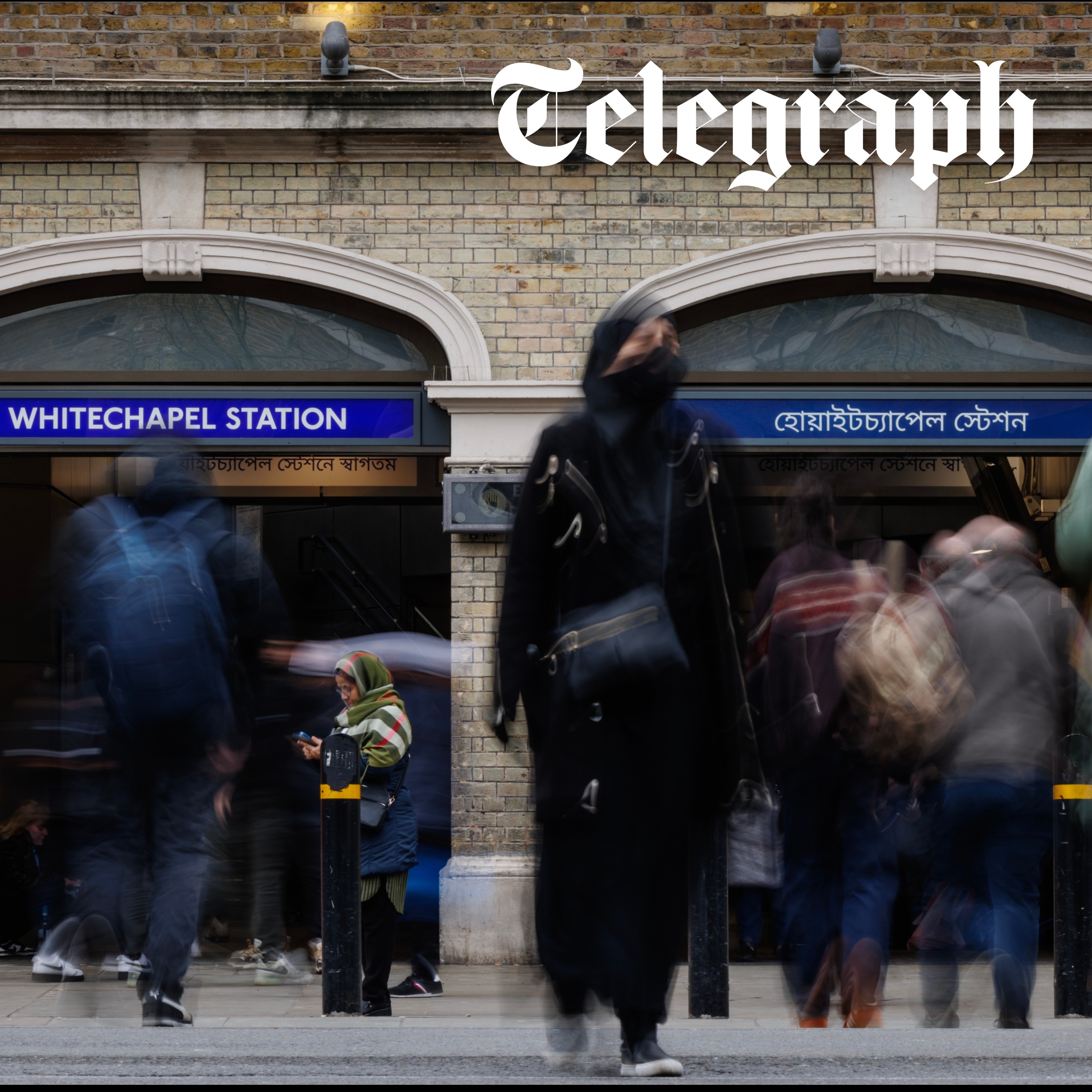
Slao, Peterborough, Leicester, Luton, Bradford and so on, for those children English is no longer the main language. We're spending 234 million pounds in recent years on translation services and our public institutions. And I'm not the first person to point to how the rise of multilingualism erodes our shared sense of who we are. Samuel Huntington in America famously wrote a book called Who Are We, in which he said that if you increasingly have many different languages and in turn many different cultures, many different ways of life, what you end up losing over the long term is that sense of we in who are we, our collective story, our collective memory, our collective history. I was struck when I went to East London recently to do a short documentary on what do people think Britishness is. And I'm being very honest with you, Alison, it took me 20 minutes to find anybody in East London around the White Chabble area who could actually speak English. Now how can you have a shared identity? How can you have a shared story, a shared memory? If the people in your society
rising numbers don't even speak the shared language, my view is perhaps old fashioned. I think if you live in England and you're working in England, I think you should fundamentally speak English. And I don't mind pointing to that. I've also pointed to the constraints that it poses on teachers and schools. Again, the left disagree with me. They say there's nothing to see here. But if you read the evidence has been submitted by organizations like the Bell Foundation and others, it is quite clear teachers struggle with schools where there are dozens if not more languages being spoken. And by the way, people on the left, they never say what about the British kids who have to go through the educational system in this environment. I'm not talking about one or two well speakers here, Alison. I'm talking about schools say school in Bradford. My critics really attack me for pointing to what's happening in Bradford. Yeah, years ago, I did teacher training in South all and even then, this is a long time ago, there were children in my English class who couldn't write English. I mean, they were they were lovely kids, but they were from foreign backgrounds. And it was a struggle to incorporate the teaching of them into the group where they were children
where English was the first language. So I take your point, Matt. The book does contain some shocking statistics about the rapid pace of demographic change in Britain. You talk about how England and Wales will change in just one lifetime between today and the end of the century. White Britain has become a minority in 2063 and by the time a child born today turned 37 years of age, the white British will officially become a minority group in Britain. And you say also point out, Matt, that until the late 1990s, white British represented more than 95% of the country. Are you making a point about skin color per se? Most of us know people who aren't white and yet are sorely British, a couple of leading lights in reform. One's family from Sri Lanka, one of Laila Cunningham's family from Egypt. I think I feel they're their British. Are you making a point about skin color? Is whiteness is eroded? Or are you making a point again about national identity? Well, the first thing to say is even though many people who be listening to this have a
sense that Britain is changing, I don't think people fully understand how quickly our country is about to be transformed. That's why I wrote the book because I wanted to tell people the truth. And as you say, some of the numbers are pretty startling. Now, I want to talk about whether the British and the English people want that to happen, because I don't think there's much of a democratic mandate for that scale of demographic change. It's like nothing our ancestors have ever seen. Now, with regards to the majority, I don't view this as being really about race and ethnicity. I view it as being more story about historic majorities. Majority groups are important because they anchor the nation. They define the nation. So if you look around the world, about 70% of all countries have a very clear majority group. And about 80% of all countries have a majority that represents about 40% of their population. Now, what I'm saying is if we carry on in the
current direction of travel in Britain, by the end of this century, we will have neither of those things. Now, that puts us into the same bucket as countries like Lebanon and Sierra Leone. Majorities are important. And even people from minority backgrounds who I'm very clear, I make this point in the introduction, they care just as much about these issues as they're white British counterparts. That's why, for example, one in three, black and minority ethnic Britons voted for Brexit because they care as much about these issues around borders, demographic change, lowering migration, restoring national sovereignty. As their white British counterparts, they view the majority of the nation as a symbol of their nation. And they too don't want to live in a country that say 50 years from now that might call itself Britain, might call itself England, might call itself Wales. But it doesn't actually look in any recognisable sense like the Britain or the England or the Wales that we currently know and recognise
and also love. And that's why I think this is about saying there are millions of people, often from different backgrounds who value our country, who value the demographic makeup of our country and they don't want to see it overturned. You write for decades the institutions that once embodied our nation, Parliament, civil service, the courts, the police, the BBC have drifted away from the public. They exist to serve. Our country is now in the grip of a new ruling class whose members see themselves not as custodians of a living nation, but as supervisors at the global humanitarian project that has no borders and no loyalty to the people whose taxes fund their salaries. Now, you've worked in academia, Matt. You've been surrounded by the people you describe. How did all these bright, highly educated people end up becoming hyper progressives and arguably anti-British? Well, it's a very big question and I have to be honest, the 20 years in universities
certainly influenced my thinking and writing in the book because I've seen it all. I mean, I've been at the World Economic Forum workshops. I've been at the trilateral commission conferences. I've been at the Oxbridge seminars. I've been in the room with the top academics around the world. I've seen how they talk and think about the countries that they're from but no longer really value or cherish. This book has ruffled feathers among that group. I think what's essentially happened is the public have started to drift right on cultural issues like migration and borders because they recognize that their countries are being destroyed and I'm very clear in the book and saying this is about civilizational collapse. That's what we're living through. While the institutions, they've been drifting to the left, not just universities, but the publishing houses, the political parties, the media, all of the things you've pointed to as well, the police authorities, the general regime of censorship and control. As those institutions have sensed that the people
are on the move, they've tried to keep everybody in place. I just don't think that's sustainable. In higher education, partly it's about how people have self-selected into higher education, but it's also about what happens when you're in the universities and what generally happens is you are exposed to group think. It is ironic that the universities talk endlessly about diversity, but there really is a complete lack of diversity of thought in higher education. I think now that's being made worse by how higher education is becoming a Ponzi scheme for mass migration. It's increasingly clear that higher education is being used to encourage the importing of low wage, low-skill non-European migrants who are basically allowing second-rate universities to keep the lights on, giving them a crucial source of funding, but those students are often using higher education to just get into Britain and then switch on to different visa programmes and stay in the country. Now, I'm happy to be unpopular among
my academic colleagues appointing this out, but I've lived it. I've seen it. I've been told not to fail international students because they bring money that the university needs and without that money, the university would go broke. I'm just blowing the whistle and the reason I wanted to tell people the truth about how immigration is changing our society. So I had to consciously step outside of all of that to actually bring people the evidence and the data showing, for example, why mass migration is weakening our economy, showing why actually certain minority groups are disproportionately more likely to commit rape and sexual assault. I'm sorry if that upsets everybody, but it's an empirical fact. We either believe in evidence or we don't. And so I've been pointing these things out in the book and I'm glad that so many people are engaging with it, because I think they can sense to be very blunt that they are being ghastly and they are being misled and I would even say they're being lied to by a political class that is wholly focused on preserving this broken consensus. Yes, my asylum system whistle blower, she said that the big surge
in asylum claims have come from students and dependents coming to university. So they don't even bother to take the course anymore. They pitch up and then that's where the big area of growth for asylum claims is in these people you described. It's interesting, Matt, isn't it, that if you look at some, I'm very interested in this rise in illegal migrants linked to rape and sexual violence, something really bothers me because I don't think the safety of British women and children is considered at all in these immigration cases when men are kept in the system who quite frequently go on to assault people. But we recently had a case in Oxford of an Afghan man who draped a child and his barrister, presumably a member of this liberal class you describe, basically argued that her client had very different cultural understanding, didn't understand British values and so on because so couldn't really be expected to know that abducting and raping a 12-year-old
was not a desirable thing. I mean, they do know, don't they? At some level, they do know that it's incompatible, don't they? Well, absolutely. I was not surprised, unfortunately, at all to see another recent case in Uniton where an Afghan man, 23 years of age who arrived on one of the small boats entered Britain illegally, was just sentenced to 16 years for raping a 12-year-old child in Uniton. This is completely consistent with the evidence I talk about. In the book, Afghans are disproportionately more likely than other net foreign national groups to be arrested and convicted of sexual assaults. Now, Paloma faith and awake celebrities might not want to talk about this, just Phillips might not want to talk about this, but it is the reality that we are living through. What we need to do, I think, is really start thinking about, again, what I talk about in the book is research that has been put forward by somebody like Garrett Jones, a very respected academic, and he has this good line. He says, what people have to understand is when you import
migrants, you are importing the average cultural traits of those societies. So when you're importing 40,000 Afghans, as we've been doing, or you're importing people from Eritrea or Somalia, we are importing the average cultural traits from those societies. So it's no surprise, for example, that large numbers of Somali people are living in social housing at the British people's expense, often unemployed as well. We need to end this, and in the final chapter, I say, what can we do about it? We need to end welfare benefits for people who are not British. We need to end social housing subsidies for people who are not British. Those two things right would save us 16 billion pounds a year, which could go into frontline NHS, frontline schools, policing, and the rest of it. But what we've got among the ruling class is what the Canadian psychologist Gadsad has called suicidal empathy. It is a world view that basically pushes elites to be so obsessed with showing empathy to other people, people from outside of their countries,
or minorities within their countries, that they end up destroying their countries from within. The grooming gang scandal is the most obvious example of this. The reason nobody looked at it was because the elites were so obsessed with showing empathy to minorities, that they completely overlooked white working class girls from the majority in it clashed with that world view. So what we need to do is push back very strongly against that world view of suicidal empathy, and say no actually, we believe in a principle of national preference. We believe that our people come first. We're not ashamed of that. We're not going to be embarrassed about that. And we're going to preserve and protect our nation's state. We've seen Shabbana Moub saying non-crime hate incidents or being scrapped. They were used, clearly used, Matt, to punish people for tweeting comments, very like the ones you make in your book. Do you think that this new anti-Muslim hostility guidance is again being introduced to suppress precisely the kind of truthful openness you're showing in
this book? Well, I did think about you actually while I was writing the book because I thought, I think I get a mention, yes. Yeah, if the police officers came to your door, then they're certainly about to come to my door. But I do think the supposed scrapping of non-crime hate incidents in a way should be welcomed, but it doesn't really indicate the reassertion of individual liberty because at the same time, we're having this new definition of anti-Muslim hostility, which, of course, say is non-statutory, but we all know what that means in reality is going to be imposed on our schools, universities, NHS and more, which is basically going to shut down discussion about Islam in our country. So you won't be able to criticize the scenes that we witnessed in Trafalgar Square. You won't be able to criticize the way in which the grooming gangs are partly influenced by ideas and teachings within Islam. You won't be able to criticize things like Sharia Courts or the way in which women are treated because under this definition, no doubt critics will cry that that
is prejudicial stereotyping. So no matter what somebody like Dominic Grief says, this is now going to be used to stigmatize discussion around Islam and cultural practices within Muslim communities. What I would have liked to have seen, briefly, is a political leader in this country. March that school teacher and badly back into the classroom and make it crystal clear that this is England, the history of England as a history of liberty. That's what the historian McCordy once said, and we are not a country, we're not a nation that is going to be bullied and harassed and intimidated into curtailing our public square and national conversation because of some angry Muslims. Now, if we had real leaders that they would be all over that as interesting Nigel Farage is the only frontline political leader, by the way, who has said that he will ban Muslim brotherhood. And I think that is something that has been overlooked but is incredibly important
because that's what those scenes in Trafalgar Square were about. They were about bullying. They were about intimidation and they were about using the public place to project a political ideology. You just came second, a heroic second in the Gordon and Denton by election. A group calling itself the Muslim vote did tell Muslims in that constituency. I believe they were quite quite a high percentage in one half of the constituency to vote green and the greens did indeed win, although with sending out mixed messages in the translated into foreign languages, a very different perspective from the trans views that they espoused when speaking English. Matt, did you see sort of segregation there and what do you think are the implications for our democracy in the future if that's allowed to continue? Well, I saw that the greens have become a Trojan horse for sectarianism. That's basically what is happening. Many hustings, gender segregated. I didn't see Muslim women at the hustings by
the way. I saw lots of leaflets in Urdu and Punjabi. I did think about releasing my book in Urdu. I thought, hey, maybe that would encourage more people to read it. But underneath this is actually and Welsh and Welsh and underneath this is actually a very insidious creeping threat that is facing our society and everybody can sense it. Sectarianism is when people put tribal and religious allegiances ahead of their loyalty to Britain. We can see that time and time again and if this is now happening potentially in dozens of seats at the next general election, as I say in the book, 10 years from now, 20 years from now, it will be happening in hundreds of seats in this country. I don't want to see that happen. The answer to this is to do three things. We need to dramatically restrict postal voting. We need to end mass postal voting so it is only used by the disabled or people serving our country overseas or the elderly who cannot actually walk to the polling stations. Secondly, we need to have a further clamp down on a legal coercive family voting and to
be honest, if that means putting police officers in polling stations, then that's what it means. And thirdly, we need to ban and commonwealth voting. There are two and a half million people in our country who can vote at our elections who are not British citizens. That is completely insane. We need to end that. Do all those three things because the reality here is we will not save our country unless we fix our democracy. And that is really the honest point that we need to wrestle with. We need full-scale political reform before our democracy gets turned into some kind of tribal, gerrymandered, sectarian system that looks more like it should be at home in a temple dictatorship in Africa than the home of Magna Carta and individual liberty. Dr David Betts, just finally, Matt, Dr David Betts has said the conditions in the UK are pretty right for civil war. Should reform a party, believe you will stand again as an MP at the general election, should reform win in 2029? What do you think it can realistically do? I mean, obviously,
there's going to be massive opposition, isn't there? We see even the most minor shifts being resisted, really, by not just the Labour people, but by the media. What could a forage government do to prevent suicide of the nation? Well, I said a meeting in North London recently sat next to an 82-year-old lady from the British Jewish community who talked to me all night about various things and then at the end of the dinner turned not angry, not dramatic, and she just said if reform doesn't win the next general election, we're leaving. And I was a bit taken aback because I said leaving. She said, yeah, leaving the country, leaving the only home that she's ever known. And I said, well, that is quite shocking. And she looked at me and she said, honey, everyone in this room feels that way. And it was that sense that we are approaching an endpoint here. And I do really believe and Nigel Farage has talked about this. We are in last chance saloon in this country because if we're going to turn it around, we need to do a number of things very quickly. We need to end
the policy of mass uncontrolled immigration. We need to leave the European Convention on Human Rights and we need to repeal Tony Blair's Human Rights Act so we can control our borders and disempower an army of activists left wing lawyers. We need to ban Muslim Brotherhood. We need to ban the Iranian Revolutionary Guards. We need to end welfare for people who are not British and social housing subsidies for people who are not British. We need to reassure the hard working forgotten majority strip out diversity equity and inclusion from our public institutions slash net zero, lower the tax burden for small businesses remove regulation and actually get the life and blood of our economy moving again. We also need to dramatically lower the amount of foreign aid that we're spending about 13 billion pounds a year on condoms in Pakistan and cycling lanes in Mexico while we're treating British people in hospital car parks and corridors. It's completely outrageous. We need to start making better choices. Everything I've just said is in the reform manifesto. Now, obviously I have a a bias, right? I support reform because I think it's the only
political party that is capable of turning the tide. And I would point out just if I may briefly that at the recent by-election, there was a candidate to my right going even further than reform talking in very casual, sloppy, extreme language about mass deportations and the removal of British nationals. I would point out that that candidate attracted fewer votes and a monster raiding loony party, right? That is that is not where the British people are. The British people are reasonable. The British people are tolerant. The British people want fairness, but they consent. Millions of people consents are being treated like second class citizens in their own country. And this book is why on page one, I dedicate this book to those people I dedicated to the forgotten majority because they are being treated like second class citizens. And that's not acceptable. Well, they are buying your book, Matt, in huge numbers. And as you said in the book, the ruling class reserves a special hatred, who's those who tell the truth about what is really going on. So a little bit of advice for you, Matthew, when the police come to the door, say nothing.
Well, I'll call you. Thank you very much for being an ideal guest on planet normal. Thank you. Interesting words as ever, Alison from Matt Goodwin. I do think he's come in for a bit of stick unduly with people trying to attack the messenger rather than the message, but he's clearly taking it in good spirits. It was good if you to question him on the use of AI and misquoting it and so on. But this is really a function of a much bigger aspect of this book's publication. I think the fact that it has gone to the top or very near the top, courtesy of an Easter bunny of the Amazon nonfiction charts in the UK is very interesting because it's self-published. I've talked to Matt a lot about this. He didn't feel that he'd get a fair crack of the whip from regular publishers. And so he's self-published. The idea that he couldn't get a publisher is completely mad. He's written over half a dozen books that are on various university reading lists, incredibly solid
pieces that bridge between academia and a broader audience. So he's already very much a published, established author with very, very prestigious publishers behind him. But he decided in this case that he didn't want to have the discussions with the editorial staff. He didn't want to have battles with mainstream publishers that worried his book was a bit spicy. So he decided to self-publish and he's got to the top of the Amazon charts or very near the top anyway. And I think that is a major change because I think it is the case that over a number of years our publishing industry has self-centered. You have sensitivity readers and all kinds of overly-lawored manuscripts written by committee. You can't write a book by committee. I mean, we know we are authors, right? We know what it's like. You cannot write a book by committee. And a lot of the kind of rogue publishing industry in recent years has tried to impose committees on, you know, iconoclastic authors.
Publishing a book, you need a team, you need proof readers, it needs to be lowered obviously when you're in the public arena to the extent Matt Goodwin is. But the fact that he decided to go alone and the fact that his book is really so important in the national discourse and selling to the extent that it is, even though he's self-published, maybe because he's self-published, I think is a major kind of moment in the sort of British cultural and indeed journalistic industry. Yes, absolutely. And you can imagine one of the young sensitivity readers, can't you? Passing out some of Matt's chapters. I don't agree with everything he says. I worry about some of the veering over intonativism. I wonder about this emphasis on how white Britain will be in 60, 70 years. I'm not sure. I mean, you know, we've obviously got leading reform figures like Zia Yusuf, Leila Cunningham, you know, British Muslims, they're British, right? They are British. And if we start looking at skin colour, I agree with lots of it. One interesting
fact, Liam, is that JK Rowling's agent, very successful agent, obviously Neil Blair, is looking at setting up a publishing house himself, which will be for people like Matt and all these people, Lucy Connelly, all these people where there's sort of BNPonson publishing houses, you know, extremely woke left wing ones would turn their noses up. But we're seeing with Matt, aren't we? How he's really struck a huge chord. And there are a lot of people, as he says in the book, there are enormous numbers of people not just on the right. And this is what's really interesting, not just on, you know, Starmer's now just not, Starmer's not even using far right anymore. Today's starmer was just using right wing as a pejorative, right? We can see what's Labour's strategy going to be in the run up to May the seventh local elections, then in the run up to the general election. He is just going to call reform racist and far right and right wing, but lots of people are
all he's got, name calling is all he's got. He's got nothing and he's going to be wiped out, or that Labour's going to be absolutely eviscerated on the sense of being it really is going to be so well deserved. But I think that Labour's refusal to confront what now, many of its traditional working-class voters feel very acutely in their own lives, don't they, with the rapid change of their, you know, their kids schools? By the way, I, you know, I did teacher training many, many years ago now, and that was in Southall, very strong Asian area. In West London, yeah. It was fascinating because a lot of the, particularly the Asian girls I was teaching were, they were highly motivated kids, right? They were sitting in the front with the soreses and all the Angela Rainies were at the back putting on their makeup, you know, filing their nails and staring daggers at me. But it's difficult, Liam. And what Matt talks about is when you've got kids where English isn't their first language and they're, you know, they're not coming from homes
with conversation and books, it disadvantages the British children, you know, the Indigenous British children. A lot of the early wave into Southall and I grew up literally, you know, not far up the road, a bike ride away. Yeah. And it was the same in Kingsbury or I grew up. A lot of the early wave evasions, you know, many of whom I was at primary school with and my best mates to this day, frankly, were Hindus. And the Hindus were very pro education, very pro integration. You know, obviously they had their rituals and their culture and they were very open about it and it was very enriching for all of us. And they didn't, they had an attitude to girls where girls were, you know, as important as boys, girls were going to go off to university, as the boys were going to go off to university. A lot of these inner city areas now, the predominant population is Muslim. And of course, there are many Muslim who have exactly the same aspirations for their daughters as they do for their sons. But there are quite a few that don't. And there are quite a few that don't integrate and don't want their wives speaking English and taking part
in local community activities. So there has been a change. There has been a change. And I agree with you. I think sometimes Matt Goodwin really does go quite far on the nativism. Though I do think there's a lot of value in what he says. I do think Gorton and Denton is a major footnote in political history and he helped that happen. Yeah, because he was such a strong candidate, because he has got such a strong following. He almost forged the absurd green Islamic alliance. Yeah, Zach Polansky dancing on a stage at a recent anti far right rally in London. And Zach Polansky is literally there with blokes in SNM bondage gear. I mean, how's that going to go down at the local mosque? In the end, the Muslim vote is so galvanized. It's so organized. It's got demography on its side. It's growing all the time. They will just dispense with the greens
as and when they want to and need to. The greens are their play thing. How they must disdain these ridiculous bourgeois poses who are treating British democracy like a kind of an extension of the summer festival season to the horror of a lot of the population. And I do think as the greens are more exposed that the idiocy of a lot of what they're saying is not even as if they're talking about the environment these days. It's all foreign policy and it's all anti capitalism and it's all you're not allowed to rent out your flat. I mean, it's all let's just print money. There's a magic money tree. I mean, it's just ridiculous. And I do think it will be smoked out. And I do think that this green Islamic alliance will break down under its own internal contradictions. But just I think to say, I thank you to Matt Goodwin because I think his idea that the country that so many of us love will be gone unless mass immigration is reversed and very, very strong
limits set for British values and defending our way of life. Now until I listen to emails, the message is you send us a planet normal at telegraph.co.uk. Please keep them coming. We learn so much from you. The citizens of planet normal. Lots and lots of emails coming in on the NHS as we talked about on the top. This is from Claire. The case of Sandy Peggy, the nurse who found herself in dispute with five health board over her objection to a male doctor, dressed in female clothing, using the women's changing rooms, is instructive as to the NHS's priority, says Claire. The 20-something equality and diversity officer who gave evidence at the hearing was reported to be paid as salary in the range of 50 to 59,000 Sandy Peggy and nurse of many years experience of practical patient care was on a salary scale of somewhere between 30 and 40,000. Absolutely, absolutely ridiculous. And this is from Derek. This is a familiar story.
My wife and I looked on as a major NHS hospital effectively killed an elderly friend of my wife. She had severe curvature at the spine and many excruciating painful and seemingly mostly undetected features. My wife's friend was a retired nurse as is my wife. And what they experienced under NHS care was completely unrecognizable to them both as proud retired nurses. So after a fall, my wife's friend was admitted. You walk into the modern hospital and there there are statues and mission statements emblazoned in the lobby that talk of compassion, respect, and dignity and pride. But where's the nurse in gone? So that's absolutely great. And this is from my, actually, this is really interesting. My wife says, we are finding getting to see a GP increasingly difficult with a two-week wait being common if you could get to see one at all. More often, you will be triaged to a nurse. At one stage, we could message our GP through the NHS app.
That facility has now been removed. My wife needed a physio appointment. The wait time was over four weeks. The GP service is becoming more and more difficult to access, which may be one reason why more people are using A&E. I guess this is the new NHS strategy to take the pressure of the NHS as Mike. Thanks to Alison Liam for your excellent podcast and keeping us sane. This is from Luke, not his real name. In April, my business has this lot to deal with, a 4% increase in the minimum wage, an 8.5% increase in business rates, a 38% rise in gas unit costs, a 50% increase in gas standing charge. Other increases include, says Luke, nationally insurance, plus God knows how much more to fill the van up every week. Why aren't I taking on new staff, the government wonders? You tell me. And then this is Mark from Manchester, Dear Alison and Liam, what a pleasant surprise to have waited me on opening the daily telegraph app on Saturday morning, expecting more international doom and gloom,
more in raging news on that dreadful, droning, deadweight, masquerading. The Prime Minister is every utterance, a non-prime hot air incident. But no, says Mark, instead, I was faced with the image of a Lycra-clad gym goddess, an athletic Alison telling us all about her fabulous gym journey and the joys and benefits of lifting weights, who to thank it. A story of decreasing jabs and increasing gym, it made my day. I too started weights a year or so ago, says Mark from Manchester and can definitely back up what super swell Alison says, niggling eggs and pains have disappeared. I feel stronger, fitter, and more confident all around, and more power to you, Alison. Keep up the good work. You look fab. And what of Liam? Well, he'll soon be on his bike ride, taking on his annual challenge for charity, cycling 300 kilometres from London to Paris for Duchenne, muscular dystrophy in 24 hours. Will he to be featured in the telegraph with inspirational photos to boot? And will he
and Alison take on a new merchandising opportunity and treat us all to a calendar with each month featuring an inspirational shot of our trusty, powerful podcasting co-pilots matching their intellectual might with their athletic prowess, only time will tell. Keep up the good work, you athletes, and of course, a million thanks for the superb podcast, which keeps my spirits up. Mark from Manchester. Good man. Good man. I'm not being on the tandem with you. Imagine you at the front. You'd be so bloody bossy, wouldn't you? Terrible. Can you imagine my little legs trying to keep up with you? Let's both stare on the tandem shower. Let's stare by committee, shall we? Finally, this is from John. Hi, Alison, Liam. It was quite amusing to see Rachel and Ed summoning the petrol retailers to the headmaster's study for dressing down on price gouging, thus displaying complete ignorance of how the petrol market works as John. The retailers make less
than was it 10% profit on petrol, whilst the government takes 50% in fuel duty and VAT. Who is the price gouger here, says John? As well as the usual laws of supply and demand, the price of petrol is also affected by wholesale and distribution costs by local competition pressure. The retailers also take huge financial risks by buying long, if they think wholesale prices will rise in the future and buying short, if they think prices will fall. When they get this wrong, it hits their profit margins significantly. Wouldn't it be nice, as John, to have a government understands how business and markets work, unlike the current bunch of student politicians? And on that bombshell acid from planet normal, as we leave our sanctuary of sweet reason, our flying refuge of reasoned views email week is my turn. It's got to be marked from Manchester. A city close to my heart marks send us an email to plan normal telegraph.co.uk, put mug winner in the subject heading and we will send you your rare as rocking horse poo, planet normal mug. And if you've enjoyed this episode of Planet Normal,
please do subscribe and leave a review and rating, we really like reading those to cheer ourselves up. And thanks finally to our producers, Casho, James Hodgson and Louise the Wells, stay safe and in touch with us and with each other. Until next week, it's goodbye from me. You're not having my Jerry can and it's goodbye from him. Spelt Otter like.
More episodes
More from Planet Normal

Boat-load of trouble: Channel fury, Israel sanctions & broke Britain
Planet Normal

Planet Normal: ‘Fair-weather’ Burnham faces a growing economic storm
Planet Normal

Planet Normal: Best Voyages from the Rocket 2026 P4
Planet Normal

Planet Normal: Best Voyages from the Rocket 2026 P3
Planet Normal