About this episode
Get every episode summarized
Each time Criminal publishes, we email you a written briefing from the transcript — the topics, who appeared, and any specific claims, with the ad reads skipped.
Email me new episodesFree for 3 shows. No card needed.
Transcript ready
494 searchable segments. Every word is indexed and playable.
Full transcript
Criminal — The Longline. Machine-transcribed; use the interactive transcript above to jump the player to any line.
Support for criminal comes from better health. Financial stress can be draining. It can cause anxiety. It make you feel like you have no control. But you can take steps to improve your mental state and how you think and feel about your finances. A therapist can help. Better help matches you with a licensed therapist who fits your needs and preferences. When life feels overwhelming, therapy can help. Sign up and get 10% off at betterhelp.com slash criminal. If a shark is coming towards you, you know, just most of the time just saying calm and just maintaining eye contact is going to do the trick. It's when people start freaking out and flailing around as when they're like, oh, is that a prey? Why is the energy so high? Why is this thing looking like prey, right? I mean, I have a hard time getting sharks close to me most of the time because I'm like wanting them to get close. This is Tanner Mansell.
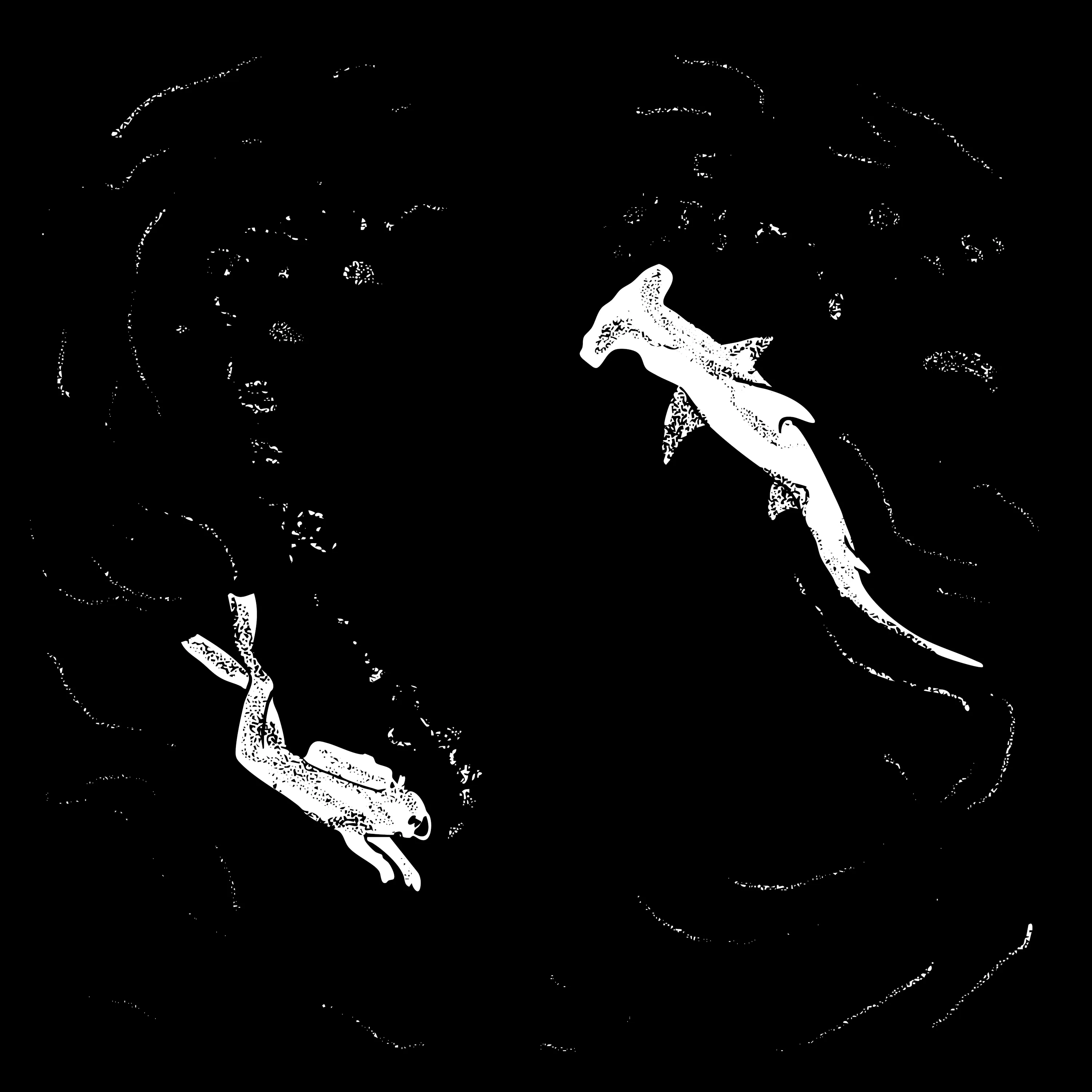
He's been diving with sharks for about 10 years. The first time was in 2016 on vacation in Jupiter, Florida. We got out there. We jumped in the water and it was just like these sharks were just swimming within five feet of us, just minding their own business, you know, looking at us swimming around. It was this overwhelming feeling of just calmness and peacefulness. You know, it was a high, a literal high that lasted months afterwards. Tanner had been working a corporate job in Oregon, but after this vacation, he decided he wanted to make a change. I couldn't go back to what I was doing knowing that that existed. So I just started reading books. I started putting everything I could together to be like, okay, how do I exit, you know, this lifestyle that I'm in and start over completely doing this?
By 2017, Tanner had saved up enough money to move to Florida. Eventually he started helping out on tours with the same company gone diving with, working with a man named John Moore. One in Tanner would take small groups about four miles off shore in the Gulf Stream. Then they put a cage with fish into the water to attract sharks. Jupiter, Florida is known for its sharks. Depending on the season, they have bowl sharks, hammerheads, and sometimes even great whites. By August 2020, Tanner had been working as a shark diving guide for about three years. On Monday, August 10, they had a tour scheduled with six passengers, a couple, and a family of four. Here's John. And we headed out to our normal bowl shark spot, and I kind of remember the water was a little bit murky, but we had great sharks that day.
It kind of rained, so it was kind of a bit overcast, and the sharks were, and the water just wasn't super clear, but I do remember we had really good shark activity, and we did a, probably about a 45 minute dive, and then we were headed back, and we still had extra time, you know, before our, it was right before our lunch break. There was a nearby shipwreck that John and Tanner sometimes took tours to, if they had extra time. And so we cruised over to that rack, but the water was really murky there. Like I'd say, you know, almost no visibility, like maybe not the kind of water you'd really want to be in, just because, you know, it just becomes a little sketchier when the water is not clear. And so we were getting ready to go back in, and as we spun around, I could see this orange float, like an orange speck in a little bit further out, and so I was like, oh God, you
know, because sometimes if there's like a diver comes to the surface away from a boat hill, inflate a little colored thing so that his boat can find him, and other boats don't run him over. You know, there's been dozens of times where we've, we've picked people up out in the water, and so when I saw this buoy, I was thinking to myself, oh, it's probably a scuba diver or trash. So we did our normal routine, if it's trash, we'll pick it up, because the diver will help him out, get him back to their boat. And as we got closer, we realized, okay, it's just some, you know, random buoy. And Tanner grabbed it, but he's like, oh, there's a fishing line on it. And he started pulling in the line, and he's like, it feels like there's something on this. And, you know, and it's a very thick fishing line, and he pulled and pulled and pulled, and then we got to a shark that was swimming on the line. Neither of them had seen anything like this before. I was out there at least five days a week, and we'd never seen anything like that.
Because, you know, occasionally, you know, it's Florida, and people catch sharks occasionally. But you know, there's strict regulations for shark fishing. And so we cut that shark free, but that line was attached, you know, to a thick, a very thick line. And so we just started pulling on that thicker line, and it was one of those where it never ends. Like we pulled it in, we started pulling it, and we got to another shark, which we cut off. And then we, and then the line continued. So we realized we found something really, you know, odd out here. When he looked at the setup a little more, John realized that it looked like a fishing method called long lining. But he'd never seen a long line in this area, and he'd never seen one with sharks on it. Long lining is it's a method of fishing where you will have miles of fishing line set out
that'll have hooks spaced out upon it. And you know, when I was in college, I did a couple tours of working on a long line boat for fishing for swordfish. And so I knew what long line is, but this wasn't like, you know, where, when I was fishing, we had, it was a very legitimate looking setup. It wasn't like, this was not like your regular long line setup. This had like little pink and purple weights from Walmart attached to it, and to hold the line down and had this little, you know, faded buoy on the end of it, it was not like a legitimate looking setup. When I, you know, when I long lined, I was a buoy man, so I set the, the buoy's out for the thing, and we would have, you know, a massive buoy on the end of the line with a, with our boat name, a permit number, and everything on it. And then it had a large mast with a radar reflective dome thing on the top, so that other
boats would recognize it and stay away from it. And this didn't have any of that. This looked like something very illegal and subversive going on, and we felt like, you know, if we didn't act, yeah, these sharks would definitely die. Tanner says there were all different kinds of sharks on the line, tiger sharks, nurse sharks, lemon sharks, and hammerheads, and that some of them look like they weren't doing well. Some sharks, like hammerheads, need to keep moving to get enough oxygen. So they're trapped, they're not getting oxygen, so they, that's how a hammerhead shark will die, as you, you stop them from moving in the water. Tanner got in touch with a co-worker, and she called NOAA, the National Oceanic and Atmospheric Administration. She said they seemed very concerned about what we had found. Then their co-worker called Florida Fish and Wildlife.
And they were as baffled as we were, because they'd never heard of this either. Like this is not an area where, you know, I knew lots of fishermen there, no one had ever heard of a long line there ever. And yeah, so, you know, we got no indication from anybody that we should stop doing this, because nobody knew what this was. So they kept pulling the line. At first, we kept thinking this was going to end, like, you know, you keep thinking like, okay, here's, you know, there's another shark, oh my god, and this must be the end of this line, but it didn't end, it just, it went on forever. And this is like back breaking work, like you're like hand over handing, especially because we're collecting this line and putting it on the boat, because, you know, we didn't want to just, you know, cut these animals free and leave, like this line out there to, you know, pollute the ocean or potentially ensnare some other wildlife. And, and so, you know, we're, we're picking up this line and coiling it into the back of the boat.
The passengers that were on board with John and Tanner helped pull the line in, and they took videos of them cutting the sharks free. Oh, free, baby. Yeah. Yeah. Yeah. Yeah. Yeah. Yeah. Yeah. Yeah. Yeah. Yeah. Yeah. Yeah. And everyone, you know, and everyone was kind of excited too, because they'd see, you know, it seemed like we had found like something very criminal going on and we were, you know, saving this wildlife. And the first few sharks, you know, they looked exhausted because they've been, you know, pulling against this line for a while. But you know, when we cut them free, they just, they just swam away. But then we got to like a bigger hammerhead shark and that shark was not in good shape. It's sort of half swam, half sank and I'm pretty certain it died and it was a big, probably like a 12, I'd say at least like a 12 foot great hammerhead.
They cut 19 sharks free. At one point a few hours in, John called Fish and Wildlife and spoke with an officer named Barry Partilow. John told him that they were still pulling the line in and cutting sharks free. Eventually, they had to head back to shore and on the way, John spotted a Fish and Wildlife boat. And so I buzzed over to the Fish and Wildlife boat and I said, Hey, you know, we found this line, you know, out there and he's like, I was the guy you were talking to on the phone. And so he took photos of this line, this giant pile of line in my boat and said, Oh my God, that's crazy. Like I've never seen anything like that. And he said, Can you like put it on the dock? And I said, Sure. Yep. And so I headed back to our marina where I did, you know, as he said, I put it on the dock much to the chagrin of the harbor master who was like, Wait, why are you putting this
massive pile of line? But everyone was so intrigued by this line. Like people were just coming up and checking out this massive pile of line that we've now unloaded on the dock and we're telling everyone the story and the passengers are, you know, all excited telling everyone what happened and what we found out there. And there was a, at that point, there was a guy that had like a fishing blog or something and he said, Oh my God, so we told him the whole story too. And he's like, Can I take pictures and so we had, you know, we're opposing with all this line and he was taking pictures, he's like, I'll put it in my fishing blog. This is so crazy and that was one of the pictures that then went viral online. Last night, John and Tanner started getting a lot of messages from people who had seen the photo online. John noticed that there were some comments that said he and Tanner were going to get in trouble because someone had a permit to set up that line.
And I was just ignoring it because I thought there's no way that that's a permanent line because, you know, we'd already talked to all the authorities and noted told us that there was a permanent line out there. And then I was still talking to Fish and Wildlife that evening and they said, Hey, well, can we talk to you again tomorrow? And I said, Yeah, absolutely. And they were at this point, they're still everyone's so nice and, you know, they were, you know, acting like we had throated a crime. And it wasn't until the next morning that like all of a sudden the tone had changed. I'm Phoebe Judge. This is criminal. We'll be right back to listen without ads, join criminal plus. Support for criminal comes from ritual. If you're looking for a daily multivitamin that fits into your daily routine, you might
like ritual. They offer a range of multivitamins and they use high quality, clean ingredients. Their multivitamins have a patented delayed release design that lets your body absorb what it needs when it needs it, which also means you don't have to take it with food. And ritual says they're transparent about where their ingredients come from. You can trace them yourself through an interactive map on their website. I take rituals essential for women multivitamin and I like that the capsules are infused with essential oils, which gives them a fresh, minty scent and flavor. And since you don't have to take them with food, I don't have to worry about when I take them, which is great for busy days or days when I'm traveling. Instead of striving for perfect health, you can aim to support foundational health. Save 25% on your first month at ritual.com slash criminal. That's ritual.com slash criminal for 25% of your first month. Hi, I'm Brunei Brown and I'm Adam Grant and we're here to invite you to the Curiosity Shop.
A podcast that's a place for listening, wondering, thinking, feeling and questioning. It's going to be fun. We rarely agree but we almost never disagree and we're always learning. That's true. You can subscribe to the Curiosity Shop on YouTube or follow in your favorite podcast app to automatically receive new episodes every Thursday. The day after John Moore and Tanner Mansell found the long line, John noticed that he had missed a call from Florida Fish and Wildlife. So I called them and now the guy was like very like the tone had changed so dramatically on the phone and the guy now was like super aggro sounding on the phone. He's like, I need you to come down to, you know, the Marina right now and, you know, I want to talk to you and I was like, hey, I'm going to talk to a lawyer because I knew something was up and I did not go down and meet him and I said you can talk to my lawyer. And then John found out that the rumors he'd been hearing online were true.
The long line had actually been legal. Someone had a permit for it. And it was permitted through NOAA, through the National Ocean Graphic and Atmospheric Administration. The organization that John says had seemed concerned about the line being there when his coworker called them. They learned that the permit belonged to a local fisherman's boat and that it was a type of permit that was hardly ever granted. Here's Tanner. So this is the most rare permitted line in the U.S. only up to five, I think, are given out per year and initially I just felt bad because I'm like, oh, you know, we obviously interfered with a legal thing. But we did everything we could to make sure that it wasn't like we, you know, we thought we were uncovering a crime the whole time. We asked the law enforcement. John and Tanner didn't hear anything else from law enforcement over the next few months.
But they say a lot of people in the community were talking about what happened. There's a big anti-shark culture in Florida, you know, in a certain, you know, in the fishing community, you know, because they, a lot of the fishing community hates the sharks because, you know, the sharks eat their catch. And so a lot of the fishermen, you know, want the sharks dead. And you know, and we regularly see, you know, gunshot wounds to sharks like that's just a standard in our business. You know, we're, we're out there diving with these sharks and you see sharks on the daily with bullet holes in their head and stuff. And so as soon as the fishing community found out that this was a legal line that was killing sharks out there and that we had, that we had thwarted this, we became like public enemy number one. And they were like, I was getting death threats. A couple of months after they found the line, Tanner got a knock on his door.
It was an official from NOAA and some police officers. Tanner remembers them saying that they were now investigating what had happened with the long line as a stolen property case. They essentially said to me, they were like, we're not going after you. We're going after Captain John. We're not planning to put you in the indictment, but we need information and we need your cooperation. I was like, I, all I said was yeah, I'm not doing that. I'm not speak to a lawyer and we can talk after that, but I'm, I don't feel comfortable. And so like, okay, very well, no worries. And then they left. And then I told John, I'm like, dude, John, like they're seriously coming at us. They were coming at you and I just didn't say anything because I didn't feel comfortable. The whole thing just seemed so insane. If I was going to commit a crime out there, like I wouldn't be calling the police while I was doing it. I wouldn't be calling, you know, Fish and Wildlife repeatedly on myself.
And the people that the passengers we had, this chief of police, his wife, who also worked in law enforcement, as witnesses to this, you know, because these, they were listening to my phone conversations on speaker. They were seeing me reporting this in real time. There was no way that you could have thought that we were doing anything, you know, illegal out there. John and Tanner both hired lawyers, but they hadn't been officially charged with anything. So they waited and tried to keep working as usual. It was always in the back of my head, but I honestly, you know, I never thought anything would come of this. You know, we, you couldn't forget about it because still like, almost on a daily, there were people like waving pistols at me when I'd go out of the harbor, you know, fishermen waving guns at me and, you know, yelling obscenities at my passengers and stuff like, like the, the level of, you know, literal from the, the fishing community was insane.
It was like this for a couple of years. In 2022, Tanner traveled to Indonesia, where his partner runs a non-profit. So I just landed in Indonesia, I'm about two days in and I get a call from my lawyer who says you're being arrested and you need to be in the US tomorrow. John was at home in Florida when he got the call. He remembers it was his wedding anniversary and he was at the store buying flowers for his wife. Tanner's lawyer reached out to the prosecution to explain that Tanner was out of the country and said they're willing to turn themselves in. Tanner's in Indonesia, he'll catch the first flight back, but we need a little bit of time and that's when things started getting really serious because the prosecutor started arguing that we couldn't do what's called like a safe surrender or we couldn't turn ourselves in that they were going to arrest us on our doorstep.
John says that after a lot of back and forth through their lawyers, they were finally able to turn themselves in. They were both charged with theft of commercial fishing gear in federal waters, a felony. The prosecutor offered us pleading to plead guilty and John and I didn't even hesitate. We're like, no, we're not pleading guilty to something we didn't do. So we were, if we would have played guilty, we would have got misdemeanors, community service, and we had to write a letter of an apology and admit guilt and be like, we did, you know, and we're like, no, we were like, we're not going to do that because we didn't do anything wrong here. John and Tanner's lawyers started preparing for the trial. Our lawyer sat John down before and they tested him to see how he would hold up. And John is such a like good energy, a green kind of guy that he failed so miserably.
They quickly said, John, you are not cut out for for this. They're like, it's so easy to make you say, oh, yeah, no, I see what I see your point and they're like, this doesn't work in court. So our lawyers were like, look, this prosecutor is going to eat John up if he goes up there. And I didn't even consider going up there because I'm like, well, John's not going, I'm not going, we had four different lawyers representing us and they said, we don't think that you guys should take the stand. We think that we have enough evidence here to acquit you. So we decided not to testify. The trial began on November 28, 2022. The prosecution argued that we intentionally sought out to destroy this fisherman's property because sharks are worth more to us alive than dead. So we stole, essentially, they said we stole the sharks from them. Because you have a tourism business that relies on your clients being able to see sharks.
Exactly. Which, obviously, I don't want to see sharks die, but I'm also, you know, no fool. I know that sharks are being harvested off of Florida daily, you know. So I'm not, I'm not, you know, I wasn't trying to take a stand. I was just trying to do the right thing and I thought somebody was illegally killing them. The Fish and Wildlife Officer who'd been on the phone with John, Officer Barry Partilo testified. He told the court, quote, I advised him as a law enforcement officer, we would never remove anything from a hook or a line without first investigating it. And we would never advise anybody to remove anything from a hook and a line without investigating it. He also said, I told him not to cut the fish off the line. John says he was surprised when he heard that.
He says Officer Partilo never told him to stop. He reached out to Florida Fish and Wildlife and Noah for this story, but didn't hear back. A Noah Officer who filed a report on the incident also testified and said that the report didn't include anything about John being told to stop. The trial lasted nearly three days. And then the deliberation lasted in eternity. It was like two and a half days of the jury sending notes to us. One note from the jury to the judge read, quote, not unanimous, cannot get there. The jury asked for more specific definitions of certain words, like mistake. Near the end of the first full day of deliberations, the judge said the jury was, quote, still very divided. The next day, the judge issued something called an Allen charge, which urges the jury
to work harder to reach a verdict to avoid a hung jury. It's also sometimes called a dynamite charge. So after our three days, basically, of jury deliberation and deadlocked jury, they said the jury has come to a decision. And honestly, we had like, you know, like we all felt really good about it and the prosecution looked stressed. And so when the jury came out, you could immediately see on their face that it was bad. You know, like people, they, like people were avoiding eye contact as they came out. Some of the jurors were crying. And that's when I knew I was like, oh, yeah, they're, they're, they're going to find a skill P. And like the whole courtroom, like everyone behind us started crying in, you know, in our side of the courtroom.
And I was just, honestly, I was pissed. I was in shock and I was just, and I was pissed. We'll be right back. The U.S. Department of Justice issued a press release announcing John Moore and Tanner Man's Cells Conviction. It began quote, a boat crew offering tours, the opportunity to swim the sharks took a pause between dives to seal a commercial fishing gear set. What was your sentence? The prosecutor was trying to get us to go to jail for five years and pay $250,000. They were each sentenced to one year of probation and had to pay back the cost of the long line equipment and the sharks they let free.
And I had one year of community service, which was, you know, I volunteered at the shelter walking dogs like that was great. Like it was something I didn't like to do anyway. The judge said, I think their primary motivation was trying to protect the sharks and the ocean life. You know, so the sentence itself was nothing, you know, was really nothing. You know, but it's, there's a lot of things that come along with a conviction. You know, it's with a felony life changes. You know, my daughter lives in Canada. I couldn't go visit my daughter in Canada. She just bought a house, just had a baby and, you know, with a felony conviction, anything like renting an apartment, you have to put down the ear. You know, we're planning on moving to California, which we finally have, we're able to do. But it, you know, when, as we're applying for houses to rent, you know, you have to put down the ear felon on the thing, which, you know, the most bizarre thing for me, like
I didn't even have, I didn't even have a speeding ticket like I had never, you know, this was not my, my wheelhouse. Did, did you appeal? Yes, we appealed. And luckily, you know, my attorneys, they, they did it for free, you know, they, they said we're going to appeal and I just said, listen, like I am, I'm completely bankrupt from this. I, you know, I, we lost, I, I can't afford to appeal. And they're like, well, we're doing it and you don't have to pay anything. They appealed on an issue about jury instructions. Three appellate judges heard their case and decided to uphold the convictions. But one of the judges wrote, because I am bound to consider only the single, narrow issue raised on appeal, I joined my colleagues in affirming, but I do so with reluctance. John Moore, Jr., and Tanner Mansell are felons because they tried to save sharks from what they believed to be an illegal poaching operation.
They are the only felons I have ever encountered in 18 years on the bench and three years as a federal prosecutor who called law enforcement to report what they were seeing and what actions they were taking in real time. And so my lawyers were like, well, we're not done. We are going to see what the next step is. And it was, it looked like it was going to be the Supreme Court. But then in May of 2025, nearly five years after John and Tanner found the long line, they both got a phone call. It was the day after my birthday, we were walking our dog and I got a call from my lawyer. She said, John, I have a, can you talk for a second? And I said, yeah, of course. And then she said, I have the White House on the other line. And I was like, what? I was actually on a plane and the plane started rolling forward. And I started getting a call from my lawyer and he never calls.
He's always emailing. So I was like, ooh, I wonder what this is like, you know, I didn't know. So I answered and I said, hey, I'm on a plane. It's rolling forward. I was like, 30 seconds, what's up? And he said, you were just pardoned by the president of the United States, congratulations. And I just broke down. I started crying. I was like, oh my God, finally it's like some good news. I couldn't believe it. The person next to me thought it was probably crazy. They were both shocked because they hadn't even applied for a presidential pardon. I could vote again because that was another obvious thing that, you know, you couldn't do. And if I wanted to have a firearm, which I hadn't wanted, but I could have a firearm again and all that, but you still couldn't, it wasn't recognized internationally. You were still a felon, but you were a pardoned felon. Meaning that the conviction, along with the pardon, would still appear on their criminal
records. John would be able to visit his daughter in Canada, but he says in his case, he would have to apply for a special permit. John and Tanner's lawyers started working to get their felony records expunged. They submitted a petition to the original judge who heard their case. John says they were told it might take several weeks to hear back, but they heard the next morning that the judge had cleared their records. John and his wife live in California now. He's still out on the water most days and still guiding shark dives and wildlife tours. How has this changed the way you do your job? I don't know if it's changed the way I do my job at home, but it's changed my outlook on everything else. I'm like a very optimistic person by, you know, like, annoyingly optimistic for a lot of people, like, you know, as my wife and, you know, it stripped a little of that optimism
from my brain because, you know, I always thought if you do the right thing, then, you know, then the university takes care of you. And, you know, and this was not the case in that situation. Tanner still lives in Jupiter and still leads shark diving tours, but he says he isn't able to enjoy it the way he used to. One day this past summer, he was heading back to the marina after a trip and saw two large gasoline canisters floating in the ocean, leaking gas. And my reaction as always, obviously, is to stop and pick them up and put them, you know, clean up the ocean, right? So I got there and I immediately started feeling I was going to have a panic attack. And, yeah, no, that was, so I started feeling like I'm going to have a panic attack. And kind of everything froze.
And I just started feeling like, you know, what, what's in these, these tanks, right? Like, what, uh, what's going to happen if I, if I do this? So, you know, even though I can blatantly see, you know, gas leaking into the ocean, I was hesitant and it took me like a good five, ten minutes to like collect my thoughts and be like, all right, this is the right thing to do. And picked them up, took them in. To see photos and videos from the story, go to our Instagram at Criminal underscore podcast or find us on Facebook at this is criminal. We're also on YouTube at youtube.com slash criminal podcast.
Criminal is created by Lauren Spore and me. Nadia Wilson is our senior producer. Katie Bishop is our supervising producer. Our producers are Susanna Robertson, Jackie Cigico, Lily Clark, and Lena Cillison. Our show is mixed and engineered by Veronica Seminetti. This episode was fact checked by Katie Cedarborg. Julian Alexander makes original illustrations for each episode of criminal. You can see them at this is criminal dot com. And you can sign up for a newsletter at this is criminal dot com slash newsletter. We hope you'll consider supporting our work by joining our membership program criminal plus. You can listen to criminal. This is love and fever eats a mystery without any ads plus you'll get bonus episodes. These are special episodes with me and criminal co-creator Lauren Spore talking about everything from how we make our episodes to the crime stories that caught our attention that week to things we've been enjoying lately. To learn more go to patreon.com slash criminal.
More on facebook at this is criminal and instagram and tiktok at criminal underscore podcast. More also on youtube at youtube dot com slash criminal podcast. Criminal is part of the vox media podcast network. Discover more great shows at podcast dot vox media dot com. I'm Phoebe Judge. This is criminal.
More episodes


