Loading...
About this Episode
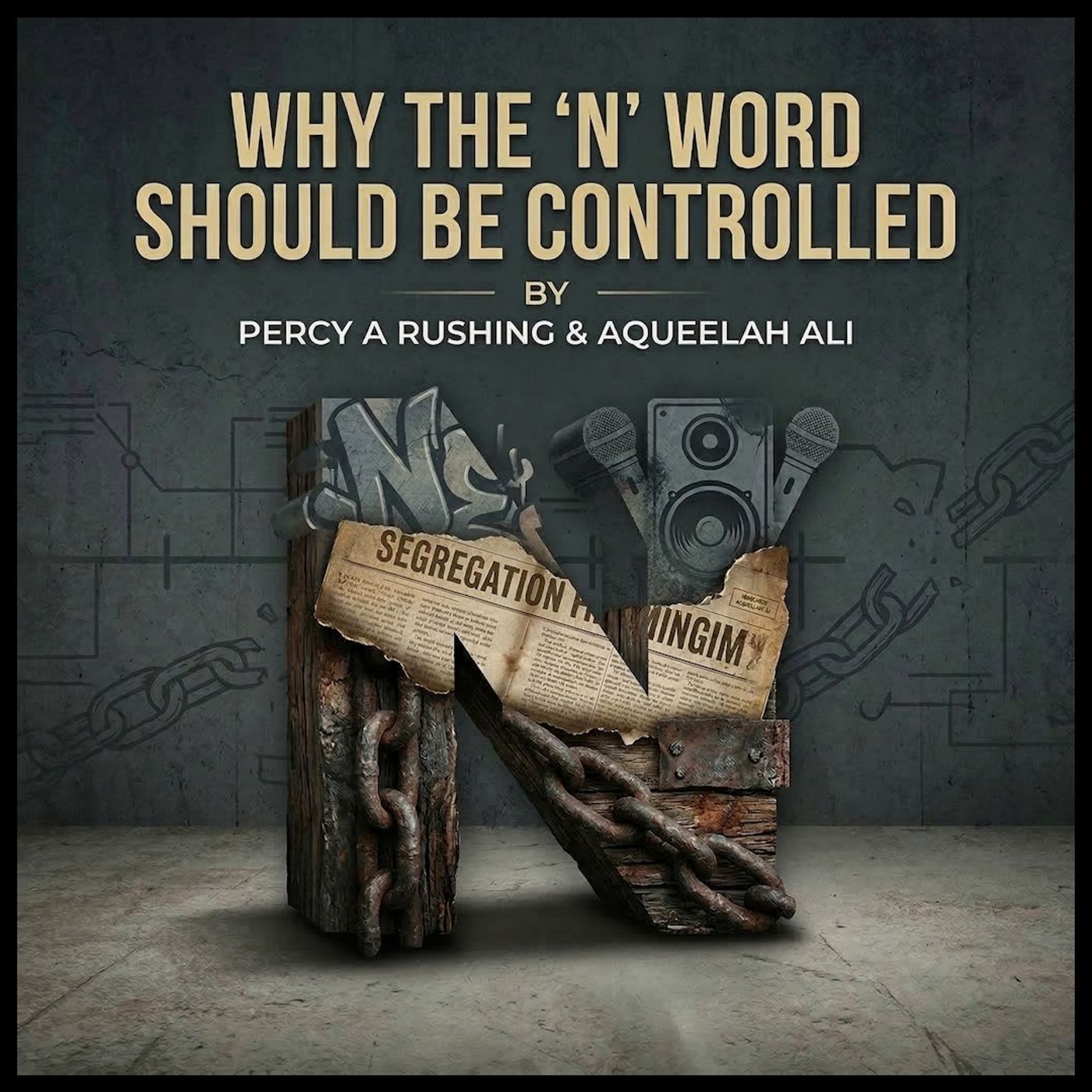
What if the most controversial word in America doesn't need to disappear—it just needs to be understood? Percy A. Rushing and Aqueelah Ali join us to discuss their groundbreaking book "Why the N-Word Should Be Controlled: My View from Both Sides Being Black and White," challenging us to stop arguing and start listening. This isn't about cancel culture or easy answers—it's about the uncomfortable conversations that actually move us forward. Whether you're Black, white, or from any community, this discussion will make you rethink language, power, and healing.
Get the book: Available now on Amazon and Barnes & Noble
Coming soon: "Two Worlds, One Mind" and "A Hundred Deep"
Get the book: Available now on Amazon and Barnes & Noble
Coming soon: "Two Worlds, One Mind" and "A Hundred Deep"
Hosts & Guests

Transcript
Finding great candidates to hire can be like, well, trying to find a needle in a haystack.
Sure, you can post your job to some job board, but then all you can do is hope the right
person comes along, which is why you should try Zippercrooter for free.
At zippercrooter.com slash zip.
Zippercrooter doesn't depend on candidates finding you.
It finds them for you.
It's powerful technology identifies people with the right experience and actively invites
them to apply to your job.
You get qualified candidates fast.
So while other companies might deliver a lot of hay, Zippercrooter finds you what you're
looking for.
The needle in the haystack.
See why four out of five employers who post a job on Zippercrooter get a quality candidate
within the first day.
Zippercrooter, the smartest way to hire.
And right now, you can try Zippercrooter for free.
That's right.
Free.
Finding great candidates to hire can be like, well, trying to find a needle in a haystack.
Sure, you can post your job to some job board, but then all you can do is hope the right
person comes along, which is why you should try Zippercrooter for free.
At zippercrooter.com slash zip.
Zippercrooter doesn't depend on candidates finding you.
It finds them for you.
It's powerful technology identifies people with the right experience and actively invites
them to apply to your job.
You get qualified candidates fast.
So while other companies might deliver a lot of hay, Zippercrooter finds you what you're
looking for.
The needle in the haystack.
See why four out of five employers who post a job on Zippercrooter get a quality candidate
within the first day.
Zippercrooter, the smartest way to hire.
And right now, you can try Zippercrooter for free.
That's right.
At zippercrooter.com slash zip.
That zippercrooter.com slash zip zippercrooter.com slash zip.
Hey, it's Benji Cole, son of Al Cole from CBS Radio and host of the syndicated talk show,
People of Distinction.
The talk gives you an in-depth view of some of the most dynamic, intelligent and successful
people on the planet, run to our website Al Cole Enterprises.com for more info.
Email me through Benji at Al Cole Enterprises.com if you'd like to get involved with what we
have going.
And as always, please continue to like and follow our broadcasts.
People of Distinction is internationally syndicated, solely due to the love and support that
you all continue to give.
We're available across all major distributors and as long as you keep following, we're
going to continue to put out the content.
Now, sit back and strap in because on the line with us today, we have the impressive
Percy A. rushing in Aquila Ali.
Now, we're going to be discussing their incredible book, why the N word should be controlled.
My view from both sides, being black and white, its Amazon is Barnes and Noble.
Man, listen, it's a lot of other places, okay?
Sit back, type it into a search bar, and you're going to be greeted with all of them.
But not only for this book, okay?
Now, listen, we're about to get into some things, okay?
This book is going to carry the discussion here today, but be on the lookout because there
are another two books set to be released in the future.
One is entitled Two Worlds, One Mind, and next, 100 Deep.
Again, both of those titles still in creation, so they're not available for purchase just
yet, but you're going to want to check them out the moment they are and the only way to
do it is by checking back in frequently.
Man, listen, right there in the title, yeah, you know what we're discussing today.
Okay, I'm at the edge of my seat, man, I'm excited about this.
I have some, I have my own perspective on it, and we about to get into it, but let's
be real, like, it's funny to me, man, like when we were, when we were doing our research
in preparation for this discussion, my team and I, like, we're going around and like,
we're getting into it, right, and we're like, well, Benji, well, what do you feel?
Because of course, I'm the representative black man on the, on the squad here.
So they're like, well, Benji, how do you feel about this?
And I'm like, what is this?
An interesting conversation, right?
The end word, and really the dichotomy here is the end word being controlled versus being
eradicated.
Now, that's interesting.
And again, growing up in the communities in which I come from, like, I have my own view
point on this, but here's the most important aspect.
So we live in a world that loves to argue, but hates to understand, right?
There, there's no word that stops the conversation faster than the end word.
And what I love about this is, first and foremost, it's going to initiate conversations.
And most importantly, like Percy and Aquila, they're not here to tell you what to think.
They're here to challenge how you think.
And that's such an important delineation, man.
Sit back, strap fit, have your notebooks ready.
There are a lot of areas of gray, and we are just going to scratch the surface here today.
There's only so much we can fit into a 20 minute discussion, but I promise by the time
we've concluded, man, you're going to run, you're going to purchase your copies.
And then I'm going to challenge each and every one of you listening in, have those conversations
with those around you.
Sometimes it may get uncomfortable, but that's okay.
Yeah, I mean, like, human beings are dynamic, man.
We can have uncomfortable conversations and still be able to push forward.
And that, I think, is where the power lies with this incredible book.
So, yeah, let's get it started.
Percy, Aquila, welcome to the network.
And thank you for being guests.
How are you both doing today?
We both doing good, Benji.
Yeah, we're doing great.
Listen, it is a pleasure to have you guys here, man.
I'm grateful to have you here on the network to have this discussion.
Because like I said, in my opening, I think that's, I think that's where the power lies.
Is in the conversations like this and, and I, I think it's a beautiful thing that you've
constructed.
And I'm hoping that everybody that picks it up, they don't stop just with the words at
the pages, but they also talk to those around them because I think that is really where
there's the movement that can develop from this.
That's where it's going to happen, man, in the weeds, in those conversations.
So let's, let's first and foremost, start off by learning a little bit more about each
of you.
Start by telling us your backgrounds, please.
Well, my name is Percy Russian, I'm 50 years old and I had a Detroit Michigan, moved
around a lot from the birds to the city and just grasp a lot of life income, you know,
on how things are.
That's why I'm here with some of the views that I see as well as how I think and hold
myself as an individual.
Okay.
And I am Aquila Ali.
I am from Ipsilanti, Miss again, born and raised EMU, marching band, band geek, all that
good stuff.
And I have some old Chris, all teenagers and I'm just a single mom doing the best that
I can.
Well, again, welcome both of you to the network.
Guys, let's start.
Let's learn a little bit more about the bug.
I got a lot of questions and we're going to dive into it, but give us a brief synopsis
of why the N word should be controlled.
We came up with it based on I was doing music.
So a lot of got on this topic about, you know, the N word being strongly used in our black
community and our black music.
We know that it can have on people.
There's a lot of people that feel uncomfortable in many different culture and races as well.
They don't like it in some other cultures.
They still use it.
So, but it's not used more publicly is more just around at home or in our neighborhoods.
We know that.
So, when it's brought to attention through music and movies, it gives a structure on, does
this stand for us as black people?
Is this the strength that we use or feel that we need from this word, or can we just be
strong-minded black people as well, just people and individuals?
So, I mean, coming across from the music, we tried to gain copyrights of it and we couldn't
get it as an individual word.
So we was challenged to make a book about it.
So coming up, they wanted us to express really how I felt as a biracial child and being
raised by a white grandma in the black community at the time of how it was in Detroit through
the 70s and 80s after we had the riots in the 60s and everything, just the emphasis
of this word became more and more for the black community.
So we figured like, if this is going to be a good influence or a bad influence, it just
needs to be kind of monitored to not have it in everybody's face where it's causing racial
issues.
We just wanted to really make people think, you know, because it's not about being the
end word.
It's not like, it doesn't have to be just a black thing, you know, saying that we were
actually all comfortable to just use it to use it and it's just another word that
would be different as well, but that's more to this more negative than positive.
We have to, we're trying to figure out a way to, you know, just to calm it down a bit
that way people don't keep getting offended.
Well, listen, thank you for that.
And I think that's a very interesting point, right?
And that's where I want to go next.
Like I mentioned it in my opening, the delineation and, and listen, I can't find myself going
anywhere else because it's in the title.
It doesn't say why the end word should be canceled, should be eradicated.
It says why it should be controlled.
Now that's interesting.
And I don't think it was by happenstance, right?
Like I believe you guys intentionally put that in there.
Okay.
So let's talk about it.
In your opinion, why is it the end word being controlled and not eradicated?
One to be eradicated would mean to take it out of our whole vocabulary, you know what I'm
saying?
Most of us growing up in the black community, using it for many different greetings or
whatever.
So to eradicate it would mean to change the whole structure of the black community.
And we know we're not up for that.
Right.
Or to control it would be like, since we feel as black people, we have more of the authority
to use it that it should be controlled a little bit more of how we use it and quit throwing
it in people's faces that it's something that we embrace, but other people can embrace.
If we're to embrace each other as blacks and white in America, we, to me, like I always
tell people, we came on the same shift together, no matter what the situation may have been.
It's a joke or not, you know, but openly we don't know history like that truly.
But we want to have a little bit of sense of it and just quit being more of ignorant
with it and being a useful for it and playful with it if it's going to be like that.
So I listen, I'm following you and I completely agree.
I think again, as I mentioned, as a black man raising this country like communities that
I was in, like that was it became a reclamation, right?
It became a word that that a lot of people that I knew growing up is like, we're taking
this back.
And there's a lot of debates, especially, you know, I can hear it already, man.
A lot of the old heads listening in there right now, they're like, Ben, you know, you
got to know the history behind the word.
And that's the reason why we shouldn't use it.
And I get all of that.
And then there's a lot of the younger generations are like, yeah, but we're not doing it with
the ER.
We're doing it with the A and that makes it okay.
Okay.
So it is like I said, there's nuance to this.
And you guys don't speak for the entire community, but I'm going to ask you the question
because your representatives here, you wrote this book.
So when we're talking about that reclamation, we're talking about the fact that our communities
are using this and we know getting down well, it's not going to get eradicated.
They're going to continue.
Okay.
I'm curious, man, like you explore this word in the book and you explore language, can
language that was purely in its in its creation?
Finding great candidates to hire can be like, well, trying to find a needle in a haystack.
Sure, you can post your job to some job board, but then all you can do is hope the right
person comes along, which is why you should try Zippercrooter for free at zippercrooter.com
slash zip.
Zippercrooter doesn't depend on candidates finding you.
It finds them for you.
It's powerful technology identifies people with the right experience and actively invites
them to apply to your job.
You get qualified candidates fast.
So while other companies might deliver a lot of, hey, Zippercrooter, find you what you're
looking for.
The needle in the haystack.
See why four out of five employers who post a job on Zippercrooter get a quality candidate
within the first day.
Zippercrooter, the smartest way to hire.
And right now, you can try Zippercrooter for free.
That's right.
Free at zippercrooter.com slash zip.
That zippercrooter.com slash zip zippercrooter.com slash zip.
Warning, the following Zippercrooter radio spot you are about to hear is going to be filled
with F words.
When you're hiring, we at Zippercrooter know you can feel frustrated for Lauren even.
Like your efforts are futile and you can spend a fortune trying to find fabulous people.
You need to get flooded with candidates who are just fine.
Fortunately, Zippercrooter figured out how to fix all that.
And right now, you can try Zippercrooter for free at zippercrooter.com slash zip.
With Zippercrooter, you can forget your frustrations.
Because we find the right people for your roles fast.
Which is our absolute favorite F word.
In fact, four out of five employers who post on Zippercrooter get a quality candidate
within the first day.
Fantastic.
So whether you need to hire four, 40 or 400 people, get ready to meet first rate talent.
Just go to zippercrooter.com slash zip to try Zippercrooter for free.
Don't forget that zippercrooter.com slash zip.
Finally, that zippercrooter.com slash zip.
It was born out of oppression.
It was born with malice intent.
Can that word ever be fully cleansed in your eyes or is that original poison always going
to be there in that residue will always remain?
Oh, that's a deep question.
I would say it's a yes and a no answer.
People, you know, like I said, if it was a regular, just a word, you know, that didn't
have any emphasis whatsoever, it'd be easier to deal with.
But since it has so much history, and like you said, that ER, that's what really just
kind of messes it up very by like daily basis, all of us, we do, we say it.
We say it in words.
But it is.
It's a family word.
If, you know, really want to look at it that way, like you're not going to just cause somebody
that out of nowhere, you know, saying you'll be called somebody that does like a close person
to you.
You know, so it can be, it really can be positive, it really, really can be.
But like you said, it's always going to be that negative in the background, no matter what
we do.
It's going to be some type of negative as always going to be, you know, not to be specific,
but a white person that just will never like the sound of the word.
And if it's for their standpoint of not using it themselves, or just not liking the word
in general, because they don't like that it's the regulatory either, but they don't like
it because they think it's negative towards black person as well.
So it's definitely one of the words that it, yes, it's a yes and no answer.
It really is.
Yeah.
Well, I appreciate it.
I appreciate that Aquila.
And listen, I know that it is a difficult one and I don't, again, I mentioned this during
the question.
Like I get it.
I'm not speaking for the entire community, but I love, I love your answer in the way
that you approached it.
And I think, again, that should be a question that we're having is really analyzing and being
comfortable sitting in the uncomfortableness of this discussion, because I think that that's
really where a lot of this is going to start to, to kind of move towards where we're
wanting it to go with this discussion, being productive.
And people, I'm going to say again, man, it starts with this book.
Like I said, the discussion that we're having right now is riveting.
You can't see me right now, but I'm on the edge of my seat.
But head on over.
Amazon, buzzed over.
He got to purchase your copies, man.
Again, why the end words should be controlled?
My view from both sides being black and white.
Check out the other two books that are slated to be released in the future.
Two worlds, one mind, followed by 100 deep.
These are books you need to add to your shelf because not only are they entertaining, but
they're going to do a lot of good and hopefully open your eyes, man, help you change some
perceptions that maybe you had.
And as we're talking about that perception, let's talk about some perceptions here.
All right.
So this is a conversation that is primarily geared around the black community.
All right, we got that.
Well, let's not alienate other people here.
Okay.
Let's talk about the reader that maybe doesn't come from the black community.
Not just the white reader, but that might be one of them, but readers from all different
ethnicities and backgrounds, specifically the reader that had never had this word weaponized
against them.
So they want to understand, they want to get involved in a lot of people that I speak
to that that don't come from this community.
When we have conversations like this, man, a lot of them feel a sense of a sense of guilt,
right?
They feel a sense of pressure that they're taking on.
Now, I'm not here to say whether that's correct or not, but that is a side effect, right?
There is an alienation that inherently is built into this.
And then we hear the term white guilt and all of that that transpires again, a very broad
question, almost unfair to ask, but let's play with it.
Let's examine it.
What is the most or if not the most, what is an effective way in your opinion for those
outlying communities to truly understand the weight without co-opting the pain that
is associated with that guilt that a lot of people would feel?
Well, one, where we work, we deal with a lot of customers, the area that we are at is
the borderline of Detroit, which we know majority of our black culture and a rich community,
which still has a mixture of black and white in their community as well.
So when we brought this book to a lot of their tensions, we figured out where we're going
to go with this as well how they were going to react.
And actually, both sides have agreed to some terms of this book, all of them have read
it.
I have a various conversation with many of the customers here, and they love it from
a couple of school teachers that have read the book to their students, as well as workers
and factories, and they have passed the book along.
So both cultures have read this book and gave me the same response.
As far as when you said the old has, yeah, it was a upper point.
It was a overdrive.
Some felt like they were still stuck in their ways from back then, where it was white
only or this and that.
But if the times of change were not your inner store where it's no white signs and white
people are accepting us, they're trying to look at us for our acceptance now and not
our flaws and mistakes of the past, but we keep some of those flaws and mistakes embedded
in us and it makes us look bad as a culture.
Even though we try to separate or segregate ourselves within the black community, no matter
what as a black man, when you step into a place, you're already kind of looked at like what
is going to happen or transpire with this person.
Who's in the word strongly in public like that to defend ourselves?
Yeah, the white culture, even though they emphasize that honest through history, through
the roughness that we had to go through now, yeah, they have made up for it and said,
we don't like it.
We don't approve it.
We acknowledge not going to say, oh, but for majority of whites that have, my family
have, we grew up in Detroit, poor, but it didn't matter.
We grew up with structure in our home, we grew up with, you know, doing the right things.
So I lived within a quarter mile of my black and white grandmother grandparents and they
both were the same.
There was no differences on how they treated me, maybe me as a child, but yeah, the rest
of the kids maybe gotten neglected.
You know, here, you get picked out as your favorite, but never come across separate or segregate
myself from either one of the families to say, I'm mostly this or I'm mostly that.
I go by right and wrong and that's another thing that made me write the book that I didn't
want to be too much on the word itself and just constantly repeating, repeating the same
actions or anything with it.
It had to bring out not just myself and how I felt, but other people, the way they seen
it.
White cousins that grew up in Detroit, they used it and they didn't care who was around
and got accepted using it to sometimes going to a further, deeper part of Detroit where
solid blacks and they're like, okay, we're not going to let you use this because even though
you're a white boy in the struggling community, you're still not black.
So we're not going to allow you to do it.
So it opened my mind up to like, what is this word?
Why is it so bad or why is it so stronger?
Why is it used this way and not that way?
So now being an adult and you go through it, you learn the word is just wrong over
our to me.
Okay.
And you are definitely right when it comes to the old heads because like I had both interactions.
So being that I'm fully black, he's makes, but I'm fully black a little bit of Cherokee.
And I have both reactions.
So let's say a older white woman, see the title, oh, that seems kind of interesting.
Yeah, I might check it out, you know, is what she would say and then I'd go to an older
black woman and I've had the same, you know, same reaction that the white woman had, but
the older black woman also, you know, another one said, oh, I ain't touching that.
That's how to write there.
That's too much.
So it really depends on how open your mind is, whether you're old, young, you know, it
really doesn't matter.
But, you know, being an I'm fully black, canning out a book that says why the end words should
be controlled.
So I know I get looked at kind of weird too, because I'm fully black, you know, not.
So it's, yeah, it's a different reaction from every different person.
You never know.
But we know that not everybody's going to agree and not everybody's going to disagree.
It's a good thing to just open up everybody's mind.
And listen, and that's where I'm saying, like, people get past the title, not the title
is provocative.
All right.
It's going to stop you in your tracks.
And that's what it's meant to do, but get past it.
And that's the reason why this conversation is so compelling to me is because no one
side is right or wrong entirely, right?
Like everybody has their stance, their viewpoint.
And there's, like, this is such a layered conversation.
And we're talking specifically about this one word, but I feel like it's so emblematic
of a lot of things.
Like when we just look at our society right now and how divided we are, it comes down to
a lot of similar things.
Like we allow things to become so divisive now.
Now I'm just going to put it out there.
It's not the time for the discussion, whether or not we're actually as divided as some
of the media will portray, I don't really think that, but it's not to say that it isn't
there.
It's as extreme as it's being made to, to put out, but that's for another conversation
on another day.
Right now, though, look at this.
And yes, we're talking about it from one particular lens, but trust and believe people
when you read in between the lines, like what they're both talking about here in the
answer that they just gave, it comes down to understanding and it comes down to, like,
personally, when you were talking, man, like it came from me.
Like I was, I was hearing that and I'm like, you're talking about inclusion, you're talking
about acceptance, whether you're in the white, the black community.
And again, the end word got that.
That's a very specific example.
But essentially at its found, it is most fundamental point that we're talking about understanding.
And my goodness, how many people can look at this end word aside and be like, man, I
don't feel like I'm being heard right now.
I don't feel like I'm being understood.
And that's why I'm saying people, this book is layered, man.
There's a conversation, a very specific one that's going to ensue.
But if I'm you, I'm reading in between the lines, I'm trying to see, is this premise
something that can be viewed from multiple perspectives and multiple lenses?
And if that's the case, okay, I think there might be some, because listen, I have conversations
with people all the time when it comes to politics.
People of distinction is not a political podcast, but we have political representatives all
the time.
I'm unapologetically democratic, but please don't get me wrong.
I don't think the Democrats have all of my best interests in hand.
I just think they lean more towards my viewpoint.
But again, neither here nor there, but I talk to people all the time, man, whether they're
on the right or they're on the left, and we can actually have some pretty amazing conversations.
And it's like, yeah, when I don't got Fox News screaming at me or CNN screaming at me,
and I'm just meeting the person where they're at, oh, you don't seem like the devil.
I think I could actually talk to you.
I think we might be able to relate on something.
And it's just interesting, man.
So anyways, listen, I'm going to get off my high horse right now.
I got a final question for both of you guys, and I think it's a great one to close out
on.
If we had the opportunity and we can make sure we put this book in the hands of every single
person in America, and you can instruct them to read just one single page or just one
single passage from the book, what would that section be?
And why do you believe that that's a core message that they wouldn't want to take with
them?
The Prelude.
The first page of the book, the Prelude is like the intro, the beginning, the basically
it's like a, what do you call it?
Like a double on hand, you know, a type deal.
It's like, once you do that first page, you're not going to want to close the book.
And I've heard that from every single person I handed the book to that first page, that's
the one.
And I'd say maybe the reference to, I don't want to say anything, but there's a reference
to a movie in there.
And that example itself is another way of saying, you know, not saying the end word without
saying it, because the movie, I said that without saying it, and you can do that in a sense,
but at the same time, if you bring it up, it's not going to hurt you as well because
it's just the word.
But that first, yeah, that printable intro, that's the thing right there, because once
you read that, you're not going to want to put the book now.
You read that.
It's like buckle up.
Here we go.
Yeah.
And mine would just be the first page coming in because it's relating to me.
The whole intro is beginning me, but getting everybody else.
So for me, it's the beginning, that first page, I didn't try to get too in depth about
myself, that would be in the second book and based on a lot of things I encountered
in life, how I lived, how I grew up, the choices and decisions I made, what was done
or seeing around me to this book is going to be deeper in chapters in a harder cover.
But yeah, mine is the first page and it's describing me and how I truly feel and how
I think.
People, if you've been listening to this conversation, waiting for a simple answer or an easy slogan
that you can just take and you can just post all over your social media, you probably
missed the point.
Listen, Percy and Aquila, they didn't, they didn't write this book to make us comfortable.
They wrote it to make us conscious.
This book is available now, man, and it's the kind of book that stays with you long after
the last page.
I mentioned it before, I'm going to say it again and I really believe it, man, the conversation
is the most important part of this.
Now it starts with reading the book.
You can't have the conversation if you don't even know the topic point, right?
So purchase the book, read it, make sure that you are aware of the discussion at hand,
but don't let it end there.
I started off by saying, I'm going to challenge each and every one of you and that's exactly
where I'm going to close.
I challenge you, purchase the book and start conversing.
This is not a one-size-fits-all, this is not black and white, there are a lot of areas
of gray, but this book is an invitation to step into someone else's reality.
And I think, personally, that's an experience we could all use more of.
So you know where to go, man, get your copies today, Percy, Aquila, this has been an absolute
honor.
I mean, that keep up the fantastic work and once again, thank you both for being guests
on people of distinction.
Thank you so much, Benji, this was amazing, great experience, we appreciate everything
and what you're doing and helping us, we're going to keep our moves in.
Warning, the following Zippercruder radio spot you are about to hear is going to be filled
with F words.
When you're hiring, we at Zippercruder know you can feel frustrated, for Lauren even,
like your efforts are futile and you can spend a fortune trying to find fabulous people
only to get flooded with candidates who are just fine.
Fortunately, Zippercruder figured out how to fix all that and right now, you can try
Zippercruder for free at zippercruder.com slash zip.
With Zippercruder, you can forget your frustrations because we find the right people for your roles
fast, which is our absolute favorite F word.
In fact, four out of five employers who post on Zippercruder get a quality candidate
within the first day.
Fantastic.
So, whether you need to hire four, 40 or 400 people, get ready to meet first rate talent.
Just go to zippercruder.com slash zip to try Zippercruder for free.
Don't forget that zippercruder.com slash zip.
Finally, that zippercruder.com slash zip.
The sun shining, birds are singing and all feels right in the world.
Until the season changes and suddenly you lose your motivation to get out of bed.
In fact, one in five people experience some form of depression no matter the season or
time of year.
At the American Psychiatric Association Foundation, our vision is to build a mentally healthy
nation for all because we want you to live your best life and be your best you all year
round.
Please visit mentallyhealthynation.org to learn more.