Get every episode summarized
Each time Switched on Pop publishes, we email you a written briefing from the transcript — the topics, who appeared, and any specific claims, with the ad reads skipped.
Email me new episodesFree for 3 shows. No card needed.
About this episode
Switched on Pop is made possible by:
“If you listen to the show, you know that good music doesn't just emerge out of thin air. There's a lot of design and thoughtfulness that goes into crafting a great song. Sonos brings that same level of thoughtful design to their sound system.”From the transcript
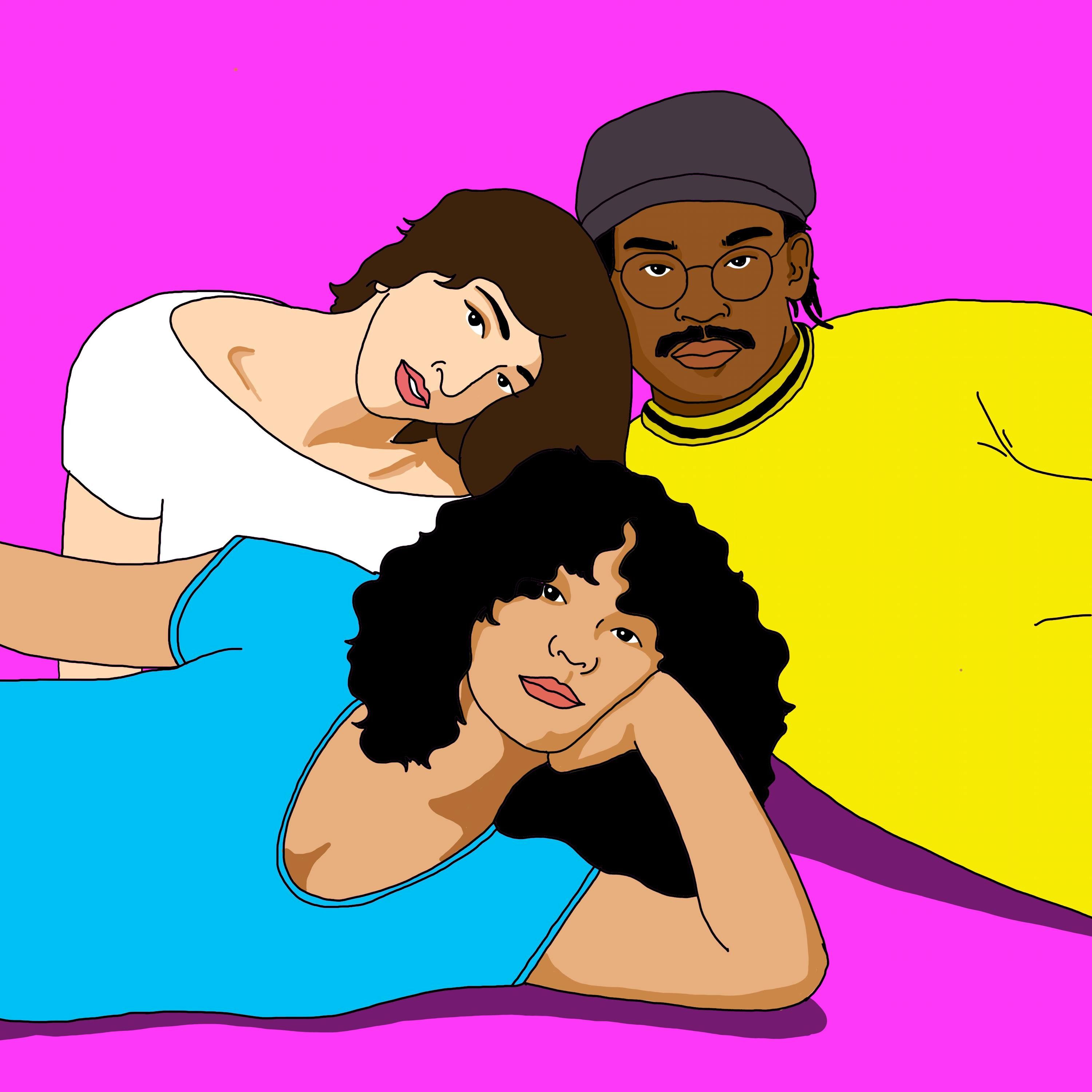
Throughout pop history, groups from The Ink Spots to the Beach Boys to Fleetwood Mac all forged their sound in the alchemy of vocal harmonies, harnessing the magic that happens when different voices join as one. Then suddenly, right around the 1980s, vocal harmonies started to wane in pop. Whether it was Michael Jackson creating a new model of the solo star, music technology making the voice more like an instrument, or simply audiences wanting a new sound, today the art of vocal harmony is hard to find on the charts. But bands like Tiny Habits, whose originals and covers showcase intricate and delicate harmonies, are bringing the sound back to the people, with a message that everyone needs to sing more, and to sing together.
CREDITS
- Reanna Cruz: Producer
- Iris Gottlieb: Illustrator
- Charlie Harding: Host, Executive Producer
- Dion Lee: Art Director
- Brandon McFarland: Audio Engineer
- Nick Ripps: Video Editor
- Nate Sloan: Host
- Lissa Soep: Editor
- Zach Tenorio & Jocie Adams: Theme Composers
Switched On Pop is a co-production of Vox Media Podcast Network, Vulture, and Rock Ridge Productions.
Links: Newsletter
Songs discussed:
- Fleetwood Mac – The Chain
- The Roches – Hammond Song
- Crosby, Stills, Nash & Young – Suite: Judy Blue Eyes
- Pérotin, The Hilliard Ensemble – Viderunt omnes
- Mbuti men – Elephant Hunting Song
- Bulgarian State Television Female Choir – Pilentze Pee
- The Golden Gate Quartet – Stormy Weather
- The Jackson 5 – Who’s Lovin’ You
- Frankie Valli & The Four Seasons – C’mon Marianne
- The Beach Boys – Barbara Ann
- Michael Jackson – Don’t Stop ’Til You Get Enough
- Tiny Habits – Right In Front Of Me
- Tiny Habits – Anything He Was
- Tiny Habits – one more (live acoustic)
Learn more about your ad choices. Visit podcastchoices.com/adchoices
Get every episode summarized
Each time Switched on Pop publishes, we email you a written briefing from the transcript — the topics, who appeared, and any specific claims, with the ad reads skipped.
Email me new episodesFree for 3 shows. No card needed.
Hosts & guests

Transcript ready
582 searchable segments. Every word is indexed and playable.
Full transcript
Switched on Pop — The power of singing together (ft. Tiny Habits). Machine-transcribed; use the interactive transcript above to jump the player to any line.
Support for the show comes from Sonos. If you listen to the show, you know that good music doesn't just emerge out of thin air. There's a lot of design and thoughtfulness that goes into crafting a great song. Sonos brings that same level of thoughtful design to their sound system. For Sonos, it's not just about engineering one great speaker. It's about creating a holistic system that lets you control the sound from room to room and moment to moment and totally immerse yourself. It's a sound system engineered to make you feel. Visit sonos.com and build your system. Sonos love the sound, feel the system. Secrets. He acts like a concerned parent, but something's not right. Jonas doesn't want them to be. He says K, it isn't well enough. He's lying. Always. Sonos, Mercedes out of the picture. Cracks starting to show. Perfect image is hiding for them. Deceit. Don't know. We'll do anything to jump in. You'll be surprised. You'll have no idea if you're spending any time in the truck.
You can trust him. Small town, big drama. Stream the unmissible stories on Holy Oaks. Now on channel four. Charlie, I want to play a couple songs for you and have you tell me what you think they all have in common. Okay, here's the first. Here's the second. And here's the third. They all tell me that your musical taste are stuck in another decade. Okay, yes. And I thought that might be what you say. These are all songs from the 60s and 70s. But is there anything else?
I would say apart from the excellent rhythm guitar playing, huge vocal harmonies. That's exactly right. And today I want to understand why these harmonies are so powerful and why I hardly hear them on the charts today. I'm John Pop. Welcome to Switched on Pop. I'm musicologist Nate Sloan. I'm a songwriter. Charlie Harding. Okay, and Charlie, to be clear, what did we just listen to there? Let's see, at the end was Crossbeast Hills Nation, young. Yes, sweet, Judy Blue Eyes. What was the second one? That was Hammond Song by The Rocious. Thanks to our friend Steve Hall for introducing me to that one. And then we began with Fleetwood and Mac and the line. The chain. The chain. The chain. Sorry. I'm out of touch. And these are just a handful of tracks from thousands that we could pull, which offer sterling examples of stunning vocal harmonies.
And this art of singing together, making your voices blend as one, singing chords, singing polyphony. This is maybe a lost art in the world of pop music. Absolutely. Like the general trend over the last few decades has been away from groups and towards singular artists. Celebrity seems to be easier to propagate when there's one face that you have to put on every billboard. At the same time, maybe I would counteract what you said, because when you listen to an Ariana Grande track, she's such an expert vocal producer and is layering dozens of Ariana Grande's on top of each other with really dense rich harmony. This is the right way to try and make it all the way out.
That's Kiss Me, the opening track of Ariana's most recent album, Pettel. And yeah, a nice example of what you're describing. She is such a master of layering herself in incredible intricate vocal harmonies. No, that's not exactly what I'm talking about. I'm talking about different people singing together. And I think this is an important distinction because as virtuosic as what Ariana and others do, I think there's something deeper when you sing together. There's something even therapeutic. There's something healing. There's something that might connect us to each other's human beings. I feel a little emotional. I don't think I've been in a chorus of other people in like two decades. I used to sing in a chorus in high school and it was a very moving experience, even though I was a really bad singer. Similarly, I sang in a shaped note chorus when I was in grad school,
which was really fun, kind of this traditional southern religious style of singing, which is really loud and really nasally. This is where we have the New York. What religious revival movement were you a part of? I don't know how they let a Jewish kid from New York City in that church in Northern California, but it was a really fun thing that I looked forward to every week. That was anti-Octo 777 by the Hennigar Union Sacred Harpsingers that we just listened to. But yeah, like you, I haven't really been singing with anyone in a long time, and I miss it. There is something so profound about singing together, something kind of ineffable. It's a way of communicating with other people without actually having a conversation necessarily.
One of our great limitations of being humans is that it's really hard to walk into a room of everybody talking. You can't hear more than one and a half conversations at a time before your brain is just tapped out. Yeah. But when you're singing in a chorus, you can have a hundred people and everybody's contributing and you're resonating altogether. So it's no surprise that group singing is probably the oldest form of music making we have. I mean, we have records from basically every culture going back to prehistory of people singing together, say in a Catholic church in Western Europe, we could listen to the work of the composer Perotan, his composition, Vito Runt Omnis.
The Western classical tradition gets a lot of credit for coming up with complex, polyphonic ways of singing. And by polyphonic, I mean, you have independent melodies interacting with one another. But we were just listening to, I feel like I have to go back to my AP Music Theory. Like, first there was monophony, everyone singing the same note. You just said polyphony. Many people singing different notes. Isn't there like a middle ground? Is there homophony? Homophony, baby. You nailed it, Charlie. You still got it. So there's like basically one main melody and then everyone else is kind of droning on another thing. Is that homophony? That's absolutely right. And so I feel like there was a big story that is always told to what you're saying is like Western, culture goes monophony, homophony, polyphony. It's like seen as this like grand development and gets a lot of credit for the development of the complex, richest ways of singing. We could go to so many corners of the globe and find examples of incredibly complex choral singing.
I mean, to name just a few, I would love to listen to a song from the Inbuti people of what's now the Democratic Republic of Congo that was recorded by Smithsonian Folkways. This is their elephant hunting song. I'm also borderline obsessed with the Bulgarian choral tradition, which is known for singing really crunchy intervals like seconds close together that normally you would avoid, but they just really lean into. I
rocks. That's the Bulgarian state television female choir. But if we're talking about popular music, yeah, I feel like the approach to vocal harmony that has been the most influential on most of the music we love and discuss on this show. Let me guess. Let me guess. Let me guess. Is it do up? No, go back a little further. What's pre- what's pre-do up? I'll give you hint. It's also, you know, comes from the world of gospel religion and worship. Yeah. And I want to highlight a group like the Golden Gate Quartet who were transitional figures. They took the sound of gospel, but they started applying it to popular music like the hit song of the 1930s stormy weather. No.
The rich harmonies, the blues, sonorities, the call and response, the move from background to foreground all of these, which are hallmarks of American popular music, were pioneered in the gospel church, especially the black gospel church of the early 20th century. I mean, we heard those same techniques in Ariana's vocal layering. She was doing call and response. She had these sort of like hummed vocals underneath a lot of those techniques. Yeah, they've been around for what, 80 years. And those gospel choral arrangements feed right into some of the most popular American musical movements, including duop, which you mentioned. Wouldn't you love to turn on the radio and hear Frankie Valley in the Four Seasons just rocking that rich harmony at the beginning of Command Marianne? Well, we're so, we're the Four Seasons
enormous influence on the Beach Boys because that top line high pitch thing that I always associate to like Brian Wilson, that clearly is where he's got to be listening to it from. Totally. And I mean, you just called exactly where I'm going next because even into the 1960s and 70s, some of the biggest hits were predicated on really stunning vocal harmonies. And I think the Beach Boys is just like a crystalline example of that. Take there 1965 track Barbara Anne, for example. Throughout the 60s and 70s, right, from Motown to the Brill building to Nashville, Dali Parton, everyone is doing vocal harmonies, even into the 70s, right? We started this episode listening to Fleetwood Mac, Crosby Stills, Nash and Young. You know, their vocal harmonies are like
a hallmark of their sound. And then we get to the 1980s. And something seems to change. All the sudden, these vocal harmonies are no longer populating the charts like they had been for, I don't know, almost a century. And whose fault is that Charlie? I would probably blame the multi track recorder, but you're going to point to a person. The multi track recorder, yes, which eventually, you know, allows folks like Ariana Grande to overdub themselves rather than singing and acquire. I don't know. I'm tempted to blame the King of Pop, Michael Jackson. I think it might be hard to sort of pinpoint one person, but I do accept that his going solo from the Jackson's represents a moment in time where there is a rift of vocal harmony from one of the groups, one of the like, you know, Motown groups known for their collaborative sound. Motown loses the Jackson's. Michael goes solo and vocal harmonies are forever changed. Sure. Why not? We can listen to the Jackson 5
singing harmony on whose love and you. But if we fast forward to, you know, the best-selling album of all time, Thriller, we don't hear group harmonies. If anything, we hear like solo overdubbed harmonies. But mostly it's just Michael of Crack. There are for sure vocal harmonies in that clip, but they are functioning very differently than what we're hearing in the Jackson 5. Like there is one clear center lead vocal. Everything else is also Michael Jackson just supporting himself sort of thickening up the lead vocal rather than wall of rich, intricate harmonies. You know, it makes sense that the early 80s might be the place to
locate the demise of vocal harmonies and group singing because it's an era of deregulation, privatization, and rising individualism. And it is the era of the rise of the brand and corporatism. And it's just so easy to sell one person as an aspirational figure in a way that's harder to say, who are you amongst this group? Right. That Reagan era rhetoric of pulling yourself up by your bootstraps and doing it yourself versus the sort of collectivism that had been a hallmark of the 60s and 70s. And the music industry has a concomitant shift. As you were saying earlier in the episode, we move from the age of the band to the age of the solo singer. And that's, you know, what we get in the 80s. We get Madonna. We get Prince. We get Michael. These like singular, figures who are the centerpiece of their artistic statement. Could we say the move of the age of the band to the age of the brand? Ooh, I'll take it. Yeah. Put that on a throw pillow. Absolutely.
And even today, when we do have a band, you know, BTS, for instance, comes to mind or Katzai, like K-pop is producing a lot of great boy and girl groups. And yet, for sure, they don't sing harmony that much. They sing in unison a lot, which is really interesting. Or there's a clear verse for each person to sing individually. But fear not, Charlie, I have good news for those harmony hounds in our audience, those lovers of... I'm losing my elotative powers here. Fonic populism. There's some up and coming groups who are making harmony a signature of their sounds. Some of them we've interviewed on the pod before, like True Style. Others are in the world of country music, like the high women. But the one I want to focus on right now is actually blowing up on TikTok and Instagram and all over social media because of their incredible
harmonies. It's the group Tiny Habits. Oh, I love that. Maybe I'm too close and they're singing really close tight harmony. Right, they're literally singing these close harmonies as they're singing about trying to get close. It's a really nice bit of word painting. That song is right in front of me from their album Keepers. I wanted to understand why this group was drawn to these kind of throwback harmonies and why they think it's resonated with young audience. Finally, how do they produce these incredibly crunchy and satisfying intricate vocals? Tiny Habits made up of Sinyakhan, Mayeree, and Judah, Meyauah met as students at the Berkeley College of Music where I think you like to teach. I do profess there. And I had to sit down with them and ask them,
how do they make these harmonies that resonate with young audiences? Where do they get their signature crunchy sounds from? And what drew them to singing together and harmonizing in an increasingly individualistic world? Support for the show comes from Sonos. Our relationship to sound, whether listening to music or watching a movie is deeply personal. Everyone has different needs, different spaces, different ways they want to connect with whatever they're listening to. That's why Sonos has designed an entire range of speakers and headphones to work together in harmony, so you can customize a sound system for your life. From speakers to soundbars, to subwoofers, to headphones, the whole Sonos system works together to create a seamless listening experience. My family has been using a Sonos system for years. We have the Sonos Ultra soundbar that we use connected to our TV. So all the shows and movies we watch have amazing sound
quality. And we use the Sonos Play speakers for music around the house. We can control exactly what you hear in different rooms. It's amazing fidelity and they're kind of these small sleek speakers that you can just kind of fit anywhere. It's also really easy to connect Sonos to any music player and just play music with the press of a button. I even have my turntable hooked up to my Sonos system so we can listen to records. It's so seamless and easy and most importantly, the sound quality is incredible. So visit sonos.com and build your system. Sonos love the sound, feel the system. Secrets. He acts like a concerned parent, but something's not right. He says Kate isn't well enough. He's lying. He's lying. He wants to say he's down the picture. Cracks start to show. Perfect image is hiding from him.
Deceit. Don't know. We'll do anything to get you in. He's holding his head. No idea. He's just going to be trying to be trusted. He confessed it. Small town, big drama. Stream the unmissable stories on Holy Oaks. Now on Channel 4. Tom Boiler Arcade here. Fancy your chances? Every day, Tom Boiler Arcade's prize league puts you head to head with real players in daily slot tournaments. Open the app, play our slots and every spin can move you closer to the top. Climb the leaderboard and you can win real prizes. Fancy a go? Download Tom Boiler Arcade now for fun's say. Tordom is available. Select a game only. Octim required. D&C's apply. Play responsibly. Tiny habits. Welcome to Switch Shandop. Hello. Can you introduce yourselves? I'm Sinha. I'm Judah. I'm Maya. And maybe we could start with you all singing something for us. Let's do it.
Maybe something from your new album. Keepers. Totally. Ready? Ah, two. I know I can't be anything you want to do. But I'll try to try to. Nothing like he was. But I know what he meant to you. I'll try to. We're about to. Right. Was that me? We love to. Remories prove you are happy. Erdoin. Anything we like to do. When he was next to you. I'll try to try to. Why do you love singing together? Many reasons. Many reasons. Can't harmonize by yourself. I mean, we just started singing as friends. We met at Berkeley. College of Music in Boston. And we were just kind of buddies. We were like singing in stairwells
and singing in dorm rooms. So yeah, it really just started because it was just so fun and exciting. And then we just kept doing it. Just fun. Yeah. And now it just feels so healing all the time, I think. It's very satisfying also. Yeah. So I feel like we all have very specific tastes now about harmony. I'm interested in that word healing. What's healing about singing together? Because we're also friends and we know so much about each other and our personal lives. It's just like, it's just healing. I don't even know how to explain it. There's something primal about it too. Like you see a video of a choir on Instagram and you like have chills. And I think of experience of any group of people doing one thing together is always the together. Is there like a physical experience to singing together? It feels like for me, I feel so held when I'm singing with them. It's almost like this comfort, blanket of like there's other people who are holding you up while you're doing this really vulnerable thing. And I think that's like a universal experience. I was saying for anyone in a choir or
doing one thing together, it's like you feel a part of something. You feel a part of something. And you're all kind of experiencing the same emotional moment. So you sang a little bit of anything he was for us. Tell us about composing and arranging that song. Where did that come from? Well, I wrote that song a few years ago and I was just like, it was just obvious that I was like, oh, this has to be a hapsong. And so I brought it to them and they like immediately knew exactly what to sing. It was a very like straightforward process of like obviously my would sing that part and so you would sing that part and that's just like that just kind of happened. Yeah.
I think arranging for us has kind of gotten easier over time because we've sung so much together, we kind of fall into our regular kind of parts. But I think with this song, we kind of felt like we didn't need to overcomplicate it. Yeah. It kind of speaks for itself, you know, in terms of the chorus is very classic. Yeah. Nothing too crazy because we have the tendency to like really overcomplicate. And so that was very, it was very easy, very easy. When you're building a harmony, there's the notes and the pitches that you're each singing. And then there's also the blend of your voices. And I'm curious like how your voices are working together. What is that process like? Silent. It is very, yeah. It's very internal. Each of us have the desire for it to sound very specifically connected and like one voice sort of. And so I think while we're singing actively, we're thinking about, I guess we're maybe not even thinking about it at this point. Yeah. It's just like I'm hearing you, I'm adjusting however
minorly or majorly to your phrasing and breathing. The free-priced- A lot of listening I think. And just adjusting accordingly. It used to be harder. I think when we were starting, yeah, the unison was kind of a more foreign concept maybe. And I think that's a thing with a lot of like harmony groups that maybe they do less of. And I think for us, when we kind of started discovering that part of our voices and that, oh, actually our blend is pretty good. And so we kind of refined it and worked on it. And now it's sort of second nature. Yeah. I feel like also people made us aware of it. We weren't even really thinking about it until we were posting videos and people were like, oh, you guys have such a great unison. You sound like one person and we were like, and it's super cool because you'll hear our individual voices and they sound pretty different. Yeah. But something about the frequency of all of our voices just come together. It's like it's one thing. Could we hear that like the transformation from individual voices to the collective? Yeah. What should we sing?
What should we sing? Is like the, I mean, we could do flicker even or something. Yeah. Sure. Does me? Three, oh, one by one. Yeah, yeah. Okay. I love it. I like it. What's the lyric? I like it. Okay. You got it. Wait up, I'm running over your shoulder looking at me like I'm someone you don't know Wait up, I'm running over your shoulder looking at me like I'm someone you don't know Tadak, do you have there? I'm running over your shoulder looking at me like I'm someone you don't know That was pretty cool. That was interesting. Yeah, it was a wait.
So does that mean you're constantly aware of your volume and your intensity and how it works? It's like an active adjustment. Like as you're singing like you just like, okay, like I wish I had something to compare it to but I don't really know. It's hard. You're listening but you're not over listening. You're listening. It's like just balancing. Like surfing. Yeah, yeah, yeah. Constantly like adjusting yourself until you're like completely within whatever you're supposed to be. Writing the ways. Yeah, writing the way. I'm just focusing the harmony. Wow. I like that. So yeah, let's take it back a little now. Give us your like the tiny habits origin story. Like do you remember when you all sang together for the first time? I had been in school for a year already and then we had been sent home for COVID and upon our return, my I had been following me on Instagram separately.
And I think they were in conversation before they had gotten to campus. And they were sort of chatting a little bit. Maya had a crush on Judah. It's no big deal. She goes, we look at him. Judah quarantine's over. We had a 10-day quarantine. She was Jeute, come on down. Like let's sing together. She wanted to get to. No. It's okay. It was good. That was when she does not tell people. Right, she doesn't, she does. I mean, this is stunning person. to me. And so then they were seeing a little bit, a little YouTube karaoke situation. And me and Maya had also been in conversation over Instagram DM. She responded to me, you should come down and sing with me and Judah. And so I went downstairs shaking as I knocked on her door. And we sang happy inside by Casey Moss, my dorm and floor that that January evening. And you can hear that video now and you really can like hear our individual voices. There was no, like, even just not a lot of connection yet. Yeah. But there was a spark. Yeah. And I didn't know, Sydney at all. Like Maya was like maybe one of the only two people.
Yeah. That was the first time I that I like had taught I like my roommate and literally you. I like had conversations with before coming to campus. And then she's like, we should sing together. And I was like, because Judah and I started Berkeley during the pandemic. And it was like completely online. Yeah. So kind of the way you would, you were making friends with like online classes and like, yeah, you know, following people on Instagram. So that's kind of why. But that's the really beautiful thing about college, I think. Yeah. So everybody's sort of equally scared. You have access to all these people that are your age and interested in the same thing as you. It was very cool. Yeah. Right. And then so you you sang a Casey Muscov song together and we're like, oh, there's something here. And then was there a moment where you were singing either an original or an arrangement and and realize that there was something you really wanted to build together. I feel like when you guys started one more, there's this like one of our first songs we ever wrote was called one more and the two of them had started it in like the stairwell
or something classic. And we had gotten together. It was like a final day of the semester and the room was empty and we sang that song together in like mostly unison. I think I was watching that video back for a while after we had gone home and I was like, this is a little bit special. Yeah. And probably like should be something. Yeah. It sounds like the isolation of the pandemic like really shaped this. It did. Also, we like we were all in the same dorm building and there were like maybe three or four different Berkeley dorm buildings and like you were only allowed to hang out with the people that you were like in like in your same dorm building. So if we were in different dorms, it was across the hall for me. Myo was directly like. Yeah. So like. Kismet. It was fake. Maybe it was right. It was a transition from your maybe initial intentions
as artists though. Like did you start Berkeley with the intention of like being a solo act? And what made you feel like it would be okay to instead form this you know collective? There was no conscious decision to be like, oh okay, we're leaving our solo careers behind. Yeah. Or like we're going to school to like form a band or something. It was just like we're you know, open to whatever. I feel like a lot of it also had to do with like the way it was resonating with other people. It felt like there was something special about making a trio or having a band that it felt I guess sort of more original in some fun. Yeah. There's a delicacy maybe to some of the work you do that feels like it's an antidote to the overstimulation of so much of the world we live in. Your arrangements are very intricate, sometimes very quiet.
And it kind of as a listener it kind of puts you into this other mode of experiencing art. How intentional is that or is that just something that developed organically? Definitely organically. I think also is sort of a product of the music that we loved like starting because we were all really into little singer songwriting sounds and just delicate music. Every choice we make I would say is pretty intentional. One thing that's really striking about your arrangements are the crunchiness factor. Your willingness to throw in these pitches that create dissonance or some kind of tension. So I would love if you could maybe sing something for us that would be an example of that approach and we could break down how you create those sounds totally ready.
That she goes, that she goes again, raising through my brain and I just can contain this feeling like man. Yeah. I guess that's not bad. Where there's like. Also, these videos take 45,000 tapes. Yeah. So everyone's seeing the TikTok. They're like oh, I'm sick. I mean, as you can hear, there's so many things that are going into it. We're doing a lot of like flipping and so yeah. There's also three different people singing. So like one person makes a mistake. They're going to want to do the same. Right. You mentioned flipping. Like what break that down for us? What does that refer to exactly? Yeah. I guess more just like playing around with what parts were singing because I think a lot of
the time, you know, there's like the alto and the melody and the soprano, whatever. Tenor. And I think usually people will kind of that's their partner sticking to that. And I think we do a lot of part two. Letting someone else do the melody or letting someone else take the little part. And we'll start on the melody and then flip to the third. Yeah. Yeah. So it's like everyone's taking turns and only of like not doing something that is complicated or. But I think it's funny because I think at least in my brain, we're not thinking, oh, you know, I'm singing, I mean, I guess maybe now we do. But I think before it was less about okay, I'm singing the melody and now I'm going to sing the third here. And then I think it just kind of happened. This is your whole part. Yeah. Yeah. It just sort of like came out when we were arranging. And now maybe we think more about it. Tell me about introducing that crunch factor into an arrangement. I think it just depends on the song honestly because it's like. Yeah, so you have to be appropriate about it. Yeah. And intuitive. To be crunchy just for the sake of being crunchy, now it's crispy. Yeah. And now I'm out. Oh, really?
That's crispy. It's a little burnt. Right. We just want it lightly. Yeah, a little bit brown. A little bit brown. A little bit brown. A little bit brown. Exactly. Exactly. I was crispy. You have a beautiful album, Keepers. Yeah. And you're going to be touring. What are you looking forward to singing live from this record? Like what's the moment? All of it. Probably all of it. Yeah. I'm excited for fragile too. I feel like that one's always just a. We've been singing that. A nice. Something to see. I'm a bunch of things. Something to see. I've been like healing about it. Yeah. Or spiritual. A little spiritual. Yeah. I'm excited to have some fun. Yeah. Yeah. Like with loved ones, everything. I'm excited for someone you love. Oh. Yes. Because I have this vision that we like teach the audience the harmonies in the bridge and they all sing it back. Yeah. The really fun, really fun thing about our audiences is that there's a lot of musicians. Usually. Yeah. Um, you know, Harmony fans and all that. So they sing pretty well.
Is there one of those songs you just mentioned? Is there a moment that you could sing for us now? Is a little preview? We could sing the fragile bridge. Yeah. That's what you see. I couldn't find them. Watching it fall down. Letting it shatter. Stir the stick in a hand out. We've seen it happen. We watched them fade out. Don't let us be them. Don't let that be now. I don't want to die. Is that a tire and more healthier? People are going to listen to your album, hear you on tour, watch your videos, and they might want to sing themselves with other people. Like where would they start to have that experience themselves? Maybe Facebook. Maybe the internet.
Probably probably probably the internet. Like find other people. There's a million other people that are desperate to sing with. Send that message. Send the message post a video for something. I want to find friends who sing with us in my area. Because there definitely are people. It's also a very easy way to build a community and make friends. I feel like we have such a privilege with our gift to like, like, oh, I can go and sing with this person. And now we hang out. And we're most of my friends I met because I just like, I want to sing with you. I want to hang out with you. I just want with you. It's so funny though. Because that's like, it can be in two ways. It can be more intimate than just being someone's friend or somehow a really nice bridge to be coming closer to someone. Yeah. Because sometimes we're singing. And I mean, Maya or me and Judah are just staring into each other's eyes. But it's not like registering as an intimate situation. I don't know how to explain that. It's just very comfortable. But sometimes you can talk to a new person.
And it's like, I'm awkward. But if you're singing with them, something's different about it. And if someone's feeling nervous like you, seeing that you described, you know, shaking as you knocked on the door, the first time you sang together, like, what would you tell someone who was nervous about that first time? I wouldn't have made it too late. Do it scared. Do it scared. We've done a lot of things scared. But we've done it together. Yeah. Or even if you're by yourself going into a situation where you're like, about to embrace, you know, new relationships, like, it's so worth it. Like that fear, it goes away so quickly. It's such a temporary feeling to be afraid of something. Yeah. You never know how someone will impact you. Right. And it can go either way. That is the beauty of music and the arts. Like sharing something with somebody that is separate from you in a way. Like it's music and then it's like people. Yeah. And you both get to attach yourself to something together. Yeah. And I feel like that's really... Is there a cover that comes to mind that really...
You felt like people really connected with when you... When you sang it? We just recently had a little pop-up show for our album in London. And it was in the church. And we decided during soundcheck that we were going to do a song unplugged in the middle of the audience. And we sang alone by heart. And it was really special. So funny is that we found a video of it on TikTok. The comments are like, why are they hooting in Hollywood in a church? Yeah. I'm like, so sorry. Oh my god. Yeah. It was so funny, but... But it happened. All the respects. Yes. All the respects. We can do that. We have to take a chorus of that. Wow, do it very well. First part. I'm really glad to tell you. I'm at you.
Oh. Oh. And now it shows me to the ball. How do I get you alone? How do I get you alone? How do I get you? How do I get you? How do I get you alone? Yeah. Tiny habits. Maya, Juda, Sinha. Thank you so much for joining us today. Thanks for having us. This is so fun. I love you. I love you. I love you. I love you.
I love you. Tom Bola R.K.'s prize lead. Daily slot tournaments against real players. Climb the leaderboard. Own it. Cash in. Download Tom Bola R.K. for fun. Say 18 plus gambler away. TNC's apply.
More episodes
More from Switched on Pop

Tove Lo wants her music to sound out of control (ft. Tove Lo)
Switched on Pop

Lizzy McAlpine summons Nick Drake & Joni Mitchell
Switched on Pop
Questionable Country
Switched on Pop
Phoebe Bridgers opens her Moleskine
Switched on Pop