Loading...
societyculturephilosophy
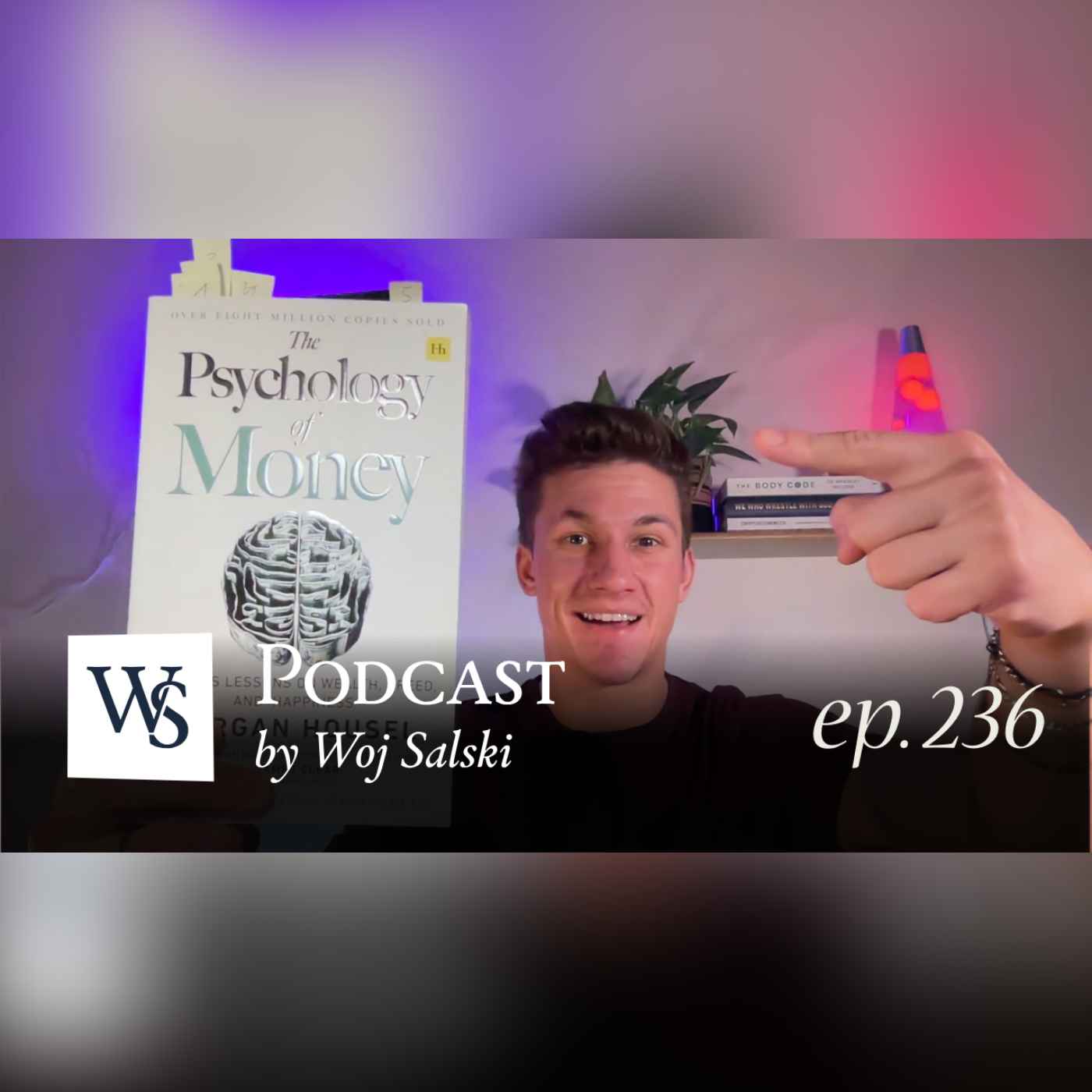
The Psychology of Money: How the Mindset about Money Shapes Your Wealth (ep. 236)
About this Episode
In this week’s episode, we dive into Morgan Housel’s The Psychology of Money, exploring how financial success is shaped not just by numbers and strategy, but by mindset, emotions, and the way we interpret the world around us.
We uncover why the soft skills of finance: patience, discipline, humility, and emotional awareness, often matter more than technical knowledge when it comes to building wealth. We’ll discuss the powerful influence of fear and greed on financial decisions, and how understanding these emotions can help us avoid costly mistakes in markets and in life. Additionally, we examine how each person views money through a unique lens shaped by their experiences, reminding us that financial advice is never truly universal.
We also explore the idea of defining personal wealth and understanding what “enough” truly means. Instead of endlessly chasing more, we reflect on the importance of protecting the non-financial aspects of life - reputation, relationships, freedom, and happiness - which ultimately give money its meaning. Along the way, we touch on the remarkable power of compound interest and how small, consistent decisions made over time can shape extraordinary outcomes.
Finally, we discuss the critical difference between getting wealthy and staying wealthy, and why preserving wealth often requires restraint, patience, and a healthy respect for uncertainty. The conversation also explores the deepest form of wealth - the freedom to control your time and live according to your values, and why each person’s financial strategy must reflect their own goals, risk tolerance, and life circumstances.
Join us to discover how The Psychology of Money offers timeless insights into the behaviors, habits, and perspectives that shape financial well-being. Tune in for a thoughtful conversation that blends personal reflection, practical wisdom, and a deeper understanding of how money interacts with human nature.
All the love, all the power, all of the time!
If you'd like to support the podcast, follow this link: https://linktr.ee/w.salski
Instagram: / unusual.stories_podcast
YouTube: https://www.youtube.com/@WS_Podcast
Spotify: https://open.spotify.com/show/2bcP2r30SdpUuUCU6Jmnk9?si=ce70a31da4d04854
Primal.net: @wspodcast
Link to the book on Amazon: https://amzn.eu/d/0iMLD0hk
Related Media:
"Let's Talk About Money" - https://fountain.fm/episode/tZY2v4MyKpZLto6U13Bl
"Why You Shouldn't Buy Bitcoin?" - https://fountain.fm/episode/FIM7ht8BaiEFkkqfeaSm
"The Bitcoin Standard" - https://fountain.fm/episode/RCwkrgPTPzFgvS2wGrkF
"The 4 Laws of Financial Prosperity" - https://fountain.fm/episode/d5pG9pbSQOr3FXVi4H3W
"The Price of Tomorrow" - https://fountain.fm/episode/Nrkb8qrat8Lk8tnXQFu3
Hosts & Guests
Transcript
Hello and welcome to WS Podcast. My name is Wojcik Salski, I'll be your host for today and
before I begin, may I just remind you, if you find this podcast entertaining useful in any way,
shape or form something that is worth coming back to, then please make sure to follow or subscribe,
maybe click that like button on your device and of course if you'd like to support the podcast by
promoting it across your friends and colleagues that goes the longest way, I think, apart from
of course being a subscriber, and if you'd like to support the podcast in any other way, maybe by,
you know, sending me a little email or letting me know what kind of a book or a topic you'd like
me to discuss over the next generation of seasons, then please make sure to do. I am wholeheartedly
grateful for all of you out there who do. I've been getting more and more of these over the past few
months, especially when I've been, especially as I've been discussing like freedom-focused and
monetary-focused ideas, so I have some exciting interviews, sort of conversations I guess lined up
because of these and I'm very, very grateful. So thank you so much for all of you. Thank you for your
time. Thank you for your attention. Thank you for your bearing with my misspellings and the rumblings
and I hope that essentially this is worth your while, right? It certainly is worth mine. So I hope
we share this together. So today, as this is the fourth episode of the season in which we discuss
the books related to finance, economy, global sort of macroeconomics and stuff. I have this
amazing book for you, which is The Psychology of Money by Morgan Hounsell. And yeah, I'll just make
sure that you can see it properly. And basically, as you can see here and maybe I quite like the
the color of it. So here's why. But yeah, even before we start by discussing the ideas within the
book, I'll just quickly sort of run down through the biggest advantages, I think. So apparently,
this one is one of the books that many people recommend for beginners in terms of figuring out
what to do with your finance, how finance works. It's mostly related to personal finance and from
the perspective of just getting wealthy, getting healthy, getting wealthy, getting healthy, wealthy,
and wealthy, healthy, I guess. And it's interesting that it's basically quite an easy to read
and practical-focused book, which I think is really, really useful. There is not much
sort of fluff around the topic. Some of the chapters are really, really brief, literally a few pages.
We actually explore one of them today. And I enjoyed the read. I found many things somewhat
already known to me, maybe because I've been reading quite a few books on finance and personal
finance and economics. And I've been studying economics as well, both at uni and at work.
But I think that the way the book is written is definitely one of the ones that I would suggest to
someone completely green to the topic of finance. And also someone who doesn't want much,
you know, fluff. They just want to get straight to the point. And maybe similarly to the book,
the four laws for financial prosperity, or you know, the one that we've done just two episodes
ago. I'll link below. It's very action-oriented. At the end of each chapter, there are some bullet
points and some ideas how you can put into action whatever the author is exploring. And I found
the read easy and pleasurable. I sort of quite, quite quickly went through it. And most importantly,
and this is really sort of the crux of the matter. And I guess the title comes from this.
The book talks a lot about our mindset and our emotions and just how much they play a role.
Essentially the first most important role in creating our wealth or, you know, sort of standing
in the way of us getting wealthy. So we'll explore that in a second. It's something that struck me
and I wanted to read this to you is a quote with which the author decided to start the whole book,
which is a quote from Napoleon. And it says, a genius is a man who can do the average thing
when everyone else around him is losing their mind. And I found that this really sort of
underlines very well the essence of what the book talks about. And we'll discuss some of the ideas
from the book. I have the quotes for you and tagged. I'll read a few parts. I'll discuss them
from the perspective of, you know, both what the author explores plus sort of tying it into
the different readings and episodes that we've done so far. And hopefully my aim for this episode
is to provide you with enough knowledge to take action now if you didn't want to read the book
and also enough excitement and interest that you actually pick up the book because ultimately,
as you probably know, if you've been listening to this show for a while, most importantly,
we're trying to unpack some ideas here to get as excited to start reading because personally,
from my perspective, people don't read enough. And quite frankly, I think if you want to learn
about something, the most important thing is to find the actual source and explore it for yourself.
And of course, you know, feel free to discuss it with others and so forth. But unless you've
explored the actual source is very difficult from my perspective to truly know what you're
subscribing to or what you think really where your source comes from. And so as much as you
might want to just pick up your phone right now and scroll through some TikTok or other app,
I would encourage you to tune in and at the end of the episode, just get yourself this book.
And hopefully you'll see the benefits of both. So without further ado, let's start.
The first topic that I'll sort of chime in Mr. Housel for is the idea that financial success
relies on soft skills. And it's counterintuitive in many ways. This idea that,
I'm pretty sure that if you were asked yourself or maybe if you asked an average
jane or joe on the street, how does one become rich? They will list a bunch of activities that
wealthy or rich people do and maybe some successes along the way. But I doubt that many people
would point to soft skills or habits as the main driver. And of course, Mr. Morgan starts
just with that and he underscores it across the whole of the book going forward. So the quote is
financial outcomes are driven by lack, independent of intelligence and effort.
And financial success is not a hard science. It's soft skill where how you behave is more important
than what you know. And before I go any further, let's stop here for a moment and just ponder this idea.
And we've discussed it briefly with other episodes dedicated to finance and to
attitude, but also not only to habits. Let's leave the sort of luck to the side.
We'll come back to that later. But the point on soft skills and emotions is where we first
stop. And I have some notes here on my little, you know, loyal companion of a notebook. And the
the interesting thing that I'd like you to ponder is the fear and greed index.
If this is the first time you've heard about the fear and greed index, then please either stop
this video or maybe just, you know, throw me to the side of your screen and look it up.
It's actually the index that is very sort of telling of how the market, meaning the participants
out there who are trading the different financial securities and stocks and bonds and commodities
and everything, how is the market feeling? And this is really important, you know, we're starting
an episode about the book, which is about the psychology of money. And in one of the first chapters,
the outer points out to us that majority of our financial success is up to luck and our soft skills.
AKA, of course, our ability to withstand boredom and withstand fear. And then, you know,
to put it in layman's terms, to not buy when something's overpriced and to not sell when something's
low on its value, right, out of fear of losing. And vice versa, out of fear of missing out people
by overpriced stocks and things. And out of greed for, you know, hope of greater gains,
people get themselves in all kinds of pickles, right? And there are plenty of snake oil salesman
out there, and I bet plenty of them will stay. And unfortunately, also, you know, in terms of gambling,
I am pretty sure that the statistics on gambling are quite dire. And there are many reasons for it.
I think the most straightforward one is, as people notice, even without understanding that the
value of their money sort of loses over time, they are propelled to spend and they feel more and
more demotivated and so more and more likely to take advantage of somewhat hopeful, somewhat promising,
great returns quickly schemes. And that's where you get scammed. That's where you lose all of your
money and a casino and so forth. But this fear and greed index is very telling. Because if you think
that getting wealthy is about numbers and logic and, you know, calculations, maybe to some degree,
it could be. And certainly it will help if you can calculate different things and will explore that
in at a later part in the episode. But would you say, would you guess, would you have guessed
before starting this episode that it is about emotions and about your fear and your greed
that according to the outer is the greatest determinant of your ability to success in finance over
a time. Now, the quote that the outer uses from a financial trader, actually, Michael Burnick is
this one. Some lessons have to be experienced before they can be understood. And I've written down
this quote as I was preparing the episode because it actually made me ponder whether or not you will
be able to grasp what I'm talking about until you get burned. And of course, I hope you will.
But I'm not sure I would have. As you might remember from one of my previous episodes,
I've actually got scammed before. And, you know, so be it. And that's a lesson learned. It was an
expensive lesson. But it certainly was an important one. And, you know, talking about that fear and
greed index, each of us will have that fear and greed index within us. And as the outer, you know,
sort of explores throughout the one of the first chapters of the book, it is very natural for us.
And as Walter puts it, history never repeats itself, but man always does. It is very natural for us
to have acting, to be acting out of fear or to be acting out of greed. And, you know, it's a
worth, it's a worth challenge to sort of put yourself in front of to truly ask yourself,
what kind of a person are you? Are you more fearful? Are you more greedy? Are you both,
depending on the situation, you know, from my perspective, from my experience, I found that
it was greed that got me over the edge to lose, you know, to get scammed, essentially. But it was fear
underlying that greed that I had to discover as well. And many of us, if not all, at some point in
our life, will have to face some deep, seated fears. And of course, this episode is about finance,
and not about figuring out your traumas from the past. But if we assume that everything is
connected, and if we assume that what the outer claims to be the case, that our upbringing and our
experiences determine to a greater degree than we would expect, how we act and how we get wealthy
or not, or how we allow our money to, you know, sort of to leave us, or to how we allow it to stay with us,
it's really important then to reflect on yourself and maybe try it out, you know, a good
challenge for you if you're obviously above the age that you need to be to attend the local casino.
You know, this might be an interesting experiment for yourself. I certainly did it with me,
with myself and my family, to go to a casino and see how you act, you know, put some money on the
table, start playing for a bit and observe your emotions, notice whether you're acting out of fear,
whether you're acting out of curiosity, out of greed, feel those emotions, because then once
you've mapped them, once you know how does it feel for you to be greedy, it might just save you a
couple of dollars or a couple of hundred thousand dollars in the future when you recognize that
experience happening just before you were to make some risky bet on the, you know, on your trading
account or stuff like that. So, you know, I'm not encouraging anyone to gamble if anything
each to their own and, you know, be wary of those, but it certainly can serve you as a great
experience of which Michael Bernic mentions in the quote that you might need to be able to recognize
your own fear and greed index. And, you know, if it is real, that it's mostly emotions that play a
role in us becoming wealthy, we need to get ahead of the game and sort of figure out what kind of
emotions drive us in those moments. So, I encourage you to have some inner exploration adventure
in the coming, you know, days, months, weeks, years. Now, one more thing that I wanted to mention
on this point before we go any further is the, this one, every decision people make with money is
justified by taking the information they have at the moment and plucking it into their unique
mental model of how the world works. And, this is an important point because you might think that
it is a very, it's an obvious option. It's an obvious perspective. Everyone else thinks the same
way and how can they not see this amazing opportunity or how can they not see that this is a scam?
Well, according to the author and I'm pretty sure you would agree, each of us is looking through a
very different lens and that lens is mostly, you know, sort of developed over time through our
experiences and something that might seem very obvious to you might be completely, completely
unattainable and unnoticeable to someone else. And yet again, a great example of this is having
a past experience with that thing. If you've never seen a table, the first time you will see a table,
you might not fully comprehend what to do with a table. Of course, if you've seen a chair before
or a little stool, you might, or maybe a rock, you might sort of kind of deduct that it might serve
a similar purpose of putting things onto it or maybe stepping up on it or maybe sitting on it.
But ultimately, you're much less likely to use that technology tool of a table the same way as one
who uses a table on the daily basis would, if you've seen a table for the first time. And this
applies to everything else. If you've never had your heart broken, the first time it sucks.
Of course, every other time it probably sucks as well, but at least you might notice the pattern
and you might see yourself approaching that point in advance. Experience is a
merciless but also a great teacher. And the author really encourages us to take part in noticing
and expecting that whatever you think is obvious for everyone else, it probably isn't. And so,
if you are to pass on the knowledge, you should probably check yourself first for all of your biases
to ensure that you don't skip over the essential foundational parts while going through those things
that you're trying to share. And it's a fair challenge, you know, come to think of it. This is
exactly the challenge that I'm having when I'm here sort of putting across some sort of a breakdown
of ideas from a book from my mind to yours, right? You might have some different patterns of thinking.
Maybe you've not listened to a few episodes that I've mentioned and therefore you have some
holes in your knowledge. Of course, I might have an ignorance of a certain aspect of this reading
because I simply did not notice it. And when you read this book, you will notice those things and
you might skim over the ones that I thought were important. You know, you could do an experiment of
just giving a highlighter of different color to each of your friends and then lending them the
same book and asking them to highlight what they think is important for them. And you would find
that the majority of the highlights they did are different to one another. We notice different
things because of our experience. And this plays a huge role in our irrational acting in the market,
which those that seem to know it all tell you that it's very rational. And of course, if you notice
any news about finance, there is little to no rationality in there. And I think the fear and
greed index is a great indicator pun intended of that fact, right? So the second
second topic I'd like to explore is really interesting because it's also very personal.
When I say what does it mean for you to be wealthy? What are your thoughts?
Have a moment now and think what would be enough money for you? What what amount of money would
make you wealthier? What amount of stuff would make you wealthier? What kind of an activity? What
kind of a lifestyle would make you feel wealthy? Maybe you feel wealthy already, you know? Maybe you
feel abandoned and wealthy, even just by being able to listen to this episode because that means
that you have access to so many wonders of technology these days. Now, in terms of
financial wealth, a great sort of invitation from the author and I'll read in a second the
different pointers that he makes here is to really ask yourself how much do you think you need
to be wealthy? Whatever that means to you. And what I've noticed in my own experience of sort of
pondering this and also having a little adventure of trying to calculate how much would I need to
live the kind of life that I sort of strive for? I found that first it's not as much as I thought
initially and it's very much so measurable. It's not abstract. So, you know, let's do just an
effort experiment. I bet many people, if they were asked just sort of off the cuff, how much money
would you want to have to feel wealthy? I think many people would say something, you know, some
interesting numbers such as a million pounds or 10 trillion or maybe 200,000 or, you know, whatever,
whatever. The thing is, though, and I don't remember from which book. It's not from this one, but
you know, maybe it will come back to me, but there was one book about finance that I've encountered
a few years back that actually walked you through this activity of just writing down, you know,
researching and writing down the different prices of things that you think would make your life
feel like a wealthy person, right? And then you were supposed to just sort of, you know, divide it into
months, figure out how much you would be paying whether they were on credit or whether they would
be, you know, but straight of the button stuff. And essentially, after writing down a bunch of
things for myself, such as I'd like to have a nice car, you know, there was some really luxurious
car that I always wanted and I'd like to be living in this place with, you know, in a neighborhood
home and this and that I'd like to take a private jet trip once in a while and stuff, like things
that at the time I thought are what would make me wealthy. And then I divided it and I actually
researched how much it costs. And then I figured out maybe I don't need my own private jet, but I
still can benefit from hiring one when I need it and stuff sort of, you know, after writing down
all of those things, I confronted the amount that I initially stated, which was something like
million or two million pounds. And it turned out that it was basically like 30% of what I
estimated, even less, I think, something like 200,000 overall. Of course, that's still quite a bit
of money. Don't get me wrong, but my point here is that when you ask yourself what is enough for you
and you dive deeper into that question when you actually, you know, maybe write down the things
that you would consider to be worth that money that you'd like to have a month, a year, you know,
to be able to sustain yourself in that lifestyle, you might find that it's actually
much lower than you were estimated just by the of the cuff remark of I'd like a million dollars,
you know. So yeah, it's just a funny little experiment to have. Now, the outer
right, a bunch of bullet points here and this is in regards to how rich people do crazy things
and the whole chapter is dedicated to the fact that many people never stop obsessing over money,
even when they have a lot of it. And quotes here, a bunch of quotes I'll read is there is no reason
to risk what you have and need for what you don't have and don't need. So that's a few words of
caution in terms of running and risking more and more of what you have for what you don't have,
right. And now a few of the things that are worth remembering is that one, the hardest financial
skill is getting the goal post to stop moving, something to ponder. Once you've established that
goal, make sure that you don't move it. And it's funny because, you know, they say in Polish,
you have a saying that appetite grows as you eat. And I think it's, it can be very true to our
in, you know, sort of wealth pursuit as well. It's a challenge to keep spending the same amount
while you're earning more and more. And I challenge you to do that because that's how you create wealth.
Second, social comparison is the problem. By comparing yourself to others who have more,
you will always feel you're in the lack. And therefore, you will always be pursuing more and more.
And so, you know, you're basically moving that goal post and constantly prolonging your feeling of
satisfaction and achieving the goal. Enough is not too little. Enough is realizing that the opposite
and an insatiable appetite for more will push you to the point of regret. It's important to
mark that line and sort of, you know, go towards it. And now, a few things that he mentions here,
there are many things never worth risking, no matter the potential gain. And these are
reputation, freedom and independence, family and friends, being loved by those who you want to love,
happiness. And essentially, your best at keeping these things is knowing when it's time to stop
taking risks that might harm them, knowing when you have enough. So, what is your enough, right?
What does it mean for you to be wealthy enough? I think this is a much deeper question that might
initially seem to us. And quite frankly, I think it's quite an important one to ask yourself,
especially from time to time, you know, you have only so many days in your life and not to get
too morbid here, but, you know, our time is limited. And you got to choose what you dedicate your time
to. And if that pursuit of money gets in the way of all the other things that are more valuable,
you know, your family, your friends, your experiences with them, your happiness, your freedom,
your ability to choose your peace, your peace of mind, then you're probably not,
you know, you're not too skillful about these choices. And of course, some of you might want to do
that, and that's completely fine, each to their own. But the outer here sort of underscores this idea
that enough, whatever that enough is for you is enough. You don't have to move that goal post
when you arrive. If you've hit that goal post, you might as well celebrate and spend time with
your loved ones. Now, of course, the book on finance would not be a book of finance on finance
without compound interest. And I will not, you know, get bogged down in this again.
Please refer to the episode on the price of tomorrow book. I'll link below or maybe let's talk
about money book, not book episode, or maybe the Bitcoin standard episode, or maybe the four
laws of financial prosperity. We've already explored this idea of compound interest. And I'd like
you to really hone in on this. And if you haven't, please look it up. Essentially, it's this
power of either making the money work for you over time or paying more than you would have to pay
over time because of compounding interest either on the money you've lent or on the money you've
borrowed, essentially. That's the quickest way to explain it, I guess. So now let's talk about the idea
that we've actually explored before as well, which is this difference between getting wealthy
and staying wealthy. And we sort of touched on this point slightly by, you know, mentioning this
challenge of ensuring that whatever you spend do not increase as you earn more. And of course,
some of it will cost tend to increase over time because we like to have a better, you know, life.
What would you be doing your wealth creation for if not to enjoy it, to some degree? But the
challenge here is to ensure that you stay wealthy as you go, right? And according to the
author, there are a million ways to get wealthy and plenty of books on how to do so. But there is
only one way to stay wealthy, some combination of frugality and paranoia. And there is this
interesting quote that people often use in the markets when they talk about the stock market and
stuff like that, which is that only the paranoid survive. And it's essentially this idea from
Ray Dalio, which we've explored as well. And there is a quote from him that, if you worry,
you don't have to worry. If you do not worry, you have to worry, right? If you anticipate, plan,
think about a few different outcomes and don't assume that always everything will turn out exactly
as you plan, then you're more likely to stay in the game and enjoy the ride than people that won't
do so. And of course, yet again, to get wealthy, according to the author, there are many ways. Of course,
the best way is to just make more money, whether by your income, your investments, whatever.
I'm not here to provide you with financial advice to any degree. But in terms of staying wealthy,
the game yet again is all about those two emotions on the index of fear and greed. It's about
this frugality and paranoia, right? Being fearful enough not to risk it all on one sort of
toss of heads and tails and being sufficiently satiated and frugal not to overreach, not to
overspend, not to fall into that over things that you don't need over the time horizon that is too
short. And of course, I wouldn't be myself if I didn't mention here the instant versus delayed
gratification game, which we are all playing every day. And you know, the one thing that I'll say
here from my perspective reading this book and the many others, it seems to me that there might be
some correlation between being able to act on delayed gratification basis and being able to
amass wealth and get better over time. And of course, this applies to everything else. And
what do I know? Maybe I'm wrong, but I have not found many examples across my friends and family
of people that play the instant gratification route and have the kind of results that one would
expect from, you know, this getting wealthy, getting healthy, getting better deal. I believe that
in all assets, in all facets of our lives, having a good healthy relationship with your future self
and acting on the behalf and benefit and to the benefit of those that come after us including
ourselves into the future, you might just find yourself on the better, you know, in a better place
essentially when the time comes. And we've explored that so many times, you know, there are episodes
out there who touch on this and this book just proves the point, right? The outer mentions here
compounding by saying compounding only works if you can give us at years and years to grow.
It's like planting oak trees. A year of growth will never show much progress. Ten years can make
a meaningful difference and 50 years can create something absolutely extraordinary.
A interesting idea here is also that you should have a barbelled personality which is your
optimistic about the future but paranoid about what will prevent you from getting to the future.
And according to the outer sensible optimism is a belief that the odds are in your favor
and over time things will balance out to a good outcome even if what happens in between is filled
with misery. Now, of course, as we explore in all these episodes and all these ideas,
you've got to be, I don't know, I wonder if you can hear this. Someone decided to take out the trash right now.
Well, that's a first for the show. But yeah, sorry. So in terms of these ideas, all of them,
I think tie to this idea of moderation. If you assume that if you become so frugal,
then that and so sort of like scrooge from the Christmas story that you never spend on anything,
you never get out of the house, you never even eat. You probably will die or at least you'll suffer.
And then, of course, on the other hand, if you're overspending constantly, you might
sort of get away with overspending and maxing out your credit cards and all your credit lines
for a month or two. But at some point, you will be broken. At some point, you will be in great
misery and you'll probably bring that misery along for your family and whoever else is affected.
So there's probably a sweet spot somewhere there between being completely, you know,
crazily frugal and being completely crazily out going with all your out goings. But yeah,
the in the essence, the idea here is that to get wealthy is actually, according to the outer,
much easier than to stay wealthy. And of course, we've all heard those stories about people
winning lottery tickets or young athletes or actors and actresses getting crazily wealthy,
instantaneously and then falling into some bad habits and going broke quickly after simply because
they have not had that mindset and that healthy dose of paranoia and frugality within them.
It's the kind of discussion that some people might want to have with themselves.
How would you like to go about? Would you like to plan for the long term or would you like to have
instantaneously? And of course, one and the other have its benefits, but it's for you and myself
to choose. Now, topic number four is about freedom, funnily enough. And we've obviously had a very
interesting two session topic on freedom. So I'll link below the episodes for both, the links for
both episodes. But the topic on freedom here, something that I literally written here, yes,
with exclamation mark, I'll start, I'll read the quote and then I'll mention it to you.
The highest form of wealth is the ability to wake up every morning and say, I can do whatever I want
today. The ability to do what you want, when you want, with who you want, for as long as you want
is priceless. It is the highest dividend money pays. Having a strong sense of controlling one's
life is a more dependable predictor of positive feelings of well-being than any of the objective
conditions of life we have considered. And doing something you love on a schedule you can't
control can feel the same as doing something you hate. Now, a few different quotes I thrown at you,
but the bottom line is very straightforward. As you'll find with good habits formed and
investments and saving strategies and assets bought and your wealth increasing, you'll find that
more and more of your money, which essentially in spiritual or energetic
physics terms really is a store of your energy that you can project because you've amassed it
and this potential energy can be projected to either bring forth a new car from the dealership or
maybe to build a home or maybe to have a great vacation. As your wealth grows and that potential
energy to be expended grows, you become more and more independent of it. It's like with health,
health and money are very similar in a way that when you don't have it, it consumes almost every
waking moment. If you're completely broke, you're probably suffering quite a bit from being broken
unless you're fully ignorant of the factor or maybe you will fully pretend that you don't mind.
In the same way, if you're ill, of course you cannot enjoy any other facet of your life because
your whole being is affected by the fact that you're ill. And so it's funny when people say that
money is not everything, of course, and money might not buy happiness but try to be happy
or try to do anything without having any money. It's absurd to think that just by not
considering it an important aspect of your life, it isn't. You might just be up for a very unfortunate
sad surprise. Now, the point here is that money as this potential energy is also a potential for
freedom, right? If you are in a position such as myself where you have a job to which you have to
go each day of the week, apart from weekends, maybe to make a certain amount of money so you can
pay for all of your expenses in the month, then you don't have that much freedom about going to
work or not. You know, quite frankly, if you observe yourself or anyone around you, people are
less likely to miss a day of work than to miss any other thing they have in the week. It simply
is so ingrained in us as a need because we need to live and living costs that we will, you know,
sometimes even being ill, you will still go to work, right? Because otherwise you're worried
that you might not be able to pay your rent or you might not be able to feed your kids and whatever.
The point here is your money that you earn matters to you and it matters most when you don't have
enough of it. The more you have, the more potential you have for freedom. Let's say, you know, let's
have a case of three different people. There is one person, let's call him John, that doesn't have
any savings, doesn't have any investments and he lives from paycheck to paycheck. So by the month
send, he's completely spent and he needs to make sure to go to work in the coming month to make money
to enjoy, to enjoy that month of paying all the bills and go again and again. Of course, in John's
situation, unless he changes his strategy, he's unlikely to have any freedom whatsoever of choosing
a different job or even of leaving this one because unless he has a different option,
he's basically stuck with it because bills don't really, you know, listen to you saying,
oh, I'm sorry, I didn't attend work yesterday because I was feeling ill, bills just arrive and
you have to pay them. Now, the second person might be Jenny and Jenny has two months' worth of
savings on her account. Now, Jenny still needs to go to work to pay for her life expenses but let's
say that Jenny suddenly decides that she'd like to change job and one option and a more optimistic one
is of course that she starts applying to different jobs as she works in her previous one and so she
doesn't even have to take a time off from working to get a new job and potentially she could just
go straight from one to another. But let's say that in the meantime, she decides to leave her work
because it's just too toxic. She doesn't like it anymore. Now, because of her two months' savings,
she has this freedom of two months' worth of energy she can expand without having to go to work
and of course it's not an ideal scenario because two months is quite a short period of time
to find a new job but she's in a much better, stronger freedom-wise position than John is. John
has no savings whatsoever and so he has no choice whatsoever to make these concessions and to
take a break. Now, imagine there is also a third person that will call Sam and Sam has consistently
saved and invested money and so over time his wealth became so great that he could afford to live
of his savings and investments for a year. Now, Sam in that scenario has much more freedom,
both exponentially, essentially more from John and quite a big amount more freedom from
Jenny because not only can he decide to quit his job and he will still have him a year to find
the new one but maybe because of his investments his money will actually be making money
as he's not going to work and that's where we get to the point of compound interest and of course
getting wealthy and staying wealthy. If you can get from the point of making your ends meet
to the point of having enough savings to have a choice to the point that your money works for
you so you don't have to work every day, you become truly free and truly wealthy from the perspective
of what the money can give you and I think it's a worthy goal, some call it financial independence,
some call it financial freedom, whatever that is to you, it's something that the outer here explores
as a point of all of our efforts to create more freedom for ourselves to both choose,
to be more picky with our work and also to be able to be in charge of our time and the way we spend
and with whom we spend it and according to the outer, according to some different studies and research
agency is something that plays a crucial role in our feelings of satisfaction with our life
and it's definitely something worth pondering, how much of agency, how much of freedom and independence
do you have right now and your money on your account and in your savings and investments is
actually a good indicator of just how much of that potential freedom you might have.
Now finally the fifth theme and obviously I'm skipping for quite a bit of the book so
I don't want to discourage you from reading it, I think it's only fair that you explore it for yourself,
for your benefit and the benefit of your loved ones. The final topic that I would like to discuss
with you today is an interesting one because it's slightly different to what I've experienced in
different in other finance-focused books and podcasts and this one is about the fact that
each of us has different goals. Now few quotes for you, investors often innocently take
cues from other investors who are playing a different game than they are. When investors have
different goals and time horizons and they do in every asset class, prices that look ridiculous
to one person can make sense to another because the factors those investors pay attention to
are different. Now let's leave investors aside, right? Let's think about us every day
people, not necessarily investors. We've already discussed that each of us comes with a different
set of experiences and behaviors and patterns and perspectives and cultural norms and everything.
If you take this into consideration and if you also take into consideration that each of us has
different goals, some people plan out five years into the future, some people plan out a month into
the future, some people are more fearful on this fear and greed index, some people are more greedy,
some people are more risk-averse and some people are less risk-averse, some people have 30 more
years to live and some people might be going to retirement just now and they have much less time
left to produce, to earn and so forth. Each profile of us, each and every person will have different
goals and therefore different perspectives on those investments and finance strategies and
you know saving goals. What for you is wealthy means wealthy is not necessarily what for me means
wealthy, right? And for that reason, the last thing you should do, according to the
author, is take bets, make decisions, choose your way of dealing with finance,
without really analyzing what motivates others and just simply by looking at what they do.
If you copy paste someone else's strategy but you have different goals and expectations,
don't be surprised if that strategy turns out to be exactly not what you need, right?
And this is a big thing that I think each of us should reflect on in general in terms of our life,
in general in terms of our goals, is that each of us has a different set of expectations and each
of us sees things differently. Some are more patient, some are less patient, some have more
needs, some have less needs, some have a family to take care of and some don't. Some might be
likely to risk things and some don't, right? So just be wary, be careful with this because this
will play a huge role. You know, I'll just briefly mention I've been learning and we've explored
this on the episode why you shouldn't buy Bitcoin. I've been learning about Bitcoin for four years now
and I've been learning about investments for four or five years now and talking to people about
these things and encouraging them to educate themselves and to try it and to see what happens,
you know, to learn is one thing. But then at the end of the day, I don't know what is your goal
and I don't know what you're willing to accept as your patients, your greed, your fear, play a part.
And I've already had experience such as this one where someone listens to what I have to say,
they consider this to be an advice, they take action and then they come back to me disappointed
after a month or a year and are upset that, you know, what we've discussed is not what they wanted,
like it turns out that it was not the right choice for them. And of course, you know,
first thing is I'm, you know, I'm sad for them in some ways, but of course, then I ask them,
have you actually educated yourself? Do you understand what you did? Do you understand the choice
you've made? And they become defensive, you know, that particular person just said that they
trusted me and they thought that I wish them well, which I do. And I bet you've had this
experience before with your friends, family and colleagues that suddenly because the person
did not want to do their own research and they made some decisions, now they blame you for their
ignorance essentially, right? Because I didn't do anything for them, I simply pointed them in
the direction and they took a shortcut, right? Without understanding the motives and without
understanding the strategy, they just acted on what they thought is what I mean, without understanding
what I mean. And this is an invitation for all of you and for myself as a reminder, as I'll
listen to this episode in 20 years time, it's still probably as ignorant of the world as I am
right now. At the end of the day, people that will ask you for advice and also people that you
will give advice to and people that you will ask advice from, we all have different perspectives
and we all have different expectations. So unless you understand the motives behind what they do
and unless you map it onto your own expectations, don't take silly actions and maybe in the words of
Michael Botnik, some lessons have to be experienced before they can be understood and maybe this is
exactly what will happen anyhow because we just learn apparently the best when we experience it on
our own skin, right? So of course I wish for you and your colleagues and your family members to
to never make a mistake, but I'm pretty sure also that that mistake will be needed for you and for
them to become better as people and more skilled and more experienced because experience is essentially
loads of failures with some successes along the way and it's simply how we learn, right? But I just
wanted to give you a word of caution of going around, you know, asking people advice without
without really doing your due diligence and this is the bottom line for essentially all of these
episodes that I've been creating and will continue to create. Do your own due diligence, learn about
things that will impact your life because they will, you know, if you act and you invest that will
impact your life and if something impacts your life, I think it's each of our responsibility
to ensure that we understand the decision to the degree that we can understand it. Of course,
that's never going to be 100%, but it's something to strive for. So yeah, just remember that you
and me and everyone else have different perspectives and different goals. Now the invitation for you,
as if there wasn't enough invitation in this episode, this of course first and foremost read the book,
I think it's worth it. It's also quite quite a small, quite a pleasurable one. Now,
come back to that idea of what is enough for you. Figure out how much you would need in passive
income monthly or yearly to not have to work and to do what you want to do in life and see that
and if you want to strive towards financial freedom, financial independence, consider that figure,
that amount, your goal and of course educate yourself and pursue the different roots of understanding
how can you make your money work for you because that's how wealth is created. It's according to
the outer, it's with this mixture of frugality and paranoia, of consistent action, compound
interest and educated, cold, not emotional actions. And so yeah, I wish you all the wealth in the world.
I think you will, if you apply these ideas from the book, you will attain your wealth level,
whatever that means to you, I certainly will mine. And yeah, if you've enjoyed this episode
and you haven't already, please make sure to follow or subscribe, whichever platform that is.
And if you'd like to support the podcast in any other way, follow the link below and I'll also
put below all the links to the different episodes and ideas and book that we've explored. So thank
you for your time. It's always a pleasure. Have a wonderful, wonderful week. Stay happy, stay healthy,
and I'll see you next time.


