About this episode
Then, the United Nations said that Israeli strikes have displaced nearly 700,000 people have been displaced from their homes in Lebanon. Professor Fawaz Gerges details how violence is harming the region.
And, CBC Sports digital host and Paralympian Allison Lang breaks down the winners and medal count on day five of the 2026 Milan Cortina Paralympics.
See pcm.adswizz.com for information about our collection and use of personal data for sponsorship and to manage your podcast sponsorship preferences.
NPR Privacy Policy
Get every episode summarized
Each time Here & Now Anytime publishes, we email you a written briefing from the transcript — the topics, who appeared, and any specific claims, with the ad reads skipped.
Email me new episodesFree for 3 shows. No card needed.
Hosts & guests

Transcript ready
347 searchable segments. Every word is indexed and playable.
Full transcript
Here & Now Anytime — The race to secure Iran's nuclear material. Machine-transcribed; use the interactive transcript above to jump the player to any line.
Support for here and now any time comes from the VCU School of Business, offering graduate programs for military families and veterans in accounting, information systems, supply chain and more, including MBAs. Learn more at business.vcu.edu slash GRAD. The U.S. and Israeli War on Iran intensifies, now Lebanon is in the crosshairs. This Wednesday, March 11th, and this is here and now any time from NPR and W.B.W.R. Boston. I'm Shiko Thuyuri. Today on the show, Israel launches attacks on Lebanon's capital of Beirut, after Hezbollah
fired at Israel for killing Iran's supreme leader. So even though Hezbollah's decision to retaliate against the American Israeli war against Iran was reckless, Hezbollah made it very clear in the past 13 months that Israel's continuing attacks on Lebanon will not go unanswered, so here we go again. And we get an update on the awe-inspiring performances at the Paralympic Games. But first, the conflict between the U.S., Israel and Iran appears to be shifting to the street of Hormuz. That's the narrow waterway that carries about a fifth of the world's oil. The U.S. military's central command said on Wednesday that it could not protect civilians at shipping ports in the wake of recent attacks by Iran. Meanwhile, the Pentagon says 140 American service members have been wounded since the war began, and President Trump is considering sending troops into Iran to secure the country's hidden stockpile of nuclear material that could be used to make weapons.
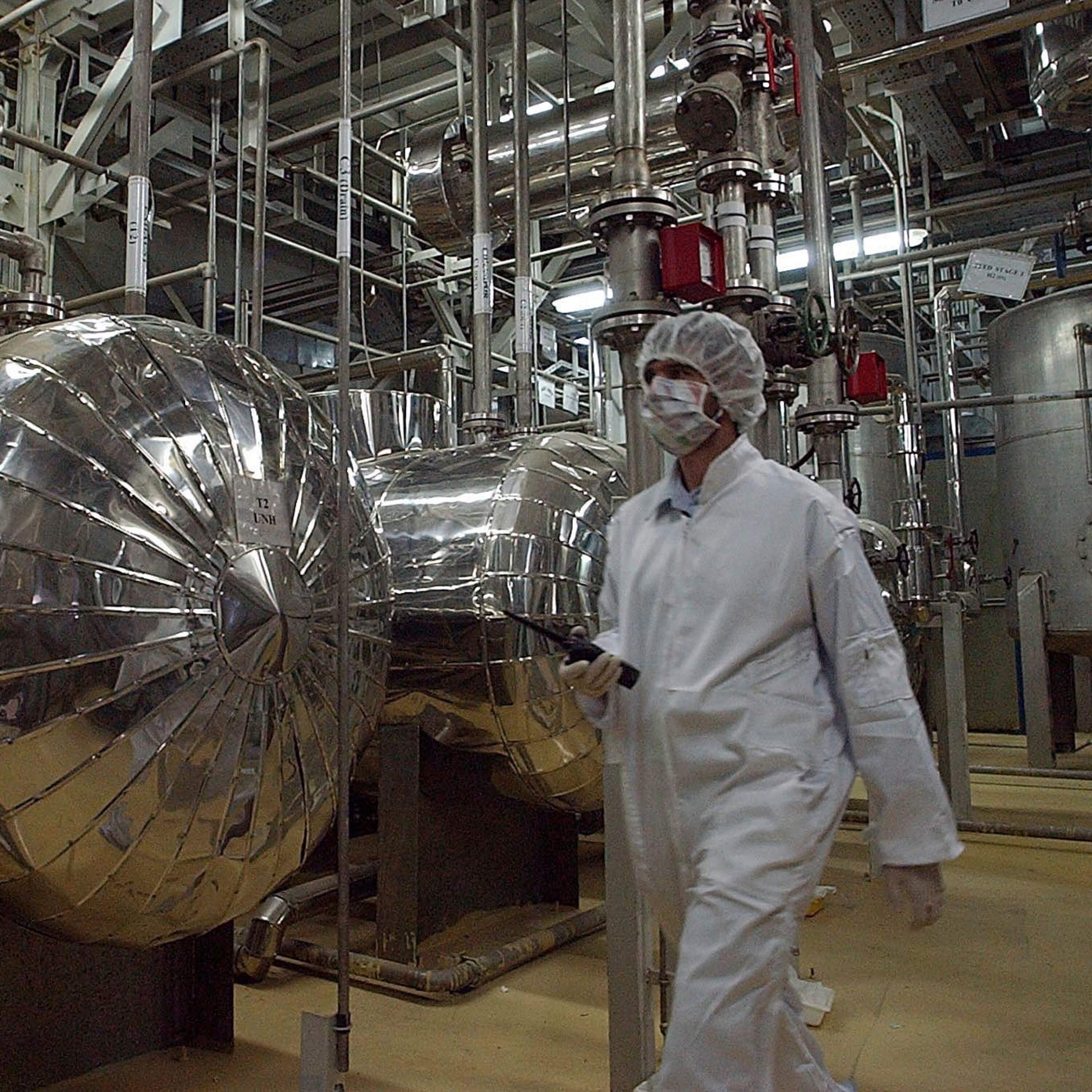
Experts say Iran has enough highly enriched uranium to create 10 nuclear warheads. The stockpile was not destroyed in airstrikes last June. And Secretary of State Mark Rubio has reportedly told Congress that, quote, people are going to have to go and get it. Let's get perspective from David Albright. He's a physicist and weapons expert, and the founder of the Institute for Science and International Security. Here's his conversation with Robin Young. You said this in a New York Times opinion piece, it would seem obvious, but why do they have to deal with these canisters? Well, one is it is just what the IA said. It's material that can be further enriched up to weapon-grade uranium and used to make nuclear weapons, and the sort of what we call the fissom material, the weapon-grade uranium side. That's the long pole in the tent of making nuclear weapons, and so you don't want to leave Iran with this capability that at the time of its Tuesday, maybe five years from now,
maybe two years from now, they decide to try to make a nuclear weapon, and the world maybe is very different then. Maybe it's half asleep to these kind of threats. So I think it's a residual capability that's too dangerous to leave it alone. Well, also if the Iranian government, which has been sort of protecting this, is decimated, it could be another group that comes in and get these canisters. That's been pointed out. But in that same time's opinion piece, the writer is W.J. Hennigan and Massimo Calibrecy conclude, after speaking to experts like yourself, it's no exaggeration to say the future of the region may well depend on whether the U.S. having triggered this crisis is successful in finding and securing the stockpile. That's serious. I think it is. I mean, it's Iran with nuclear weapons, with this kind of regime, would be very threatening to many in the region, and probably would start a whole chain of proliferation in countries like Saudi Arabia, maybe even Turkey, and the more nuclear powers there are.
We know Israel has nuclear weapons. The more unstable it becomes in the bigger chance that nuclear weapons could be used. Plus, if it Israel attacked Iran in June of 2025, we're now back at war. Part of the reason we're there is because this stockpile was not addressed. Of course, there's a threat of missiles that Israel feels particularly threatened by. But there's also the nuclear question. And I think if we don't settle this now, we will probably end up in another war, six months, 12 months, 18 months from now, to deal with this issue again. Yeah. Well, we've been mentioning the IAEA, you know, the inspectors. The agency's head, this is Rafael Garcia, has said recently, he's not even sure where this enriched uranium is. I mean, that's one of the problems. What are some of the others? Well, he believes that it's probably in the nuclear facilities.
He said yesterday that half of it is, he thinks is under the Esfahan Mount. The rubble, yeah. But it's, well, it's an intact facility, it's, yeah. And he also said, he doesn't know that for sure. And so you do have to worry that it's been moved. And so you, you do need to investigate this right now using intelligence services to try to understand where all this material is. Because as you point out, others could be interested in it. If, if things become very unstable in Iran, there could be terrorist interests. There could be just capitalist interests. This highly enriched uranium is extremely valuable to some states. And as I said, some terrorist groups. By the way, just in case, you know, people are just saying, what, you know, this isn't dangerous in its form or is it? I mean, could somebody bomb it and cause a conflagration? Well, it's, it's, it's, it's in thick canisters.
There's an, and there's maybe 25 kilograms or up to 25 kilograms per canister. But the material itself is uranium hexafluoride and before it is extremely toxic. And so if the canisters have been breached and the room is contaminated, you definitely want to be very careful about entering that room. Okay. Well, and the question, you know, that everyone is dancing around is the fact that this would take boots on the ground. Can you explain why? I mean, because we understand it would be troops, but maybe accompanying nuclear experts. I mean, people who know what to do when they find it. And that's feasible when, if, if the situation is stable, and the material that we believe is in the S-Found Mountain is, is a situation where the tunnel entrances were buried by the Iranians. And so a commando rate can't go, the bulldozers and trucks, they're not going to be able to do that. But if the situation is stable, where the, the people going in are protected against essentially
a strike from the Iranians, then you can do it. I think what alternative that is, I believe, Israel, the United States, you're considering is that you really try to destroy these mountain facilities. And, and then you, you try to use intelligence methods and, and then finally negotiating methods to make sure you, you've gotten it all. Yeah. David Albright, physicist, weapons expert, founder of the Institute for Science and International Security. We've got a second here. Does this keep you up at night? Uh, yes, it does actually. I mean, the situation doesn't, it does risk getting out of control. Well, we will stay in touch. Thank you very much. Thank you. Coming up next, the regional war in the Middle East is now targeting Lebanon. We dig into why after the break.
Support for here and now any time comes from select quote, if you're new to life insurance, you're not alone. Thankfully, there's select quote. For over 40 years, select quote is helped more than 2 million Americans understand their options and get the coverage they need. That quote takes the guesswork out of finding the right life insurance policy. Life insurance is never cheaper than it is today. Get the right life insurance for you, for less, and save more than 50% at selectquote.com slash anytime. That's select quote.com slash anytime. The Israeli Defense Forces continue attacks on Lebanon. Today, it struck an apartment building in central Beirut, the second strike in the Capitol since the war began. The UN now says that nearly 700,000 people in Lebanon have been displaced from their homes. Israel claims to be targeting Hezbollah strongholds. Hezbollah is backed by Iran and launched drones and missiles at Israel after Israel and
the U.S. first attacked Iran. For more on what this escalation could mean for Lebanon, we reached out to Farwa Zerges. He's a professor of international relations at the London School of Economics. He's a professor of international relations at the London School of Economics. So there's a long history here between these groups, but most recently, when Hezbollah started attacking Israel from Lebanon to avenge the death of Iran's supreme leader. From your point of view, how serious is this latest round of violence that's displaced now as we said 700,000 people in Lebanon? Well, I think Lebanon now is in the eye of the storm. I think Israel has used Hezbollah's retaliation against the assassination of the supreme leader in Iran as a justification to launch all out war against Hezbollah. What we need to remind your listeners is that since the ceasefire was signed more than a year ago, Israel kept attacking Lebanon on almost daily basis.
Israel occupies five major hills in southern Lebanon, Israel violates Lebanon's sovereignty on daily basis. Since the ceasefire was signed more than 13 months ago, Israel has killed hundreds of Lebanese and injured more than a couple of thousand Lebanese. So even though Hezbollah's decision to retaliate against the American Israeli war against Iran was reckless, and Hezbollah's decision did not take into account the human and the political and economic costs of Israel's retaliation. Hezbollah made it very clear in the past 13 months that Israel's continuing attacks on Lebanon will not go unanswered. So here we go again. In this ceasefire you're referring to, 2024, there was a similar eruption of violence between Israel and Hezbollah related to the war in Gaza. What I want to ask you about now is Lebanon's response to this conflict because after Hezbollah
started attacking Israel, the government of Lebanon made some pretty major steps saying Hezbollah's military campaign was illegal. Tell us about that and why that is such a significant step. Well, the Lebanese president, Josef Houn and the prime minister and a Wef Salam are very angry with Hezbollah because Hezbollah's decision to retaliate was not really the Lebanese government was not consulted and the Lebanese president made it very clear that the decision by Hezbollah to retaliate risks basically all out to by Israel against Lebanon and the Lebanese government has decided now to ban Hezbollah's military and operational activities in Lebanon. There is a real danger of domestic instability and even civil strife if the Lebanese government decides to really try to act and then Hezbollah's military activities because Hezbollah is
a major power in the sense that even though its capabilities were degraded during the 2024 war with Israel, it continues to have major operational and military capacity as the last few days have shown. Even Israeli leaders are surprised and shocked by the ability of Hezbollah to really respond to Israel's attack and far missiles at the very heart of Israel's military bases in Israel and also on the Lebanese Israeli borders. So you're saying that the military power is still quite strong. What about Hezbollah's political power? It has a major network of social services and schools and healthcare facilities. I mean, my understanding over the years has been that Hezbollah kind of de facto was the government. Is that changing? Is public opinion turning against the group? Well, I mean, I think what we need to understand is that Hezbollah is deeply embedded in a very
massive social and political context in Lebanon. Hezbollah has a support of almost 2 million citizens in Lebanon, who basically mainly the Shi'at community in Lebanon. I think what we have seen in the past one year or so is the decline of Hezbollah's popularity in Lebanon, particularly among the Christian communities and the Sunni communities. But I would argue that its base of support within the Shi'at community remains very strong. So Hezbollah is not just a, you might say, a military organization. Hezbollah is a major political and social movement in Lebanon and that's why any kind of clashes between the Lebanese army and Hezbollah could really trigger civil strife. And that's why the Lebanese government is very cautious and very concerned about any major confrontation with Hezbollah. Yeah. Lebanon is asking for direct talks now with Israel to end the fighting. I'm curious if Lebanon is strong enough to root out Hezbollah without sparking a civil
war, the kind that you mentioned. I think you'll make it sound. Your question is that somehow this is really Hezbollah versus the Lebanese government and Israel versus Hezbollah. What we need to understand is that Israel has been striking Lebanon non-stop since the ceasefire in 2024. The Lebanese authorities have pleaded, have urged the U.S. government and the French government to basically convince the Israeli government to stop its attack on Lebanon, to pull out of its occupation zones in Lebanon. And the Lebanese government have promised that if Israel basically discontinues attacks and pulls out of Lebanon, the Lebanese government will move forward and try to basically disarm Hezbollah. In fact, Hezbollah said, quote, unquote, all along, that Hezbollah is willing to basically come to an understanding with the government, but only when Israel stops violating Lebanon's
sovereignty and only when Israel pulls out of southern Lebanon. So far, we have not really seen any major American intervention. We have not really seen any major change. I doubted very much whether President Trump or his administration will basically try to pressure Israel to stop its attacks on Lebanon. And final point on this, what I fear is that what Israel is trying to do is to really force the Lebanese government to basically move against Hezbollah, triggering civil strife in Lebanon. Because in Israel's point of view, that's the only way it could really deliver a fatal blow to Hezbollah. So considering what you just said, do you see any viable off ramp to end this war, either the war directly in Iran or the one that is spread now across the Middle East? The American Israeli attacks on Iran are no longer a limited war against Iran. Now you have a region-wide conflict, not just between Iran and the United States and Israel,
but also in the Gulf, in Lebanon and Iraq. I would not be surprised if the Houthis in Yemen do not join the war in the next few hours and next few days, point one. Point two, even if the war in Iran ends, Israel will not end its war in Lebanon. Israel now has a justification from its point of view to really move against Hezbollah launching a massive ground attack in order to deliver a fatal blow against Hezbollah. And in this particular sense, in fact, what I fear the most is that Lebanon now isn't the eye of the storm and the massive, as you said, it's a massive humanitarian situation. Israel is punishing the entire population of South Lebanon, of the Baka Valley, of the Dahlia in Beirut in order to exert more pressure on Hezbollah. So sadly for Lebanon, it seems to me that Lebanon is basically pressed between Iraq, the Iraq of Hezbollah's unwillingness to disarm and a harder place, Israel's decision to relaunch
all out to, in order to weaken and defeat Hezbollah. Fahwa Zajez is Professor of International Relations at the London School of Economics, author of the Great betrayal, the struggle for freedom and democracy in the Middle East. Professor, thank you so much for your time. I appreciate it. Thank you. Coming up, a cross-country skier snags her third gold medal, making her the most decorated American Winter Paralympian, details after the break. This message comes from Babel. Babel's conversation-based language technique teaches you useful words and phrases to get you speaking quickly about the things you actually talk about in the real world, with lessons handcrafted by over 200 language experts and voiced by real native speakers.
Start speaking with Babel today. Get up to 55% off your Babel subscription right now at Babel.com slash NPR. Spelled B-A-B-B-E-L dot com slash NPR. Rules and restrictions may apply. It's day five of the Paralympics, so we called up CBC Sports Digital Host and Bronze Metal Winning Paralympian, Allison Lang, to break down the latest highlights with Robin. I have to apologize in advance going to start by asking about hockey and maybe sensitive. The US had two gold medal wins in the Olympics after beating Canada and both men's and women's finals so sorry, but how are the US and Canadian hockey teams faring in the Paralympics? Yeah, that is a fair question. You know us Canadians. We love our hockey. And both Canada and the USA are undefeated in this tournament so far. And both play in their semifinal this Friday, Canada vs China and USA vs Czechia. And if both win, it will be another Canada vs USA gold medal showdown, of course similar to the Olympic Games.
You did win, but the Paralympics are hoping for a third time in the charm for Canada. Revenge. Revenge. Just real quick, hockey is different in the Paralympics, men and women are on one team. Yeah, Paralympic ice hockey is officially a mixed gender event, meaning up to three women can hold a roster spot. And in Milano there are two women on the teams currently. One is on team Japan and the other is on Slovakia, but unfortunately neither of them have hit the ice this tournament. However, there is a movement right now to get women's pair of ice hockey as an official event for hopefully future Winter Paralympic Games. Yeah, well because it's you know put them on the team, but then they don't play. I mean, come on. Anyway, okay, so let's go to curling, also has a mixed doubles, two big matches to decide the medal winners gold and silver played and that was settled, but then there was a bronze match. How did the Americans do in the bronze medal game today? Yeah, I hate to break it to you, but Latvia came out on top. So yeah, mixed doubles made its debut at the Paralympics for the first time.
This is actually Latvia's first Winter Paralympic medal. So that's exciting for them, unfortunate for you, but it doesn't mean that Canada is actually seeing USA coming up. We are in a face off in the mixed team round robin on Thursday. Okay. Tell us though about, I mean, I'm really asking you to tell me did the team USA win? And I understand they won three gold medals today. Yes, they did. Team USA is off to a great start to the day. Oxana Masters and Jake Attacov took home gold in women's sitting and men's visually impaired with Sydney Peterson winning the women's standing. And I don't know if you know Oxana Masters story, but she is so inspirational. She was born in Ukraine with birth defects to radiation, took a couple years in orphanages and then was adopted to a couple in the States. And then she, at the age of seven and by 14, she had to get both her legs amputated because of the radiation and the side effects that were occurring. And she started as a summer Paralympic athlete by Rowan fell in love with it.
And then that transition, she's now a summer Paralympian and a winter Paralympian. And she hit a record of 21 career Paralympic medals. This is the 11th gold she's got. Wow. I just, you know, we only have a few seconds here, Alison. You know, it's grown so much. You're such a part of it. A medal winner yourself must be something to watch. Oh, 100%. And that is a huge part of what we're advocating for now is, you know, we watch the Olympics. We need this excitement for the Paralympics. There is a huge Paralympic movement right now. These athletes are phenomenal. And yeah, everyone better tune in. Okay. CBC sports digital host Paralympian herself, Alison Lang. Alison, thank you. Thank you so much. Here and now any time comes from NPR and WBWR Boston. Today's stories were preached by Sam Rapleson, Jill Ryan and Jenna Griffiths. These editors were Michael Scotto, Cat Welch and Thomas Danielian, technical direction
from Caleb Green and James Trout. Our theme music is by Mike Musketto, Max Liebman and Chris Bentley. Our digital producers are Alison Hagen and Grace Griffin. And the executive producer of Here and Now is Alan Price. Thanks for listening. We'll see you tomorrow. This message comes from Schwab. At Schwab, how you invest is your choice. Not theirs. That's why when it comes to managing your wealth, Schwab gives you more choices. You can invest and trade on your own. Plus get advice and more comprehensive wealth solutions to help meet your unique needs. With award-winning service, low costs and transparent advice, you can manage your wealth your way at Schwab. Visit Schwab.com to learn more. This message comes from Bombas.
Your feet hit the ground in average of 2,000 times in a mile. Bombas sport socks are designed to support you every step. Sprint to Bombas.com, slash NPR and use code NPR for 20% off. This message comes from Mint Mobile. If you're tired of spending hundreds on big wireless bills, bogus fees and free perks, Mint Mobile is for you. Shop plans at MintMobile.com slash switch. Taxes and fees extra. See Mint Mobile for details.
More episodes
More from Here & Now Anytime

The story behind the photo that captures the horror of 9/11
Here & Now Anytime

The conservative movement, one year after the killing of Charlie Kirk
Here & Now Anytime

9/11 and the long shadow of Islamophobia
Here & Now Anytime

Israel faces global outrage over West Bank violence
Here & Now Anytime