Loading...
artsperforming
The Salt Stones: Seasons of a Shepherd’s Life with HELEN WHYBROW
About this Episode
Have we forgotten how to truly participate in the natural world? What can the ancient practice of shepherding teach us about ecological healing? How does physical labor connect us to the land, memory and belonging?
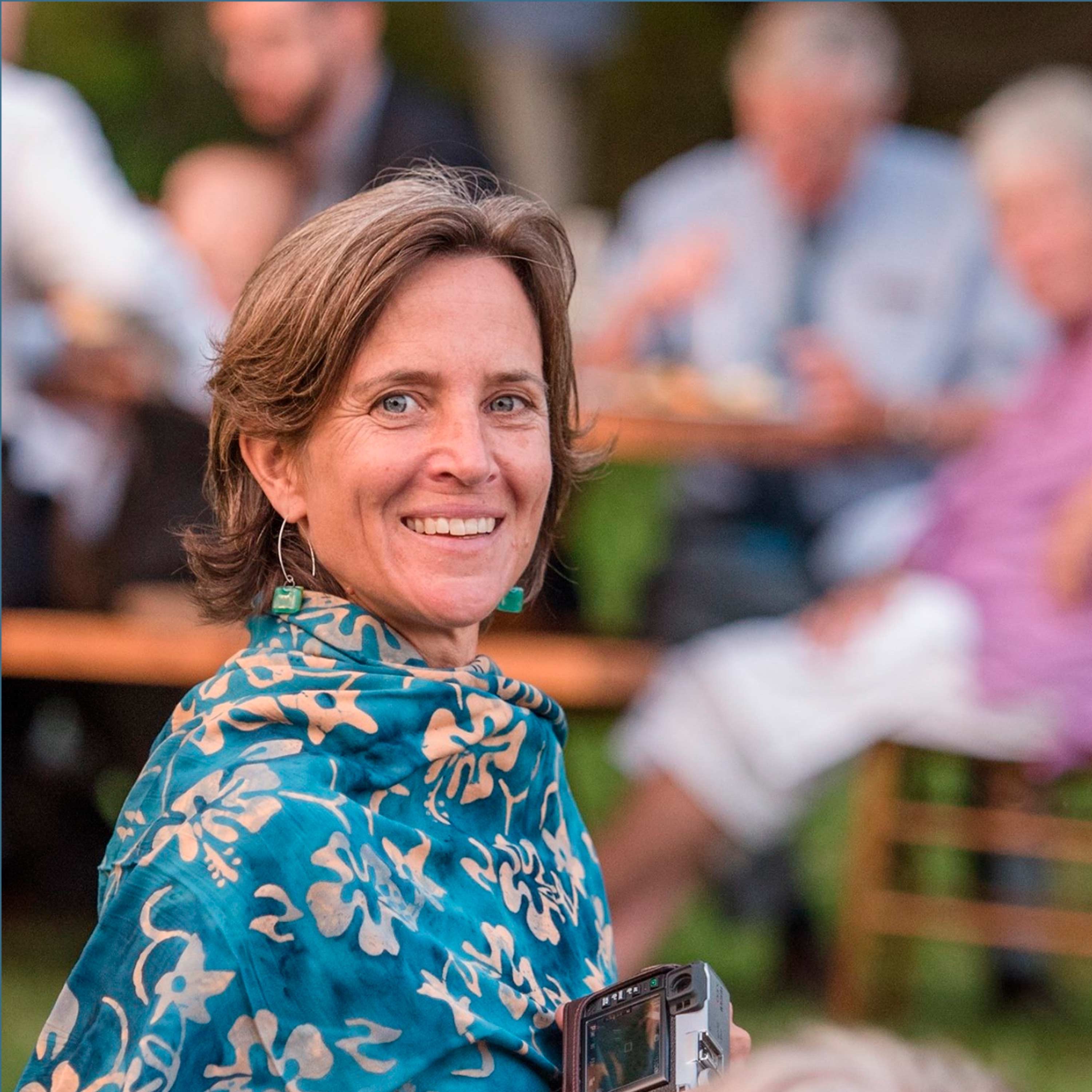
In this episode of the Speaking Out of Place podcast, Professor David Palumbo-Liu speaks with Helen Whybrow about her book, The Salt Stones: Seasons of a Shepherd’s Life. Besides being a detailed account of the day to day, season by season life on her farm, where she and her family raise sheep, build a broad community, and maintain Knoll Farm, a center for activists, writers, artists and others to share ideas on how to promote healthier and more just ways of living together and in the environment, The Salt Stones is at base about the ways we are losing a sense of belonging, not only with others and with other forms of life on this planet, but also with the cycles of existence, of life and of death. Whybrow shows time and again that it is mostly a matter of developing ways of seeing and noticing what is all around us, and learning about and respecting the ways that generations of people and non-human animals have existed together in sustainable and mutually-dependent ways.
Helen Whybrow is a writer, editor and organic farmer whose book about shepherding, land and belonging, The Salt Stones, was longlisted for the National Book Award and chosen as a New Yorker Best Book of 2025. Her other titles include Dead Reckoning (W. W. Norton, 2001) and A Man Apart (Chelsea Green, 2015). She has a master’s in journalism and has taught writing at Middlebury College and the Breadloaf Environmental Writer’s Conference. She and her family farm and steward a refuge for land justice at Knoll Farm in Fayston, Vermont.
(0:00) The Salt Stones
(2:50) A Lifelong Love of Land and Language
(6:50) The Cord: A Story of Lambing and Life
(13:40) Literary Influences and Jean Giono
(18:15) The Erased Work of Nature
(20:30) Radical Intimacy and Participation
(23:45) Measuring Diminishment and Listening to Nature
(25:15) Lita the Ewe and Complex Ecosystems
(29:17) Kulning: The Lost Art of Herding Songs
(32:15) Embodied Memory and Physical Labor
(37:45) The True Meaning of Belonging
(43:30) Radical Hospitality at Noel Farm
(46:15) Kinship
https://speakingoutofplace.com
Bluesky @palumboliu.bsky.social
Instagram @speaking_out_of_place
Hosts & Guests
Transcript
Today gives me special pleasure to speak with Helen Wybroe about her book, The Salt
Stones, Seasons of a Shepherd's Life.
Besides being a detailed account the day-to-day season-by-season life on her farm, where she and
her family raise sheep, build a broad community, and maintain null farm, a center for activists,
writers, artists, and others to share ideas about how to promote healthier and more just
ways of living together and in the environment.
The salt stones is at base about the ways we are losing a sense of belonging.
Not only with others and with other forms of life on this planet, but also with the cycles
of existence of life and of death.
Wybroe shows time and again that it is mostly a matter of developing ways of seeing and
noticing what is all around us, and learning about and respecting the ways that generations
of people and non-human animals have existed together in sustainable and mutually dependent
ways.
Speaking out of place is produced in collaboration with the creative process and is made with
support from Stanford University, I alone am responsible for his content.
We hope you enjoy this and other episodes.
Please help support speaking out of place by subscribing via our website, speakingoutofplace.com,
following us on Instagram and following me on Blue Sky.
You can give me your feedback and suggest people to invite and topics to cover.
Also, please check out my book of the same title, published by Hey Market Books.
Kiyanka Yamata Taylor calls the quote, the exact book we need for the troubled historical
moment through which we are living.
Welcome to the podcast I'm delighted to have you on.
The book is just amazing and there are certain key themes that we'll touch upon, but why
I love about it is you purchased these themes from so many different angles.
I'd like to start with two questions actually.
First, tell us a little bit about yourself and how you came to write this book and what
was the main story you wanted to tell and then talk about this really incredible opening
scene in the book where you're delivering these two views and it struck me as being an incredibly
gripping way to get the reader into the text, but it also introduces two very powerful
and twine themes that of life and that of death and very important that your book talks
about the manners in which we live and die and how important it is to think about and
reflect upon these two things and how your experience as a shepherd helped you to understand
this in a very special way.
So two questions again, generally, who are you?
How did you come to write this book?
What was the main impetus in the main story you wanted to tell them, then let's talk
about the chord?
Thank you.
Thank you so much for those questions a little bit about myself.
I think what's relevant in relation to this book is that I grew up on a farm.
I grew up very connected to a piece of land on the Connecticut River and the Northern
Connecticut watershed in New Hampshire and my two deepest, primal loves, my whole life
have been words and language on the one hand and land on the other.
And I've always been fascinated by how land shapes identity and shapes us in shapes culture
and then vice versa, how we shape land through our own caring for it and our regard or disregard.
And so those have been the studies of my life, both as a reader and a writer and also
as a practitioner.
And when I was in my early 30s, I came to the second piece of land that I've deeply fallen
in love with, which is where I live now and I've been here for 25 years.
It's in Central Vermont, very mountainous piece of land.
And this is where I've been really quite obsessed, I would have to say, with the idea of
pastoralism and how sheep and grazing animals can become actually a tool for land restoration
because we hear a lot about how grazing animals in many parts of the world have degraded
the land and that's certainly true and that can happen quite easily if the carrying capacity
of the land cannot withstand all of those little mouths, eat all the vegetation.
It leads to erosion and desertification and all kinds of other other problems of land degradation.
But there's also this incredible history of pastoralism in human culture, right?
We've been in relationship with grazing animals since before we were farmers.
We've been in relationship with them 13 or 14,000 years and we first domesticated the wild sheep
and goats in area that's probably now turkey that sort of part of the world
by bringing these wild animals out of the mountains into the village
and keeping them there to collect their fiber and to tame them and to birth their young
and to have milk and meat and then to walk with them back to the mountain areas
where the pastures would support their life.
So the pastoral peoples around the world since ancient times to now,
their animals are not just a source of meat or milk.
They are really completely interwoven into their sense of well-being, their sense of identity,
their culture, their language, their mythology, their idea of currency and exchange
and their understanding of the world where they live.
And so this has really fascinated me and captivated me and I read a lot about it
and have experienced parts of it in different places where I've traveled.
So I really wanted to write about that, but I didn't want the book to be abstract
or strictly journalistic.
I wanted it to be very visceral and practical and rooted in my personal experience.
And so many people call it a memoir,
but it's not really a memoir in the sense that it's not really so much about me and my life.
It's more about my practice of being a shepherd and all the things that it has taught me
and all the things I think about as I'm moving around with the sheep.
So that's a perfect description.
And I really liked the way, especially the last few words that you said about it's not being your story,
but your story is intertwined with everything you just mentioned.
And actually one of the passages I was going to read was about
you describing the way sheep move through the land.
And that's just amazing.
But before we get to that, let's talk about the chord.
Okay.
Yeah, so the chord is the chapter that begins the book.
And it's actually one of the earliest pieces that I wrote over the two or three years
that I was putting these stories down on the page.
And it's a story about, and I can read part of it if you like.
I love that.
Please, yeah.
The setting is our farm and I'm there alone.
My husband is traveling and my three year old was to sleep in the house.
And I very intentionally began and ended the book with lambing season
because it's the essence of being a shepherd.
It's the heart of the matter.
It's where it begins.
And it's the most tense period of any shepherd's life.
And out in the barn helping this difficult delivery of a you who's first thing twins.
And I've been out there a long time and it's snowy and cold.
And I can read just a little bit from the center of the story if you want.
I step back from blue, blue is the you who's giving birth.
Stand up and rinse my arms.
Her twins are jammed in the birth canal like tangled tree branches and a narrow stream
during spring flood.
The natural birthing position for a lamb is like a diver.
Head between front limbs, shoulders forward and streamlined for the sprint to air.
When the arms are back, the shoulders are too broad for the opening.
This is the problem with the first lamb, I think.
The second lamb has its feet over the first lamb's head.
And its own head is somewhere farther back in the womb.
Most likely, those were its back legs I felt, a breach or backward birth.
A breach birth can be delivered,
but there's a high chance that the lamb will inhale fluid on the way out
as the umbilical cord is stretched and breaks.
Then it's unlikely to survive.
When our daughter, Ren, was born, our midwife lifted her to my chest
and Peter cut the cord near her belly.
In my exhausted state, where images took on a strangely supernatural intensity,
I remember thinking how thick the cord looked,
like a sinewy tree root you find while digging.
The kind that resists every effort of this fade,
something muscular and undeniable.
A lamb's umbilical is as translucent and soft as a bit of milkweed down.
I've never had to break or cut a cord.
It always happens on its own as the lamb slips out of its watery home and onto the hay,
becoming a creature of the breathing world.
This astonishes me that the cord that sustains life could be so thin.
Perhaps so being of a creature that's closer to the wild.
You would have to lick the birth membranes from the lamb and be on her way
to leave little trace behind for predators to smell.
The lamb's ability to get to its feet and follow its mom
within a few minutes of being born is an evolutionary imperative.
Would blue dye in the wild, I wonder?
Probably yes.
No doubt all these thousands of years are humans have been shepherds
and helped use give birth have tweaked the evolutionary arc
so that not only the easy birthers pass on their genes.
A nomadic shepherd would have helped a birth
so that the whole flock could more quickly move out of the wind,
get away from predators or find the spring grass.
Only in the worst cases would they have abandoned a laboring you
and unborn lambs to the wolves.
On Vermont hill farms like ours,
most of which were self-sufficient by economic necessity
well into the 20th century.
Another live birth would have meant hope for a family
that faced spring with little left but potatoes
and cabbage in the cellar.
The peaks surrounding our farm tell this story,
scrag, stark, mount hunger,
while shepherd's brook drains their slopes to the mad river.
Sheep also meant clothing and blankets
during the long period of history
when wool was the only primary source of cloth
and every farm woman knew how to make home spun.
Those are the practical reasons
but I know there were and are
more important reasons shepherds would do everything
to assist a birth.
This ancient primal thing of caring for a flock
is ultimately about human attachment.
Blue's eyes are weirdly white, her breath shallow.
She rests her horns against the wall and goes still.
Inside her womb, I trace shapes of the up to be born
with my fingertips over and over
guessing their anatomy allowed, front foot, nose, back foot,
a lock picker in the dark.
I have to be absolutely sure before I pull.
A faint noise comes from the doorway
where a dim light spills from the barn into the sheepshed.
Ren, who is three, has navigated the dark snowy path
from house to barn in her dinosaur pajamas to find me.
She comes around the corner tentatively with a worried look
then runs quickly down the steps with arms out
when she sees me crouch there.
I have only glanced her way.
My face, I'm sure, is a mask of concentration.
Ben climbs onto my back and her cold hands
find the warmth of my neck, the teeth by Parker Hood,
her two big boots dangling from sockless feet.
Since her father was away at bedtime, I told her,
if you wake up in the night and I'm not in my bed,
then look outside.
If the barn lights are on, I'm out there
and you can come out.
I'll leave your boots by the door.
I honestly wasn't sure she would figure it out,
but I hadn't come up with any better options.
Are there babies she whispers close to my ear?
Yes, soon I say.
I leave blue and put rent on a hay bale so she can watch.
I drape my huge coat around.
I can't take her back to bed.
We are in this together now.
The first time she saw a birth,
she was two months old,
strapped to my chest under my downcoat
as I worked to clear a lamb's airway.
Her tiny head so close to my hands
that I was afraid of hurting her.
She is old enough now to observe more closely.
I wonder if I should warn her
about how seeing blood can be scary
and how an lamb is born.
It's normal for it to be wet and limp,
sometimes coated with a bright, sticky yellow feces
that looks gross.
And sometimes the lamb is not alive.
So that's the middle section of it.
That's more to come after that.
You chose the passage so well.
It gives the listeners such a good sense of how you write
because it's all about entaglement, entwinement connections
and the amount of information in a short passage
of all sorts of different kinds of your personal relationship,
your daughter,
how you came to understand this,
the history of birthing and all this
and use that process.
It's all seamless.
It creates a kind of hole
and you develop a rhythm and a kind of environment,
to say such that you could pick the book up
and just spend any part and find something of that nature.
So I have so many questions to ask you,
but I'll start with one about literature
because throughout your quote,
as you all know,
and remembering that another part of your life
you were a publisher,
I'd like to talk a little bit about the role of literature
in your work.
And I noted when I got to the acknowledgments
which come at the end,
you just have a ton of writers that you're quoting
and see this person and that person
and they're not of the same generation
of the same nationality.
So I hear all these other voices coming through you
and Jean-Giona wrote very much
in the same kind of pastoral mode that you do.
So tell us about how you are interacting with these voices
of other people who've experienced something
not necessarily exactly what you're doing,
but similar to it in one way or the other.
Thank you so much for that question.
I love that question.
I definitely am a writer
who feels most aligned and alive
when I'm in conversation with other writers.
And so no matter what I'm working on,
I have a big stack of books by my desk
and they might be related to the subject
and they might be not related at all.
And it's just something about that writer's voice
and approach to any subject
that enthralls me and excites me.
And I think, oh, I want to like understand
how they're using language here.
And so Jean-Giona was definitely
one of those great loves of mine
and he's not widely read anymore
but he was a very well-known French novelist
in between the World Wars,
lived in Provence and wrote about peasant life, primarily.
And was very concerned with the disintegration
of peasant life and the way in which the rural life
was becoming marginalized
and more and more difficult to sustain.
He was a pacifist
and he sheltered a lot of people during the occupation
by the Nazis.
He was jailed for being a communist
which was something I'm sure that happened a lot at that time
but he was most of all just a humanist
and was very concerned with how people
and also nature in rural Southern France were surviving.
And so his writings vary alive to me in that way.
It's very eccentric even.
And yet there's almost like physical presence
that I really appreciate.
And so there's a little book called The Serpent of Stars
that I discovered right around the time
when that birthing story was happening
when Ren was a little girl actually a couple years before
that I discovered this little novel
called The Serpent of Stars.
And it's about these shepherds who go into the Alps
and they perform a play
and it's this very sort of elemental, mysterious moment
where they all come together
and somebody represents the mountain
and somebody's the river
and somebody's the cold, somebody's the wind
and they act out their relationship to the place.
And I just loved that idea.
And so The Serpent of Stars in some ways
became a little bit of a muse for me in this book
as I wrote, I've been privileged to be a nonfiction book editor
for most of my adult life.
I do it in a very sort of part time way
because farming takes up most of my life.
But I feel like I've been lucky enough
to really be in conversation with a lot of great writers
over the year.
Yeah.
Yeah, I love the word that you use eccentric
because a lot of your book is about questioning
how we got to be centered in the way that we are.
In other words, how is this centered, which is not natural, right?
But it's the creation of the erosion precisely
of alternate ways of being in the world
such that we've naturalized
this very narrow notion of things
and your book does so much to restore our ability
to sense other things.
I kept on underlying, I think you use the word notice
a lot, which I think is really important
because we just miss so much
because we've been trained not to think about it.
There's so many things that you write about, which seem both
so natural but also miraculous things
that one would never think of at least not somebody
not familiar with farming life.
For example, you write sheep not only eat to nurse themselves,
they magically create the next year's movable feast
as they go.
They're hooves subtly and gently till the ground,
disperse grasses and stimulate dormant clover
and veg to sprout.
They make pockets for rain to collect in dry ground
and they open the tatch and cold ground
and they leave perfectly pelted compost
in the way of dung everywhere they go.
So you talk a lot about the movement and the rhythm
and seasons as precisely life giving.
So tell us what kinds of things we miss
when we only look at animals or vegetables
simply as objects and commodities.
And I'm thinking about how Marx talks
about the erasure of human labor,
it takes us form these fetishized objects
and something I think is going on similarly
in terms of the way that we're oblivious
to the work nature does.
You had that wonderful story about how
you were dinged for advertising, lamb that you were,
and I have to tell you the stories,
one of my most embarrassing stories,
but it illustrates what you're talking about
and what I think I'm talking about.
When our son was very small and we're in Palo Alto,
you know, Palo Alto, very much into,
let's find out what the indigenous people were living like.
And so there was this field trip
and then overnight several days,
not maybe two or three days out and some preserve.
And we were going to teach the children,
you know, what was like to forage.
And you will not believe this
or maybe you will, which would be said.
As a parent, we were charged to go to this freezer
trunk that we grew along
and take out these frozen game hints
that were all wrapped in plastic
and there's like Eastern, hide them in places
and so children go out and become Indian and find.
But I think this is exactly what we're talking about,
this idea that we just go to the store and buy it
and everything that goes into the process
of creating that life that we consume or X number of dollars.
So talk about all this things.
Yeah.
Oh, wow, that story is just in so many,
on so many levels, right?
And such a great illustration of modern American life.
Yeah, where everything comes wrapped in plastic, right?
Literally everything comes wrapped in plastic
and we barely ever know its origins.
And I think one of the concepts
that's really at the heart of my life and my writing
is this idea, not just of noticing,
but participating in one's surroundings
and that this act of participation
is what creates intimacy and creates belonging.
And I think that's true in human relationships
and being present for someone
is a radical act of intimacy, actually.
And it's something that we with the internet
and social media and online and now AI,
we are doing less and less of that in person.
Radical act of intimacy, which is literally to just show up
and participate in somebody's life
and their conversation and to make eye contact
and say, what's happening for you?
And I think that the same is true of nature.
Like nature is so infinitely complex.
We will never fully understand this planet that we live on.
And it's very humbling to be out there
in the woods or the pastures with the animals
and to even make any attempt at understanding
the complexity of it.
And yet instead of that feeling discouraging,
my experience is it feels incredibly joyful.
And full of wonder and full of a sense of wholeness.
Like here I am a part of this absolutely intricate intelligence
that I don't understand, but I'm an extension of it.
I'm part of it.
My actions have reactions in nature
and the other way around.
And I really think that regardless of how far
any one person in their personal life gets from nature,
like even if you're an entirely urban person,
you spend a few days sitting beyond a computer
and walking on concrete.
I think if you are put down on a healthy ecosystem
and then you're put down on a very unhealthy degraded
ecosystem, you would still be able to feel the difference.
Don't need any training to feel the difference.
It's in us as biological creatures.
We can tell when something's healthy and when it isn't.
And I think that being participant and being curious
about natural spaces is not only essential
for the future health of the natural world,
but it's essential for our own health as well.
Like they just go hand in hand.
You have this uncanny knack of anticipating everything
I'm going to ask you because you said before
you mentioned about the sheep walking
and the pastoral life.
And I had that quote next to ask you.
So this is what I was going to read to you next.
I'm going to read yourself back to yourself.
There are two ways that I measured
diminishment in the natural world.
A world we all have the ability to see
and sense no matter where we live.
The first is ecological, the lost of vitality,
complexity and stability.
This can be studied and measured,
but it can also be perceived by simply listening
and noticing.
Nature has a voice that sings in different registers.
And in those registers we can hear health
or struggle, presence or absence.
The second way you measure diminishment
is in the human experience, the loss of beauty
of meaning, of pattern language.
These also become more available to us
as we watch and listen and take in what surrounds us.
And there are so many wonderful stories
that open onto exactly these things you said.
But if I had to one to pick, and again, there are many,
but I'm just going to pick one.
Is this story about the mother lamb?
I think Lita or Lita?
And her inability to feed her youth.
And it's a rather elaborate story,
but the way that you unfold your learning pattern
has it worth the way that you begin
to with help another person ultimately.
But try to figure out what's happening here.
And I think this illustrates exactly
one of the main points for your book,
which is we have to understand, as you say,
how complex nature is, and yet we're not clueless.
If we have certain values and certain intentions,
we will open ourselves up to different kinds of information,
different kinds of signs as it were in the world.
So tell us about Lita and how you figured out
what seemed to be a very simple thing,
but actually taps into this whole elaborate set
of dependencies.
Yeah, and that's so well said, David, about we're not clueless.
We will, if we observe.
And it's a certain type of observation.
It's an observation that I think is steeped
in humility where, exactly.
In order to solve some of the problems
that you see in nature with animals,
you need to hold the idea that you don't know.
You don't know what's happening.
And that's the only way you get to the answers.
Because things are complex enough
that you need to be looking for things
that you would never think of looking for.
I'm sure this is probably what it feels like
to be a scientist and a certain scientist.
My book covers 20 years, and I did that intentionally
so that people would feel empowered to realize,
I didn't know what I was doing either.
I came to this with a lot of questions.
And I learned through a lot of mistakes
and through simply watching things happen.
And so the story about Lida begins fairly early
in the book.
She's this beautiful, vigorous tall mother
you who has triplets.
And it's hard for for you to produce enough milk
to feed three babies.
They only have two teeth and four.
And so it's a stretch.
But she was doing great.
And the three lamps were growing like wildfire.
And then one day I noticed that she's just getting thinner
and thinner and she's ravenous.
And her lamps are ravenous.
And she's eating everything I'm giving her.
She's devouring food.
And she's still losing weight, I think I say.
And the book's something she's like shedding weight
like someone on survivor.
And so I just started watching her.
And the chapter really becomes a bit of a study
about rumination and this without going
into a whole long digression.
But sheep are ruminant animals.
And so the chew and reach you their food many times.
And that's how they are able to digest it
and turn this very woody plant material into protein
and milk for their young.
And she is swallowing her food, chewing it.
And then her cod, which is that chewed food
that needs to go up and down a few times to become
very digestible and fluid, she's just spitting it out.
She can't chew her cut.
And I've never seen an animal just spit out their cut before.
And so they start investigating like,
why would this be happening?
It's hurting her to chew.
She has like a split tooth in the back of her mouth.
And there's like going through all these things.
It's a story that really helps me tell the importance
of rumination and the relationship
between the mother and the lamb and how,
through their chewing of their cod,
they pass on so much information to their young.
It's on information about what plants to eat,
where to find them.
What's the micro flora of the soil
that becomes the micro flora of their gut,
which becomes the micro flora of their milk,
which builds the lamb's immune system,
which builds our immune system if we drink sheep's milk.
It's like this incredible and intricate connected web
that is all about these fluids and processes
and microbes in the natural world that are in us, too.
And there's nothing gross or clean about it.
It's actually fundamental to life itself.
So that was where I, as a shepherd,
learned a lot more about that whole complex system
that we're all part of.
Now, it was interesting because at various moments
in your book, I was compelled to go to YouTube
because, for example, the sharing of sheep,
do you know, I'm sure you know,
the record for sharing a sheep, Irish, obviously,
37 seconds, it was mind blowing.
It was almost like a dance.
He held the sheep and he stood
and he just knew where every bit was
and the lamb seemed to be okay with it
because he seemed so confident about it.
The other one that I was really taken by,
and I forget the exact word for this is,
I think it's a Norway,
when women sings, bring the sheep in,
tell us about that.
Yeah, so that's called Colt.
It's spelled K-U-L-N-I-N-G
and it's a form of singing
that was developed in pastoral systems
where the women and girls would take cows
and goats and sheep into the mountains
and stay there all summer long,
making butter and cheese in the sheeling system.
It was very widely practiced in Norway and Sweden
up until about the 1950s
and I'm sure it's still practiced today
but just on a less culture-wide scale.
And Colning is, it's a little bit,
I think, yodeling is maybe,
it's like, it's a form of using the voice
that can be projected over distances
in an alpine environment
because the animals are grazing without fences.
Obviously, they're in the calm environment
so they need to be called back for milking time
or they need to be moved from one place to another
or sometimes it would be two shepherds
calling to one another to relay information.
As I understand it, a very complex language
between human and animal,
human and human that would speak of what was happening
in their lives at that moment.
And so I was pretty captivated by that.
I would love it.
Have you tried it yourself?
No.
You're always learning things, Ellen.
I think this is right up your alley.
Oh, I have to say, my sheep do come to me when I call them
like even if we'd meet far up in the high pasture
if I use my voice in a certain way,
I'll come running, which I think is quite weird.
I never, when I started, I never thought
that sheep could be trained to come like a dog
but they certainly can.
Yeah.
No, it's a beautiful thing to listen to and to watch
because it reminds us of something we talked about
at the beginning of our conversation, which is art
and that we think of art as being a certain thing
highly of such as something that's taught,
but art comes from human rituals and human needs
and not just in terms of material needs
with spiritual needs too.
And the two are not separate at all.
They're often entwined in really remarkable ways.
Oh, yeah.
You dedicate the book to your mother, Mary Ruth Wybrow.
And she appears throughout the book,
but she has a whole chapter devoted to her.
And for me, it really ties together
your thoughts on your relationship with her.
But also very powerfully your thoughts about life
and how we live in the world with others.
And it's both very kind to generous,
but also very frank and honest.
And that's something I really appreciated about it
because it's such an important topic.
Could you tell us about this chapter
in your relationship with your mother
because you mentioned that you were raised on a farm
in theater form.
So tell us about the same but different
in mothers and daughters and life and death.
Yeah, thank you for asking that.
My mother was English, both my parents were English
and they both died in the past.
My mom, two years ago, just as the book was coming out.
The book was in production.
The book's been out not quite a year.
And so my mom never read the book
because she had dementia.
And it really, the story about her
is about the beginning of her losing her memory
and how the things that she was holding onto
were very much the physical rituals and asks
that she had always taken care of on a farm.
And so I write about or attempt to write
about how our bodies are not,
it's not just our minds that hold our memories,
our bodies hold memories too.
And that as the mind's memory starts to go off
and the body's memory is still intact.
And there were many things that she could do
on the farm even when she couldn't remember what day it was
like shelling peas or washing buckets
or feeding a bottle lamp, for instance.
And in those times she seemed completely herself
and intact.
And one of the things that really made me think about
is how in an agrarian society,
we've always had places for the old.
We've always had that they could do,
even if their minds weren't as sharp
or their balance wasn't as good,
they would sit on the porch and skein the wool
or weave the blanket or shell the peas.
And I think that our children now
are learning fewer of those competencies with our hands.
And so it got me thinking like what happens then
when we're old, we don't have those things
that we can do that are where the memory is embodied
in the body.
And so I think that's a loss.
I think that's something that may surprise us in ways
that we haven't anticipated.
It may be one of the many unintended consequences
of this conceptual age that we live in,
this age of electronics.
And I think there are many writers who write about this
that they're really interested in what happens
when the working class life, the life, physical work,
the life of the hands, the life of the body
is being replaced by conceptual work
and by ideas and by things that we can't touch.
And so not only are people losing those tasks
in the way of life,
but they're losing their sense of agency
and identity in the culture in ways that they've always had.
And I think obviously this shift has been happening
since the 1950s really,
but it's ratcheting up big time right now, right?
And we're in the midst of really devaluing physical work.
And I think very soon, if not immediately,
will be in an enormous crisis of just not having people
to do work because we've disregarded
how important that work actually is.
I've digressed a little bit,
but I thought a lot about my mother in that way.
If physical work was always very important to her,
it was a big part of what gave her joy.
Yeah, and I'll advertise this podcast to you
and to listeners today.
I had on scholar named Muslin Kim
and her book was about art collecting
and especially art collecting in the 50s.
And she tied it into developments earlier on
in terms of the beginning of managerial science.
And the way precisely the people with brains,
they were the ones that counted,
the people that bathed things,
obviously they were interchangeable, assembly line, et cetera.
And she said that Duchamp and the developing of conceptual art
took part in that degrading of actually making things,
but rather discovering things and these toilets.
Now there are.
You just have to make the suggestion in your brain.
So you can just think that way.
And we talked about it earlier when I asked you
about the sheep walking through the countryside
and creating these pellets of fertilizer as they go
and telling the soil at something I never thought about.
Obviously, they were doing things
that we don't think of them doing
because we've been taught to only appreciate certain things.
So I really appreciated that.
There was something else I wanted to talk to you about.
And maybe I anticipated you this time
because one of the things that started coming out to me
was how special the farm is as a place and space.
And you do a marvelous job of showing how seemingly mundane
tasks and routine point to ways of life
that happened to entire worlds.
And then when we emailed just prior to this interview,
you said, I want to talk about belonging.
And so I have your quote on belonging queued up
because I teach a course called belonging and literature.
And of course, I teach this as a first-year course
because students leaving their homes now
in this university didn't need to be able to belong.
And what I do is sort of tweak the idea of belonging
to include, well, what happens when you're placed
into an identity that you don't want, right?
Slot into this, this is where you belong.
This is not a place that you want to belong.
And it gets back to our discussion,
exit, exit, tricity, perhaps.
But this is you again quote, the idea of belonging,
what it is, what it enables, what enables it to happen
or not to happen, where and how it is found
has preoccupied me most of my life.
My practice of being a shepherd is a large part
of my ongoing inquiry into belonging.
Not just my own, but to understand what it means
for all of us in this time of profound loss
of the natural world, could you talk about belonging?
Yeah, yeah, what a brilliant idea for a class
for incoming students, I love that.
Belonging is a word that I am fascinated with.
I think it's very close to well-being,
and I think it's something that's fundamental
to one's mental and spiritual and physical health.
And I'm also really interested in how the word
belonging includes within it the word for longing
because it means that often most of the question
where we belong, and it can be a lifelong search,
not just a physical place, but a person or a job
or a culture, and so many people are displaced
and dispersed, that it's a very real pressing question
for a lot of people and very hard to answer.
And I think it includes this notion of longing
for something that you once knew,
but you can't quite touch again,
that maybe your ancestors knew,
and you have glimpsed it and you understand it,
but the sense of this longing is it's like an absence,
but you understand that it could be filled by something.
And I think that for me, a lot of the feeling
of that longing comes from the natural world.
And I know that's not true for everyone.
And people find there different things.
But for me, there's a fundamental sense
when I'm out in nature of wholeness and feeling.
I can breathe in this sort of constant questioning
of who am I and what am I doing
and this sort of ever-present self-doubt
that most writers have.
It goes well, it seems a bit of a living out there.
And I think that's been true for me ever since I was very young.
I remember really struggling in school
and feeling like I didn't have friends
and I didn't know why I was spending all these hours inside.
And it seemed like it's a piece
and going out in the woods
and just lying under these giant pine trees
and smelling the pine resin and feeling the sun
and just feeling this incredible sense of peace
and feeling like none of that was going on in my head
is important at all.
So I think this is at the heart of my book, really,
is how to design this for one another for ourselves.
Our farm is very much of a gathering place.
It's not just growing food
and doing this ecological experiment
but it's very much of a gathering place.
We talk about it, our farm is a refuge.
We also talk about it as being an anchor
for the people out in the world who are anchoring other people.
So there are a lot of people like that right now
who are on the front lines
of what's happening in this country
who are really either very frightened
and for good reason
or they're allies to people who are in need
and those people need a place to be able to go
and put everything down and take a deep breath
and take stock and talk to one another and feel
just connected to themselves.
And that's what the farm has become
is that place for a lot of people.
And it's remarkable how profound it is for people
to just step away and be in the natural world.
I've seen it over and over again.
So for me, I feel like caring for that natural world
those spaces is very important to me.
And the extension of that is that I'm caring for people
through doing that.
I don't know if you could read this
but it has no farm.
That was my next question here in Canning
because I quoted you before earlier talking about
these are things that it doesn't matter
whether you're in the city or in nature.
So I'm in Palo Alto suburb
and one of the ways that my wife and I
have reconciled to ourselves to being at Stanford
because A, it's close to the ocean,
much closer than Berkeley.
And so the ocean to us is like your farm to you
in some ways, but it also has a great arrest for preserve.
I'm going there right after we finish talking
about I go there three or four times a week at least.
And like you said, when I'm walking there,
I keep on thinking it's a miracle.
It really is a miracle.
You can look at anything and see the interdependency, right?
And when you and I were talking before
when we were setting this up, I said, slugs are amazing.
They seem absolutely inert,
but they're doing all these things with the soil
that you wouldn't think of and you think they're easy prey
but there's haste so bad apparently
they don't have any natural predators.
That's the legend.
And as you said before, it's so humbling
and being humbled is so liberating.
I was going to ask you about the farm
because I was again wondering exactly
how people who are living in New York City or whatever,
how does your farm help create these gatherings
and things that sort of replenish that?
And what kinds of things go on in the farm?
I'm really interested in terms of this,
these workshops that you're having.
Maybe you could tell us a little bit about the workshops
and the kinds of perhaps transformations
or the types of different conversations people
fall into that could only happen in that space.
But they will take back to where they live.
Yeah, thank you.
So for almost 25 years now,
we've created a gathering space for people
who are working in loosely speaking areas
of social and land justice in farm justice.
And the programs have always been tuition free.
So their fellowship-based programs
were raised money for people to come.
So there's no barrier for entry
and people come sometimes as a group
where they know each other
and maybe they're affiliated with a particular nonprofit.
But the ones that we gather,
we have an extensive network of alumni
probably over at least two or 3,000 alumni now
who recommend other people to come through the programs
and they are invited to come.
There's no agenda really.
It's bring your project, your idea.
Some people come and simply rest or walk
or sit in the field.
Some people come with a curriculum they're designing
or a book they're writing
or some very distinct project that they're working on.
Some people come and they end up networking
other people who are here
and building some new organizing,
some new initiative or something.
And we really are just creating the container.
So we're eating them beautiful food from the farm.
We have places for them to stay.
We practice what we call radical hospitality,
which is whatever you need while you're here,
we will do everything we can to provide it for you.
And in some pretty rustic space,
a lot of our meetings happen in this huge old Timberframe barn.
So where we eat, people have full access to the gardens
and the orchards and the forestry.
We put very next to no restrictions on their movement
or their time here.
It's really for them.
I think this idea of allowing people
to follow their intuition and seek what they need for themselves
is pretty profound and pretty radical.
And a lot of people completely unplug when they're here.
We do have cell service, we do a Wi-Fi,
but most people choose to unplug from the world
and that in itself.
I don't need to tell you how transformative that can be.
Yeah, yeah.
How can our listeners support the work there?
Is there a website we can go to and donate?
Yes, there's a website nullfarm.org
and that shares a lot of information
about our programs as well as the farming side of things.
Wonderful.
I invited you also to read anything you wanted from your book.
I don't know if you have another passage you wanted to read, but...
Sure, since we spoke about belonging,
maybe I'll just end with that seems like a really nice way
to end the passage that comes toward the end of the book.
A little bit more by thoughts on that.
I never thought after leaving my childhood farm
that I would ever find another place
where I felt so at home, so connected to myself.
I feared that the power and wholeness I felt in girlhood
and lost as a teen was something I would always mourn.
In shapeshifting from that deeply rooted girl,
I tested my strength as a wanderer
while always longing for the place
that I credited for my wholeness.
Then I came here.
Over the years living and moving with sheep over this hillside,
tending and attending to this place,
I thought I had simply replaced one attachment
to place with another.
But in writing my love song to this hillside,
I have begun to trace how belonging happens
and I have begun to understand how it's not attached to particulars.
Not about finding any one place,
one person, one thing that holds us.
It is not outside of us at all.
Belonging is more about the ritual
and dedicated attention within us
to something beloved that matters.
The world belonging encompasses longing.
In nature, I feel a belonging with
and a belonging to a kinship, a reciprocity,
as well as a longing for greater intimacy and knowledge
to be radically present and to be loved,
a bee longing in and for the greater world.
But this feeling can happen anywhere, I know this now.
We are participants in our own sense of belonging.
It doesn't happen automatically
and has less to do with the place itself
than our energy to receive it.
We make it happen with a mother, a daughter, a hillside,
a life work, a way of being,
through a deep commitment over time,
through our curiosity, through our merging.
Belonging is a two-way embrace.
It begins the moment some place or someone says to you,
welcome, and you receive the gift.
You set your bags down inside a door, inside a heart.
Then belonging requires more than anything participation.
It requires unpacking your bags
and discarding everything you were carrying
that you no longer need to fully embrace where you are.
Finding belonging requires a softening
of the boundaries of self.
A quest to find you are enough
becomes all at once, you are infinite.
To practice belonging is an act of resistance
against diminishment of ourselves
and of the more than human world
that offers all of us a home.
Oh, thank you so much for reading that particular passage
to close us out because it opens up, again,
to a whole universe as does your book, which is just marvelous.
We booked this program now,
but I actually used it for my Christmas reading,
and it was perfect.
So thank you so much for being on
and sharing your time with us and your thoughts
and reading, and it's so lovely to hear you read
because you write beautifully
and you read your writing beautifully.
Thank you so much for being on, Helen.
Thank you so much, David, it's been really wonderful.
Yeah.
Take care, bye-bye.
More from The Creative Process · Arts, Culture & Society: Books, Film, Music, TV, Art, Writing, Creativity, Education, Environment, Theatre, Dance, LGBTQ, Climate Change, Social Justice, Spirituality, Feminism, Tech, Sustainability
View all episodes →
The Fight for the Future: AI, Privacy & Power with CARISSA VÉLIZ
The Creative Process · Arts, Culture & Society: Books, Film, Music, TV, Art, Writing, Creativity, Education, Environment, Theatre, Dance, LGBTQ, Climate Change, Social Justice, Spirituality, Feminism, Tech, Sustainability
Apr 21, 2026·53:47·failed
Why Do We Listen to the Talkers More Than the Builders Saving the Planet? - Phys...
The Creative Process · Arts, Culture & Society: Books, Film, Music, TV, Art, Writing, Creativity, Education, Environment, Theatre, Dance, LGBTQ, Climate Change, Social Justice, Spirituality, Feminism, Tech, Sustainability
Apr 17, 2026·22:38·failed