Loading...
healthfitnesseducation
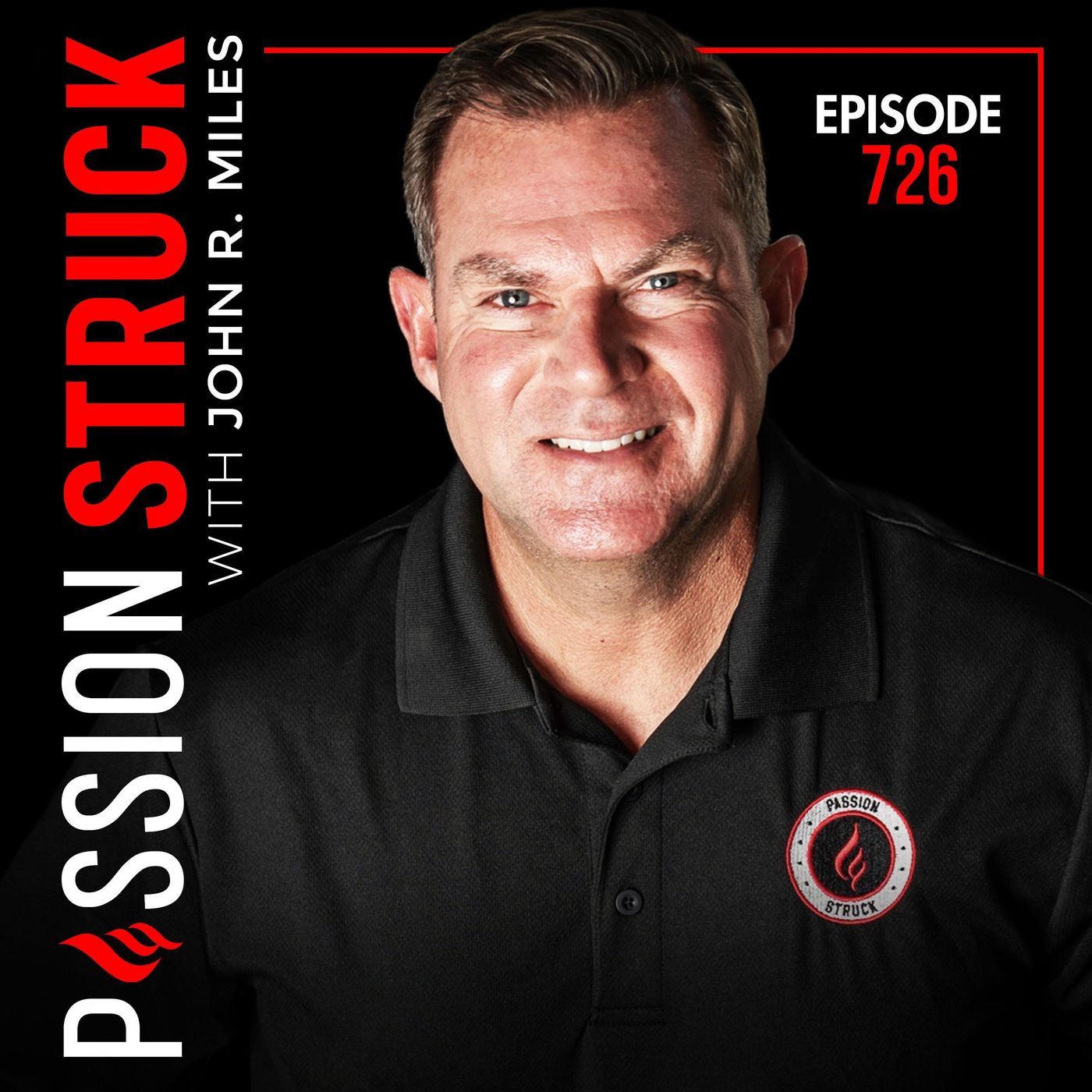
The Speech Impediment of the Soul: A Path to Intrinsic Worth | John R. Miles EP 726
About this Episode
We are taught from the schoolyard to the boardroom that our value is a variable, something that fluctuates based on our last win, our latest promotion, or our ability to remain relentlessly productive. But what happens when the "doing" stops?In this deeply personal solo episode of Passion Struck, John R. Miles pulls back the curtain on a phenomenon he calls the "speech impediment of the soul." Drawing from a life-altering traumatic brain injury at age five and his subsequent climb through the ranks of the Navy and Fortune 50 leadership, John explores the quiet disorientation that follows when we trade our voices for safety and our existence for achievement.As we approach the February 24th launch of his new children’s book, You Matter, Luma, John reveals why mattering is the "preventative medicine" the human spirit requires to stop the cycle of over-performance and invisibility. This episode is a call to end the trade and finally reclaim a sense of worth that requires no strings attached.Passion Struck is the #1 alternative health and personal growth podcast dedicated to human flourishing and the science of mattering. It is ranked #1 on FeedSpot’s list of the Top Passion Podcasts on the Web, recognizing the show’s ongoing commitment to thoughtful, human-centered conversations.Check the full show notes here: https://passionstruck.com/healing-childhood-trauma-feeling-invisible-adult/All links gathered here, including books, Substack, YouTube, and Start Mattering apparel: https://linktr.ee/John_R_MilesIn This Episode, You Will Learn
Connect with John
Support the Movement: https://startmattering.com/. Every human deserves to feel seen, valued, and like they matter. Wear it. Live it. Show it.
Disclaimer
The Passion Struck podcast is for educational and entertainment purposes only. The views and opinions
- The Shattered Window: How early life trauma can rewrite your reality and create a "performance trap" that follows you into adulthood.
- The Speech Impediment of the Soul: Identifying the hidden whisper that tells high-achievers they only matter if they are producing.
- The Maximizer’s Prison: Why modern life’s obsession with optimization and "best" choices actually erodes human dignity.
- The Luma Truth: How to shift from mattering through achievement to mattering through existence.
- The Wordless Tie: Practical tools for building a profound connection with others that doesn't rely on perfect words or performance.
- Mattering Mirrors: Why we must decouple excellence from worth to protect the next generation (and our own inner child).
- The Adult Mattering Audit: Four specific questions to help you diagnose and heal your own quiet disorientation.
- Preventative Medicine: How the message of You Matter, Luma acts as a shield for children ages 4–8 against the optimization trap.
- Pre-order You Matter, Luma (releasing February 24): https://youmatterluma.com/
- Support the Movement: https://StartMattering.com
- Watch on YouTube: Search for Passion Struck with John R. Miles
Connect with John
- Pre-Order The Mattering Effect: https://matteringeffect.com/
- Book John to Speak: https://johnrmiles.com/speaking/
- Keynotes, books, podcast, and resources: https://linktr.ee/John_R_Miles
- Children’s Book — You Matter, Luma: https://youmatterluma.com/
- Substack: https://www.theignitedlife.net/
Support the Movement: https://startmattering.com/. Every human deserves to feel seen, valued, and like they matter. Wear it. Live it. Show it.
Disclaimer
The Passion Struck podcast is for educational and entertainment purposes only. The views and opinions
Transcript
Coming up next on PassionStruck, a traumatic brain injury at 5,
fortune 50 boardrooms in my 30s, and a quiet disorientation that followed me through both.
Today on PassionStruck, we're diagnosing the speech impediment of the soul
that hidden whisper telling high achievers, if you stop doing, you stop mattering.
We're going to the schoolyard to see why age 5 is the wett cement for your child's worth.
How modern life's optimization trap erodes it, and why my new children's book,
Humater Luma, is more than a story that's preventative medicine for the human spirit.
The trade is over. It's time to be seen. Let's get PassionStruck.
Welcome to PassionStruck. I'm your host, John Miles. This is the show where we explore the
art of human flourishing and what it truly means to live like it matters. Each week I sit down
with change makers, creators, scientists, and everyday heroes to decode the human experience,
and uncover the tools that help us lead with meaning, heal what hurts, and pursue the fullest
expression of who we're capable of becoming. Whether you're designing your future,
developing as a leader, or seeking deeper alignment in your life, this show is your invitation
to grow with purpose and act with intention. Because the secret to a life of deep purpose,
connection, and impact is choosing to live like you matter.
Hey friends, and welcome back to episode 726 of PassionStruck.
In the last two episodes of our U-Matter series, we've explored how significance is shaped
from the outside in. With bearish warts on Tuesday, we examined the optimization trap.
A modern choice culture trains us to treat our lives like spreadsheets rather than stores.
And yesterday, with Daniel Ellenberg, we looked at the inherited emotional scripts that
dictate who was allowed to be seen and who was forced into silence. Today, we turn inward
to the most personal chapter of this series yet. As we approach the February 24th launch
of my first children's book, New Matter Luma, I want to take you back to where the question
of mattering first took root for me. Long before I was a Navy veteran or a Fortune 50 executive,
I was a five-year-old boy walking across a wide open spoolyard alone, wearing a black eye patch
and carrying a silence I didn't know how to break. In this solo episode, I'm pulling back
a curtain on the speech impediment of the soul, that quiet disorientation that tells us we only count
if we perform, calculate, and win. We're going to explore the shattered window, how early trauma
creates a performance trap that follows us into adulthood. The maximizer's prison,
while overachieving is often just a socially acceptable way to stay invisible.
The Luma truth, how we can reclaim mattering through existence rather than achievement,
and the wordless tie will uncover practical tools to become mattering mirrors for the children
in our lives, and for the inner child still walking that yard. This isn't just a story about
a book launch, it's a conversation about the preventative medicine our spirit needs to stop
trading our voices for safety. It's about the quiet courage required to finally say,
the trade is over, I count, no strings attached. Thank you for choosing Passion Stark
and choosing me to be your hosting guide on your journey to creating an intentional life.
Now, let that journey begin.
I want to take you back with me to a summer afternoon when I was five years old.
It's a scene most of us recognize. Neighborhood kids, thick humidity hanging in the air,
a wild breathless game of tag, we were tearing between houses, feet pounding the grass,
laughing and dodging. In that reckless, joyful way, children do when play starts pushing
every boundary, getting rougher, faster, fueled by childhood adrenaline.
And then the line was crossed. One shove from behind, a sudden weightlessness. I remember the
sensation of flying. The split second where gravity let go. Then the world exploded in sound
in glass. I went headfirst through a basement window. Shards scattered like diamonds
crossed the concrete floor. And that single, chaotic instant, the game ended. And my life as I knew
it was replaced by a traumatic brain injury that fractured everything. The aftermath wasn't just
physical pain. It was a complete rewriting of how I experienced reality. My grains rolled in
like dark endless storms. Learning once effortless became a foggy, frustrating maze. Focus slipped
away. Words, things I had always taken for granted simply wouldn't come. But the deepest wound
was the silence. My speech became severely impaired. Inside my head, thoughts still raced.
Clear, urgent, vibrant. But when I tried to speak, they emerged garbled.
Halton trapped. I felt like a heavy steel wall had slammed down between my mind and my mouth.
The harder I fought to be understood, the more exaggerated the lag became, a cruel feedback loop
of frustration. To make it worse, my vision blurred in one eye. Ampliopia set in. And suddenly,
I was the kid with the black eye patch, looking different, feeling different, utterly invisible,
and a crowd appears. I became convinced of a devastating lie. No one wanted to hear anything I
had to say. The world quieted. I shrank every day while the other kid stayed in class. I had to stand
up, feel their eyes on my back, and walk out. I crossed that big, wide open school yard alone.
Five-year-old, carrying the weight of the world, heading toward a small, isolated room,
where speech therapists waited. She didn't know it then, but she wasn't just a clinician. She became
my lifeline. She didn't only coach tongue placement, or the mechanics of a thup sound. She listened,
truly, patiently. She sat in the silence with me. And in that room, I learned about the wordless
tie, that connection that doesn't need a perfect sentence to be real. She was the first person
who didn't wait for me to perform speech, to show me that I was significant. Through her steady
kindness, she showed me that my voice, even when broken, still had value. That I still had value.
She became the first real crack in the darkness. The quiet foundation, I rebuilt my confidence on.
Yet, as I grew up, and my speech slowly returned, I realized the physical impediment wasn't the only
thing I carried. Beneath the surface, a deeper quiet endured. I call it the speech impediment
of the soul. It's that persistent feeling of not fully registering, of being unseen,
even one surrounded. I carried it into the Navy. I carried it into Fortune 50 boardrooms.
I tried to drown it out by overachieving, checking every marker of success, hoping that if I did
enough, the world would finally see me. But that quiet disorientation doesn't vanish with a promotion
or a title. It trails you into relationships. In the moments of triumph, whispering,
the old lie, you only matter if you perform. Before that window shattered, I was just a normal kid.
I blended in. I was part of the pack. But in the wake of that injury, the normalcy evaporated.
Suddenly, I was different. And in the ecosystem of a school yard, being different can be a very
dangerous thing. Kids can be remarkably kind, but they can also be unintentionally cruel. The
stairs, the teasing, the way conversations parted around me, like water around a rock. I wasn't
just the kid who got hurt. I was the kid with the eye patch, the kid whose words didn't work.
And the part that still feels heaviest when I remember it, those daily walks of shame. Every
afternoon, at the same hour, I stood up from my desk and I felt 30 pairs of eyes,
follow me out the door and crossed that exposed yard in plain view of everyone. The field
became a stage. And my only role was the broken one. I didn't want to be special. I didn't want
to be resilient. I just wanted to disappear. Pull the eye patch over my whole face and vanish
in the floorboards. When you're five or six and the world is already telling you through stairs,
teasing, and those specialized rooms that you don't quite fit, you start to believe that your presence
is a burden. A joke, you stop trying to speak because the cost of being misunderstood is higher
than the cost of silence. So you trade your voice for safety. This is where the quiet disorientation
begins. This is where we learn to hide. And for so many of us, we spend the rest of our lives
building massive, impressive structures, careers, reputations, achievements just to hide the fact
that we still feel like the kid walking across the yard, hoping no one notices us, yet desperate
for someone to finally say you still count. Hiding in adulthood really looks like literal silence
anymore. Most of the time, it's the opposite. It's loud, busy, accomplished hiding. We hide by
staying relentlessly productive, so no one has time to see the uncertainty underneath. We hide
by collecting titles, credentials, followers, or wins that act like armor, proof that we're
enough if anyone looks too closely. We hide by filling every gap with noise, meetings,
side hustles, constant optimization, so the old whisper of you don't quite register never gets
a quiet moment to speak. Overachieving becomes the most socially acceptable form of invisibility.
You're everywhere doing everything, yet still protecting that tender part inside that's afraid
it doesn't count on its own. What I have learned over the past 18 years of trying to fix why I was so
broken is that this isn't just my story. It's the hidden pattern behind countless high achievers
and the lonely, the broken, the burned out, quietly compensating for a childhood when we felt
we didn't matter. So let me pause here and invite you into your own reflection. Take a quiet moment.
Maybe close your eyes and ask yourself these four questions to help diagnose your own quiet
disorientation. No need to shout out loud. This is just between you and that inner kid who still walks
the yard. First question. Where in my life right now? Do I catch myself overperforming or overcompensating
to feel seen, valued, or safe? A promotion chase. People pleasing. Perfectionism in small things.
Second question. When was the last time I felt truly registered? Seen for who I am, not for what I
produce or achieve? And how rare does that feeling seem? Third question. If my titles, achievements,
productivity, or usefulness were stripped away tomorrow, who are the one or two people or moments
that would still make me feel like I matter? No strings attached. And the fourth question.
What early echo? Maybe a childhood memory of feeling invisible, burdensome, or different,
still whispers that my worth is conditional on what I do, rather than who I am. Sit with those
for a beat. Notice what comes up. That subtle unease. That drive to do more. To quiet the silence.
That's often the speech impediment of the soul, showing itself. Before we continue, I want to
pause for a moment. One of the deepest insights we've discussed today is that mattering is learned
through experience. Not just reassurance. It forms when a child or an adult realizes that their
presence changes the emotional weather of the room. That truth begins early. My upcoming children's
book, UMatter Luma, which launches February 24th, is designed as a tool to help children feel
that truth in their bodies. Before they learn to earn belonging through pleasing,
performing, or disappearing, I have a specific invitation for you today. If this conversation
resonates with you, if you want to help plant this preventative medicine in the lives of the next
generation, I invite you to pre-order the book right now at Barnes & Noble. Here is why that
specific choice matters. Barnes & Noble uses pre-order data to decide which books they carry in
their stores nationwide. We have a goal of 300 pre-orders to ensure this message is available
on shelves across the country. Your single order is a signal that this message counts. It is a
way for you to participate in breaking the cycle of silence. And for those of you looking to go
deeper, each episode in this series includes guided reflection prompts within the ignited life.
These prompts are designed to help you examine where your relationships circulate care
and where they quietly extract it. You can find those at theignitedlife.net. Now a quick break
for our sponsors. Thank you for supporting those who support this show.
Hey friends, there's something about March that makes you want to reset your space.
For me, that started in the kitchen, clearing out what I didn't need and upgrading what I use
every single day. That's when I brought in Caraway. What I love is how simple Caraway makes
everything. The ceramic coating means food just lifts right off, so I'm using less oil,
clean up, take seconds, and cooking actually feels enjoyable again. But it's not just performance,
it's the intentional design. The storage system keeps everything organized, and I've become
a lot more mindful about what I bring into my home. And that's why it's so important that Caraway
is third-party tested and made with high standards, which just gives me more confidence in what
I'm using every day. It's one of those upgrades you feel immediately. Caraway's cookware set is
a favorite for a reason. It can save you up to $230 versus buying the items individually. Plus,
if you visit carawayhome.com slash passion struck, you can take an additional 10% off your next
purchase. The steel is exclusive for our listeners, so visit carawayhome.com slash passion struck,
or use code passion struck at checkout. Caraway non-toxic kitchenware made modern.
You're listening to passion struck on the passion struck network. Now let's return to the conversation
and look at the optimization trap that keeps us from seeing ourselves clearly. Let's talk about the
difference between mattering through achievement and mattering through existence. Most of us have
been trained, quietly, relentlessly, to believe we matter because of what we do. I call this mattering
through achievement. It's the performance trap. You feel significant when you hit the target,
the promotion, the perfect quarterly numbers, the viral post, the spotless house, the marathon PR,
every win becomes proof that you exist. Every loss becomes evidence you're falling short.
It's seductive because it works for a while. The world rewards it, society measures it,
your paycheck, your LinkedIn profile, your inner credit. They all run in that same scorecard.
But here's the problem. It's fragile. It depends entirely on external validation. It can be taken
away in an instant, a layoff, a market crash, aging out of peak performance. When the scoreboard flips,
so does your sense of worth. You're back to that kid crossing the yard, wondering if anyone notices.
And the more you succeed, the higher the stakes become. As renowned psychologist Barry Schwartz and I
explored earlier this week, we become a culture of maximizers. We treat our lives like spreadsheets,
chasing the absolute best in every domain, only to end up paralyzed by anxiety and regret.
For decades, we've been sold a seductive promise. More choice equals more freedom. We're told
that if we gather just enough data and run the right algorithm, we can optimize our lives
into perfect satisfaction. But as Barry and I discussed on the show, the opposite is true.
We've become maximizers. We treat our time like a commodity and our lives like a spreadsheet.
We've outsourced our judgment to metrics, KPIs, and algorithms, constantly checking the dashboard
to see if we're winning. Here's the danger. When life becomes an optimization problem, your dignity
arose. If you are only as valuable as your last metric, you are, by definition, replaceable.
Barry proposes a different path. He calls it virtue-based decision-making. It means we stop asking,
what's the max utility I can get out of this? And we start asking, what kind of person will I
become if I do this? This is the antidote to the performance trap.
Mattering through achievement keeps us calculating, optimizing, and hiding behind our productivity.
Mattering through existence invites us to show up as we are right now. It is the radical shift
from seeing yourself as a unit of production to knowing that you are a center of significance.
When you reclaim your judgment, you reclaim your voice. You stop being a data point and start
being the author of your own story. Children are born wired for this truth. Watch a toddler explore
a room. They don't question whether they deserve to be there. They just are. Curious,
present, fully occupying their space. That innate sense of worth is the mattering instinct.
It's biological. Philosophers and developmental psychologists tell us it's as fundamental
as attachment. When a child's presence is mirrored back as valuable, their brain's register's
safety. When it isn't, when the mirroring is conditional or absent, the brain interprets it
as a threat. And modern life is very good at turning that instinct into a performance script.
From the stir chart in kindergarten to the stack ranking in the corporate office,
we are optimized out of intrinsic worth. We learn early. Love, attention, approval are all rewards
for output. Rades, likes, bonuses, they all teach us the same lesson. You matter to the degree
that you produce. By the time we're adults, the trade feels normal. We've internalized it so
deeply that resting in existence feels risky. We build entire lives around the performance trap
because it once protected us from the pain of feeling invisible. But protection becomes a prison.
Overachievement becomes the adult version of trading your voice for safety. And here's the quiet
irony. The higher we climb, the more we secretly fear the fall. Because deep down, we still believe
the old lie. If I stop doing, I stop mattering. This is why so many successful people feel quietly
disoriented even at the top. The boardroom looks different from the school yard, but the whisper
is the same. Prove it again and again and again. Where you vanish. But it doesn't have to stay that
way. And that brings us to why this matters so urgently for the next generation. And why?
I wrote you matter, Luma, specifically for children ages three to eight. I didn't write this book
to just tell another cute story. I wrote it to act like a shield. Developmental psychology shows us
that children arrive with an innate mattering instinct. A biological necessity is fundamental
as attachment or safety. From the moment they open their eyes, they seek mirroring, eye contact,
responsive smiles. Simple affirmations that say, you are here and your presence matters. When that
mirroring is constant and unconditional, the brain registers belonging and security. However,
when it's conditional tied to performance, grades, wins, or absent, the brain registers threat.
That early threat response wires the patterns we carry forward. Compensation with draw, the quiet
disorientation that follows us into adulthood. Between the ages of three and eight, a child's
self-concept is like wet cement. It's the precise window when they're most vulnerable to the
optimization trap. They start looking around the school yard, comparing themselves to others,
and asking the quiet question, where do I rank? If we don't intentionally plant the language
of intrinsic worth in that exact window, the world will happily hand them the performance
script later. That's the mission of UMatter Luma. It is preventative medicine for the soul.
In the story, Luma discovers that her spark, her significance, isn't tied to being the fastest,
the loudest, the smartest, or the most perfect. It's simply there because she is.
It plants the seed through gentle, wonder-filled narrative. It affirms existence before the world
convinces her value must be earned. By nurturing that innate mattering instinct at age five,
we give children an internal compass. Thirty years from now, when they're sitting in a
boardroom facing a layoff or watching their own child struggle, they won't have to rebuild from
the same silence we did. They already know I matter. Not because of what I produce, but because
I exist. As parents, educators, and leaders, we are the primary mattering mirrors for the children
in our lives. When we only celebrate the A on the test, the goal on the field, the fastest time,
the home run, we polish the mirror of achievement, but we miss the human behind it.
Excellence is what they do. Mattering is who they are. This doesn't mean we stop
encouraging excellence. It means we decouple excellence from worth. We want our children to
strive because they are inspired, not because they fear that failing will make them invisible.
Even if they crash through the glass one day, like I did, even if they find themselves walking
across the yard alone, even if the world tells them they don't quite fit, their fundamental value
remains untouched. The beauty of this work is that when we teach a child, they matter through
existence. We are also speaking to the five-year-olds still living inside each of us.
When you read you matter Luma to a child, you are repeating the words your own soul needed to hear.
When you were wearing that eye patch, feeling the processing lag, crossing the yard alone,
trading your voice for safety. You were telling that inner version of yourself,
the trade is over. You don't have to hide anymore. You count no strings attached. That's the
shield. That's how we break the cycle. Not by fixing adults who are already carrying the silence,
but by protecting children before the silence ever takes root. Once the shield is in place,
we can begin the daily practice of reinforcing it. How do we actually protect that shield in
daily life? How do we become the consistent, unconditional, mattering mirrors our children
and our own inner child need? The answer lies in something that I've been talking about
these past few weeks that my sister Carolyn helped me name. I mentioned it earlier in this episode.
I call it the wordless tie. The wordless tie is the silent or found connection that says,
you matter without needing perfect words, achievements, or explanations. It's the glance that
lingers a second longer. The hand on the shoulder during a hard moment, the undivided attention
when no one is watching. It's presence that registers existence, not output. It's what my speech
therapist gave me in the small room decades ago. She didn't wait for my words to be fixed before
she showed me that I was significant. We can give that same gift today without star charts,
gold stars, trophies, or good job rankings. Here are practical, repeatable ways to create the
wordless tie in homes and classrooms. The first is a daily 10-minute, undistracted presence ritual.
The way you do this is you set aside 10 minutes a day where the child leads completely. No agenda,
no correction, no teaching moment. You follow their play, their story, their questions. Your only job
is to be fully present, to mirror their choices back with curiosity and warmth. I see you chose the
blue block first. Tell me why that one felt right. While you're doing it, no phone, don't even think
about multitasking. Just eyes, ears, and calm attention. And here's why it works, because it proves
to the child that their existence registers with you, even when they're not performing. It builds
the neural pathway of unconditional safety. Here's the second practice you can do. Shift from
result praise to humanity praise, something I call the mattering script. Replace achievement
focus praise with presence-focused language. Here are some swaps that you can try out. Instead of
saying, I am so proud of the A that you got on the test. Say instead, I noticed how much
heart and curiosity you put into studying that part of you lights me up. Instead of saying,
great job scoring that goal. Say instead, I love watching you play with such joy and determination.
It shows me who you are inside. Instead of saying, you're the smartest, fastest, best in class. Say
instead, I see how persistent you were when it got hard. That persistence is such a beautiful part
of you. And lastly, instead of saying, you did it perfectly. Say instead, I'm glad you tried
something new. I love seeing you explore and grow, no matter the outcome. Here's the key,
praise the effort, the character, the humanity, not the ranking or result. This decouples worth
from performance. The third thing you can do is to eliminate the rank in everyday moments.
The starts by dropping comparative language. Things like, you're better than your brother at this.
Remove reward charts or sticker systems that tie affection to output. And when disappointment happens,
such as receiving a low grade or missing a goal in a game, respond with, this moment doesn't change
how much you matter to me. I'm here with you in it, no matter what. Why this works is children
internalize that their value is constant, not conditional. And then lastly, the adult
mattering audit, a daily check-in for you. Because before you can fully mirror mattering to a child,
you need to feel it in yourself. Here is a quick, three-question audit that you can use each evening,
either as a journal or mental reflection. Ask yourself, today, where did I seek validation
through what I produced, rather than who I am? Second, where did I feel truly seen for my
existence, not for my output? Even if it was just a quiet moment alone. And then third, what
one small act tomorrow? Can I do to reclaim my own wordless tie? To remind myself, I matter
without having to earn it. When you practice this, you model the Luma truth. Your child sees a parent
who is secure in existence, not chasing endless metrics. These tools are simple. They don't
require any special training or expensive resources. They require only your intention,
presence, and the courage to stop optimizing for a moment. Because the wordless tie isn't about
saying the perfect thing, it's about being the steady mirror that says, you are here, you are
enough. You matter right now as you are when we give our children and ourselves that mirror
consistently. The quiet disorientation loosens its grip, the cycle breaks, and a new generation
rose up knowing they count with no strings attached. Thank you for joining me on this journey
from that shattered basement window in my five-year-old world across the wide open school yard of quiet
disorientation to the bedrooms and bedrooms where we still whisper the old lie, prove it, or you vanish.
We've talked about the performance trap that keeps so many of us calculating, optimizing,
and hiding behind productivity. We reclaimed the Luma truth that you matter simply because you
exist. We've seen how the optimization script erodes dignity and how virtue-based choosing
the wordless tie and daily presence can restore it. And we've named the shield,
protecting the next generation before silence ever takes root. This is how we break the cycle.
One intentional mirror, one wordless connection, one child, and one inner child at a time.
If today's conversation stirred something in you, the recognition of your own quiet disorientation
or the desire to give the children in your life a different story, here are a few simple steps.
Start small tomorrow. Try the 10-minute, undistracted presence ritual with a child, or with yourself.
Swap one praise phrase using the mattering script. Run the adult mattering audit before bed.
Pick up a copy of you matter Luma. The book is now available for preorder. It's designed
precisely for this moment, a gentle, wonderful story that plants the seeds of intrinsic worth
in ages 3-8. When you read it with a child, you're not just sharing words. You're repeating the
affirmation your own soul once needed. Preorder links are in the chinotes or on my site.
And if you want to keep this conversation going, watch the full episode on our YouTube channel.
Search for Passion Struck with John R. Miles. Hit subscribe, turn on notifications, and leave a
comment. Where did the quiet disorientation show up for you today? Your stories matter. Next week,
we're diving even deeper into this very theme. My guest is philosopher and New York Times best-selling
author Rebecca Goldstein. He wrote the new groundbreaking book The Mattering Instinct. We explore
how mattering is wired into the human condition. My modern life often severs that wiring and
how reclaiming it can ignite a life of purpose and connection. You won't want to miss it.
We are so different by temperament, belief systems, value systems,
culture or talents or passions. And that individuality all goes into how we respond to this shared
motivation that we have, deep motivation that shapes our lives. And we none of us want to waste our
life. We want to respond in the right way to this instinct. And we all make the distinction that
there are right ways and wrong ways. And we want to, in appeasing this longing and answering the
question, do I really matter that motivates all this? Until then, remember, you are not a unit of
production. You are a center of significance. Your presence registers right now as you are.
The trade is over. You don't have to hide anymore. You count no strings attached.
Thank you for being here. I'll see you next time on Passion Strap. Go Ignite Your Life.