Loading...
educationhealthfitness
The Ultimate Winter HVAC Prep Checklist Every Homeowner Needs
About this Episode
Welcome to the audio version of the following web page: https://filterbuy.com/resources/winter/pre-winter-hvac-prep/winter-hvac-system-maintenance-checklist/ In this episode, we connect a winter HVAC maintenance checklist with the importance of keeping your vents clean and your system optimized before colder weather arrives. Preparing your system isn’t just about performance—it’s about ensuring clean airflow, preventing dust buildup, and avoiding costly breakdowns when heating demand increases. Using properly sized air filters—such as 18x20x1, 24x24x1, 24x28x1, 20x25x6, and 16x25x4—available through Amazon, Walmart, eBay, Home Depot, and Target, helps capture dust and allergens before they circulate through your home. Choosing between MERV 8 and MERV 11 options can further refine your air quality while maintaining efficient airflow during peak usage. Pairing routine filter replacement with professional vent cleaning enhances overall system efficiency and indoor air quality. Clean vents allow your HVAC system to distribute warm air evenly, reduce strain on components, and create a healthier, more comfortable environment throughout the winter season.
Hosts & Guests
Transcript
This podcast is sponsored by Talkspace.
Last year, I went through many different life changes.
I needed to take a pause and examine how I was feeling
and the inside to better show up for the ones
who need me to be my best version of myself.
When you're navigating life's changes,
Talkspace can help.
Talkspace is the number one rated online therapy,
bringing you professional support
from licensed therapists and psychiatry providers
that you can access anytime, anywhere.
Living a busy life, navigating a long distance relationship,
becoming a first step father.
Talkspace made all of those journeys possible.
I could speak with my therapist in the office.
I could speak with my therapist in the comfort of my home.
I was never alone.
Talkspace works with most major insurers
and most insured members have a zero dollar copay.
No insurance, no problem.
Now get $80 off your first month with promo code Space80
when you go to Talkspace.com.
Match with a licensed therapist today at Talkspace.com.
Save $80 with code Space80 at Talkspace.com.
From Taco Night into Room to sushi in Tokyo,
make every bite rewarding with gold from the MX.
Wherever you die, four times the membership rewards points
at restaurants worldwide are pounding up.
Learn more at americanexpress.com slash ExploreDascode.
Terms and points cap apply.
The ultimate winter HVAC prep checklist.
Every homeowner needs as winter approaches and temperatures
drop, the last thing you want is a freezing house
due to a furnace failure.
Many heating systems break down during the first cold snap
often from preventable issues.
Preparing your home for winter
doesn't have to be costly or complicated.
Simple maintenance can keep your system efficient,
reduce energy bills and prevent emergencies.
With the right steps, like using pleated Merv 8
through 13 filters from filter by for better airflow
and dust capture, you can ensure a warm, safe,
and cozy season.
Quick answers.
What should be on your winter HVAC maintenance checklist?
A complete winter HVAC maintenance checklist
comes down to two categories.
What you handle yourself and what a professional should inspect.
After shipping millions of filters to homes across the US,
we've seen firsthand that the homeowners who follow
both consistently avoid the costliest winter breakdowns.
DIY essentials monthly.
Replace your air filter every 60 to 90 days
or every 30 to 60 with pets.
Visually inspect your filter once a month,
clear debris from around outdoor units.
Check all vents and registers for blockages,
test thermostat settings and verify heat response.
Professional tune up once before heating season,
duct inspection and ceiling.
Refrigerant and electrical connection checks,
evaporator and condenser coil cleaning,
system cycling and thermostat calibration,
three numbers worth remembering.
Heating and cooling equals 52% of your household energy use.
Indoor pollutants are two to five times higher
than outdoor levels.
A clean filter can cut energy consumption by five to 15%.
Bottom line, the single most impactful thing
you can do right now is check your air filter.
If it's dirty, replace it.
If you want to stop thinking about it entirely,
set up auto delivery and let clean filters come to you.
Top takeaways.
Heating and cooling consume 52% of your energy budget.
A clean filter can reduce energy use by five to 15%.
It's one of the cheapest upgrades you can make.
Indoor air is two to five times more polluted
than outdoor air.
Your family spends 90% of their time indoors.
Your filter is the first line of defense.
A $15 filter can prevent hundreds in repair costs.
Dirty filters cause frozen coils, short cycling
and premature wear.
Change yours every 60 to 90 days.
Your murve rating should match your household.
Merve eight covers the basics.
Pets, allergies or asthma.
Step up to Merve 11 or Merve 13.
Auto delivery solves the forgetting problem.
Pick your size, choose your schedule.
Clean filters show up when you need them.
No reminders required.
Why winter HVAC maintenance matters.
It's easy to adopt and quote out of sight.
Out of mind and quote attitude toward your heating system,
especially when it seems to be working fine.
However, neglecting maintenance is the fastest way
to shorten the lifespan of your unit.
Winter HVAC maintenance is about more than just comfort.
It's an investment in your home's infrastructure.
Preventative care helps avoid costly breakdowns
during peak cold weather, which is inevitably
when repair services are busiest and most expensive.
Hey well maintained system also runs more efficiently,
consuming less energy to heat your home,
which translates directly to lower utility bills.
Furthermore, addressing components like air filters
and ductwork protects your indoor air quality,
reducing the circulation of winter allergens and pollutants.
Core winter HVAC maintenance checklist.
Preparing your system doesn't require a degree
in mechanical engineering.
By following this core maintenance of HVAC system checklist,
you can tackle the most critical tasks yourself.
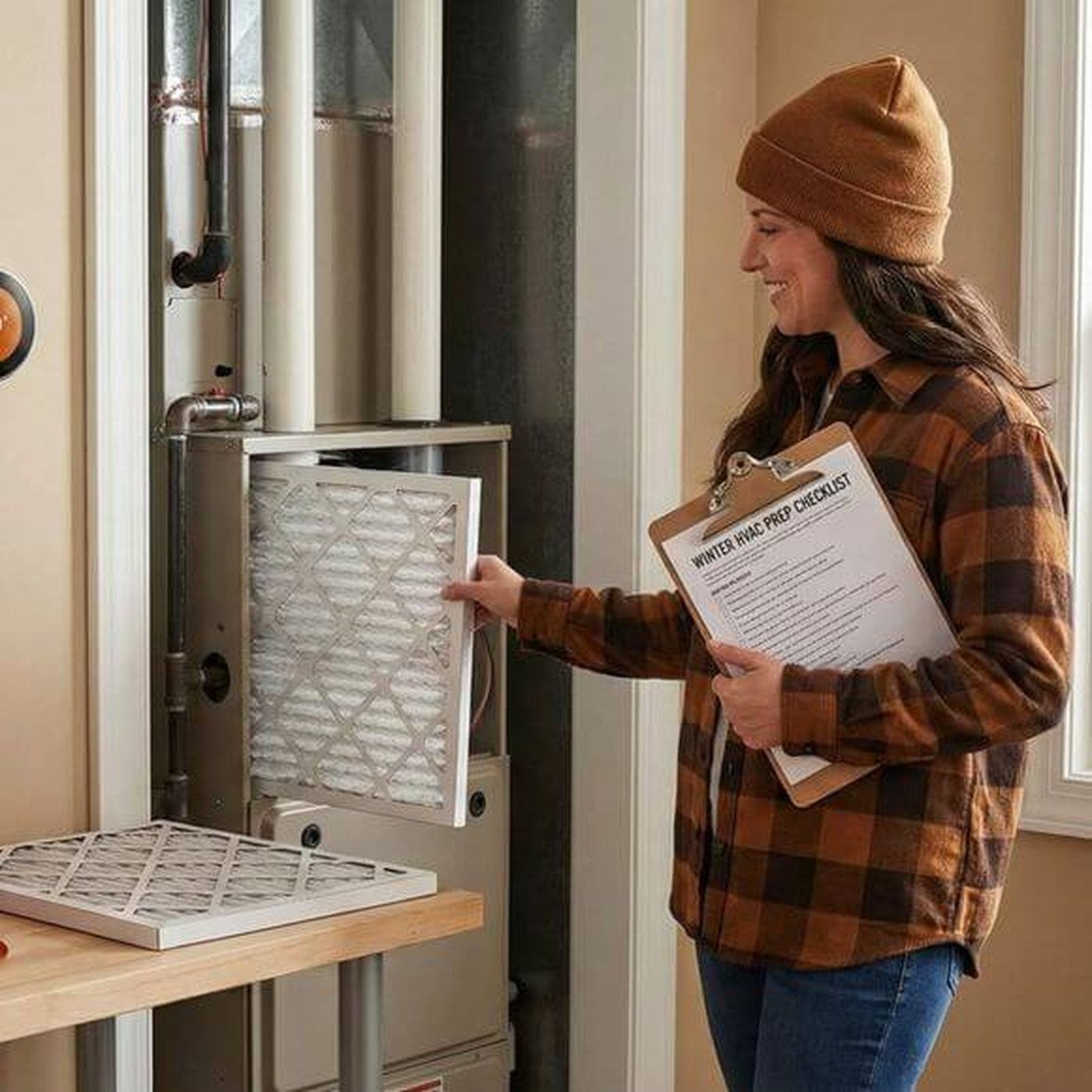
Replace or upgrade your air filter.
The single most important thing you can do
for your HVAC system is to manage your air filtration.
Many older homes still use cheap, flat fiberglass filters.
While these offer minimum resistance to airflow,
they do almost nothing to stop smaller particles
like pet dander, mold spores or find dust
from circulating through your home
and clogging your equipment.
Pleated filters are a superior alternative.
A murvate through 13 pleated filter
offers a far greater surface area to trap contaminants
without restricting the area your furnace needs
to operate efficiently.
During winter, when your system is running frequently,
you should aim to check your filter every month
and replace it at least every 90 days.
If you have pets or suffer from allergies,
you may need to swap it out more often.
Filter buys pleated filters are designed specifically
to balance consistent airflow
with high performance filtration.
Ensuring your system doesn't have to work overtime
to keep you warm.
Inspect duct work for leaks or blockages.
Your furnace might be pumping out plenty of heat,
but if your ducts are leaking,
that warm air is escaping into your attic
or crawl space before it ever reaches your living room.
Leaky ducts are a major cause of uneven heating
and wasted energy.
Take a flashlight and visually inspect accessible duct work
for disconnected joints, holes, or separated sections.
Keep an eye out for streaks of dust near seams
which often indicate an air leak.
Sealing these gaps with metallic foil tape,
not standard duct tape which dries out and peels
can significantly improve your system's efficiency.
Check and calibrate your thermostat.
Your thermostat is the brain of your HVAC system.
If it's reading the temperature incorrectly,
your furnace will run too long or not enough,
leading to discomfort and wasted money.
Verify your thermostat's accuracy by placing a separate,
reliable thermometer next to it for an hour.
If the readings differ by more than a degree,
check your manual for a calibration instructions.
For those with smart thermostats,
ensure your software is up to date
and your quote-a-way end quote schedules are set
for winter hours to maximize savings while you aren't home.
Clear and inspect vents and registers.
It sounds simple, but blocked vents are a frequent culprit
for heating issues.
Go room by room and ensure that all supply and return vents
are open and unobstructed.
Furniture, heavy curtains, or rugs covering these vents
can choke your system's airflow,
causing pressure imbalances that strain the blower motor.
Test system controls, before the temperatures plummet,
run a full test cycle.
Turn your thermostat to quote-heat end quote
and set it a few degrees higher than the current room
temperature.
Listen to the startup sequence.
You should hear the furnace ignite or the heat pump engage
followed by the blower fan kicking on shortly after.
Listen for any banging, rattling, or squealing noises,
which are clear signs that a mechanical component needs attention.
Schedule a professional HVAC inspection.
DIY maintenance is essential, but it doesn't replace
the eye of a professional.
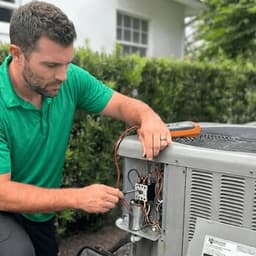
A certified technician has the tools
to check electrical connections, measure gas pressure,
inspect the heat exchanger for dangerous cracks,
and test safety switches.
Scheduling a professional tune-up ensures
that the complex internal components are safe and ready
for the heavy workload of winter.
Don't forget air conditioner maintenance during winter.
Just because you aren't using your cooling system
doesn't mean you should ignore it completely.
Proper maintenance of air conditioner units
during the off-season is vital for ensuring
they start up reliably next spring.
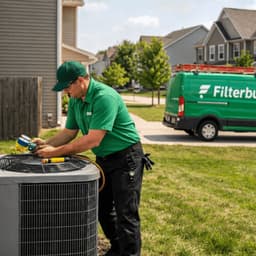
Go outside and clear away any fallen leaves, twigs,
or tall grass that has accumulated around the condenser unit.
If you choose to cover your AC unit, use a breathable cover
or just a piece of plywood over the top
to protect the fan from falling ice and debris.
Avoid wrapping the entire unit in airtight plastic
as it straps moisture and creates a cozy winter home
for mice and other pests that can chew
through electrical wiring.
Winter home maintenance checklist beyond HVAC.
Your heating system works hand in hand with your homes
envelope.
To keep the heat in and the cold out,
add these tasks to your winter home maintenance checklist,
seal doors and windows.
Check for drafts around frames
and apply weather stripping or a caulk we're necessary.
Insulate exposed pipes.
Prevent freezing and bursting pipes
by wrapping them in foam insulation,
especially in unheated areas like basements or garages,
reverse ceiling fans.
Switch your fans to rotate clockwise at a low speed.
This gently pushes warm air that rises to the ceiling
back down into the living space.
Test detectors.
Winter is peak season for house fires
and carbon monoxide poisoning.
Test all smoke and carbon monoxide detectors
and replace batteries if needed.
Downloadable HVAC maintenance checklist resources.
Staying organized makes maintenance easier.
Using a printable HVAC maintenance checklist
P-DF helps you track what you've done and when
ensuring no steps are missed year after year.
Homeowners can also customize a digital HVAC
maintenance checklist template
to include specific filter sizes for their unit,
the model number of their furnace
and the contact information for their preferred HVAC technician.
Filter by offers a range of educational resources
and guides that act as practical tools
to keep your maintenance schedule on track.
What happens if you skip winter HVAC maintenance?
Skipping these steps might save you an hour on a Saturday
but the long term costs are rarely worth it.
Neglected systems inevitably face higher energy bills
as dirt and neglect force the unit to consume more power
to do the same job.
Worse, minor wear and tear can snowball
into catastrophic failure.
A frayed belt or a dirty sensor
can shut down your entire system in the dead of winter
leading to expensive emergency repair calls.
Furthermore, poor maintenance leads to reduced air quality
and can significantly shorten the overall lifespan
of your expensive equipment.
Forcing you to pay for a replacement,
years earlier than necessary.
Make winter prep easy with filter by.
Don't wait for the first snowstorm to realize
your furnace isn't up to the task.
By following this checklist,
you are securing your home's comfort
and efficiency for the months ahead.
Upgrade to a pleated murve eight through 13 filter
from filter by today to ensure your system breathes easy
and enjoy the peace of mind that comes with a warm, safe home.
In over a decade of manufacturing filters
and working directly with homeowners,
we've seen the same pattern every winter.
Systems that fail during the first cold snap
almost always have one thing in common,
a neglected filter that's been choking air flow for months.
End quote.
Seven go to resources that make winter,
HVAC maintenance a whole lot easier.
Look, we get it, you've got a full plate
between work, family and everything else on your list,
diving deep into HVAC maintenance,
probably isn't how you want to spend your weekend.
Good news, you don't have to figure it all out on your own.
We've rounded up seven resources we actually trust
to help you keep your system running strong,
your energy bills and check
and your home's air cleaner this winter.
Think of it as your cheat sheet
for being the hero of your household without the homework.
Number one, energy star maintenance.
Checklist, a simple plan to stay ahead of problems.
You already know that staying on top of things
saves you headaches down the road.
The official energy star maintenance checklist makes it easy,
laying out exactly what to do each season
so your heating and cooling system
keeps running the way it should.
Bookmark this one and check it off as you go.
Source, US Environmental Protection Agency
slash Department of Energy.
Best for homeowners who like having a clear,
repeatable game plan.
Number two, DOE Fall and Winter.
Energy saving tips, real ways to lower your heating bill.
Starting today, nobody wants to pay more than they have to,
especially when the fix is simple.
The US Department of Energy's winter guide
is packed with no cost and low cost moves
like adjusting your thermostat setback
and sealing drafty spots that can trim up to 10%
off your annual heating costs.
Small effort, big impact.
Source, US Department of Energy.
Best for homeowners looking for quick wins that add up fast.
Number three, EPA Merve Rating Explainer.
What those numbers on your filter actually mean?
If you've ever stood in the filter aisle wondering
what the difference is between a Merve 8 and a Merve 13,
you're not alone.
The EPA's guide breaks down how the rating system works
and what each level actually captures
so you can make a confident choice
instead of just grabbing whatever's closest.
Source, US, Environmental Protection Agency.
Best for anyone comparing filter options
and wanting the facts, not the marketing.
Number four, filter by Merve Guide.
Match the right filter to your home, your family and your air.
This is where we get to nerd out a little in a good way.
Our Merve Rating Guide walks you through the real world differences
between Merve 8, 11 and 13
and helps you figure out which one fits your household.
Got pets, allergies, a dusty older home.
We've been manufacturing filters in the US for over a decade
and will help you find your perfect match
with a side-by-side comparison that actually makes sense.
Source, filter by.
Best for homeowners ready to pick the right filter
without second guessing it.
Number five, DOE programmable.
Thermostat guide, set it, forget it, save money.
Here's one of those upgrades that practically pays for itself.
The Department of Energy's Thermostat Guide explains how programmable
and smart thermostats work.
The best heating schedules for winter
and what to look for if you're ready to upgrade.
If you're still walking over to the wall every morning
to adjust the temperature, this one's for you.
Source, US Department of Energy.
Best for homeowners who want to automate savings
without overthinking it.
Number six, service experts, winter checklist.
No exactly what approach should be checking.
Scheduling a fall tune-up is one of the smartest things
you can do before winter hits.
But how do you know if the technician is doing a thorough job?
This contractor-level checklist covers
what a quality professional inspection looks like
from heat exchanger checks to carbon monoxide testing.
So you know what to expect and what to ask about.
Source, service experts, heating and air conditioning.
Best for homeowners who want to feel confident
about what they're paying for.
Number seven, American Standard Winter Thermostat Guide.
Find your family's comfort sweet spot.
Every household is different
and the right thermostat setting depends on whether you're home,
away, sleeping, or keeping your pets comfortable while you're at work.
This guide lays out ideal temperature ranges for every scenario
backed by department of energy data and sleep research.
It's a quick read that can make a noticeable difference
in both comfort and cost.
Source, American Standard.
Best for families fine-tuning their settings
for better sleep, lower bills, and happier pets.
Supporting statistics, what the data tells us
and what we've seen firsthand.
After more than a decade of manufacturing air filters
in the US and shipping millions to homes nationwide,
we've learned most homeowners underestimate what's happening
with their indoor air and how much it's costing them.
The research confirms what we hear from customers every day.
Number one, over half your energy, bill goes to heating
and cooling the US.
Energy information administration found that heating
and air conditioning account for 52%
of a household's annual energy consumption.
That number doesn't surprise us.
When customers call about mid-winter bill spikes,
the first thing we ask is when they last change their filter.
The answer is almost always months ago,
what we've seen firsthand.
A clogged filter forces your system to work harder
to push air through.
That extra strain shows up directly on your energy bill.
Homes with pets, older systems,
or heavy-winter usage benefit from changing filters
every 60 days instead of the standard 90.
Number two, your indoor air is likely dirtier
than the air outside.
The EPA reports that indoor pollutant levels
are often two to five times higher than outdoor levels
and Americans spend roughly 90% of their time indoors.
Customers are consistently shocked
when they pull out a used filter and see what it captured,
but the visible buildup is only part of the story.
What your filter is trapping that you can't see.
Microscopic allergens like pollen and mold spores,
bacteria, and fine particulate matter,
pet dander and dust mite debris,
are recommendation based on testing
and thousands of customer reviews.
Merve eight handles everyday dust, lint, and debris.
Merve 11 offers better protection for homes
with pets or mild allergies.
Merve Heter 13 provides the best defense
against allergens, bacteria, and fine particles.
Number three, a fresh filter protects your entire HVAC
investment, the US.
Department of Energy reports that replacing a dirty filter
can lower energy consumption by five to 15%.
But from our experience working with homeowners
and HVAC professionals wasted energy is just the beginning.
What a neglected filter can lead to.
Frozen evaporator coils.
Short cycling and system shutdowns,
premature wear that results in expensive repairs.
The simplest fix we recommend, swap your filter
every 60 to 90 days, it takes about two minutes.
Set up auto delivery so you never forget.
Protect a system that's one of the biggest investments
in your home.
A clean filter can save you hundreds
in avoidable repairs and wasted energy
over a single heating season.
Final thought, the smallest step makes the biggest difference.
We've spent over a decade manufacturing millions
of filters across our US facilities in Alabama, Florida,
Pennsylvania, and Utah.
If there's one thing we've learned, it's this.
The homeowners who stay ahead of filter
changes almost always avoid the biggest headaches.
That's not a sales pitch.
It's a pattern we've seen across millions of orders
and thousands of customer conversations.
What proactive homeowners consistently report?
Lower energy bills month over month.
Fewer unexpected HVAC repair calls.
Noticeably cleaner, fresher air at home.
What homeowners who wait too long usually deal with.
Musty smells or weak airflow.
Unexplained spikes in utility bills.
Repair costs that a $15 filter could have prevented.
Our honest take.
The HVAC industry has done a poor job
of educating homeowners about how much a simple air filter
actually matters.
Most people know they should change it.
Far fewer understand why or how much money and stress
they're leaving on the table by putting it off.
Here's what the data and our firsthand experience both
point to.
Your HVAC system is likely the most expensive equipment
in your home.
It deserves more than an afterthought.
Indoor air quality directly affects your family's health.
With pollutant levels two to five times higher indoors
than outdoors, your filter is your first line of defense.
Heating and cooling consume over half your energy budget.
A clean filter is one of the cheapest ways
to keep that number in check.
None of this requires a major renovation
and expensive service call or hours of research.
It requires a filter that fits, shows up on time
and gets swapped out before it becomes a problem.
Where are we stand?
We built filter by around one belief.
Clean indoor air shouldn't be complicated, expensive,
or easy to forget.
That's why we offer over 600 standard sizes
plus custom filters for hard to fit systems.
Auto delivery subscriptions that take the guesswork out
entirely.
Factory direct pricing with fast free shipping.
But beyond the products, our mission is simpler.
We want every homeowner to know
that the air inside their home matters
and that protecting it is one of the easiest,
most impactful things they can do for their family,
their home, and their wallet.
Change your filter, breathe easier.
It really is that simple.
Next steps, take control of your home's air.
Today, you've got the knowledge, now put it into action.
These steps take minutes, not hours,
and each one moves you closer to cleaner air,
lower bills, and a healthier home this winter.
Step one, check your current filter.
Pull out your existing filter and look for these warning signs.
Visibly gray, dusty, or clogged.
No light passes through and held up to a window.
It's been more than 60 to 90 days since your last change.
If any of these apply, it's time for a replacement.
That dirty filter is costing you money right now.
Step two, find your exact size.
An ill-fitting filter lets unfiltered air
bypass the system entirely.
Get the right fit.
Check the printed dimensions on your current filter's frame.
Measure length, width, and depth if no size is printed.
Note both nominal size, for example, 20 by 20 by one.
An actual size, for example, 19.50 by 19.50 by 0.75.
Can't find a standard size.
We manufacture custom filters for hard-to-fit systems.
Step three, choose the right Merv rating.
Merv eight handles everyday dust, lint, and debris,
ideal for homes without pets or allergies.
Merv 11 offers stronger particle capture
for homes with pets or mild sensitivities.
Merv 13 provides the best defense for allergy
and asthma sufferers, capturing bacteria, pollen, and mold.
For homes dealing with smoke, cooking odors,
or persistent smells, our odor eliminator
with activated carbon is designed specifically for that.
Not sure, our team can help you choose in minutes.
Step four, set up auto delivery.
The most common mistake we see, homeowners
who mean to change their filter but let months slip by.
Here's how it works.
Select your size and Merv rating.
Choose delivery frequency, everyone.
Two or three months, filters arrive on schedule.
No reminders needed.
What you get?
Consistent system efficiency all season.
No last minute store runs.
Factory direct pricing with free shipping on every order.
Step five, schedule a seasonal HVAC checkup.
A clean filter is the foundation.
A professional tune up covers the rest.
Ask your technician to check ductwork for leaks
and proper sealing, refrigerant levels
and electrical connections, thermostat calibration,
and system cycling evaporator and condenser coil
condition.
Our pro tip, pair regular filter changes
with a professional tune up before each heating
and cooling season.
Most HVAC professionals we work with confirm this combination
maximizes both efficiency and equipment lifespan.
Step six, share what you've learned.
Clean air affects everyone who spends time in your home.
Share this guide with a neighbor or family member.
Leave a review about your filter by experience.
Talk to your landlord or property manager if you rent.
Ready to get started?
Visit filterby.com to find your size.
Choose your Merve rating and set up auto delivery
all in a few clicks.
Better air for all starts with one filter.
Yours.
Frequently asked questions.
Question, how often should I change my air filter
during winter?
Answer, we recommend every 60 to 90 days
during the heating season.
However, homes with pets, allergies
or heavy system usage may need a fresh filter
closer to every 30 to 60 days.
Based on what we've seen across millions of filter shipments,
winter is when systems work the hardest
and dirty filters cause the most problems.
A quick visual check once a month
is the easiest way to stay ahead of it.
Question, what should be included
in a winter HVAC maintenance checklist?
Answer, a solid winter checklist covers both
what you can do yourself and what a professional should handle.
DIY tasks include replacing your air filter,
clearing debris from around outdoor units,
testing your thermostat settings,
and checking vents and registers for blockages.
Professional tasks include inspecting and sealing ductwork,
checking refrigerant levels and electrical connections,
cleaning evaporator and condenser coils
and verifying system cycling and calibration.
The combination of regular filter changes
and at least one professional tune up
before the heating season gives your system
the best chance of running efficiently all winter.
Question, what nerve rating is best for winter?
Answer, it depends on your household, not the season.
That said, winter brings unique challenges.
Homes are sealed tighter, air recirculates more
and pollutants have fewer ways to escape.
Mervate is good for basic dust and debris
in homes without pets or allergies.
Merv 11 is better for homes with pets,
moderate dust or mild sensitivities.
Merv 13 is best for allergy and asthma sufferers
or homes where air quality is a top priority.
The odor eliminator is ideal
if winter cooking, fireplace use or smoke is a concern.
From our experience, most homeowners who upgrade
from a Merv 8 to a Merv 11 or 13 notice a difference
within the first week.
Question, can skipping HVAC maintenance
in winter really increase my energy bills?
Answer, yes, and the data confirms it.
Heating and cooling account for 52%
of household energy consumption
according to the US Energy Information Administration.
The Department of Energy reports
that a dirty filter alone can increase energy consumption
by five to 15%.
We hear from customers regularly
who trace a sudden bill increase back to a filter
they forgot to change.
When your system is forced to push air
through a clogged filter, it runs longer,
works harder and uses more energy.
Over a full heating season,
that adds up to real money.
Question, is it worth setting up auto delivery
for air filters?
Answer, if you've ever forgotten to change your filter
and most homeowners have, auto delivery pays for itself,
what you get.
Your exact filter size delivered on your schedule,
everyone, two or three months,
factory direct pricing with free shipping every time,
one less thing to remember during a busy winter.
The most common mistake we see is homeowners
who fully intend to change their filter
but let months go by.
Auto delivery removes at risk entirely.
You pick your size, choose your murve rating,
set your frequency and your filters arrive
before you need them.
Your winter HVAC maintenance starts with a clean filter.
Find your exact size, choose the right murve rating
for your home and set up auto delivery at filterby.com
so your system stays protected all season without the hassle.
Better air for all starts with one filter, yours.
Dinner time, it's where little moments are cherished.
With Blue Cash Preferred, get 6% cash back
at US Supermarkets and bring everyone together.
We did say everyone.
Learn more at americanexpress.com slash explore.bcp.
Terms and cash back cap apply with Blue Cash Preferred.
Tyler Reddick here from 2311 Racing.
Victory Lane?
Yeah, it's even better with Chamba by my side.
Race to ChambaCasino.com, let's Chamba.
No purchase necessary, VTW Group,
voidware prohibited by law, CT and C's, 21 plus,
sponsored by ChambaCasino.