About this episode
See pcm.adswizz.com for information about our collection and use of personal data for sponsorship and to manage your podcast sponsorship preferences.
NPR Privacy Policy
Get every episode summarized
Each time Here & Now Anytime publishes, we email you a written briefing from the transcript — the topics, who appeared, and any specific claims, with the ad reads skipped.
Email me new episodesFree for 3 shows. No card needed.
Hosts & guests

Transcript ready
321 searchable segments. Every word is indexed and playable.
Full transcript
Here & Now Anytime — The view from inside Iran. Machine-transcribed; use the interactive transcript above to jump the player to any line.
Support for here and now any time comes from the VCU School of Business, offering graduate programs for military families and veterans in accounting, information systems, supply chain and more, including MBAs. Learn more at business.vcu.edu slash GRAD. WVU are podcasts. Boston. Of course they see it as an opportunity, one that they haven't ever had, but on the other hand, they also think it's very risky what if Donald Trump cuts a deal with the regime, then what? Kurdish forces in Iraq are reportedly planning for a possible incursion into Iran. Could they be a lever for regime change in Tehran, or agents of chaos? Or will they just be left out to drive? It's Thursday, March 5th, and this is here and now any time from NPR and WVU are. I'm Chris Bentley.
Today on the show, a retired Navy admiral says the U.S. attacked Iran without a clear plan for what happens next politically. We're going to have to turn to an existing probably IRGC leader when we haven't killed to temporarily and potentially permanently lead the country going forward. Also, we'll get a rare view from Tehran. Who are you to change your regime? How can you consider for yourself that you have this authority to go and decide for the other nations? Life inside Iran under bombardment by the U.S. and Israel, coming up in about 15 minutes. But first, on day 6 of the U.S. and Israeli war on Iran, most of the strikes are coming from the air, bombs, missiles, drones. But there's growing speculation about what could happen on the ground, specifically along Iran's northwestern border where Kurdish fighters have long opposed the Iranian
government. The Kurds are a stateless ethnic group of mostly Sunni Muslims who live in a mountainous region they call Kurdistan, which spans parts of Iran, Iraq, Turkey, and Syria. Some Kurdish groups based in Iraq are reportedly preparing units that could cross into Iran, and observers wonder if President Trump might see the Kurds as a tool for regime change in Iran. The White House is pushing back on that idea. Here's Press Secretary Carolyn Levit. The President has held many calls with partners, allies, and leaders in the region in the Middle East. He did speak to Kurdish leaders with respect to our base that we have in northern Iraq. But as for any report suggesting that the President has agreed to any such plan is completely false and should not be written. But Kurdish leaders and regional officials reportedly say the preparations are real. So says Amberin Zaman, she's chief correspondent for Al Monitor, an American news site focused on
the Middle East, and she told Indira Lakshmanan that groups along the Iran-Iraq border are discussing whether to move in to Iran. What they're preparing for specifically is to be able to move in once they're confident that the regime is sufficiently weakened in those Kurdish provinces so that they can basically take charge. And as you know, the Israelis and the Americans have been bombing those areas very heavily, targeting Iranian security forces, and so basically prepping the ground for these forces to move in. So if Kurdish forces did open a front in western Iran, how big of a threat could they possibly be to Iran's much bigger and better funded Islamic Revolutionary Guard Corps? Well, that's an excellent question. And obviously in advance of any such move, they would need to be assured that the IRGC, the Basij and other Iranian security forces are sufficiently
weakened in those areas so that they can become effective. Now, the real threat really is that if other ethnic groups inside Iran, notably the Baloch and the Azeris, two other ethnic groups you're referring to. That's correct, yes. If they are inspired then to rise up as well, because Iran has a huge problem, especially with the Baloch who live along the frontier with Pakistan, but this is all very speculative for now because many of these groups that are in this Kurdish alliance have not seen combat for decades. They've been basically living in camps well away from the Iranian border have very little presence inside Iran. Amberin, the US, as you note, has partnered with Kurdish forces before, memorably during the Iraq war and those alliances haven't always lasted. Do the Kurdish leaders fear that the US would
leave them high and dry, not actually stand by them if things escalate or go south? Totally because there is a long history of the US encouraging the Kurds to rise up only to let them down. We saw this play out in 1991 when George Bush asked them to rise up against Saddam Hussein and then did nothing for them when they did and we saw Saddam Hussein kill them by the thousands. More recently we saw something similar play out in Syria, if not quite on that scale where the US pivoted towards Damascus and watched the Syrian army attack the Kurds and not intervene to stop that from happening. You're talking directly to Kurdish leaders now. Do they see this moment as a genuine opening for them and their ambitions or are they concerned this is a risk that could backfire if the current Iranian regime survives? Well, they feel very split on this issue on the one hand. Of course, they see it as an opportunity
one that they haven't ever had. So why not give it a try given what's going on inside Iran? But on the other hand, they also think it's very risky. What if Donald Trump cuts a deal with the regime? Then what? Ambrin Zaman is chief correspondent for Al-Monitor, a US-based Middle Eastern news website. Ambrin, thank you so much for your time. Let's take a short break now and then Robin Young will pick up the conversation about Kurds and lots more on the war with a retired Navy admiral. That's after the break. Support for here now anytime comes from the VCU School of Business. Getting your MBA doesn't have to mean stepping away from work. VCU's evening MBA is offered in person and online
and you can move at your own pace, part time or full time. Choose from electives and concentrations across areas like analytics, finance, entrepreneurship, healthcare management and brand leadership. The VCU School of Business is open for business, open for opportunity. Learn more at business.vcu.edu slash evening MBA. This message comes from Wise, the app for international people using money around the globe. You can send, spend and receive and up to 40 currencies with only a few simple taps. Be smart, get wise, download the Wise app today or visit Wise.com, tease and seize apply. This message comes from Intuit TurboTax. With TurboTax expert full service, match with a dedicated expert who will do your taxes for you from start to finish, getting you every dollar you deserve. It's that easy. Visit TurboTax.com to match with an expert today. Let's bring in retired Admiral Mark Montgomery with the foundation for defensive
democracies whose leadership has advocated for regime change in Iran. Admiral Montgomery served in the Navy for decades does support this war with concerns, but Admiral first your thought on this idea that the CIA might harm Kurds to foment a popular uprising in Iran. Yeah, I'm not happy with this. I would have hoped that a precursor for starting this conflict would have been that we had an idea of who we would arm ahead of time. The only time I've ever seen air-enabled campaigns work in Libya in 2011 and Kosovo in 1999, both of which are participated in, we had armed insurgencies going on the ground and therefore the air campaign worked. The idea that we're now going to turn to the Kurds, a group that I think would be viewed very poorly by the Iranian public. I mean, if you want the Iranian public to like the IRGC, the Iranian Revolutionary Guard, core armed the Kurds and bring them against them. Well, and again, we should say White House Press Secretary Caroline Levitt said that
talk of the CIA funding the Kurds was completely false, but to something that you just said, you would have thought this would have been planned out beforehand. Do you get the sense that this may not have been tabletopped as they call it? So I would break it up into the political part in the military part. The military part clearly was well organized, planned, and is now being executed pretty well. And by that, I mean, the kind of lines of effort where you destroy the IRGC, the Iranian Revolutionary Guard, core, and their facilities, you suppress enemy air defense, you destroy their maritime capabilities, you destroy probably most importantly their ballistic missile capabilities, facilities, and future production, and their drone capabilities, facilities, and future production. So that part, I think, is organized right. What you're asking is the political end of this of what's the strategic endgame here clearly not mapped out in an effective way. And that's why the President, the Secretary of State, and Secretary of Defense have given five or six different reasons for why we're doing this and outcomes that they expect from it.
Now, what about the sense that there can be a popular uprising fomented in the very first moments of this? President Trump also said to the Iranian people, it's your government, go take it. Now, we're hearing from analysts, Karim Sahjad-Pur, for instance, is one who says in the beginning of this regime, 47 years ago, you might have had 20 percent of the Iranian population opposed, 80 percent supporting the regime that came in. Now, it's more like 80 percent against the regime 20 supporting. But still, we saw an uprising attempted and thousands of people were killed. So, is that also kind of a false assumption, or what do you think? So I think the 80-20 is probably correct. The problem is the 20 percent have all the weapons. And we saw that, you know, anywhere, you know, depending who believed three to 30,000 protesters were killed, that'll have a dampening effect on future protests if they don't have
weapons, if they don't have a believable path to victory, which you don't have when you have 125,000 highly organized IRGC of whom I think anywhere from 25 to 50,000 are true believers, you know, that are going to fight to the bitter end. You need to have an armed adversary on the ground, but it needs to be someone that people can embrace, and again, getting back to the Kurds, not the Kurds. But also, who leads? We spoke to an Iranian in Iran, but I'm hearing this elsewhere, too, that there's a deep concern that the U.S. will do what it's done in the past in Iran, and in the more recent history in other countries, handpicked somebody to put into lead a country that has not worked historically. I mean, certainly, we're getting to the point where we're going to militarily achieve, you know, through air power and significant damage to all those lines of effort, I said, and the problem is at the end of that, without having solved, the military's very good at this, you know, planning and executing a war plan, the military is world class.
The problem is the political leadership did not have a similar effort in how you solve this, how you resolve this politically, and as a result, we're going to be left with that military solution, which means exactly what you said. We're going to have to turn to an existing probably IRGC leader, one we haven't killed, to temporarily and potentially permanently lead the country going forward. I hope, you know, it sounds like we've been listening to their conversations for several years. Maybe we've detected some senior IRGC people who privately have had misgivings about the IRGC. Maybe those are the ones we approach. I'm not sure. But we better do something so that at the four or five-week point, we're able to end the air campaign, because there are no more targets at that point, realistically. I'd say one other thing, though, and the president hasn't said this enough, the IRGC killed a thousand American soldiers in Iraq. These are in different ways. We documented this. These are people that we should hold accountable. I'm not opposed to the military part of this. I am disappointed that with all
the timing of this, we in Israel drove the timing of this, yet we did not have the appropriate level of political solution ready to go. I just have to ask you. You tell us you just got back from weeks in Ukraine. How critical a situation is there in Ukraine right now? Well, they're not going to lose this war, but the ballistic missile attacks by Russia every day, which equal what we're seeing in the Middle East on the few days here, they get every day, and many of them are hitting because they're short patriot, a missile called AMRAAM and other air defense systems. And what happens is it hits critical infrastructure and private residential areas, killing Ukrainian citizens. It's off the radar. It is. Retired Admiral Mark Montgomery with the nonprofit foundation for Defensive Democracies Research Institute. Admiral Mark, thank you so much. Thank you very much. To that point of Iran's political future, mentioned earlier,
in the apparent lack of an American plan for it, President Trump told Politico today that he expects to play a big role in choosing Iran's future leadership. Quote, we'll work with the people in the regime to make sure that somebody gets there that can nicely build Iran, but without nuclear weapons. Well, Robin mentioned hearing from an Iranian. After the break, we'll listen to that conversation about what it's like to live in Tehran during wartime. Stick around. This message comes from Rinse, who knows that greatness takes time. So does laundry. So Rinse will take your laundry and hand deliver it to your door, expertly cleaned. And you can take the time pursuing your passions. Time one spent sorting and waiting, folding and queuing, now spent challenging and innovating and pushing your way to greatness.
So pick up that Irish flute or those calligraphy pens or the daunting beef Wellington recipe card and leave the laundry to Rinse. Rinse, it's time to be great. This message comes from Duck.AI, a new product from Duck.DuckGo. Once it keeps control of the info you share with AI, head to Duck.AI to chat privately with popular AI's. Duck.AI keeps your AI chats private. It's free, no account required, and built by Duck.DuckGo, where AI is always optional and who believe in protecting your data, not collecting it. Visit Duck.AI slash NPR. This message comes from Mintmobile. If you're tired of spending hundreds on big wireless bills, bogus fees and free perks, Mintmobile is for you. Shop plans at Mintmobile.com slash switch, taxes and fees extra. See Mintmobile for details. This message comes from Indeed. Hiring? Do it the right way. With Indeed sponsored jobs, claim a $75 sponsored job credit to get matched with quality candidates
at Indeed.com slash podcast, terms and conditions apply. Last year, after the U.S. and Israel attacked Iran in June, we reached Ali Safari at his home in Tehran. He's a former news editor and doctoral student in international relations. Here's what he told us last year when we asked him what he was most concerned about back then. Well, I cannot guarantee that I'm going to be alive to see what is going to be the future of Iran in my country. But what I can say, I'm really afraid of a regional war, because the war, the military, is not an option. If you want to engage in diplomacy, you have to continue the diplomatic way. Of course, since that U.S. Israeli attack, known as the 12-day war, there's been widespread unrest and suffering in Iran. The government there killed thousands of protesters in January. And now this war.
Yesterday, when we spoke to Ali, he told Robin Young, bombs were falling near his home. I'm talking to you on the attack right now. There is some kind of attacks in the western parts of Tehran, which is really close to my home. And I'm hearing the sounds of explosion even right now, and the attack is going on. Well, what do you think about what's being said here in the United States? We had our Secretary of Defense Pete Hegseth saying this war has just begun that there's another large wave coming. We heard from President Trump, the White House, just recently that there's going to be complete control of the airspace indicating heightened attacks. How does that, how do you receive that? Well, to be honest, I'm not a military person and not a military expert to talk about that. But what I can say, what we are hearing from the American officials as Iranian citizens, we are receiving and hearing different signals from the American
officials. Because what is the purpose of this war that they have started? Because what we have had during the June, they have said that they have started this war for the cause of the Iranian, so-called nuclear program. And now they are saying that we're going to continue to hit the Iranian nuclear program, also Iranian Missus capability. And also we are looking for, I mean, making an atmosphere for some kind of change inside the Iranian, I mean, governments or maybe overthrew the regime. And at the other hand, we have heard also exactly one night before the beginning of this war, the Wars of the Foreign Minister of Oman, which he have said that we are so close to Richard Diel. And also now, today, I think, or yesterday, we have heard what the American negotiator said that. No, it wasn't any possibility to, I mean, have a deal with the Iranian. So, I mean, there are some kind of different things that we are hearing every day. Well, believe me.
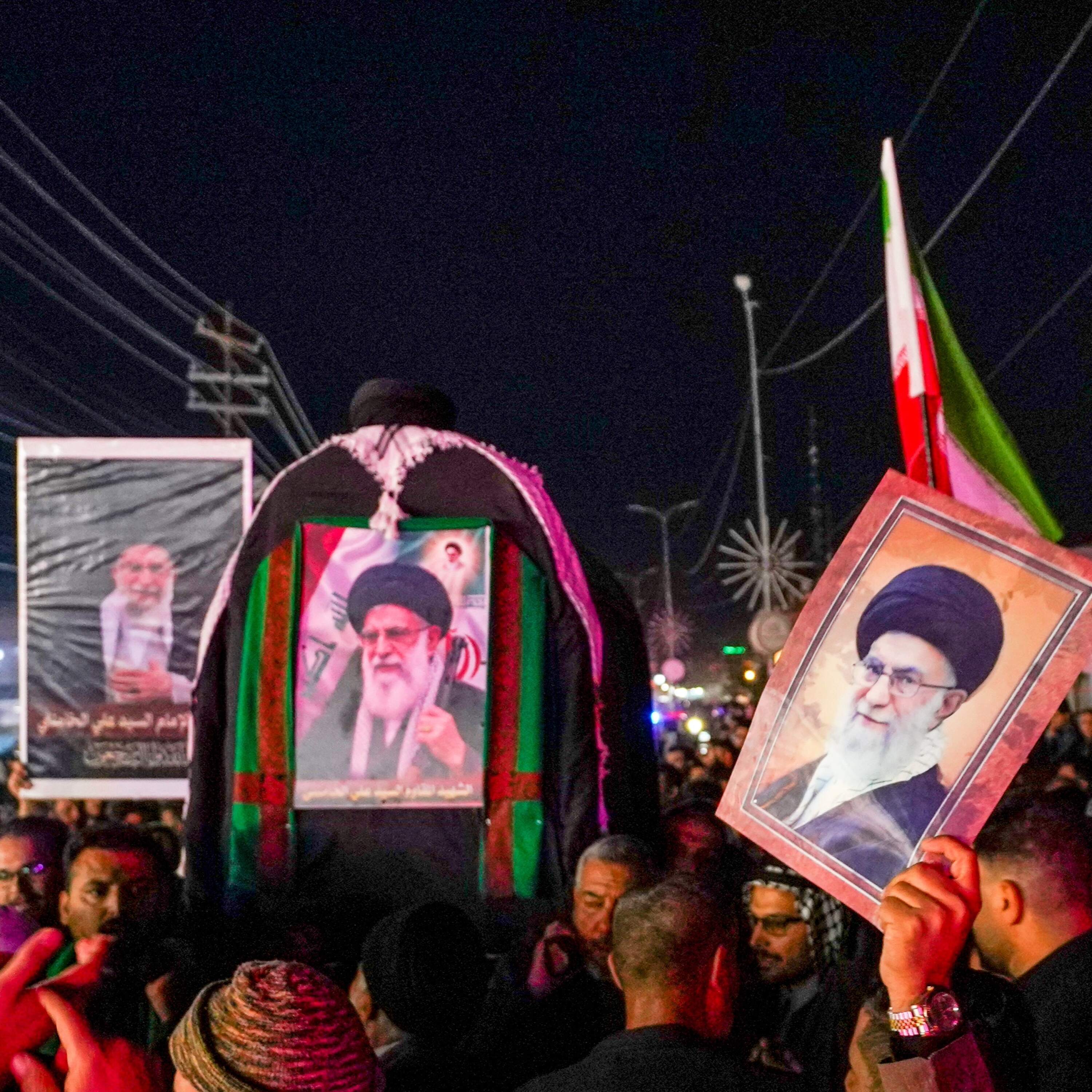
Yeah, believe me. We have, you know, here in the States been talking quite a bit about mixed messaging. What was this attack about? Was it, as you said, to obliterate the nuclear program that was said to have been obliterated in June? Is it about regime change? We were told it wasn't about regime change, but perhaps the Iranians could rise up and make it about regime change. And then the regime was changed at least altered when 40-plus leaders, including Supreme Leader Hamine, were killed in strikes. Ali, start on the personal level with you. What do you want? Well, first of all, what I can say as an Iranian, whenever that there is a war against Iran, we are seeing that the sense of patriotism emerged between the people. When there is a war, there is a foreign enemy is attacking your country,
attacking your, I mean, infrastructure, attacking your, I mean, army. The reasons, festival, the first thing that everyone's wants is to stop that war, but also we have heard that from some parts of the Iranian diaspora outside Iran, inviting the United States or other countries to attack Iran, to hit Iran, to have some changes. But what I want as an Iranian, I think that when there is a war against your country and the purpose of that war, going to be, as they have said, that changing in the regime, always through the regime, another thing that this is a wise way to have the change from outside. We all know the experiences that the United States, what have done to Iraq, what that they have done to Afghanistan, and their people are suffering until this very day, due to the consequences of the war that was raised by the United States of America against those countries. What you are saying from the assassination of a Supreme Leader of another country, do you think that it's somehow
a little bit? I'm not like we're going to say that it was a clear relation of the international law. So I think that the situation is quite complicated, even in this situation, you know, that's what we have experienced during the beginning of the January, the clashes and the protests that we have had, due to the economic difficulties. Also, what we have heard that there have been some contacts between President Trump and also some courtish groups invest some part of Iran. So there are going to be many fears between the Iranians that maybe there is some kind of, willingness from the United States of America, from Israel, in order to activate those terrorist groups in order to take control different parts of Iran and this going to lead to this association of my country. It sounds like what you're saying is the Iranian people were bravely, courageously, you know, rising up thousands were killed after that uprising and it sounds like
you're, and that was because of the economic situation there, and now it sounds like I'm hearing anger from you, these reports that we're hearing that the CIA is working with Kurdish militants as they would call them to cross into the border and foment a popular uprising. You're saying to the words you're using to describe those Kurdish militants is terrorists, and it feels as if this opportunity for Iranians to finally take over their future is being undermined. First of all, yes, they are separate groups that they do not have even influence inside the other provinces of Iran. They do not have any supporters in size, for example, Tehran or other big cities, Iranian big cities. This doesn't seem any so-called revolution. It's somehow we can call that a coup, a coup d'état against the Iranian government. So, this situation when the people, the ordinary citizens of the Iranian,
or the ordinary citizens, doesn't have any rule to play in this kind of campaign. It doesn't seem that they're going to be in the favor of deriving people. Yeah. Look, Ali, we can't believe you said to us just a little while back, oh, we're being attacked again. Call me back in five minutes. As if, you know, there had been a car accident or something. Are you afraid? I know you are a country that's used to hearing attacks, but are you afraid that you go outside? What's your life like? First of all, I'm afraid of losing my family. Yesterday, I have lost one of my friends. He was passing by one of the Iranian streets and suddenly the attack to a police station and due to that attack, he had been killed. We are living under under a, I mean, daily attacks by the American and also the Israeli air forces.
And this is quite interesting for me that that friend of mine, more unfortunately, has been killed, but due to that attack, was one of the participants in the uprising that you called during the beginning of the January. And he had been detained. He had been detained by the police at that time. And now we have been killed by the American or maybe the Israeli forces. So at this situation, yes, we are afraid of anything, maybe attacks, maybe, I mean, the chaotic situation because of the continuation of these daily attacks. And the people are asking, okay, how, how going to be the end of these attacks? The big fear that we have, we are now living with is the fear of future, that how is going to be the future of the Iranian nation? Yeah. I guess I haven't, I haven't asked you this. Are you on a new level glad that this has happened, that Homenay and other top leaders have been killed?
Is, I mean, we are hearing from Iranians in the diaspora who are overjoyed. Yes, first of all, I think that's my personal view. It isn't important because you have to look at the Iranian society. The first thing that I have to say that, as you know, that attacking an assassination, this is not a killing, it was really a assassination of the leader of another country is in violation of the international law. And the second thing, the second thing, which is really important for me, where we can remember that the how was the reaction of the diaspora of other countries that have been attacked by the United States of America. If you go and talk directly to the Iranian position, they are saying that what we have wanted for the during all campaign against the number of Republicans around, what we have said and what we have insisted on, it was some kind of reformation from inside by the Iranian people, not with the intervention of different countries.
So my view, I'm totally, I'm not, first of all, I'm not glad, but I think I'm, I'm totally angry about what happens one day you stand up and you see that the attacks to the presidential palace, the assassinated your leader. And now they are saying that, okay, we came here to have a regime change for who are you to change our regime? What, how can you, how can you consider for yourself that you have this authority to go and decide for the other nations? Yeah. And as we will reiterate, you're not someone who was, you know, a vocal supporter of the regime. Look, I just, how are you getting food? How is money working? Who's running the country? Who picks up garbage? You worried about your children? Do you have safe rooms? I mean, how are you living daily? Well, the daily life hasn't been changed, at least until this very now, everything is going on. The administrative branch of the governments are working.
I mean, collecting the garbage or maybe other things. I don't know who is the person that who is in charge, but what we have heard from the media, from the state television, that there is a leadership council, which is in charge for the administration of the country. And what I can say about the daily life, nothing has been changed until this very now, except the sounds of explosions, the killing, being killed, some of your friends, and the, I mean, consequences of the war that we're all living. Yeah. Are people leaving? Are people trying to get out? Living the city, you mean? Yeah. Since the, I mean, initial hours of the war, yes, we have seen the people living the city. And also, there was a statement by the Iranian government, which advised the people to leave the city, particularly Toronto, you've said that based on our information, it's going to be a continuous operation by the United States of America,
so it's better to leave the state safe. But since the confirmation of the passing away of the Iranian Supreme Leader, we have seen, I mean, returning of the people to the Tehran, now every night, there are some pro-governments gatherings, rallies inside Tehran, it was in contrary from what we have had during June, because at that time, I think 19 person of the Tehran's population left the city, but now this is in contrast, simultaneously, with the attacks and bombardment of the city, we are seeing the rallies during the nights in supporting the governments. Supporting the government, and as you said, maybe the same people who might have been protesting the government just weeks ago. Yes, exactly. And as I said, that the situation, the atmosphere of Tehran is quite complicated. No one going to understand that what is going to
happen, you are seeing the bombardment at the same time, you are seeing these gatherings and the rallies in supporting and in the condemnation of war. And with the civilian casualties, the situation, what I can see here, the situation is going to change in favor of the governments. Yeah, Ali Safari speaking to us from Tehran, thank you so much and we just wish you the best possible, you know, please stay well, stay safe. Thank you, thank you so much, thank you, and thank you for this time that you gave me. That's it for the show today. Here and now any time comes from NPR and WBOR. Today's stories were produced by Jill Ryan, Janaya Walker, and Lin Meniga. Today's editors were Todd Bunt, Vikaela Rodriguez, and Michael Skado. Technical direction from Kayla Green and James Trout. A theme music is by Mike Miscado, Max Liebman, and me, Chris Bentley. Our digital producers are Allison Hagen and Grace Griffin, and here and now's executive producer is Alan Price.
Thanks for listening, we'll be back with you tomorrow, and happy birthday, Mom. I know you always listen to the end. This message comes from Mint Mobile. If you're tired of spending hundreds on big wireless bills, bogus fees and free perks, Mint Mobile might be right for you with plans starting from $15 a month. Shop plans today at MintMobile.com-switch. Upfront payment of $45 for three-month five-gigabyte plan required. New customer offer for first three months only. Then full-price plan options available. Taxes and fees extra see Mint Mobile for details. This message comes from Prolon. Feeling heavy and depleted after the holidays? Prolon's five-day fasting mimicking diet aims to make it easy to reset your body, habits, and energy heading into the new year. Developed at USC's Longgevity Institute, the goal of Prolon's nutrition program
is to rejuvenate you from within by working at the cellular level to support fat loss, glowing skin, and sharper focus. Get 15% off plus a bonus gift when you subscribe at ProlonLife.com-NPR.
More episodes
More from Here & Now Anytime

The story behind the photo that captures the horror of 9/11
Here & Now Anytime

The conservative movement, one year after the killing of Charlie Kirk
Here & Now Anytime

9/11 and the long shadow of Islamophobia
Here & Now Anytime

Israel faces global outrage over West Bank violence
Here & Now Anytime