Loading...
news
The whistleblower who thinks change is coming to social media
About this Episode
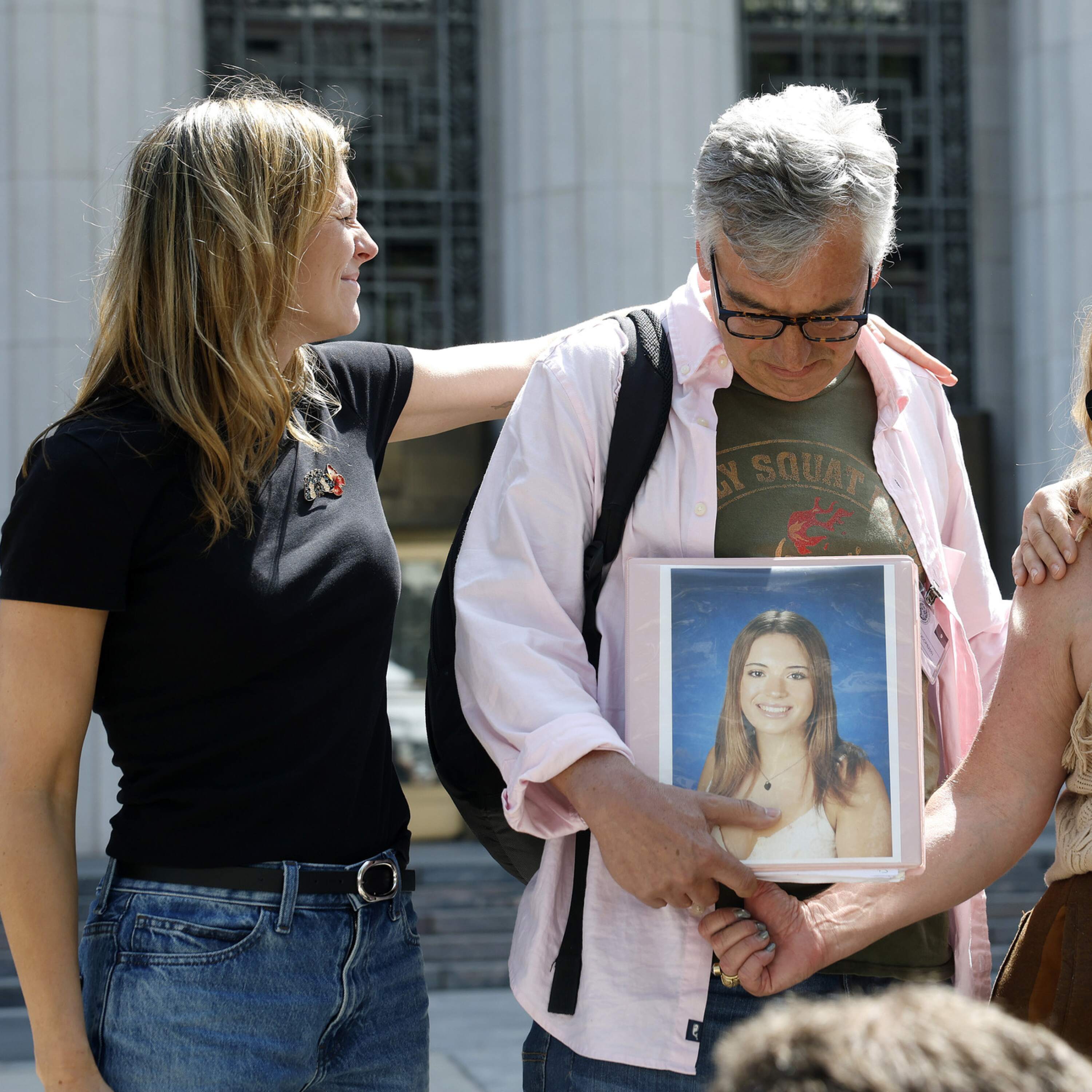
You might be cynical about the size of awards this week in two trials looking at social media harm against children. But Facebook whistleblower Frances Haugen says rulings against Meta and Google could signal a larger trend. She joins us.
Then, the war with Iran is having massive ripple effects across the Middle East. Princeton University's Bernard Haykel explains how Iran's neighbors across the Persian Gulf, Saudi Arabia, see the war.
And, Corpus Christi, Texas, is weeks away from a potential water emergency, with reservoirs below 10% and demand outpacing supply. KEDT's Spencer Cihak talks about who gets water in Texas and what happens when there isn’t enough.
To manage podcast ad preferences, review the links below:
See pcm.adswizz.com for information about our collection and use of personal data for sponsorship and to manage your podcast sponsorship preferences.
NPR Privacy Policy
Then, the war with Iran is having massive ripple effects across the Middle East. Princeton University's Bernard Haykel explains how Iran's neighbors across the Persian Gulf, Saudi Arabia, see the war.
And, Corpus Christi, Texas, is weeks away from a potential water emergency, with reservoirs below 10% and demand outpacing supply. KEDT's Spencer Cihak talks about who gets water in Texas and what happens when there isn’t enough.
To manage podcast ad preferences, review the links below:
See pcm.adswizz.com for information about our collection and use of personal data for sponsorship and to manage your podcast sponsorship preferences.
NPR Privacy Policy
Hosts & Guests

Transcript
Support for here and now any time comes from the VCU School of Business.
Careers evolve and sometimes growth means continuing your education.
VCU graduate programs offer flexible evening and weekend options for working professionals.
Learn more at business.vcu.edu slash grad.
WBUR podcasts. Boston.
Blaming the victim is a classic playbook for for large powerful companies for people.
We can build safer social media, met a new how they chose not to.
We can keep pushing and demand, but that's what our children have access to.
His big tech having its big tobacco moment.
It's Thursday, March 26th, and this is here and now any time from NPR and WBUR.
I'm Chris Bentley.
Today on the show, what Saudi Arabia wants out of the war in Iran?
It's clear that this war, despite the fact that they're still selling a lot of oil,
will require them to redirect their funds domestically,
to build their own country and their infrastructure, but also to buy new weapons systems.
Also, why some techsens are rationing water.
2011 there was a flash drought, and since then it's been just a a ticking clock to this point.
That story coming up at about 10 minutes.
But first, big tech lost two major trials this week,
and there are more than a thousand cases where those came from.
Yesterday, Meta, which owns Instagram and Facebook, and Google, which owns YouTube,
were found liable for making apps that addicted and harmed the mental health of an now 20-year-old
woman with features like Infinite Scrolling and Video Auto Play.
Meta spokeswoman Ashley Nicole Davis spoke outside the Los Angeles Courthouse where the case
was heard.
Team mental health is profoundly complex and cannot be linked to a single app.
We will continue to defend ourselves vigorously as every case is different,
and we remain confident in our record of protecting teens online.
But it's not just that case in California.
Earlier this week, a jury in New Mexico found that Meta exposed miners to dangerous material.
Meta plans to appeal.
But let's hear from someone who says she's been waiting years for
accountability. In 2021, Francis Hagen told Congress that Facebook ignored its own research
about addiction and mental health. She discussed her time as an employee of Facebook and her memoir,
The Power of One. And earlier today, she spoke to Robin Young.
The California case, as you know, was a young woman who started using a YouTube at six
Instagram when she was 11. What was your first reaction when you heard about the ruling in her
favor? I was frankly shocked at the magnitude of it. So for your listeners,
she got three million in compensatory damages and three million in punitive,
which if you worked it out across the United States, if less than one percent of kids in the
United States were impacted, that would be over a trillion dollars. Yeah, huge.
It was because this is what you're saying. It was huge in that a thousand flowers will now bloom
is something else you said. Unquestionably. Yep. So you think there will be other lawsuits.
So just just in Southern California, because remember, this is a state level lawsuit,
not a federal one. There's 1,600 plaintiffs, just in Los Angeles. As we have trials warming up
in Northern California, the multi-state lawsuit, think likely tobacco lawsuit is gearing up later
this year, school districts are suing. It's going to be huge. Yeah, this is an Oakland and there are
school districts there saying we're bearing the burden of children who've been damaged by social
unity. We have to take care of them. But you mentioned tobacco and everybody is, you know,
comparing this to when the tobacco industry was finally brought to its knees. But Francis,
tobacco was tobacco. It's a thing. You know, that industry was required to warn people that it was
dangerous, but not really rebuild it. You told me years ago about the architecture of Facebook,
how it's built into how Facebook is designed. You know, even if you respond to something and say,
I don't want you to send me this anymore, you've responded to it. You've helped build it. I mean,
how does Facebook change? So that was the core of this court case. You know, over the course of
multiple beaks, a jury of everyday citizens got to listen to real Facebook research and how they
ran experiments to make their products safer. This is things like turning off notifications late
at night, turning off notifications in the middle of the school day, intentionally alerting users
are allowing users to reduce how much negative content they see if they want to. They can do this.
They can do this if they want. And that's what the jurors heard. And the reason why they gave
so much in damages was that Facebook had lots of tools in their tool chest, but they chose not to use
them. Okay. So you said this three years ago, you're saying it again now that we have to have laws
to force them. But as you know, there's a, you know, kind of a law that says that they are not
responsible. Social media is not responsible for what happens to its users. How do you get around
that? So part of why these lawsuits are so important is that up until now, every time anyone
is complained about damages on Facebook, they've held up this law called Section 230. When,
what changed about this lawsuit is they said, let's not look at content. Sure, you have immunity
for content. Let's look at how you designed the products. And what the judge ruled at the beginning,
why we had this case at all, was that you are responsible for the decisions you make and how you
build digital products just like if you were building a car. Yeah. So in other words, you know what
the content is. You know, part of what you know, you saw and turned your stomach was that when you
were at Facebook, they got rid of a certain division that would have possibly seen what was happening
online in the lead up to January 6th. You're saying that they can do this and not responsible for
somebody, you know, going on and saying they want to do something on Jan 6th, but they're responsible
for notifying people. It's there. They can do that. I think that it's important to, we often get
locked into these frames of reference where we're talking about individual pieces of content.
The kinds of decisions Facebook made around our politics or made around the children's
mental health are very similar. What the jury decided was that the way Facebook knew
that their algorithms would preferentially push people towards more extreme topics. It doesn't
have to be that way, but it does make you consume the products more. So unless we have consequences
like this, they're not going to give us things that are the best of social media. By the way,
we asked a metaphor statement, a Meta spokesperson told us in that statement today that the mental
health of teenagers is profoundly complex and cannot be linked to a single app. They are going to
appeal. Your sense, I mean, they also, we have to say, their lawyers really denigrated this young
woman in court accused her family of being the source of her problems. We only have about a minute
here. There are also parents who came from around the world whose children had killed themselves
because of these apps. Just what would you say to them who feel like they cannot,
that there's nothing like we can do here? It's too big. Blaming the victim is a classic playbook
for large, powerful companies for people. The reality is we're sitting here today having this
conversation because of jury of our jury of every day Americans said people need to be responsible
for their actions. We can build safe for social media, Meta knew how they chose not to. We can
keep pushing and demand that that's what our children have access to because our kids deserve the
best. Facebook with a blower, Frances Hagen, thank you so much for sharing your thoughts and
thank you for what you did. I appreciate it. Thank you for what you did.
We'll be also spoke with Sasha Howard. She's head of the Tech Oversight Project,
which has worked closely with parents in some other social media court cases.
She called yesterday's verdict an earthquake. Yesterday's decision was truly monumental for
those of us who have been fighting to hold big tech accountable for years, most especially
survivor families, young people, parents like myself, and basically every American who uses
social media, which is pretty much all of us. The reason why it was so monumental is because
this was the very first time that Meta and Google executives had been compelled to take the stand
swear and oath and before a jury of their peers defend the fact that they have designed their
products to be addictive. They knew it was harming people and they went ahead and did it anyway.
There's more to that conversation and you can find it all right now at hereandnow.org.
But coming up next, how war could be an opportunity for some in Iran's powerful rival across
the Persian Gulf, Saudi Arabia? That story in just a minute.
Support for here and now anytime comes from the VCU School of Business. Their executive MBA
is a 20-month weekend program for working professionals. Combining online and in-person learning,
you can keep working while learning your degree and applying what you learn. Alongside business
fundamentals, develop judgment and strategy, innovation, and human-centered decision-making,
focusing on transformative leadership. The VCU School of Business is open for business,
open for opportunity. Learn more at business.vcu.edu slash EMBA.
Support for here and now anytime comes from Select Quote. If you're new to life insurance,
you're not alone. Thankfully, there's Select Quote. For over 40 years, Select Quote is helped
more than 2 million Americans understand their options and get the coverage they need.
Select Quote takes the guesswork out of finding the right life insurance policy.
Life insurance is never cheaper than it is today. Get the right life insurance for you,
for less and save more than 50% at selectquote.com slash anytime. That's Select Quote.com slash anytime.
This Earth Day, a one-and-a-kind adventure begins. From WBWR, the creators of Circle Round
an endless thread, you prefer your fruit hot or not, comes a new interactive story.
100 years into our flooded future, the Midnight Rebellion is coming. April 22, wherever you get your
podcasts. The US and Israel's attack on Iran last month set off a chain reaction of violence
across the region, made all the deadlier by Israel's apparently unilateral decision to invade Lebanon
around the same time. The war has embroiled just about every country in the region, to some extent,
and shocked the global economy, particularly the oil market. Not great for countries whose economy
is based on fossil fuels. But the leaders of at least one petro-state may be trying to use the
situation to their advantage. Bernard Hakel is a professor at Princeton. We called him up to ask
about Saudi Arabia's view on the war in Iran, and our timing was perfect. He's at the Saudi
Investment Summit in Miami, sponsored by Saudi Arabia. President Trump is slated to speak there
tomorrow, by the way. And in this conversation with Robin Young, Bernard Hakel said the war might be
on the minds of those investors, but it's not on the summit's agenda. Yeah, not much. I mean,
the war's not being mentioned. And the Saudi officials who are here are largely presenting the
situation as, you know, that the country's resilient. It's still an excellent destination for
American investments. And Jared Kushner was just here as well and spoke. And he also essentially
made the same argument. So obviously, there's money at stake in the Middle East. And, you know,
well, President Trump might say to the Iranians or to Americans, we are obliterating them.
That's not something you want to hear at an investment summit. But the New York Times is
reporting this week that Saudi Arabia's Crown Prince, Mohammed bin Salman, has been pushing
President Trump to continue the war with Iran because MBS, the Crown Prince, sees an historic
opportunity to remake the Middle East. Now, Saudi officials are denying that. And the times
reporting is based on unnamed sources. But the times is saying the Prince wants a beautiful
rebuild Iran. Is that what your sense of what Saudi Arabia wants is? So the Saudi position
unstated is essentially to see Iran contained that they don't want an Iran that is emboldened by
this war. They don't want to see a failed state or chaos in a civil war in Sue.
So I think that the New York Times view is overly simplistic and not nuanced enough.
And that there's a real difference, say, between the Saudi position and the Israeli position.
I think the Israelis want the regime in Iran to fall and regardless of the consequences.
Well, and how does that tension work out? Because before the war in Gaza, Israel's war with Hamas,
the Saudis and the Israelis have been sort of tiptoeing towards relations with the help of the
U.S. Yes. I mean, the Saudis want an economically integrated region. And Israel would be part of this
kind of vision. All of that was disrupted by the war in Gaza. So the Saudis have, for domestic
reasons, insisted greatly on a pathway to a Palestinian state. But at the same time, they want concessions
from the Americans for normalization with Israel. That hasn't changed. Professor, we know the Saudis
are at Sunni Muslim majority, Iran, Shia majority. What is the most important divide between the
countries? So I don't think actually the sectarian division between Shia Sunni explains the
tensions between these two countries. Rather, what explains the tensions are radically different
visions for the region. The Saudis want order, stability, and commerce. Whereas the Iranians
have a revolutionary ideology, and they want to see the expulsion of the U.S. and all its
influence from the region. They want to see the destruction of Israel. How about Professor, I have
to ask you, is that just the leadership in Iran? It is the leadership in Iran and the regime
that has this view. The majority of Iranians, some 80 percent at least, don't share this view.
And we saw this in the last presidential elections in Iran, where they voted for someone,
the president of Iran, Pesition, who does not have this hyper religious, revolutionary worldview.
What else are you looking at at this Saudi Arabian financial investor conference? What are you
watching? So, I mean, one of the things that I'm very keen to watch is the appetite that foreigners,
non-Saudis have to invest in the kingdom. And to what extent the Saudis are still interested in
investing in the United States and overseas. And it's clear that despite the fact that they're
selling, still selling a lot of oil, will require them to redirect their funds and domestically
to build their own country and their infrastructure. But also to buy new weapons systems, because this
war has radically changed the nature of warfare towards drones and missiles. And those are
capabilities that they're going to have to develop very quickly. And we see this, for instance,
renewed relations with the Ukrainians, who are very advanced in anti-drone technology.
So, we're going to see a different military landscape after this war, because of what's happening
now. Oh, that is fascinating. When you have a president and a son-in-law attending a conference,
maybe out of fear that the Saudis will pull investments out of the US? Yeah, I mean, it is a
possibility. And I also suspect that President Trump will eventually ask the Saudis and the other
rich, wealth countries, oil countries to probably pay for a lot of the expenses of this war.
Bernard Heiko, Professor of Near Eastern Studies at Princeton. Professor, thank you so much.
Thank you.
Coming up, some Texans are running out of water. People in Corpus Christi,
are cutting back on water use, as drought brings the city to the brink of a water crisis.
And dear Lakshmanan has that story after the break.
Support for here in now any time comes from the VCU School of Business.
Two hours south, Richmond feels close, but not crowded. Graduate students come to the
VCU School of Business for a variety of reasons to study accounting, hone their skills in decision
analytics and marketing, or make a career change into finance or supply chain. Classes are scheduled
for working professionals with flexible evening options, including online and on campus.
The VCU School of Business is open for business, open for opportunity. Learn more at business.vcu.edu
slash g-r-a-d.
Their automated investing and saving tools give you the quiet confidence of someone who knows
where to put their money. With tax smart tools that help grow your after-tax returns year-round,
get started today at betterment.com. That's B-E-T-T-E-R-M-E-N-T dot com.
Investing involves a risk. Performance not guaranteed. Betterment is not a tax advisor,
nor should any information herein be considered tax advice. Please consult a qualified tax professional.
Texas's eighth largest city is running out of water. In Corpus Christi, residents are cutting back
on showers and laundry and worried about flushing toilets. Reservoirs are at critically low levels
and the city is just two months away from a potential water emergency. Spencer Chi-Hawk is news
director at NPR Member Station KEDT in Corpus Christi and he joins us now. Welcome.
Thank you, Vera. Good to be here. So Spencer, explain why this is happening and is the city actually
going to run out of water? Most recently, the city council released six models and only one of
those six showed a pathway to where the city would not reach a water emergency. There's a lot of
different factors that have gone into why we got into this place, including both weather and just
stress on the water supply that we had already. Well, Corpus Christi's water system serves half
a million people. What is life like there now and what happens to you residents and businesses if a
water emergency is declared? Now, curtailment will need to start, which would mean that right now
citizens are only able to water their lawns once every two weeks. There's a possible fine if you're
not covering up your pool when you're not using it. It's just going to go from being a place where
right now it's a little bit of water is able to be used to maintain. It's going to completely go
away. And when it comes to industry, that's where the majority of the water in the community is going
and that's a lifeline here for a lot of a lot of business and a lot of the economy about half of it,
including it's both tourism and also the industry here that really prop up work in the community.
That's where we'll see some curtailment starting that we haven't seen yet here at all.
Well, I want to know a little bit more about that because South Texas has been suffering from drought
on and off for nearly five years. We've heard a lot about lower than average rainfall in San Antonio
in particular, but there's also been rising demand for water, especially from industry in South
Texas. So explain to listeners a bit more what pushed the city to this point. For the past 30 years,
the city has not added any new water supply systems. So they've been using the same systems really
since the the 90s when the Mary Road pipeline was built, which pumps water from East Texas. When
you hear about San Antonio and those dry conditions, our reservoirs are actually in it's closer to
San Antonio than it is Corpus Christi. So people here every day, you know, it rains. We get about
30 inches a year, but out in those air conditions, about 30 miles out of town, it's a it's a very
different ecosystem. Not a lot of rain comes from there. It when I was speaking with experts
at the National Weather Service, they talked about 2011. There was a flash drought. And since then,
it's been just a a ticking clock to this point. Wow. Well, we know that, you know, there has been
below average rainfall for seven consecutive months since last September in San Antonio.
Interesting to hear that because of the location of your reservoirs that it's actually affecting
as far out as Corpus Christi. So Spencer Chihock, news director at KEDT in Corpus Christi. Thank you
so much for sharing all those insights. Thank you.
That's it for here and now anytime today. Our show comes from NPR and WVR Boston. Today's stories
were produced by Ashley Locke, Joel Ryan, and Janaya Walker. Today's editors for Todd
Munt, Mikhail Rodriguez, and Michael Scato. Technical direction from Caleb Green and James Trout.
Our theme music is by Mike Miscato, Max Liebman, and me, Chris Bentley. Our digital producers are
Allison Hagen and Grace Griffin, and here and now's executive producer is Alan Price.
Thanks for listening. Hope you did that for the tomorrow.
This message comes from NPR sponsor OnePassword.
Anyone else feel like 99% of your emails and texts are password reset codes?
Trusted by millions of users and over 175,000 businesses. OnePassword lets you skip the
resets and sign in securely with strong, unique passwords that auto fill across all your devices.
You can safely share logins, store cards, and files, and finally stop using your pet's name as a
password. Try it free for two weeks at OnePassword.com slash NPR.
This message comes from Kachava. Sometimes you crave a treat while prioritizing your wellness goals.
Kachava's newest coffee flavor is the perfect treat. This all-in-one nutrition shake
delivers bold flavor from decaffeinated Brazilian beans with 25 grams of protein,
six grams of fiber, greens, and more. Treat yourself to the flavor and nutrition your body
craves. Go to Kachava.com and use code in PR. New customers get 15% off their first order.
That's kachava.com code in PR.
This message comes from NPR sponsor Charles Schwab with its original podcast
on investing. Each week you'll get thoughtful in-depth analysis of both the stock and the bond
markets. Listen today and subscribe at Schwab.com slash on investing or wherever you get your podcasts.


