Loading...
healthfitnesseducation
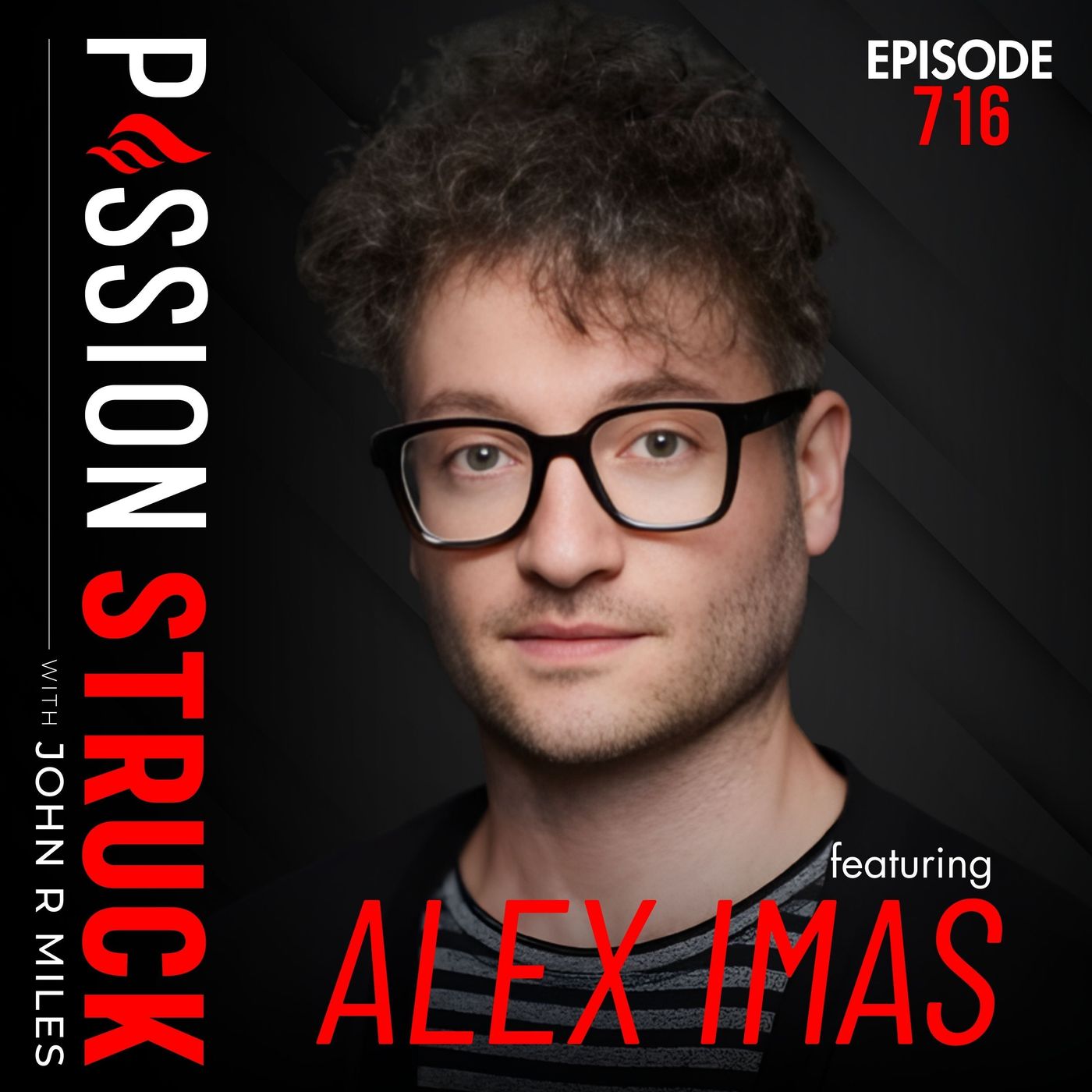
The Winner’s Curse: Why Smart People Lose Their Way | Alex Imas – EP 716
About this Episode
What if “winning” isn’t proof of intelligence, but evidence that something went wrong?In this compelling episode of Passion Struck, behavioral economist Alex Imas joins John R. Miles to unpack The Winner’s Curse, a powerful concept from behavioral economics that explains why smart, capable people systematically overpay, overcommit, and double down on bad decisions.Drawing from his research and his forthcoming book co-authored with Nobel Laureate Richard Thaler, Alex reveals how the Winner’s Curse shows up far beyond auctions and markets—shaping career choices, relationships, investments, leadership decisions, and even how we interact with AI-driven systems. When competition, uncertainty, and ego collide, the “winner” is often the person who misunderstood the situation the most.John and Alex explore why human decision-making breaks down under uncertainty, how mental representation distorts the choices we think we’re making, and why loss aversion and sunk costs keep us chasing outcomes that no longer serve us. They also examine how modern technology and algorithms don’t correct these flaws but often amplify them.At its core, this episode is about reclaiming agency in an irrational world: learning to recognize when confidence is misleading, when winning comes at too high a cost, and how better decisions begin not with smarter thinking, but with clearer framing. If you’ve ever wondered why success sometimes feels hollow, why “winning” creates regret, or why intelligent people repeat the same costly mistakes, this conversation will change how you see choice itself.Passion Struck was recently ranked #1 on FeedSpot’s list of the Top Passion Podcasts on the Web, recognizing the show’s ongoing commitment to thoughtful, human-centered conversations like this one.Check the full show notes here: https://passionstruck.com/the-winners-curse-alex-imas/Download a Free Companion Workbook with reflection prompts tied to this episode.All links gathered here, including books, Substack, YouTube, and Start Mattering apparel:https://linktr.ee/John_R_MilesPre-order You Matter, Luma:https://youmatterluma.com/For more about Alex Imas:https://www.chicagobooth.edu/faculty/directory/i/alex-imasIn this episode, you will learn
Connect with John
Support the Movement: https://startmattering.com/. Every human deserves to feel seen, valued, and like they matter. Wear it. Live it. Show it.
Disclaimer
The Passion Struck podcast is for educational and entertainment purposes only. The views and opinions expressed do not necessarily reflect those of Passion Struck or its affiliates. This podcast is not a substitute for professional medical or psychological advice.
- Why the Winner’s Curse means the “winner” often made the biggest mistake
- How behavioral economics challenges the myth of rational decision making
- What mental representation is and how it distorts the choices we believe we’re making
- Why loss aversion and sunk costs keep us chasing bad outcomes
- How uncertainty, competition, and ego interact to produce overconfidence
- Why AI and algorithms often magnify human bias instead of correcting it
- Practical ways to slow down decisions and avoid costly “wins.”
Connect with John
- Keynotes, books, podcast, and resources: https://linktr.ee/John_R_Miles
- Children’s Book — You Matter, Luma: https://youmatterluma.com/
- Pre-Order The Mattering Effect: https://matteringeffect.com/
- Book John to Speak: https://johnrmiles.com/speaking/
Support the Movement: https://startmattering.com/. Every human deserves to feel seen, valued, and like they matter. Wear it. Live it. Show it.
Disclaimer
The Passion Struck podcast is for educational and entertainment purposes only. The views and opinions expressed do not necessarily reflect those of Passion Struck or its affiliates. This podcast is not a substitute for professional medical or psychological advice.
Transcript
coming up next on passion struck don't succumb to the sunk cost fallacy so the sunk cost fallacy
is this idea that i've already done something i've already gone down this path i might as well
keep going even though it's looking like a bad decision don't succumb to that sunk cost fallacy
always take a moment think is the next step if i hadn't gone into this decision to begin with if
i hadn't paid money to invest in the stock if i hadn't taken those that one class in that topic
would i still do that next thing if the answer is no stop do something else
just this is one of the most important things that behavioral science has taught us
welcome to passion struck i'm your host john miles this is the show where we explore the art
of human flourishing and what it truly means to live like it matters each week i sit down with
change makers creators scientists and everyday heroes to decode the human experience
and uncover the tools that help us lead with meaning heal what hurts and pursue the fullest
expression before we're capable of becoming whether you're designing your future developing
as a leader or seeking deeper alignment in your life this show is your invitation to grow with
purpose and act with intention because the secret to a life of deep purpose connection and impact
is choosing to live like you matter hey friends and welcome back to episode 716 of passion
struck we're continuing our series the meaning makers where we're examining how meaning is
formed protected and sometimes distorted in modern life in our last episode on Tuesday with
dr. Stephen slumman we explored how beliefs form and how certainty when left unexamined
and quietly narrow our thinking and distort our sense of meaning today we take the next step
because even when our beliefs feel solid the real test of meaning shows up in the choices we
make under pressure my guess today is Alex emus Alex is a behavioral scientist and professor
whose work examines how people make decisions in competitive high stakes environments especially
when the desire to win quietly distorts judgment and obscures cost he is the author of the winners
curse written with Nobel laureate Richard Thaler our conversation centers on a powerful idea known
as the winners curse a phenomenon where people win by overpaying over committing or over reaching
only to discover later that the victory itself carried structural costs that they never intended
to accept what makes this so relevant to meaning is this many lives aren't misaligned because
of failure they're misaligned because of success achieved inside distorted environments in this
episode we explore why capable people make systematically costly decisions how our environment
shape choices more than intentions why competition amplifies overconfidence and risk and how
recognizing the winners curse can help us build success that actually holds before we dive in
a quick note on a project that mirrors these names of inherent worth my new children's book
you matter lima is a bridge to that truth or a reminder that your significance isn't earned by
your performance it's a fact of your existence you can pre-order it now at Barnes & Noble for
you matter lima.com if this episode resonates please share it with someone navigating a similar
season and if you haven't yet a five star rating review on Apple Podcasts or Spotify
helps these conversations reach the people who need them most you can catch the full visual
experience on our youtube channels passion struck clips and genre miles now let's continue the
meaning makers with Alex Emus thank you for choosing passion struck and choosing me to be your
hosting guide on your journey to creating an intentional life now let that journey begin
hey friends there's something about March that makes you want to reset your space
for me that started in the kitchen clearing out what I didn't need and upgrading what I use
every single day that's when I brought in caraway what I love is how simple caraway makes everything
the ceramic coating means food just lifts right off so I'm using less oil clean up take seconds
and cooking actually feels enjoyable again but it's not just performance it's the intentional design
the storage system keeps everything organized and I've become a lot more mindful about what I
bring into my home and that's why it's so important that caraway is third party tested and made
with high standards which just gives me more confidence and when I'm using every day it's one of
those upgrades you feel immediately caraway's cookware set is a favorite for a reason it can save
you up to $230 versus buying the items individually plus if you visit carawayhome.com slash passion
struck you can take an additional 10% off your next purchase the steel is exclusive for our listeners
so visit carawayhome.com slash passion struck or use code passion struck at checkout caraway
nontoxic kitchenware made modern I am absolutely thrilled today to welcome Alex Eamist
to passion struck welcome Alex how are you today I'm doing great John thank you I'm so excited
to have you on the show for the listeners if you don't know who Alex is he's earned the Sloan
research fellowship multiple rising scholar awards and is widely published Alex what first
drew you to studying decision making was there a formative moment that made you question why
people act so differently from what theory predicts I was drawn to decision making very early on in
college actually the first time I was drawn to it was from the perspective of abnormal psychology
so I was drawn to decision making like thinking about cases when things really go wrong so schizophrenia
bipolar disorder and I've always just been fascinated by the different ways that people
make decisions you get into your own head assuming that everybody acts the way that you do
and as I met more people made more friends I realized wow people so many people think so differently
than I do and I was just fascinated by that all of this these different perspectives all of these
different minds going out there and making decisions while I was taking abnormal psychology and
psychiatry courses I was also taking economics courses and I was an economics major and doing in a
pre-med program and in economics I was struck by the fact that the assumptions in economics were
basically the opposite of that was that everybody thinks exactly the same and everybody might have
different preferences but the basic idea that everybody has correct beliefs everybody maximizes
a utility function you might care more about risk than I do or you might like apples or oranges
more than I do but for the most part people are very similar and when you get to the macro models
people are like literally the same these are like representative agent models so I was just
struck by the fact that wow my class is about real human people are very different than the
economic classes that I'm taking at the same time and I was just very fascinated by that fact and
wanted to figure out how I can bridge those two things together and that's how I found behavioral
economics and dove right in when so once I discovered it well a lot of what I talk to people about
on the show is the power of our choices and I remember doing an interview a number of years ago
with Michelle Seager from Michigan and we were talking about the power of micro choices and I
understand you study how people mentally represent choices what does it actually mean to represent
a decision in the mind a mental representation is essentially what you think you're facing so let's
say you decide to open up a bank account so what does that mean you look at the amount of money that
your deposit will grow by you look at the minimum deposit you look at fees all of these sorts of
things and then you make a decision whether to go with that bank or a different bank a mental
representation is basically how do I take all of those different features and how do I represent them
in my mind so some people for example completely ignore overdraft fees like they don't even consider
them that's not in their representation of the decision that they're facing and so when you're
choosing to buy a stock or not buying a stock when you're forming a portfolio when you're thinking
about a job to get so one classic kind of example is like people from Michigan versus people from
California were asked people are about to go to college where do you think they'll be happier
and their mental representation was all about the weather the majority of their decision was
where's the weather better and when California was a lot better in Michigan people thought wow
people in California must be so much happier and turns out if you actually measure people's happiness
it's not there's not much of a difference between the two places what were people missing well when
you move to California there's something called traffic there's something called all of the inconveniences
that come from living in Los Angeles and that's just not in people's representations of
that decision and when it's not in the representation you don't take it into account and make wrong
forecasts you make the wrong decision and potentially make some mistakes if you're missing
something in your representation thank you for sharing that such a fascinating body of work
and something I'm extremely interested in as is the topic of risk and I understand that you've
researched and written a lot about dynamic inconsistency which is really gets into the handling of
how risk diverges from actions in real time and I understand there's a gap that can emerge how does
that gap relate to this dynamic inconsistency dynamic inconsistencies a very general property that
basically means look I plan to do one thing and I don't do it it's the idea that I have a goal
I want to work out I want to lose weight I want to get healthy and then you say all right in order to
do that I need to go to the gym I need to have a good diet and these are the types of things I need to
do and then you make a plan you write it down you do whatever you need to do you buy a gym membership
you make a nice little plan for yourself to meet the goal and then when the time arrives to actually
do that thing you don't do it you do something else in the case of risk what my research has shown
is that when people start taking on risk they essentially really like these kind of low
probability high-wind gambles so like when I'm thinking about forming a portfolio or buying some
stocks I have a plan for how I'm gonna hold those stocks essentially what my plan is look if the
price goes up I'm gonna hold on to it if it goes down I'm gonna sell it right away that plan
generates risk that kind of looks like a lottery because the downsides eliminated but the upside
is like essentially infinity or not infinity but a very large number so that's what people plan to
do what do they actually do turns out they do the exact opposite of that when the stock goes up or
their portfolio goes up they're like oh man I just made some money let me cash that in and buy
something or buy something else whereas when they start losing what do they do they think oh man I'm
in the hole I gotta get out of it I better hold on to it I better put even more money into it
they double down they chase their losses so basically what does their portfolio look like what
is their ownership look like the opposite of what they intended to do one one of the things that
really interests me is taking this whole idea of decision-making and looking at it now in the
world that we live in where digital technology and AI has become so pervasive what new behavioral
patterns or biases are you seeing as humans are adapting to machines or it could be our algorithms
are adapting to our irrationalities depending on how you look at it I don't think there's any
new psychology out there the past 10 years 15 years has not been long enough for us to develop
any new biases or psychology what we're seeing is a lot of the biases erupt on steroids so we're
seeing people double down and risk a lot of money on the fact that now the casino they don't need
to drive to it it's on their phone so we're seeing a huge explosion of bankruptcy cases all over
the states all over the world that like online sports gambling has been legalized all over the
America it's also been legalized in places like Brazil Brazil the government is now dealing with the
fact that something like 25 or 30% of people's welfare assistance is being spent on sports gambling
and things like that and getting people into debt and getting them into bankruptcy and basically
people are losing all of their money so that's just one example where access to digital technology
reforms are very well aware of the biases that people have because they have full control over
the information and the environment that people are in when they're making decisions they could
construct these algorithms in a way that really exploits these biases on a scale we haven't seen
before what do you think the next evolution of that is going to be we've already seen it being
used to disrupt political races we're seeing used in warfare tactics we're seeing it used by
influencers where do you see this going we're at a crossroads where there's one path where
artificial intelligence can be really be a force for good this is a similar crossroads we had
with information technology in the late 90s where you know you had access to the library of
Alexandria at times 100 right all of the information in the world at your fingertips theoretically we
could be a in a utopia right now where everybody knows their biases and heuristics and they have
all of the information in the world to solve them they have governments and or affirms that create
apps for them to make better decisions they're saving money for retirement all of these sorts of
things we could have been that is a world that's not the world we ended up with the reason we didn't
end up with that in that world is because there's a lot more money to be made by exploiting biases
than just solving them these biases we're in a similar crossroads right now with AI we have a
situation where you can have artificial intelligence basically act as an agent for you act as a
decision aid for you on a scale that we've never been able to reach before because these are
completely personalized things that know your biases know your heuristics and can really help
you make better decisions but on the other hand we could have AI just basically allow firms to
engage in first degree price discrimination which is basically all of the consumers surplus we get
we learn that we get an econ 101 because firms can't engage in first price in discrimination now
firms can be as they through these AI machine learning algorithms they have all of the data on
every single individual to allow them to target them with specific prices so we can get into that
world too we can see the emergence of first degree price discrimination that on a scale we've
never seen before we can have an emergence of misinformation of people not really knowing what's
real out there or we can have something quite different where AI actually helps solve all of these
problems so obviously with all the changes that are hitting us this is a completely different world
in behavioral economics just as it is and every other dimension of our lives so I thought it was
pretty interesting that a winner's curse came about I understand it over 30 years ago but you have
co-authored a new update to it with noble laureate Richard Thaler how did that collaboration come
about and what did you learn stepping into the world of a foundational thinker as both colleague and
co-author so I've known Richard for a while when I was a graduate school my office ended up being
right next to his because he did his winters in San Diego and that's where I got my PhD and we
started talking pretty early and then my first job was a Carnegie Mellon and we kept talking
throughout that process and at some point he called me up and said why don't you come out and give
a talk at University of Chicago I ended up with a job at University of Chicago sometime in the first
year at University of Chicago he called me and said hey I got a project would you be interested in
in thinking about it and it was basically the original winner's curse which was basically the
anomalies columns that he had been writing about each individual behavioral economics phenomenon
basically taking all of those columns that he had written up to 92 stapling them together and
giving them making them into a book and they it happened to have gone out of print and the publisher
asked him if you want to do an update I jumped at the opportunity it's not every day you get to
work with a noble laureate he's a becure of mine and we're friends so I thought it was going to be
a lot of fun it ended up not being an update as uh those things traditionally are done about two
thirds of the book is brand new essentially what we ended up deciding to do was to take those
original anomalies columns and use them as like a foundation for each chapter and then rewriting
them to some extent for the modern audience and then for each chapter that covers a specific topic
in behavioral economics there's an update that looks at all of the research that's happened in
over 30 years in that space so that those updates essentially catch the reader up to what's been
happening in behavioral economics since 1992 which includes new topics and kind of new areas
that behavioral economics has gone into it is interesting in over that 30 year period how many of
these theories used to be questioned at first and now you can spout them off and they're widely
accepted although I still don't see a lot of them being placed in modern textbooks which is
something that we need to fix but I'm interested I've heard a lot about Richard Taylor haven't had
a chance to meet him here he's very humorous but I'm wondering what's the most powerful piece of
wisdom or advice he's given you probably the most powerful piece of advice is in terms of my day
to day life that I use is to not worry or argue particularly argue about things that probably aren't
going to happen so he calls that don't argue over off-equilibrium paths which is an econ way of saying
look if you and your wife are arguing about something you know what kind of house you're going to get
when you move to Stanford California think about are you going to move to Stanford California to begin
with and the chances of that are fairly low so just don't don't have that argument say let's
table that it turns out like a lot of the kind of conflicts and anxiety that I particularly have
and many others do too are about things that counterfactuals low probability events things that are
probably not going to happen and thinking through oh my worried about something what is it what is
the probability of that thing actually happening and if it's really low just think about something
house argue about some well try not to argue about but if you have to argue about something that's
probably going to happen and that piece of advice I actually reference it all the time particularly in
my inner person of life and how I go about my day I understand behavioral economics began as a
rebel field as I alluded to earlier but I understand when the book was first written a lot of the
experiments that were done at that point in time we're in the classroom or in the lab and I know
one of the big evolutions especially now through the work that Katie Milkman and Angela Duckworth
are doing with behavior change for good is we're now able to start doing a lot more field research
and with their evolution a lot more mega studies around this how has that shaped
where the field is going do you feel that's mostly what the updates are focused on is the fact that
precisely as you said the original behavioral economics studies and that was the pushback
was that they were done with college students at low stakes sometimes hypothetical not even like really
consequential decisions and economists were basically like hey that's cool fun study but we don't
really care about college students who don't know what they're doing we care about stock market
professionals we care about professional athletes we care about CEOs of companies and we just don't
think they're going to make these mistakes nice study but we don't care and for the last 30 years
the field has moved into as you said the field it's real it's studies with real professionals large
studies field experiments observational data sets showing that the types of things that we studied
with these college students they show up with CEOs of major Fortune 500 companies with people with
real money on their line making decision after decision before we continue I want to pause on
something important listening to a conversation about decision making under pressure is one thing
noticing how those forces shape your own choices is quite another that tension between momentum
and discernment is exactly what this conversation with Aleximus is about meaning isn't shaped only
by what we choose it's shaped by what we continue that's why each episode in this series is paired
with reflection tools inside my substantiated life not to tell you what to do but to help you see
structure more clearly asking questions like where might I be honoring momentum without reassessing
cost what environments are shaping my choices more than my values and what would it look like to choose
sustainability over escalation you can join us at the ignitedlife.net now a quick break from
our sponsors thank you for supporting those who support the show you're listening to passion
struck on the passion struck network now back to my conversation with Aleximus it's really interesting
I first started to get immersed in this in the mid 2000s and I was working as an executive
at lows at the time and I was in charge of all the data across the company and we spent a lot of
time looking at the supply chain obviously but even more time looking at customer patterns and
interactions and so we were hiring a team of data scientists and behavioral scientists to help us
understand how do we modernize the supply chain ecosystem and get people to work more efficiently
but more importantly we were looking at how do you engage with the consumer in what we were
trying to do as a total closed loop so as they were using different channels to interact with lows
whether it be online the call center in the store etc how do you make it feel to them like it's one
channel and not separate distinct channels and that's evolved today for them into my lows and other
things but it's really fascinating to me how much it is now powering so much of commerce that's
done around the world can you talk about that a little bit more I think with behavioral economics
and behavioral science I think what many people's perceptions are missing is the amount of behavioral
economics and science that's been going on in the private sector a lot of the focus has been on
governments it's been on public sectors initiatives but the private sector has really been doing
behavioral economics before behavioral economics was even a field companies like lows as you mentioned
are doing a lot of behavioral economics in terms of thinking about improving the customer experience
I had worked with P and C briefly at some point thinking about designing my wallet which is like
their platform for getting people to have all of the information that they would want about their
bank account in one spot eliminating these sorts of barriers for the consumer experience again
when you're thinking about kind of the standard model of economics these things shouldn't really
matter the fact that you have to click a couple times to get information about the amount that you
have on loan versus the amount that you have in your cash or savings account these sorts of things
are so cheap that people should be able to do it and you don't need to create a separate platform
but the fact of the matter is because this people are have bounded rationality it really matters
that they have everything in front of them in an easily digestible way this goes back into the idea
of mental representation if I have my loan in one spot of the website or the platform if I have my
savings account in a different platform all of these things are earning different interest rates
I have a credit card open so what a lot of people do for example when they don't have these things
at the same time they have a high interest rate balance on their credit card while at the same time
holding enough money in their bank to pay off the credit card so essentially they're losing money
on the interest rate paying these high interest rates well where they could just completely pay off
their credit card and not have to deal with that at all but the fact is because they don't have
all of that information given to them at the same time on some platforms many people are doing that
and I think a lot of companies are really trying to incorporate behavioral economics to make these
sorts of consumer experiences a lot better Alex thanks for going into that I wanted to go back
to the book and I wanted to start with the basic idea itself what is the winners curse and how does
it show up in our daily lives the winners curse is best demonstrated in a little experiment that
you can do yourself if you want to make some easy money and you have a free evening get a jar
fill it with some coins and go to the pub or something like that and say look everybody in the room
bid on this jar of coins and the winner gets the money you don't have to take the coins I'll
then owe you the money and what you're going to see time after time and I know this because we've
run these experiments in class all the time the person who actually ends up winning will pay more
for the jar that's in the jar so you're going to be able to earn some money from this so why does
that happen essentially when you look at the jar everybody looks at the jar people get a different
estimate of how much is in the jar so some people think let's say there's 15 bucks some people say it's
18 bucks sometimes we'll say 12 nine eight people are all over the place they don't know how much
money is in there but who's going to end up winning the person who wins the jar is going to be the
person who's most optimistic who's most wrong in the positive direction and that's the winner's
curse it's the idea that the person who's winning is actually going to be losing money because they're
wrong in the positive direction and that's at the demonstration of the winner's curse and that's
partly why it happens but the first time that when it was documented in the 70s it wasn't with the
jar of coins it was oil executives scratching their head about the fact that look we got these
expensive engineers looking at oil wells thinking how much oil is going to be in these wells
and every time we actually win a bid at an oil well we end up having less oil in there than we
thought we did and we keep losing money what's going on and they publish these papers in trade
journals calling it the winner's curse by basically saying look something is wrong every single time
we end up winning we end up actually losing what's going on and folks like literature,
Thaler, Max, Bayzer, and and other people delved into it and started to understand the psychology
behind the phenomenon. Man it's so interesting I spent the early part of my career working as a
practice leader at Arthur Anderson and I was in the Houston market and I still remember sitting
in this room and Exxon mobile with the hundreds of executives across the industry hearing and
economist come and talk to us saying that we had reached the peak of big oil and from this point
in history going forth there was going to be a demise every single year.
Boy was he wrong with the evolution of how we do fracking and other things but science finds
away. Yes exactly but it reminds me of markets and how modern markets change which is something
that you guys covered in the book and you did it through social contagion and the persistence
of overconfidence in modern markets by examining Reddit and Robin Hood and I was hoping you could
give the audience a little bit bigger take of what I'm talking about here.
With Robin Hood and the preflate proliferation of these online communities essentially so this
has a bit more to do with the stock market and these like meme stock phenomenon and there's
obviously many more implications but the meme stock phenomenon is a great example we've had bubbles
in the past and in the past then going back to the 1600s we've had bubbles and it's this idea that
people over there's this herd mentality where people think like maybe yeah maybe this is over
value but everybody else is being on it if I don't bid in on it I'm going to miss out on all this
money to be made so I'm going to bid on it too and the price goes through the roof and then one day
somebody wakes up and says hey this is a bubble I'm getting out and this starts that whole
downstream cycle where everybody ends up losing money except for that one person who got out in time
and this idea of behind bubbles is now again supercharged when you have these digital spaces like
the combination between Reddit for example and Robin Hood what does that combination look like in
practice the game stop situation is a very nice example because that allows people to coordinate
their decisions very in a fundamentally different way they can say in the wall there's a subreddit
called wall street bets what wall street bait that's allows you people to do is to say look we're
going to all hold on to this and actually they have this their own language to talk about the
fact that everybody that is going to be holding on to these these sorts of stocks so they buy the
stocks and without Reddit you don't really know who else is going to sell because nobody's
coordinating everybody's sitting independently in their house with Reddit you have the ability to
for people to coordinate to say like diamond hands what that means is that everybody's committing
on holding and what that means is that bubble can go on for a much longer time than what we've
seen before because what we've seen before is these things like are bubbling up and they've
explode bubbling up and explode with game stop you look at the price now and it's actually it hasn't
crashed it went down certainly from the peak but it's still up there because people are coordinating to
hold their shares saying look we're going to we're going to keep this going and the ability for people
to coordinate on buying these things very easily through Robinhood and the combination of being
able to publicly coordinate and communicate on these forums has led to a very different financial
market for retail traders than say what we had even 10 years ago yeah that was just shocking when
that happened a few years ago to see how a community platform like that drove such a huge market
change it was fascinating and scary at the same time I'm not sure your thoughts about it but I
still remember that and just being in complete awe about what happened these there's two different
models of financial markets out there there's a model of kind of efficient markets where the price of
a stock is the discounted future cash flow of that company that's less the standard rational model
the people are saying like look this is the price that this stock is worth because that's how much
it's going to be paying out through dividends and all sorts of other things to me and that's how
much I'm willing to pay for this is the fully rational model the other one is by John Maynard Keynes
who was this giant economist in the 20s and 30s and he called the stock market a beauty contest
yeah what's the what does he mean by that back in the day you had these newspaper contests where
there was a whole page of different faces let's say usually was women's faces and the winner of
the contest was the one who picked the face that everybody else picked so not the one he preferred
the one that everybody else picked so this gets into this idea of theory of mind where my decisions
are based on what I think everybody else is thinking and that's a fundamentally different model
of the stock market where now I don't care how much cash flow GameStop has I don't care how much
cash flow AMC has I am buying GameStop because I think other people are going to buy GameStop and
that's it and that and therefore because of that the odd these online forums have this huge power
of coordinating this behavior because now I can say look I know that GameStop is going to pop
because a lot of people are saying GameStop is going to pop and now you have AMC and coals and all
of these other different completely random companies popping just because of this phenomenon
yeah man it is so interesting yeah well I wanted to ask you about some of the classics and I
thought we could start with loss of version but we've long believed losses heard about twice as
much as equivalent gains please us does this still hold true in the hyper stimulated digital
environment or our attention emotion do you find changing that ratio that's a great question
we don't have a lot of data on this first of all so you're thinking like what is the loss of
version crypto or something like right exactly we're like a just a completely digital asset
I don't think anybody I know has collected data on this but this is a quite an interesting question
what are the implications for all behavioral economics when you have physical goods such as a
house a mug other sorts of products what are the implications of those of behavioral economics
in that space for a world where a lot of stuff is just going to be digital completely
isn't going to have a physical presence in the world if I was to hypothesize and based on some
my own data where I've run an endowment effect experiments with digital art and essentially I found
that things are largely unchanged if I tell you that you are the owner of an art piece versus I
ask you how much are you willing to pay for that art piece your valuations change just from me telling
you you own it the minimum that you now be willing to accept apart with it increases by two and a
half times relative to five seconds ago before I told you that and this is like the for your
audience this is the NFTs non-fungible tokens which are now used to allow digital creators to
have some ownership over their art so the endowment effect doesn't seem to really weaken when you go
into the digital space at least in that sense okay well another one I wanted to go into was the fairness
anchoring effect and so I guess the way I want to frame this is fairness and norms so there are a
lot of modern pricing debates that people get into about rejecting deals that we see online and
feeling that they're unfair even when they cost us money etc what does this say about the role
of fairness and sustaining social trust in my view fairness and norms are key for co-sustaining
cooperation within many experiments is the fact that if you have a game so it helps to go through
one example of this sort of game so the public goods game is a really nice way of studying these
things what it means is that let's say me and you and maybe two or three other people are playing
this game and the game is fairly simple me and you have an amount that we're given so like that's
an earned down mint that let's say it's two bucks each of us has two bucks and then we decide how
much of the two bucks to contribute to the quote unquote public good whatever we contribute gets
added up multiplied by some amount and then divided evenly between all of us what that means
is that even those who didn't contribute anything would still get a piece of the public
good what does that mean for economic what does economic theory say about this well if I get
something without contributing anything guess what I'm going to do I'm going to contribute nothing
and then guess what happens nobody contributes anything so the economic theory is a very strict
prediction of what happens in public goods games what actually happens in reality well people
contribute something they contribute 20 30 40% of their endowment especially in the first period
they contribute something gets divided everybody gets something but as the game continues especially
in the very final round those contributions go to zero in the final round people think well everybody
else is contributing something you know what what if I just don't contribute anything and I'll still
get paid guess what everybody else is thinking the same thing and then nobody contributes and nobody
gets anything other than their endowment so basically the overall pie shrinks as the game progresses
so the real innovation happened in 1999 2000 with Ernst fair and Simon goctor ran a game of the
public goods game but they introduced one little extra thing which has to do with fairness and norms
what they did is that after every single round of the public goods game everybody has the opportunity
to spend a little bit of their own money to take away a larger amount from somebody else
what does this actually mean in practice it allows people to punish those who don't contribute
if people feel like whoa this was unfair I contributed something but you didn't I can now punish you
hurt you at a cost to myself again economic theory very simple prediction why the HELL would
I spend money to punish somebody else I wouldn't so the economic theory predicts no
contributions no punishment what ended up happening in this game people felt like non contributors
were acting unfairly and they were more than willing to punish them and what did that do to the game
it meant that people who were thinking maybe I won't contribute now they got worried about
getting punished so they contributed so contributions went up almost all the way and not only did
they go up in the beginning they stayed high through the entire game even in the last round
because even in the last round if I don't contribute I'm still going to get punished so I'm going to
contribute so adding this element of fairness of nor punishing norms allowed cooperation to flourish
in this setting without the ability to punish people who violate norms cooperation just completely
went to crap and was by the final round there was none of it left well and now I wanted to talk
about one of the things that Richard Taylor is most famous for which is his work on nudges which
he did with Cass Sunstein who has been on this program and but I wanted to revisit this in its
ethical dimension and you've been discussing a little bit about this in the past couple of answers
but we started this episode talking about choice and the research that you've done around
how to make better choices but there's this tension between helping people to make better choices
versus manipulating their autonomy and so you've explored this dual use quality of throughout the
book and what did you find that's most meaningful about the research?
So the whole Nudge program was started by a paper called Libertarian paternalism
and the idea there was to say look standard economics defines a choice set in a particular way
and behavioral economics says that we can choices can change without affecting people's ability
to make decisions so what does that mean? So let's go to the 401k example so the 401k example the
classic opt-in opt-out study so before Bridget, Maedrian and Shay had this landmark study in the late 1990s
essentially what did that look like? People chose opt-in into a retirement plan and most people
didn't what they did instead is to say hey instead of people choosing to opt-in let's make the
default that they are in the plan and if they want to they can opt-out so all it is that instead of
checking the top thing the bottom thing is checked. Standard economists doesn't matter right it's
the choice that is exactly the same I'm deciding whether opt-in or opt-out turned out this raised
opt-in rates to the roof many more people ended up being enrolled right so this is the behavioral
economics part this is a classic Nudge you don't change the in the actual choice environment people
are free to make the same decisions as before but they're making different decisions because you're
introducing this seemingly irrelevant factor which is what Richard calls it into the mix what
people are defaulted it the ethicality behind it depends on who you ask frankly when you're getting
into ethics this is a normative field so different people have different opinions you now you're in
the world you're not in the data world you're in the opinion world right and there's a group of
people who view nudges this perfectly ethical other people disagree with that statement they think
that your behavioral economics should be part of the coercion people can have disagreements about
this I think with something as important as an retirement savings you have to start thinking
about the costs and benefits to people at the end when they're reaching retirement and they're
thinking wow I forgot to opt-in into my 401k plan I really wish I did if only somebody had
nudged me to contribute to my 401k I would have ended up with more money for my retirement
in other cases in the case of organ donations or something like that Richard and Cass have
work in this space saying look we should give people full autonomy and nudges don't really
belong in that space so it really depends on the context and it depends on the argument
yeah I also wanted since we're on this topic to explore amazon and amazon prime sales because
I understand amazon uses nudges as well as anyone does how should a listener think about this when
it comes to like the psychological triggers that happen when amazon is doing like a prime day
yeah so I think we we talked about this in the beginning of the conversation companies have
been doing these behavioral science behavioral economic experiments since they started so amazon
literally doing thousands of eb tests on how a prime day advertisement how it should look where it
should look to who which and then you have different versions and those two different versions are
given to different people depending on their buying habits the optimization of behavioral science
in order to get people to purchase is just it's done to a very very huge extent by these by these
companies now I haven't looked at specific things that particularly amazon is done but certainly
there's research and behavioral science showing that something like making shipping free for example
or doing expedited shipping for a lower amount on a specific day really gets people to purchase
because they're thinking wow their loss of version is getting activated there that they feel like
they're going to be losing less money this is something that they really want they want this thing
faster this is the whole self control my opium thing being taken advantage of now I get to have
this thing which maybe I don't eat it all but hey I get it faster I'm going to buy it that's the
say that they're doing a lot of different things all at the same time and they're making these
cocktails of behavioral science in order to get people to purchase the firms have been doing this
since the beginning of capitalism right it's just now it's in a completely different scale
we've talked about the digital world a few times now I want to think about digital biases
specifically digital biases the standpoint of authoring and I think of sub-stack and I think in
general on finding that people are under reporting their use of AI tools because of something you
explore in the book which is social desirability bias but to me if someone asks you if you're using
AI to help with your writing and someone answers no it's almost unbelievable to me because
if you're using a Google search or literally any technology that's out there all of it is
underpinned by different AI frameworks so arbitrarily you are using it and almost any research
that you're doing but what do you think it reveals about how humans perceive technology's role
in their competence or their creativity I think so I have a paper about this on AI and social
desirability bias so we run a study in at the large university asking students they're about their
AI use and when you ask them how much do you use AI ever right the answer is like 63% and you
might think wow that's low most students I think are using AI and it turns out if you ask a
slightly different question and this is using techniques from psychology in order to overcome
social desirability bias you ask not whether you use AI you ask whether your friends use AI
now social desirability bias isn't really affected because it's not me you're asking about my
friends and that number is 95% so that gap between 95% and 60 something percent that is the gap
that people are misreporting their AI use essentially and we've collected other data
confirm that the gap that that it's under reporting versus over reporting in one condition versus
the other so this is something that that's going to be a challenge for companies for policy makers
especially for educators so this is a space that I'm very interested in from a both a personal
perspective I'm a teacher but also from a policy perspective in terms of like how do we think
about university or higher ed in the age of AI obviously we can't say never use AI become a
ludite but also we want people to use AI in a way that helps them to learn something so they
retain some information but they also learn how to use these tools in an effective way that's
going to help them when the exit the university and that kind of cause benefit is something that's
that that conversation is happening right now but it needs to happen faster yeah I can't
remember if I was talking to Bobby Parmar or Judd Kessler but one of them was telling me in their class
that I've understood that the papers that they're getting back are progressively getting better
and better because obvious students are using AI to help them write them but what I wish I
remembered which one told me this but what they were doing in their class was taking it to another
level so they were making them come in front of the class to show the application of what they
researched to make sure that they were retaining what they were writing about and they were telling
me that it really showed a huge difference between who was actually retaining and using the
information versus who was just using the AI tools because I know I find myself when I'm using
them a lot I'm not retaining as much about the work that I'm doing as compared to when I'm doing
a whole bunch of research and then having to write it on my own. There's great research about this
Sherri Amalamed whose Judd's colleague at Wharton shows that if you do research through AI versus
just googling it so you have access to Google which is also uses AI but in a different way versus
LLMs to help you research a topic you just simply retain more information when even though you're
reading the same information when you search for it yourself and parse through it the way that our
brain works is to retain the information between the pauses so like when you're reading a book
versus you get the spark notes from a book right why did we discourage spark notes like in 30
years ago 20 years ago when I was in school the information is the same but the process of reading the
book the text and pausing flipping back and forth all of that is part of learning but it's discounted
because it doesn't seem like that's not where the information is and that process is really there's
we need to be very explicit about what actual learning looks like in order for the broader
population to understand that AI is an incredible technology but reading winners curse by saying what
what is in the winners curse give me a two paragraph summary versus actually reading the book you're
going to retain something very different yeah absolutely well Alex if listeners could take two or
three practical tools from this conversation to improve their own decision making where would you
tell them to start don't succumb to the sunk cost fallacy so the sunk cost fallacy is this idea that
I've already done something I've already gone down this path I might as well keep going even
though it's looking like a bad decision don't succumb to that sunk cost fallacy always take a
moment think is the next step if I hadn't gone into this decision to begin with if I hadn't paid
money to invest in the stock if I hadn't taken those that one class in that topic would I still
do that next thing if the answer is no stop do something else just this is one of the most important
things that behavioral science has taught us I think the first thing that I said don't worry about
things that have very little probabilities of happening don't argue about those things I think
that's a very good lesson too I use it all the time in my own life and the other thing that I've
done research on and that's in the book is take time to deliberate fast decisions are not necessarily
good decisions so system two thinking system two thinking and people know this but they just
that doesn't work into their everyday lives so a lot of states have cooling off periods before
they can get a divorce there's a reason for that there's cooling off reasons before you can get
purchase a firearm in many states there's a reason for that the reason is that we know that
decisions are better if we think harder we cool off the emotions wear off and we can consider
all of the options and it's actually very easy to incorporate that lesson into your everyday life
in terms of stopping and thinking while you're making important or some important decisions
Alex I always love to ask this question what does it mean to you to live a passion struck life
I think I'm extremely lucky to be doing what I'm doing because I've stumbled into a field where
I feel passion struck and just passionate every single day of it literally every single day
because there's just so much out there to explore and to learn about and for me living a passion
struck life is to keep my mind open to read to say yes all the time instead of saying no if I don't
think I have time to do something and it sounds new and potentially exciting just make the time
and do it that when that that's really and and taking risks has led me to be quite interested and
excited and passionate in my everyday life in terms of what I do every single day for work as well
as for fun and lastly Alex where's the best place listeners can learn more about you
I'm active on x or twitter however you want to call it so I have a Aleximus on that platform and
my website is Aleximus.com and if you guys want to check out the the book it's got a very active
website winnerscurse.org it's got a lot of these materials it's got slides to take these sorts
of concepts and break it down it's got replication materials for the experiments if you want to run
learn how to run them by yourself so that's another place. Awesome well Alex it was such an honor
to have you thank you for joining us on passion so much. Thank you. That brings a close to today's
conversation with Aleximus what stayed with me the most is how quietly the winners curse operates
not just in markets or negotiations but in live shape by escalation comparison and environments
that reward winning without revealing cost Alex showed us that good decision making isn't about
intelligence or restraint it's about clearly seeing inside the systems we're operating in
meaning isn't about accumulating wins it's about choosing what can be sustained without distortion
and that brings us to what's next in the meaning makers series. In my upcoming episode next week
I'm joined by Shana Pearson where we'll explore how meaning is cultivated not through optimization
or acceleration but through presence embodiment and the discipline of slowing down if Alex help us
see the hidden cost of winning Shana will help us explore would it looks like to live from alignment
rather than escalation. It bothers me when people refer to ADHD as a superpower it really does because
there's nothing about ADHD that makes life easier and it's difficult to manage ADHD on so many levels
like in your relationships career personal health name it and so when people are like oh is this
a superpower you should be able to do like all of these things so much you've got this and oh you
don't and you know that life is really hard and you know that you're struggling and you know you're
working a hundred times harder than every single human and longer than anyone there's no superpower
and so then you just feel like there's something else is wrong with you because you can't even use
your superpower you don't even know where it is like where's the superpower part of this. Before you
move on with your date I'd invite you to pause and ask where in my life might momentum be
substituted for discernment. If you want support applying these ideas you can join me inside my
substack at the ignitedlife.net where each episode in the series is paired with reflection tools
designed to help you integrate insight into how you actually live. As we continue the meaning
makers remember significance isn't built by winning at all costs it's built by choosing what
truly holds. I'm John Miles you've been PassionStruck until next time


