
About this episode
On today’s edition of The Briefing, Dr. Mohler discusses the details of Iran’s ceasefire proposal, Iran’s meme war against the U.S., the consequences of porn addiction for a generation of young men, and Canada’s Bill C-9 which is hate speech legislation aimed at Christian conviction.
Part I (00:13 – 08:22)
We Now Know Iran’s 10-Point Ceasefire Proposal: The Original Proposal is Unlikely to Come to Pass, But Just Talking is an Important Step
Part II (08:22 – 11:50)
The U.S. and Iran in a Meme War: Propaganda, Social Media, and the War of Ideas in the Iranian Conflict
- US government accounts and pro‑Iranian voices wage ‘memetic warfare’ by USA Today (Kate Perez and Carlie Procell)
The Devastation of Porn Addictions: A Generation of Young Men are Dealing with the Consequences of Their Porn Addictions, and Even the Secular World Sees a Big Problem
- A generation of boys grew up on porn. Now, some young men want out by USA Today (Rachel Hale)
Canada’s Bill C-9 is Hate Speech Legislation Aimed at Christian Conviction: The Removal of Protection of Religious Speech is a Massive Issue
- Canada hate bill could be ‘weaponized’ against people of faith, Conservative lawmaker warns by Fox News (Kristine Parks)
- Bill C-9 by Canada House of Commons
- Why Mark Carney’s Canadian liberals are going to war with the Bible by The Telegraph (Collin Freeman)
- Canada wants to make quoting the Bible illegal by The Spectator (Jane Stannus)
Follow Dr. Mohler:
X | Instagram | Facebook | YouTube
For more information on The Southern Baptist Theological Seminary, go to sbts.edu.
For more information on Boyce College, just go to BoyceCollege.com.
To write Dr. Mohler or submit a question for The Mailbox, go here.
Get every episode summarized
Each time The Briefing with Albert Mohler publishes, we email you a written briefing from the transcript — the topics, who appeared, and any specific claims, with the ad reads skipped.
Email me new episodesFree for 3 shows. No card needed.
Hosts & guests

Transcript ready
418 searchable segments. Every word is indexed and playable.
Full transcript
The Briefing with Albert Mohler — Thursday, April 9, 2026. Machine-transcribed; use the interactive transcript above to jump the player to any line.
It's Thursday, April 9, 2026. I'm Albert Moeller, and this is The Briefing, a daily analysis of news and events from a Christian worldview. We are continuing to hope for and pray for peace there in Iran and in the Middle East. What we know right now is that the ceasefire, a 14-day ceasefire agreed to by the United States and Iran, and also with the agreement of Israel, a little footnote on that. It's still holding, but tenuously so. And you just need to know that's what should have been expected from the beginning. Any agreement like this is going to be very tenuous and it is going to be conditional in all honesty on some longer term agreement. And so that's one of the things we're going to be looking for and it's one of the things we're going to be praying for. But let's just notice that what President Trump said when he announced the ceasefire agreement, what he said was that the Iranian government had put forward a set of proposals that was
at least a workable starting point. Now that's a remarkable statement from President Trump. And we now know what those ten points were. And so as reported by American authorities and American media and is affirmed by Iran, we now know that the first point is an American guarantee of non-aggression with Iran. Now that may be the easiest place to start because I don't think the United States wants to be at any permanent state of conflict with Iran. And so the United States can agree to that at least in theory. Number two, Iran maintains control of the state of Hormuz. Okay. Now as the New York Times says, it's an understatement. This is likely to become a major sticking point. I think that is abundantly clear. And so if Iran wants to control the state of Hormuz, perhaps even for commercial as well as geo-strategic purposes, that's going to be a problem. And in here we need to remind ourselves as Christians, there's a basic principle in the rule of nations and a navigational law that has to do with the freedom of shipping.
And so if indeed you have a country that claims this kind of territory in international waters, that is a huge problem. It's a very dangerous precedent. Just imagine all the places around the world where that can happen. Now there are exceptions to this you might think. But the exceptions actually probably aren't actual exceptions. So you think about the Suez Canal, you think about the Panama Canal, but those are internal waterways. Okay. So the Suez Canal, internal controlled by Egypt, the Panama Canal, internal. It connects two bodies of water that lead to international waters, but it is not in itself covered by the international treaties and by the prevailing tradition of international law. So it would be like, for instance, a nation on the Mediterranean, I realize it's a far larger body of water, but it's of somewhat similar significance just in terms of global trade. You just can't have one nation claim to control that international waterway.
If you have a precedent here, that's going to be a huge problem. So nonetheless, this is what Iran has demanded. Number three, ending the regional war on all fronts, including Iran's ally, Hezbollah, and Lebanon. Okay. Now, this is a direct conflict with the fact that the United States is calling for Iran to separate itself from these proxies, but there are those who believe that this actually could become a point of agreement because it could be that both Iran and the United States and add Israel to this picture have more to gain by cooperation on this than by continued conflict. Number four, withdrawal of U.S. combat forces from all bases and positions in the region. Okay. Maybe down to a matter of definitions. First of all, the definition of the region and the definition, perhaps even of combat forces, but the United States is not going to agree to remove all combat forces from this region, not going to happen, period. Number five, reparations for war damages in Iran. Again, I don't think that's even possible, not going to happen.
Could be defined as something that's a part of some kind of larger agreement. Number six, acceptance of Iran's right to nuclear enrichment, a debt on arrival. Just absolutely debt on arrival. You know, one of the consistent messages coming from American presidential administrations has been that that's unacceptable. So the approach taken to stop that by say the Obama administration and the Biden administration on one hand, the Trump administration on another, those are very different, but you know, the stated policy is the same. Iran cannot be allowed to obtain nuclear enrichment, the willy to a workable nuclear weapon. Number seven, lifting all primary sanctions on Iran. Well, the primary sanctions are where you have statements from the United States that say there can be no trade with Iran, period. Then number eight is lifting of all secondary sanctions on Iran. I mentioned those two together because the primary sanctions have to do with deals with Iran or Iranian entities.
Secondary bands in this case or sanctions have to do with no business with countries itself that does business with Iran. It's a very similar kind of thing, but Iran's demanding that both be lifted. It's unlikely that's going to happen, but you know, in this kind of negotiation, it's something that could happen progressively given good behavior on the part of Iran over time. Number nine, termination of all resolutions against Iran by the board of governors of the international atomic energy agency. Now the IAEA is actually an independent entity. The U.S. doesn't control it. The White House doesn't control it, but it would be interesting to see how the administration and the IAEA respond to this. That could be a little complex. It may be a little hard to predict because those resolutions are many. It'll be interesting to see what kind of response comes. Number 10, termination of all United Nations Security Council resolutions against Iran. Well, you know, the U.S. can't do that unilaterally. A veto is unilaterally, but the removal of a veto and a change in the policy that is
not unilaterally. But on the other hand, the UN Security Council also includes some nations that have been pretty friendly to Iran, such as even with veto power, Russia and China, and so it's possible that the United States could allow the termination of Security Council resolutions against Iran. So again, it's going to be very, very interesting. I think it's interesting that President Trump said this is a workable place to start. I'm not sure that I would have expected that from President Trump. This doesn't look workable in terms of the actual wording provided by the Iranian demands. But you know, maybe in a larger sense, and I guess this is what we see here, President Trump means workable as in. You know, we've got to have something on the table to begin, and it says something about the way he's thinking that he's willing to at least start with these things. But we're talking about 14 days, and the clock is ticking, but you know, we need to come back to the fact that what we are looking at here is the United States having a responsibility to try to seek peace, but a lasting peace, this short ceasefire, it's virtually impossible
to believe that there's going to be a lasting peace on the other side of 14 days. But you know what, sometimes you just buy time, and it just may be that that's what President Trump and the United States are, that's what we're doing right now. Israel also. Now, it's also interesting that Israel has said from the beginning that it would participate in this 14-day agreement, but it would not cease hostilities in Lebanon. Iran is complaining about that. You know, this is very fragile. It could break even in the time we're having this conversation about it. We'll be interested to see how this goes. But I do think it's important to recognize that the plan that Iran proposed, it's basically dead on arrival on at least a seven of the ten points. And I think there's some people who would hear that and go, well, this, this, this is hopeless. Well, I'm going to tell you, it's not because sometimes international agreements have been hammered out and the impossible becomes possible at the very last minute.
It may be just that kind of situation right here. All right, there are two other elements in the situation with Iran that are really interesting from a worldview perspective right now. Number one, New York Times headline propaganda against U.S. is alarming Trump team. Subhead voice of America shows are revived to push the American viewpoint. Okay. This New York Times article is really interesting because it tells us that President Trump and the Trump administration have had to change the administration's official policy on some of the propaganda efforts. That's the word that the Times uses. Let's just say international communication efforts. And it is because here's something we always had to keep in mind. War is fought out with bullets and missiles and bombers, but it has also fought out with ideas and those ideas have to be communicated. And so Von Klausler is the famous German military historian said that war as politics continued by other means. Politics is also an argument continued by other means.
And you're looking at, we'll say, a radio broadcast back during the Cold War, even shortwave broadcasts. You're looking at communications technologies being used. And this becomes a matter of war weaponry as well. And so the fact is that Iran has deployed all kinds of propaganda tools all around the world. Now I want to add to this a second big front page article. This one in USA today, yesterday, here's the headline, US and Iran engaged in meme warfare. The subhead foes using social media to shape perceptions. Okay. So we're looking at radio kind of traditional media and that first issue of warfare. There's a war of ideas. And this is where Christians must understand there always is always is. And we as Christians have a particular interest and investment in the war of ideas. Number one, that it exists. And number two, what the ideas are and how this this unfolds. The USA today front page article is about the fact that over the course of the military action by the US and Israel against Iran, all sides have been conducting a war in social
media with memes. Now by the way, this has led to some obvious things that you would simply see in social media such as AI generated false photographs and videos being presented in a war of ideas. There is a fast recourse to propaganda and to lies in the place of the truth. Now you know that in social media in general. So it is interesting and we as Christians need to understand that when you're talking about war, you're talking about conflict. The conflict of ideas is even more basic than the conflict of weaponry. And I think there's something deeply biblical about that right down to the Bible's notion of spiritual warfare. But when you are in a war, you are in military action. It is a war of information. It is a war of arguments. It is a war of ideologies. It's a war of communications. And the Trump administration has now been awakened to the fact that some of those traditional communication tools that they had thought weren't so important before, all of a sudden, they're very, very important in order to tell the world the American side of the story.
But we're now not just talking about shortwave and radio and television. We're talking about social media and there is a war going on there too. And this is where Christians understand, even without this war on social media, there is a war on social media. It's a war of ideologies. It's a war of worldviews. And we as Christians to be the last people unaware of that. Now I want to shift. And even as we're talking about a war of worldviews and a moral war being fought out in the digital realm, USA Today had a front page article in April the 2nd. That's just a matter of days ago. And I want to point to this article, not so much just for what it draws our attention to, but where it feels to go. Here's the headline, growing number are fighting the addiction. We're talking about an addiction to pornography. The subhead is generation of boys grew up on easy access to porn. It's a really interesting article. Once again, we're talking about the front page of USA Today.
That's expensive media real estate. And you're talking about a massive front page article drawing our attention to the fact that pornography and even what's defined here is pornography addiction has had a very, very dangerous impact on boys and young men. And it's also interesting. There's no apology here for the article saying this is about males. This is about boys and young men. It's about the devastation that pornography is brought into their lives. And this is digital pornography. This is not a bunch of magazines in a box somewhere. This is the pornography that's being mainstreamed through digital networks and, of course, right down to smartphones and all the rest, laptops, iPads, all the rest. There's big worldview impact in this front page article by Rachel Hale, because there is no evasion in this article about the specific damage that is being done to these boys and young men. So, without going into excessive detail, they're having difficulty functioning in terms
of actual sexual relationships. Now, again, USA Today is not coming at this really clearly with an affirmation of marriage as the only context, but marriage is clearly even in the background here. And the fact is is that the porn addictions are following these boys into young manhood and following them into marriage or into relationships with devastating effect. Devastating effect. Now, you have clear documentation of this. You have first person accounts in this article, and I'm not going to go into any of the detail, but I'll just say to Christian parents and to youth pastors, pastors and others, you do need to look at this article, because it is one of the most depressing things you will see. And the numbers themselves tell us that even where you don't think this is a problem, it probably is a problem. I want Christian parents and Christian young people to understand what is at stake here. We're talking here about an article that says it's having all kinds of devastating effects, but you know, there's no attention here to the devastating effect upon the soul.
That's completely absent. But there's something else completely absent from this. And I think this is just massively important. You're talking about a cover story in USA Today. Again, major coverage, most of the front page, you're looking at a big headline, you're looking at very explicit, very candid, straight on analysis. Let me tell you what's missing, what to do about it, all right? Because that's where the secular world has almost no answer, what's some kind of therapy, some kind of support group. You know, I don't think anyone seriously thinks that's going to be a way to deal with this problem. Nobody, nobody in this article, nobody cited here, seems to have any understanding of why the answer should be no use, a total of lightens. And of course, there's nothing in this article that implies that government should do anything about it. In other words, this is just so downstream of the libertarian arguments, the pro pornography arguments that I guess it seems inconceivable to some people to say maybe a same society would
put some clear boundaries on this. And again, you're talking about boys, you're not talking just about young men, you're talking about boys. And by the way, the article begins with a boy who's barely a teenager. And in some cases, some of the boys aren't even teenagers yet when they're getting trapped into these pornographic cycles. And you know, that's supposed to be illegal. The access on the part of minors to these sites is supposed to be illegal. The concession here is that that's not working. We all know that's not working. Who's holding these sites accountable? You know, we're looking here at an undeniable crisis. But it's one thing to say, this is worth front page coverage. What to do about it? Well, someone else is going to have to deal with that. Now let's shift geographically to Canada. And of course, we've had to look at Canada of late. Most importantly, because of the medical assistance in dying issue, where tragically Canada is really very much on the forefront of moral disaster with this medical assistance in dying. But now I want to talk about two religious liberty issues in Canada.
And one of them is really pressing and it's really big. I think the best report on this has come from Fox News, Christine Perks. She begins by saying, quote, a Canadian hate speech bill is drawing backlash from critics who warned it could chill religious speech and expose some people to prosecution for quoting the Bible. Okay, does that have your attention? Being arrested, prosecuted for quoting the Bible. Okay, so what's in the background to this? It is what is known in Canada as Bill C9. It is identified as the Combating Hate Act. It has been introduced into Canada's Parliament by Canadian Liberal Justice Minister Sean Frazier. It passed in the House of Commons on the 25th of March. It is now going to the Canadian Senate. As Fox News tells us, quote, the measure would expand Canada's hate speech laws, create a new hate crime offense, and add penalties for intimidating or blocking people from accessing houses of worship, cultural spaces, schools, senior residences, means basically nursing homes and cemeteries. This into this, quote, the sharpest criticism of the bill focuses on its repeal of a long
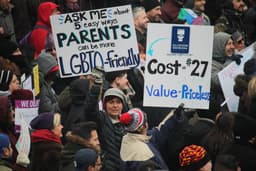
standing defense for religious speech in some criminal hate speech cases. Okay, so I have been looking at the government's website and at the official legislative report and just looking at the text interestingly in Canada's published parallel in both English and French. The bottom line is that the most dangerous thing is the existence of the hate crime, hate speech legislation in the first place. And by the way, Christians don't deny that there is a category of hate crime or hate speech. We understand that's the way sin works. But when you have this kind of legislation and when you have specific protected classes, you run into conflict with, in this case, just a Christian quoting the Bible. Because the included classes include sexual minorities. And that's just a huge part of this. We're talking about these new synthetic human rights and designations of groups. And so you have homophobia and transphobia basically identified as two of the things that
are to be rejected. And so any speech that is homophobic or transphobic, and you could just follow the logic of all of this, is going to be illegal and can lead either to a hate crime depending upon the action or certainly hate speech, criminalized defense. And there are real offenses here at the felony level. You could be talking about something like 10 years in prison, at a lesser level, just short of two years in prison. Obviously, this is an effort to bring about a chilling effect on speech. But the specific issue here, and I've tracked this down to the actual text, the specific issue here is not what's in this new revised proposal, but what's not in it and what's not in it that is taken out of the existing legislation is protection for religious speech. And that includes, and there's actual examples of this already in terms of the experience in Canada and elsewhere, you're talking about someone just quoting the Bible and that being defined as hate speech. That's not just an idle threat, that's not an empty threat. That is a clear and present danger.
A very important article at the Telegraph in London, my Colin Freeman, is entitled, Why Mark Carney's Canadian Liberals Are Going To War with the Bible? Okay, does that have your attention yet? Listen to this. Introduced by Prime Minister Mark Carney's ruling liberal party, the Combating Hate Act will remove a provision that shields speakers from prosecution for such crimes if they say it was a good faith interpretation of a religious text. Okay, so wait a minute. The idea of a religious text here, that's not just brought in as some way to scare Christians about what's going on here, that is actually part of the statutory language that is being removed. Quote, but it doesn't end there. Also known as Bill C9, the act is a wide ranging piece of legislation aimed at targeting what Carney's government claims is, quote, rising anti-Semitism, Islamophobia, homophobia and transphobia. The liberal Prime Minister says that the legislation is, quote, a huge step forward in our mission to build a stronger, safer country. The spectator, another very influential British news source, has a headline candidate wants
to make quoting the Bible illegal. Jane Stanis, a writing for the spectator, gets right to the point, quote, the Combating Hate Act is not just concerned with religious speech. It is a sweeping but vaguely worded law intended to fight anti-Semitism, Islamophobia, homophobia and transphobia. Again, the words are right there. She says one of its new categories of hate speech is intimidation. This is defined so loosely that all kinds of lawful behavior, including peaceful protests and religious expression, could be criminalized in consequence. I think it's just really important that Christians, not only in Canada, but in the United States. Frankly, Christians everywhere know that this is one of the ways an increasingly oppressive government is moving on the legitimacy of religious expression, even citing a biblical text and is turning gospel witness into a form of hate speech, which, of course, is being blamed for hate crimes. You know, telling the truth, just speaking the truth is a Christian responsibility.
When you speak about Christian responsibility, you realize that we're talking about something that's deeply rooted in the Old Testament, examples like Daniel and others who refuse to bend the knee and to worship the idol. The contemporary demand is that we bend the knee and worship the idol of these new sexual theories and these self-declared sexual identities and cease talking about what God has revealed in Scripture. That is not an option for the Christian church. That is something Christians simply cannot do. I think it's just important, vitally important, that we recognize how close this danger is to all of us. By the way, in Canada, I said there are a couple of issues. There is another big issue and this one's really fascinating. It might not be as direct a threat to religious liberty, but it could well become that. It's also just a fascinating back door in Canada's constitution. In Canada's constitution, as it was most recently revised, it includes a cause known as the
notwithstanding cause. That's the 1982 Canadian constitution. It allows provinces to basically nullify what's in the charter of liberties as a right, a protected right, if there is a legitimate pressing reason to do so. It can do so. All levels allowed to pass laws that suspend rights in the Constitution's charter of rights and freedoms. They can only do so for five years, but then they can renew it. This notwithstanding clause was evidently required to get the various provinces, particularly Quebec, in agreement with doing this. It's going to be very, very interesting to see where this goes. Just recognize that this is a key difference already in the Canadian constitution. If you have provinces allowed to suspend basic rights, just imagine if in the United States, we had individual states that had a constitutional right to suspend, say, one of the rights enshrined in the bill of rights. I think most Americans would say that's absolutely impossible.
It's incoherent. It's unacceptable. But you know, it was evidently politically expedient and necessary in Canada in 1982 to have this constitution ratified, but evidently, and perhaps this is tied to the larger concerns right now of the prevailing government there, that's just not going to be acceptable. Or at least there are those who are arguing that. But then that could raise the entire question of that 1982 constitution. Basic issues are at stake. Giant worldview issues are at stake. When you're talking about human rights, included, for example, in the Canadian constitution's charter of rights and freedoms, if you can follow that with a notwithstanding clause that allows provinces to put them in suspension for whatever reason they see fit, well, I think the entire secular experiment in human rights is called into question, and we're living in the very times in which that's going to be an inescapable question, nation by nation.
All right, you may note that I am not in my usual studio. I want to tell you where I am. I am at the arc encounter behind me is the arc. And of course, I have a giraffe on one side and a kangaroo on the other. I'm very honored to be here. Answers and Genesis is owning a conference where I am speaking, a women's conference this year is speaking at the men's conference next year. I'm thrilled to be with the folks here. And you know what? It is just an incredible honor to say that today the briefing is coming to you with Noah's arc in the background. How's that? In any event, I wanted you to know about it. I wanted you to know what you are seeing and thanks to Answers and Genesis for helping you make this possible. Thanks for listening to the briefing. For more information, go to my website at Albertmoor.com. You can follow me on extra Twitter by going to x.com forward slash Albert Moor. For information on this other map to theological seminary, go to spts.edu. For information on voice college, just go to voicecollege.com.
I'll meet you again tomorrow for the briefing.
More episodes
More from The Briefing with Albert Mohler

Monday, September 14, 2026
The Briefing with Albert Mohler

Friday, September 11, 2026
The Briefing with Albert Mohler
Thursday, September 10, 2026
The Briefing with Albert Mohler
Wednesday, September 9, 2026
The Briefing with Albert Mohler