Loading...
About this Episode
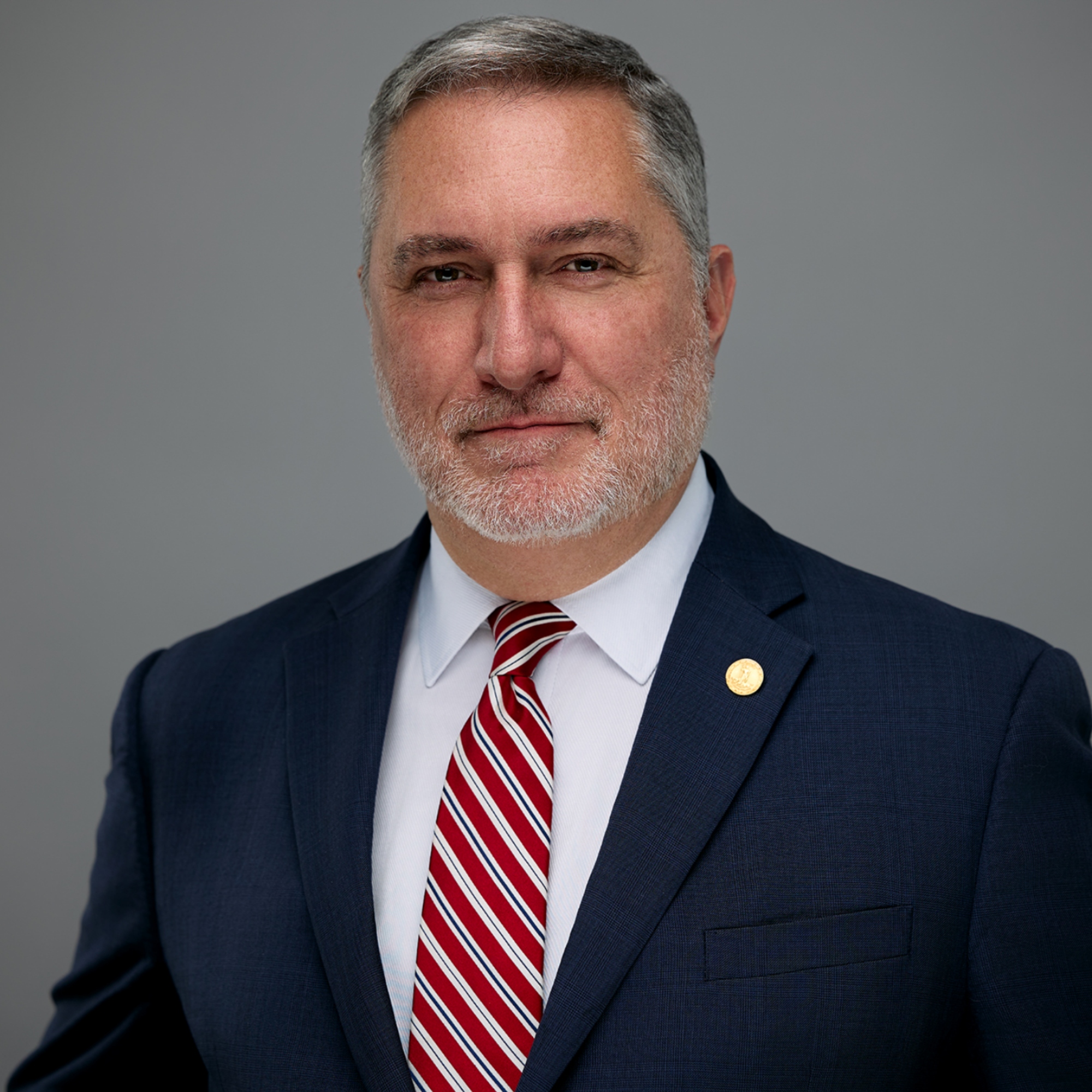
Attorney and Former Virginia Delegate Tim Anderson rejoins the show this first Monday of March -- to revisit the ongoing legal battles over Virginia's election schedule, gerrymandering, and election laws. John and Tim provide an in-depth update on court rulings, constitutional questions, and the political implications of the current election chaos.
Hosts & Guests
Transcript
So much to talk about on this Monday, but one of the big issues that everyone in politics
and in government and business has been tracking is whether we're actually going to have this
gerrymandering referendum that the Democrats are jamming through or whether someone in the
courts is going to step in and make the Democrats a pay, the rules that they themselves set
up.
Tim Anderson is a former member of the Virginia House of delegates and he's the attorney
who's kind of driving the resistance movement if you want to put it that way and he's with
this morning.
We're expecting to hear some sort of ruling this morning that could derail the whole
process, Tim.
What's the update?
Good morning, John.
So last week, the city of Lynchburg by resolution voted to hire me to represent the
city in a municipality dispute with the Commonwealth.
And what they, they're in limbo, as is every municipality because we have a order out
of task, well, that tells the Department of Elections that it can't prepare for this
election.
And so the Department of Elections is gone dark and the way our system works in Virginia
and elections is you have the Department of Elections appear and then in every locality
there's a local registrar and that local registrar is basically the lieutenant carrying
out the orders of the general, the general in this case is the Department of Elections.
Well, Department of Elections is offline and in Lynchburg specifically, the registrar
emailed the elections, people and said, hey, I need guidance and they literally wrote
them back and said, we can't give you any, do the best you can with what you have.
That's insane because obviously different localities may act differently in some cases
and in certain, in certain places, some of just said they're not even going to do it.
Campbell County, Pastor Resolution, we're not going to do it.
Spots of Aignia, Pastor Resolution with County, Pastor Resolution.
And so we have all these counties going in different directions and there's no guidance
from elections.
And so Lynchburg hired me and said, look, we want the courts to tell us what to do.
We need the court to declare what our responsibilities are here.
We need the court to answer some important constitutional questions.
And so we spun all that up on Wednesday and filed that with the courts and we had an
emergency hearing Thursday morning in Lynchburg.
We were in Lynchburg for about five hours putting on evidence.
And you know, I mean, a lot of people think that the law is like that.
It's not, it's not like it is on TV.
There was usually a lot of preparation and getting people ready and all this came together
at record speed.
So it was me versus the Attorney General's Office and then another lawyer who represented
Don Scott in the, the task well, one case, she was there and another lawyer with her.
So it was me versus three.
And we put the case on and, you know, the judge was, they threw everything at us.
They threw sovereign immunity.
They threw venue.
They threw the non-judicial, but judicial controversy.
They threw everything at us multiple ways, multiple times and was able to deflect all
of those and back.
But the judge had ample opportunity to do anything to even delay our case.
It could have done anything on Thursday, but after we said and done, he submitted it.
He asked us to alter right.
We all did.
We were all up until midnight over the weekend, writing and submitting.
And now we are in a position where he said he's going to rule today 11 a.m.
And that's our thing and, you know, the judge is going to make some very, very critical
and important decisions before the, you know, that apply the Lynchburg.
But when he does, it's going to really give a lot of guidance to the rest of the state,
especially the municipalities.
We argued what does 90 days mean, which is something that you and I have talked about.
You know, the Constitution says that you can't submit a ballot on a constitutional amendment
at any sooner than 90 days to a voter.
And the constitutional amendment passed on January 16th.
That means that 90 days from there and is April 16th, but they're going to be submitting
those ballots as soon as March 6th under the current schedule.
And you know, the Democrats are saying, well, that's because the election is on April
21.
So that's the date that counts.
What we're arguing is is that when you vote on March 6, you are revocably voting.
You can't take that back.
You're answering the question.
And the Constitution says you can't do that.
The Democrats also use the rules.
The Democrats agreed to it from the beginning.
They set the rules here.
They're the ones who set up 45 days of early voting.
They're the ones who have put the parameters in place.
And they're very clearly just tried to jam this through and come up with excuses to get
it started.
Well, that's right.
And so our Constitution was enacted in the 70s, and there was no 45 day early voting in
the 70s.
And so the words say, shall not be submitted to voters any sooner.
And then, you know, obviously post-COVID, they ran these 45 days of early voting through,
which is fine.
I mean, that's what they're doing.
That's what they're doing.
That the question still remains, what does submission to voters mean?
And we think it's pretty clear early voting can't start any sooner than April 16th.
Can't start on March 6th.
And that's a big deal for reasons we can talk about in a minute.
But then the other big thing is this, is that the entire election schedule is over a
House Bill, House Bill 1384, which creates all of this.
This is the bill that Abigail Spamberger was laughing when she was signing, you know, that
we saw the viral video of her, you know, her first bill that she signed.
So 1384 does a lot of things.
It suspends all the laws that prohibit what they're doing right now.
It suspends all of them.
It sets up the date of April 21 for early voting or for the election day.
It sets up the money.
And what the Democrats did is they called that a general appropriations bill and general
appropriations bills become effective immediately.
But it's not a general appropriations bill.
And so we are do that.
And therefore it doesn't become effective immediately, even if the Democrats call it something, even
if the Democrats say it's effective immediately, it's not effective to July 1.
That base, then what's the difference?
What is the distinction in the way the general assembly runs?
So in order for something to become immediate, that's not an appropriations bill.
You have to have four fifths of the general assembly vote for it.
It's called an emergency call.
And they did it.
They got party line votes so they did not have four fifths votes.
And so they just, they just, they literally titled it appropriations bill.
But it's not the appropriate.
It's not the bill, the appropriations act of the 2026 general assembly session.
And so they've literally done everything to sneak around and work around.
And so we argued at the hearing that it's unconsciously passed.
And that mattered.
The judge already kind of ruled on that because one of the provisions of this bill is that
no circuit court can litigate any of these issues except for Richmond.
And so the comment was trying to move it to Richmond and we said you can't do that.
You can maybe do that after July 1, but you can't do it today.
And the judge will greet with that and kept the case.
And so he's already leaned into the idea that 1384 is not valid.
And if 1384 is not valid, this whole election is invalid.
And that's what I've been saying from the beginning.
This whole thing is so illegal and unconstitutional how they've done it, how they've got here.
They've cut corners.
They've done everything they can.
And we're just asking the court to say it, to say it that you can't do it.
I mean, he asked me in the hearing, he asked me two questions.
He said, well, yes, the other attorneys who said they can't even intervene.
The other attorney said the judge can't even intervene in this election.
And the judge said, well, what if, you know, what if the question was only men vote?
No, nobody else just men.
Do we have to wait for the election to go through?
And then decide that that was an improper or can I stop that?
And then even their side said, well, that's different, your honor.
Well, that's crazy because it's not different because the Constitution,
we're talking about a different part of the Constitution that they don't want to talk about.
But he talked about that, but then he asked me and he said,
what's worse, an imperfect election or no election?
And I said, I think it's a third option.
I think an unconstitutional election is the worst thing that we can do in the Commonwealth.
Having voters vote is something that is so defective that it has to be set aside
is worse than anything.
And I said, we're not trying to stop the election.
We just want it to be done correctly.
They've got to do it in the proper steps and the proper procedures.
And really, they probably can't even do this until mid-August.
Which would then be too late for the gerrymandering and the rigging of the federal elections
that they're, is their ultimate goal.
That's right. That's exactly what this is about.
If we don't have elections till August, then on this constitutional amendment,
they can't rig the election this year.
And that's why they're reigning it through in the time table that they're reigning it through.
But in a practical sense, that also means that the candidates that you currently have,
the incumbents and the people who are already announced that they're going to challenge the incumbents
Republican and Democrat alike, would still run.
And the people of Virginia could decide whether they like those people
and whether they're going to use them to send a message to Washington or to Donald Trump.
You still have an election. It's still valid.
It's just with the established lines.
And with the established signs, it should be noted that Abigail Spamberger won Rob Whitman's district.
One, Jen Jenkins district.
So if the will of the voters in these currently drawn districts is that they want to send Donald Trump a message,
then there's still plenty of voters that could do that in the current lines.
They don't have to pull all these...
Look, they're putting, they're putting Guchland where you are.
Guchland into Arlington.
I mean, it's crazy.
It's shocking.
Geographically, it's a huge distance between those two places.
They have nothing in common.
All the rules of good map drawing for legislative representation are thrown out the window
because they're trying to anchor it in, quote, unquote, blue areas so that they can rig the election here.
Do you think that the Democrats, when they put this through,
just figured that the Republicans were going to be lazy or listless
and not challenge them aggressively like this case is doing?
You know, we've not really seen Republicans engage like we're doing right now in the past.
And I think that they made a calculus that it didn't happen.
And look, it's not just me.
You know, the RNC brought a new lawsuit in Tazwell,
which is before the Virginia Supreme Court.
And you know, you had Terry Kilgore and Ryan McDougal bring the first lawsuit in Tazwell.
And so, you know, these are, it's not just me.
There are other people out there fighting for this.
And I don't think that the Democrats anticipate that that was going to happen.
So, you know, it's great to be part of something.
You know, we also saw John McWire and Rob Whitman file a lawsuit in Richmond,
which has not moved yet, which this is why they wanted it to get stuck in Richmond.
It has not moved.
You know, their lawsuit is about restoring fairness as to whether or not that is a constitutionally valid question.
Hasn't moved.
And that's why the Democrats, you know,
tied all this to have to be filed in Richmond is because they knew they can bury it out there.
And, you know, before an election, you know, once the first vote is passed on Friday,
if courts haven't stopped this, we're in a big trouble.
But, you know, what we expect out of Judge Eats today in Lentlunchburg is some kind of direction.
And, you know, I can't promise anybody who's watching your show that it's going to go our way.
But what he's going to have to answer is, is what does 90 days mean?
Does 90 days mean 90 days or does 90 days mean 44 days?
And so we're going to have to see what he says.
And if he says 90 days means 90 days, which we think he will, I'm hopeful, praying,
that he will, then Lentlunchburg's not going to be able to have an election by court order.
And that's going to create some chaos in the entire election.
And I don't know how they can legally do it.
I think the Supreme Court would then have to act.
They've not ruled on anything at this point.
I think they would have to act as to whether a statewide injunction is in place
or they're going to stay the order out of Lentlunchburg.
But I think the Supreme Court would have to do something before Friday,
if the court enjoins Lentlunchburg from moving forward.
And if Lentlunchburg, if the judge in Lentlunchburg does put some sort of stop here,
does it only apply to Lentlunchburg?
That was one of the issues in Tazwell was originally it appeared to apply just to Tazwell.
And then there was this seemed like confusion from the people I was talking to
about whether the whole state had to slam on the brakes.
How does that work?
But it does only apply to Tazwell.
And it does though apply to the Department of Elections,
overall, where they can't even provide voting books to the registrants.
You know, one other thing we talked about,
like the registrants are going to have to use the November voting books in November 2025.
And certainly people have died, certainly people have moved,
certainly new people have moved in and registered.
They can, none of that's going to be, it's all going to be completely off by months.
And so that's a big issue, but when a city is told by a court,
you can't proceed.
And you're going to now take 58,000 voters out of the equation by court order.
Not just the registrar or anything like that, but the actual city is offline.
I think that will cause the Supreme Court to have to rule one way or the other.
What's been their reticence in this?
I would think that for their own reputation and for good governance,
they would feel obligated to have stepped in to clear all this up weeks ago.
Well, it's just a general theme that courts don't want to get in the middle of elections.
They want people to make their own decisions.
They don't want the courts to put thumbs on the scales of political questions.
That's a bedrock theme in courts.
And so that's not uncommon, but like I told the judge,
I said, let the people vote.
That's fine, but let the people vote with a correct procedural question,
not something that was just ran through for political gain by one party.
And that's what's really gross about this is they're trying to say restoring fairness
when they have literally broken every rule that matters.
Every rule that matters has been broken by the Democrats.
This is such an illegal process that we've got to see something come out of us
as a high court of what we're supposed to do here.
And I think ultimately this thing's going to have to stop.
It's just going to have to stop.
And then we're going to have to let everybody do this the right way.
You know, like I said to you before the other day,
there's three other amendments.
There's the abortion amendment, the gay right marriage amendment,
and the voting amendment.
And I don't like those amendments,
but they all were directly at least.
They were all passed in year one and year two,
and they're going to go on the November ballot.
But those were done right.
And we're going to have to rally people together to vote accordingly.
You know, the gay marriage thing,
I'm obviously, I don't have any problems with gay marriage,
but I do have problems with them putting gender into the Constitution
as a court's to tinker with that as a constitutionally protected class.
Because gender is a problem, obviously.
They know what they're doing with the wording there.
Yeah, that's right.
That's right.
So, you know, there's, you know,
there's all these things that we have to,
you know, that are spinning.
And I think if Lynchburg punches the brakes at 11 o'clock today,
just a little bit from now,
we're going to see something very big happen in Virginia.
Yeah, I really appreciate you bringing this up today
and we'll be monitoring that throughout the morning.
I suspect that while we're focused on this huge issue,
and it is a big issue,
and I'm glad that the RNC,
the Republican National Committees,
finally paying some attention to what's happening in Virginia,
because it's going to have huge impact on them
going forward and on President Trump
and his ability to get anything done
in the last two years of this term.
What's, what else is happening at the Capitol?
I see on social media
these large classes that you're teaching
for concealed carry permits.
And some of my friends who were very big
in the two-A community are beside themselves.
What, what are you tracking that we need
to not let slip under the radar?
So, there's a bill,
I can't remember the exact number.
I think it's Senate Bill 114, it's 115.
It's something in the, it's 110,
it's in the teens between 110 and 120.
That it has passed the Senate
and has gotten through a subcommittee in the House
and is now in appropriations.
And essentially, it's going to allow the Attorney General
in Virginia to revoke reciprocity agreements
with other states.
So, our concealed carry permit is about to collapse.
Assuming that, that, you know, this becomes law,
but this all started back in 2016,
back when Mark Herring was the Attorney General,
and he just unilaterally decided
he was going to revoke reciprocity agreements
because he's the Attorney General.
This is going to codify what Mark Herring did
and allow the Attorney General to do it,
although I think the Attorney General
can probably do it anyway.
You know, our permit, Virginia permits work
in other states like North Carolina,
West Virginia, Tennessee, Florida.
They're going to go through and revoke.
We have 30 states our permit works
and it's going to get revoked probably down to six.
So, what we're doing is,
I'm teaching the Utah concealed carry class
all over the state,
and by plugging into Utah as a non-resident,
you get access to all of Utah states,
which are 35 in total.
And so, people are basically hedging
that their Virginia permit
is probably not going to be very good anymore,
and getting the Utah permit
so that when they travel,
they have something that works in other places.
And it's remarkable that you can't count
on the legislators in your home state
to protect you as a law-abiding citizen.
They're going to try to strip you of your rights
and turn you into a felon,
should you cross an imaginary line
from state to state,
and you've got to take these extraordinary efforts
to protect yourself.
It's pretty important.
Tim Anderson, a former member of the House of Delegates,
I appreciate the fact that you're being so aggressive
on all of these issues,
but especially this one,
which has national ramifications,
if it goes through with the gerrymandering
that the Democrats are pushing.
Thanks for talking to us,
and we'll check back in with you later this week.
Thanks, sir.
Thank you.
Pretty remarkable to be in this situation,
and thank goodness there's some people
who will go to the wall on this.
And in all fairness,
this is not a case where
Tim Anderson and the Republicans
are just fighting to fight
and gum up the works
and throw a monkey wrench into things.
They're asking everybody,
the legislature,
the governor,
the judges,
the board of elections,
the local registrars.
Could you just read the plain English
of the law and follow it, please?
And, you know,
let me compare it to something
that people do seem to care about,
sports.
If this was the Super Bowl,
or if this were the World Series,
I think people would be very adamant
that you actually obey
the rules that are written in the rule book.
And they wouldn't be turning their head,
saying, well, we'll just work this out later now.
I mean, the game's being played right now,
and we need your ruling on this,
and it needs to be factual
and not just based on emotion.
And I think the courts
will see what happens today,
but I think the courts have been letting us down.
And the Supreme Court's decision,
look, I do want the Supreme Court
to get in between the voters
and the will of the voters.
I concur with that,
but that's not what's happening here.
The Supreme Court is allowing something
to occur that is wrong.
I mean, it just is,
based on what's written down
in the law.
There is a process.
It's very clear.
It's not like,
oh, wish we had thought of this part
because this has kind of put us in an awkward position.
I mean, the law sets up a calendar.
And I get it.
The Democrats don't want to follow the calendar.
They want their way.
I certainly understand that.
And we don't Republicans don't want this to proceed.
But it's not based on just us not wanting it to proceed.
It's actually based on,
are you going to follow the law or not?
And I think we're in dangerous territory
when you've got judges who step back from their job,
which is not to put a thumb on the scale,
but to look at the law and actually follow the letter of the law.
This is where we're falling apart all over the country.
And I would have expected more from Virginia.
So we'll see what happens as we continue.
Let's take a break.
We'll be back with more just a moment on the read revolution.
