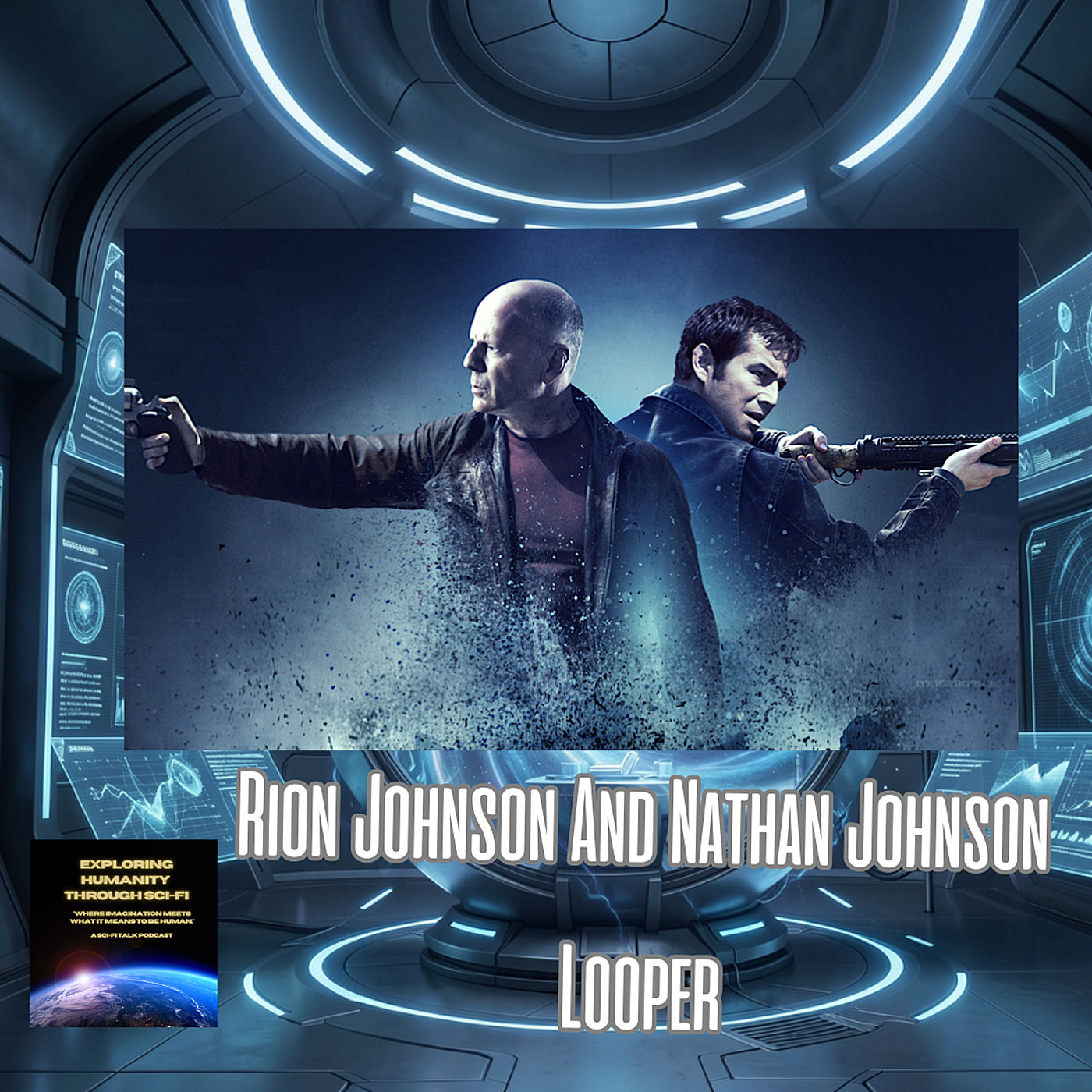
Time, Consequence, and Closed Loops : Looper
About this episode
This episode dives into Looper, Rian Johnson’s acclaimed 2012 time‑travel thriller, through a conversation recorded at San Diego Comic‑Con with writer‑director Rian Johnson and his cousin, composer Nathan Johnson. The film’s blend of noir, futurism, and moral complexity makes it a standout in modern sci‑fi, and this discussion explores how its world was built—musically, narratively, and philosophically.
Looper follows Joe, a contract killer (“looper”) who executes targets sent back from the future. When his future self is sent back to be killed, the loop collapses, forcing both versions of Joe into a collision of motives, ethics, and timelines. The film is known for its grounded approach to time travel, its emotional stakes, and its refusal to offer easy answers.
🧭 Does Looper Follow Star Trek’s “Don’t Change History” Rule?Star Trek often treats time as something that must be preserved—history is a fragile timeline, and altering it is dangerous or unethical. Looper takes a very different stance.
Get every episode summarized
Each time Exploring Humanity Through Sci-Fi publishes, we email you a written briefing from the transcript — the topics, who appeared, and any specific claims, with the ad reads skipped.
Email me new episodesFree for 3 shows. No card needed.
Hosts & guests


No transcript yet
This episode has not been transcribed. Request it and it moves to the front of the queue.
More episodes
More from Exploring Humanity Through Sci-Fi

Star Trek at 60 — “Enterprise: The First Bold Step”
Exploring Humanity Through Sci-Fi

The Walking Dead Season Three Norman Reedus Gale Ann Hurd
Exploring Humanity Through Sci-Fi

The Ghosts Of Devils Perch
Exploring Humanity Through Sci-Fi

Michael Shapiro’s Frankenstein
Exploring Humanity Through Sci-Fi