Loading...
sportswrestling
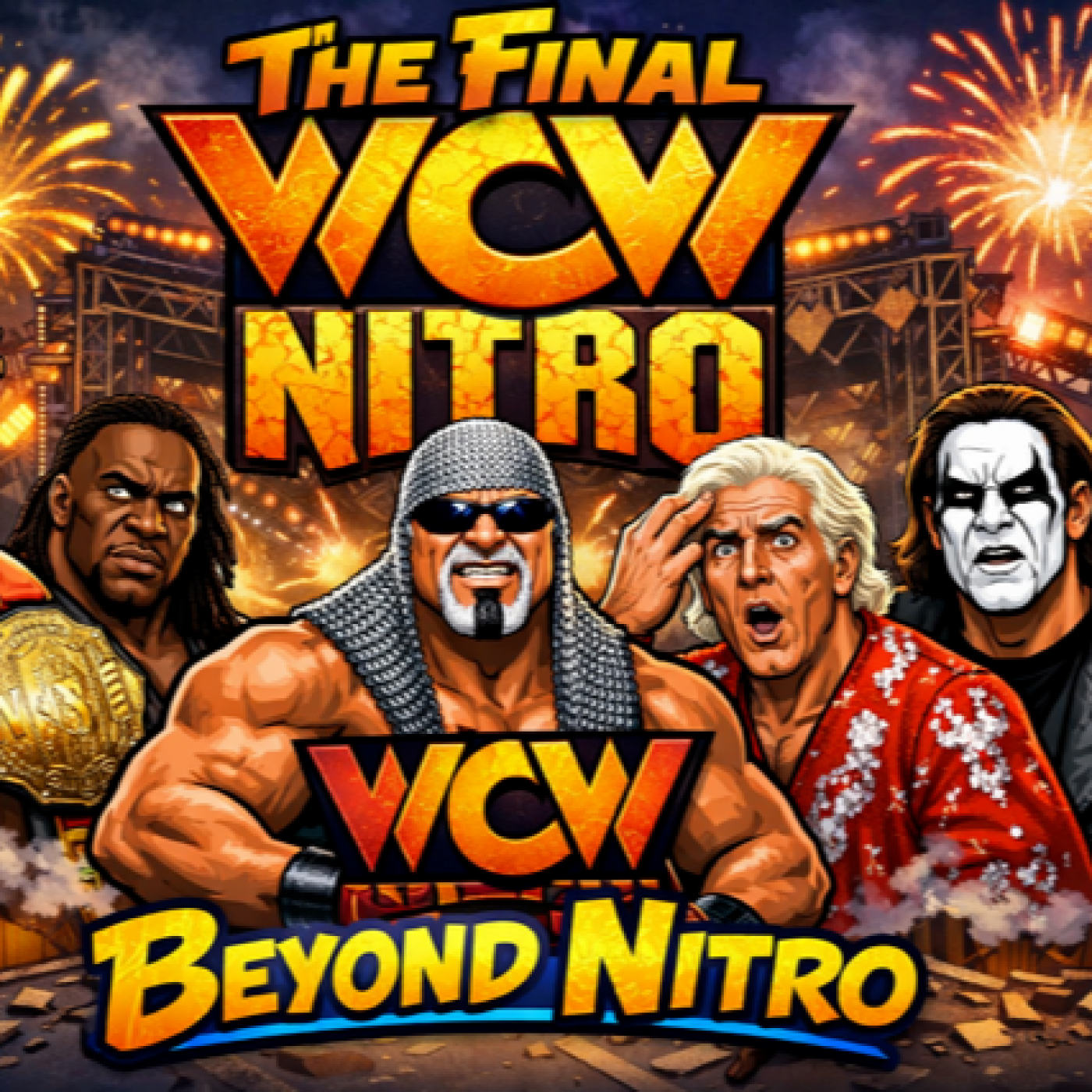
TMPT Special Feature: Guy Evans on 25th Anniversary of Last WCW Nitro
About this Episode
Welcome to a Special Edition of the Two Man Power Trip with host John Poz, as he welcomes in writer, author, historian, Guy Evans. The BEYOND NITRO author joins the show to talk about his new audiobook, BEYOND NITRO: Untold Stories from the WCW era. Host John Poz and Guy talk about The Monday Night Wars, the BEYOND NITRO book, the 25th Anniversary of the Last WCW Monday Nitro, Eric Bischoff, Vince McMahon, Brad Siegel, Who Killed WCW on VICE, and so much more.
BEYOND NITRO: Untold Stories from the WCW era - https://www.audible.com/pd/Beyond-Nitro-Untold-Stories-from-the-WCW-Era-Audiobook/B0GT6C2N3H?srsltid=AfmBOopXGB8bWfI0ZX6DJ7V4DChBWCaiBAFyQpOP9ubzbq-cLt2jGXbd
Follow us on Twitter and IG @TwoManPowerTrip
Store - Teepublic.com/stores/TMPT
Hosts & Guests
Transcript
Guys, it's no use putting it off. The best time for an underwear refreshes now.
Tommy John underwear is designed for a perfect fit that stays put all day.
There's zero shape thanks to four times more stretch than competing brands,
and their innovative horizontal quick draw fly is a game changer.
With over 30 million pairs sold, there are thousands of men out there more comfortable than you.
Don't settle for less. Go to TommyJohn.com today for 25% off your first order with code comfort.
That's TommyJohn.com code comfort. Tommy John, comfort perfected.
Please welcome in our new sponsor, Mando Whole Body Deodorant. That's part about
Mando Whole Body Deodorant is I just received and have used my new Mando products.
I love this stuff sometimes. You know, you're at the gym or sometimes you're at home.
I'm a treadmill. You get a little stinky. You got a little smelly. You get a little dirty.
And what do you need? Maybe you can't take a shower right away. What do you need?
My favorite part, the deodorant wipes helps me keep nice and clean, nice and fresh, and smell
nice and fresh as well. And then when I do have the opportunity to go and take that shower,
I will use the Whole Body Wash, which has been unbelievable. I love this stuff. It was created by a
doctor who saw firsthand how normal BO was being misdiagnosed and mistreated. It is clinically proven
to block odor all day and control odor for up to 72 hours. The Whole Body Deodorant is safe to
use anywhere on your body, pits, balls, thigh folds, belly buttons, butt cracked feet. You name it.
You could use it there. The Mando Starter Pack is perfect for new customers. It comes with a
solid stick deodorant, cream tube deodorant, two free products of your choice like the Mini Body
Wash and the deodorant wipes. Love those. And don't forget free shipping. A special offer for our
listeners, new customers get $5 off of a starter pack with our exclusive code that equates to over
40% off your starter pack, use code school at shopmando.com SHOPMANDO.com. Please support the show
and tell them we sent you. That is a special offer for you the listeners. Once again, the new
customers get $5 off the starter pack with our exclusive code equates to 40% off your starter pack
use the code school at shopmando.com SHOPMANDO.com. Please support our show and tell them we sent you
smell fresher, stay dryer and boost your confidence from head to toe with Mando.
This episode is brought to you by Progressive. Most of you aren't just listening right now.
You're driving, cleaning, and even exercising. But what if you could be saving money by switching
to Progressive? Drivers who save by switching save nearly $750 on average and auto customers qualify
for an average of 7 discounts. Multitask right now. Quote today at Progressive.com. Progressive
casualty insurance company and affiliates national average 12 month savings of $744 by new customers
surveyed who saved with Progressive between June 2022 and May 2023. Potential savings will vary,
discounts not available in all states and situations.
The upcoming presentation is a two-man power trip on wrestling podcast production.
And now for something completely different.
Hey, I'm all the favor. I'm in free halls of fame. For the young fans, they don't give it
damn. They just give it damn about themselves and what they're hearing now. And I got no problem with
those rules. I know the rules are going to end. I'm going to have you try the game that way.
And when I even came off with that knee drop on the top rope and he bent me, I thought that
something happened. I couldn't hear a thing. You could have heard the pin drop in the arena.
It touched me so deeply that when I went in a dressing room, I really felt depressed.
I'd tell you that. I'd tell you right to insane. And the parliament and I, if he wanted to get
a real stream fight with me, trust me. He would lose and he knew it. You know, that's the other
thing. They'd give you the power and they're like, okay, you're in charge of it. I was like,
well, what? Well, you mentioned a guy like Harley-Rade. That kind of legendary status. It's
obvious why people would get upset. Oh, as I'm concerned, Robert Piper was not a wrestler.
He was an English good worker. If he had to go out and he'd work his way to the top and not have
good friends like him bar and ass. I'm not shanning. He's not a good guy. He's just not a tough guy.
So I swear to you, I don't have an ego. I don't give a crap. If that stuff is not important to me,
people don't know me. They have no idea who I am. They know of me as being a fictional
character that they'd drawn. People didn't understand that, you know, the guy they saw in the ring
that happened to be using this real man that happened to actually be the president of the company.
They really believe that that guy that they'd loved to hate was actually a pretty decent guy.
And I think many people have the perception that I really was that character.
This episode is brought to you by Progressive Insurance. Whether you love true crime or comedy,
celebrity interviews or news, you call the shots on what's in your podcast queue. And guess what?
Now you can call them on your auto insurance too, with the name your price tool from Progressive.
It works just the way it sounds. You tell Progressive how much you want to pay for car insurance,
and they'll show you coverage options that fit your budget. Get your quote today at Progressive.com
to join the over 28 million drivers who trust Progressive. Progressive
casualty insurance company and affiliates price and coverage match limited by state law.
This episode is brought to you by Progressive Insurance. Whether you love true crime or comedy,
celebrity interviews or news, you call the shots on what's in your podcast queue. And guess what?
Now you can call them on your auto insurance too, with the name your price tool from Progressive.
It works just the way it sounds. You tell Progressive how much you want to pay for car insurance,
and they'll show you coverage options that fit your budget. Get your quote today at Progressive.com
to join the over 28 million drivers who trust Progressive. Progressive casualty insurance
company and affiliates price and coverage match limited by state law. Hello, and welcome to
the two main power trip of Wrestling and Rehost a JP, a job pause with me today. Very special
returning guest author historian demand behind Nitro and beyond Nitro, Mr. Guy Evans. Guy,
welcome back. How you doing? I'm doing great, John. Thank you so much for having me back.
Now, of course, the Beyond Nitro audiobook is out, and it's the 25th anniversary of the
last WCB Nitro. So let's talk first about the audiobook. Tell us about, you know, how that all
went down. Yeah, I appreciate you giving me time to talk about that and having me back on the show.
So as a lot of people listening to this will know last year was the publication of Beyond Nitro,
which is the second book in the Nitro series. And, you know, that that book became the
highest selling book we've ever had on Guy Evans books.com. Really successful launch of that book.
The one thing that we were missing last year was the audiobook. And so after some, you know,
technical snafus and some things to work through, we finally got it done. And it's up now on
audible and Apple books. Those are the only two places you can listen to it. It's exclusive
through there. It's over 13 hours in duration. And if you're wondering, you know, is it kind of
covering the same ground as the first book? The clue really is in the title. It's, you know,
content that's going beyond the original Nitro book, pulling out some of the things that were
just touched on in the first book, and actually bringing to light a lot of new information about
WCW. And a host of other subjects actually in wrestling history that sort of tie into the WCW
story. So if you're someone who's interested in digesting your wrestling literature in that
format, once again, you can go to audible or Apple books, just type in Beyond Nitro. And while
you're at it, if you haven't listened to the first Nitro book, that is on those platforms as
well. So really excited about that. And like I say, I appreciate you giving me the chance to talk
about it. Yeah, no problem. So how long did it take you to do the audiobook? Just as far as
recording and stuff. You know, the recording didn't take that long. I want to say maybe a few
weeks. We just had some some issues in terms of editing and where exactly the audiobook would go
in the end. We decided to go down the same road as the first book and make it an audible and
Apple exclusive. So I think it honestly worked out extremely well and for the best in the end
because that audiobook, as we're speaking, of course, it's March 26, the 25th anniversary of
the last Nitro and the audiobook was just published about five or six days ago. So I think the timing
couldn't have been better as far as even more of a renewed interest in WCW happening at the
moment. And you know, we're off to a really good start and I encourage people to go listen to him.
The craziest thing to me, besides the fact that it's been 25 years, because that's just like
mind blowing to me. It's like, I thought, you know, for obviously for a while, because Bischoff's
run at WCW's catch Johnny Ace in charge. Like you think Bischoff's buying in a fusion media
ventures and all of a sudden WWF ends up buying WCW. When the heck did Bischoff actually find out
that he wasn't the bitter? Like, was it a week before? Was it two weeks? Because he's on the
Nitro the week before and he's telling the other guys to bring their boots. He does sound somber,
though. So it's it's weird. It's like he's saying the guys to bring their boots. So it's like
he's book in the next show. But also he's book in Steiner versus Booker T. But then also he's got
like a really somber voice to say he's like depressed. Yes. Well, you know, all of the details on that
are in the first Nitro book and some of the final few chapters in terms of exactly when Eric
learned about the sale not going through. And if you recall and if you think about the timeline,
it wasn't until the Friday the 23rd of March that it was actually made official that the WWF
was going to be buying substantially all of WCWs as a company in terms of the it's most valuable
assets, including of course the tape library and a lot of the the trademarks and some talent
contracts and so forth. So on the on the Monday March 19th edition of Nitro as you're talking
about, by that point it had been publicly disseminated and talked about in the press that the
shows were being cancelled. But I suppose, you know, the the final ultimate nail in the coffin had
yet not come down yet in terms of WWF ended up ending up with the company. So it's kind of a
a little bit of a gray area there there. Excuse me, although, you know, in retrospect I think
it was fairly inevitable and I think most people close to the situation had a sense that that
was going to happen. The one interesting thing about the fusing attempted takeover which I learned
subsequent to doing the first Nitro book and this was something I got from someone who had
I would say intimate knowledge of that attempted transaction is the the idea of what that
transaction represented for the people involved in the deal. So what I mean by that is I think
sometimes as wrestling fans as people who followed the Monday Night Wars back then WCW fans,
you know, we sort of sit back and think, man, what if what if that transaction had gone through?
What if fusing had actually taken control of the company? You know, there would have been a rough
probably two or three years at the at the very least for WCW to sort of regain their standing
in the industry and there would have been a serious rebuilding phase. But man, you know, possibly
somewhere down the line they could have contended again. Well, according to this person that I spoke
to, you know, they characterized the opportunity as basically being like a flipping opportunity for
fusions, meaning we're going to purchase this brand that's extremely damaged that really could not
have been tarnished any more than it had been in the preceding sort of 18 months and we're going to
look to rehabilitate it and then perhaps a couple years down the line sell this thing onto someone
else. So who's to say whether or not is the WF ultimately would have ended up with WCW maybe
it would have gone to another group. Maybe it would have been yet another corporation or entity that
didn't understand or appreciate wrestling. All of those, of course, are hypotheticals but I did
present that to Eric Bischoff in putting together this beyond nitro book and I said, you know,
does this perspective sort of jive with your recollections and what your perception was at the time?
And what was interesting is he really took a little bit of time to think about it and he ultimately
came to the conclusion that, you know what, based on what you just told me and based on how things
went at the time that does sound 100% accurate and he qualified that by saying it wouldn't have dampened
his enthusiasm for the deal and even if that would have been made explicitly known at the time he
still would have been on board. And, you know, motivations and plans could always have changed,
of course, that's not to say they were locked into that kind of scenario but I found that to be kind
of an interesting wrinkle to that whole story and again, it's one that personally I wasn't aware of
in doing the first book. It is kind of like crazy if you think about it. It's like, man, you know,
inside of trading, which I know as so many people have talked about now, but it's like,
Stu Snyder, Brad Siegel, is there some sort of insider deal going on here with WWBF that we didn't
know but obviously Bischoff didn't know about it either. Yeah, I mean, that's a subject that
still generates an awful amount of speculation and conjecture today. I will say that not only did I
interview Stu Snyder for the first book, he agreed to be interviewed again for the second book
and I posed an additional set of questions to him relative to some of the continued speculation
about his involvement. Keep in mind, he also featured in the Who Kill WCW series and make himself
available for a lengthy interview there and directly answered a lot of questions pertaining to his
involvement in the deal. So I think you have to give him a lot of credit for opening himself up
directly for those questions and everything that I ever asked him, he answered directly.
And there's some very interesting details as it relates to the WWF purchase of WCW that this book
goes into in terms of yes, on paper, they acquired WCW or it's substantially all of its assets for
quote pennies on the dollar. But there was also this additional commitment to purchase advertising
from AOL Time Warner and that was not an insignificant amount of money, it was over 20 million dollars
that they were 20.6 million dollars to be exact that they were committing to over a three-year
period. And I find that to be quite significant because if you look at the total financial outlay
therefore relative to the WWF in that transaction, you're talking about a figure that approaches
25 million dollars as opposed to 2.5 million dollars in cash or sometimes people will quote the
figure of 4.2 million dollars when you take into account some of the other considerations involved
in that deal. But their actual outlay over a period of three years ultimately was in the
neighborhood of 25 million dollars. And if you wanted to get really technical, I could go into
there are actually a lot of entanglements that ended up happening with them trying to get out of
some WCW license agreements and things like that that ended up costing them even more
for a number of years thereafter. But the point is in March of 2001 they were committing to
a total cost of around 25 million dollars. So everything that I just said to you, I
posed directly to Steve Snyder and said this seems very significant. What do you have to say
about that and what do we make of that? And he responded to it directly and again didn't
dodge the question and was very open I thought about how that came to be and people can read about
that in the book. And so again it's a subject I think that will always fascinate people
the way that that sale went down obviously left a bad taste in the mouth of many of the people
who worked in WCW as well. You think about the idea that on a Friday afternoon essentially
everyone learned at the same time seemingly out of nowhere that they were being sold to the WF
with no opportunity to ask questions of their superiors or clarify exactly what was going on.
So you know it was a fairly traumatic moment I think for a lot of people who worked there as
certainly a turning point in their professional and personal lives and by extension I think fans
also sense the same thing and it's you know again a lot of these details a lot of these nuances
even even when we've had the books now and even when you've had people on the record talking about
it I think you know for some people that that speculation will always continue. I love that stew
is out there though you know what I mean it's not hiding from it so it kind of makes you seem like
maybe it doesn't have anything to hide from or about so that's a good sign. Yeah I think it all
really stems from I would say on the part of if we put ourselves in the shoes of
the WCW employees at that time and the mechanism by which they learned that this was all
going down the the late Friday memo that goes out you know people logging onto the WF website
and seeing that apparently they've bought WCW I mean people who worked for WCW were finding that
that out the same way that the fans did right so it wasn't like there was a meeting a few days
in advance and hey just to let you know we don't want to spring this on you but this is probably
what's going to happen we want you to be prepared for it now you know they felt like they had
got worked for lack of a better term by Brad Siegel they felt like this was a swerve at the last
minute and they had been misled and you know obviously that is going to foster a lot of concerns
related to exactly what went on here especially when people read about the final reported figure
of the transaction I think to a lot of people even though I've kind of gone into there what the
deal structure actually was but just looking at it on paper that didn't make sense to a lot of
people either and there were a lot of people associated with WCW saying hey if I knew that it was
only going to be sold for this amount of money I could have put together a group I could have
launched a bid with some investors and so on and so forth so again I you know I give people credit
for answering these questions especially because we're talking about events that happened a quarter
century ago we're also talking about things that in the careers of executives not that they weren't
significant but they are you know one of many things that were going on in their career at that
particular time one of many things when they look back on their their life in the workplace that
they had to deal with because you know one of the ironic things I think about wrestling and
particularly WCW at that time is ultimately a lot of the most important decisions were being made
by people who had no affinity or affiliation with the wrestling business rarely right you know they
were people who were involved with it on the periphery or were overseeing what was going on but it
wasn't like ultimately the final decisions were being made by quote unquote wrestling people so to
ask people like that to go back you know a quarter century into the past and talk about something
that carries with it a lot of negative connotations as it relates to their involvement I think you
do have to give them credit and then ultimately you know what I try to do is quote these people directly
at length and then let the reader decide okay does this jive with my understanding of this
particular subject and how trustworthy do I determine this person to be and I think that's in many
cases when you're talking about people's opinions and their recollections that's that's the best you
can do is to to provide everything that you have to the reader that's like the crazy thing with
Brad Siegel and Bischoff like was there a I don't know like a a bad breakup or something like
like like it seemed like he had the deal he went on vacation you know he's having some beers at
the beach and stuff like so did Brad like work Eric or did it did something change or did Brad
not like Eric did something happen there well I think the fundamental
consideration inherent to all of this is something that the nitro book put out for the first time
which was this condition that was inherent to the fusion deal specifically a provision that said
if someone comes along and cancels this wrestling programming we're going to retain the right to
program this time slot on the turn in networks for a certain period of time into the future and
that was something you know prior to that book coming out anytime this subject was talked about
that was never broached because quite frankly it wasn't known and you know Brian Bedol who
was was one of the key people involved with the fusion effort he was the person who first
alerted me to that and so you know by the time we get to this stage that you're talking about
you know Jamie Kellner has come in by this particular point in time and you know when I had
communication with with the late Mr. Kellner you know the subject of his discussions with Brad Siegel
came up and so I know quite a bit about that I've heard what Brad Siegel has had to say about
that subject as well but I think if you put yourself in the position of a Jamie Kellner at that
particular point in time and this is by no means a defense of what happened because clearly I
would have preferred if they didn't cancel the shows and I would have liked us to be talking about
nitro that's happening this coming Monday right but that's obviously not what happened but
you know he's coming in to this job in early March of 2001 and as anyone would be even though
if you look into his background this was a guy who had a tremendous reputation in the TV industry
and had a long and storied career as an executive but like anyone else he's coming into a new
workplace a new job and I'm sure looking for some easy wins right off the bat and you're presented
with okay we have this division here that at least according to our books is hemorrhaging money
we have this rebranding effort that is already underway at TNT and TBS where those teams
those respective teams have gone out and come up with a new vision for what those networks could
be and on top of that we have this deal that is yet to be fully consummated if you like or complete
where we're going to be giving over potentially control of prime time slots to this outside agency
and so all this outside entity I should say so you can kind of see what the thought process would
have been for someone in Jamie Kellner's position to say hold on why do I want to keep this on the
air again because I'm I'm can not only do I have to go back to my people at the networks and say
yeah I'm just going to ignore all the work you've done for the last six months on this rebranding
thing not only am I going to spit in the face of my financial people but on top of that I'm going
to put us in a position where we may lose control full control anyway over programming the time on our
networks so you know once I learned all of that context and sort of put myself in the shoes of
those decision makers that made a lot more sense so that is all to say that I think ultimately at
the end it did have less to do with Brad Siegel than it did Jamie Kellner although of course
you know those two were were very much very much you know the central part of all of those
discussions at that time so we're at the 25th anniversary at the last night because of all this
obviously because they sell to Vince of course so crazy looking back the Vince appears you know
he kind of opens a broadcast he's like well I bought my competition and you know what I mean he's
gloating and everything else just absolutely shocking to me as a fan though it's like there's
a bit depressing as well yeah I think you're right actually you know when you go back even now and
look at that footage it's like okay Vince is acting in his Mr. McMahon character quote unquote
right but I don't know if there was that much acting involved in terms of him you know opening
the broadcast and gloating about what had happened and you know from a strictly sort of business point
of view you would have to say the way that they ended that simulcast was masterful in terms of him
you know leveraging his issues with Ted Turner or those we know Ted was you know not a part of the
picture or decision making process at the end whatsoever but at least sort of in the fictional realm
you know McMahon was able to spin that into his promo he's able to further the storyline between him
and Shane obviously and and able to in the same breath promote WrestleMania 17 which was coming up
six days later so you'd have to say from a pure business standpoint what a genius move that was
however in consideration of the history and the lineage not only would WCW but prior to that on
the turn in networks you know in retrospect pretty depressing to go back and see you have this
kind of touching moment in the ring with Flare and Sting and then immediately we fade to Cleveland for
you know Vince walking to the ring and I know again you could come back and say well you know
by by numerous accounts and this is in the nitro book as well you know Vince was personally
pushing for Flare and Sting to end the broadcast that was something that was important to him
and so I guess you have to give him that but you know it did sort of end with a whimper really
which was unfortunate given you know where that program Nitro was at its peak to think that it
all ended with a fade to a promo on Raw and then as we talk about in Beyond Nitro the last
30 seconds ever on the turn in networks in that time slot for Nitro was devoted to a WrestleMania
commercial again genius business move but I see where you're coming from in terms of that being
a little depressing to go back go back excuse me go back and watch and and also to think about
man it's super depressing and then even to add like insult to injury when he comes out before
obviously Shane makes his announcement that he bought WCW and then you know it's obviously swerve
and that's leading more fuel to the fire for the WrestleMania 17 match but when he starts naming
the guys you're thinking that those in my head those are the guys that he's going to be bringing in
why else would he mention them and he does not bring in those guys so it's like you know some of
them but not all but it's just that was like the weird part too I was like wait what the hell was
that all about was that just him like testing the waters or is that just him being a dick yeah and
I remember seeing that at the time and you know feeling hopeful that okay you know obviously at that
time I think it was fairly well known if you were following the wrestling business closely as an
outsider it was not a secret that a lot of these guys had contracts that probably would be very
difficult to maneuver around as far as bringing them into the WWF at that time this is not
something that was learned later on this was known in the moment that this was going to be a challenge
but once you saw that happen you said all right well you know maybe they're going to break the bank
and do what every wrestling fan has you know dreamed about or wanted to see for a number of years
and like you said you know essentially that none of that or hardly any of that materialized and
one of the things that I think is very interesting the kind of relates to what we're talking about
is when you go back and you look at the viewership for those episodes of raw
after nitro goes away and what happens throughout the you know the spring summer and fall of 2001
I think surely there would have been an assumption that we're going to capture a significant portion
of the traditional WCW audience here because there's going to be some curiosity as to how they
combine these two entities and and even if you know we don't do a good job with that they're
going to watch our show anyway because what else is on the air on on Monday night as far as wrestling
goes and it's a cliche to say and everyone does say it and everyone will continue to say it but
the reality is that quite literally millions of those fans at that particular point in time or
very close to it simply stop watching the product and you know as all wrestling fans or most
wrestling fans tend to do you know inevitably there's a period at some point that you kind of come
back and tune in to what's happening today and revisit some of these old times but in terms of
being weekly devoted viewers of Monday night wrestling for a lot of people after March of 2001 they
said okay that's I've had my fill and I'm going to move on to other things and and and so you think
about that Vince Promo as you talked about portending this future where we're going to have all of
these stars coming in and I think after a certain point in time you know people realize that that
wasn't going to happen and by the time it did happen in many of those cases a lot of those fans
had left what was it two years plus until you know Goldberg came in for example right you know by
that point in time a lot of those faithful WCW fans had moved on to other things so yeah it's
kind of wild to go back and watch that Promo knowing you know what you know ultimately ended up
happening and the crazy thing is everyone's like oh you know it was great that you know Nash and
those guys got to sit home and and collect money from Turner because they had their contract and
they still take time to go to the money contract WWF didn't want to buy out here's the thing about
Goldberg which is nuts WWF ended up paying him more money for less dates than they would have had
they just bought his contract and it was like man how stupid is that I just was like baffled by
some of it and then you come in and and Hogan becomes this huge merch seller's like well
if I have a ton more money than we were planning on you know what I mean it's just it was
mistake you have to mistake it's a mistake you know bitch off of course they'd have to pay and
bring him in flayer like you could have brought them in and made it a hot angle instead of having a
heel stonk hold Steve Austin who WWFired via FedEx be the leader of WW like mid-made notes yeah
and I mean so many things happened you know when we think back to 25 years ago
this week you think about the Austin heel turn happening six days later and a lot of people
regard that as effectively the end of the attitude era right you of okay WCW has gone away now
ECW has gone away you know the most popular baby face of that period is now has now turned heel
you know in a move the I think hardly anyone would regard looking back as a success
so you know the one qualifier I suppose to all of this is the kind of point out that
the WCW of 2001 was a far cry from the WCW of 1998 let's say right so when we talk about these kind
of like this super bowl of wrestling idea where oh you know you could have kept these two companies
separate and maybe once a year WrestleMania you do WWF or WWE versus WCW I think you know the one
thing that needs to be recognized is the fact that the WCW brand had been severely damaged by 2001
and relatively speaking you know very few fans were purchasing their events on pay-per-view
that we've still a dedicated TV audience but those pay-per-view numbers had really fell off a cliff
now having said all of that and you know this much better than I John how many times have we
seen in the history of wrestling characters get a fresh coat of paint right guys that you thought
okay this guy is dead in the water his career is over there's nowhere else to go you know they
go to a new promotion and all of a sudden it's a new lease of life and they extend their career
by number of years or even you know simply a a heel turn or a baby face turn or some kind of
character change all of a sudden revitalizes them and you say you know I didn't see that coming
so I say all that to say it would not have been surprising to see a scenario where had those guys
come in even with all of the damage the WCW brand had suffered just that novelty of oh wow these
these guys are now on WWF TV leading this WCW faction that could have been enough in and of
itself to you know almost in one night repair repair a lot of that damage that had been done to the
brand because you know only two or three years had really elapsed since WCW was at its peak in terms
of its viewership and mainstream awareness and so on so it wasn't like you were going to have to
educate this entirely new audience on what WCW was and who those those characters were so again
it's it's something that people will always debate and always think about and I think it would be
hard not to regard it as a catastrophic missed opportunity really and and something that could have
possibly fended off the decline in wrestling's popularity for another few years had they
gone about things differently it is crazy thank you because like DWO comes in and Vince is like
I'm going to bring in the end of you and you're going to kill it they're going to kill my creation
they were you know they were super over obviously in book and right but when they came in
it was like oh my god you know so like you said fresh coat of paint it worked you know what I mean
like it was they were super over I would say and I know the end WO hadn't been you know really around
that group you will since 99 so it just I don't know some of those things where I feel like Vince
was such an ego maniac he was never going to put anything WCW over he even hears later when he
brings instinct nationally says he's like oh yeah triple it so he has to beat him because WCW has
to lose WF and he's like that was you know 15 years ago he's like nope Vince and Triple H still
think that like wow that's crazy what yeah I mean I remember tuning in for that staying triple H
match because this was right around the time I actually started to work on the Nitro book this
would a this was 2015 am I right in saying that is that when that match was yeah so that that
was right around the time when I was doing the initial interviews and kind of putting together
an outline of what it would be and obviously around that rough time frame is when you had
WW network I think launched in 2014 and so a lot of people were getting exposed to the old WCW
shows again and I remember just being taken aback at the finish of that match when you know you hear
on on the announcers you hear the announcers say I'm paraphrasing here but something's of the
effect of you know we saw the Monday Night Wars come to life and the right side won again you know
and it's just like man this we're talking about 14 years have gone by here like and by that point
again we're not talking about two or three years we're talking you know close to 15 years where
yes there is going to be a substantial portion of the audience that didn't live through those
those times and weren't familiar with with WCW so you know obviously you knew exactly where that
direction was coming from where that line was coming from and so you know it's it's interesting
to think about you know in a in a business that is you know predetermined and and make belief a
lack of a better term how you know these fictional matches can come to represent something you know
much bigger in the minds of some of the decision makers it's it's quite fascinating really
so the actual show itself when you're looking at it obviously Panama City Beach I guess it's
the boardwalk beach resort technically in Panama City Beach I didn't realize there was a dark match
too gingeric beat Jason Jen didn't realize that was going on but right is that is that the correct name
I don't remember being called the boardwalk beach resort yes I think it was adjacent if you want
if you want to be really technical to club La Vila that's right I was going to say I always knew
it as club La Vila yeah yeah yeah yeah that's right so I mean you know the thing that number one
thing that comes to mind I think when I think about that that final show again looking at it
differently now in retrospect having established a relationship with a lot of people who works in WCW
is thinking about it through the eyes of the people on the production side I mean if you go back
and you look at that who killed WCW show and listen to someone like a Neil Pruitt talking about
you know the heartache essentially of that day and and what it represented in terms of
these people who had been together for so long no longer working together you know what a surreal
atmosphere that must have been to try to produce a wrestling show under those circumstances not
knowing what your future was going to be not knowing what the future of the company was and in many
ways you know very much an unusual show with Steiner and Booker T as the opener you know of course
following you know Flair's promo I great and I always found it even at the time I remember thinking
when Flair mentions Buff Bagwell if you remember he runs down this list of legends right he again I'd
have to go back and watch it but you know we were we were the Steiner's we were staying we were
Luger we were back you know and he mentioned Bagwell in there and I thought that always struck me
as quite interesting that he would make that list but you know it was an interesting choice I
think to open the festivities with that World Heavyweight title match or unification match I suppose
you could say but a lot of unusual things that the Stasiac Bigelow match that effectively over
as soon as it started and of course you know I mentioned Bagwell Luger and Bagwell originally was
supposed to be on that show and they weren't and you know left the building so a lot of sort of
funky things happen but yeah yeah this is a real show to think about and to go back and watch
that's for sure the weird thing about Steiner too you could tell he's got the broken foot he could
barely move but yet he's you know he's defending the WCW title anyway and he loses it Booker T becomes
US champ and WCW World Heavyweight champion but he shouldn't even wrestle right I mean he's I mean
he looked like his foot was basically hanging on by a thread yeah and if I recall you could probably
tell me the actual time of the match what was it five six minutes and eleven or ten or eleven
seconds I was very short a little bit over five minutes very short and until the point you know and
I think Steiner had been one of those bright spots you know for WCW and the infamous year 2000
there weren't a lot of bright spots quite frankly but I think he would have been one of those
guys again in an alternate universe if you think about who could have come in and represented WCW
as a faction in the WWF you know the strength of his character at that time was such that you know
he just used believability I mean there were people in the company who've gone on record since saying
you know we weren't entirely sure how much of this was a persona is he really this this loose cannon
this madman he was totally unpredictable behind the scenes and so I think what you saw in the camera
sometimes was not altogether different than what you saw you know behind the curtain as well so
you know if you remember and if you go back at that time there were rumors leading up to it that
he wasn't going to do the favors so to speak that he wasn't thrilled about putting over
the book on the last show but obviously as we saw on the final broadcast it was clean as a whistle
in five minutes and and book as the new champ yeah it was one of those things where you never know
with a scatty Steiner he was a pretty pretty unpredictable I've interviewed him and before I
interviewed I was like you know intimidate him nervous and he was awesome so I was like oh he's
sick so cuz so maybe a little bit of a persona you know a little bit of a gimmick there but
but then I was talking to Mark he knows and he was saying that he literally tried to beat Steiner up
like it's almost like it's a joke like to try to see if he could beat him up and he said Steiner
like snapped on him beat the hell out of him and Rick had to save him so I was like oh you
guess you never know where you're gonna get well you know it's huge that reminds me of a funny
story I think it may be in beyond nitro actually Neil Pruitt who's one of the producers for WCW he
was telling me a story about I don't know if you remember the angle where the NWO ran the Steiner's
off the road quote yes so good oh with the videotape are so good yes and you know he tells a story
that on the day of the shoot when they were all supposed to drive to the location to make this happen
you know everyone was there but Scott Steiner and he showed up you know very late and when he did
Rick basically chewed him out in front of everyone there you know Nash Hall six the production crew
everyone and told him you're gonna sit in the back seat and I'm driving we're gonna go to where
the shoot is now and you're gonna sit in the back seat and shut up basically so he said it was
kind of an interesting sight to see you know this this mammoth of a man with his reputation even
at that time uh basically get get told off by his brother and sit in the back seat
he listens to the big brother yeah like he knows was telling a great story and he's like literally
Rick was the only one that could convince him because he goes like he's like I might as well kill him
or something I don't think he was really serious about that part but Rick's like okay okay that's
enough is that he's like we like Mike that's enough that's enough and Mike was like oh my god he
goes I couldn't get him off of me he's like he was just he just mulled me yeah yeah and he knows
isn't I mean he knows his bigger than Scott I mean he's a big big dude so right easy just going
back to um to the show though to Nitro so who from WWF is kind of running this show from WW7 telling
Neil Prood and Jimmy Hart and all those guys what to do Bruce yeah you had Bruce Pritchaday you had
Jerry Briscoe then you obviously had Shane McMahon who was the you know I think much earlier than
we may sort of think about in our memory banks because of course we think about okay he came
out at the end of the show but he was there hours before showtime and one of the stories in
beyond Nitro relates to what happened when he did show up and I was kind of taken aback by this
because the account that I got from a production team member was that he stepped into the ring while
a lot of the guys were there before the show and the production people were surrounding the ring
and he kind of raised his hands in the air and you know positioned himself and the company as
the victors and made it clear to everyone how buoyant and jubilant he was about being in that
position and it's kind of interesting because there are some people who talk about the address
that Shane gave to the WCW crew before the show and you know some people characterize it as being
very short and to the point some people characterize it as some kind of an illusion to you know
numerous people remember the word merger being mentioned like we see this as a merger of two
great companies you know others sort of talk about the fact that he presented himself in a very
in very humble fashion but the the the production team member Scott Lansing that I'm talking about
who filmed that great footage that we saw from the last nitro on the vice documentary you know he
was very adamant in terms of his description of how Shane presented himself there in front of
the whole crew so again that's something that prior to doing this book I wasn't aware of and it
kind of makes you think about that night and the relationship between the WWF people and WCW people
in a whole different way I would say. Yeah that's I mean that's got to be surreal like the
competitions there not only they're there they're taking over they're giving speeches they're
taking over the ring I mean just just absolutely crazy to think of like what the hell is going on
here and not only that they're like putting the show together and they're still keeping some of
the storyline to some of the matches that were from you know from like built up for months almost
really with the that that said be cruise rate tag team tournament style versus book or tea like
they're keeping some of the stuff but then they're not really going to keep anything you know what I
mean it was like weird it's almost like they were oh yeah yeah we're going to keep this going we're
going to do this we're going to you know finish this up the right way and and then they cannot
don't keep their promises on any of that stuff. That's right and you know I think that that added to
the surreal nature of the broadcast the sort of one foot in one foot out approach like are we
going to be continuing these storylines moving forward or is this the is this really the end of the
chapter or the end of the story you know if you remember the show had been advertised as the
night of champions and based on you know Eric Bischoff's call to Nitro the previous week and
some of the materials that they were putting out themselves about the show it was all kind of
speculation as to well who's going to come back for this last show right because you know most of
these guys obviously were still under contract at that time so are we going to get this parade of
guys from the past and obviously that that didn't materialize at all and as you said they kind of
quickly wrapped up some angles there were others that almost they were continuing in a way and
you know I mentioned Shane McMahon a minute ago one of the things that always stood out to me
about this night and I honestly don't remember if this made it into the Nitro book or not but
I remember speaking to some people on the WWF side describing Stephanie McMahon being in tears
on that night and her sort of you know sort of shedding the stress and anxiety of this competition
for so many years and the relief of you know we finally put them out of business and so
you know you pair that with the recollection that I just talked about as it relates to Shane
you know this was a very cathartic moment for them where you know this threat had been
existential for the WWF and even though this was really WCW on paper by this point and a far cry
from what it had been in the past and you know it wasn't as Vince talked about in his promo where
you know Ted Turner himself is going to have to deliver the contract to me right this this wasn't
the the old setup where it was WCW you know wholly owned under Turner Broadcasting or mostly owned
by Turner Broadcasting you know completely different set of circumstances but still you know very
cathartic moment for the McMahon family and by proxy everyone who was close to the family as well
yeah that's such a funny line like really Ted Turner like I know he's being Mr. McMahon at that
point but really did he really expect that or is he just you know just messing around
yeah no you know one of the things I remember talking to Bill Burke about who was the head of the
TBS network on the subject of Turner and McMahon he said listen for Ted Turner he did not perceive
Mr. or Vince McMahon as being anywhere close to his level right because this is a guy who yes you
know extremely successful businessman in the arena of professional wrestling you know not taking
anything away from that but you're talking about a certified you know media mogul in Ted Turner
and someone who was really one of the most influential Americans of the 20th century and is in many
ways directly responsible for the news and entertainment paradigm that we have today and so although
you know I think part of the rhetoric on the part of the WWF often was to position this as a
a personal vendetta it's it's Ted Turner doing everything he can to put Vince McMahon out of
business you know I think again you can read about this more in the nitro book but
the idea that Ted Turner was spending every waking hour thinking about Vince McMahon
I wouldn't have been surprised if he barely thought about the man to be honest with you
but of course the WWF did a great job of managing those perceptions and creating that idea that
this was a a personal blood feud that Vince McMahon ultimately was successful in so you know
the arts of managing perceptions I think is central to success and wrestling and they did it
always position yourself as the underdog even though it's McMahon versus Bischoff who you know when
he first started kind of like a rookie CEO if you will not see yo but a rookie president in the company
and then he's billing it like oh I'm feuding with Ted Turner that's really feuding with Bischoff you know
to me that he just tried to be like the underdog that's right and you know there's a reason why you
know when Eric talks about Ted the subject of the famous meeting where Ted makes the dictate
which as the nitro book talks about had already already been determined in private but makes it
known to Eric that this is what we're going to do on Monday nights there's a reason that story comes
up so often and that is other than getting phone calls from Ted on Tuesday afternoons when the
ratings came in you know Bischoff was not in the room with Ted that often to talk about WCW or any
other entity because Ted had nothing to do with the day-to-day running off the company you know
whatsoever so you know again very different than the picture I think the WWF tried to paint and
you know of course it would have been less sexy I suppose for McMahon to say well I'm really
competing against this guy Eric Bischoff you know it makes him sound grander and makes the whole
competition sound more grandiose when it's you know it's Ted Turner's rastling promotion against us
and our little family business and you know none of that is to say that WCW didn't have of course
certain very significant advantages in terms of being part of that sort of broadcasting empire we
talk a lot about the disadvantages of course there were a lot of advantages that came with it as
well and it's not like Ted was completely out to lunch when it came to you know what was going on
but again no direct or indirect involvement in the day-to-day affairs of the company what so ever
and just one data point of many to point to is the fact that as I mentioned the number of times
that him and Eric were actually in the same room talking about any other stuff was you know you
could probably count on one hand right definitely it's just interesting too like with the show like
that they continue with the the WCW Cruiserweight tag tournament Mysterio and Kidman they basically win
a three-way tag match under four minutes then they win the tag titles against Skipper and Romeo
to win the vacant basically Cruiserweight tag team or to win the Cruiserweight tag that's under five
minutes so it's like they're keeping stuff around but they're making it super short and just like
almost like I don't know they trying to appease the WCW audience one last time or they trying to
clear things up or they actually looking at these guys like oh we might actually want to use
some of these guys let's do quick matches with them well I would I would say you're probably
onto something and I think I would also hazard to guess a lot of this had to do with the end of
the show being devoted devoted rather excuse me to the simul cast because from what I understand
that was something that relatively speaking came you know quite late on the understanding that
okay TNT is actually going to allow us to do this so I say all that to say that if you think about
the matches that they would have set up in the prior week that would have been under the assumption
that we're going to have two hours minus commercial time of course to actually put on all of these
matches and then all of a sudden it's well you know most of the last 20 minutes is going to be
devoted to Vince's promo and it's going to be commercial free during that time so now you're
trying to fit everything in with the commercial breaks with you know Flas promo at the start video
packages if you remember DDP does a you know an interview where he's thanking the fans for the whole
you know WCW era and so forth so to get all of that into a condensed show I would say is probably
a factor in terms of why those matches ended up being even shorter I would say yeah that's true
you've thinking about the simul cast the flayer promo yes all you know all the match jordan even
sheath Helms defeats chava Guerrero to retain WCW Cruiserweight title that's under five minutes
all heron polombo defeated storm and awesomeness for it to maintain WCW tag titles that's like three
minutes like it just felt like almost like a little bit of a test run with these guys but they
but almost in line though to what raw was like a lot of those matches on raw were what two minutes
five minutes like they're all pretty sure well that's very true yeah and I think you it's an
interesting point that you raised because that's something that often gets forgotten about doesn't
it when we think about this this era of wrestling is you know famously a lot of the content was
being produced with the idea that the viewer has the remote control in hand and we don't want
to give them the opportunity to switch over to either the other wrestling show or another form
of programming so you know the pay per views is where you saw you know longer more drawn out matches
but in terms of TV matches it was actually quite rad that you'd see a match approaching some
of the match times that we see today so although looking back you know as you mentioned you sort of say
why five minutes three minutes six minutes whatever it is for these different matches but to your
point that's not altogether dissimilar from what the WWF was doing anyway during this time
and then of course got a mention sting defeats flayer basically seven minutes 20 seconds or so
it's basically under seven minutes 30 seconds but that is the only thing that kind of bishop alluded
to week earlier you know the legends can't come back and bring your boots sting comes back and
obviously flayer wrestles so that's kind of the only really tie into what bishop was really mentioning
the week before about the legends quote-unquote returning and it wasn't to you know that's a few
with the magnificent seven at the time obviously but flayer lose the sting which also is great because
in a certain way in a poetic way bookmarks stinging flayer is in the first nitro so also on the last
nitro yeah I always really liked the symmetry of that as you said you know the match was a prominent
match on the first show and then it closes up you know nitro at the end and I don't think under
the circumstance is really you could have had a more fitting end to the WCW era than have those
two given who was under contract who was actually available to work and and all of the different
considerations at play and you know although you go back and look at that match and obviously flayer
has not been in the ring in a very long time famously wrestles in the t-shirt as he's talked about
ad nauseam you know he doesn't have his typical confidence a lot of ring rust and so forth
sting is coming back from a lengthy absence as well but even still just their sheer chemistry
and just the magic that those two had in the ring together I think carried that match in addition
just the awareness that this is the last match we're going to see in a WCW ring so I loved it
I thought it was a great way to end the show and you know a truly authentic and real moment
in wrestling history I would say when flayer and sting embrace at the end of that match and I
know flayer has talked about in subsequent years that you know hey there was no emotion on my part
right when I'm giving that promo to start the show when I'm ending things with sting I just want
this to I want to get the hell out of here I want I want this to be over with but I think if you go
back and you look at that footage and you pair that with some of the things other people have talked
about from that night you know there's a story of flayer standing there watching McMahon's promo
almost in in disbelief you know once the the simul cast begins and being you know visibly
affected by what's going on I don't know if they're the actions of someone who's like completely
checked out and doesn't care about what's happening um so you know I think uh truly a very sort of
gripping and uh and and touching end really to not only that match but the show and the whole
my true era and it just sucks like like WCB's over you actually lose that fan base and they really
don't come back you know I mean like it and it's really just a bit of a bit of a short during the
invasion angle they did to pop some ratings that pay-per-view pop the number then everyone saw
what they were doing with WCB and that kind of sort of fade and fade and fade and get less so
you really lost that audience and and you know it's just a really a sad day for wrestling when you go
back it's actually like at times like a heart watch you know if when you watch that last night trail
it is because you know I would say if you were to make the argument that the wrestling business
generally speaking hasn't been the same since then I think it would be hard to kind of poke holes
in that line of thinking or line of reasoning because um obviously everyone knows
what happened subsequent to this in a very long period of that being effectively a monopoly in
the business and what I detected was after the launch of AEW um you know some optimism
certainly and um a lot of people hoping that this could be finally the next uh cycle now for the
wrestling business and we're going to have a resumption of um sort of the mainstream pop
popularity again of of wrestling and I think it's fair to say and I don't think I'm being harsh
and saying that this that obviously didn't materialize um you know we're talking about
six years going on now since uh the first episode of dynamite and I suppose you could say it's a
feather in the cap possibly um of AEW is a promotion that you know they've been on the turner airways
for that long and so on and so forth but um you know the downside of sort of highlighting your
longevity as a company as it kind of puts a microscope on the fact that um you know you look at
the Monday night war zero relatively short really five and a half years but there were so many
impactful moments and matches and angles that happened in that time that here we are 25 years later
still talking about it so the idea that you know TNA or AEW or other companies have lasted much longer
it's kind of a double-edged sword there because you know have they given you a commensurate number
of those magical moments over a lengthy period of time versus what we saw in the Monday night
war so um I think that now things have settled down a bit and now we've kind of seen what AEW is
and we've seen the new reality of WWE under TKO um I think there has been a shift in the last year or
two where um a lot of people have kind of you know seen what the future is likely to hold under this
new structure and how the fan is regarded and how um you know the the mindset I would say
has shifted somewhat from what it had been in the past I think that's put even more of a spotlight
on a time and wrestling history that um you know for a long as long as we're going to be around
we'll probably still be talking about and you know I would have said a few years ago that I'm
fairly sure that the business is not going to hit those heights again um at this point I'm you
know 99.9% sure that um you know unfortunately I think that was likely uh and never say never
you know that's why I'll say 99.9% uh these things do go in cycles and all it takes is yeah
there could be a star around the corner that none of us even have an awareness of that could
completely blow the gates open and here we are with another massive boom period and everyone's
talking about wrestling again but at this present point in time there's not a lot of evidence to
suggest that's going to happen so I think that makes the WCWWF days even legendary because you know
to this point that really was uh was the peak man it's just crazy to think like wow where
AEW Dynamite's been on longer than Nitro with literally not even half of the impact like it it's
just a remarkable Nitro basically debuts and it's like you know the number one wrestling show pretty
much and and you know it's going head to head was growing and really holding its own and the
dominating for 83 weeks really two years it's really more than eight three weeks dominates for two
years it just been the impact of Nitro will will just I mean live on forever you're never going to
see an AEW had the chance had the opportunity had the money at the same network everything it just
wasn't even even even able to sniff the Nitro and WCW yeah I mean when you go back and look at it
what's really remarkable to me is you think about the amount of goodwill the AW had at the beginning
that was a remarkable set of circumstances I would say where you had um the WWE in a position
where the fans largely speaking were absolutely sick of the creative output they were losing hope
that anything was going to change they knew that a lot of what they were seeing was being designed
to appeal to an audience of one and they were sort of lost in the wilderness really you know almost
accepting this is just what wrestling is now and you know there's no incentive for WWE to change
their approach to programming and of course a lot of that had to do with the exorbitant rights fees
that wrestling gets in this day and age the idea of you know we've got to put on our absolute
best show because we need to drive people to the arenas or we need them to purchase the paper views
in order to sustain our business you know that by by the point in time that we're talking about
that had long been an outdated approach to business right they they had such a margin of error
because of these TV rights fees that as long as they're roughly roughly speaking as long as
they're attracting a consistent audience and not driving people away in droves which is
easier to do when you're effectively a monopoly than they were going to be okay and that's to say
nothing of you know the guaranteed income streams like the the Saudi deal and the WWE network
and all these other things so I think you go back and you you sort of look at the launch of AW
and say they could not have possibly been a better set of circumstances you have someone in Tony
Khan who's perceived as being this is a fan who who empathizes with our desire for wrestling to
be great again and someone who's going to take a completely different approach and is saying all
the right things seemingly doing all of the right things of course you had this independent
movement that had bubbled up in the wrestling business in the days since WCW where a lot of the
stars who had you know made a name for themselves outside of WWE are now going to be all together
in this new promotion and I think it's not a coincidence if you go back and look at the ratings
you know for that first show 1.4 million viewers and you know a red hot crowd at least from from
what I recall watching that first episode and as you mentioned being back on the turn of networks
and having a lot of people who are instrumental behind the scenes in in WCW involved as well
I think there was a real opportunity there and I think slowly but surely you know the mystique kind
of went away and you know the facade you sort of cracks in the facade and now we're in a position
where I think I don't think anyone is sitting there saying just give this a little bit more time in
AWs going to be a real contender I think you know we're talking about years and years since anyone
was thinking that at this point and you know I'm sure the promotion is going to continue probably
as long as the Khan family will fund it that is to say likely you know we could do a podcast
85 years from now and I'm sure the promotion will be will be in existence but without sort of the
high stakes that we had back in the 90s and the almost life or death battle that the wrestling
promotions were in I'm not sure how you can manufacture that kind of intensity and can't miss TV
again but but once again we always retain hope because you know in 93 94 I don't think anyone
was anticipating oh there's a there's a boom period there's a massive wave of popularity for
wrestling coming just give it a couple of years so all it takes is the right star the right person
the right promotion and you know we we could be talking about some great days again we'll see
good point that's for sure so let's wind it down head towards the finish here
give us one last big push and plug for the Beyond Nature audiobook
yes well I want to thank you John for making time for me today especially on late notice and on
this anniversary um again hard to believe that it's been 25 years but it's always a pleasure to
speak with you and I really appreciate that you have supported everything that I've been involved
in since the beginning actually since the nitro book came out and everything that's followed and
you know as I've said before what a wonderful archive of shows that that you have for anyone like
myself or anyone else involved in the history of wrestling to go through so it's always a pleasure
to be with you in terms of the Beyond Nitro audiobook as we're speaking it just came out
on audible and apple books those are the only two platforms you can get the book so over 13 hours
in duration so you stack that against the first nitro book which is also an audible and apple
that was over 17 hours maybe 18 hours so if you haven't listened to either book you're talking
about you know 30 31 hours of some really great stuff you're going to learn a lot about the WCW days
that you haven't heard of before you're going to get perspectives from you know over 200 people
when you take into account both of the books and and you know if anyone listening to this does
have a chance to check them out I'd love to hear from you either on Twitter you can send us a
message at WCW Nitro book or my email is guy Evans WCW book at gmail.com so if you do have a chance to
listen to one or both of the books in audio form I'd love to hear from you and get your feedback
and just look forward to speaking with you again John. Yes guys thank you always great to have
you on love it and love this topic obviously so thank you so much for all the time really appreciate
it. You're welcome thank you. This has been a John Paz power trip production in conjunction with
the two-man power trip of wrestling you could follow us on Instagram and Twitter at two-man power
trip you could check us out on Facebook you could subscribe on YouTube you can go to patreon.com
slash tmpt empire to become a patron and also check out the website tmptempire.com and by a
shirt at pro wrestling t's dot com two-man power trip where the power lies brother
Ryan Reynolds here for mid mobile the message for everyone paying big wireless way too much please
for the love everything goodness world stop with mint you can get premium wireless for just
$15 a month of course if you enjoy overpay no judgments but that's weird okay one judgment
anyway give it a try at minmoble.com slash switch upfront payment of $45 for three-month plan
equivalent to $15 per month required intro rate for three months only then full price plan options
available taxes and fees extra see full turns at minmoble.com